×

Madagascar🇲🇬 | citiesAntsirabeColonial station, rickshaw loops, horn workshops, thermal spa | things to do and best time to go

Explore AmbatondrazakaExplore Toliara

Backpacking in Antsirabe
👍 Recommendedcity ranked #5
By Johan Kruseman 🇳🇱 | Updated October 16, 2026

Antsirabe was once a French-era spa town where colonists came to take the thermal waters, and it still carries that faded grandeur in its wide avenues and old hotels. Today it is a working highland city in central Madagascar, about 170 km south-southwest of Antananarivo, full of pousse-pousse (rickshaw) runners, workshops and bakeries. I still connect it with the rhythmic clip-clop of zebu carts and the sharp, sweet smell of frying mofo gasy drifting along Avenue de l’Indépendance at dawn. The pousse-pousse costs little and gives you the best view of the streets, while a taxi-be wastes time in traffic and a private car costs far more for short hops. Expect cool nights, some hassle from vendors and little nightlife. You will like it most if you enjoy crafts, markets and slow walking. Beach seekers and party travelers will not.

Discover everything you want to know in the 📖 Madagascar Travel Guide.


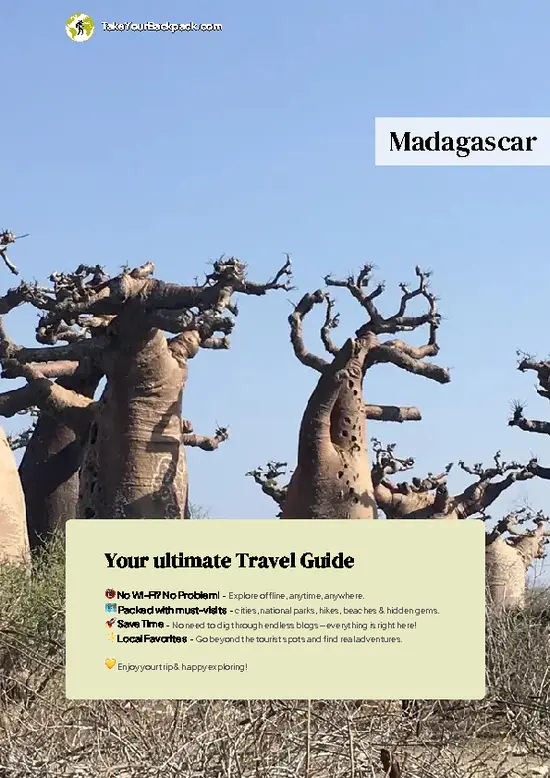
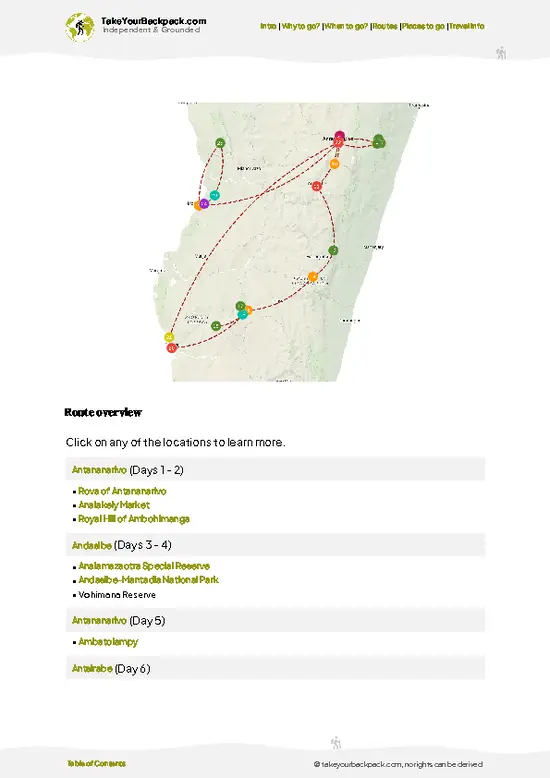
example page 0 from our offline Travel Guide for Madagascar
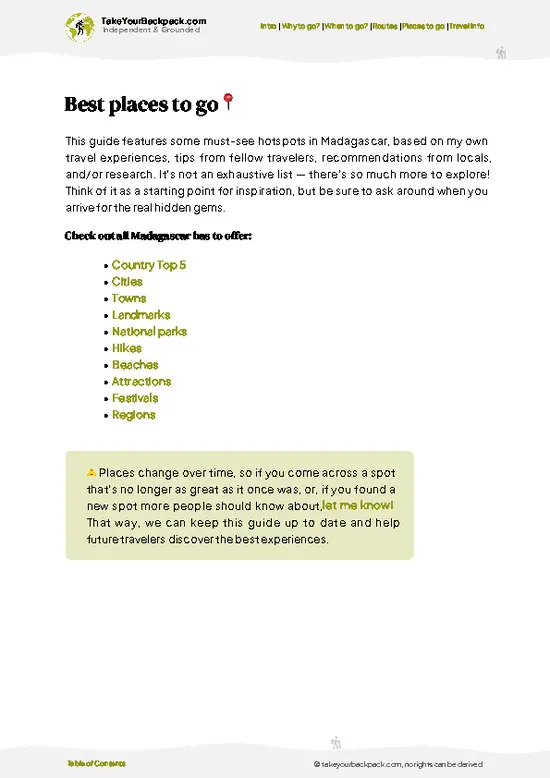
example page 1 from our offline Travel Guide for Madagascar
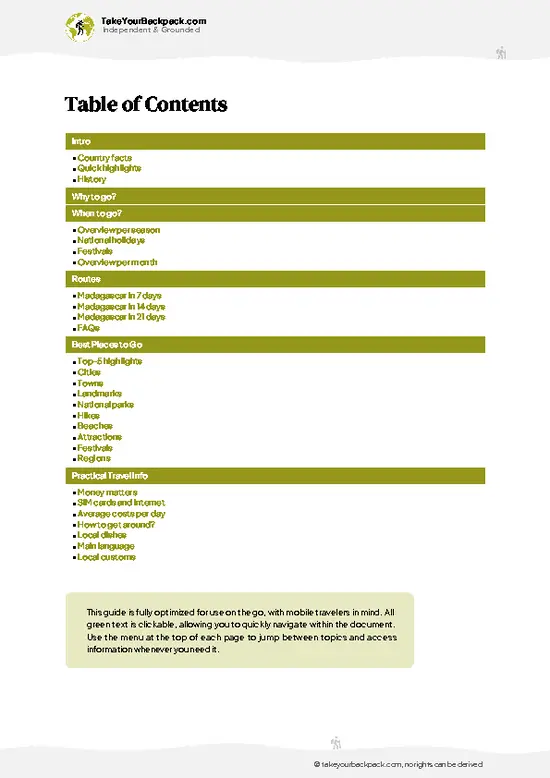
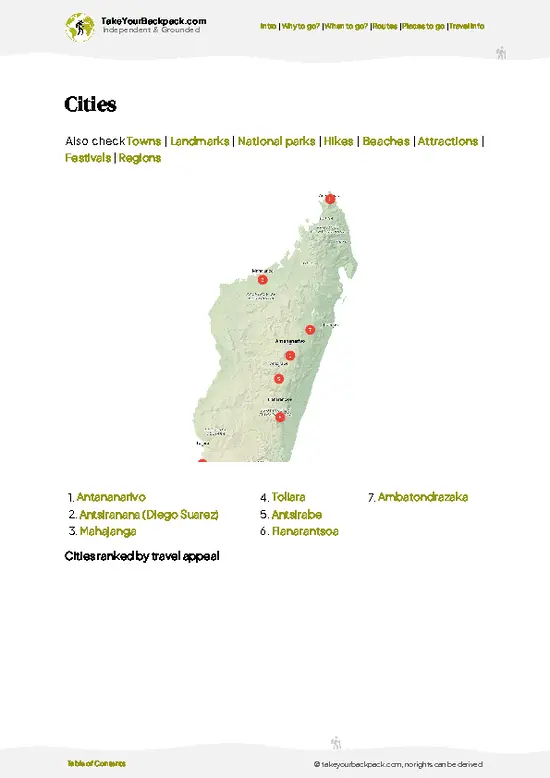
example page 2 from our offline Travel Guide for Madagascar
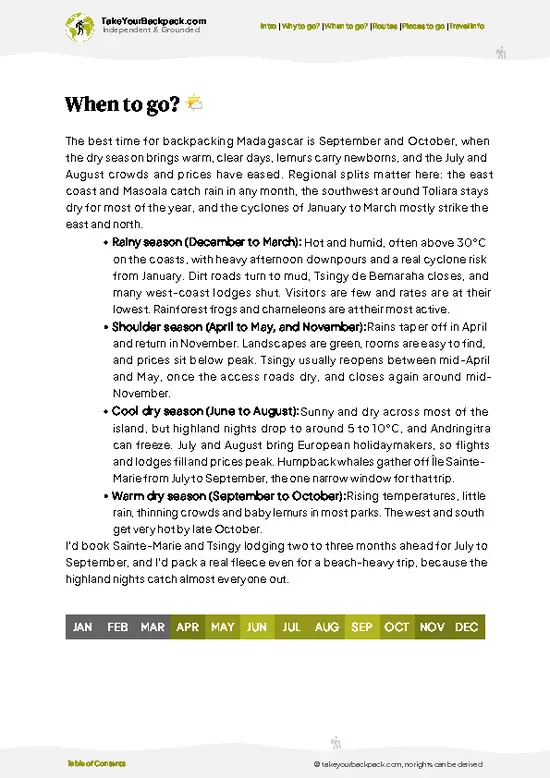
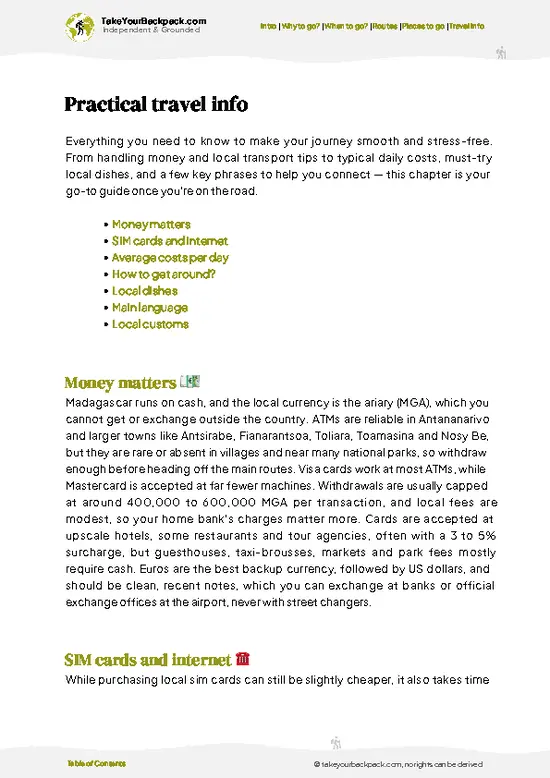
example page 3 from our offline Travel Guide for Madagascar
example page 4 from our offline Travel Guide for Madagascar
example page 5 from our offline Travel Guide for Madagascar
example page 6 from our offline Travel Guide for Madagascar
example page 7 from our offline Travel Guide for Madagascar
Loading the map 🌍
CLICK TO FILTER
cities
towns
landmarks
national parks
hikes
beaches
attractions
festivals
regions
SHOW COUNTRY’S BESTSHOW ALL

✨ Why go?
Ranked #5 city in Madagascar
What makes this city worth visiting

Backpackers come to Antsirabe because it breaks the long road between the capital and the south into a manageable stage. Taxi-brousse run in all directions, so it works as a calm first or second stop when you want to shake off the capital’s chaos without committing to a remote region. The city is flat and walkable, with a grid of wide streets, and the pace is gentle enough that a day of wandering feels easy. The real draw is craft: horn, zebu bone and recycled metal workshops turn out toys, model cars and jewelry you can watch being made. Food is another reason, with cheap local eateries and good bakeries around the center. Add the cool highland air, which suits long walks, and the volcanic lakes in the countryside, such as Lake Tritriva. Two nights is plenty for most travelers. Stay longer … read more 👉
Backpackers come to Antsirabe because it breaks the long road between the capital and the south into a manageable stage. Taxi-brousse run in all directions, so it works as a calm first or second stop when you want to shake off the capital’s chaos without committing to a remote region. The city is flat and walkable, with a grid of wide streets, and the pace is gentle enough that a day of wandering feels easy. The real draw is craft: horn, zebu bone and recycled metal workshops turn out toys, model cars and jewelry you can watch being made. Food is another reason, with cheap local eateries and good bakeries around the center. Add the cool highland air, which suits long walks, and the volcanic lakes in the countryside, such as Lake Tritriva. Two nights is plenty for most travelers. Stay longer only if you want to use it as a base for the surrounding lakes and villages.

💡 HighlightsDon't-miss highlights and experiences

  1. Gare d’Antsirabe (old railway station): The town’s best-known landmark, a handsome 1923 colonial station with a clock tower and wide arcades, now mostly dormant. Go in the morning for the soft light and photos. Free to look around from outside, 20 to 30 minutes.
  2. Pousse-pousse ride through town: The city’s signature experience, with brightly decorated rickshaws pulled along tree-lined avenues. Mornings are best. Agree the price first, roughly Ar 2,000 to 5,000 per short ride (about US$0.50 to 1.10), 1 hour for a loop.
  3. Craft workshops (horn and zebu bone): Small family studios where artisans carve, polish and assemble horn goods and miniature vehicles. Visit on weekday mornings when work is underway. Free to watch, buying is optional, 45 to 60 minutes.
  4. Thermal Hotel and Hôtel des Thermes: A grand
… read more 👉
  1. Gare d’Antsirabe (old railway station): The town’s best-known landmark, a handsome 1923 colonial station with a clock tower and wide arcades, now mostly dormant. Go in the morning for the soft light and photos. Free to look around from outside, 20 to 30 minutes.
  2. Pousse-pousse ride through town: The city’s signature experience, with brightly decorated rickshaws pulled along tree-lined avenues. Mornings are best. Agree the price first, roughly Ar 2,000 to 5,000 per short ride (about US$0.50 to 1.10), 1 hour for a loop.
  3. Craft workshops (horn and zebu bone): Small family studios where artisans carve, polish and assemble horn goods and miniature vehicles. Visit on weekday mornings when work is underway. Free to watch, buying is optional, 45 to 60 minutes.
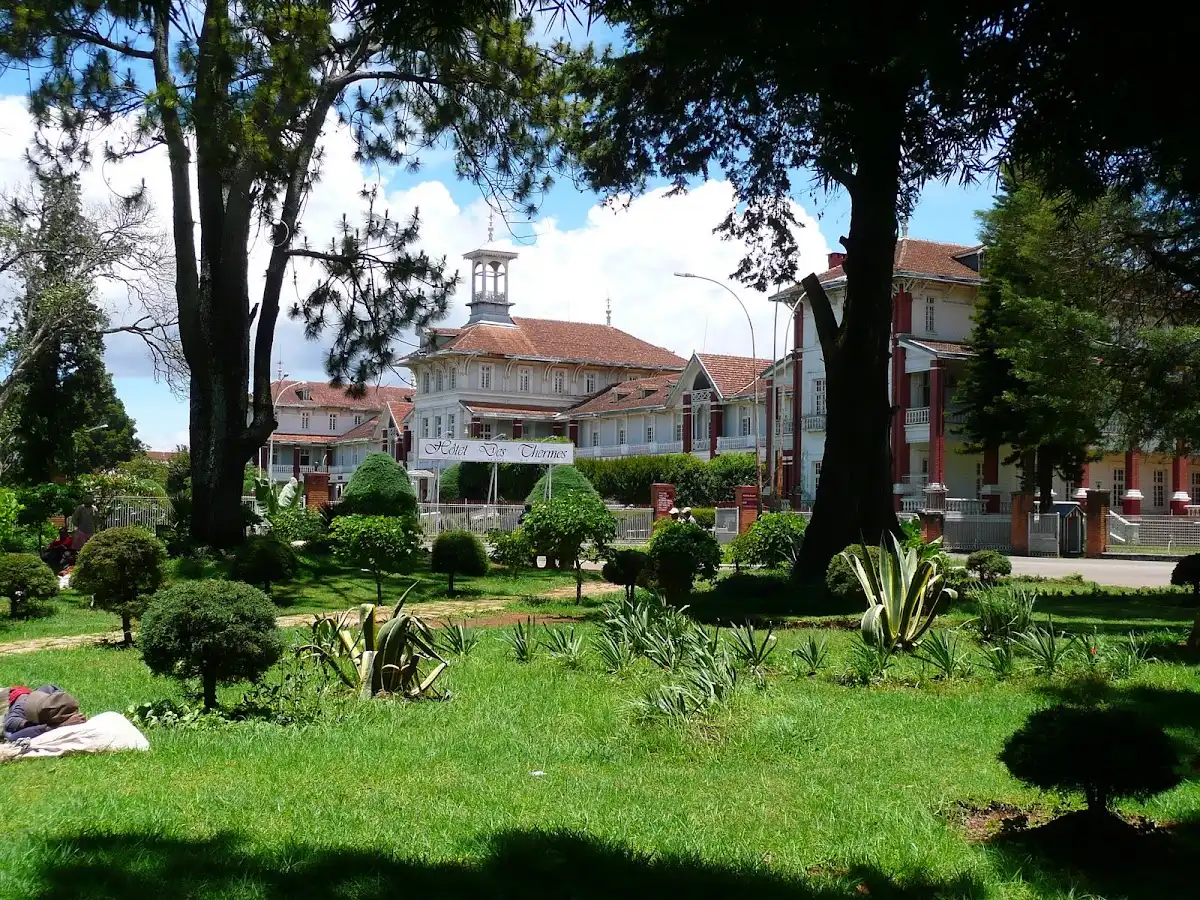
  4. Thermal Hotel and Hôtel des Thermes: A grand 1930s spa building with a garden and old-world interiors that recall the town’s thermal origins. Visit late afternoon for a drink on the terrace. Entry is free for a coffee, treatments cost extra, 45 minutes.
  5. Lake Ranomafana: A small lake on the edge of town, ringed by paths and shaded by trees, popular with local families. Come at sunset for the calmest atmosphere. Free, 30 to 45 minutes.
  6. Marché d’Antsirabe (Zoma area stalls): Stacks of vegetables, spices, fruit and textiles fill the lanes, and it is the best place for picking up snacks. Go early in the morning. Free to browse, 1 hour.
  7. Cathédrale Notre-Dame de la Salette: A Catholic cathedral with a tall brick tower, set in a quiet part of town. Visit on a Sunday morning for hymns. Free, 20 minutes.
Outside the city, Lake Tritriva, Lake Andraikiba and the hot-spring village of Ambohimanjaka make good day trips. Start with the pousse-pousse ride, since it takes you past the station, workshops and market in one loop and helps you get your bearings.
Spotted a mistake or missing something? Contact us.
🏘️ NeighborhoodsUnderstanding the local layout

Antsirabe is compact, flat and cool, so you can cover its main areas on foot and save your money for the odd pousse-pousse ride.
  • Avenue de l’Indépendance and the center. The wide main boulevard runs from the grand colonial railway station to the Hôtel des Thermes. Expect bakery smoke, honking Peugeot taxis and pousse-pousse pullers calling out. Cafés, pastry shops and money changers cluster here. It is the easiest area to explore on foot, and the best value for a first afternoon.
  • Marché d’Analakely area (central market). Tables are stacked with Vakinankaratra apples, pears, strawberries, dried fish and tiny embroidered goods. Mornings are loud and muddy after rain. Go early, bring small bills, and keep a hand on your pockets.
  • Ibity and Lake Tritriva road. Out of town, the road passes red-earth
… read more 👉
Antsirabe is compact, flat and cool, so you can cover its main areas on foot and save your money for the odd pousse-pousse ride.
  • Avenue de l’Indépendance and the center. The wide main boulevard runs from the grand colonial railway station to the Hôtel des Thermes. Expect bakery smoke, honking Peugeot taxis and pousse-pousse pullers calling out. Cafés, pastry shops and money changers cluster here. It is the easiest area to explore on foot, and the best value for a first afternoon.
  • Marché d’Analakely area (central market). Tables are stacked with Vakinankaratra apples, pears, strawberries, dried fish and tiny embroidered goods. Mornings are loud and muddy after rain. Go early, bring small bills, and keep a hand on your pockets.
  • Ibity and Lake Tritriva road. Out of town, the road passes red-earth hills and rice terraces. Ibity is quiet and smells of eucalyptus and wood fires. It is too far to walk, so hire a bike or a taxi-brousse.
  • Lake Andraikiba. A short ride from the center, the lake is calm, with pine trees and a breeze at sunset. It suits a slow stroll rather than a night out.
  • Thermal quarter. Near the old baths, the streets are wider and quieter, with a faint mineral smell. It is walkable from the center in about 10 minutes.

⌛️ 1 dayA smart one-day plan

7:30 AM, Gare d’Antsirabe: Start at the old station, where the clock tower and arcades look best in early light. Grab a mofo gasy from a street vendor nearby, then flag down a pousse-pousse for the next stretch.

8:30 AM, Marché d’Antsirabe: Wander the market lanes while stalls are still fresh, sampling fruit and watching spice sellers weigh their goods. It is the best place to see daily life, and the pace is easy.

10:30 AM, Craft workshops: Ride or walk to a few horn and zebu bone ateliers. Watching artisans file and polish tiny model cars is the main reason to come, and you can pick up inexpensive souvenirs if you wish.

12:30 PM, Lunch near the center: Choose a simple local restaurant for rice with zebu or vary it with a bakery sandwich. Take a short rest before the afternoon.

2:30 PM, … read more 👉
7:30 AM, Gare d’Antsirabe: Start at the old station, where the clock tower and arcades look best in early light. Grab a mofo gasy from a street vendor nearby, then flag down a pousse-pousse for the next stretch.

8:30 AM, Marché d’Antsirabe: Wander the market lanes while stalls are still fresh, sampling fruit and watching spice sellers weigh their goods. It is the best place to see daily life, and the pace is easy.

10:30 AM, Craft workshops: Ride or walk to a few horn and zebu bone ateliers. Watching artisans file and polish tiny model cars is the main reason to come, and you can pick up inexpensive souvenirs if you wish.

12:30 PM, Lunch near the center: Choose a simple local restaurant for rice with zebu or vary it with a bakery sandwich. Take a short rest before the afternoon.

2:30 PM, Cathédrale Notre-Dame de la Salette: Walk to the cathedral, which sits away from the main tourist circuit and is usually quiet. Look at the brickwork and enjoy the calm of the surrounding streets.

4:00 PM, Hôtel des Thermes: Take a pousse-pousse to this grand 1930s hotel for coffee on the terrace and a look at the garden and interiors.

5:30 PM, Lake Ranomafana: Finish with a slow stroll around the lake as the light softens and families gather. Walk back through town for dinner.

🌤️ When to go?Seasonal considerations and timing

  • Cool Dry Season (May to August): Days reach 18 to 23°C (64 to 73°F), but nights drop to 3 to 8°C (37 to 46°F), sometimes near frost. Sunshine is reliable, and daylight lasts roughly 11 hours. Pack a real jacket.
  • Warm Transition (September to November): Highs of 22 to 27°C (72 to 81°F), clear mornings, and jacaranda in bloom. Crowds are modest and prices stay steady, making this the pleasant middle ground.
  • Rainy Season (December to March): Afternoon downpours and humidity, with highs around 25 to 28°C (77 to 82°F). Daylight stretches to about 13.5 hours. Rural roads turn to mud and cyclone remnants can delay travel.
  • Holiday Peaks: July and August, Christmas and Easter fill rooms, and rates can rise 10 to 30% in better places.
Book ahead if you land in town during the late-June independence celebrations.

source: climatestotravel.comJANJanuary: fair for travelingFEBFebruary: fair for travelingMARMarch: fair for travelingAPRApril: highly recommended for travelingMAYMay: excellent for travelingJUNJune: excellent for travelingJULJuly: highly recommended for travelingAUGAugust: highly recommended for travelingSEPSeptember: excellent for travelingOCTOctober: highly recommended for travelingNOVNovember: fair for travelingDECDecember: fair for traveling
madagascar-city-antsirabe v1
© Google |

✈️ The backpacker research shortcutMadagascar Travel Guide

An offline-friendly backpacking guide with optimized travel routes, ranked highlights, transport advice, and the best areas to stay.
example page 0 from our offline Travel Guide for Madagascar
example page 1 from our offline Travel Guide for Madagascar
example page 2 from our offline Travel Guide for Madagascar
example page 3 from our offline Travel Guide for Madagascar
example page 4 from our offline Travel Guide for Madagascar
example page 5 from our offline Travel Guide for Madagascar
example page 6 from our offline Travel Guide for Madagascar
example page 7 from our offline Travel Guide for Madagascar
The digital guide (305 pages) contains:
✅ 96 highlights, ranked by travel appeal
✅ Optimized 7, 14 & 21-day travel routes
✅ Cities, national parks, landmarks, beaches
✅ How to get around
✅ Offline-friendly for travel without Wi-Fi
👉 Click to see all 30+ guide features

📅 Plan smarter in minutes, not weeks
✅ Month by month travel advice
✅ Festivals & national holidays
✅ Budget expectations

🗺️ Go to the right places, skip the overrated ones
✅ Honest pros & cons of destinations
✅ Top hikes, parks & viewpoints
✅ Lesser-known places most travelers miss
✅ Clear “worth it vs skip it” guidance

🛏️ Travel smoothly without rookie mistakes
✅ Best areas to stay
✅ Transport systems explained simply
✅ Common scams & safety advice
✅ SIM cards, money & practical tips

🌍 Understand the country, not just visit it
✅ Culture & traditions
✅ 52 Essential phrases & customs
✅ Festivals worth planning around
✅ Traveler-friendly historical context
✅ Insights that make places more meaningful

📱 Built for real travel conditions
✅ Fully downloadable PDF
✅ Works completely offline
✅ Optimized for phone use
✅ Useful in remote areas & buses
✅ Everything in one place
Stop searching, start planning
Get instant access to your full guide. 30‑day money-back guarantee.
+ Add another guide for just

By proceeding you agree to our terms.
Sent to your inbox immediately after payment • 100% Secure Checkout
Best Backpacking Travel Advisor 2025 tourism awardBest Backpacking
Travel Advisor
2025
What others say about Take Your Backpack Guides:
⭐⭐⭐⭐⭐
Fantastic, amazing amount of information!
⭐⭐⭐⭐⭐
My goodness this is amazing, it's what I've been looking for hats off too you!
⭐⭐⭐⭐⭐
I think this is absolutely BRILLIANT
⭐⭐⭐⭐
Very complete and informative. It's still missing places, but I gotta to commend you
⭐⭐⭐⭐⭐
This is truly amazing, thank you, can't wait to explore it with my kids!
⭐⭐⭐⭐⭐
Awesome resource, thank you!
⭐⭐⭐⭐⭐
This is amazing! Can't wait to explore the ones I haven't seen
⭐⭐⭐⭐
I love this! Well done, great idea.
⭐⭐⭐⭐⭐
Thanks for taking the time to make this gem!
⭐⭐⭐⭐⭐
This might be the best website I've ever seen.
⭐⭐⭐⭐⭐
Congratulations, and thank you so much for your work; it's incredibly valuable.
⭐⭐⭐⭐
In all seriousness I think you did a great job pointing out the important spots
⭐⭐⭐⭐⭐
10/10 very good
⭐⭐⭐⭐⭐
As someone who's only just starting to visit regularly this is awesome, thank you.
⭐⭐⭐⭐
Thank you very much! I'm going to visit my dad, it's going to be very useful!
⭐⭐⭐⭐⭐
This is really cool! We'll be travelling for the first time and this definitely come in handy.
⭐⭐⭐⭐⭐
You are now our minister of culture, congratulations 👨‍💼
⭐⭐⭐⭐⭐
Just wanted to tell you that this is a pearl! Going to follow your recommendations.
⭐⭐⭐⭐⭐
This is so cool. I'll definitely be using the resource for my travels soon.
⭐⭐⭐⭐⭐
This is very impressive! Good work.
⭐⭐⭐⭐⭐
This is an amazing and informative site. Very well done!

🛏️ Where to stay?Choosing the right base

The center near Avenue de l’Indépendance is the best area for a budget bed, because everything you need sits within a 10-minute walk. Guesthouses and a few simple dorm-style rooms cluster close to the railway station and the central market. Beds are limited compared with Antananarivo, so private rooms with shared bathrooms are common and often cost little more than a dorm. Streets here stay lively until about 9 pm and are well lit along the main avenue, making it comfortable to return after dinner. Noise starts early, with roosters and market traffic before sunrise, so bring earplugs. Taxi-brousse … read more 👉
The center near Avenue de l’Indépendance is the best area for a budget bed, because everything you need sits within a 10-minute walk. Guesthouses and a few simple dorm-style rooms cluster close to the railway station and the central market. Beds are limited compared with Antananarivo, so private rooms with shared bathrooms are common and often cost little more than a dorm. Streets here stay lively until about 9 pm and are well lit along the main avenue, making it comfortable to return after dinner. Noise starts early, with roosters and market traffic before sunrise, so bring earplugs. Taxi-brousse departure points are a short pousse-pousse ride away.
The quieter second option is the area around Lake Andraikiba and the thermal quarter. It has a few simple lodges with garden space and calmer nights, and the air is cleaner. It is a 15 to 25 minute walk or a short taxi ride from the center, so you trade some convenience for sleep. Evenings are dark, so take a taxi after dark rather than walking. Hot water can be unreliable in the cool season, so ask before booking, and check for extra blankets from May to August.

🚌 Getting aroundTransportation options and practical tips

The easiest way to get around Antsirabe is on foot, because the center is flat, laid out in a grid and about 2 km across. Traffic is a steady stream of pousse-pousses, bicycles, taxis and horns, and the air carries a trace of diesel and charcoal. There is no meaningful city bus system, so you rely on a handful of cheap, simple options.
  • Walking. Free, quick and the best way to take in the market, the cathedral and the railway station. Pavements are uneven, and you will weave around vendors and puddles, but it beats any vehicle for the center.
  • Pousse-pousse. Rickshaw-style carts pulled by runners, usually Ar 2,000 to 5,000 (roughly US$0.45 to 1.10) for a short hop, with the price agreed first. They are slow and bumpy but oddly pleasant at dusk, and the best option when you carry a heavy pack or
… read more 👉
The easiest way to get around Antsirabe is on foot, because the center is flat, laid out in a grid and about 2 km across. Traffic is a steady stream of pousse-pousses, bicycles, taxis and horns, and the air carries a trace of diesel and charcoal. There is no meaningful city bus system, so you rely on a handful of cheap, simple options.
  • Walking. Free, quick and the best way to take in the market, the cathedral and the railway station. Pavements are uneven, and you will weave around vendors and puddles, but it beats any vehicle for the center.
  • Pousse-pousse. Rickshaw-style carts pulled by runners, usually Ar 2,000 to 5,000 (roughly US$0.45 to 1.10) for a short hop, with the price agreed first. They are slow and bumpy but oddly pleasant at dusk, and the best option when you carry a heavy pack or the afternoon rain starts. Many travelers tip a little, and it is worth it for the human effort.
  • Taxi and tuk-tuk style three-wheelers. Small taxis and bajaj-type tuk-tuks cost about Ar 5,000 to 10,000 (US$1.10 to 2.20) in town. They are faster than a cart and cover the lakes, but the seats are cramped and exhaust fumes drift in. Negotiate the fare before climbing in.
  • Taxi-brousse and bicycle. Minibuses to nearby villages cost about Ar 2,000 to 6,000 (US$0.45 to 1.30) and run from early morning until about late afternoon, departing when full. They are crowded, but cheapest for the lakes and Ambositra road. Bikes rent for around Ar 15,000 to 25,000 (US$3.30 to 5.50) a day, and are my pick for Lake Tritriva since the hills are manageable and the red-soil lanes are lovely.

👛 Costs (as of 16 October 2026)Money, prices, and spending tips

Most backpackers spend about US$20 to 46 a day in Antsirabe, with a bed in a simple guesthouse as the largest expense.
CategoryBudget RangeLocal Reality
Dorm or basic bed (high season)US$8 to 14Few true dorms, so a basic private room with a shared bathroom is typical.
Dorm or basic bed (off-season)US$6 to 10Rooms are easier to bargain for from December to March.
MealsUS$5 to 12Local eateries are cheap, while café meals and a beer cost more.
Local transportUS$1 to 4Pousse-pousse or short taxi rides, plus the odd minibus.
City transport passNot availableNo pass exists, and you pay per ride.
Basic activities and entry feesUS$3 to 10Lake Tritriva is about US$2 to 3, and guides cost extra.
MiscellaneousUS$3 to 6Water, snacks, tips and a SIM top-up.
Total Daily BudgetUS$20 to 46Counting high-season accommodation.
… read more 👉
Most backpackers spend about US$20 to 46 a day in Antsirabe, with a bed in a simple guesthouse as the largest expense.
CategoryBudget RangeLocal Reality
Dorm or basic bed (high season)US$8 to 14Few true dorms, so a basic private room with a shared bathroom is typical.
Dorm or basic bed (off-season)US$6 to 10Rooms are easier to bargain for from December to March.
MealsUS$5 to 12Local eateries are cheap, while café meals and a beer cost more.
Local transportUS$1 to 4Pousse-pousse or short taxi rides, plus the odd minibus.
City transport passNot availableNo pass exists, and you pay per ride.
Basic activities and entry feesUS$3 to 10Lake Tritriva is about US$2 to 3, and guides cost extra.
MiscellaneousUS$3 to 6Water, snacks, tips and a SIM top-up.
Total Daily BudgetUS$20 to 46Counting high-season accommodation.
Buy fruit and bread at the central market and eat a picnic at the lakes to cut daily food costs.
⚠️ Prices can change and everyone travels differently, so take this as a rough guide. Hope it helps you plan your adventure!

🚌 Day tripsShort trips worth adding

Antsirabe suits day trips well, because the surrounding lakes and villages sit within an hour or so on mostly paved roads.
Lake Tritriva:
A deep green crater lake ringed by cliffs and pines, about 18 km southwest. Allow 45 minutes by taxi-brousse or 2 hours by bike. Entry is around Ar 10,000 to 15,000 (US$2.20 to 3.30) including a local guide, and a round trip costs roughly US$6 to 10. Go on a clear morning, since mist hides the view. First-timers often pay a guide on top of the official fee.

Lake Andraikiba:
A calm lake about 6 km from town, ideal for a half-day ride and a picnic under pine trees. The trip costs under US$5 by bike, and the best light is late afternoon from April to October.

Betafo:
A market town about 22 km west, with volcanic lakes, rice paddies and a quiet, rural pace. … read more 👉
Antsirabe suits day trips well, because the surrounding lakes and villages sit within an hour or so on mostly paved roads.
Lake Tritriva:
A deep green crater lake ringed by cliffs and pines, about 18 km southwest. Allow 45 minutes by taxi-brousse or 2 hours by bike. Entry is around Ar 10,000 to 15,000 (US$2.20 to 3.30) including a local guide, and a round trip costs roughly US$6 to 10. Go on a clear morning, since mist hides the view. First-timers often pay a guide on top of the official fee.

Lake Andraikiba:
A calm lake about 6 km from town, ideal for a half-day ride and a picnic under pine trees. The trip costs under US$5 by bike, and the best light is late afternoon from April to October.

Betafo:
A market town about 22 km west, with volcanic lakes, rice paddies and a quiet, rural pace. Taxi-brousse takes about 45 minutes and costs Ar 3,000 to 5,000. Visit on market day for the best atmosphere, and expect to spend US$8 to 15 with a guide. Many people forget to start early, so they miss the return minibuses.

Ambositra:
A woodcarving town about 90 km south, known for marquetry workshops. The ride takes roughly 2 to 3 hours each way and costs around Ar 12,000 to 18,000 one way, so leave by 7 am.

🍲 FoodLocal Flavors for Backpackers

Antsirabe sits in highland farm country, so the produce is different from the coast: apples, pears, strawberries and peaches fill the market stalls, along with honey and fresh cheese. Locals often start the day with mofo gasy, rice-flour cakes, and with koba, a sweet paste of peanuts and sugar wrapped in banana leaves. The town is also known for its beer, and THB is brewed here, so a cold bottle in the evening is almost obligatory. Pork features strongly in the highlands, and ravitoto with pounded cassava leaves is a common order. Street grills sell skewers and fried bananas as the sun drops and the air cools, and the smoke hangs low along Avenue de l’Indépendance.
For casual meals, try small hotely (local eateries) around the market, where a plate of rice, beans and meat costs about Ar 3,000 … read more 👉
Antsirabe sits in highland farm country, so the produce is different from the coast: apples, pears, strawberries and peaches fill the market stalls, along with honey and fresh cheese. Locals often start the day with mofo gasy, rice-flour cakes, and with koba, a sweet paste of peanuts and sugar wrapped in banana leaves. The town is also known for its beer, and THB is brewed here, so a cold bottle in the evening is almost obligatory. Pork features strongly in the highlands, and ravitoto with pounded cassava leaves is a common order. Street grills sell skewers and fried bananas as the sun drops and the air cools, and the smoke hangs low along Avenue de l’Indépendance.
For casual meals, try small hotely (local eateries) around the market, where a plate of rice, beans and meat costs about Ar 3,000 to 7,000 (US$0.65 to 1.50). Bakeries and cafés near the center sell fresh bread and pastries. In the cool season, hot ginger tea is the drink to order, and it goes well with warm samosas.

🛡️ SafetySafety Tips and Common Scams in Antsirabe

Antsirabe is broadly safe, and most problems are petty. The market and the area around the railway station are where pickpockets and bag-slashers work, so carry only what you need and keep your phone out of back pockets. Pousse-pousse pullers and taxi drivers sometimes quote inflated prices to foreigners, so agree the fare before you sit down and carry small bills. Solo travelers generally feel comfortable on the main avenue after dark, but side streets are poorly lit, so take a taxi after about 9 pm instead of walking. Groups of children and hawkers can be persistent around the lakes, and a calm, friendly no works better than avoiding eye contact. Cold nights can catch people off guard, and walking around Lake Tritriva alone in poor weather is less sensible than going with a guide.

FAQTraveler FAQ

Two days is enough for most travelers. That gives you time for the market, the thermal quarter and Lake Andraikiba on day one, and Lake Tritriva or Betafo on day two. Add a third day if you want to continue to Ambositra, about 2 to 3 hours south.
Yes, Antsirabe is generally one of the easier places in Madagascar for solo backpackers. Petty theft around the market and railway station is the main risk, so keep valuables hidden. Main streets are fine until about 9 pm, and taxis cost roughly US$1 to 2 for short rides after dark.
Antsirabe is known for its pousse-pousse rickshaws, colonial-era thermal baths and the Hôtel des Thermes. It also has volcanic crater lakes such as Tritriva, about 18 km away. Cool highland weather, THB beer and gemstone and craft workshops add to its reputation.
⚠️ Things can change over time, so always validate details locally before you go.

Other Malagasy cities near Antsirabe

Explore more nearby:

  • Antananarivo—Analakely steps, Rova hilltop, Andravoahangy crafts, tin-roof views| 119 km away
  • Fianarantsoa—Betsileo old quarter, stone lanes, FCE train, highland vineyards| 176 km away
  • Ambatondrazaka—Lake Alaotra base, rice-grade market, paddy dikes, tilapia grills| 269 km away

💡 Not sure where to go next?
Create a personalized itinerary for Madagascar including Antsirabe and the places that fit your trip.

Generate my itinerary

👉 Discover all cities

Or checkout all Madagascar has to offer (think cities, towns, villages, national parks, hikes, beaches, festivals)
Country photo of Madagascar

We 💚 feedbackKey takeaways before you go

Pair Antsirabe with Antananarivo at one end and Ambositra or Fianarantsoa at the other, so it becomes the easy middle stop on the highland road south. Two nights is enough. I would use the second day for Lake Tritriva rather than adding more town time.

✈️ When did I visit Madagascar?
Madagascar I went backpacking in October 2019. With a friend I rented a 4WD and drove around the southern part of Madagascar.

✍️ Help improve this page!
The information on this page is based on my own backpacking experience in Madagascar, supplemented with up-to-date research and feedback from other travelers. Travel details can change, so if you notice anything outdated or incomplete, feel free to let me know.


🙋‍♂️ Give feedback

👋 Meet the founderWho’s Behind Take Your Backpack?

Johan, backpacker and founder of TakeYourBackpackHi, I’m Johan (Netherlands 🇳🇱), the creator of TakeYourBackpack. Over the past 3 decades, I’ve backpacked through 90+ countries across six continents, gaining extensive experience with independent travel, long-term trips, and overland routes.

This site is built on a combination of firsthand travel experience and carefully curated insights from other backpackers. Many guides are based on places I’ve personally visited, while others bring together tips, observations, and practical advice shared by trusted travelers I’ve met along the way.

The goal is to provide realistic, experience-driven guidance — not generic itineraries — so you can explore destinations with better context, clearer expectations, and more confidence.