×

Madagascar🇲🇬 | citiesFianarantsoaBetsileo old quarter, stone lanes, FCE train, highland vineyards | things to do and best time to go

Explore Antsiranana (Diego Suarez)Explore Mahajanga

Backpacking in Fianarantsoa
👌 Worth visitingcity ranked #6
By Johan Kruseman 🇳🇱 | Updated October 16, 2026

Fianarantsoa gives you the best-preserved old quarter in Madagascar, plus the departure point for the train to the coast, without a single tour-bus crowd. It sits in the south-central highlands of Madagascar, a long day’s drive south of Antananarivo. I arrived on foot at dusk, tried to climb to the Haute-Ville on the steep cobbled lanes with a full pack, and skipped the zebu-cart-free back road, so I hauled myself up the wrong flight of stairs twice. Lesson learned: drop your bag first, then wander. The upper town is worth a full morning; the lower town is a noisy grid of taxi-brousse touts and fine for errands only. It suits slow walkers and train fans, not nightlife seekers. Stone houses with red-tile roofs glow orange as church bells ring over the rice terraces below.

Discover everything you want to know in the 📖 Madagascar Travel Guide.


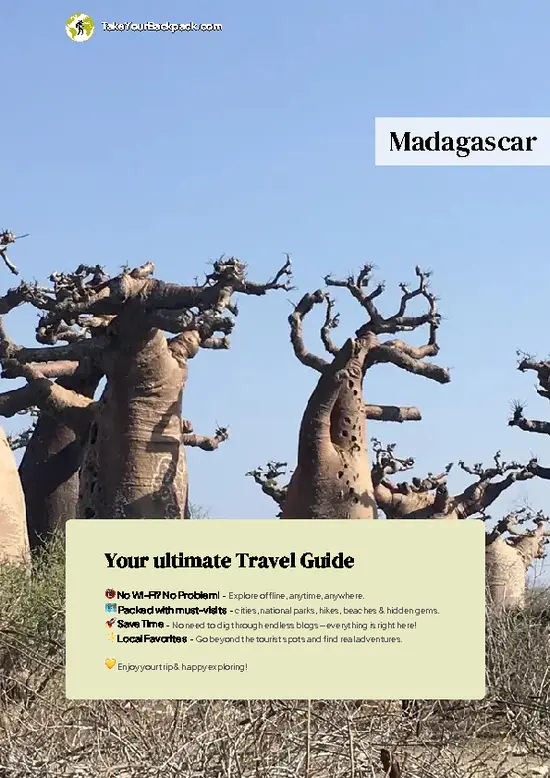
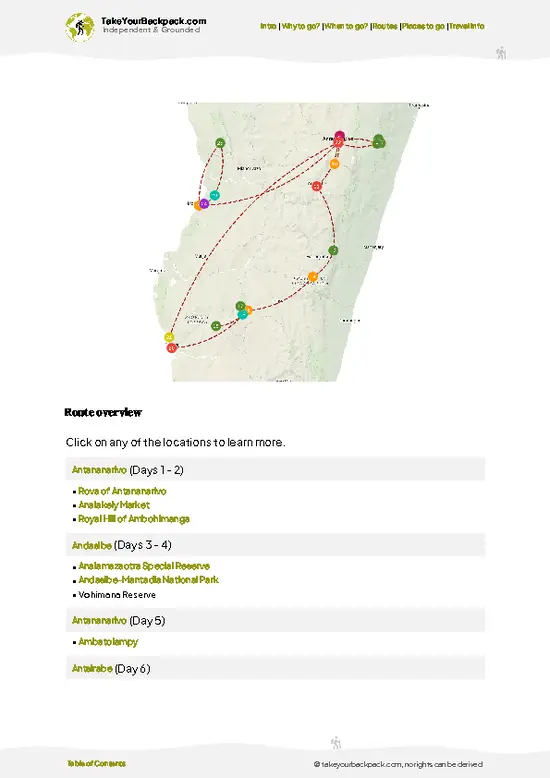
example page 0 from our offline Travel Guide for Madagascar
example page 1 from our offline Travel Guide for Madagascar
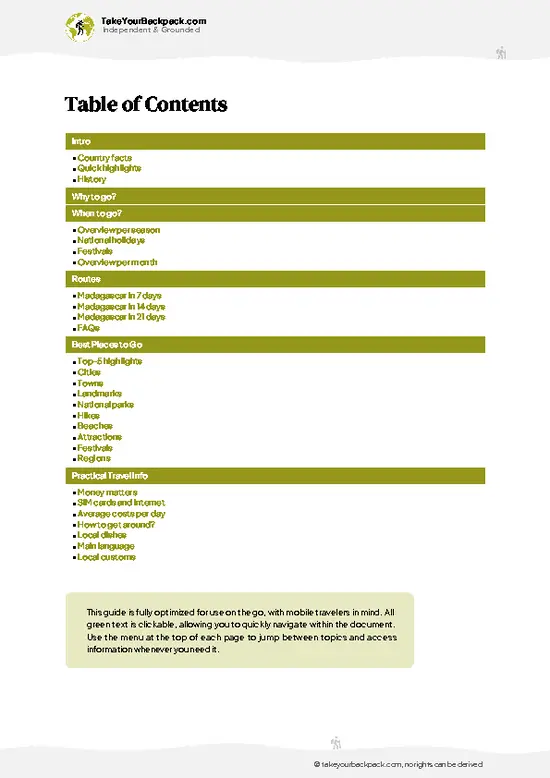
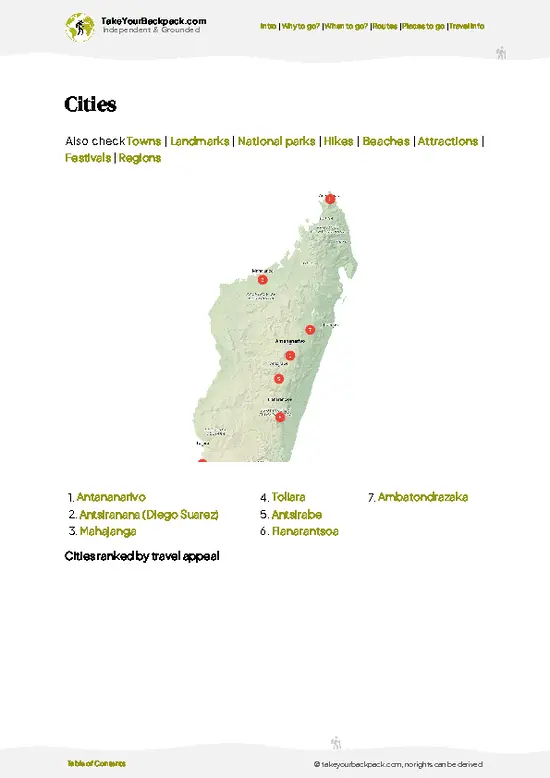
example page 2 from our offline Travel Guide for Madagascar
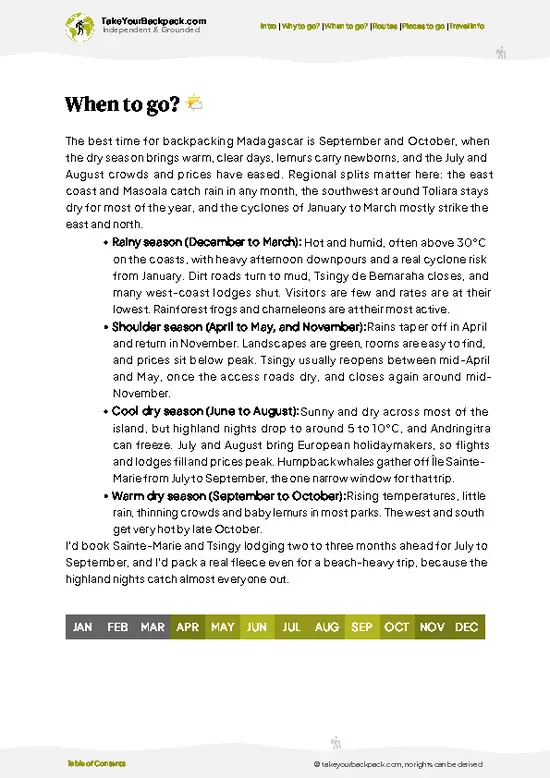
example page 3 from our offline Travel Guide for Madagascar
example page 4 from our offline Travel Guide for Madagascar
example page 5 from our offline Travel Guide for Madagascar
example page 6 from our offline Travel Guide for Madagascar
example page 7 from our offline Travel Guide for Madagascar
Loading the map 🌍
CLICK TO FILTER
cities
towns
landmarks
national parks
hikes
beaches
attractions
festivals
regions
SHOW COUNTRY’S BESTSHOW ALL

✨ Why go?
Ranked #6 city in Madagascar
Reasons people choose to visit here

Backpackers come to Fianarantsoa because it is the natural pause on the road between the capital and the south. The Haute-Ville is compact enough to cover on foot, with old stone houses, steep lanes and a cluster of churches, and you can see most of it in a leisurely day. Guesthouses here are small and friendly, and the food leans on highland staples such as zebu brochettes and rice with ravitoto, plus the local wine that the region is known for. The real draw is as a hub. The FCE railway to Manakara leaves from here, and a slow, rattling ride through villages and tunnels is one of the great low-cost trips on the island. Tea and wine country lies around town, and national parks sit a short hop away. It is not a party town, nights are quiet and dark. If you want beaches or nightlife, keep moving. … read more 👉
Backpackers come to Fianarantsoa because it is the natural pause on the road between the capital and the south. The Haute-Ville is compact enough to cover on foot, with old stone houses, steep lanes and a cluster of churches, and you can see most of it in a leisurely day. Guesthouses here are small and friendly, and the food leans on highland staples such as zebu brochettes and rice with ravitoto, plus the local wine that the region is known for. The real draw is as a hub. The FCE railway to Manakara leaves from here, and a slow, rattling ride through villages and tunnels is one of the great low-cost trips on the island. Tea and wine country lies around town, and national parks sit a short hop away. It is not a party town, nights are quiet and dark. If you want beaches or nightlife, keep moving. If you want a calm base with real character, stay two or three nights.

💡 HighlightsPlaces and moments you shouldn't skip

  1. Haute-Ville (Old Town): Cobbled lanes, Betsileo stone houses and viewpoints over the rice paddies. Go in the early morning or late afternoon for soft light. Free, 2 to 3 hours.
  2. Cathedral of Fianarantsoa (Cathédrale de l’Immaculée Conception): A large Catholic church at the top of the old town with a calm interior and sweeping views. Small donation welcome, 30 minutes.
  3. Tour of the Maison des Tisserands and local craft workshops: Look for handmade paper (antemoro) and silk weaving in the old quarter. Mornings are best, when workshops are active. Free to look, buy a few small items for around Ar 5,000 to 20,000 (US$1 to 4), 1 hour.
  4. Fianarantsoa Train Station: The colonial-era station is the start of the FCE line to Manakara. Visit in the morning to watch the departure and buy tickets. Free to look,
… read more 👉
  1. Haute-Ville (Old Town): Cobbled lanes, Betsileo stone houses and viewpoints over the rice paddies. Go in the early morning or late afternoon for soft light. Free, 2 to 3 hours.
  2. Cathedral of Fianarantsoa (Cathédrale de l’Immaculée Conception): A large Catholic church at the top of the old town with a calm interior and sweeping views. Small donation welcome, 30 minutes.
  3. Tour of the Maison des Tisserands and local craft workshops: Look for handmade paper (antemoro) and silk weaving in the old quarter. Mornings are best, when workshops are active. Free to look, buy a few small items for around Ar 5,000 to 20,000 (US$1 to 4), 1 hour.
  4. Fianarantsoa Train Station: The colonial-era station is the start of the FCE line to Manakara. Visit in the morning to watch the departure and buy tickets. Free to look, 30 minutes.
  5. Soafia Tea Plantation area: Green terraces and a small factory outside the center where you can taste the local brew. Morning visits are best. Ar 5,000 to 10,000 (about US$1 to 2), 1 to 2 hours.
  6. Lazan’i Betsileo Vineyards: Wine from the highlands is made at a local estate close to town, and tasting is straightforward. Late afternoon suits tasting. Around Ar 10,000 to 20,000 (US$2 to 4), 1 to 2 hours.
  7. Lower Town Market: Piles of vegetables, spices, fabric and live poultry, and a good place to try street snacks. Go before 10 AM. Free, 1 hour.
Nearby, Ranomafana National Park, Anja Community Reserve near Ambalavao and the Andringitra massif all work as day trips or short overnights. Everything in town together takes a relaxed day and a half.
Spotted a mistake or missing something? Contact us.

Things to do near Fianarantsoa

Ratings based on Tripadvisor reviews. When you book through this link, you support our work at no extra cost to you.

🏘️ NeighborhoodsNeighborhood guide to Fianarantsoa

Fianarantsoa splits into three levels, and you only need to climb one of them for the good stuff. Wear shoes with grip, because the cobbles are steep and slick after rain.
  • Haute-Ville (Antananarivo Be): The old town on the hill and the reason to come. Stone houses with wooden balconies, around 20 churches, and bells that carry across the roofs on Sunday morning. Walk it at dawn or late afternoon when the light turns the brick orange. Small cafés and craft stalls sit among the lanes, and it is quiet after dark. Give it half a day, on foot.
  • Middle Town (Ville Moyenne): The working center, with the market, banks, pharmacies and the cluttered streets near the main road. Expect diesel, frying dough and honking pousse-pousse bells. It is not pretty, but you will pass through to eat and change money.
… read more 👉
Fianarantsoa splits into three levels, and you only need to climb one of them for the good stuff. Wear shoes with grip, because the cobbles are steep and slick after rain.
  • Haute-Ville (Antananarivo Be): The old town on the hill and the reason to come. Stone houses with wooden balconies, around 20 churches, and bells that carry across the roofs on Sunday morning. Walk it at dawn or late afternoon when the light turns the brick orange. Small cafés and craft stalls sit among the lanes, and it is quiet after dark. Give it half a day, on foot.
  • Middle Town (Ville Moyenne): The working center, with the market, banks, pharmacies and the cluttered streets near the main road. Expect diesel, frying dough and honking pousse-pousse bells. It is not pretty, but you will pass through to eat and change money. Twenty minutes is enough.
  • Lower Town and Station area (Ville Basse): Flat, dusty and loud around the railway station, where the FCE train to the coast departs. Worth visiting only if you are catching it or watching the platform chaos. Skip it otherwise.

⌛️ 1 dayHow to make the most of one day

7:30 AM: Lower Town Market. Start here while the produce is fresh and the light is soft. Grab a coffee and a fried snack, then taxi or walk uphill to save your legs for the old quarter.
9:00 AM: Haute-Ville. Wander the cobbled lanes slowly, peeking into courtyards and enjoying views over the rice terraces. The cathedral at the top is worth the climb, and the quiet is a relief after the market.
11:30 AM: Craft workshops. Stop by a papermaking or weaving studio in the old quarter. It is a small, rarely crowded visit that shows how local materials are used.
1:00 PM: Lunch. Eat zebu with rice at a simple restaurant near the upper town and try a glass of local wine.
2:30 PM: Fianarantsoa Train Station. Walk downhill to the station to see the platform and buy tickets if you plan to ride the FCE line. … read more 👉
7:30 AM: Lower Town Market. Start here while the produce is fresh and the light is soft. Grab a coffee and a fried snack, then taxi or walk uphill to save your legs for the old quarter.
9:00 AM: Haute-Ville. Wander the cobbled lanes slowly, peeking into courtyards and enjoying views over the rice terraces. The cathedral at the top is worth the climb, and the quiet is a relief after the market.
11:30 AM: Craft workshops. Stop by a papermaking or weaving studio in the old quarter. It is a small, rarely crowded visit that shows how local materials are used.
1:00 PM: Lunch. Eat zebu with rice at a simple restaurant near the upper town and try a glass of local wine.
2:30 PM: Fianarantsoa Train Station. Walk downhill to the station to see the platform and buy tickets if you plan to ride the FCE line. It is a photogenic piece of colonial history that many visitors skip.
4:00 PM: Lazan’i Betsileo Vineyards. Take a taxi for a tasting among the vines, a gentle end to the day.
6:30 PM: Back in the old town. Catch sunset from a viewpoint as the church bells ring and lamps come on.

🌤️ When to go?Seasonal considerations and timing

May to October is the easiest window for Fianarantsoa, with dry roads and sunny days, though the altitude (about 1,100 m) keeps nights cold.
  • Cool Dry Season (May to September): Days run 18 to 24°C (64 to 75°F) and nights can drop to 5 to 8°C (41 to 46°F). Pack a fleece. Sunrise is around 6 am and sunset near 5:30 pm. Wine harvest activity and tea-country walks are at their best.
  • Hot Season (October to December): Warmer, 24 to 28°C (75 to 82°F), with the first afternoon storms. Fewer visitors and easy bargaining.
  • Rainy Season (January to April): Cyclone-driven downpours can wash out roads to Ranomafana and Ambalavao, and the train often runs late. Expect 20 to 26°C (68 to 79°F) and muddy trails.
  • Crowds and Prices: July and August fill guesthouses and bump prices slightly.
Book the train a day ahead in July and August.

source: climatestotravel.comJANJanuary: fair for travelingFEBFebruary: fair for travelingMARMarch: fair for travelingAPRApril: fair for travelingMAYMay: highly recommended for travelingJUNJune: excellent for travelingJULJuly: excellent for travelingAUGAugust: excellent for travelingSEPSeptember: highly recommended for travelingOCTOctober: highly recommended for travelingNOVNovember: fair for travelingDECDecember: fair for traveling
when-to-go

✈️ The backpacker research shortcutMadagascar Travel Guide

An offline-friendly backpacking guide with optimized travel routes, ranked highlights, transport advice, and the best areas to stay.
example page 0 from our offline Travel Guide for Madagascar
example page 1 from our offline Travel Guide for Madagascar
example page 2 from our offline Travel Guide for Madagascar
example page 3 from our offline Travel Guide for Madagascar
example page 4 from our offline Travel Guide for Madagascar
example page 5 from our offline Travel Guide for Madagascar
example page 6 from our offline Travel Guide for Madagascar
example page 7 from our offline Travel Guide for Madagascar
The digital guide (301 pages) contains:
✅ 96 highlights, ranked by travel appeal
✅ Optimized 7, 14 & 21-day travel routes
✅ Cities, national parks, landmarks, beaches
✅ How to get around
✅ Offline-friendly for travel without Wi-Fi
👉 Click to see all 30+ guide features

📅 Plan smarter in minutes, not weeks
✅ Month by month travel advice
✅ Festivals & national holidays
✅ Budget expectations

🗺️ Go to the right places, skip the overrated ones
✅ Honest pros & cons of destinations
✅ Top hikes, parks & viewpoints
✅ Lesser-known places most travelers miss
✅ Clear “worth it vs skip it” guidance

🛏️ Travel smoothly without rookie mistakes
✅ Best areas to stay
✅ Transport systems explained simply
✅ Common scams & safety advice
✅ SIM cards, money & practical tips

🌍 Understand the country, not just visit it
✅ Culture & traditions
✅ 52 Essential phrases & customs
✅ Festivals worth planning around
✅ Traveler-friendly historical context
✅ Insights that make places more meaningful

📱 Built for real travel conditions
✅ Fully downloadable PDF
✅ Works completely offline
✅ Optimized for phone use
✅ Useful in remote areas & buses
✅ Everything in one place
Stop searching, start planning
Get instant access to your full guide. 30‑day money-back guarantee.
+ Add another guide for just

By proceeding you agree to our terms.
Sent to your inbox immediately after payment • 100% Secure Checkout
Best Backpacking Travel Advisor 2025 tourism awardBest Backpacking
Travel Advisor
2025
What others say about Take Your Backpack Guides:
⭐⭐⭐⭐⭐
Fantastic, amazing amount of information!
⭐⭐⭐⭐⭐
My goodness this is amazing, it's what I've been looking for hats off too you!
⭐⭐⭐⭐⭐
I think this is absolutely BRILLIANT
⭐⭐⭐⭐
Very complete and informative. It's still missing places, but I gotta to commend you
⭐⭐⭐⭐⭐
This is truly amazing, thank you, can't wait to explore it with my kids!
⭐⭐⭐⭐⭐
Awesome resource, thank you!
⭐⭐⭐⭐⭐
This is amazing! Can't wait to explore the ones I haven't seen
⭐⭐⭐⭐
I love this! Well done, great idea.
⭐⭐⭐⭐⭐
Thanks for taking the time to make this gem!
⭐⭐⭐⭐⭐
This might be the best website I've ever seen.
⭐⭐⭐⭐⭐
Congratulations, and thank you so much for your work; it's incredibly valuable.
⭐⭐⭐⭐
In all seriousness I think you did a great job pointing out the important spots
⭐⭐⭐⭐⭐
10/10 very good
⭐⭐⭐⭐⭐
As someone who's only just starting to visit regularly this is awesome, thank you.
⭐⭐⭐⭐
Thank you very much! I'm going to visit my dad, it's going to be very useful!
⭐⭐⭐⭐⭐
This is really cool! We'll be travelling for the first time and this definitely come in handy.
⭐⭐⭐⭐⭐
You are now our minister of culture, congratulations 👨‍💼
⭐⭐⭐⭐⭐
Just wanted to tell you that this is a pearl! Going to follow your recommendations.
⭐⭐⭐⭐⭐
This is so cool. I'll definitely be using the resource for my travels soon.
⭐⭐⭐⭐⭐
This is very impressive! Good work.
⭐⭐⭐⭐⭐
This is an amazing and informative site. Very well done!

🛏️ Where to stay?Where staying makes the most sense

The Haute-Ville is the best place for a budget bed, with simple guesthouses and a handful of dorm-style options at roughly 15,000 to 40,000 ariary (US$3 to 9) per person. It is cooler, quieter and safer on foot after dark than the lower town, and nights are silent apart from church bells at dawn. The trade-off is the climb: expect a steep 15 to 25 minute walk with your pack, though a pousse-pousse will haul it for a small fee.
The Ville Moyenne is the second option. It has more mid-range rooms and a few cheap ones, and it sits near the taxi stands and shops, so you can reach the gare routière quickly. … read more 👉
The Haute-Ville is the best place for a budget bed, with simple guesthouses and a handful of dorm-style options at roughly 15,000 to 40,000 ariary (US$3 to 9) per person. It is cooler, quieter and safer on foot after dark than the lower town, and nights are silent apart from church bells at dawn. The trade-off is the climb: expect a steep 15 to 25 minute walk with your pack, though a pousse-pousse will haul it for a small fee.
The Ville Moyenne is the second option. It has more mid-range rooms and a few cheap ones, and it sits near the taxi stands and shops, so you can reach the gare routière quickly. It is louder, with traffic and early market noise, and dim streets at night call for a short taxi ride. Choose it if you leave on a early taxi-brousse or want fast access to restaurants. Hot water and heating are patchy in budget places, so ask about blankets in June and July.

🚌 Getting aroundTransportation options and practical tips

A pousse-pousse (rickshaw cart) ride across town costs about 1,000 to 2,000 ariary (US$0.25 to 0.45), paid in cash after you agree the fare before climbing in. Most backpackers walk the old town and use a rickshaw or taxi for the rest, since the hill is steep and the lower streets are chaotic. Public transport is informal, and nothing runs to a fixed timetable.
  • Walking: The best way to see the Haute-Ville. The cobbled lanes climb sharply and get slippery after rain, but the views over red-tiled roofs repay the effort. Go early, before the sun gets harsh.
  • Pousse-pousse: Cheap and slow, pulled by a runner on foot. Good for hauling a pack uphill, though it feels awkward at first. Expect to pay 1,000 to 3,000 ariary (US$0.25 to 0.70) depending on distance and hill. Foreigners are quoted high, so
… read more 👉
A pousse-pousse (rickshaw cart) ride across town costs about 1,000 to 2,000 ariary (US$0.25 to 0.45), paid in cash after you agree the fare before climbing in. Most backpackers walk the old town and use a rickshaw or taxi for the rest, since the hill is steep and the lower streets are chaotic. Public transport is informal, and nothing runs to a fixed timetable.
  • Walking: The best way to see the Haute-Ville. The cobbled lanes climb sharply and get slippery after rain, but the views over red-tiled roofs repay the effort. Go early, before the sun gets harsh.
  • Pousse-pousse: Cheap and slow, pulled by a runner on foot. Good for hauling a pack uphill, though it feels awkward at first. Expect to pay 1,000 to 3,000 ariary (US$0.25 to 0.70) depending on distance and hill. Foreigners are quoted high, so settle the price first.
  • Taxi: Small yellow cabs wait near the market and station. Short rides cost 5,000 to 10,000 ariary (US$1.10 to 2.20). Worth it at night or with heavy bags.
  • Taxi-brousse: Crowded minibuses leave from the gare routière on the edge of town for Antsirabe, Ambalavao, Ranomafana and Tuléar. Leave in the morning, when vehicles fill early, and expect to wait until every seat is taken. Fares run roughly 10,000 to 40,000 ariary (US$2 to 9) depending on distance. Bags often go on the roof.
  • FCE Train: The line to Manakara on the east coast is the most memorable ride in the region. It covers about 163 km through tunnels, bridges and villages, and takes 10 hours or far longer. Tickets are US$10 to 20. Delays are normal, so carry food and water.

👛 Costs (as of 16 October 2026)How expensive it really is

Backpacking in Fianarantsoa costs roughly US$20 to 38 per day, with dorm beds and street meals keeping the total low.
CategoryBudget RangeLocal Reality
Dorm accommodation (high season)US$6 to 10Simple beds in the Haute-Ville fill up in July and August.
Dorm accommodation (off-season)US$3 to 7Easier to negotiate, but hot water is patchy.
MealsUS$5 to 10Rice and laoka at hotely cost under US$1.50, while a restaurant dinner costs US$4 to 8.
Local transportUS$1 to 4Pousse-pousse and short taxi rides.
City transport passNot availableNo pass exists, so you pay per ride.
Basic activities and entry feesUS$3 to 10Park entry, guides and market visits, and the old town is free.
MiscellaneousUS$2 to 4Water, snacks and tips.
Total Daily BudgetUS$20 to 38Based on high-season dorm beds.
Buy a bottle of water in bulk … read more 👉
Backpacking in Fianarantsoa costs roughly US$20 to 38 per day, with dorm beds and street meals keeping the total low.
CategoryBudget RangeLocal Reality
Dorm accommodation (high season)US$6 to 10Simple beds in the Haute-Ville fill up in July and August.
Dorm accommodation (off-season)US$3 to 7Easier to negotiate, but hot water is patchy.
MealsUS$5 to 10Rice and laoka at hotely cost under US$1.50, while a restaurant dinner costs US$4 to 8.
Local transportUS$1 to 4Pousse-pousse and short taxi rides.
City transport passNot availableNo pass exists, so you pay per ride.
Basic activities and entry feesUS$3 to 10Park entry, guides and market visits, and the old town is free.
MiscellaneousUS$2 to 4Water, snacks and tips.
Total Daily BudgetUS$20 to 38Based on high-season dorm beds.
Buy a bottle of water in bulk at the market and eat where locals do to save the most.
⚠️ Prices can change and everyone travels differently, so take this as a rough guide. Hope it helps you plan your adventure!

🚌 Day tripsWhere to go beyond the main area

Fianarantsoa works well as a base for short excursions, though the road quality means you plan around transport and not distance.
Ranomafana National Park: Rainforest with lemurs, including golden bamboo lemurs, and good hiking. It takes about 2 to 3 hours by taxi-brousse (US$4 to 8), plus park entry of roughly 55,000 ariary (US$12) and a guide. Do it as a very early start, because the animals are most active in the morning. Many first-timers underestimate the distance and arrive after the best lemur window. April to November is easier.
👉 Explore Ranomafana National Park
Ambalavao: Home of Antaimoro paper workshops and the Thursday zebu market, among the biggest in the south. Taxi-brousse takes 1.5 to 2 hours (US$3 to 5). Go on market day, and take cash only. Don't take photos of cattle sellers … read more 👉
Fianarantsoa works well as a base for short excursions, though the road quality means you plan around transport and not distance.
Ranomafana National Park: Rainforest with lemurs, including golden bamboo lemurs, and good hiking. It takes about 2 to 3 hours by taxi-brousse (US$4 to 8), plus park entry of roughly 55,000 ariary (US$12) and a guide. Do it as a very early start, because the animals are most active in the morning. Many first-timers underestimate the distance and arrive after the best lemur window. April to November is easier.
👉 Explore Ranomafana National Park
Ambalavao: Home of Antaimoro paper workshops and the Thursday zebu market, among the biggest in the south. Taxi-brousse takes 1.5 to 2 hours (US$3 to 5). Go on market day, and take cash only. Don't take photos of cattle sellers without asking first.
👉 Explore Ambalavao
Sahambavy Tea Estate: A tea plantation by a lake, reached by the Manakara train in about 1 hour or by road. The cost is under US$10 round trip. Visit in the dry season and check the return train times, because delays can strand you.

Anja Community Reserve: Easy ring-tailed lemur viewing near Ambalavao, with entry about 15,000 to 25,000 ariary (US$3 to 6) plus a guide. Late morning visits are fine, and it pairs well with the market.

🍲 FoodLocal Flavors for Backpackers

Fianarantsoa sits in the country’s main wine and tea region, so local wine is the headline. Reds, whites and a sweet rosé from the nearby vineyards are sold in small shops and served at local restaurants, usually at a fraction of imported prices. A few wineries near town offer tastings, and the rosé grape juice is a good cheap alternative. Try the highland zebu dishes, such as ravitoto with pork or beef, and romazava, a brothy greens stew. Fresh trout and river fish appear on menus too.
For budget eating, head to the market and the hotely (simple local eateries) in the Ville Moyenne, where a plate of rice with laoka runs about 3,000 to 6,000 ariary (US$0.70 to 1.35). Street stalls sell mofo gasy (rice bread) and mofo anana, fried dough with greens, from early morning. In the evening, small … read more 👉
Fianarantsoa sits in the country’s main wine and tea region, so local wine is the headline. Reds, whites and a sweet rosé from the nearby vineyards are sold in small shops and served at local restaurants, usually at a fraction of imported prices. A few wineries near town offer tastings, and the rosé grape juice is a good cheap alternative. Try the highland zebu dishes, such as ravitoto with pork or beef, and romazava, a brothy greens stew. Fresh trout and river fish appear on menus too.
For budget eating, head to the market and the hotely (simple local eateries) in the Ville Moyenne, where a plate of rice with laoka runs about 3,000 to 6,000 ariary (US$0.70 to 1.35). Street stalls sell mofo gasy (rice bread) and mofo anana, fried dough with greens, from early morning. In the evening, small bars in the old town serve beer and local wine in a quiet, low-key setting. Sip the local tea at the Sahambavy estate, where the plantation sells packets cheaply.

🛡️ SafetyTraveler Safety Guide

Fianarantsoa is calm by Malagasy standards, and most problems come down to petty theft and poor lighting. Keep your phone and camera out of sight in the market and around the station, where pickpockets work crowded stalls. The steep Haute-Ville lanes are fine by day, but after dark they are unlit and cobbled, so carry a headlamp and avoid walking alone late, especially with valuables. Solo travelers, women included, generally report few issues, though a short taxi ride after 8 pm is cheap and sensible. Rickshaw runners and taxi drivers often quote inflated prices to foreigners, so agree on the fare first. Guides near taxi-brousse stations may push their services, and a firm no is enough. Carry small notes, since breaking large bills is hard. Hold onto bags tightly on crowded minibuses.

FAQTraveler FAQ

Two to three days is enough for Fianarantsoa itself and its surroundings. Spend a half day in the Haute-Ville, then use the remaining time for Ambalavao (1.5 to 2 hours away) or Ranomafana National Park (2 to 3 hours away). If you take the FCE train to Manakara, add at least one extra day.
Yes, it is considered one of the more relaxed Malagasy cities for solo travelers. Petty theft in the market and around the station is the main risk, so keep valuables hidden. The old town lanes are unlit, so take a taxi (about US$1 to 2) after dark.
Fianarantsoa is known for its old hilltop quarter with stone houses and churches, along with Malagasy wine and tea. It is also the starting point for the FCE train to Manakara, a 163 km line. Ranomafana National Park is about 2 to 3 hours away.
⚠️ Things can change over time, so always validate details locally before you go.

Other Malagasy cities near Fianarantsoa

Explore more nearby:

  • Antsirabe—Colonial station, rickshaw loops, horn workshops, thermal spa| 176 km away
  • Antananarivo—Analakely steps, Rova hilltop, Andravoahangy crafts, tin-roof views| 287 km away
  • Toliara—Vezo pirogues, sandy avenues, spiny-forest garden, southwest port| 410 km away

💡 Not sure where to go next?
Create a personalized itinerary for Madagascar including Fianarantsoa and the places that fit your trip.

Generate my itinerary

👉 Discover all cities

Or checkout all Madagascar has to offer (think cities, towns, villages, national parks, hikes, beaches, festivals)
Country photo of Madagascar

We 💚 feedbackSumming up the experience

Two nights is the right amount: one full day for the old town and a second for the train ticket, vineyard or a trip toward Ranomafana. Longer only makes sense if you add a hike. I would book the Manakara train early and carry a headlamp for the dim cobbled lanes.

✈️ When did I visit Madagascar?
Madagascar I went backpacking in October 2019. With a friend I rented a 4WD and drove around the southern part of Madagascar.

✍️ Help improve this page!
The information on this page is based on my own backpacking experience in Madagascar, supplemented with up-to-date research and feedback from other travelers. Travel details can change, so if you notice anything outdated or incomplete, feel free to let me know.


🙋‍♂️ Give feedback

👋 Meet the founderWho’s Behind Take Your Backpack?

Johan, backpacker and founder of TakeYourBackpackHi, I’m Johan (Netherlands 🇳🇱), the creator of TakeYourBackpack. Over the past 3 decades, I’ve backpacked through 90+ countries across six continents, gaining extensive experience with independent travel, long-term trips, and overland routes.

This site is built on a combination of firsthand travel experience and carefully curated insights from other backpackers. Many guides are based on places I’ve personally visited, while others bring together tips, observations, and practical advice shared by trusted travelers I’ve met along the way.

The goal is to provide realistic, experience-driven guidance — not generic itineraries — so you can explore destinations with better context, clearer expectations, and more confidence.