×

Madagascar🇲🇬 | townsSambavavanilla plantations, coconut groves, river deltas | things to do and best time to go

Explore MorondavaExplore Manakara

Backpacking in Sambava
🌟 Highlighttown ranked #8
By Johan Kruseman 🇳🇱 | Updated September 3, 2026

The real crossroads in Sambava is this: do you linger here, or push on to the wilds of Marojejy or the vanilla-scented villages further north? Sambava sits on Madagascar’s northeast coast, where the Indian Ocean air is thick with salt and the sweet tang of drying vanilla. For backpackers, Sambava is less a destination and more a launchpad—practical, not pretty, but essential if you’re chasing the rainforests or plotting a route along the vanilla coast. The town itself is flat and easy to navigate on foot, with a lively market and a handful of riverside cafés where you’ll find more locals than travelers. Don’t expect a buzzing hostel scene or late-night camaraderie; Sambava is mellow, with evenings that wind down early. Costs are lower than in Antalaha or Andapa, but you’ll trade away nightlife and tourist polish for a sense of real, working Madagascar. Transport is straightforward—taxi-brousse links are reliable if slow, and the town’s grid makes orientation simple. Safety is typical for rural Madagascar: keep your wits about you, but don’t expect big-city hassles. If you want a base for Marojejy or a taste of the vanilla trade, Sambava is the right kind of ordinary.

Discover everything you want to know in the 📖 Madagascar Travel Guide.
Loading the map 🌍
CLICK TO FILTER
cities
towns
villages
landmarks
national parks
hikes
beaches
attractions
festivals
regions
SHOW COUNTRY’S BESTSHOW ALL

✨ Why go?
Ranked #8 town in Madagascar
What makes it a must-see town

Sambava serves as a gateway for backpackers exploring Madagascar’s lush landscapes. Its convenient location near stunning hikes and pristine beaches makes it a strategic stop. You can easily access the Andasibe-Mantadia National Park for unforgettable wildlife encounters or head to the Sambava Bay for a refreshing dip. The town’s walkable streets invite you to wander, with small-scale hostels and guesthouses offering a cozy, communal vibe. Here, you’ll find local food stalls serving up fresh seafood and tropical fruits, filling the air with enticing aromas.

Travelers often linger a few days, soaking in the friendly atmosphere and connecting with fellow adventurers. It’s ideal for slow travelers and solo backpackers looking for a blend of relaxation and exploration. Sambava isn’t about nightlife; … read more 👉
Sambava serves as a gateway for backpackers exploring Madagascar’s lush landscapes. Its convenient location near stunning hikes and pristine beaches makes it a strategic stop. You can easily access the Andasibe-Mantadia National Park for unforgettable wildlife encounters or head to the Sambava Bay for a refreshing dip. The town’s walkable streets invite you to wander, with small-scale hostels and guesthouses offering a cozy, communal vibe. Here, you’ll find local food stalls serving up fresh seafood and tropical fruits, filling the air with enticing aromas.

Travelers often linger a few days, soaking in the friendly atmosphere and connecting with fellow adventurers. It’s ideal for slow travelers and solo backpackers looking for a blend of relaxation and exploration. Sambava isn’t about nightlife; it’s about embracing the rhythm of local life and the beauty of nature.
Want to include Sambava in your Madagascar route?
Create a personalized Madagascar itinerary that includes Sambava and the places that fit your trip — based on your travel style, budget, and available time. Get your route in seconds.

Generate my trip

💡 HighlightsKey sights and experiences for travelers

  • Sambava Central Market (Marché Municipal) — The town’s beating heart: a chaotic, colorful market where vanilla beans, cloves, rice and fresh seafood are stacked next to street food stalls. Best place to see daily life, haggle prices, and buy small gifts without tourist markup.
  • Vanilla curing yards and trader lanes — Walkable pockets of the town where farmers and traders dry and grade vanilla beans. Watching the curing process up close and chatting with a cooperative member gives a real, hands-on sense of why Sambava is called vanilla country.
  • Sambava Harbour & Fish Market — Small wooden pirogues land here at dawn; the fish market is noisy and immediate. Great for photography, tasting freshly grilled seafood, and seeing the coastal economy in action.
  • Town beachfront (Plage de Sambava)
read more 👉
  • Sambava Central Market (Marché Municipal) — The town’s beating heart: a chaotic, colorful market where vanilla beans, cloves, rice and fresh seafood are stacked next to street food stalls. Best place to see daily life, haggle prices, and buy small gifts without tourist markup.
  • Vanilla curing yards and trader lanes — Walkable pockets of the town where farmers and traders dry and grade vanilla beans. Watching the curing process up close and chatting with a cooperative member gives a real, hands-on sense of why Sambava is called vanilla country.
  • Sambava Harbour & Fish Market — Small wooden pirogues land here at dawn; the fish market is noisy and immediate. Great for photography, tasting freshly grilled seafood, and seeing the coastal economy in action.
  • Town beachfront (Plage de Sambava) — A long, accessible stretch of sand right by town where locals swim, launch pirogues, and stroll at sunrise. Not a luxury resort beach, but honest coastal life and great light for an early walk.
  • Old town / colonial quarter — A short wander through Sambava’s administrative core reveals weathered colonial-era houses, municipal buildings and tree-lined streets. It’s low-key, but the architecture and street scenes tell the town’s history better than a plaque.
  • Local craft stalls and small workshops — Scattered around the center are artisans making vanilla-infused products, woven mats, and carved souvenirs. Visiting a workshop is a way to support locals and see Malagasy craftsmanship up close.
  • Main church and community squares — The principal church and nearby squares are civic focal points: Sundays bring processions, markets and music, offering an instantly readable slice of social life and faith in Sambava.
  • Street-food lanes and coffee spots — Sambava’s compact center has several lively food alleys where you can try brochettes, local fritters, and Malagasy-style coffee for very little money. Eating where locals eat is an experience in itself.
  • Municipal garden and palm avenues — Small public green spaces and palm-lined streets give glimpses of the region’s tropical plants and provide shady spots to rest, people-watch, or plan the next leg of your trip.
  • Local cooperative offices and trading houses — Visiting a cooperative’s office (many welcome visitors) lets you learn about vanilla economics, see grading paperwork and sometimes buy directly from producers — a useful counterpoint to the touristy souvenir route.
A few real, visitable highlights just outside Sambava worth day-tripping to are Antalaha (another vanilla port town), the vanilla plantations in the surrounding countryside, and Marojejy National Park — Marojejy is my personal favorite for its dramatic forested peaks and wildlife.
Spotted a mistake or missing something? Contact us.

🏘️ NeighborhoodsWhere things are and how it's laid out

Sambava, a vibrant town on Madagascar’s northeast coast, offers a unique blend of culture and adventure. Here’s how to navigate its neighborhoods like a pro.

Centre Ville: This is the heart of Sambava. You’ll find local markets, shops, and eateries buzzing with life. The vibe is energetic, perfect for short stays. Walkability is high; everything is within reach. Nightlife is low-key, with a few bars where locals hang out. Transport options are plentiful, making it easy to hop on a taxi-brousse for further adventures.

Antalaha: Just a short ride from Centre Ville, Antalaha is quieter and more laid-back. Ideal for longer stays, it’s surrounded by lush landscapes and offers stunning beach access. The atmosphere is serene, with fewer tourists. While nightlife is minimal, the local dining scene … read more 👉
Sambava, a vibrant town on Madagascar’s northeast coast, offers a unique blend of culture and adventure. Here’s how to navigate its neighborhoods like a pro.

Centre Ville: This is the heart of Sambava. You’ll find local markets, shops, and eateries buzzing with life. The vibe is energetic, perfect for short stays. Walkability is high; everything is within reach. Nightlife is low-key, with a few bars where locals hang out. Transport options are plentiful, making it easy to hop on a taxi-brousse for further adventures.

Antalaha: Just a short ride from Centre Ville, Antalaha is quieter and more laid-back. Ideal for longer stays, it’s surrounded by lush landscapes and offers stunning beach access. The atmosphere is serene, with fewer tourists. While nightlife is minimal, the local dining scene is rich with fresh seafood. Walkability is decent, but you might want a bike or scooter to explore fully.

Ambodifotatra: This area is a hidden treasure, perfect for those seeking tranquility. It’s less developed, giving you a more authentic Malagasy experience. The beaches here are pristine, and the vibe is peaceful. While transport is less frequent, the slower pace allows for deeper connections with locals. Ideal for longer stays, it’s a place to unwind and recharge.

⌛️ 1 dayHow to make the most of one day

Sambava, Madagascar, is a vibrant town where the lush green hills meet the Indian Ocean, creating a backdrop that feels alive. The air is thick with the scent of vanilla and spices, a reminder of the region’s agricultural richness. Start your day early at the local market, where the colors of fresh produce and the chatter of vendors create an electric atmosphere. Grab a warm baguette from a nearby stall and pair it with some local cheese for a simple yet satisfying breakfast.

In the afternoon, head to the nearby Marojejy National Park. It’s not the most touristy spot, but the trek through the dense rainforest rewards you with breathtaking views and a chance to spot unique wildlife. The sound of rustling leaves and distant bird calls envelops you, making the effort feel worthwhile. Bring plenty … read more 👉
Sambava, Madagascar, is a vibrant town where the lush green hills meet the Indian Ocean, creating a backdrop that feels alive. The air is thick with the scent of vanilla and spices, a reminder of the region’s agricultural richness. Start your day early at the local market, where the colors of fresh produce and the chatter of vendors create an electric atmosphere. Grab a warm baguette from a nearby stall and pair it with some local cheese for a simple yet satisfying breakfast.

In the afternoon, head to the nearby Marojejy National Park. It’s not the most touristy spot, but the trek through the dense rainforest rewards you with breathtaking views and a chance to spot unique wildlife. The sound of rustling leaves and distant bird calls envelops you, making the effort feel worthwhile. Bring plenty of water and a good pair of shoes; the trails can be challenging but are manageable for most.

As the sun begins to set, return to town and stroll along the beach. The golden light casts long shadows, and the ocean breeze carries the salty scent of the sea. Stop by a local eatery for dinner; try the zebu steak, a local favorite, paired with rice and a spicy sauce. The warmth of the people and the flavors of the food create a perfect ending to your day. Sambava may not be on every tourist’s radar, but its charm lies in these authentic experiences that make every moment feel earned.
Turn your Sambava visit into an Madagascar adventure
Build a complete Madagascar route with Sambava, hidden gems, must-see destinations, and realistic travel times included.

Generate my trip

🌤️ When to go?Best time to visit Sambava


  • Weather: Sambava’s climate swings between a hot, wet season from November to April and a cooler, drier stretch from May to October. The wet months bring heavy rains and humidity, which can turn trails into slippery mud baths and make outdoor plans unpredictable.

  • Temperature: During the dry season, expect comfortable highs around 25-28°C (77-82°F) and cooler nights near 18°C (64°F). The wet season heats up to 30-32°C (86-90°F), with sticky humidity that saps energy fast.

  • Daylight Hours: Daylight stays fairly consistent year-round, roughly 11 to 12 hours daily, but the dry season’s clearer skies mean more reliable sunshine for trekking and beach time.

  • Crowds: Sambava is off the beaten path, but the dry season draws more eco-tourists and vanilla harvesters, making accommodations pricier
read more 👉

  • Weather: Sambava’s climate swings between a hot, wet season from November to April and a cooler, drier stretch from May to October. The wet months bring heavy rains and humidity, which can turn trails into slippery mud baths and make outdoor plans unpredictable.

  • Temperature: During the dry season, expect comfortable highs around 25-28°C (77-82°F) and cooler nights near 18°C (64°F). The wet season heats up to 30-32°C (86-90°F), with sticky humidity that saps energy fast.

  • Daylight Hours: Daylight stays fairly consistent year-round, roughly 11 to 12 hours daily, but the dry season’s clearer skies mean more reliable sunshine for trekking and beach time.

  • Crowds: Sambava is off the beaten path, but the dry season draws more eco-tourists and vanilla harvesters, making accommodations pricier and spots busier, especially July and August.

  • Seasonal Activities: Vanilla harvesting peaks from July to September, offering a rare chance to see local agriculture up close. The dry season also suits hiking and exploring the nearby rainforests without the constant threat of rain.

  • Price Fluctuations: Expect higher prices for lodging and tours during the dry season’s peak months. The wet season offers budget-friendly rates but comes with the trade-off of less predictable weather and limited activities.


Pro-tip: Aim for late May or early October—just before or after the peak dry season—to enjoy manageable weather, fewer crowds, and better prices, all while catching the tail ends of vanilla season’s buzz.


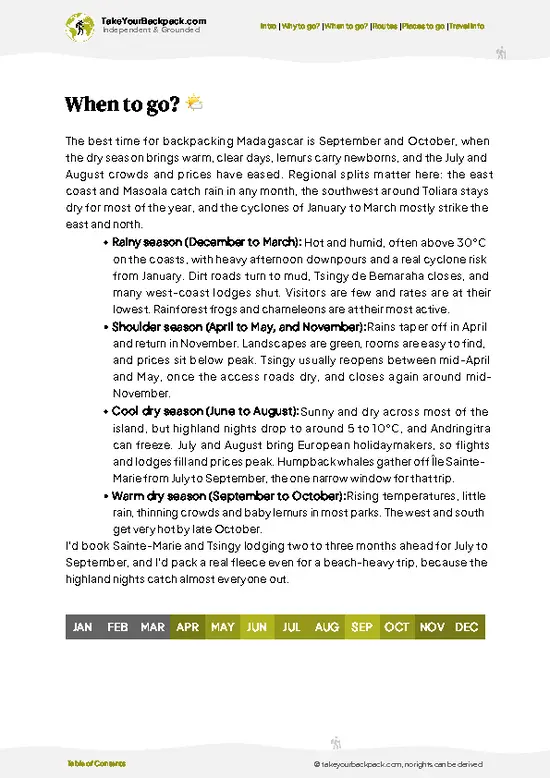
source: climatestotravel.comJANJanuary: fair for travelingFEBFebruary: fair for travelingMARMarch: fair for travelingAPRApril: fair for travelingMAYMay: highly recommended for travelingJUNJune: highly recommended for travelingJULJuly: good for travelingAUGAugust: good for travelingSEPSeptember: highly recommended for travelingOCTOctober: highly recommended for travelingNOVNovember: fair for travelingDECDecember: fair for traveling
when-to-go

✈️ The backpacker research shortcutMadagascar Travel Guide

An offline-friendly backpacking guide with optimized travel routes, ranked highlights, transport advice, and the best areas to stay.
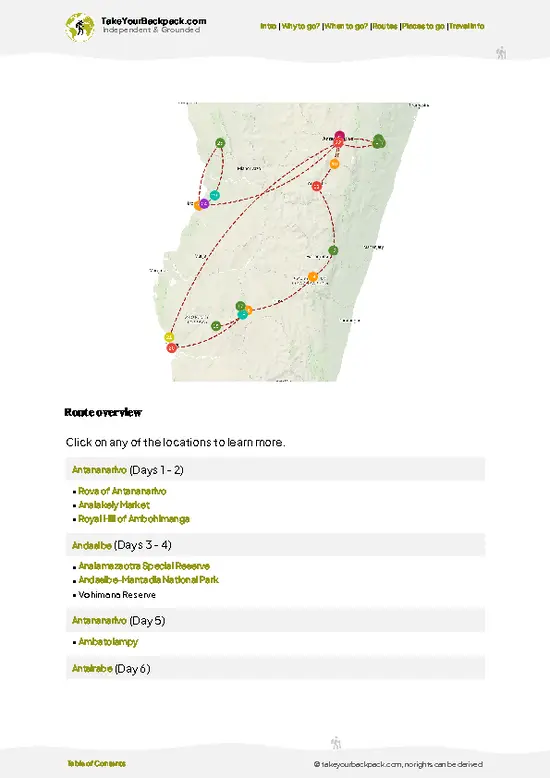
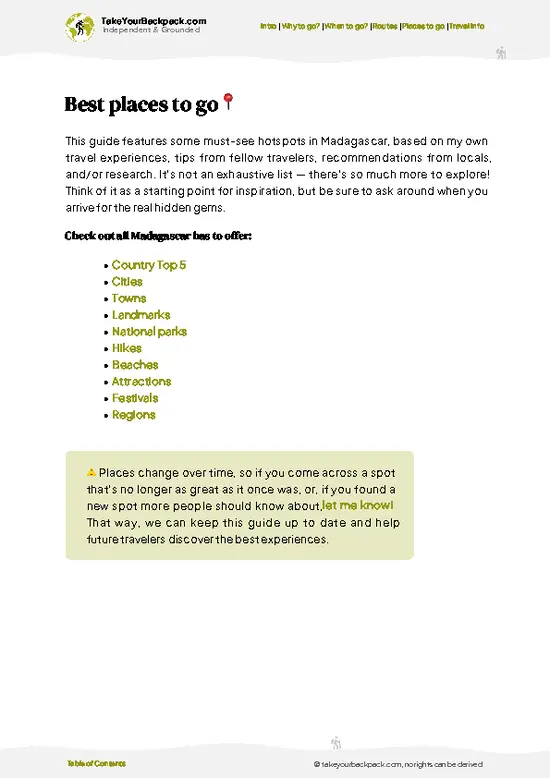
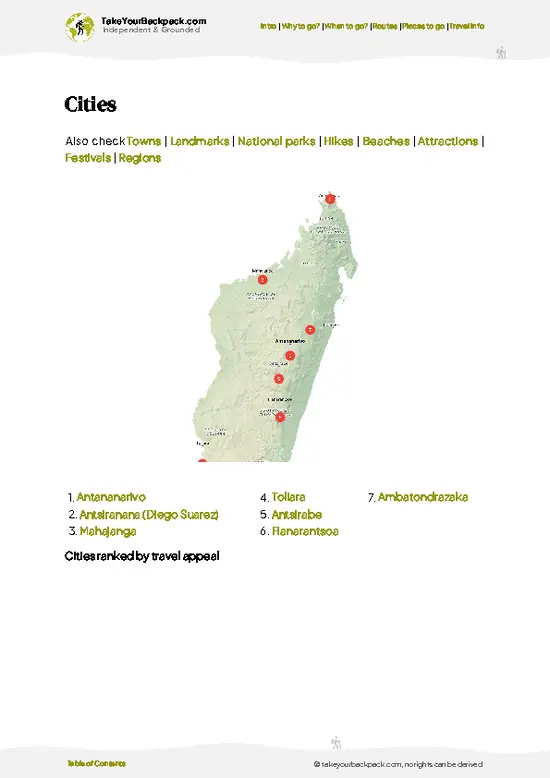
example page 0 from our offline Travel Guide for Madagascar
example page 1 from our offline Travel Guide for Madagascar
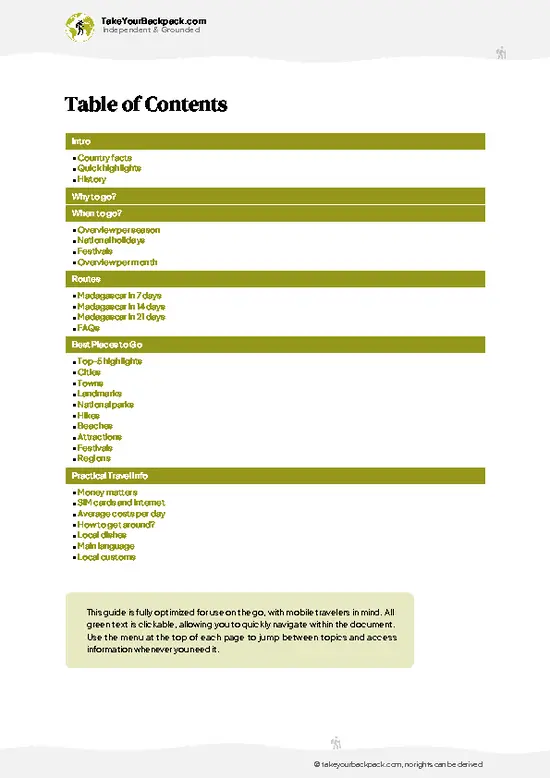
example page 2 from our offline Travel Guide for Madagascar
example page 3 from our offline Travel Guide for Madagascar
example page 4 from our offline Travel Guide for Madagascar
example page 5 from our offline Travel Guide for Madagascar
example page 6 from our offline Travel Guide for Madagascar
example page 7 from our offline Travel Guide for Madagascar
The digital guide (418 pages) contains:
110 highlights, ranked by travel appeal
Optimized 7, 14 & 21-day travel routes
Cities, national parks, landmarks, beaches
How to get around
Offline-friendly for travel without Wi-Fi
👉 Click to see all 30+ guide features

📅 Plan smarter in minutes, not weeks
Month by month travel advice
Festivals & national holidays
Budget expectations

🗺️ Go to the right places, skip the overrated ones
Honest pros & cons of destinations
Top hikes, parks & viewpoints
Lesser-known places most travelers miss
Clear “worth it vs skip it” guidance

🛏️ Travel smoothly without rookie mistakes
Best areas to stay
Transport systems explained simply
Common scams & safety advice
SIM cards, money & practical tips

🌍 Understand the country, not just visit it
Culture & traditions
52 Essential phrases & customs
Festivals worth planning around
Traveler-friendly historical context
Insights that make places more meaningful

📱 Built for real travel conditions
Fully downloadable PDF
Works completely offline
Optimized for phone use
Useful in remote areas & buses
Everything in one place
Save weeks of stressful planning
Get instant access to your full guide. 30‑day money-back guarantee.
+ Add another guide for just US$7.80

By proceeding you agree to our terms.
Sent to your inbox immediately after payment • 100% Secure Checkout
Best Backpacking Travel Advisor 2025 tourism awardBest Backpacking
Travel Advisor
2025
What others say about Take Your Backpack Guides:
⭐⭐⭐⭐⭐
Fantastic, amazing amount of information!
⭐⭐⭐⭐⭐
My goodness this is amazing, it's what I've been looking for hats off too you!
⭐⭐⭐⭐⭐
I think this is absolutely BRILLIANT
⭐⭐⭐⭐
Very complete and informative. It's still missing places, but I gotta to commend you
⭐⭐⭐⭐⭐
This is truly amazing, thank you, can't wait to explore it with my kids!
⭐⭐⭐⭐⭐
Awesome resource, thank you!
⭐⭐⭐⭐⭐
This is amazing! Can't wait to explore the ones I haven't seen
⭐⭐⭐⭐
I love this! Well done, great idea.
⭐⭐⭐⭐⭐
Thanks for taking the time to make this gem!
⭐⭐⭐⭐⭐
This might be the best website I've ever seen.
⭐⭐⭐⭐⭐
Congratulations, and thank you so much for your work; it's incredibly valuable.
⭐⭐⭐⭐
In all seriousness I think you did a great job pointing out the important spots
⭐⭐⭐⭐⭐
10/10 very good
⭐⭐⭐⭐⭐
As someone who's only just starting to visit regularly this is awesome, thank you.
⭐⭐⭐⭐
Thank you very much! I'm going to visit my dad, it's going to be very useful!
⭐⭐⭐⭐⭐
This is really cool! We'll be travelling for the first time and this definitely come in handy.
⭐⭐⭐⭐⭐
You are now our minister of culture, congratulations 👨‍💼
⭐⭐⭐⭐⭐
Just wanted to tell you that this is a pearl! Going to follow your recommendations.
⭐⭐⭐⭐⭐
This is so cool. I'll definitely be using the resource for my travels soon.
⭐⭐⭐⭐⭐
This is very impressive! Good work.
⭐⭐⭐⭐⭐
This is an amazing and informative site. Very well done!

🛏️ Where to stay?Best areas and accommodation options

In Sambava, the best spot for backpackers is the area around the town center, especially near the main market and the beachfront strip. This zone hums with life from dawn till dusk—the scent of fresh vanilla pods mingles with salty ocean air, and the streets pulse with vendors and locals chatting over coffee. It’s safe enough to wander after dark, with a steady flow of fellow travelers and friendly faces.

Why settle here? Because it’s where you’ll find the most budget-friendly hostels and guesthouses, often run by locals who double as informal guides. The social vibe is genuine—people gather … read more 👉
In Sambava, the best spot for backpackers is the area around the town center, especially near the main market and the beachfront strip. This zone hums with life from dawn till dusk—the scent of fresh vanilla pods mingles with salty ocean air, and the streets pulse with vendors and locals chatting over coffee. It’s safe enough to wander after dark, with a steady flow of fellow travelers and friendly faces.

Why settle here? Because it’s where you’ll find the most budget-friendly hostels and guesthouses, often run by locals who double as informal guides. The social vibe is genuine—people gather in small cafes or on the beach, swapping stories and tips. Compared to the quieter, more residential outskirts, this area keeps you plugged into the pulse of Sambava without the touristy gloss. It’s a practical base for exploring nearby vanilla plantations or catching a boat to Nosy Mangabe, with easy access to transport and local eateries that won’t drain your wallet.

🚌 Getting aroundMoving around without the hassle

Sambava moves at its own rhythm—less a clockwork town and more a place where the sun’s angle and the scent of vanilla pods drying in the breeze set the pace. The streets hum with a mix of purposeful locals and wandering travelers, but don’t expect strict timetables or polished transit hubs. Instead, you’ll find a blend of informal stops, shared rides, and the occasional burst of honking as drivers negotiate the narrow roads. The air carries a salty tang from the nearby ocean, mingled with the earthy sweetness of clove and vanilla plantations. This is a place where patience pays off, and understanding the flow means leaning into the local tempo rather than fighting it.


  • Walking: Sambava’s compact center is best explored on foot. The town’s uneven sidewalks and occasional potholes keep the
read more 👉
Sambava moves at its own rhythm—less a clockwork town and more a place where the sun’s angle and the scent of vanilla pods drying in the breeze set the pace. The streets hum with a mix of purposeful locals and wandering travelers, but don’t expect strict timetables or polished transit hubs. Instead, you’ll find a blend of informal stops, shared rides, and the occasional burst of honking as drivers negotiate the narrow roads. The air carries a salty tang from the nearby ocean, mingled with the earthy sweetness of clove and vanilla plantations. This is a place where patience pays off, and understanding the flow means leaning into the local tempo rather than fighting it.


  • Walking: Sambava’s compact center is best explored on foot. The town’s uneven sidewalks and occasional potholes keep the pace slow, but walking lets you soak in the humid air, catch the chatter from market stalls, and spot roadside vendors selling fresh lychees. It’s free, flexible, and the best way to navigate the tight-knit streets.


  • Taxi-Brousse (Shared Minibus): The backbone of regional travel, these minibuses leave when full, usually between 6 AM and 5 PM. Fares hover around $1–$3 for short hops. They’re cramped and noisy, but the windows roll down to let in the tropical heat and the scent of dust and diesel. Perfect for budget travelers heading to nearby villages or the airport.


  • Local Taxis: Metered taxis exist but are rare and often negotiate fares upfront. Expect to pay around $2–$5 for short rides within town. They’re faster than walking but can get stuck in the midday heat and traffic jams near the market. Use them when you’re pressed for time or carrying heavy gear.


  • Bicycle Rentals: For the adventurous, renting a bike is a sweet middle ground. Prices start at about $5 per day. The coastal breeze cools you down, but watch for uneven roads and sudden rain showers. It’s a great way to explore the outskirts and plantations at your own pace.


  • Airport Shuttle: If you’re catching a flight, some guesthouses arrange shuttles to Sambava Airport (about 15 minutes away). These run on demand rather than fixed schedules, costing roughly $10–$15. It’s the smoothest way to avoid the hassle of last-minute taxi bargaining and ensures you’re not racing the clock.

👛 Costs (as of 3 September 2026)Money, prices, and spending tips

Backpacking in Sambava, Madagascar, means embracing a laid-back vibe with costs that reflect its off-the-beaten-path charm. Here’s what you can expect to spend day-to-day:
  • Dorm Accommodation: Dorm beds in Sambava typically run between €8 and €15 per night. These are basic but clean guesthouses or hostels, often with a fan and shared bathrooms. Expect simple comfort rather than luxury—think mosquito nets and the occasional creak of wooden floors.
  • Meals: Local eateries serve up hearty Malagasy dishes for about €2 to €5 per meal. Street food is even cheaper, with snacks like sambos (fried pastries) or fresh fruit for under €1. If you opt for a tourist-oriented restaurant, prices can climb to €7 or €8, but local joints offer the best flavor and value.
  • Local Transport: Getting around Sambava
read more 👉
Backpacking in Sambava, Madagascar, means embracing a laid-back vibe with costs that reflect its off-the-beaten-path charm. Here’s what you can expect to spend day-to-day:
  • Dorm Accommodation: Dorm beds in Sambava typically run between €8 and €15 per night. These are basic but clean guesthouses or hostels, often with a fan and shared bathrooms. Expect simple comfort rather than luxury—think mosquito nets and the occasional creak of wooden floors.
  • Meals: Local eateries serve up hearty Malagasy dishes for about €2 to €5 per meal. Street food is even cheaper, with snacks like sambos (fried pastries) or fresh fruit for under €1. If you opt for a tourist-oriented restaurant, prices can climb to €7 or €8, but local joints offer the best flavor and value.
  • Local Transport: Getting around Sambava is mostly on foot or by taxi-brousse (shared minivan). Short rides cost around €0.50 to €1.50, while longer trips to nearby villages might be €2 to €4. The slow pace and open windows mean you’ll catch the scent of vanilla plantations and the sea breeze as you go.
  • Basic Activities/Entry Fees: Entrance to local parks or reserves is usually €3 to €7. Guided hikes or vanilla plantation tours can add €10 to €15, which is worth it for the insider knowledge and access to hidden spots. The natural beauty here is raw and unpolished, so a guide helps you see beyond the obvious.
  • Miscellaneous Expenses: Budget around €1 to €3 for bottled water, snacks, or small tips. Internet cafes or SIM cards are affordable, roughly €2 to €5 for a decent data package, keeping you connected without breaking the bank.

All told, a daily budget in Sambava comfortably fits between €15 and €30. This range covers the essentials and a few extras without feeling squeezed. The modest costs let you focus on the slow rhythms of the town—the humid air thick with vanilla, the chatter of markets, and the lazy pace of island life.


source: madagascar-tourisme.com
⚠️ Prices can change and everyone travels differently, so take this as a rough guide. Hope it helps you plan your adventure!

🚌 Day tripsShort trips worth adding

Sambava, Madagascar, is a backpacker’s dream base, offering easy access to some of the island’s most captivating spots. The vibrant atmosphere of the town, with its bustling markets and the scent of vanilla wafting through the air, sets the stage for adventure. Here are some day trips that make the effort worthwhile.

Marojejy National Park
Just a short drive from Sambava, Marojejy National Park is a biodiversity hotspot. The park’s lush rainforests are home to unique wildlife, including the elusive silky sifaka. Expect a 1.5-hour drive followed by a hike that can range from 3 to 6 hours, depending on your chosen trail. Bring sturdy shoes and a packed lunch; the entrance fee is around $10. The best time to visit is during the dry season, from May to October. A common mistake? Underestimating … read more 👉
Sambava, Madagascar, is a backpacker’s dream base, offering easy access to some of the island’s most captivating spots. The vibrant atmosphere of the town, with its bustling markets and the scent of vanilla wafting through the air, sets the stage for adventure. Here are some day trips that make the effort worthwhile.

Marojejy National Park
Just a short drive from Sambava, Marojejy National Park is a biodiversity hotspot. The park’s lush rainforests are home to unique wildlife, including the elusive silky sifaka. Expect a 1.5-hour drive followed by a hike that can range from 3 to 6 hours, depending on your chosen trail. Bring sturdy shoes and a packed lunch; the entrance fee is around $10. The best time to visit is during the dry season, from May to October. A common mistake? Underestimating the trail difficulty—be prepared for steep climbs and muddy paths.
👉 Explore Marojejy National Park

Vohemar
A scenic 1.5-hour ride along the coast leads you to Vohemar, a charming fishing town. Here, you can explore local markets, sample fresh seafood, and enjoy the laid-back vibe. The total cost for a day trip, including transport and meals, is about $15. Visit during the cooler months from May to September for the best experience. Many first-timers miss the chance to interact with local fishermen—don’t hesitate to strike up a conversation; they often share fascinating stories.


Antalaha
Antalaha, known for its vanilla plantations, is a 2-hour journey from Sambava. The drive is filled with stunning coastal views, and once there, you can tour the plantations and learn about the vanilla production process. Expect to spend around $20 for transport and a guided tour. The ideal time to visit is from June to August when the weather is pleasant. A common oversight is skipping the tasting of local vanilla products—don’t miss out on the ice cream!


Nosy Mangabe
Take a boat from Maroantsetra to Nosy Mangabe, a small island rich in history and wildlife. The trip takes about 30 minutes, and you can explore the island’s trails and spot rare lemurs. Budget around $25 for the boat ride and park entry. The best time to visit is during the dry season, from May to October. Many travelers forget to bring enough water—pack extra to stay hydrated while you hike.
Want to know what more Madagascar offers?
The Madagascar Travel Guide describes 110 highlights, from cities to national parks, from beaches to hikes

Get the Travel Guide -

🛡️ SafetyScams, Hazards, and Annoyances

Sambava is generally safe, but a few practical tips can enhance your experience. Stay aware in crowded markets, where pickpockets might lurk. Keep your valuables close and use a crossbody bag. If you’re solo, avoid wandering too far after dark; stick to well-lit areas and familiar routes.

Common scams are rare, but be cautious with overly friendly locals offering unsolicited help. Politely decline and trust your instincts. Everyday annoyances include the occasional aggressive street vendor; a firm but friendly “no, thank you” usually does the trick.

Embrace the local vibe, but stay grounded. Carry yourself with confidence, and you’ll navigate Sambava like a pro, soaking in its unique atmosphere without unnecessary stress.

FAQFrequently asked questions about Sambava

Yes, Sambava is worth visiting for its vanilla plantations, beautiful beaches, and access to nearby nature reserves. It offers a unique experience of Madagascar's northeast coast beyond just a stopover. The town is a hub for vanilla production, especially from July to September during the harvest season.
You need about 2 to 3 days in Sambava to explore the town, visit vanilla farms, and enjoy nearby natural attractions like the Marojejy National Park. This allows enough time to experience both cultural and outdoor activities without rushing.
No, Sambava is not practical as a day trip from nearby cities due to its remote location and limited transport options. The closest major town, Antalaha, is about 80 km away, requiring several hours of travel each way on rough roads.
⚠️ Things can change over time, so always validate details locally before you go.

Other Malagasy towns near Sambava

Explore more nearby:

  • Maroantsetra—Bay of Antongil, Masoala access, river crossings| 137 km away
  • Ambanja—cacao estates, Comorian influence, Sambirano Valley| 197 km away
  • Ankify—ferry port, mangrove coastline, island connections| 209 km away

💡 Not sure where to go next?
Create a personalized itinerary for Madagascar including Sambava and the places that fit your trip.

Generate my itinerary

👉 Discover all towns

Or checkout all Madagascar has to offer (think cities, towns, villages, national parks, hikes, beaches, festivals)
Country photo of Madagascar

We 💚 feedbackIs it worth it?

Sambava’s lush landscapes and the intoxicating scent of vanilla wafting through the air make it a sensory delight. You’ll feel the pulse of local life, especially at the bustling markets. But be ready for the heat and humidity; it can be relentless. Embrace the sweat, though—it’s part of the adventure. The payoff? Authentic experiences that stick with you long after you leave.

✈️ When did I visit Madagascar?
Madagascar I went backpacking in October 2019. With a friend I rented a 4WD and drove around the southern part of Madagascar.

✍️ Help improve this page!
The information on this page is based on my own backpacking experience in Madagascar, supplemented with up-to-date research and feedback from other travelers. Travel details can change, so if you notice anything outdated or incomplete, feel free to let me know.


🙋‍♂️ Give feedback

👋 Meet the founderWho’s Behind Take Your Backpack?

Johan, backpacker and founder of TakeYourBackpackHi, I’m Johan (Netherlands 🇳🇱), the creator of TakeYourBackpack. Over the past decade, I’ve backpacked through 80+ countries across six continents, gaining extensive experience with independent travel, long-term trips, and overland routes.

This site is built on a combination of firsthand travel experience and carefully curated insights from other backpackers. Many guides are based on places I’ve personally visited, while others bring together tips, observations, and practical advice shared by trusted travelers I’ve met along the way.

The goal is to provide realistic, experience-driven guidance — not generic itineraries — so you can explore destinations with better context, clearer expectations, and more confidence.

Get full Madagascar guide •
Instant download • 110 highlights • Full Offline guide