×

Madagascar🇲🇬 | townsMoramangarail junction, mining activity, Betsimisaraka hub | things to do and best time to go

Explore MampikonyExplore Nosy Komba

Backpacking in Moramanga
👍 Recommendedtown ranked #12
By Johan Kruseman 🇳🇱 | Updated July 30, 2026

A diesel train horn splits the morning haze, and the scent of grilled brochettes drifts through the station crowd—this is Moramanga, where the highlands meet the humid east of Madagascar. The town sits at a crossroads, both literally and for backpackers: it’s not a destination for nightlife or postcard views, but a practical, lived-in hub. You come here to catch the train to Andasibe’s rainforest, or to break up the long, rattling road east. It’s walkable, with a market that’s more functional than charming, and evenings are quiet—don’t expect a backpacker scene, but you’ll find a few guesthouses and cheap eats. Compared to Antananarivo’s chaos or Andasibe’s wildness, Moramanga is a pause: affordable, safe enough if you keep your wits, and refreshingly unpretentious.

Discover everything you want to know in the 📖 Madagascar Travel Guide.
Loading the map 🌍
CLICK TO FILTER
cities
towns
villages
landmarks
national parks
hikes
beaches
attractions
festivals
regions
SHOW COUNTRY’S BESTSHOW ALL

✨ Why go?
Ranked #12 town in Madagascar
What sets this place apart

Moramanga serves as a gateway for backpackers exploring Madagascar’s wild side. Its walkable streets are lined with small-scale hostels and guesthouses, perfect for solo travelers or small groups seeking a cozy vibe. The local food scene offers hearty meals that fuel your next adventure, while the nearby hikes and cultural sites invite exploration. Many travelers linger here for a few days, soaking in the friendly atmosphere and connecting with fellow adventurers. It’s not a party town; instead, it’s a place to recharge before heading to the breathtaking beaches or deeper into the wilderness.
Want to include Moramanga in your Madagascar route?
Create a personalized Madagascar itinerary that includes Moramanga and the places that fit your trip — based on your travel style, budget, and available time. Get your route in seconds.

Generate my trip

💡 HighlightsDon't-miss highlights and experiences

  • Gare de Moramanga (the Railway Station) — The town’s beating heart: an old colonial station and active rail junction where you can watch freights and locals bustle, feel the rhythm of travel, and get a real sense of why Moramanga mattered to Madagascar’s transport history.
  • Monument aux Martyrs / 1947 Memorial — A jagged, public memorial and small park remembering the 1947 insurrection; important for anyone trying to understand modern Malagasy history and the local memory tied to independence struggles.
  • Marché Central (Bazary Moramanga) — A colourful, sweaty, noisy market selling produce, spices, fuelwood and keepsakes; the best place to watch daily life, bargain for handcrafts, and grab cheap street food you won’t find in guidebooks.
  • Mangoro Riverbank and Old Bridge — Short walks along
read more 👉
  • Gare de Moramanga (the Railway Station) — The town’s beating heart: an old colonial station and active rail junction where you can watch freights and locals bustle, feel the rhythm of travel, and get a real sense of why Moramanga mattered to Madagascar’s transport history.
  • Monument aux Martyrs / 1947 Memorial — A jagged, public memorial and small park remembering the 1947 insurrection; important for anyone trying to understand modern Malagasy history and the local memory tied to independence struggles.
  • Marché Central (Bazary Moramanga) — A colourful, sweaty, noisy market selling produce, spices, fuelwood and keepsakes; the best place to watch daily life, bargain for handcrafts, and grab cheap street food you won’t find in guidebooks.
  • Mangoro Riverbank and Old Bridge — Short walks along the Mangoro give good views of local fishing, small boat traffic and riverside villages; it’s peaceful at dawn and useful for quick sunset photos of town life.
  • Local artisan workshops and stalls — Scattered near the market and side streets are woodcarvers, basket weavers and tailors; smaller than Andasibe’s tourist trade, but more authentic and great for watching craftspeople at work and buying directly.
  • Moramanga Cathedral / Major churches — The town’s religious buildings are social hubs as well as architecture to photograph — attend a service or just sit in the square to observe community rhythms and local music.
  • Railway yard viewpoint & train-watching spots — A favourite for slow-travel folks: hop to a safe vantage point near the tracks to watch long RN2 trains and mixed passenger services roll through — ordinary, noisy, and oddly hypnotic.
  • Jardin Municipal / Small town park — Not a fancy botanical garden, but a shady public park where locals meet, children play, and you can take a quiet break from the market bustle while sampling a snack.
  • Neighborhood walks into rice paddies (short ambulatories) — Within town limits you can follow short trails into worked paddies and tiny hamlets; it’s low-effort, very local, and a good way to see farming practices and meet villagers without hiring a car.
  • Street-food circuit and evening stalls — Moramanga’s roadside grills and koba sellers are where you learn what Malagasy fast food tastes like: cheap, filling, and a great way to strike up conversations with locals over skewers and rice cakes.
A few easily reachable day trips from Moramanga: Andasibe-Mantadia National Park (for indri and lush forest), the Peyrieras Reptile Reserve / Marozevo (chameleons and frogs), and small village treks toward the Analamazaotra area — my personal favourite for a day trip is Andasibe, because seeing indris in the wild is unforgettable.
Spotted a mistake or missing something? Contact us.

Things to do near Moramanga

Ratings based on Tripadvisor reviews. When you book through this link, you support our work at no extra cost to you.

🏘️ NeighborhoodsWhere things are and how it's laid out

Moramanga is a vibrant hub that offers a unique blend of culture and adventure, perfect for backpackers ready to dive into Madagascar’s heart.

Centre Ville: This is the bustling core, where you’ll find local markets and street food stalls. The vibe is lively, with plenty of affordable guesthouses. It’s walkable, making it easy to explore. Nightlife is low-key, with a few bars to unwind after a day of trekking.

Andranomanelatra: A quieter area, ideal for longer stays. Here, you can soak in the local atmosphere and enjoy the scent of fresh spices wafting from nearby kitchens. Transport links are decent, but you’ll want to walk or bike to fully appreciate the surroundings.

Tsaratanana: A bit off the beaten path, this neighborhood offers a more authentic experience. It’s less touristy, with … read more 👉
Moramanga is a vibrant hub that offers a unique blend of culture and adventure, perfect for backpackers ready to dive into Madagascar’s heart.

Centre Ville: This is the bustling core, where you’ll find local markets and street food stalls. The vibe is lively, with plenty of affordable guesthouses. It’s walkable, making it easy to explore. Nightlife is low-key, with a few bars to unwind after a day of trekking.

Andranomanelatra: A quieter area, ideal for longer stays. Here, you can soak in the local atmosphere and enjoy the scent of fresh spices wafting from nearby kitchens. Transport links are decent, but you’ll want to walk or bike to fully appreciate the surroundings.

Tsaratanana: A bit off the beaten path, this neighborhood offers a more authentic experience. It’s less touristy, with a slower pace. Perfect for those seeking solitude or a deeper connection with locals.

⌛️ 1 dayA smart one-day plan

Moramanga, Madagascar, is a vibrant town that pulses with local culture and history. It’s often overlooked by travelers, but that’s what makes it special. The scent of fresh spices wafts through the air, mingling with the earthy aroma of the surrounding rainforest.

Start your morning at the bustling market, where vendors sell everything from colorful fruits to handmade crafts. Engage with the locals; their warmth is infectious. Grab a fresh mango or a piece of koba, a traditional Malagasy snack, to fuel your day.

In the afternoon, head to the nearby Peyrieras Reptile Reserve. It’s a short drive and offers a chance to see chameleons and lemurs up close. The reserve isn’t on every tourist’s radar, but the thrill of spotting a vibrant chameleon against the lush greenery is worth it.

As evening … read more 👉
Moramanga, Madagascar, is a vibrant town that pulses with local culture and history. It’s often overlooked by travelers, but that’s what makes it special. The scent of fresh spices wafts through the air, mingling with the earthy aroma of the surrounding rainforest.

Start your morning at the bustling market, where vendors sell everything from colorful fruits to handmade crafts. Engage with the locals; their warmth is infectious. Grab a fresh mango or a piece of koba, a traditional Malagasy snack, to fuel your day.

In the afternoon, head to the nearby Peyrieras Reptile Reserve. It’s a short drive and offers a chance to see chameleons and lemurs up close. The reserve isn’t on every tourist’s radar, but the thrill of spotting a vibrant chameleon against the lush greenery is worth it.

As evening falls, stroll through the town’s streets, where the golden light casts long shadows. Stop by a local eatery for a plate of romazava, a hearty stew that warms the soul. The atmosphere is lively, filled with laughter and music, making it the perfect end to your day in Moramanga.
Turn your Moramanga visit into an Madagascar adventure
Build a complete Madagascar route with Moramanga, hidden gems, must-see destinations, and realistic travel times included.

Generate my trip

🌤️ When to go?Best time to visit Moramanga


  • Weather: The dry season from May to October is your best bet—clear skies, minimal rain, and a crispness in the air that makes hiking and exploring a pleasure rather than a slog through mud.

  • Temperature: Expect daytime highs around 20-25°C (68-77°F) during the dry months, cooling off nicely at night. The wet season heats up to 27-30°C (81-86°F), but humidity can make it feel heavier.

  • Daylight Hours: Roughly 11-12 hours of daylight year-round, but the dry season offers more consistent, bright mornings perfect for early starts on trails or market visits.

  • Crowds: Moramanga is off the beaten path, so crowds are light year-round. However, the dry season sees a slight uptick in eco-tourists and local festivals, adding energy without overwhelming.

  • Seasonal Activities: Dry months align with
read more 👉

  • Weather: The dry season from May to October is your best bet—clear skies, minimal rain, and a crispness in the air that makes hiking and exploring a pleasure rather than a slog through mud.

  • Temperature: Expect daytime highs around 20-25°C (68-77°F) during the dry months, cooling off nicely at night. The wet season heats up to 27-30°C (81-86°F), but humidity can make it feel heavier.

  • Daylight Hours: Roughly 11-12 hours of daylight year-round, but the dry season offers more consistent, bright mornings perfect for early starts on trails or market visits.

  • Crowds: Moramanga is off the beaten path, so crowds are light year-round. However, the dry season sees a slight uptick in eco-tourists and local festivals, adding energy without overwhelming.

  • Seasonal Activities: Dry months align with local festivals and better wildlife spotting, especially in nearby reserves. The wet season’s lush greenery is tempting but can limit access to trails and roads.

  • Price Fluctuations: Accommodation and transport costs rise modestly in the dry season due to demand but remain reasonable compared to Madagascar’s hotspots. Wet season offers the best deals but at the cost of convenience.


Pro-tip: Aim for late May or early June—when the air is fresh, the trails are dry, and you catch the tail end of the local festival buzz without the peak-season price hike.


source: climatestotravel.comJANJanuary: fair for travelingFEBFebruary: fair for travelingMARMarch: fair for travelingAPRApril: good for travelingMAYMay: highly recommended for travelingJUNJune: excellent for travelingJULJuly: excellent for travelingAUGAugust: excellent for travelingSEPSeptember: excellent for travelingOCTOctober: highly recommended for travelingNOVNovember: good for travelingDECDecember: fair for traveling
when-to-go

✈️ The backpacker research shortcutMadagascar Travel Guide

An offline-friendly backpacking guide with optimized travel routes, ranked highlights, transport advice, and the best areas to stay.
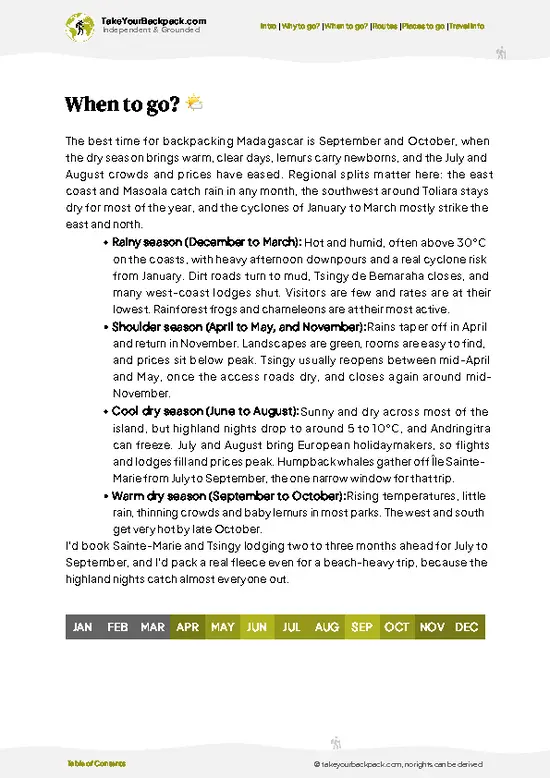
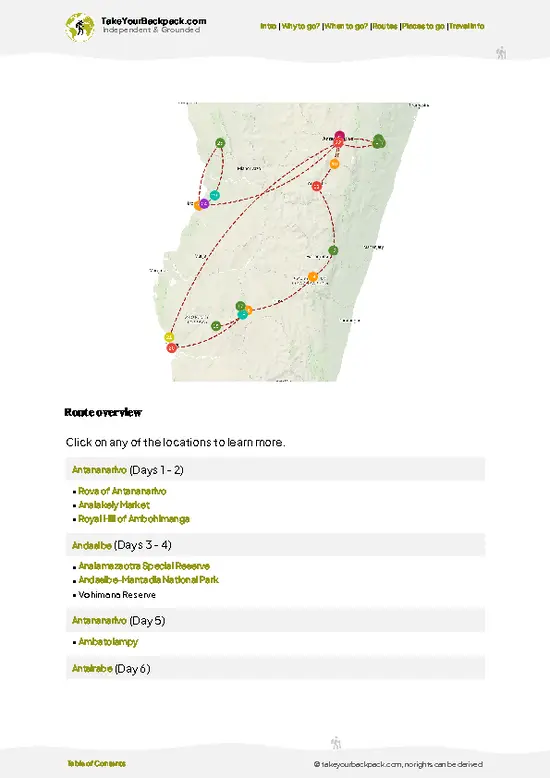
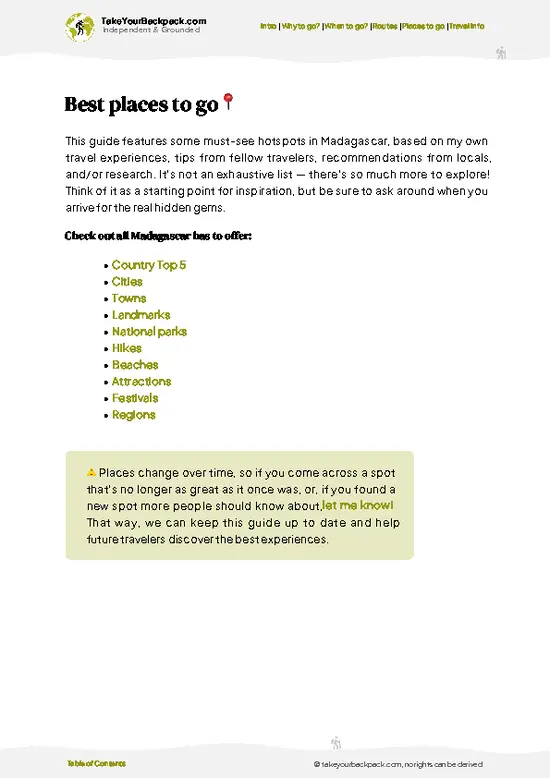
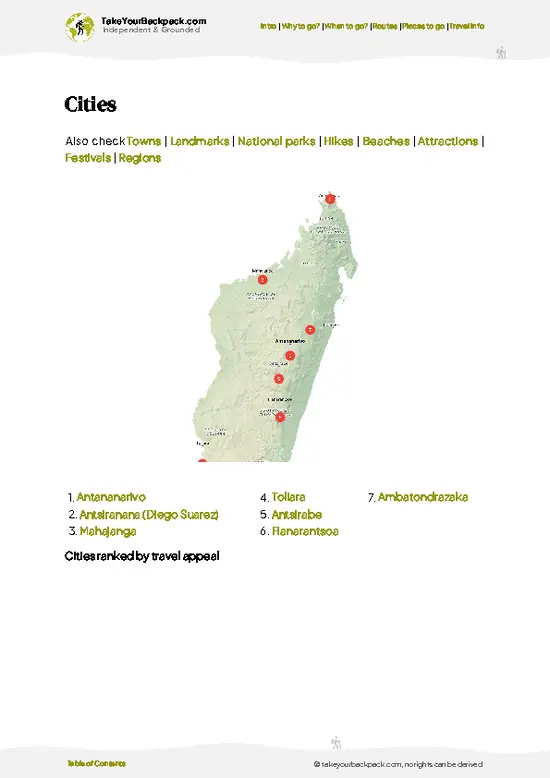
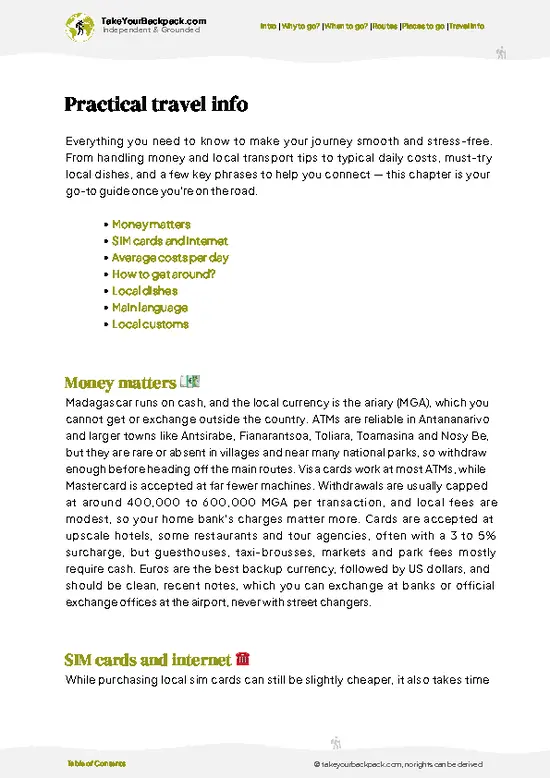
example page 0 from our offline Travel Guide for Madagascar
example page 1 from our offline Travel Guide for Madagascar
example page 2 from our offline Travel Guide for Madagascar
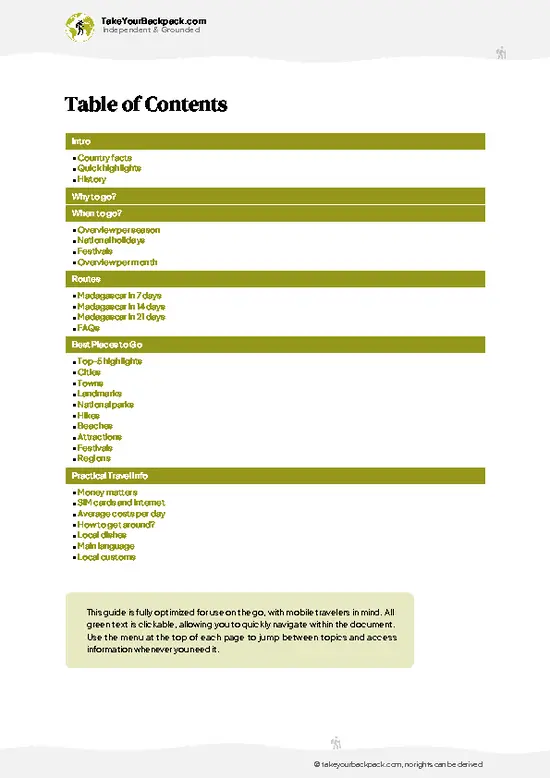
example page 3 from our offline Travel Guide for Madagascar
example page 4 from our offline Travel Guide for Madagascar
example page 5 from our offline Travel Guide for Madagascar
example page 6 from our offline Travel Guide for Madagascar
example page 7 from our offline Travel Guide for Madagascar
The digital guide (418 pages) contains:
110 highlights, ranked by travel appeal
Optimized 7, 14 & 21-day travel routes
Cities, national parks, landmarks, beaches
How to get around
Offline-friendly for travel without Wi-Fi
👉 Click to see all 30+ guide features

📅 Plan smarter in minutes, not weeks
Month by month travel advice
Festivals & national holidays
Budget expectations

🗺️ Go to the right places, skip the overrated ones
Honest pros & cons of destinations
Top hikes, parks & viewpoints
Lesser-known places most travelers miss
Clear “worth it vs skip it” guidance

🛏️ Travel smoothly without rookie mistakes
Best areas to stay
Transport systems explained simply
Common scams & safety advice
SIM cards, money & practical tips

🌍 Understand the country, not just visit it
Culture & traditions
52 Essential phrases & customs
Festivals worth planning around
Traveler-friendly historical context
Insights that make places more meaningful

📱 Built for real travel conditions
Fully downloadable PDF
Works completely offline
Optimized for phone use
Useful in remote areas & buses
Everything in one place
Save weeks of stressful planning
Get instant access to your full guide. 30‑day money-back guarantee.


By proceeding you agree to our terms.
Sent to your inbox immediately after payment • 100% Secure Checkout
Best Backpacking Travel Advisor 2025 tourism awardBest Backpacking
Travel Advisor
2025
What others say about Take Your Backpack Guides:
⭐⭐⭐⭐⭐
Fantastic, amazing amount of information!
⭐⭐⭐⭐⭐
My goodness this is amazing, it's what I've been looking for hats off too you!
⭐⭐⭐⭐⭐
I think this is absolutely BRILLIANT
⭐⭐⭐⭐
Very complete and informative. It's still missing places, but I gotta to commend you
⭐⭐⭐⭐⭐
This is truly amazing, thank you, can't wait to explore it with my kids!
⭐⭐⭐⭐⭐
Awesome resource, thank you!
⭐⭐⭐⭐⭐
This is amazing! Can't wait to explore the ones I haven't seen
⭐⭐⭐⭐
I love this! Well done, great idea.
⭐⭐⭐⭐⭐
Thanks for taking the time to make this gem!
⭐⭐⭐⭐⭐
This might be the best website I've ever seen.
⭐⭐⭐⭐⭐
Congratulations, and thank you so much for your work; it's incredibly valuable.
⭐⭐⭐⭐
In all seriousness I think you did a great job pointing out the important spots
⭐⭐⭐⭐⭐
10/10 very good
⭐⭐⭐⭐⭐
As someone who's only just starting to visit regularly this is awesome, thank you.
⭐⭐⭐⭐
Thank you very much! I'm going to visit my dad, it's going to be very useful!
⭐⭐⭐⭐⭐
This is really cool! We'll be travelling for the first time and this definitely come in handy.
⭐⭐⭐⭐⭐
You are now our minister of culture, congratulations 👨‍💼
⭐⭐⭐⭐⭐
Just wanted to tell you that this is a pearl! Going to follow your recommendations.
⭐⭐⭐⭐⭐
This is so cool. I'll definitely be using the resource for my travels soon.
⭐⭐⭐⭐⭐
This is very impressive! Good work.
⭐⭐⭐⭐⭐
This is an amazing and informative site. Very well done!

🛏️ Where to stay?Best areas and accommodation options

Moramanga’s heart for backpackers pulses strongest around the town center, where the streets hum with local markets and the scent of grilled street food. This area is your best bet—safe enough to wander after dark, with enough foot traffic to feel alive but not overwhelmed. It’s where you’ll find the few hostels catering to budget travelers, offering a chance to swap stories with fellow adventurers over a shared meal or a cold drink. Compared to the quieter, more residential outskirts, staying here means easy access to transport links and a social vibe that turns solo travel into instant camaraderie. … read more 👉
Moramanga’s heart for backpackers pulses strongest around the town center, where the streets hum with local markets and the scent of grilled street food. This area is your best bet—safe enough to wander after dark, with enough foot traffic to feel alive but not overwhelmed. It’s where you’ll find the few hostels catering to budget travelers, offering a chance to swap stories with fellow adventurers over a shared meal or a cold drink. Compared to the quieter, more residential outskirts, staying here means easy access to transport links and a social vibe that turns solo travel into instant camaraderie. The light here isn’t just daylight; it’s the glow of connection.

🚌 Getting aroundHow to get around Moramanga

Moramanga hums with a rhythm that’s part clockwork, part improvisation. The town’s pulse is set by the trains that slice through the landscape and the markets that spill onto the streets, where schedules blur into the chatter of vendors and the scent of fresh cassava. It’s not a place where you’ll find strict timetables nailed to every corner, but rather a flow that rewards patience and a keen eye. The light shifts quickly here, turning dusty mornings into warm, golden afternoons, and the best way to move through Moramanga is to sync with its natural tempo—steady, deliberate, and open to the unexpected.


  • Taxi-brousse: The backbone of regional travel, these shared minibuses leave when full, usually between 6 AM and 6 PM. Tickets cost around 1,000 MGA for short hops, offering a rough but
read more 👉
Moramanga hums with a rhythm that’s part clockwork, part improvisation. The town’s pulse is set by the trains that slice through the landscape and the markets that spill onto the streets, where schedules blur into the chatter of vendors and the scent of fresh cassava. It’s not a place where you’ll find strict timetables nailed to every corner, but rather a flow that rewards patience and a keen eye. The light shifts quickly here, turning dusty mornings into warm, golden afternoons, and the best way to move through Moramanga is to sync with its natural tempo—steady, deliberate, and open to the unexpected.


  • Taxi-brousse: The backbone of regional travel, these shared minibuses leave when full, usually between 6 AM and 6 PM. Tickets cost around 1,000 MGA for short hops, offering a rough but direct ride to nearby towns. Expect a bumpy, lively journey with frequent stops.

  • Train (Tananarive-Côte Est line): Runs twice daily, early morning and late afternoon. It’s slower and less predictable but unbeatable for scenery and a local vibe. Tickets are cheap, under 2,000 MGA, and the wooden benches invite you to soak in the landscape’s slow reveal.

  • Walking: Moramanga’s compact center is best explored on foot. Streets are dusty but manageable, and walking lets you catch the smells of street food stalls and the calls of market sellers. It’s free, flexible, and the best way to absorb the town’s texture.

  • Rickshaws (Pousse-pousse): Ideal for short distances within town, these pedal-powered carts cost about 500 MGA per ride. They’re slower than motorized options but offer a cool breeze and a close-up of daily life.

👛 Costs (as of 30 July 2026)Travel costs and budget guide for Moramanga

Backpacking in Moramanga, Madagascar, means embracing a slower pace where every ariary spent feels like a step deeper into local life. Here’s how your daily costs typically break down:
  • Dorm Accommodation: Expect to pay around €5 to €10 per night for a basic dorm bed. Options are limited and simple, often family-run guesthouses with shared bathrooms. The rooms are modest, but clean enough, and staying here puts you right in the heart of town’s rhythm.
  • Meals: Street food and small local eateries dominate. A filling meal of rice, zebu meat or fish, and vegetables will run you about €1.50 to €3. Fresh fruit and snacks are even cheaper. If you want a taste of local flavors without fuss, this is where your budget stretches the furthest.
  • Local Transport: Getting around Moramanga is mostly on foot
read more 👉
Backpacking in Moramanga, Madagascar, means embracing a slower pace where every ariary spent feels like a step deeper into local life. Here’s how your daily costs typically break down:
  • Dorm Accommodation: Expect to pay around €5 to €10 per night for a basic dorm bed. Options are limited and simple, often family-run guesthouses with shared bathrooms. The rooms are modest, but clean enough, and staying here puts you right in the heart of town’s rhythm.
  • Meals: Street food and small local eateries dominate. A filling meal of rice, zebu meat or fish, and vegetables will run you about €1.50 to €3. Fresh fruit and snacks are even cheaper. If you want a taste of local flavors without fuss, this is where your budget stretches the furthest.
  • Local Transport: Getting around Moramanga is mostly on foot or by taxi-brousse (shared minibus). Short rides cost roughly €0.30 to €0.50. For longer trips or private taxis, budget closer to €2 to €4. The roads are dusty and bumpy, so factor in some extra time and patience.
  • Basic Activities/Entry Fees: Moramanga is a gateway to nearby reserves and cultural sites. Entrance fees to places like the Peyrieras Reptile Reserve or Andasibe-Mantadia National Park start around €5 to €10. Hiring a local guide, which is highly recommended, adds about €10 to €15 per day but unlocks a richer experience.
  • Miscellaneous Expenses: Water, snacks, occasional phone credit, or small souvenirs will add about €1 to €3 daily. Bottled water is a must, given the tropical climate and limited tap water safety.

All told, you’re looking at roughly €12 to €30 per day, depending on how much you lean into local simplicity or add guided excursions. Moramanga’s charm isn’t in luxury but in the slow unfolding of its natural and cultural layers, where every euro spent feels like an investment in a genuine Malagasy experience.


source: madagascar-tourisme.com
⚠️ Prices can change and everyone travels differently, so take this as a rough guide. Hope it helps you plan your adventure!

🚌 Day tripsShort trips worth adding

Moramanga is a fantastic launchpad for exploring Madagascar’s rich biodiversity and vibrant culture. Here are some day trips that will make your backpacking adventure truly memorable.

Andasibe-Mantadia National Park
Just a short 3-hour drive from Moramanga, this park is a must for wildlife enthusiasts. The air is thick with the scent of damp earth and lush foliage, and you’ll hear the haunting calls of the indri lemurs echoing through the trees. Expect to pay around $15 for park entry and a guide. The best time to visit is during the dry season from May to October. A common mistake? Skipping the night walks; the nocturnal creatures are a whole different world.
👉 Explore Andasibe-Mantadia National Park

Analamazaotra Reserve
Only about an hour from Moramanga, this reserve offers a more … read more 👉
Moramanga is a fantastic launchpad for exploring Madagascar’s rich biodiversity and vibrant culture. Here are some day trips that will make your backpacking adventure truly memorable.

Andasibe-Mantadia National Park
Just a short 3-hour drive from Moramanga, this park is a must for wildlife enthusiasts. The air is thick with the scent of damp earth and lush foliage, and you’ll hear the haunting calls of the indri lemurs echoing through the trees. Expect to pay around $15 for park entry and a guide. The best time to visit is during the dry season from May to October. A common mistake? Skipping the night walks; the nocturnal creatures are a whole different world.
👉 Explore Andasibe-Mantadia National Park

Analamazaotra Reserve
Only about an hour from Moramanga, this reserve offers a more intimate experience with Madagascar’s unique flora and fauna. The trails are well-marked, and you can often spot chameleons blending into the vibrant leaves. Budget around $10 for entry and a guide. The ideal time to go is early morning when the mist hangs low, creating an ethereal atmosphere. Many first-timers miss the chance to ask guides about local legends—these stories add depth to your experience.


Lemurs’ Park
A quick 45-minute drive will take you to this sanctuary dedicated to lemurs. The park is home to several species, and the playful antics of these creatures are a joy to witness. Entry is about $8, and the best time to visit is in the late afternoon when the lemurs are most active. Don’t forget your camera! A common pitfall is rushing through; take your time to soak in the interactions.
Want to know what more Madagascar offers?
The Madagascar Travel Guide describes 110 highlights, from cities to national parks, from beaches to hikes

Get the Travel Guide -

🛡️ SafetyTraveler Safety Guide

Moramanga is generally safe, but staying aware enhances your experience. Stick to well-lit areas at night, especially around the market. Solo travelers should blend in; avoid flashy gear that screams “tourist.”

Watch for common scams, like overly friendly locals offering unsolicited tours. Politely decline and keep moving. Everyday annoyances include persistent street vendors; a firm but friendly “no, thank you” usually does the trick. Carry yourself confidently, and you’ll navigate the town with ease, soaking in its unique atmosphere without a hitch.

Other Malagasy towns near Moramanga

Explore more nearby:

  • Andasibe—rainforest trails, indri lemurs, misty mornings| 20 km away
  • Anosibe An’ala—remote highlands, forest reserves, traditional villages| 54 km away
  • Vatomandry—canal town, cyclone history, palm-lined avenues| 90 km away

💡 Not sure where to go next?
Create a personalized itinerary for Madagascar including Moramanga and the places that fit your trip.

Generate my itinerary

👉 Discover all towns

Or checkout all Madagascar has to offer (think cities, towns, villages, national parks, hikes, beaches, festivals)
Country photo of Madagascar

We 💚 feedbackSumming up the experience

Moramanga pulses with the raw energy of Madagascar’s culture. The vibrant market scents—spices mingling with fresh produce—are a feast for the senses. But be ready for the heat; it can be stifling. Embrace it, and you’ll find the warmth of the people matches the climate.

✈️ When did I visit Madagascar?
Madagascar I went backpacking in October 2019. With a friend I rented a 4WD and drove around the southern part of Madagascar.

✍️ Help improve this page!
The information on this page is based on my own backpacking experience in Madagascar, supplemented with up-to-date research and feedback from other travelers. Travel details can change, so if you notice anything outdated or incomplete, feel free to let me know.


🙋‍♂️ Give feedback

👋 Meet the founderWho’s Behind Take Your Backpack?

Johan, backpacker and founder of TakeYourBackpackHi, I’m Johan (Netherlands 🇳🇱), the creator of TakeYourBackpack. Over the past decade, I’ve backpacked through 80+ countries across six continents, gaining extensive experience with independent travel, long-term trips, and overland routes.

This site is built on a combination of firsthand travel experience and carefully curated insights from other backpackers. Many guides are based on places I’ve personally visited, while others bring together tips, observations, and practical advice shared by trusted travelers I’ve met along the way.

The goal is to provide realistic, experience-driven guidance — not generic itineraries — so you can explore destinations with better context, clearer expectations, and more confidence.

Get full Madagascar guide •
Instant download • 110 highlights • Full Offline guide