×

Malawi🇲🇼 | best beachesBest 3 beaches in Malawi

Beaches in Malawi are freshwater, and that changes everything. Lake Malawi has no tide, no salt sting and no surf, just clear water lapping onto sand that squeaks underfoot, with fish eagles calling overhead and charcoal smoke drifting off village cooking fires. The southern lake is the easiest: paved roads, Mangochi’s resorts and snorkeling among colorful cichlids, with higher prices and more weekend crowds. The central shore around Nkhotakota and Senga Bay sits closer to the capital and feels like a local weekend escape. The far north is slower, rougher on the roads and far quieter. For backpacking or any independent trip, the choice is comfort and convenience against solitude and sweat.

By Johan Kruseman 🇳🇱 | Updated October 19, 2026
Explore the best attractions in Malawi

Why go?Understanding Their Importance

Malawi has no coastline, yet its beaches are among the most distinctive in Africa because they sit on a freshwater inland sea, roughly 580 kilometers long, in the Great Rift Valley. Water that is fresh and usually warm means no tides, no sharks and no salt crust on your skin, and in most places the shallows are calm enough for easy swimming and kayaking. Beneath the surface lives one of the world’s richest collections of freshwater fish, hundreds of cichlid species found nowhere else, which makes snorkeling here unlike any ocean reef.

The country is one of the poorest in the region, so infrastructure is simple. Expect modest lodges, patchy electricity, generator hum at night and few big hotels outside the southern resort belt. Fishermen in dugout canoes at dawn and women washing clothes at … read more 👉
Malawi has no coastline, yet its beaches are among the most distinctive in Africa because they sit on a freshwater inland sea, roughly 580 kilometers long, in the Great Rift Valley. Water that is fresh and usually warm means no tides, no sharks and no salt crust on your skin, and in most places the shallows are calm enough for easy swimming and kayaking. Beneath the surface lives one of the world’s richest collections of freshwater fish, hundreds of cichlid species found nowhere else, which makes snorkeling here unlike any ocean reef.

The country is one of the poorest in the region, so infrastructure is simple. Expect modest lodges, patchy electricity, generator hum at night and few big hotels outside the southern resort belt. Fishermen in dugout canoes at dawn and women washing clothes at the shoreline are everyday scenes, and the lake is a working waterway rather than a stage set.

Before choosing Malawi for beaches, know the hard parts. Bilharzia (schistosomiasis) exists in the lake, so many travelers take a precautionary treatment after swimming. Mosquitoes are a constant, so malaria prevention matters. Fuel shortages and power cuts can disrupt plans, and distances are slow on roads that vary from smooth to potholed.
Our Approach to Ranking
The list of best beaches in Malawi is created based on beauty, vibe, water quality, activities, and surrounding scenery. If you feel a beach is missing in this list, please let us know.

When to go?Optimal Periods for Travel

Best months for the lake: The best months for Malawi’s beaches are May to October, when the dry season brings clear skies, little or no rain and lake water that stays comfortably swimmable. Days typically reach 24 to 28°C, the light is bright and the air is dry, with cooler nights.
Shoulder seasons: May to June and September to October are the sweet spot, with green hillsides lingering after the rains or warming up toward summer. From June to August, nights by the lake can dip to 10 to 15°C, and the southern lake sometimes gets a strong southeasterly wind called the mwera, which stirs up waves and cloudy water, especially in the south. Visibility for snorkeling tends to be best in calmer weeks.
Rainy season: November to April is the wet season. Rainfall is heaviest from December to March, often … read more 👉
Best months for the lake: The best months for Malawi’s beaches are May to October, when the dry season brings clear skies, little or no rain and lake water that stays comfortably swimmable. Days typically reach 24 to 28°C, the light is bright and the air is dry, with cooler nights.
Shoulder seasons: May to June and September to October are the sweet spot, with green hillsides lingering after the rains or warming up toward summer. From June to August, nights by the lake can dip to 10 to 15°C, and the southern lake sometimes gets a strong southeasterly wind called the mwera, which stirs up waves and cloudy water, especially in the south. Visibility for snorkeling tends to be best in calmer weeks.
Rainy season: November to April is the wet season. Rainfall is heaviest from December to March, often 200 to 300 millimeters a month around the lake, with humid heat of 28 to 33°C, mosquitoes in force and some dirt roads turning to mud, particularly in the north. Thunderstorms roll across the water in the afternoon, and the lake can run murky near river mouths.
Crowds and prices: Peak periods are school and public holidays, particularly July to August and around Christmas and Easter, when southern lodges fill with Malawian and expat families and rates rise. Outside those windows, prices are lower and the shore is often nearly empty.

beach hoppingOptimizing Your Multi-Stop Itinerary

How long to allow: A trip combining several of Malawi’s lake beaches needs 10 to 14 days, and 7 to 8 days works if you stick to one or two regions. The lake is long and the roads are slow, so the sensible cluster is the southern and central shore together, with the far north as a separate leg.
Direction of travel: Start in Lilongwe or Blantyre, the two main arrival points, and work along the lake in one direction rather than doubling back. Lilongwe to the central shore (Senga Bay, Nkhotakota) is roughly 2 to 4 hours by road. Lilongwe to Mangochi in the south takes about 4 to 5 hours. From the central shore north to Nkhata Bay and beyond, allow 6 to 8 hours via Mzuzu, then another 1 to 3 hours to the northern lakeshore towns. Minibuses are cheap but packed, with stops that come with the smell … read more 👉
How long to allow: A trip combining several of Malawi’s lake beaches needs 10 to 14 days, and 7 to 8 days works if you stick to one or two regions. The lake is long and the roads are slow, so the sensible cluster is the southern and central shore together, with the far north as a separate leg.
Direction of travel: Start in Lilongwe or Blantyre, the two main arrival points, and work along the lake in one direction rather than doubling back. Lilongwe to the central shore (Senga Bay, Nkhotakota) is roughly 2 to 4 hours by road. Lilongwe to Mangochi in the south takes about 4 to 5 hours. From the central shore north to Nkhata Bay and beyond, allow 6 to 8 hours via Mzuzu, then another 1 to 3 hours to the northern lakeshore towns. Minibuses are cheap but packed, with stops that come with the smell of fried dough and diesel; private transfers cost more but save hours. The Ilala ferry runs along the lake on a schedule that slips, so treat it as an experience, not a connection.
Pacing and common mistakes: Give each stop 2 to 4 nights, since the first day is usually lost to travel. A common mistake is trying to cover the whole lake in a week, which turns the trip into a series of bus rides. Another is booking tight onward connections, when delays are normal. Build in a buffer day before any flight and travel in daylight, as roads at dusk are crowded with cyclists and unlit vehicles.

The ListTop beaches of Malawi

1 Cape Maclear

fishing village, rocky headlands, island views, local guesthouses

Swim from sandy coves, watch fishermen at dusk, and discover a lively lakeshore where daily life and nature blend seamlessly.

2 Senga Bay

lakeside resorts, fishing boats, weekend markets, accessible shoreline

Join locals for fresh fish, stroll a busy waterfront, and find easy access to Lake Malawi’s warm, shallow waters.

malawi-beach-senga-bay
© Google |

3 Chitimba Beach

broad sand strip, mountain backdrop, craft stalls, rustic campsites

Relax beneath towering trees, browse handmade crafts, and enjoy a wide open beach framed by the dramatic Livingstonia escarpment.

Loading the map 🌍

Expert viewInsights from Locals and Experts

How many beaches to visit: Two or three lake stops is the right number for most backpackers, because each shoreline needs at least three nights to feel worth the journey. Travel days on Malawi’s roads are long, hot and slow, so every extra stop costs a day you could have spent floating over cichlids in warm, clear water. Choose a base and let the lake come to you.
Choosing the kind of beach: Budget and social travelers do best at backpacker-oriented lodges with dorms, a bar and kayaks, where evenings mean shared meals, a fire and music drifting across the water. Divers and snorkelers should prioritize the clear, rocky bays where fish are densest. Couples and families on a little more cash suit the southern resort belt, where roads are easier and food more varied. If you want silence, go north, … read more 👉
How many beaches to visit: Two or three lake stops is the right number for most backpackers, because each shoreline needs at least three nights to feel worth the journey. Travel days on Malawi’s roads are long, hot and slow, so every extra stop costs a day you could have spent floating over cichlids in warm, clear water. Choose a base and let the lake come to you.
Choosing the kind of beach: Budget and social travelers do best at backpacker-oriented lodges with dorms, a bar and kayaks, where evenings mean shared meals, a fire and music drifting across the water. Divers and snorkelers should prioritize the clear, rocky bays where fish are densest. Couples and families on a little more cash suit the southern resort belt, where roads are easier and food more varied. If you want silence, go north, accept rougher access and plan on fewer amenities. The reward is a shore where the only sound is waves and a distant canoe paddle.
What it costs: Expect US$25 to 45 a day on a backpacker budget: a dorm bed or camping at about US$6 to 15, meals US$4 to 10 at lodges and less from roadside stalls, and local transport of US$3 to 12 per leg. Mid-range travelers should plan US$70 to 150 a day. Per visit, snorkel gear rental runs about US$3 to 8, a guided kayak or dugout trip US$10 to 25, and a boat day to offshore islands US$25 to 60. National park or reserve fees, where they apply, are usually charged in US dollars, so carry small bills. Cash in kwacha is needed outside resorts, and ATMs are scarce away from main towns.
Safety and cultural considerations: The main health issue is bilharzia. Avoid swimming near reeds and river mouths, stay in open, clean water, and consider a precautionary test or treatment on return home. Malaria is present year-round, so use prophylaxis, repellent and a net. Never leave valuables on the sand, as petty theft from unattended bags happens, and avoid walking alone after dark between lodges. Swimming is safe in the shallows, but sudden afternoon winds can push kayaks offshore, so check conditions before paddling out.

Malawi is a conservative, devout country, and the lakeshore is home to working fishing communities. Cover up when walking through villages, use swimwear only at the beach, and ask before photographing people or canoes. Bargain politely with vendors and canoe-hire guides, and agree prices before setting out. Buying fish straight from the fishermen at dawn, still flapping, gets you the best meal on the shore and puts money straight into the village.

✈️ The backpacker research shortcutMalawi Travel Guide

An offline-friendly backpacking guide with optimized travel routes, ranked highlights, transport advice, and the best areas to stay.
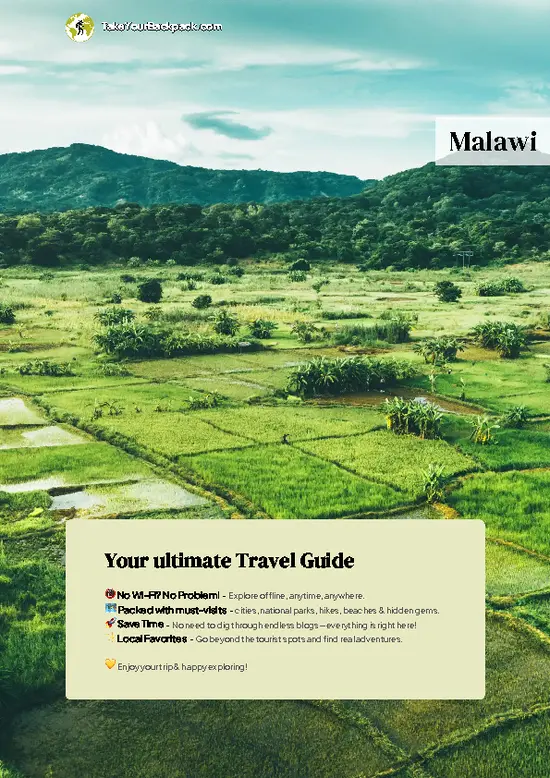
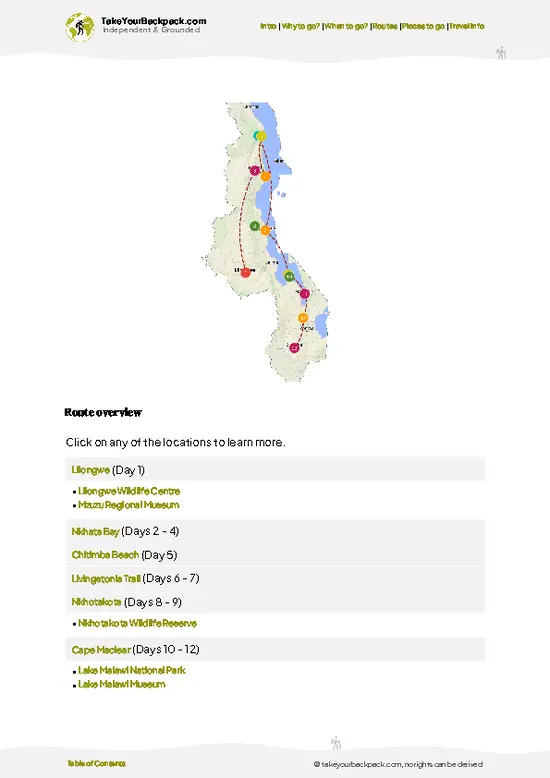
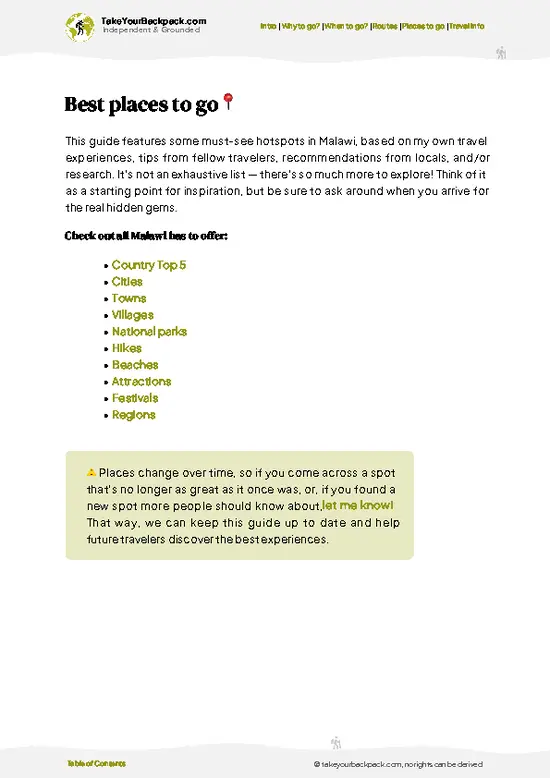
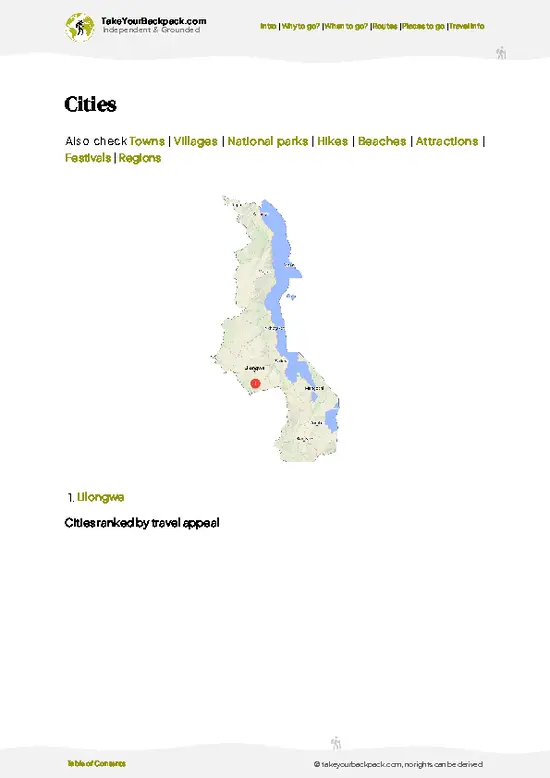
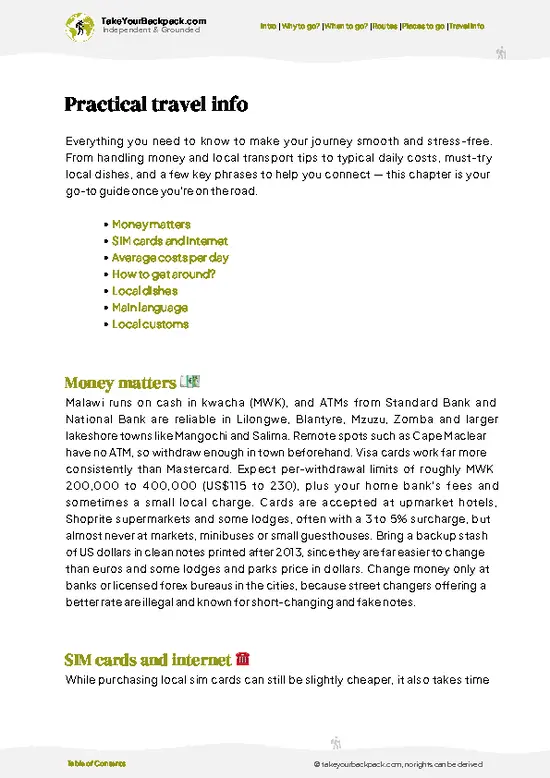
example page 0 from our offline Travel Guide for Malawi
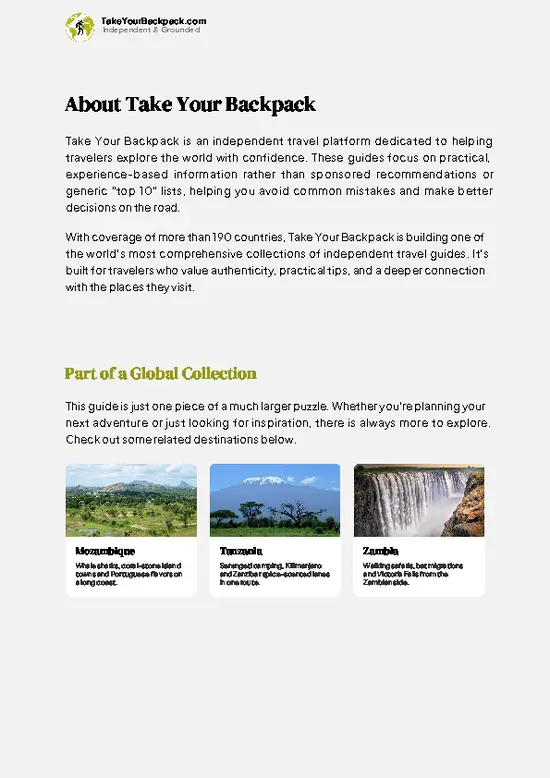
example page 1 from our offline Travel Guide for Malawi
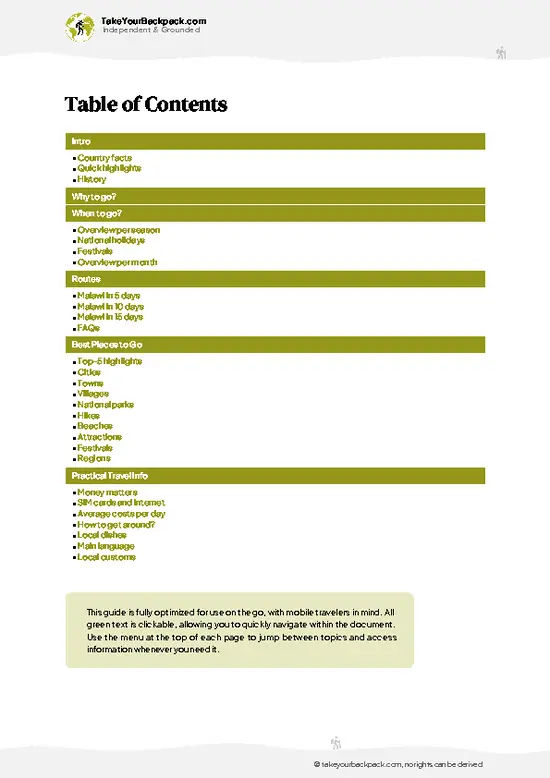
example page 2 from our offline Travel Guide for Malawi
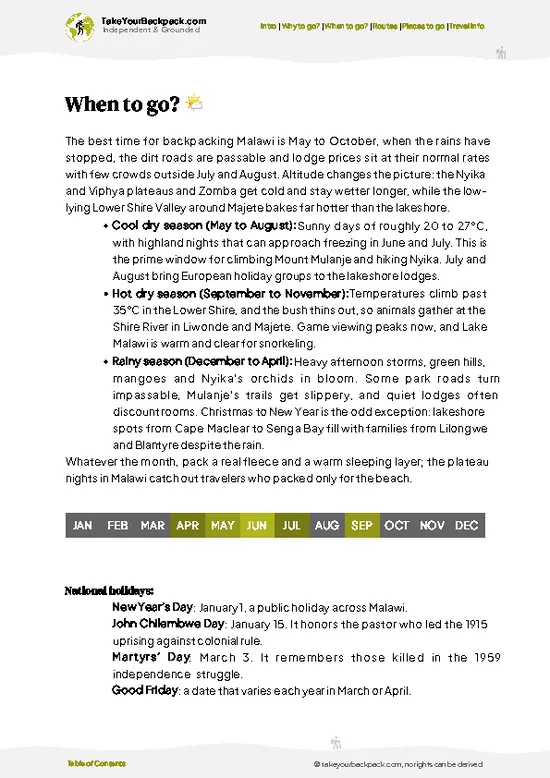
example page 3 from our offline Travel Guide for Malawi
example page 4 from our offline Travel Guide for Malawi
example page 5 from our offline Travel Guide for Malawi
example page 6 from our offline Travel Guide for Malawi
example page 7 from our offline Travel Guide for Malawi
The digital guide (263 pages) contains:
✅ 65 highlights, ranked by travel appeal
✅ Optimized 5, 10 & 15-day travel routes
✅ Cities, national parks, landmarks, beaches
✅ How to get around
✅ Offline-friendly for travel without Wi-Fi
👉 Click to see all 30+ guide features

📅 Plan smarter in minutes, not weeks
✅ Month by month travel advice
✅ Festivals & national holidays
✅ Budget expectations

🗺️ Go to the right places, skip the overrated ones
✅ Honest pros & cons of destinations
✅ Top hikes, parks & viewpoints
✅ Lesser-known places most travelers miss
✅ Clear “worth it vs skip it” guidance

🛏️ Travel smoothly without rookie mistakes
✅ Best areas to stay
✅ Transport systems explained simply
✅ Common scams & safety advice
✅ SIM cards, money & practical tips

🌍 Understand the country, not just visit it
✅ Culture & traditions
✅ 52 Essential phrases & customs
✅ Festivals worth planning around
✅ Traveler-friendly historical context
✅ Insights that make places more meaningful

📱 Built for real travel conditions
✅ Fully downloadable PDF
✅ Works completely offline
✅ Optimized for phone use
✅ Useful in remote areas & buses
✅ Everything in one place
Stop searching, start planning
Get instant access to your full guide. 30‑day money-back guarantee.
+ Add another guide for just

By proceeding you agree to our terms.
Sent to your inbox immediately after payment • 100% Secure Checkout
Best Backpacking Travel Advisor 2025 tourism awardBest Backpacking
Travel Advisor
2025
What others say about Take Your Backpack Guides:
⭐⭐⭐⭐⭐
Fantastic, amazing amount of information!
⭐⭐⭐⭐⭐
My goodness this is amazing, it's what I've been looking for hats off too you!
⭐⭐⭐⭐⭐
I think this is absolutely BRILLIANT
⭐⭐⭐⭐
Very complete and informative. It's still missing places, but I gotta to commend you
⭐⭐⭐⭐⭐
This is truly amazing, thank you, can't wait to explore it with my kids!
⭐⭐⭐⭐⭐
Awesome resource, thank you!
⭐⭐⭐⭐⭐
This is amazing! Can't wait to explore the ones I haven't seen
⭐⭐⭐⭐
I love this! Well done, great idea.
⭐⭐⭐⭐⭐
Thanks for taking the time to make this gem!
⭐⭐⭐⭐⭐
This might be the best website I've ever seen.
⭐⭐⭐⭐⭐
Congratulations, and thank you so much for your work; it's incredibly valuable.
⭐⭐⭐⭐
In all seriousness I think you did a great job pointing out the important spots
⭐⭐⭐⭐⭐
10/10 very good
⭐⭐⭐⭐⭐
As someone who's only just starting to visit regularly this is awesome, thank you.
⭐⭐⭐⭐
Thank you very much! I'm going to visit my dad, it's going to be very useful!
⭐⭐⭐⭐⭐
This is really cool! We'll be travelling for the first time and this definitely come in handy.
⭐⭐⭐⭐⭐
You are now our minister of culture, congratulations 👨‍💼
⭐⭐⭐⭐⭐
Just wanted to tell you that this is a pearl! Going to follow your recommendations.
⭐⭐⭐⭐⭐
This is so cool. I'll definitely be using the resource for my travels soon.
⭐⭐⭐⭐⭐
This is very impressive! Good work.
⭐⭐⭐⭐⭐
This is an amazing and informative site. Very well done!

🛏️ Where to stay?Where to Base Yourself

Malawi has a solid spread of hostels, backpacker lodges and lakeside campsites, with dorm beds typically around US$10 to 20 a night (paid in Malawian kwacha or US dollars). In Lilongwe, Area 3 in the Old Town is the easiest base, with walkable cafés, ATMs and the main minibus depot nearby, while Area 10 is greener, quieter and safer after dark but needs taxis to get anywhere. Along the lake, Nkhata Bay and Cape Maclear (Chembe village) have the most lodges and the liveliest bar scene, though both empty out in the rainy season, and Blantyre’s Sunnyside and Mandala areas suit a calm overnight stop near the city’s colonial sights rather than a party.

If you enjoy meeting fellow travelers, consider … read more 👉
Malawi has a solid spread of hostels, backpacker lodges and lakeside campsites, with dorm beds typically around US$10 to 20 a night (paid in Malawian kwacha or US dollars). In Lilongwe, Area 3 in the Old Town is the easiest base, with walkable cafés, ATMs and the main minibus depot nearby, while Area 10 is greener, quieter and safer after dark but needs taxis to get anywhere. Along the lake, Nkhata Bay and Cape Maclear (Chembe village) have the most lodges and the liveliest bar scene, though both empty out in the rainy season, and Blantyre’s Sunnyside and Mandala areas suit a calm overnight stop near the city’s colonial sights rather than a party.

If you enjoy meeting fellow travelers, consider choosing hostels with high ratings for atmosphere. On the other hand, if you prefer having your own space, a hotel might be a better option.

MalawiExpand Your Journey

👋 Meet the founderWho’s Behind Take Your Backpack?

Johan, backpacker and founder of TakeYourBackpackHi, I’m Johan (Netherlands 🇳🇱), the creator of TakeYourBackpack. Over the past 3 decades, I’ve backpacked through 90+ countries across six continents, gaining extensive experience with independent travel, long-term trips, and overland routes.

This site is built on a combination of firsthand travel experience and carefully curated insights from other backpackers. Many guides are based on places I’ve personally visited, while others bring together tips, observations, and practical advice shared by trusted travelers I’ve met along the way.

The goal is to provide realistic, experience-driven guidance — not generic itineraries — so you can explore destinations with better context, clearer expectations, and more confidence.