×

Malawi🇲🇼 | best national parksBest 10 national parks in Malawi

In Malawi, national parks are defined by their rich biodiversity and varied landscapes, from the rugged mountains of Nyika to the lush wetlands of Liwonde. Each park offers distinct wildlife experiences and adventure opportunities, shaping how you explore. For backpackers, the choice of park affects not just the vibe but also seasonal access, budget, and cultural immersion. For instance, Liwanje is ideal for those seeking close encounters with elephants, while Kasungu offers a more remote, tranquil experience. Understanding these nuances ensures your independent travel aligns with your interests, making every trek, view, and interaction feel deeply rewarding.

By Johan Kruseman 🇳🇱 | Updated June 4, 2026
Explore the best hikes in Malawi

Why go?Understanding Their Importance

Malawi’s national parks stand out for their diverse ecosystems and rich biodiversity, offering a unique blend of landscapes that range from rolling hills to expansive lakes. The Great Rift Valley shapes much of the terrain, creating dramatic vistas that reward those willing to trek through rugged paths. This geographical diversity fosters habitats for a variety of wildlife, including endemic species that can’t be found elsewhere.

However, accessibility can be a double-edged sword. While some parks are relatively easy to reach, the trade-off often lies in the depth of experience. More remote areas may require longer travel times, but they offer a chance to immerse oneself in nature, away from the crowds. The infrastructure is developing, yet travelers should be prepared for basic amenities … read more 👉
Malawi’s national parks stand out for their diverse ecosystems and rich biodiversity, offering a unique blend of landscapes that range from rolling hills to expansive lakes. The Great Rift Valley shapes much of the terrain, creating dramatic vistas that reward those willing to trek through rugged paths. This geographical diversity fosters habitats for a variety of wildlife, including endemic species that can’t be found elsewhere.

However, accessibility can be a double-edged sword. While some parks are relatively easy to reach, the trade-off often lies in the depth of experience. More remote areas may require longer travel times, but they offer a chance to immerse oneself in nature, away from the crowds. The infrastructure is developing, yet travelers should be prepared for basic amenities and limited services in some regions. This can enhance the adventure but may also challenge comfort levels.

Malawi’s climate plays a role too; the dry season from May to October is ideal for wildlife viewing, but the heat can be intense. Understanding these climatic nuances can help in planning the best time to visit. Ultimately, the national parks of Malawi offer a compelling mix of adventure and authenticity, but travelers must weigh the effort against the reward to truly appreciate what this country has to offer.
How the List Was Created
The list of best national parks in Malawi is created based on landscapes, wildlife, adventure opportunities, facilities, and overall experience. If you feel a national park is missing in this list, please let us know.

When to go?Optimal Periods for Travel

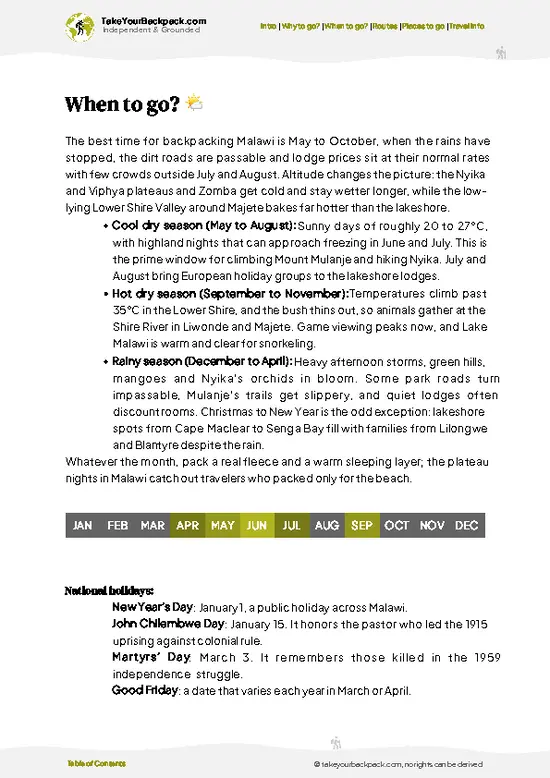
Malawi’s national parks experience distinct seasonal shifts that significantly impact wildlife visibility and trail conditions. The dry season, typically from May to October, offers the best opportunities for spotting animals. Water sources dwindle, drawing wildlife closer to rivers and lakes. This period also features cooler temperatures, making hikes more enjoyable. However, the trails can become crowded, especially in popular parks.

Rainfall begins in November, peaking from December to March. This wet season transforms the landscape into a lush, green paradise, but it comes with challenges. Trails can become muddy and slippery, making navigation difficult. Wildlife is less visible as animals disperse into denser foliage, seeking refuge from the rain.

The shoulder seasons—April and November—present … read more 👉
Malawi’s national parks experience distinct seasonal shifts that significantly impact wildlife visibility and trail conditions. The dry season, typically from May to October, offers the best opportunities for spotting animals. Water sources dwindle, drawing wildlife closer to rivers and lakes. This period also features cooler temperatures, making hikes more enjoyable. However, the trails can become crowded, especially in popular parks.

Rainfall begins in November, peaking from December to March. This wet season transforms the landscape into a lush, green paradise, but it comes with challenges. Trails can become muddy and slippery, making navigation difficult. Wildlife is less visible as animals disperse into denser foliage, seeking refuge from the rain.

The shoulder seasons—April and November—present a mixed bag. These months can offer decent wildlife sightings with fewer crowds, but conditions can be unpredictable. April may still carry residual rains, while November can be hot and humid as the dry season approaches.

Travelers should weigh the trade-offs: peak scenery and wildlife visibility against the potential for crowded trails and higher costs during the dry season. Understanding these seasonal patterns is crucial for planning an effective trip to Malawi’s national parks.

national park hoppingOptimizing Your Multi-Stop Itinerary

Combining national parks in Malawi requires strategic planning and a keen sense of pacing. Start by clustering parks regionally. Begin in the south with Majete Wildlife Reserve, where the thrill of spotting elephants and the scent of the bush linger in the air. From there, head northeast to Liwonde National Park, known for its riverine beauty and rich birdlife. This route is about 90 kilometers and takes roughly two hours by road, making it a manageable transition.

Next, consider Nyika National Park, a bit further north. The drive is longer—around 200 kilometers—but the rolling hills and unique flora make it worthwhile. Allocate at least two days here to soak in the high-altitude landscapes and enjoy the cooler climate.

Common mistakes include trying to cram too many parks into a short … read more 👉
Combining national parks in Malawi requires strategic planning and a keen sense of pacing. Start by clustering parks regionally. Begin in the south with Majete Wildlife Reserve, where the thrill of spotting elephants and the scent of the bush linger in the air. From there, head northeast to Liwonde National Park, known for its riverine beauty and rich birdlife. This route is about 90 kilometers and takes roughly two hours by road, making it a manageable transition.

Next, consider Nyika National Park, a bit further north. The drive is longer—around 200 kilometers—but the rolling hills and unique flora make it worthwhile. Allocate at least two days here to soak in the high-altitude landscapes and enjoy the cooler climate.

Common mistakes include trying to cram too many parks into a short timeframe. This often leads to rushed experiences and missed opportunities. Instead, prioritize depth over speed. Spending more time in fewer parks allows for deeper connections with the environment and wildlife.

Flexibility is key. Weather can change plans, and some trails may be more demanding than anticipated. Balancing comfort with budget is essential; consider staying in lodges that offer both amenities and proximity to park entrances. Ultimately, the reward lies in the moments of quiet reflection, the first cold beer after a long hike, and the breathtaking views that make every effort worthwhile.

The ListTop national parks of Malawi

1 Lake Malawi National Park

rocky islands, cichlid fish, clear freshwater beaches

Snorkel among colorful fish, kayak between granite islands, and relax on sandy shores where lake and land meet in a UNESCO-listed setting.

2 Majete Wildlife Reserve

reintroduced wildlife, riverine forest, guided game drives

Track reintroduced species through dense bush and riverbanks, with guided drives offering close encounters and a sense of conservation in action.

3 Nyika National Park

rolling grasslands, wildflowers, high-altitude plateau

Traverse open highlands dotted with wildflowers, encounter zebra and roan antelope, and enjoy cool air and sweeping views from Malawi’s largest park.

4 Nkhotakota Wildlife Reserve

dense miombo, river valleys, elephant translocation

Hike through thick woodland and along riverbanks, witnessing the results of major elephant relocations and ongoing habitat restoration.

5 Kasungu National Park

miombo woodland, granite hills, elephant herds

Travel through broad woodlands and granite ridges, where elephants roam and the landscape opens to wide horizons and scattered waterholes.

malawi-national-park-kasungu-national-park
© Google |

6 Vwaza Marsh Wildlife Reserve

seasonal wetlands, hippo pools, migratory birds

Watch herds gather at marshy lakes, spot hippos in quiet pools, and experience shifting wildlife patterns shaped by seasonal water levels.

7 Lengwe National Park

dry forest, nyala antelope, natural waterholes

Spot rare antelope near shaded pools, walk through dry forests, and experience wildlife drawn to scattered water sources in a semi-arid landscape.

malawi-national-park-lengwe-national-park
© Google |

8 Kuti Wildlife Reserve

open savanna, cycling routes, antelope herds

Cycle or walk through open grasslands, observing antelope and zebra in a compact reserve designed for self-guided exploration and relaxed wildlife viewing.

9 Thuma Forest Reserve

granite hills, community conservation, forest elephants

Walk with local guides through rugged hills and forest, learning about grassroots conservation and tracking elusive elephants in their natural habitat.

10 Mwabvi Wildlife Reserve

rocky outcrops, remote trails, baobab woodland

Venture into Malawi’s least-visited reserve, where rugged landscapes and baobab-dotted hills create a sense of isolation and raw wilderness.

Loading the map 🌍

Expert viewInsights from Locals and Experts

Terrain
Malawi’s national parks are a patchwork of diverse landscapes, each with its own character. From the rugged mountains of Nyika to the flat plains of Liwonde, the terrain shapes your experience. Nyika National Park, with its rolling hills and vast grasslands, feels like stepping into a different world. The air is crisp, and the scent of wildflowers fills your lungs. But don’t underestimate the effort required to traverse these highlands; the altitude can leave you breathless, both literally and figuratively. In contrast, Liwonde offers a more relaxed vibe, with its riverside paths and abundant wildlife. Here, you can spot elephants and hippos while enjoying the gentle sway of a boat ride. The trade-off? While Nyika demands stamina and time, Liwonde rewards you with easy access to wildlife … read more 👉
Terrain
Malawi’s national parks are a patchwork of diverse landscapes, each with its own character. From the rugged mountains of Nyika to the flat plains of Liwonde, the terrain shapes your experience. Nyika National Park, with its rolling hills and vast grasslands, feels like stepping into a different world. The air is crisp, and the scent of wildflowers fills your lungs. But don’t underestimate the effort required to traverse these highlands; the altitude can leave you breathless, both literally and figuratively. In contrast, Liwonde offers a more relaxed vibe, with its riverside paths and abundant wildlife. Here, you can spot elephants and hippos while enjoying the gentle sway of a boat ride. The trade-off? While Nyika demands stamina and time, Liwonde rewards you with easy access to wildlife viewing, making it a great choice for those short on time.

Park Infrastructure
The infrastructure in Malawi’s national parks varies significantly. Some parks, like Liwonde, have well-maintained roads and lodges that cater to a range of budgets. You can find everything from basic campsites to upscale lodges with stunning views of the Shire River. However, in more remote areas like Nyika, facilities can be sparse. Expect to rough it a bit, with fewer amenities and longer travel times between points of interest. This means planning is crucial. If you’re keen on visiting multiple parks, consider how much time you want to spend on the road versus soaking in the scenery. The drive between parks can be long and bumpy, which can eat into your exploration time.

Wildlife Activity
Wildlife activity varies by park and season. In Liwonde, the best time for viewing is during the dry season when animals congregate around water sources. The thrill of watching a herd of elephants come down to drink is a moment you’ll cherish. However, if you’re keen on birdwatching, Nyika shines with its unique avian species, especially during the wet season. The trade-off here is timing; if you visit during the wet season for the birds, you might miss out on the larger mammals in Liwonde.

Time and Budget Considerations
For a fulfilling experience, I’d recommend visiting two to three parks. This allows you to appreciate the unique offerings of each without feeling rushed. Expect to spend a few days in each park to truly soak in the atmosphere and wildlife. Budget-wise, you can find options ranging from budget camping to mid-range lodges, but be prepared for some variability in pricing based on the season. The more remote parks may require a bit more investment in terms of travel and accommodation, so factor that into your planning.

Safety & Cultural Considerations
Safety is generally good in the parks, but it’s wise to stay informed about local conditions and follow guidelines from park authorities. Engaging with local guides not only enhances your experience but also supports the community. They can provide insights into the flora and fauna that you might miss on your own. Culturally, be respectful of local customs, especially in areas near villages. This adds depth to your journey and fosters a connection with the land and its people.

In summary, Malawi’s national parks offer a rich tapestry of experiences, but the key is to balance your time, budget, and energy. Prioritize what matters most to you—be it wildlife, scenery, or cultural immersion—and plan accordingly. The rewards are well worth the effort.

✈️ The backpacker research shortcutMalawi Travel Guide

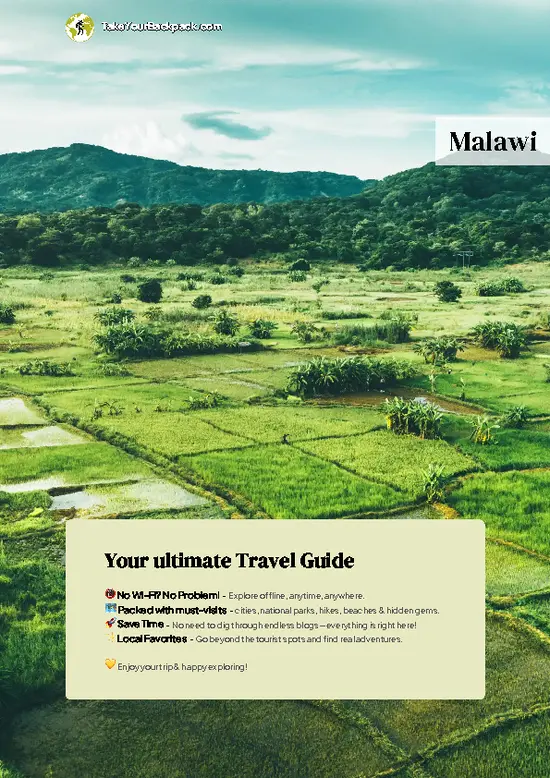
An offline-friendly backpacking guide with optimized travel routes, ranked highlights, transport advice, and the best areas to stay.
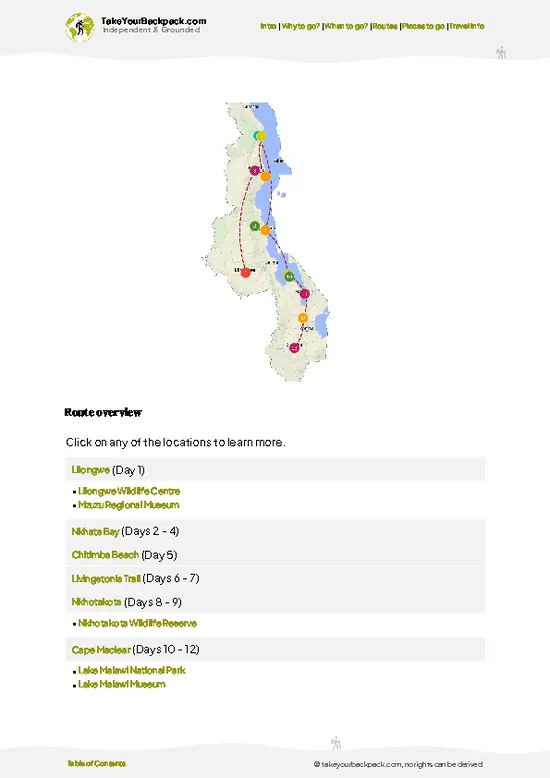
example page 0 from our offline Travel Guide for Malawi
example page 1 from our offline Travel Guide for Malawi
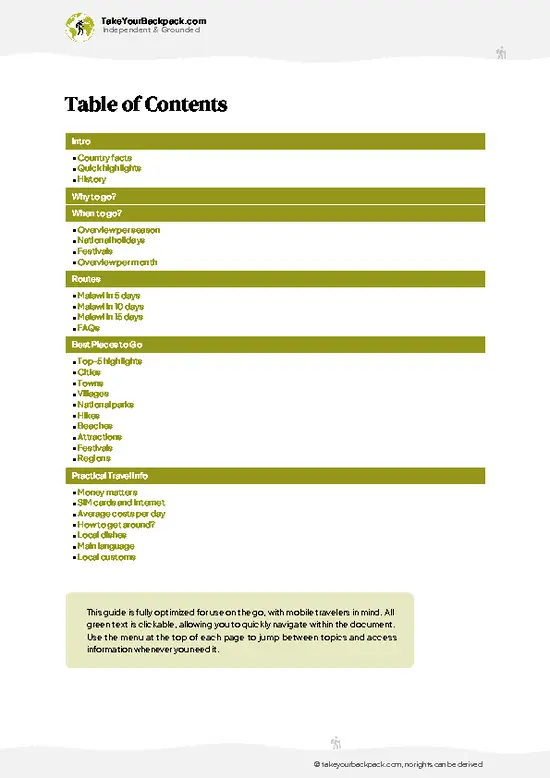
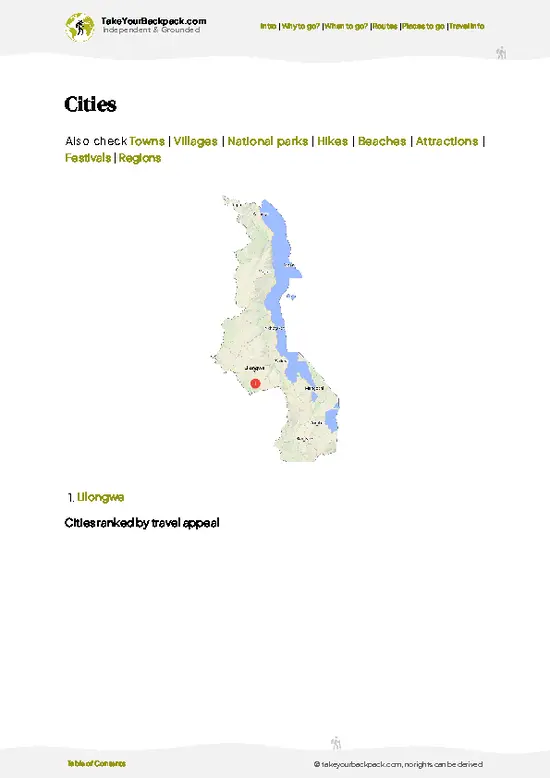
example page 2 from our offline Travel Guide for Malawi
example page 3 from our offline Travel Guide for Malawi
example page 4 from our offline Travel Guide for Malawi
example page 5 from our offline Travel Guide for Malawi
example page 6 from our offline Travel Guide for Malawi
example page 7 from our offline Travel Guide for Malawi
The digital guide (355 pages) contains:
87 highlights, ranked by travel appeal
Optimized 5, 10 & 15-day travel routes
Cities, national parks, landmarks, beaches
How to get around
Offline-friendly for travel without Wi-Fi
👉 Click to see all 30+ guide features

📅 Plan smarter in minutes, not weeks
Month by month travel advice
Festivals & national holidays
Budget expectations

🗺️ Go to the right places, skip the overrated ones
Honest pros & cons of destinations
Top hikes, parks & viewpoints
Lesser-known places most travelers miss
Clear “worth it vs skip it” guidance

🛏️ Travel smoothly without rookie mistakes
Best areas to stay
Transport systems explained simply
Common scams & safety advice
SIM cards, money & practical tips

🌍 Understand the country, not just visit it
Culture & traditions
52 Essential phrases & customs
Festivals worth planning around
Traveler-friendly historical context
Insights that make places more meaningful

📱 Built for real travel conditions
Fully downloadable PDF
Works completely offline
Optimized for phone use
Useful in remote areas & buses
Everything in one place
Save weeks of stressful planning
Get instant access to your full guide. 30‑day money-back guarantee.


By proceeding you agree to our terms.
Sent to your inbox immediately after payment • 100% Secure Checkout
Best Backpacking Travel Advisor 2025 tourism awardBest Backpacking
Travel Advisor
2025
What others say about Take Your Backpack Guides:
⭐⭐⭐⭐⭐
Fantastic, amazing amount of information!
⭐⭐⭐⭐⭐
My goodness this is amazing, it's what I've been looking for hats off too you!
⭐⭐⭐⭐⭐
I think this is absolutely BRILLIANT
⭐⭐⭐⭐
Very complete and informative. It's still missing places, but I gotta to commend you
⭐⭐⭐⭐⭐
This is truly amazing, thank you, can't wait to explore it with my kids!
⭐⭐⭐⭐⭐
Awesome resource, thank you!
⭐⭐⭐⭐⭐
This is amazing! Can't wait to explore the ones I haven't seen
⭐⭐⭐⭐
I love this! Well done, great idea.
⭐⭐⭐⭐⭐
Thanks for taking the time to make this gem!
⭐⭐⭐⭐⭐
This might be the best website I've ever seen.
⭐⭐⭐⭐⭐
Congratulations, and thank you so much for your work; it's incredibly valuable.
⭐⭐⭐⭐
In all seriousness I think you did a great job pointing out the important spots
⭐⭐⭐⭐⭐
10/10 very good
⭐⭐⭐⭐⭐
As someone who's only just starting to visit regularly this is awesome, thank you.
⭐⭐⭐⭐
Thank you very much! I'm going to visit my dad, it's going to be very useful!
⭐⭐⭐⭐⭐
This is really cool! We'll be travelling for the first time and this definitely come in handy.
⭐⭐⭐⭐⭐
You are now our minister of culture, congratulations 👨‍💼
⭐⭐⭐⭐⭐
Just wanted to tell you that this is a pearl! Going to follow your recommendations.
⭐⭐⭐⭐⭐
This is so cool. I'll definitely be using the resource for my travels soon.
⭐⭐⭐⭐⭐
This is very impressive! Good work.
⭐⭐⭐⭐⭐
This is an amazing and informative site. Very well done!

🛏️ Where to stay?Top Areas to Stay

Yes — Malawi has hostels and budget accommodation concentrated in Lilongwe and Blantyre plus the Lake Malawi corridor (Cape Maclear, Mangochi, Nkhata Bay and Likoma Island), with backpacker guesthouses, campsites and basic hostels close to main sights.
In Lilongwe the City Centre gives the best cheap options and easy transport links but offers limited nightlife and a quiet, utilitarian feel; in Blantyre central and nearby suburbs provide more urban services and better access to southern parks but some streets can be less safe after dark.
Along Lake Malawi (Cape Maclear, Nkhata Bay, Mangochi, Likoma) expect beaches, snorkeling/diving trips and a lively backpacker scene, balanced by seasonal … read more 👉
Yes — Malawi has hostels and budget accommodation concentrated in Lilongwe and Blantyre plus the Lake Malawi corridor (Cape Maclear, Mangochi, Nkhata Bay and Likoma Island), with backpacker guesthouses, campsites and basic hostels close to main sights.
In Lilongwe the City Centre gives the best cheap options and easy transport links but offers limited nightlife and a quiet, utilitarian feel; in Blantyre central and nearby suburbs provide more urban services and better access to southern parks but some streets can be less safe after dark.
Along Lake Malawi (Cape Maclear, Nkhata Bay, Mangochi, Likoma) expect beaches, snorkeling/diving trips and a lively backpacker scene, balanced by seasonal crowds, spotty infrastructure and slower transport—pack mosquito protection, expect basic facilities, and book ahead in high season.

If you enjoy meeting fellow travelers, consider choosing hostels with high ratings for atmosphere. On the other hand, if you prefer having your own space, a hotel might be a better option.

MalawiDiscover the Country

👋 Meet the founderWho’s Behind Take Your Backpack?

Johan, backpacker and founder of TakeYourBackpackHi, I’m Johan (Netherlands 🇳🇱), the creator of TakeYourBackpack. Over the past decade, I’ve backpacked through 80+ countries across six continents, gaining extensive experience with independent travel, long-term trips, and overland routes.

This site is built on a combination of firsthand travel experience and carefully curated insights from other backpackers. Many guides are based on places I’ve personally visited, while others bring together tips, observations, and practical advice shared by trusted travelers I’ve met along the way.

The goal is to provide realistic, experience-driven guidance — not generic itineraries — so you can explore destinations with better context, clearer expectations, and more confidence.

Get full Malawi guide •
Instant download • 87 highlights • Full Offline guide