How many landmarks to visit: Plan on
4 to 6 landmarks in one trip. Mali’s distances are large, roads are slow and each site needs a half day to a full day once you add guides, permits and the ride there. More than six and you are collecting photos from a car window. Fewer than four rarely justifies the journey from Bamako.
Which kinds to prioritize: Match the type to your style.
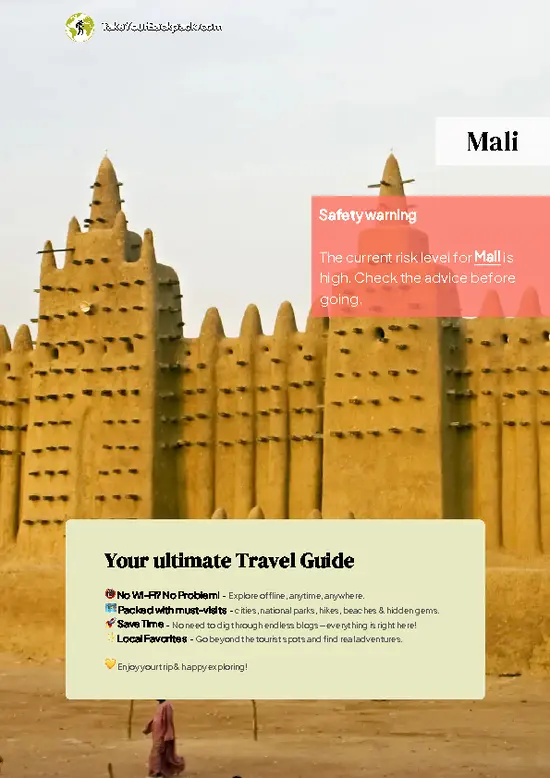
Architecture-focused travelers should pick the Niger river mud-brick towns, which are the main reason to come.
Hikers should choose the Dogon escarpment, where the walking is the attraction and a multi-day stay beats a single visit.
History readers get most from Bamako’s national museum and the scholarly and imperial sites, which need context rather than scenery. Skip anything that requires a rushed, expensive charter …
read more 👉 How many landmarks to visit: Plan on
4 to 6 landmarks in one trip. Mali’s distances are large, roads are slow and each site needs a half day to a full day once you add guides, permits and the ride there. More than six and you are collecting photos from a car window. Fewer than four rarely justifies the journey from Bamako.
Which kinds to prioritize: Match the type to your style.
Architecture-focused travelers should pick the Niger river mud-brick towns, which are the main reason to come.
Hikers should choose the Dogon escarpment, where the walking is the attraction and a multi-day stay beats a single visit.
History readers get most from Bamako’s national museum and the scholarly and imperial sites, which need context rather than scenery. Skip anything that requires a rushed, expensive charter for a short look; the logistics cost more than the view.
Budget: A realistic backpacker budget is
US$25 to 45 a day (about 15,000 to 27,000 CFA francs): guesthouse rooms at US$8 to 20, meals at US$3 to 8, local transport at US$5 to 15 on travel days. Entry fees are modest, usually US$2 to 8 per site. A local guide is worth hiring for the escarpment and for mosque or manuscript visits, at roughly US$15 to 30 a day. Escarpment trips usually add village levies of a few dollars per village, plus a meal and bed in the village. Private vehicles or charters run US$80 to 150 a day and only make sense when split among four people.
Costs and delays that catch people out: Cash is the first trap: ATMs outside Bamako are unreliable and cards are rarely accepted, so withdraw enough before heading inland. Unofficial guides and “tourist tax” collectors turn up at many sites; ask the price in advance and pay only registered guides. Photography fees apply in many villages, and people should always be asked before being photographed. Delays are routine: buses leave only when full, and flights can be cancelled with no notice, so leave a one day buffer before any onward flight.
Safety and cultural respect: Security is the central issue. Governments advise against travel to much of the country, and conditions change quickly, especially in the center and north. Check advisories and ask local contacts in Bamako before every leg, use registered guides, avoid traveling after dark and consider insurance that covers evacuation. Many sites are active religious places: dress modestly with covered shoulders and knees, remove shoes where asked and do not enter mosques or sacred village spaces without permission. Dogon villages have restricted spaces and rituals, so follow your guide’s direction on what to photograph and where to step.


 Best Backpacking
 Hi, I’m Johan (Netherlands 🇳🇱), the creator of TakeYourBackpack. Over the past 3 decades, I’ve backpacked through 90+ countries across six continents, gaining extensive experience with independent travel, long-term trips, and overland routes.