×

Mali🇲🇱 | best national parksTop-Rated 7 national parks in Mali

Mali’s national parks are a tapestry of diverse landscapes, from the arid expanses of the Sahara to lush riverbanks teeming with wildlife. Each park offers a unique experience shaped by regional and seasonal nuances. For backpackers, selecting the right park can dictate the pace of exploration and the type of adventure you’ll encounter.

Some parks, like Bandiagara, are rich in cultural immersion, while others, such as Tombouctou, focus on wildlife and natural beauty. Your choice impacts not just the vibe and safety but also your budget and ease of travel. Understanding these differences is crucial for independent travelers aiming to maximize their experience in Mali’s wild heart.

By Johan Kruseman 🇳🇱 | Updated September 4, 2026
Explore the best hikes in Mali

Why go?Why Travelers Love These Spots

National parks in Mali are a unique blend of rich biodiversity and striking landscapes, setting them apart from other countries. The geographic diversity ranges from the arid expanses of the Sahara to lush riverine ecosystems, creating habitats for a variety of wildlife. This biodiversity is not just a backdrop; it’s a living tapestry that reflects the country’s cultural heritage and historical significance, particularly in relation to ancient trade routes.

However, accessibility is a significant trade-off. Many parks are remote, requiring considerable travel time. This can be a double-edged sword: while the journey may be arduous, it often leads to a more profound connection with the land and its history. The infrastructure can be limited, which means travelers must prepare for basic amenities … read more 👉
National parks in Mali are a unique blend of rich biodiversity and striking landscapes, setting them apart from other countries. The geographic diversity ranges from the arid expanses of the Sahara to lush riverine ecosystems, creating habitats for a variety of wildlife. This biodiversity is not just a backdrop; it’s a living tapestry that reflects the country’s cultural heritage and historical significance, particularly in relation to ancient trade routes.

However, accessibility is a significant trade-off. Many parks are remote, requiring considerable travel time. This can be a double-edged sword: while the journey may be arduous, it often leads to a more profound connection with the land and its history. The infrastructure can be limited, which means travelers must prepare for basic amenities and potential delays. This lack of development can deter some, but for those willing to embrace the challenge, it offers an immersive experience that’s hard to replicate elsewhere.

The climatic conditions also play a role. The dry season is ideal for exploration, but temperatures can soar, testing even seasoned adventurers. Understanding these factors is crucial for maximizing the experience. In Mali, the national parks are not just destinations; they are gateways to understanding the intricate relationship between nature and culture, demanding respect and preparation from those who seek to explore them.
Behind the Scenes of Selection
The list of best national parks in Mali is created based on landscapes, wildlife, adventure opportunities, facilities, and overall experience. If you feel a national park is missing in this list, please let us know.

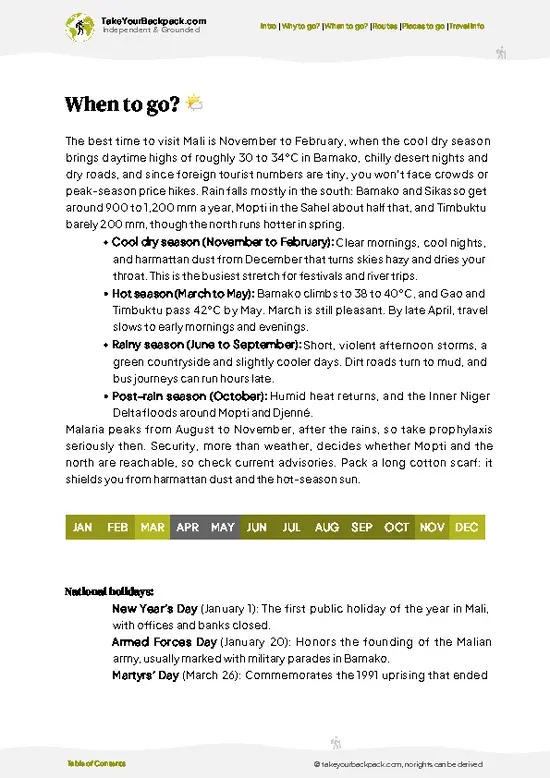
When to go?Best Time to Visit Mali for national parks

Seasonality and Wildlife Visibility


Mali’s national parks experience distinct seasons that significantly impact wildlife visibility and trail conditions. The dry season, typically from November to April, offers the best opportunities for spotting wildlife. Animals congregate around water sources, making sightings more frequent. However, temperatures can soar, especially in April, pushing into the high 90s Fahrenheit.

Rainy Season Challenges


The rainy season, from May to October, brings lush landscapes but also challenges. Trails can become muddy and impassable, limiting access to certain areas. Wildlife visibility decreases as animals disperse into denser vegetation. Rainfall peaks in July and August, often leading to heavy downpours that can disrupt travel plans.

Optimal Visiting

read more 👉

Seasonality and Wildlife Visibility


Mali’s national parks experience distinct seasons that significantly impact wildlife visibility and trail conditions. The dry season, typically from November to April, offers the best opportunities for spotting wildlife. Animals congregate around water sources, making sightings more frequent. However, temperatures can soar, especially in April, pushing into the high 90s Fahrenheit.

Rainy Season Challenges


The rainy season, from May to October, brings lush landscapes but also challenges. Trails can become muddy and impassable, limiting access to certain areas. Wildlife visibility decreases as animals disperse into denser vegetation. Rainfall peaks in July and August, often leading to heavy downpours that can disrupt travel plans.

Optimal Visiting Months


The sweet spot for visiting is often between December and February. This period combines cooler temperatures with excellent wildlife visibility. However, expect more visitors during this peak season, which can lead to crowded trails and higher costs.

Shoulder Seasons


Consider the shoulder months of November and March for a balance. These months offer decent wildlife sightings with fewer crowds and lower prices. Yet, be prepared for variable weather conditions.

Understanding these seasonal patterns is crucial for planning an effective trip. Prioritize timing to maximize both budget and energy for the experiences that truly matter.

national park hoppingHow to Combine national parks Into One Trip

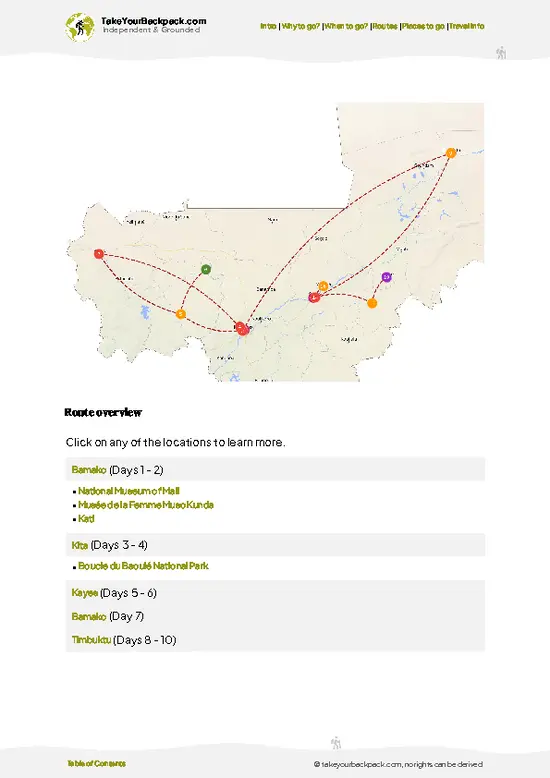
Combining national parks in Mali requires strategic planning to maximize experience while minimizing travel fatigue. Start by clustering parks regionally. The southern parks, like Boucle du Baoulé and La Boucle du Baoulé National Park, are relatively close, making them ideal for a multi-stop itinerary. From there, head north to the more remote parks like Ténéré and the Niger River National Park.

Travelers should allocate at least two to three days per park for a meaningful experience. This allows time for hiking, wildlife spotting, and soaking in the local culture. Rushing through parks can lead to missed opportunities and a sense of dissatisfaction. Prioritize depth over speed; a longer stay in one park often yields richer experiences than a quick dash through several.

Common pitfalls include read more 👉
Combining national parks in Mali requires strategic planning to maximize experience while minimizing travel fatigue. Start by clustering parks regionally. The southern parks, like Boucle du Baoulé and La Boucle du Baoulé National Park, are relatively close, making them ideal for a multi-stop itinerary. From there, head north to the more remote parks like Ténéré and the Niger River National Park.

Travelers should allocate at least two to three days per park for a meaningful experience. This allows time for hiking, wildlife spotting, and soaking in the local culture. Rushing through parks can lead to missed opportunities and a sense of dissatisfaction. Prioritize depth over speed; a longer stay in one park often yields richer experiences than a quick dash through several.

Common pitfalls include underestimating travel times between parks and over-scheduling. Roads can be rough, and conditions may vary, so flexibility is key. Budget considerations also come into play; some parks have limited facilities, which can affect comfort levels. Balancing budget with comfort may mean choosing fewer parks but enjoying them more fully.

Ultimately, the trade-off is between the breadth of experience and the depth of engagement. A well-planned trip that allows for both exploration and relaxation will yield the most rewarding memories.

The ListTop national parks of Mali

1 Boucle du Baoulé National Park

prehistoric rock art, baobab groves, rolling hills

Trace the contours of ancient landscapes dotted with rock engravings, scattered villages, and the distinctive silhouettes of baobab trees.

2 Gourma Elephants Reserve

elephant migration routes, acacia savanna, seasonal waterholes

Witness the annual passage of West African elephants as they navigate harsh terrain, seeking water and shade in a landscape shaped by survival.

3 Ansongo-Ménaka Reserve

Sahelian plains, riverine forests, giraffe herds

Travel across arid grasslands and along riverbanks where giraffes and gazelles roam, and nomadic communities pass through on seasonal migrations.

4 Bafing National Park

savanna woodlands, chimpanzee habitat, Bafing River

Follow remote trails through dry forest and river valleys, where elusive chimpanzees and rare birds move between ancient trees and rocky outcrops.

mali-national-park-bafing-national-park
© Google |

5 Kouroufing National Park

flooded plains, hippo pools, dense reeds

Glide past stands of papyrus and watch hippos surface in quiet backwaters, surrounded by the sounds of wetland birds and rustling grasses.

6 Fina Reserve

seasonal wetlands, migratory birds, open grasslands

Watch flocks of waterfowl gather in shallow pools and scan the horizon for antelope grazing in wide, open plains during the rainy season.

7 Wongo National Park

dense woodland, rare primates, rocky escarpments

Hike through thick forest and climb rugged slopes, searching for monkeys and birds that thrive in the park’s secluded, elevated terrain.

Loading the map 🌍

Expert viewInsights from Locals and Experts

Terrain
Mali’s national parks are a mix of rugged landscapes and vast savannas, each with its own character. You’ll find everything from arid plains to lush wetlands. The terrain can be challenging, especially during the rainy season when roads become muddy and impassable. If you’re planning to hike or explore, be prepared for some serious legwork. The parks are often remote, so a solid understanding of the terrain will save you time and energy. Prioritize your parks based on what you want to experience—if you’re after wildlife, some parks are better than others, but they may require more travel time.

Park Infrastructure
Let’s be real: the infrastructure in Mali’s national parks isn’t exactly five-star. Accommodations can range from basic campsites to more developed lodges, but don’t expect … read more 👉
Terrain
Mali’s national parks are a mix of rugged landscapes and vast savannas, each with its own character. You’ll find everything from arid plains to lush wetlands. The terrain can be challenging, especially during the rainy season when roads become muddy and impassable. If you’re planning to hike or explore, be prepared for some serious legwork. The parks are often remote, so a solid understanding of the terrain will save you time and energy. Prioritize your parks based on what you want to experience—if you’re after wildlife, some parks are better than others, but they may require more travel time.

Park Infrastructure
Let’s be real: the infrastructure in Mali’s national parks isn’t exactly five-star. Accommodations can range from basic campsites to more developed lodges, but don’t expect luxury. Bring your own gear if you want comfort. The roads leading to the parks can be rough, and public transport is limited. If you’re short on time, consider hiring a local guide who knows the ins and outs. They can help you navigate the terrain and maximize your experience. Just remember, the more remote the park, the less reliable the infrastructure. Factor this into your planning to avoid frustration.

Wildlife Activity
Wildlife viewing can be hit or miss, depending on the time of year. Many animals are more active during the dry season, making it the prime time for spotting. However, this is also when parks can get crowded, so you’ll need to balance your desire for wildlife with the potential for a busier experience. If you’re keen on seeing specific species, do your homework. Some parks are known for certain animals, but they may require longer stays. Be prepared for the possibility that you might not see everything on your list. That’s part of the adventure.

Time Management
You can realistically visit two to three parks in a week, but that’s pushing it. Each park has its own vibe and requires time to soak in the experience. If you rush, you’ll miss the nuances that make each park unique. Consider spending at least two days in each park to truly appreciate what they offer. If you’re trying to cover more ground, be ready for long travel days. The trade-off here is between depth and breadth: do you want to dive deep into a couple of parks or skim the surface of several? Choose wisely based on your interests.

Safety & Cultural Considerations
Safety is paramount. Some areas in Mali can be unstable, so stay informed about current conditions. Always check travel advisories and consider hiring local guides who understand the cultural landscape. Respect local customs and be mindful of your surroundings. Engaging with local communities can enrich your experience, but it’s essential to approach these interactions with sensitivity. The cultural richness of Mali is a treasure, but it requires a respectful attitude to truly appreciate it.

Budgeting
Costs can vary widely depending on your choices. Park fees, accommodation, and transportation can add up quickly. Budget for unexpected expenses, especially if you’re venturing into remote areas where supplies may be limited. It’s wise to have a flexible budget to accommodate the realities of travel in Mali. The more prepared you are, the more you can focus on enjoying the experience rather than stressing over costs.

In summary, Mali’s national parks offer a unique adventure, but they come with their own set of challenges. Plan carefully, prioritize your interests, and be ready for the unexpected. The rewards are worth the effort.

✈️ The backpacker research shortcutMali Travel Guide

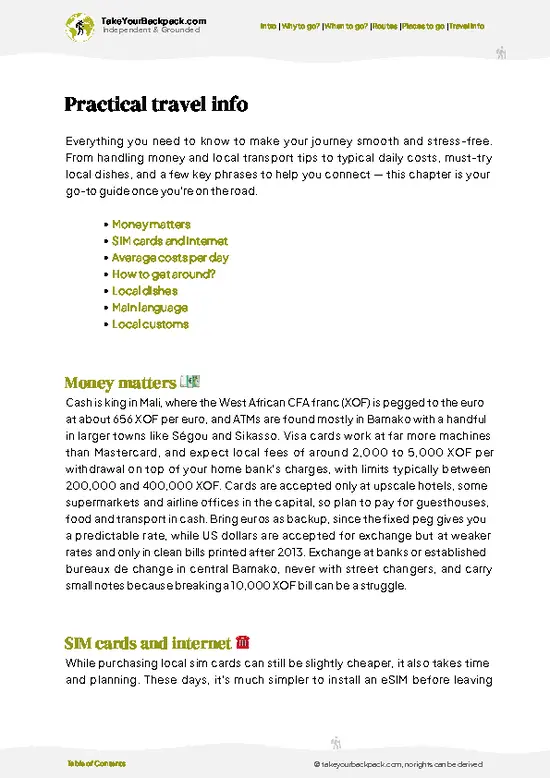
An offline-friendly backpacking guide with optimized travel routes, ranked highlights, transport advice, and the best areas to stay.
example page 0 from our offline Travel Guide for Mali
example page 1 from our offline Travel Guide for Mali
example page 2 from our offline Travel Guide for Mali
example page 3 from our offline Travel Guide for Mali
example page 4 from our offline Travel Guide for Mali
example page 5 from our offline Travel Guide for Mali
example page 6 from our offline Travel Guide for Mali
example page 7 from our offline Travel Guide for Mali
The digital guide (299 pages) contains:
72 highlights, ranked by travel appeal
Optimized 5, 10 & 15-day travel routes
Cities, national parks, landmarks, beaches
How to get around
Offline-friendly for travel without Wi-Fi
👉 Click to see all 30+ guide features

📅 Plan smarter in minutes, not weeks
Month by month travel advice
Festivals & national holidays
Budget expectations

🗺️ Go to the right places, skip the overrated ones
Honest pros & cons of destinations
Top hikes, parks & viewpoints
Lesser-known places most travelers miss
Clear “worth it vs skip it” guidance

🛏️ Travel smoothly without rookie mistakes
Best areas to stay
Transport systems explained simply
Common scams & safety advice
SIM cards, money & practical tips

🌍 Understand the country, not just visit it
Culture & traditions
52 Essential phrases & customs
Festivals worth planning around
Traveler-friendly historical context
Insights that make places more meaningful

📱 Built for real travel conditions
Fully downloadable PDF
Works completely offline
Optimized for phone use
Useful in remote areas & buses
Everything in one place
Save weeks of stressful planning
Get instant access to your full guide. 30‑day money-back guarantee.
+ Add another guide for just US$7.80

By proceeding you agree to our terms.
Sent to your inbox immediately after payment • 100% Secure Checkout
Best Backpacking Travel Advisor 2025 tourism awardBest Backpacking
Travel Advisor
2025
What others say about Take Your Backpack Guides:
⭐⭐⭐⭐⭐
Fantastic, amazing amount of information!
⭐⭐⭐⭐⭐
My goodness this is amazing, it's what I've been looking for hats off too you!
⭐⭐⭐⭐⭐
I think this is absolutely BRILLIANT
⭐⭐⭐⭐
Very complete and informative. It's still missing places, but I gotta to commend you
⭐⭐⭐⭐⭐
This is truly amazing, thank you, can't wait to explore it with my kids!
⭐⭐⭐⭐⭐
Awesome resource, thank you!
⭐⭐⭐⭐⭐
This is amazing! Can't wait to explore the ones I haven't seen
⭐⭐⭐⭐
I love this! Well done, great idea.
⭐⭐⭐⭐⭐
Thanks for taking the time to make this gem!
⭐⭐⭐⭐⭐
This might be the best website I've ever seen.
⭐⭐⭐⭐⭐
Congratulations, and thank you so much for your work; it's incredibly valuable.
⭐⭐⭐⭐
In all seriousness I think you did a great job pointing out the important spots
⭐⭐⭐⭐⭐
10/10 very good
⭐⭐⭐⭐⭐
As someone who's only just starting to visit regularly this is awesome, thank you.
⭐⭐⭐⭐
Thank you very much! I'm going to visit my dad, it's going to be very useful!
⭐⭐⭐⭐⭐
This is really cool! We'll be travelling for the first time and this definitely come in handy.
⭐⭐⭐⭐⭐
You are now our minister of culture, congratulations 👨‍💼
⭐⭐⭐⭐⭐
Just wanted to tell you that this is a pearl! Going to follow your recommendations.
⭐⭐⭐⭐⭐
This is so cool. I'll definitely be using the resource for my travels soon.
⭐⭐⭐⭐⭐
This is very impressive! Good work.
⭐⭐⭐⭐⭐
This is an amazing and informative site. Very well done!

🛏️ Where to stay?Top Places to Consider Staying

Yes — there are hostels and budget guesthouses in Mali, concentrated in the capital and southern river towns rather than in the unstable northern regions.
In Bamako the best choice is around Hippodrome, ACI 2000 and Badalabougou: Hippodrome gives the most nightlife and tourist services, ACI 2000 is central and relatively quiet, and Badalabougou is cheaper but closer to busy roads and markets.
Outside the capital, look for simple guesthouses in river towns like Mopti and Ségou (good for markets and river access but basic facilities); Timbuktu has very limited, often seasonal options and significant security constraints, so prioritize safety and contingency plans.

If you enjoy meeting fellow … read more 👉
Yes — there are hostels and budget guesthouses in Mali, concentrated in the capital and southern river towns rather than in the unstable northern regions.
In Bamako the best choice is around Hippodrome, ACI 2000 and Badalabougou: Hippodrome gives the most nightlife and tourist services, ACI 2000 is central and relatively quiet, and Badalabougou is cheaper but closer to busy roads and markets.
Outside the capital, look for simple guesthouses in river towns like Mopti and Ségou (good for markets and river access but basic facilities); Timbuktu has very limited, often seasonal options and significant security constraints, so prioritize safety and contingency plans.

If you enjoy meeting fellow travelers, consider choosing hostels with high ratings for atmosphere. On the other hand, if you prefer having your own space, a hotel might be a better option.

MaliMore Places Across Mali

👋 Meet the founderWho’s Behind Take Your Backpack?

Johan, backpacker and founder of TakeYourBackpackHi, I’m Johan (Netherlands 🇳🇱), the creator of TakeYourBackpack. Over the past decade, I’ve backpacked through 80+ countries across six continents, gaining extensive experience with independent travel, long-term trips, and overland routes.

This site is built on a combination of firsthand travel experience and carefully curated insights from other backpackers. Many guides are based on places I’ve personally visited, while others bring together tips, observations, and practical advice shared by trusted travelers I’ve met along the way.

The goal is to provide realistic, experience-driven guidance — not generic itineraries — so you can explore destinations with better context, clearer expectations, and more confidence.

Get full Mali guide •
Instant download • 72 highlights • Full Offline guide