
×

Marshall Islands🇲🇭 | regionsAilinglaplap AtollWoja airstrip, jade lagoon, canoe builders, clan-owned islets | things to do and best time to go

Explore Rongelap AtollExplore Likiep Atoll

Backpacking in Ailinglaplap Atoll
👍 Recommendedregion ranked #2
By Johan Kruseman 🇳🇱 | Updated October 15, 2026

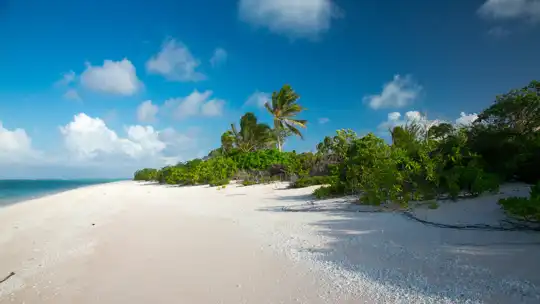
The decision that shapes a trip here is whether you can live with a schedule you don’t control. Flights from Majuro are infrequent and seats go to locals first, so a fixed return date is risky. Experienced travelers book the outbound and the return together, then pad the end of the trip with spare days. Ailinglaplap Atoll lies in the southwest of the Marshall Islands, in the Ralik chain. Its big lagoon holds dozens of islets strung along a ring of reef. There are no resorts, and shops carry rice, flour, canned fish and little else, so bring snacks and cash. That is why it feels lived-in rather than staged. Mornings smell of coconut smoke and salt, and the lagoon turns milky jade under a hard midday sun. Roosters, outboard motors and church hymns make up the soundtrack. Ask a family for a lift by boat and you will see islets the airstrip never reaches.

Discover everything you want to know in the 📖 Marshall Islands Travel Guide.


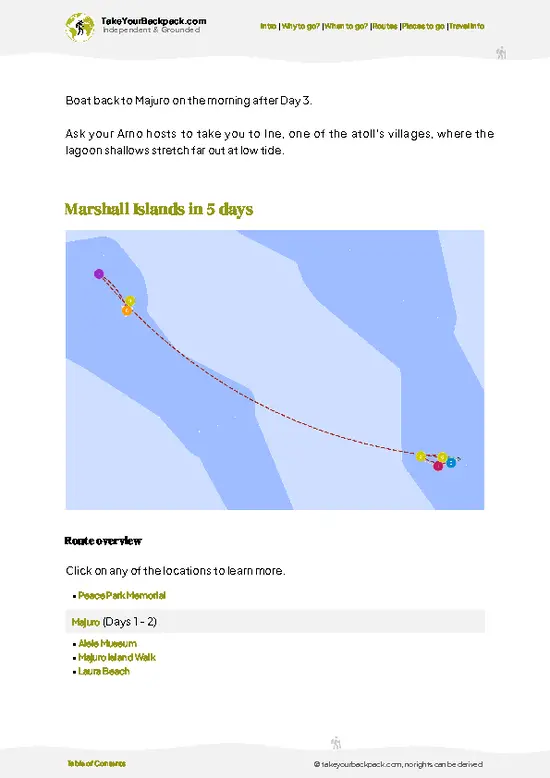
example page 0 from our offline Travel Guide for Marshall Islands
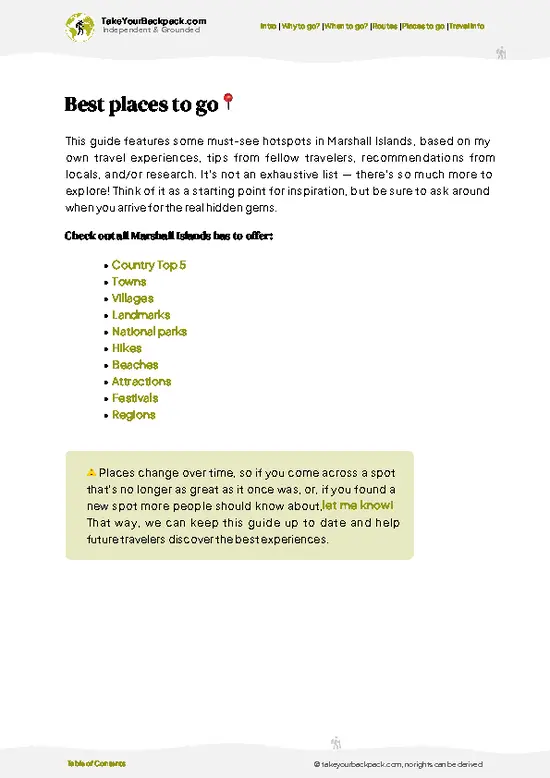
example page 1 from our offline Travel Guide for Marshall Islands
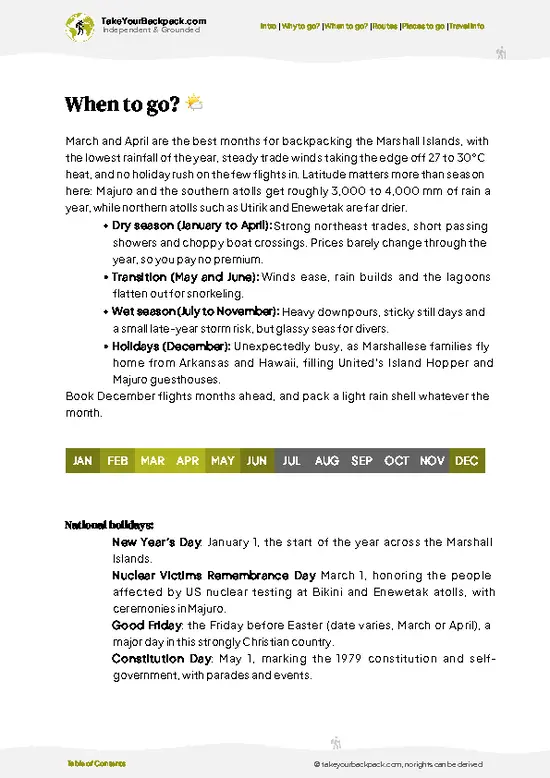
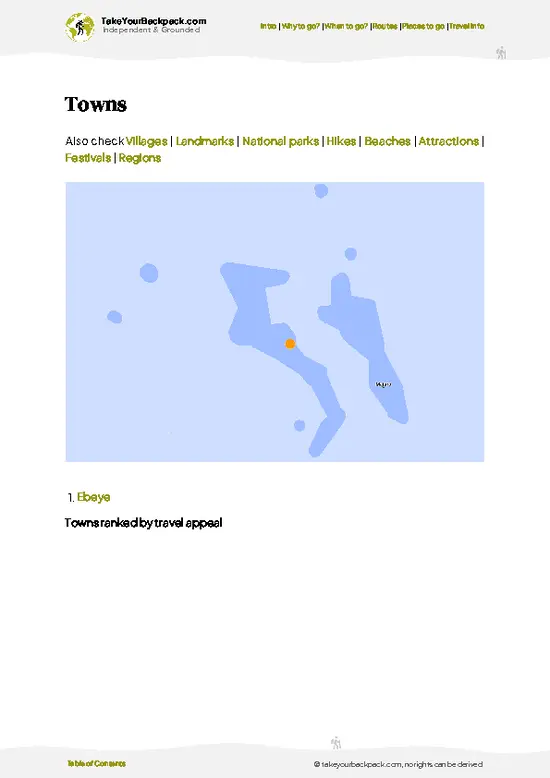
example page 2 from our offline Travel Guide for Marshall Islands
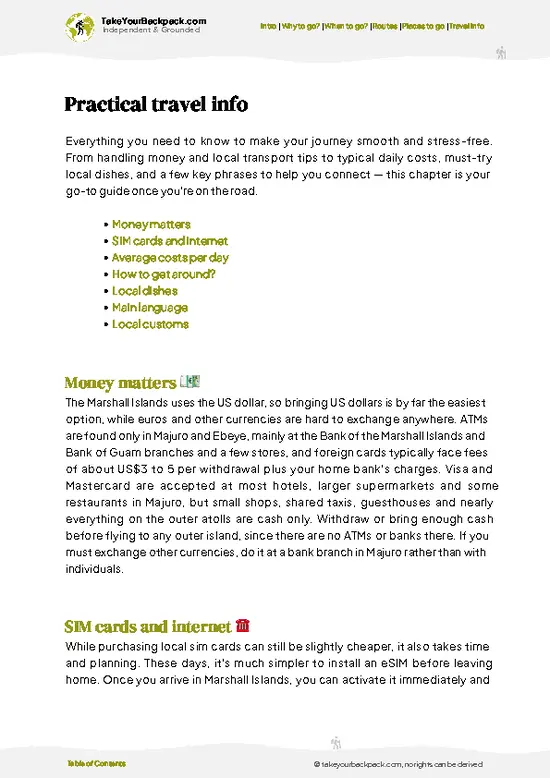
example page 3 from our offline Travel Guide for Marshall Islands
example page 4 from our offline Travel Guide for Marshall Islands
example page 5 from our offline Travel Guide for Marshall Islands
example page 6 from our offline Travel Guide for Marshall Islands
example page 7 from our offline Travel Guide for Marshall Islands
Loading the map 🌍
CLICK TO FILTER
towns
villages
landmarks
national parks
hikes
beaches
attractions
festivals
regions
SHOW COUNTRY’S BESTSHOW ALL

✨ Why go?
Ranked #2 region in Marshall Islands
What makes it a must-see region

People come to Ailinglaplap because it gives you something Majuro cannot: a working Marshallese atoll with almost no visitors. The lagoon of roughly 56 islets is the main draw. One base lets you reach several islands by small boat, so you can swap village life for empty sandbars without packing up. Slow travel is the only kind on offer, and it suits the place. Boats leave when the tide, fuel and family plans line up, so days stretch out and conversations get long. That is how you end up eating breakfast breadfruit with a family instead of ticking off sights. The atoll also carries real weight in Marshallese history as the home region of the Kabua family, whose members led the country into independence. You hear that story in kitchens and churches, not on plaques. Snorkeling the passes and … read more 👉
People come to Ailinglaplap because it gives you something Majuro cannot: a working Marshallese atoll with almost no visitors. The lagoon of roughly 56 islets is the main draw. One base lets you reach several islands by small boat, so you can swap village life for empty sandbars without packing up. Slow travel is the only kind on offer, and it suits the place. Boats leave when the tide, fuel and family plans line up, so days stretch out and conversations get long. That is how you end up eating breakfast breadfruit with a family instead of ticking off sights. The atoll also carries real weight in Marshallese history as the home region of the Kabua family, whose members led the country into independence. You hear that story in kitchens and churches, not on plaques. Snorkeling the passes and outer reef is the other reason, with clear water and few other people in it. Come with patience and a sense of humor, and you will be rewarded.

💡 HighlightsKey sights and experiences for travelers

  1. Woja Island: the atoll’s main settlement and the airstrip arrival point. Walk the single lane at dusk, when kids play volleyball and the church bell rings.
  2. The inner lagoon: calm, shallow and pale green, best crossed by small boat with a local guide who knows the coral heads.
  3. Outer ocean reef: the Pacific side has surf, sharp coral and clear water. Snorkel only on calm days and with someone local.
  4. Village churches: Sunday services fill the building with harmonized hymns. Dress modestly and sit near the back.
  5. Outrigger canoe building: Marshallese sailing canoes are still made and repaired here. Watch the lashing and hull-shaping work if a builder invites you.
  6. Uninhabited sandbars: small islets on the lagoon rim with crabs, terns and white sand. Lesser known, and locals use them for picnics.
  7. Pandanus
… read more 👉
  1. Woja Island: the atoll’s main settlement and the airstrip arrival point. Walk the single lane at dusk, when kids play volleyball and the church bell rings.
  2. The inner lagoon: calm, shallow and pale green, best crossed by small boat with a local guide who knows the coral heads.
  3. Outer ocean reef: the Pacific side has surf, sharp coral and clear water. Snorkel only on calm days and with someone local.
  4. Village churches: Sunday services fill the building with harmonized hymns. Dress modestly and sit near the back.
  5. Outrigger canoe building: Marshallese sailing canoes are still made and repaired here. Watch the lashing and hull-shaping work if a builder invites you.
  6. Uninhabited sandbars: small islets on the lagoon rim with crabs, terns and white sand. Lesser known, and locals use them for picnics.
  7. Pandanus and breadfruit groves: shaded interior paths where families still harvest and weave mats. Pass slowly and say hello first.
  8. Ocean-side sunsets: the reef flat glows orange and the wind drops. Locals gather here to fish, so bring a cold drink and join them.
  9. Lagoon-side fishing at low tide: you can wade out with villagers and watch net and spear fishing. It is a rare chance to eat what you saw caught.
The ocean reef snorkel and the lagoon boat trip combine well in one day when the water is calm.
Spotted a mistake or missing something? Contact us.

⌛️ 5 daysA smart one-week plan

Day 1: Woja: A slow arrival day, shaped by the flight schedule. The plane lands on Woja’s airstrip, and everything else depends on boats, so use the first day to settle in with your host, buy supplies and walk the island. Introduce yourself to the family or council who will arrange boat rides. Villagers move at the pace of tides and fuel, and you will too.
Day 2-3: The inner lagoon: Hire a small boat for a full day on the lagoon, aiming for the sandbars. Stop at a village, ask before landing, and bring a gift such as rice or fuel money. Go back by a different channel and snorkel a coral head on the way. On day three, repeat the process with another stretch of the rim, because the atoll is too spread out to see in one run.
Day 4: The ocean reef: This is your detour. Cross to the outer reef on … read more 👉
Day 1: Woja: A slow arrival day, shaped by the flight schedule. The plane lands on Woja’s airstrip, and everything else depends on boats, so use the first day to settle in with your host, buy supplies and walk the island. Introduce yourself to the family or council who will arrange boat rides. Villagers move at the pace of tides and fuel, and you will too.
Day 2-3: The inner lagoon: Hire a small boat for a full day on the lagoon, aiming for the sandbars. Stop at a village, ask before landing, and bring a gift such as rice or fuel money. Go back by a different channel and snorkel a coral head on the way. On day three, repeat the process with another stretch of the rim, because the atoll is too spread out to see in one run.
Day 4: The ocean reef: This is your detour. Cross to the outer reef on a calm morning with a guide and snorkel the drop-off, which adds clear water and bigger fish without changing your base. Keep the afternoon free, because weather can send you back early.
Day 5: Back on Woja: Spend it near the airstrip, helping with a canoe, fishing at low tide or joining the evening church gathering. Flights can shift, so staying close is practical.

If one day justifies the trip, make it Day 2, when the lagoon light turns turquoise and the sandbars appear.

🌤️ When to go?Weather, crowds, and seasonal trade-offs

  • Dry season (December to April): Trade winds blow steady, skies are mostly clear, and days run 27 to 31°C (81 to 88°F) with lagoon water around 28°C (82°F). This is the best window for boat trips and snorkeling. Daylight lasts about 11.5 to 12 hours, so plan around a dusk near 6:30 pm.
  • Wet season (May to November): Squalls roll across the lagoon most afternoons, humidity sits heavy, and temperatures barely move from the dry-season range. Seas can turn rough on the ocean side, and small boat trips get canceled more often.
  • Holiday peaks: Christmas and Gospel Day (the first Friday of December) fill the few flights from Majuro with returning families. Seats get scarce and island hosts are busy cooking and feasting.
  • Prices: Fares and boat fuel costs do not swing much by season. The real fluctuation
… read more 👉
  • Dry season (December to April): Trade winds blow steady, skies are mostly clear, and days run 27 to 31°C (81 to 88°F) with lagoon water around 28°C (82°F). This is the best window for boat trips and snorkeling. Daylight lasts about 11.5 to 12 hours, so plan around a dusk near 6:30 pm.
  • Wet season (May to November): Squalls roll across the lagoon most afternoons, humidity sits heavy, and temperatures barely move from the dry-season range. Seas can turn rough on the ocean side, and small boat trips get canceled more often.
  • Holiday peaks: Christmas and Gospel Day (the first Friday of December) fill the few flights from Majuro with returning families. Seats get scarce and island hosts are busy cooking and feasting.
  • Prices: Fares and boat fuel costs do not swing much by season. The real fluctuation is seat availability.
Book the flight first, then plan around it, and aim for February or March when the lagoon is calmest.


source: climatestotravel.comJANJanuary: excellent for travelingFEBFebruary: excellent for travelingMARMarch: excellent for travelingAPRApril: highly recommended for travelingMAYMay: fair for travelingJUNJune: below average for travelingJULJuly: below average for travelingAUGAugust: below average for travelingSEPSeptember: below average for travelingOCTOctober: fair for travelingNOVNovember: highly recommended for travelingDECDecember: excellent for traveling
when-to-go

✈️ The backpacker research shortcutMarshall Islands Travel Guide

An offline-friendly backpacking guide with optimized travel routes, ranked highlights, transport advice, and the best areas to stay.
example page 0 from our offline Travel Guide for Marshall Islands
example page 1 from our offline Travel Guide for Marshall Islands
example page 2 from our offline Travel Guide for Marshall Islands
example page 3 from our offline Travel Guide for Marshall Islands
example page 4 from our offline Travel Guide for Marshall Islands
example page 5 from our offline Travel Guide for Marshall Islands
example page 6 from our offline Travel Guide for Marshall Islands
example page 7 from our offline Travel Guide for Marshall Islands
The digital guide (125 pages) contains:
✅ 27 highlights, ranked by travel appeal
✅ Optimized 2, 3 & 5-day travel routes
✅ Cities, national parks, landmarks, beaches
✅ How to get around
✅ Offline-friendly for travel without Wi-Fi
👉 Click to see all 30+ guide features

📅 Plan smarter in minutes, not weeks
✅ Month by month travel advice
✅ Festivals & national holidays
✅ Budget expectations

🗺️ Go to the right places, skip the overrated ones
✅ Honest pros & cons of destinations
✅ Top hikes, parks & viewpoints
✅ Lesser-known places most travelers miss
✅ Clear “worth it vs skip it” guidance

🛏️ Travel smoothly without rookie mistakes
✅ Best areas to stay
✅ Transport systems explained simply
✅ Common scams & safety advice
✅ SIM cards, money & practical tips

🌍 Understand the country, not just visit it
✅ Culture & traditions
✅ 52 Essential phrases & customs
✅ Festivals worth planning around
✅ Traveler-friendly historical context
✅ Insights that make places more meaningful

📱 Built for real travel conditions
✅ Fully downloadable PDF
✅ Works completely offline
✅ Optimized for phone use
✅ Useful in remote areas & buses
✅ Everything in one place
Stop searching, start planning
Get instant access to your full guide. 30‑day money-back guarantee.
+ Add another guide for just

By proceeding you agree to our terms.
Sent to your inbox immediately after payment • 100% Secure Checkout
Best Backpacking Travel Advisor 2025 tourism awardBest Backpacking
Travel Advisor
2025
What others say about Take Your Backpack Guides:
⭐⭐⭐⭐⭐
Fantastic, amazing amount of information!
⭐⭐⭐⭐⭐
My goodness this is amazing, it's what I've been looking for hats off too you!
⭐⭐⭐⭐⭐
I think this is absolutely BRILLIANT
⭐⭐⭐⭐
Very complete and informative. It's still missing places, but I gotta to commend you
⭐⭐⭐⭐⭐
This is truly amazing, thank you, can't wait to explore it with my kids!
⭐⭐⭐⭐⭐
Awesome resource, thank you!
⭐⭐⭐⭐⭐
This is amazing! Can't wait to explore the ones I haven't seen
⭐⭐⭐⭐
I love this! Well done, great idea.
⭐⭐⭐⭐⭐
Thanks for taking the time to make this gem!
⭐⭐⭐⭐⭐
This might be the best website I've ever seen.
⭐⭐⭐⭐⭐
Congratulations, and thank you so much for your work; it's incredibly valuable.
⭐⭐⭐⭐
In all seriousness I think you did a great job pointing out the important spots
⭐⭐⭐⭐⭐
10/10 very good
⭐⭐⭐⭐⭐
As someone who's only just starting to visit regularly this is awesome, thank you.
⭐⭐⭐⭐
Thank you very much! I'm going to visit my dad, it's going to be very useful!
⭐⭐⭐⭐⭐
This is really cool! We'll be travelling for the first time and this definitely come in handy.
⭐⭐⭐⭐⭐
You are now our minister of culture, congratulations 👨‍💼
⭐⭐⭐⭐⭐
Just wanted to tell you that this is a pearl! Going to follow your recommendations.
⭐⭐⭐⭐⭐
This is so cool. I'll definitely be using the resource for my travels soon.
⭐⭐⭐⭐⭐
This is very impressive! Good work.
⭐⭐⭐⭐⭐
This is an amazing and informative site. Very well done!

🛏️ Where to stay?Best areas to stay in Marshall Islands

Woja, the administrative center and home to the airstrip, is the only practical base on Ailinglaplap, and you will stay with a local family. Nothing resembling a backpacker hostel scene exists here, and that is the appeal. Arrange your stay through the council office or a contact in Majuro before you fly, because walking up unannounced leaves your host with no time to prepare a room.

Woja suits solo travelers because everyone knows who has arrived within an hour, so you are never lost or overlooked. Expect a simple room or mat, shared bathing with a bucket or basic shower, and electricity that … read more 👉
Woja, the administrative center and home to the airstrip, is the only practical base on Ailinglaplap, and you will stay with a local family. Nothing resembling a backpacker hostel scene exists here, and that is the appeal. Arrange your stay through the council office or a contact in Majuro before you fly, because walking up unannounced leaves your host with no time to prepare a room.

Woja suits solo travelers because everyone knows who has arrived within an hour, so you are never lost or overlooked. Expect a simple room or mat, shared bathing with a bucket or basic shower, and electricity that comes and goes. You are also a guest in a very small community. A modest gift of rice, flour, or canned goods, plus a contribution toward fuel and meals, is expected and appreciated, and typically runs a few dozen US dollars per night all in.

From Woja, you can reach other islets of the atoll by skiff and, with a host who has relatives there, sleep out for a night or two. The lagoon is huge, so those trips depend on the weather and on fuel. Social life here means evenings on the porch, church on Sundays, and plenty of conversation. Bring patience and a card game or two.

🚌 Getting aroundHow to get from A to B

From the Woja airstrip, the village center is a flat walk of a few minutes along a coral-gravel road, and someone from your host family will almost always show up with a pickup truck or a motorbike to carry your pack. Nobody runs a schedule here, because there is no bus and no train, and fuel is shipped in from Majuro. So you ask, and rides appear. Most backpackers fly in from Majuro, then use small boats to reach other islets around the lagoon.
  • Air Marshall Islands flight from Majuro: Flights take roughly an hour on a small prop plane and run only a few times a week at best, with fares around US$150 to 300 round trip. Schedules shift with weather and aircraft, so a spare buffer day on each end saves you from missing an onward international flight. Book through the Majuro office rather than
… read more 👉
From the Woja airstrip, the village center is a flat walk of a few minutes along a coral-gravel road, and someone from your host family will almost always show up with a pickup truck or a motorbike to carry your pack. Nobody runs a schedule here, because there is no bus and no train, and fuel is shipped in from Majuro. So you ask, and rides appear. Most backpackers fly in from Majuro, then use small boats to reach other islets around the lagoon.
  • Air Marshall Islands flight from Majuro: Flights take roughly an hour on a small prop plane and run only a few times a week at best, with fares around US$150 to 300 round trip. Schedules shift with weather and aircraft, so a spare buffer day on each end saves you from missing an onward international flight. Book through the Majuro office rather than waiting for online confirmation.
  • Field trip ship: Government and private cargo ships sail from Majuro and take around 1 to 2 days to arrive. Fares are low (US$30 to 60 for deck space), but you sleep on a mat among sacks of rice, with diesel fumes and salt spray in your hair. Departures are irregular, so most experienced travelers use the ship only if they have weeks to spare.
  • Outboard skiffs: Local families run aluminum or fiberglass boats across the lagoon to far islets, and the rides are fast, wet, and loud. Expect to cover fuel, usually US$20 to 80 depending on the distance, since fuel is the real cost out here. Pack everything in dry bags, wear a hat, and bring water, because the sun bounces hard off the lagoon.
  • Walking and bikes: Woja is small enough to cross on foot in under half an hour, and the paths smell of copra, coconut husk, and wood smoke. Bikes are scarce, so ask your host to borrow one. Go early in the morning or after 4 pm, when the heat eases.
Tell your host your plans the day you arrive, because boat seats, fuel, and someone with local knowledge are all arranged through family networks rather than offices.

🍲 FoodLocal Flavors for Backpackers

Eating on Ailinglaplap is breadfruit, coconut, and reef fish, and nothing is flown in for show. Breadfruit comes roasted over coals until the skin chars and the flesh turns dense and sweet, or sliced and fried. Pandanus is pounded into a sticky, caramel-like paste, and bwiro (preserved breadfruit) has a sour, fermented punch that takes a few bites to appreciate. Fish arrives grilled whole, fried, or raw in coconut milk and lime, usually tuna, snapper, or mahi-mahi, and when the tide and crew align, you may get lobster or coconut crab.

There are no restaurants as such. You eat at your host’s table, at feasts on the church grounds, or from the one or two small stores in Woja that stock rice, canned meat, instant noodles, and sweet biscuits. The store shelves empty between supply ships, so bring … read more 👉
Eating on Ailinglaplap is breadfruit, coconut, and reef fish, and nothing is flown in for show. Breadfruit comes roasted over coals until the skin chars and the flesh turns dense and sweet, or sliced and fried. Pandanus is pounded into a sticky, caramel-like paste, and bwiro (preserved breadfruit) has a sour, fermented punch that takes a few bites to appreciate. Fish arrives grilled whole, fried, or raw in coconut milk and lime, usually tuna, snapper, or mahi-mahi, and when the tide and crew align, you may get lobster or coconut crab.

There are no restaurants as such. You eat at your host’s table, at feasts on the church grounds, or from the one or two small stores in Woja that stock rice, canned meat, instant noodles, and sweet biscuits. The store shelves empty between supply ships, so bring snacks, coffee, and anything you can’t live without from Majuro.

The drink to find is jekero, the sweet sap tapped from coconut palm flowers, and green coconut water cracked open with a machete is the daily refresher. Rain tanks supply drinking water, so ask your host before filling a bottle.

Customs matter. Food is shared, the oldest or guest is served first, and refusing everything reads as rude, so accept a little of each dish. Wait for the blessing before you eat. Offer to help with cooking or cleanup, and leave something toward the meal costs.

FAQTraveler FAQ

Plan on 4 to 7 days if you want to see Ailinglaplap properly, mostly because flights from Majuro run only a few times a week. That gives you time to settle into Woja, take a skiff to one or two outer islets, and snorkel the lagoon. A shorter trip of 2 to 3 days works only if your flight timing lines up perfectly, and a spare day at either end is wise.
On Ailinglaplap you get around mostly on foot in Woja, where the village can be crossed in under half an hour, plus rides in your host’s pickup or on a borrowed bike. To reach other islets you share or charter an outboard skiff, which costs roughly US$20 to 80 in fuel depending on distance. Ask your host to arrange this on arrival, because there are no scheduled buses, taxis, or ferries on the atoll.
Ailinglaplap is known for its huge lagoon of about 750 square kilometers, ringed by roughly 50 narrow islets with a land area of only about 15 square kilometers. It is also known for traditional Marshallese canoe building and sailing, and for being the home of one of the most historically important chiefly lineages in the Ralik chain. Today, around 1,200 people live here, with Woja as the main village, a small airstrip, and a quiet life based on fishing, copra, and breadfruit.
⚠️ Things can change over time, so always validate details locally before you go.

Other Marshallese regions near Ailinglaplap Atoll

Explore more nearby:

  • Namu Atoll—Homestays, jade lagoon, outer-islet picnics, Sunday hymns| 91 km away
  • Kwajalein Atoll—Prinz Eugen wreck, pale-green lagoon, Ebeye crowds, Roi-Namur bunkers| 247 km away
  • Likiep Atoll—Capelle and de Brum houses, copra yards, village lane, family stays| 281 km away

💡 Not sure where to go next?
Create a personalized itinerary for Marshall Islands including Ailinglaplap Atoll and the places that fit your trip.

Generate my itinerary

👉 Discover all regions

Or checkout all Marshall Islands has to offer (think cities, towns, villages, national parks, hikes, beaches, festivals)
Country photo of Marshall Islands

We 💚 feedbackSumming up the experience

Come in the calmer, drier months, and plan to be on the water at first light, when the lagoon is glassy and the wind has not picked up. That is the best hour here, and it is gone by midmorning. I would carry cash in small bills, extra snacks and a flexible return seat.

✍️ Help improve this page!
The information on this page is based on in-depth research, insights shared by experienced travelers, and feedback from the local travel community in Marshall Islands. While every effort is made to keep the information accurate and current, conditions can change — so if you spot anything incorrect or outdated, please get in touch.


🙋‍♂️ Give feedback

👋 Meet the founderWho’s Behind Take Your Backpack?

Johan, backpacker and founder of TakeYourBackpackHi, I’m Johan (Netherlands 🇳🇱), the creator of TakeYourBackpack. Over the past 3 decades, I’ve backpacked through 90+ countries across six continents, gaining extensive experience with independent travel, long-term trips, and overland routes.

This site is built on a combination of firsthand travel experience and carefully curated insights from other backpackers. Many guides are based on places I’ve personally visited, while others bring together tips, observations, and practical advice shared by trusted travelers I’ve met along the way.

The goal is to provide realistic, experience-driven guidance — not generic itineraries — so you can explore destinations with better context, clearer expectations, and more confidence.