v2.webp)
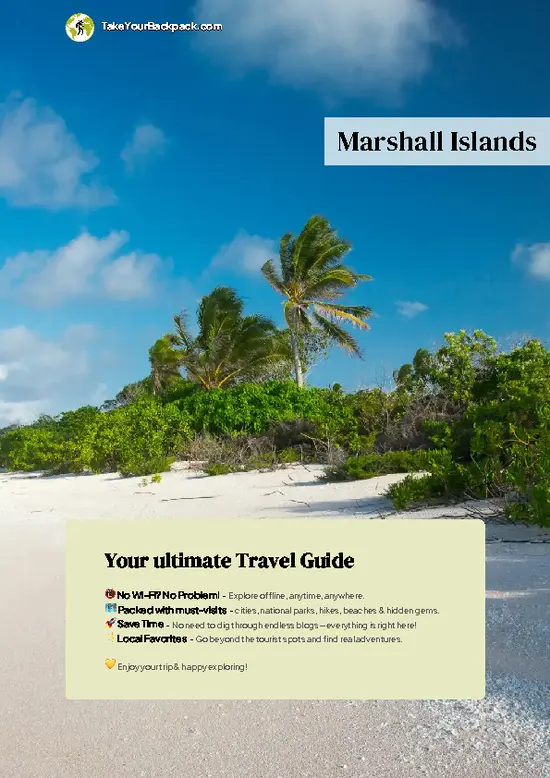
- Capelle and de Brum historic houses: The old wooden homes of the founding families are the atoll’s signature, with verandas and timber frames that look nothing like other Marshallese villages. Ask permission before going close.
- Likiep village lane: A flat, sandy main path lined with breadfruit, coconut palms and pandanus. Walking it at sunrise shows daily life in full: kids heading to school, women sweeping yards.
- Catholic church: The village’s main church anchors Sunday life, and the singing carries across the whole settlement. Visitors in modest dress are welcome.
- Likiep cemetery: Graves here include those of the founding families, with Portuguese and German surnames that tell the settlement’s story in stone and concrete.
- Likiep Lagoon: Clear, sheltered water with coral heads close to the village
- Capelle and de Brum historic houses: The old wooden homes of the founding families are the atoll’s signature, with verandas and timber frames that look nothing like other Marshallese villages. Ask permission before going close.
- Likiep village lane: A flat, sandy main path lined with breadfruit, coconut palms and pandanus. Walking it at sunrise shows daily life in full: kids heading to school, women sweeping yards.
- Catholic church: The village’s main church anchors Sunday life, and the singing carries across the whole settlement. Visitors in modest dress are welcome.
- Likiep cemetery: Graves here include those of the founding families, with Portuguese and German surnames that tell the settlement’s story in stone and concrete.
- Likiep Lagoon: Clear, sheltered water with coral heads close to the village shore. Snorkeling here is calm and easy, with small reef fish and the occasional ray.
- Likiep Airport: The short airstrip is the atoll’s link to the outside, and flight days draw half the village. Watching the small plane land is an event in itself.
- Copra drying yards: Copra is still the main source of income. You can see split coconuts drying in the sun and smell their oily sweetness, and sometimes help turn them.
- Outer lagoon islets: Uninhabited motus a short boat ride from the village, with white sand, hermit crabs and nobody else. Local hosts know which ones suit a picnic.
- Ocean-side reef flats: On the windward side, the surf breaks far out and low tide exposes tide pools full of small creatures. Wear reef shoes.
Spotted a mistake or missing something? Contact us.

 Best Backpacking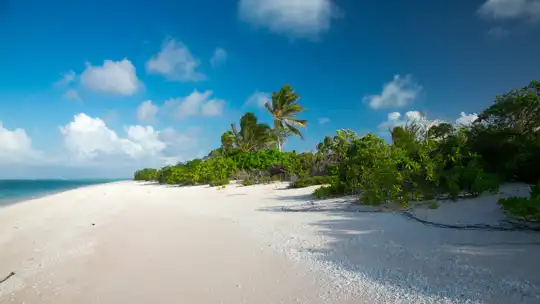
.jpg) Hi, I’m Johan (Netherlands 🇳🇱), the creator of TakeYourBackpack. Over the past 3 decades, I’ve backpacked through 90+ countries across six continents, gaining extensive experience with independent travel, long-term trips, and overland routes.
Hi, I’m Johan (Netherlands 🇳🇱), the creator of TakeYourBackpack. Over the past 3 decades, I’ve backpacked through 90+ countries across six continents, gaining extensive experience with independent travel, long-term trips, and overland routes.