Short version: yes, but it’s not Southeast Asia-easy. Martinique is totally doable as an independent backpacker if you’re comfortable with a bit of planning and some French. It’s a French overseas department, so it feels like a slice of Europe in the Caribbean: safe, organized, and not especially cheap. The main challenges for backpackers are limited hostels, car-centric infrastructure, and higher prices than nearby islands.
If you’ve backpacked in Europe, this will feel familiar: supermarkets instead of street food, Airbnbs and small guesthouses instead of dorms everywhere, and a lot of self-catering to keep costs down. Wild camping is sensitive and not officially allowed in many areas, so rely on campgrounds, simple bungalows, and budget guesthouses. Hitchhiking is common but not guaranteed, and you should treat it as a bonus, not a plan.
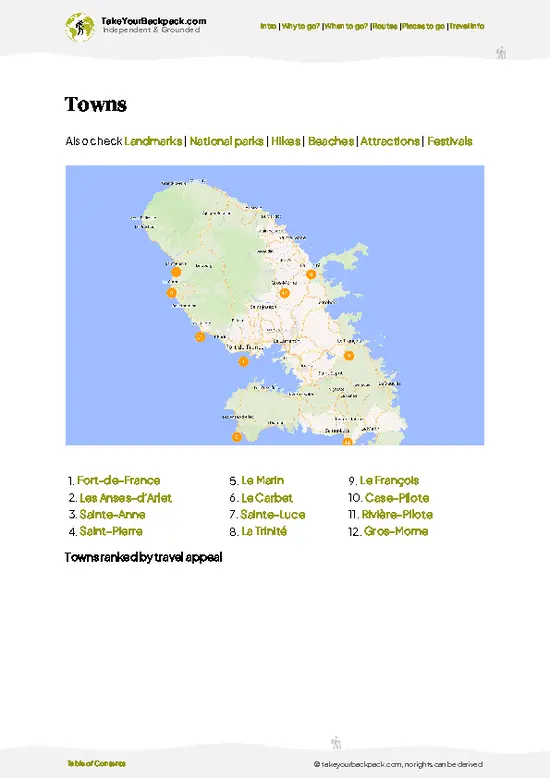
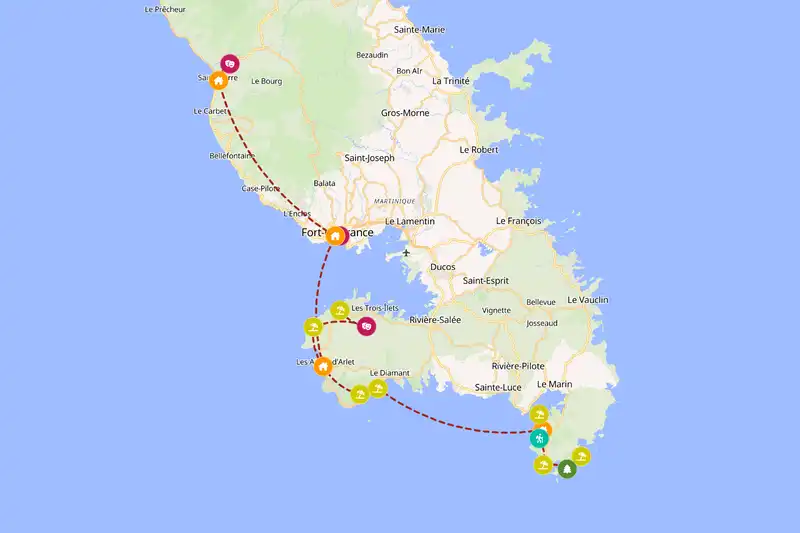
Independent travel works best if you base yourself in 2–3 hubs (for example: Fort-de-France/Schœlcher for urban access, Le Morne-Rouge or Saint-Pierre for the north, Sainte-Anne or Le Marin for the south) and day-trip from there. English is not widely spoken outside tourist spots, so basic French phrases help a lot with buses, markets, and hitchhiking. If you’re expecting ultra-cheap backpacker infrastructure, you’ll be frustrated; if you’re okay with a slightly higher daily budget and some logistics, you’ll be rewarded with great hiking, beaches, and a very local-feeling island.
If you’re flying all the way to Martinique, anything under 5 days feels rushed. The sweet spot for a budget backpacker is 7–10 days; 2 weeks is ideal if you want to hike hard, beach-hop, and still have lazy days.
Rough breakdown:
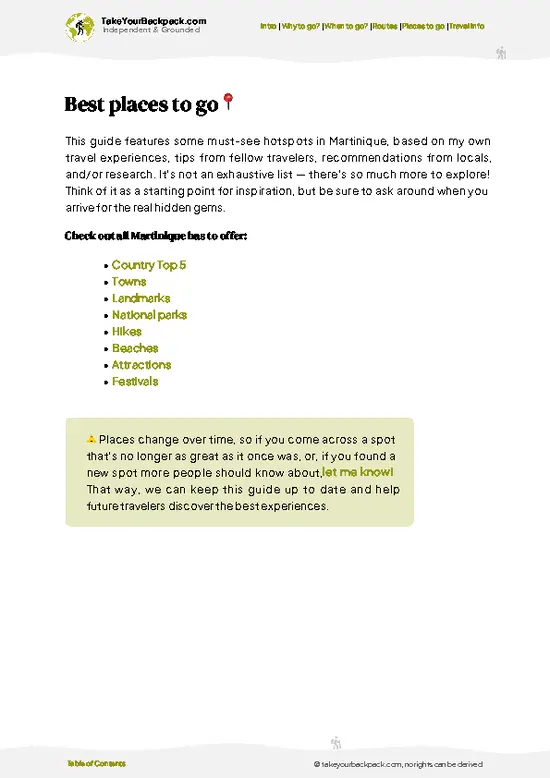
- 4–5 days (minimum viable trip): Base yourself in the south (Sainte-Anne or Le Marin). Focus on beaches (Les Salines, Anse Michel), one day in Fort-de-France, and a quick taste of the rainforest (Jardin de Balata or a short hike near Fonds-Saint-Denis). You’ll miss a lot of the north.
- 7–10 days (recommended): Split your time: 3–4 nights in the south for beaches and coastal walks, 3–4 nights in the north for hiking and black-sand bays, and 1–2 nights around Fort-de-France or Schœlcher for markets, street life, and ferries. This lets you climb or at least approach Mont Pelée, explore the Route de la Trace, and still have proper swim days.
- 12–14 days (slow and satisfying): Add extra hiking days in the north, a sailing or kayak day around Le Marin or Trois-Îlets, and more time just living like a local: long supermarket picnics, rum distillery visits, and wandering small towns.
For tight budgets, longer stays can actually be cheaper per day because you can shop in big supermarkets, cook, and negotiate weekly rates on apartments or bungalows instead of bouncing around every night.
You can get around without a car, but it changes how you travel. Think slower, more local, and more strategic.
Public transport: There are buses and shared minibuses (often called TCSP or local ‘taxi collectifs’), but they’re designed for locals commuting, not tourists. They work reasonably well around Fort-de-France and to some larger towns, but they’re infrequent on evenings, Sundays, and in rural areas. You’ll need to be flexible with time and patient at bus stops.
Ferries: Ferries are your friend. They connect Fort-de-France with Trois-Îlets and some nearby areas, which is perfect if you’re staying in town and want beach access without a car. They’re relatively cheap and more reliable than some bus routes.
Hitchhiking: Common and generally safe during daylight, especially on main roads. It’s easier if you speak French and look obviously like a traveler with a backpack. Don’t rely on it at night or for catching flights/ferries; use it for non-urgent hops between towns or trailheads.
Walking and base-camping: The best no-car strategy is to choose bases with walkable access to beaches, food, and at least one bus route. Sainte-Anne, Le Marin, Trois-Îlets, and parts of Fort-de-France work well. From there, you can walk to several beaches and use buses or hitchhiking for occasional longer jumps.
If you’re short on time and want to hit both north and south, renting a car for 2–3 days in the middle of your trip can be a good compromise: bus/ferry the rest of the time, then do a focused road trip to the harder-to-reach spots.
For a backpacker on a budget, the must-visits are the places where you can get big experiences for low daily cost: hiking, beaches, and local food.
1. Northern Martinique & Mont Pelée
This is the island’s wild side: cloud forests, steep trails, and black-sand bays. Even if you don’t summit Mont Pelée, hiking part of the trail gives you a sense of the island’s volcanic backbone. Base around Saint-Pierre or Le Morne-Rouge for access to trails and cooler nights. Saint-Pierre itself, with its ruins from the 1902 eruption, is worth a wander.
2. Route de la Trace & Rainforest Interior
The road between Fort-de-France and the north cuts through dense rainforest, waterfalls, and viewpoints. You can’t walk the whole thing, but you can hike sections and short trails that branch off. Fonds-Saint-Denis and the area around it are great for day hikes and river swims. This is where Martinique feels most like a Caribbean jungle rather than a beach resort.
3. Southern Beaches around Sainte-Anne
If you only pick one beach area, make it the far south. Les Salines is famous for a reason: long curve of sand, palm trees, and usually swimmable water. Nearby, you’ve got quieter spots like Anse Meunier and the coastal trail (Trace des Caps) that lets you hike between beaches. You can do full days here on a picnic budget if you stock up at supermarkets.
4. Fort-de-France (half to one day)
Not everyone loves it, but it’s the best place to feel the island’s everyday rhythm. The covered market, street food stalls, and waterfront are good for a low-cost lunch and people-watching. Use it as a transport hub, but give it at least a few hours instead of just passing through.
5. A Rum Distillery with Grounds You Can Explore
You don’t need to be a big drinker to appreciate how central rum is here. Choose one where you can walk around the estate, see the cane fields or old machinery, and taste a bit at the end. It’s a cultural stop as much as a boozy one, and often cheaper than many ‘tourist activities.’
6. At Least One Black-Sand Beach
Anse Couleuvre or Anse Céron in the north are worth the effort: jungle backdrop, darker sand, and a more dramatic feel than the postcard-white south. They’re also good spots to combine with short hikes.
If you’re short on time or money, skip anything that eats hours of transport or cash without giving you something unique to Martinique.
1. Over-scheduled museum hopping
Unless you’re a hardcore history buff, you don’t need to hit every museum. Pick one that interests you (for example, a small local history museum or a rum-related site) and skip the rest. The island’s story is better felt in towns, ruins, and markets than in a string of ticketed rooms.
2. Multiple organized boat excursions
Boat trips are fun, but they add up fast. If you’re on a budget, choose one good day on the water (snorkeling or a simple coastal cruise) and skip the rest. You can swim and snorkel from shore in many places for free or cheap.
3. Trying to ‘do’ every beach
The beaches start to blur if you chase them all. Focus on a cluster: the Sainte-Anne area in the south and one or two black-sand beaches in the north. Skipping some of the mid-island resort beaches (like the more built-up parts of Trois-Îlets) frees time for hiking and local food.
4. Expensive resort areas as a base
You don’t need to stay in the priciest resort zones to enjoy the island. Use them as day-trip targets if you’re curious, but sleep in simpler guesthouses, bungalows, or campgrounds. Skipping resort stays keeps your budget for experiences and good meals.
5. Long detours for ‘Instagram spots’
Any place that requires a long bus ride or taxi just for one photo (a single viewpoint, a mural, a fancy beach club) is not worth it on a tight schedule. Martinique’s real payoff is in its mix of hiking, everyday life, and accessible beaches, not in chasing one specific angle you saw online.
6. Shopping-focused time in malls or duty-free zones
Prices are generally not low enough to justify spending precious days shopping. Grab what you need at supermarkets and local markets, then get back to the trails, beaches, and rum tastings.