×

Mauritania🇲🇷 | townsAioun El Atroussregional capital, military presence, Saharan edge | things to do and best time to go

Explore KankossaExplore Timbedra

Backpacking in Aioun El Atrouss
🌟 Highlighttown ranked #6
By Johan Kruseman 🇳🇱 | Updated May 26, 2026

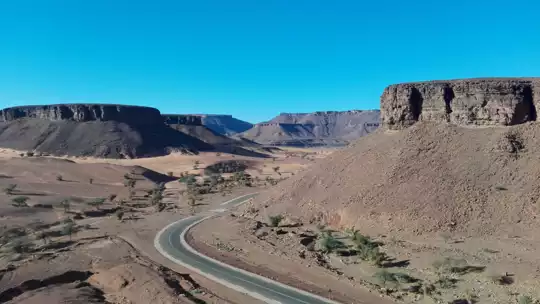
Aioun El Atrouss surprises most backpackers by being greener than you’d expect from a Saharan outpost—after the rains, the air smells of wet earth and acacia, and the hills blush with grass. Tucked in Mauritania’s southeast, it’s a crossroads town where the desert’s edge softens into rocky plateaus. Aioun isn’t a destination for urban thrills; it’s a practical, low-key stopover, best used as a launchpad for exploring the Hodh Ech Chargui region’s wild escarpments or as a breather between the dustier, more remote stretches of the interior. The market is lively but compact, with more donkey carts than cars, and the evenings settle into a hush broken only by tea kettles and distant calls to prayer. Transport is basic—shared taxis and bush buses, no trains—so patience is part of the deal. You won’t find hostels or a backpacker scene, but you will find cheap eats, simple auberges, and a sense of calm that’s rare in busier towns like Néma. Safety is generally good, though the pace is slow and the social scene is local, not international. Aioun is for those who want to feel the desert’s threshold, not just pass through it.

Discover everything you want to know in the 📖 Mauritania Travel Guide.
Safety warning

The current risk level for Mauritania is high. Check the advice before going.


Get your Mauritania guide
63 ranked highlights, routes & tips, works offline (269 pages)
Loading the map 🌍
CLICK TO FILTER
cities
towns
villages
landmarks
national parks
hikes
beaches
attractions
festivals
regions
SHOW COUNTRY’S BESTSHOW ALL

✨ Why go?
Ranked #6 town in Mauritania
The unique appeal for travelers

Backpackers flock to ’Aioun El Atrouss’ for its strategic location along the route to the Adrar region. This town serves as a convenient base for hikes in the surrounding sand dunes and rock formations. The walkable streets are lined with small-scale guesthouses and hostels, offering a cozy atmosphere where you can swap stories with fellow travelers. The local food scene is a treat; savor tagines and fresh bread from street vendors that fill the air with inviting aromas.

Most travelers stay a few days, soaking in the friendly vibe and engaging with the local culture. It’s ideal for slow travelers and solo adventurers looking for a genuine experience, rather than a quick stop. If you appreciate a blend of nature and community, this town is a worthy pause on your journey.
Want to include Aioun El Atrouss in your Mauritania route?
Create a personalized Mauritania itinerary that includes Aioun El Atrouss and the places that fit your trip — based on your travel style, budget, and available time. Get your route in seconds.

Generate my trip

💡 HighlightsDon't-miss highlights and experiences

  • Marché central (the town market) — The daily market is the best way to feel the town: stalls selling fresh produce, spices, textiles and everyday goods, with local vendors and a lively atmosphere that shows how people here live and trade.
  • The main Friday mosque — The mosque is the spiritual and social heart of Aioun El Atrouss; visiting around prayer times (respectfully and modestly dressed) gives a real sense of local religious life and community rhythms.
  • Aioun El Atrouss regional airport — A small, functional regional airport that’s the primary arrival and departure point for the town; useful to visit for logistics and to watch the rhythms of regional travel and transport.
A few real, visitable highlights just outside town worth day trips: nearby desert landscapes and palm groves, traditional … read more 👉
  • Marché central (the town market) — The daily market is the best way to feel the town: stalls selling fresh produce, spices, textiles and everyday goods, with local vendors and a lively atmosphere that shows how people here live and trade.
  • The main Friday mosque — The mosque is the spiritual and social heart of Aioun El Atrouss; visiting around prayer times (respectfully and modestly dressed) gives a real sense of local religious life and community rhythms.
  • Aioun El Atrouss regional airport — A small, functional regional airport that’s the primary arrival and departure point for the town; useful to visit for logistics and to watch the rhythms of regional travel and transport.
A few real, visitable highlights just outside town worth day trips: nearby desert landscapes and palm groves, traditional nomad encampments and seasonal livestock markets at surrounding villages, and small border-market towns where regional cross-border trade happens.
Spotted a mistake or missing something? Contact us.

🏘️ NeighborhoodsKey areas and districts to know

’Aioun El Atrouss’ is a fascinating blend of culture and desert life, perfect for backpackers seeking authenticity. Here’s how to navigate its neighborhoods:

Centre Ville: This is the heart of the town. Bustling markets fill the air with the scent of spices and grilled meats. It’s walkable, with affordable guesthouses and local eateries. Ideal for short stays, you can soak in the local vibe and easily access transport to other areas.

Quartier des Artisans: A quieter area, this neighborhood is where you’ll find local crafts and artisans at work. The atmosphere is laid-back, perfect for those looking to escape the hustle. Prices are reasonable, and it’s a great spot for longer stays if you want to immerse yourself in the craft culture.

Zone de Loisirs: If you’re after nightlife, this is your … read more 👉
’Aioun El Atrouss’ is a fascinating blend of culture and desert life, perfect for backpackers seeking authenticity. Here’s how to navigate its neighborhoods:

Centre Ville: This is the heart of the town. Bustling markets fill the air with the scent of spices and grilled meats. It’s walkable, with affordable guesthouses and local eateries. Ideal for short stays, you can soak in the local vibe and easily access transport to other areas.

Quartier des Artisans: A quieter area, this neighborhood is where you’ll find local crafts and artisans at work. The atmosphere is laid-back, perfect for those looking to escape the hustle. Prices are reasonable, and it’s a great spot for longer stays if you want to immerse yourself in the craft culture.

Zone de Loisirs: If you’re after nightlife, this is your go-to. Bars and cafes buzz with energy, especially on weekends. While it’s less walkable, taxis are readily available. Perfect for short bursts of fun, but not ideal for peace-seekers.

Each area offers a unique slice of life, making your experience richer and more rewarding.

⌛️ 1 day1-day itinerary for Aioun El Atrouss

’Aioun El Atrouss’ is a town that pulses with the rhythm of everyday life in Mauritania. It’s a place where the desert meets the spirit of community, offering a glimpse into local culture that’s often overlooked by tourists. The streets are alive with the scent of spices and the sounds of laughter, making it a perfect spot for an immersive day.

Start your morning at the bustling market in the heart of the town. The vibrant colors of fresh produce and the chatter of vendors create an electric atmosphere. Grab a breakfast of *mhadjeb*, a delicious flatbread stuffed with vegetables, from a local stall. The warmth of the bread pairs perfectly with the cool morning air.

As the sun climbs higher, wander through the narrow streets of the old neighborhood, where mud-brick houses stand as a testament … read more 👉
’Aioun El Atrouss’ is a town that pulses with the rhythm of everyday life in Mauritania. It’s a place where the desert meets the spirit of community, offering a glimpse into local culture that’s often overlooked by tourists. The streets are alive with the scent of spices and the sounds of laughter, making it a perfect spot for an immersive day.

Start your morning at the bustling market in the heart of the town. The vibrant colors of fresh produce and the chatter of vendors create an electric atmosphere. Grab a breakfast of *mhadjeb*, a delicious flatbread stuffed with vegetables, from a local stall. The warmth of the bread pairs perfectly with the cool morning air.

As the sun climbs higher, wander through the narrow streets of the old neighborhood, where mud-brick houses stand as a testament to traditional architecture. Stop by the local pottery workshop, often missed by tourists. Here, artisans shape clay into beautiful pieces, and you might even get a chance to try your hand at it.

In the afternoon, head to the nearby oasis, a serene escape where you can relax under the shade of palm trees. The gentle rustle of leaves and the soft sound of water create a peaceful backdrop for reflection.

As evening falls, return to the town center. Enjoy a meal at a local eatery, savoring dishes like *thieboudienne*, a flavorful fish and rice dish. The day wraps up with the golden hues of sunset painting the sky, a perfect end to a day well spent in ’Aioun El Atrouss.’
Turn your Aioun El Atrouss visit into an Mauritania adventure
Build a complete Mauritania route with Aioun El Atrouss, hidden gems, must-see destinations, and realistic travel times included.

Generate my trip

🌤️ When to go?Choosing the right time of year


  • Weather: Aioun El Atrouss bakes under the Saharan sun most of the year. The best window is between November and February when temperatures dip to a bearable 20-25°C (68-77°F). Outside this, expect scorching heat that can drain your energy fast.

  • Temperature: Daytime highs in summer often soar past 40°C (104°F), making midday trekking a brutal slog. Nights can be surprisingly cool, dropping to around 15°C (59°F), so pack layers if you camp.

  • Daylight Hours: The sun rises early and sets late, giving you roughly 11-12 hours of light year-round. This steady daylight rhythm means you can plan long hikes without worrying about sudden darkness.

  • Crowds: Tourism here is sparse year-round, so you won’t face crowds. The quiet means you get the place almost to yourself, but also fewer services
read more 👉

  • Weather: Aioun El Atrouss bakes under the Saharan sun most of the year. The best window is between November and February when temperatures dip to a bearable 20-25°C (68-77°F). Outside this, expect scorching heat that can drain your energy fast.

  • Temperature: Daytime highs in summer often soar past 40°C (104°F), making midday trekking a brutal slog. Nights can be surprisingly cool, dropping to around 15°C (59°F), so pack layers if you camp.

  • Daylight Hours: The sun rises early and sets late, giving you roughly 11-12 hours of light year-round. This steady daylight rhythm means you can plan long hikes without worrying about sudden darkness.

  • Crowds: Tourism here is sparse year-round, so you won’t face crowds. The quiet means you get the place almost to yourself, but also fewer services and less infrastructure.

  • Seasonal Activities: Cooler months bring local markets and cultural events to life, offering a richer experience. The heat of summer tends to push locals indoors, so you miss out on that vibrant street life.

  • Price Fluctuations: Prices remain fairly stable due to low tourism volume, but expect slightly higher costs during the cooler season when demand peaks among the few visitors who come.


Pro-tip: Aim for late November to early February to catch the sweet spot of mild weather and active local life—your body and your camera will thank you.


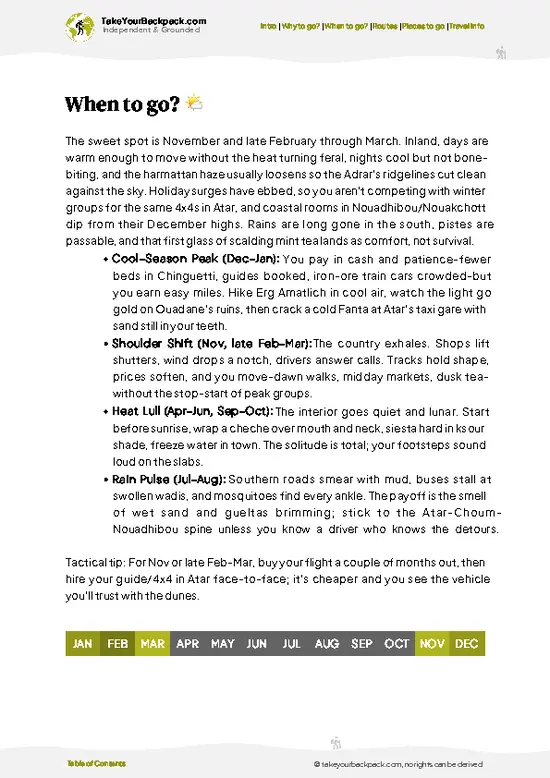
source: climatestotravel.comJANJanuary: excellent for travelingFEBFebruary: excellent for travelingMARMarch: good for travelingAPRApril: fair for travelingMAYMay: below average for travelingJUNJune: below average for travelingJULJuly: below average for travelingAUGAugust: below average for travelingSEPSeptember: fair for travelingOCTOctober: good for travelingNOVNovember: highly recommended for travelingDECDecember: excellent for traveling
when-to-go

✈️ The backpacker research shortcutMauritania Travel Guide

An offline-friendly backpacking guide with optimized travel routes, ranked highlights, transport advice, and the best areas to stay.
example page 0 from our offline Travel Guide for Mauritania
example page 1 from our offline Travel Guide for Mauritania
example page 2 from our offline Travel Guide for Mauritania
example page 3 from our offline Travel Guide for Mauritania
example page 4 from our offline Travel Guide for Mauritania
example page 5 from our offline Travel Guide for Mauritania
example page 6 from our offline Travel Guide for Mauritania
example page 7 from our offline Travel Guide for Mauritania
The digital guide (269 pages) contains:
63 highlights, ranked by travel appeal
Optimized 5, 10 & 15-day travel routes
Cities, national parks, landmarks, beaches
How to get around
Offline-friendly for travel without Wi-Fi
👉 Click to see all 30+ guide features

📅 Plan smarter in minutes, not weeks
Month by month travel advice
Festivals & national holidays
Budget expectations

🗺️ Go to the right places, skip the overrated ones
Honest pros & cons of destinations
Top hikes, parks & viewpoints
Lesser-known places most travelers miss
Clear “worth it vs skip it” guidance

🛏️ Travel smoothly without rookie mistakes
Best areas to stay
Transport systems explained simply
Common scams & safety advice
SIM cards, money & practical tips

🌍 Understand the country, not just visit it
Culture & traditions
52 Essential phrases & customs
Festivals worth planning around
Traveler-friendly historical context
Insights that make places more meaningful

📱 Built for real travel conditions
Fully downloadable PDF
Works completely offline
Optimized for phone use
Useful in remote areas & buses
Everything in one place
Save weeks of stressful planning
Get instant access to your full guide. 30‑day money-back guarantee.


By proceeding you agree to our terms.
Sent to your inbox immediately after payment • 100% Secure Checkout
Best Backpacking Travel Advisor 2025 tourism awardBest Backpacking
Travel Advisor
2025
What others say about Take Your Backpack Guides:
⭐⭐⭐⭐⭐
Fantastic, amazing amount of information!
⭐⭐⭐⭐⭐
My goodness this is amazing, it's what I've been looking for hats off too you!
⭐⭐⭐⭐⭐
I think this is absolutely BRILLIANT
⭐⭐⭐⭐
Very complete and informative. It's still missing places, but I gotta to commend you
⭐⭐⭐⭐⭐
This is truly amazing, thank you, can't wait to explore it with my kids!
⭐⭐⭐⭐⭐
Awesome resource, thank you!
⭐⭐⭐⭐⭐
This is amazing! Can't wait to explore the ones I haven't seen
⭐⭐⭐⭐
I love this! Well done, great idea.
⭐⭐⭐⭐⭐
Thanks for taking the time to make this gem!
⭐⭐⭐⭐⭐
This might be the best website I've ever seen.
⭐⭐⭐⭐⭐
Congratulations, and thank you so much for your work; it's incredibly valuable.
⭐⭐⭐⭐
In all seriousness I think you did a great job pointing out the important spots
⭐⭐⭐⭐⭐
10/10 very good
⭐⭐⭐⭐⭐
As someone who's only just starting to visit regularly this is awesome, thank you.
⭐⭐⭐⭐
Thank you very much! I'm going to visit my dad, it's going to be very useful!
⭐⭐⭐⭐⭐
This is really cool! We'll be travelling for the first time and this definitely come in handy.
⭐⭐⭐⭐⭐
You are now our minister of culture, congratulations 👨‍💼
⭐⭐⭐⭐⭐
Just wanted to tell you that this is a pearl! Going to follow your recommendations.
⭐⭐⭐⭐⭐
This is so cool. I'll definitely be using the resource for my travels soon.
⭐⭐⭐⭐⭐
This is very impressive! Good work.
⭐⭐⭐⭐⭐
This is an amazing and informative site. Very well done!

🛏️ Where to stay?How to pick the right area

In ’Aioun El Atrouss, the best spot for backpackers is the town center, where the pulse of daily life beats strongest. This area is compact, making it easy to navigate on foot, which is a blessing when you’re carrying your pack and want to soak in the local rhythm without hassle. The streets here are lined with small markets and cafés where the scent of fresh bread and strong tea drifts through the air, inviting you to pause and connect with locals or fellow travelers.

Compared to the quieter outskirts, the center feels safer after dark because there’s always a steady flow of people, and the … read more 👉
In ’Aioun El Atrouss, the best spot for backpackers is the town center, where the pulse of daily life beats strongest. This area is compact, making it easy to navigate on foot, which is a blessing when you’re carrying your pack and want to soak in the local rhythm without hassle. The streets here are lined with small markets and cafés where the scent of fresh bread and strong tea drifts through the air, inviting you to pause and connect with locals or fellow travelers.

Compared to the quieter outskirts, the center feels safer after dark because there’s always a steady flow of people, and the community vibe is palpable. It’s where budget travelers naturally gather, so you’ll find simple guesthouses and a handful of hostels that cater to solo adventurers looking for a social atmosphere without the tourist gloss.

Staying here means you’re steps away from the town’s core life—markets, eateries, and the occasional street musician—making it easier to dive into authentic experiences without needing a car or complicated directions. The energy here is low-key but alive, perfect for those who want to feel part of the place rather than just passing through.

🚌 Getting aroundGetting around like a local

Aioun El Atrouss moves at its own rhythm—less a clockwork town and more a place where time bends to the sun’s arc and the dusty wind’s mood. The streets hum with a slow pulse, where the scent of dry earth and faint smoke from cooking fires lingers in the air. You won’t find rigid schedules here; instead, you’ll navigate a blend of informal rhythms and local intuition. This is a town where patience pays off, and the journey itself is part of the experience. Understanding how to move through Aioun El Atrouss means syncing with its natural flow, not fighting it.

Walking: The most straightforward way to get around is on foot. The town’s compact layout means you can cover most key spots within 20 to 30 minutes. Walking lets you soak in the textures—the cracked mud walls, the chatter from market … read more 👉
Aioun El Atrouss moves at its own rhythm—less a clockwork town and more a place where time bends to the sun’s arc and the dusty wind’s mood. The streets hum with a slow pulse, where the scent of dry earth and faint smoke from cooking fires lingers in the air. You won’t find rigid schedules here; instead, you’ll navigate a blend of informal rhythms and local intuition. This is a town where patience pays off, and the journey itself is part of the experience. Understanding how to move through Aioun El Atrouss means syncing with its natural flow, not fighting it.

Walking: The most straightforward way to get around is on foot. The town’s compact layout means you can cover most key spots within 20 to 30 minutes. Walking lets you soak in the textures—the cracked mud walls, the chatter from market stalls, the occasional stray goat ambling by. It’s free, flexible, and the best way to catch the town’s unfiltered vibe.

Shared Taxis (Taxi Collectifs): These operate without strict timetables, leaving when full, usually from central points like the main market or bus station. Fares hover around 100-200 MRO (Mauritanian Ouguiya), making them a budget-friendly option for longer hops within or just outside town. Expect a bumpy ride on unpaved roads, but the shared nature means you’ll meet locals and get a real sense of daily life.

Motorcycle Taxis (Motos): For quick, nimble trips, motorcycle taxis dart through narrow alleys and dusty tracks. They’re faster than walking and cheaper than private cars, with fares typically between 50-100 MRO for short distances. Helmets aren’t always standard, so hold on tight and brace for a ride that’s as much about the thrill as the destination.

Intercity Buses: If you’re heading beyond Aioun El Atrouss, the main bus station offers services to Nouakchott and other regional hubs. Departure times are flexible but usually cluster in the early morning (6-9 AM) and late afternoon (4-6 PM). Tickets cost roughly 500-700 MRO, and the journey can be long and dusty, but it’s the most economical way to cover serious ground.

Private Car Hire: For those with a bit more budget or traveling in groups, renting a car with a driver is an option. It’s pricier—expect to pay upwards of 10,000 MRO per day—but offers comfort, control over your schedule, and access to remote spots unreachable by public transit. This is the choice for travelers who want to blend ease with exploration without the unpredictability of shared rides.

Mastering Aioun El Atrouss’s transit means embracing its laid-back tempo and the tactile reality of its roads and rhythms. Walk when you want to absorb the town’s soul, hitch a shared taxi for local color, or grab a moto for speed and spontaneity. Each mode offers a different lens on the town’s character, turning every trip into a small adventure.

👛 Costs (as of 28 May 2025)How expensive it really is

Backpacking in ’Aioun El Atrouss’, Mauritania, means embracing a raw, off-the-beaten-path vibe where costs stay modest but the experience is rich in local flavor.
  • Dorm Accommodation: Expect basic guesthouses or small inns with shared rooms. Prices hover around €8 to €15 per night. These places often have minimal amenities, but the simplicity keeps your wallet happy.
  • Meals: Street food and local eateries dominate here. A filling meal of traditional Mauritanian dishes like thieboudienne or grilled meats will set you back about €2 to €5. Fresh bread, tea, and snacks are even cheaper, making it easy to eat well on a shoestring.
  • Local Transport: Transport options are limited and informal. Shared taxis or minibuses are the norm, costing roughly €0.50 to €1 per short trip within town. For longer
read more 👉
Backpacking in ’Aioun El Atrouss’, Mauritania, means embracing a raw, off-the-beaten-path vibe where costs stay modest but the experience is rich in local flavor.
  • Dorm Accommodation: Expect basic guesthouses or small inns with shared rooms. Prices hover around €8 to €15 per night. These places often have minimal amenities, but the simplicity keeps your wallet happy.
  • Meals: Street food and local eateries dominate here. A filling meal of traditional Mauritanian dishes like thieboudienne or grilled meats will set you back about €2 to €5. Fresh bread, tea, and snacks are even cheaper, making it easy to eat well on a shoestring.
  • Local Transport: Transport options are limited and informal. Shared taxis or minibuses are the norm, costing roughly €0.50 to €1 per short trip within town. For longer distances, prices rise but remain affordable compared to global standards.
  • Basic Activities/Entry Fees: The town’s attractions are low-key, with few formal entry fees. Visiting markets, local mosques, or natural spots usually costs nothing or just a small tip if you hire a guide, around €1 to €3.
  • Miscellaneous Expenses: Budget for essentials like bottled water, phone credit, or small souvenirs. These typically add up to about €1 to €3 daily, depending on your habits.

All told, you’re looking at roughly €12 to €27 per day to cover the essentials in ’Aioun El Atrouss’. This range keeps you comfortably independent without skimping on the authentic local rhythm.
⚠️ Prices can change and everyone travels differently, so take this as a rough guide. Hope it helps you plan your adventure!

🚌 Day tripsWhere to go beyond the main area

Using ’Aioun El Atrouss’ as a base for day trips opens up a world of exploration in Mauritania. The town’s strategic location makes it a perfect launchpad for adventures that blend culture, history, and stunning landscapes.

Chinguetti
Just a couple of hours from ’Aioun El Atrouss’, Chinguetti is a UNESCO World Heritage site that feels like stepping into a time capsule. The ancient libraries filled with centuries-old manuscripts are a must-see. You’ll wander through narrow, dusty streets, where the scent of spices mingles with the warm desert air. Budget around 5,000 ouguiya for transport and a modest meal. The best time to visit is between November and March when the temperatures are cooler. A common mistake? Underestimating the sun; pack plenty of water and a hat.
👉 Explore Chinguetti
read more 👉
Using ’Aioun El Atrouss’ as a base for day trips opens up a world of exploration in Mauritania. The town’s strategic location makes it a perfect launchpad for adventures that blend culture, history, and stunning landscapes.

Chinguetti
Just a couple of hours from ’Aioun El Atrouss’, Chinguetti is a UNESCO World Heritage site that feels like stepping into a time capsule. The ancient libraries filled with centuries-old manuscripts are a must-see. You’ll wander through narrow, dusty streets, where the scent of spices mingles with the warm desert air. Budget around 5,000 ouguiya for transport and a modest meal. The best time to visit is between November and March when the temperatures are cooler. A common mistake? Underestimating the sun; pack plenty of water and a hat.
👉 Explore Chinguetti

Ouadane
This remote town, about three hours away, offers a glimpse into Mauritania’s rich history. The crumbling ruins of ancient structures tell stories of a once-thriving trade hub. The journey itself is an adventure, with the landscape shifting from arid plains to rocky outcrops. Expect to spend around 6,000 ouguiya for transport. Late afternoon visits are ideal for capturing the golden light on the ruins. Many first-timers miss the chance to engage with locals; don’t hesitate to ask questions and share stories.
👉 Explore Ouadane

Terjit Oasis
A little over an hour’s drive, Terjit Oasis is a refreshing escape. The lush palm trees and cool waters create a stark contrast to the surrounding desert. It’s a perfect spot for a picnic or a dip. Budget around 4,000 ouguiya for transport. The best time to go is early morning, when the light dances on the water. A rookie error is not bringing a swimsuit; you’ll want to take a dip in those inviting waters.
👉 Explore Terjit Oasis

Atar
Roughly two hours away, Atar is a bustling town that serves as a gateway to the Sahara. Explore the local market, where the vibrant colors of textiles and spices ignite the senses. Expect to spend about 5,500 ouguiya for transport and snacks. The cooler months are best for wandering the streets. Many travelers overlook the chance to try local dishes; don’t miss out on the traditional tagine.
👉 Explore Atar
Want to know what more Mauritania offers?
The Mauritania Travel Guide describes 63 highlights, from cities to national parks, from beaches to hikes

Get the Travel Guide -

🛡️ SafetyStaying Safe: What Travelers Should Know

In ’Aioun El Atrouss’, safety is generally solid, but a few practical tips can enhance your experience. Stay aware in crowded markets; pickpockets occasionally lurk among the vibrant stalls. If you’re solo, avoid wandering too far after dark—stick to well-lit areas and familiar paths.

Be cautious with offers from locals; some may try to sell you tours or services that aren’t what they seem. A friendly smile can go a long way, but trust your instincts. Carry your belongings close, and keep your phone handy for navigation. The atmosphere is warm, but a little vigilance ensures you soak in the charm without distraction.

Other Mauritanian towns near Aioun El Atrouss

Explore more nearby:

  • Timbedra—transit stop, livestock trading, basic amenities| 160 km away
  • Kiffa—bead markets, Sahelian crossroads, artisanal workshops| 192 km away
  • Kankossa—artificial lake, fishing boats, rural outposts| 220 km away

💡 Not sure where to go next?
Create a personalized itinerary for Mauritania including Aioun El Atrouss and the places that fit your trip.

Generate my itinerary

👉 Discover all towns

Or checkout all Mauritania has to offer (think cities, towns, villages, national parks, hikes, beaches, festivals)
Country photo of Mauritania

We 💚 feedbackFinal thoughts on visiting Aioun El Atrouss

Aioun El Atrouss has a raw, unfiltered vibe that feels like stepping into a living postcard. The sunsets here? They paint the sky in hues you didn’t know existed. A surprise? The warmth of the locals; they’ll share stories over sweet mint tea that linger long after you leave. Just watch your step—some paths can be tricky, but the adventure is worth it.

✍️ Help improve this page!
The information on this page is based on in-depth research, insights shared by experienced travelers, and feedback from the local travel community in Mauritania. While every effort is made to keep the information accurate and current, conditions can change — so if you spot anything incorrect or outdated, please get in touch.


🙋‍♂️ Give feedback

👋 Meet the founderWho’s Behind Take Your Backpack?

Johan, backpacker and founder of TakeYourBackpackHi, I’m Johan (Netherlands 🇳🇱), the creator of TakeYourBackpack. Over the past decade, I’ve backpacked through 80+ countries across six continents, gaining extensive experience with independent travel, long-term trips, and overland routes.

This site is built on a combination of firsthand travel experience and carefully curated insights from other backpackers. Many guides are based on places I’ve personally visited, while others bring together tips, observations, and practical advice shared by trusted travelers I’ve met along the way.

The goal is to provide realistic, experience-driven guidance — not generic itineraries — so you can explore destinations with better context, clearer expectations, and more confidence.

Get full Mauritania guide •
Instant download • 63 highlights • Full Offline guide