v2.webp)
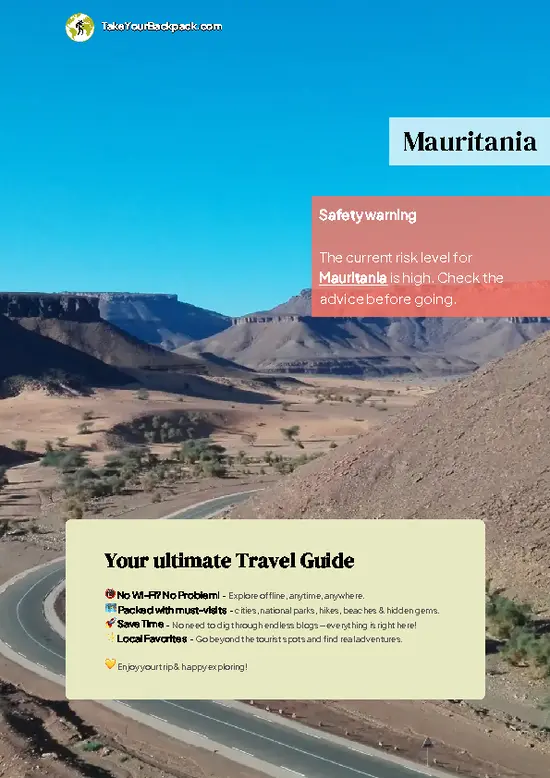
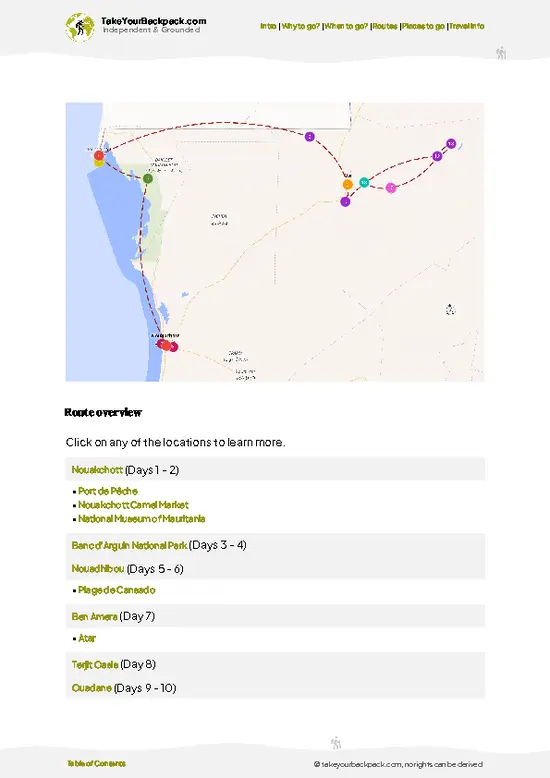
- Old Ksar of Ouadane: The 12th-century stone town, a UNESCO-listed ruin of tumbled houses, mosque remains and narrow alleys, is the reason to come. Visit in the first hours after sunrise or the late afternoon, when the stone is cooler and the shadows are long. Free entry; allow 1.5 to 2 hours.
- Ouadane Manuscript Library: A small collection of old Quranic texts, legal papers and scientific writings kept by local families, evidence of the town’s past as a learning center. Go in the morning, when the keepers are most likely to be around. A donation of US$2 to 5 is customary; 30 to 45 minutes.
- The Palm Grove and Wadi: Below the ruins, date palms and small gardens survive on groundwater, a green strip that smells of damp earth against the gold stone. Walk it in late afternoon for shade and soft light.
- Old Ksar of Ouadane: The 12th-century stone town, a UNESCO-listed ruin of tumbled houses, mosque remains and narrow alleys, is the reason to come. Visit in the first hours after sunrise or the late afternoon, when the stone is cooler and the shadows are long. Free entry; allow 1.5 to 2 hours.
- Ouadane Manuscript Library: A small collection of old Quranic texts, legal papers and scientific writings kept by local families, evidence of the town’s past as a learning center. Go in the morning, when the keepers are most likely to be around. A donation of US$2 to 5 is customary; 30 to 45 minutes.
- The Palm Grove and Wadi: Below the ruins, date palms and small gardens survive on groundwater, a green strip that smells of damp earth against the gold stone. Walk it in late afternoon for shade and soft light. Free; about an hour.
- The Old Mosque and Ancient Cemetery: Close to the ksar, simple tombs and the old mosque remains show how the town once organized its life. Best in the morning, when it is quiet. Free; around 30 minutes.
- Plateau Viewpoint above the Ksar: A short scramble up the rock edge gives a wide view over the ruins, the palm grove and the endless hamada. Sunset is the favorite hour, though you will need a torch for the way down. Free; 45 minutes to an hour.
Spotted a mistake or missing something? Contact us.

Lifetime Adventure: 8-Day Private Tour to Mauritania

Tour in Mauritania

Nouakchott Explorer: Private Capital Tour

Adrar & Banc d'Arguin 10-Day Tour

The best of Nouadhibou walking tour

4-Day Mauritania Adventure & Culture

Romantic tour in Rosso

Mauritania in a nutshell Day Tour of Nouakchott

Mauritania eSIM (Instant Delivery)


 Best Backpacking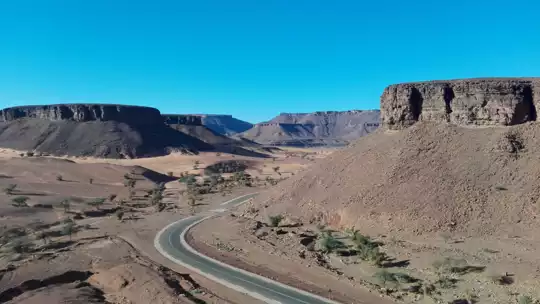
.jpg) Hi, I’m Johan (Netherlands 🇳🇱), the creator of TakeYourBackpack. Over the past 3 decades, I’ve backpacked through 90+ countries across six continents, gaining extensive experience with independent travel, long-term trips, and overland routes.
Hi, I’m Johan (Netherlands 🇳🇱), the creator of TakeYourBackpack. Over the past 3 decades, I’ve backpacked through 90+ countries across six continents, gaining extensive experience with independent travel, long-term trips, and overland routes.