v2.webp)
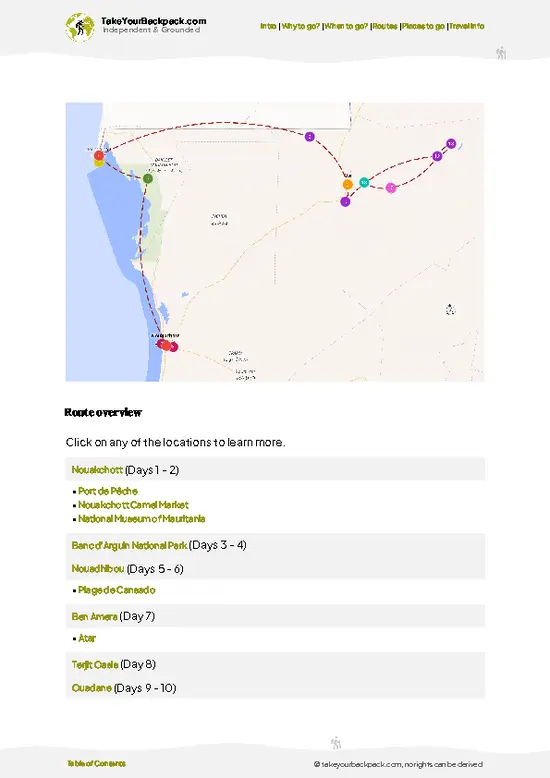
- Friday souk (the weekly Atar market) — The heartbeat of the town: a chaotic, colorful market where traders sell dates, spices, textiles, livestock and everything in between. Great for people-watching, tasting street snacks and buying locally made goods.
- The old medina / ksar of Atar — Narrow alleys, mudbrick houses and low doorways that give a real feel for Saharan urban life. Walk slowly here—architecture, light and daily routines are the attraction, not a single monument.
- The town’s main Friday mosque — An active place of worship that anchors communal life; visitors can admire local mosque architecture from the outside and observe prayer rhythms (dress and behavior respectfully).
- Palmeraie (the palm oasis and date groves) — Shady rows of palms right by town where date farming still
- Friday souk (the weekly Atar market) — The heartbeat of the town: a chaotic, colorful market where traders sell dates, spices, textiles, livestock and everything in between. Great for people-watching, tasting street snacks and buying locally made goods.
- The old medina / ksar of Atar — Narrow alleys, mudbrick houses and low doorways that give a real feel for Saharan urban life. Walk slowly here—architecture, light and daily routines are the attraction, not a single monument.
- The town’s main Friday mosque — An active place of worship that anchors communal life; visitors can admire local mosque architecture from the outside and observe prayer rhythms (dress and behavior respectfully).
- Palmeraie (the palm oasis and date groves) — Shady rows of palms right by town where date farming still matters. Good for a relaxed stroll, photographing oasis life and buying fresh dates from growers.
- Traditional craft workshops and souk alleys — Small shops and back-street workshops where leatherworkers, silversmiths and carpet sellers still hammer and stitch by hand. Watching a craft demo and bargaining for a small piece makes for an honest souvenir.
- Livestock trading areas (market days) — On market days parts of Atar turn into lively animal trading spots—camels, goats and sheep—with loud haggling and practical logistics. A raw, unfiltered look at regional commerce (keep distance and ask before photographing).
- Colonial-era quarter and public buildings — A handful of French-era administrative buildings and houses that contrast with the older ksar; useful for understanding the town’s recent history and seeing different architectural layers.
- Central square tea houses and cafés — Small tea houses where locals gather for mint tea, news and games. Best place to overhear local conversation, sample simple Saharan dishes and practice a few words of Hassaniya.
- Neighborhood granaries and small ruins — Scattered, modest storage structures and ruined compounds inside town that hint at older caravan economies and ways of life—nice for short exploratory walks with a local guide.
- Sunset viewpoints on the town’s edge — Low hills and the first dunes around Atar give short, accessible vantage points for dramatic desert sunsets—no long drive required and a peaceful way to end a day in town.
Spotted a mistake or missing something? Contact us.

 Best Backpacking
.jpg) Hi, I’m Johan (Netherlands 🇳🇱), the creator of TakeYourBackpack. Over the past 3 decades, I’ve backpacked through 90+ countries across six continents, gaining extensive experience with independent travel, long-term trips, and overland routes.
Hi, I’m Johan (Netherlands 🇳🇱), the creator of TakeYourBackpack. Over the past 3 decades, I’ve backpacked through 90+ countries across six continents, gaining extensive experience with independent travel, long-term trips, and overland routes.