×

Mauritania🇲🇷 | townsTimbedratransit stop, livestock trading, basic amenities | things to do and best time to go

Explore Aioun El AtroussExplore Bassiknou

Backpacking in Timbedra
👌 Worth visitingtown ranked #15
By Johan Kruseman 🇳🇱 | Updated June 4, 2026

Timbedra used to be a true outpost—dusty, isolated, a place where the desert wind felt like the only company and the main road was more camel track than tarmac. Today, it’s still remote, but the edges have softened: you’ll find a few more trucks, a handful of shops, and the occasional traveler pausing between Néma and the Adrar. Tucked in eastern Mauritania, Timbedra is less a destination than a crossroads—practical for resupply, a night’s rest, or catching your breath before the next long haul. There’s a market that hums in the morning, and the air smells of tea and sand. Don’t expect hostels or a backpacker scene; you’ll likely be the only foreigner in town, which can feel both exhilarating and lonely. Costs are low, but so are amenities. Compared to busier Atar or the chaos of Nouakchott, Timbedra is quieter, rougher, and more honest—a place that rewards patience, not spectacle. Transport is basic but doable: battered bush taxis, rare minibuses, and plenty of walking. Safety is about common sense; the vibe is sleepy, not threatening. If you want Mauritania unfiltered, Timbedra delivers, but you have to meet it on its terms.

Discover everything you want to know in the 📖 Mauritania Travel Guide.
Safety warning

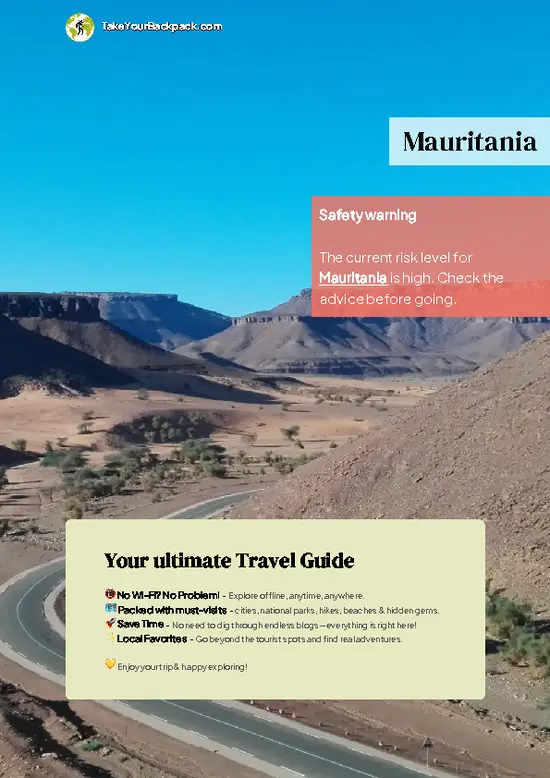
The current risk level for Mauritania is high. Check the advice before going.


Get your Mauritania guide
63 ranked highlights, routes & tips, works offline (269 pages)
Loading the map 🌍
CLICK TO FILTER
cities
towns
villages
landmarks
national parks
hikes
beaches
attractions
festivals
regions
SHOW COUNTRY’S BESTSHOW ALL

✨ Why go?
Ranked #15 town in Mauritania
Why visitors keep coming back

Timbedra serves as a gateway for backpackers exploring Mauritania’s rugged beauty. Nestled near the Adrar region, it’s a convenient stop for those heading to the Sahara or seeking cultural immersion. The walkable streets invite you to wander, with small-scale guesthouses offering a cozy place to rest. Here, you can savor local dishes like tagine and couscous, where the spices dance in the air, making every meal a sensory delight.

Travelers often linger a few days, soaking in the friendly atmosphere and connecting with fellow adventurers. It’s a haven for slow travelers and solo backpackers who appreciate a quieter vibe over bustling nightlife. The nearby hikes and historical sites provide ample opportunities for exploration, making Timbedra not just a stopover, but a meaningful part of your … read more 👉
Timbedra serves as a gateway for backpackers exploring Mauritania’s rugged beauty. Nestled near the Adrar region, it’s a convenient stop for those heading to the Sahara or seeking cultural immersion. The walkable streets invite you to wander, with small-scale guesthouses offering a cozy place to rest. Here, you can savor local dishes like tagine and couscous, where the spices dance in the air, making every meal a sensory delight.

Travelers often linger a few days, soaking in the friendly atmosphere and connecting with fellow adventurers. It’s a haven for slow travelers and solo backpackers who appreciate a quieter vibe over bustling nightlife. The nearby hikes and historical sites provide ample opportunities for exploration, making Timbedra not just a stopover, but a meaningful part of your journey. Embrace the simplicity and warmth; it’s where the heart of Mauritania truly beats.
Want to include Timbedra in your Mauritania route?
Create a personalized Mauritania itinerary that includes Timbedra and the places that fit your trip — based on your travel style, budget, and available time. Get your route in seconds.

Generate my trip

💡 HighlightsThe experiences that define the visit

  • Timbedra weekly souk (market) — The heart of the village: livestock trading, spice and cloth stalls, and people from surrounding nomad camps. Best visited early morning when bargaining and bartering are busiest; excellent for photos and meeting locals.
  • Main Friday mosque — A living piece of community life rather than a museum piece. Visiting during non-prayer times lets you appreciate the building’s simple Saharan architecture and observe the rhythms of daily worship and social exchange.
  • Old quarter (mud-brick lanes) — Narrow alleyways and traditional adobe homes that show how people have lived here for generations. Wandering the lanes is low-key but revealing: laundry lines, children playing, and old doors with hand-carved details.
  • Palmeraie and communal wells — A pocket oasis of date
read more 👉
  • Timbedra weekly souk (market) — The heart of the village: livestock trading, spice and cloth stalls, and people from surrounding nomad camps. Best visited early morning when bargaining and bartering are busiest; excellent for photos and meeting locals.
  • Main Friday mosque — A living piece of community life rather than a museum piece. Visiting during non-prayer times lets you appreciate the building’s simple Saharan architecture and observe the rhythms of daily worship and social exchange.
  • Old quarter (mud-brick lanes) — Narrow alleyways and traditional adobe homes that show how people have lived here for generations. Wandering the lanes is low-key but revealing: laundry lines, children playing, and old doors with hand-carved details.
  • Palmeraie and communal wells — A pocket oasis of date palms and shaded paths right by the village. The wells and palm groves are still central to daily life and offer a cool, photo-ready spot and conversation with people tending the trees.
  • Livestock market and camel pens — Separate from the main souk on market days, this is where camels, goats, and sheep are inspected and sold. It’s noisy, salty, and an authentic way to see local economy and animal husbandry up close.
  • Artisan workshops (leather and metalworkers) — Small, clustered workshops where locals repair saddles, make simple metal tools, and work leather. You can watch craftsmen at the forge and sometimes buy a modest, well-made souvenir.
  • Tea stalls and market cafés — Tiny tea spots around the market where locals meet; sitting for a glass of sweet, layered Mauritanian tea is one of the easiest ways to talk to people and watch daily life unfold.
  • Women’s food and produce market — Often a separate section of the market where women sell dates, cereals, and homemade goods. It’s the best place to taste local staples and watch traditional food commerce that doesn’t always appear in guidebooks.
  • Village school and madrasa precinct — Schools and small religious study centers are social anchors here; with permission you can visit to see local education in action and meet teachers and students.
  • Oued bed and sunset viewpoint — A short walk to the dry riverbed on the village edge gives you a quiet place for a sunset view over floodplain grasses and sand — simple, but a good spot to feel the landscape around Timbedra.
A few real, visitable highlights just outside Timbedra worth day-tripping to include nearby palm oases and nomad camps in the Hodh region, the larger regional market town of Néma for a bigger souk experience, and stretches of nearby dunes and seasonal salt flats that are reached by local drivers.
Spotted a mistake or missing something? Contact us.
🏘️ NeighborhoodsHow different areas shape the experience

Timbedra is a captivating blend of history and culture, perfect for backpackers seeking an authentic experience in Mauritania. Each neighborhood has its own character, making it essential to choose wisely.

Old Town: This area pulses with history. Narrow, winding streets lead you past ancient architecture and bustling markets. It’s walkable, with a vibrant atmosphere that’s perfect for short stays. Expect a mix of local eateries and shops, but nightlife is low-key.

New Quarter: A contrast to Old Town, this neighborhood offers modern amenities and a more relaxed vibe. It’s slightly pricier but still budget-friendly. Transport options are better here, making it ideal for longer stays. Cafés and restaurants cater to a mix of locals and travelers, providing a lively evening scene.

Market District: … read more 👉
Timbedra is a captivating blend of history and culture, perfect for backpackers seeking an authentic experience in Mauritania. Each neighborhood has its own character, making it essential to choose wisely.

Old Town: This area pulses with history. Narrow, winding streets lead you past ancient architecture and bustling markets. It’s walkable, with a vibrant atmosphere that’s perfect for short stays. Expect a mix of local eateries and shops, but nightlife is low-key.

New Quarter: A contrast to Old Town, this neighborhood offers modern amenities and a more relaxed vibe. It’s slightly pricier but still budget-friendly. Transport options are better here, making it ideal for longer stays. Cafés and restaurants cater to a mix of locals and travelers, providing a lively evening scene.

Market District: The heart of daily life in Timbedra. The scents of spices and fresh produce fill the air. It’s a great spot for budget-conscious backpackers looking to immerse themselves in local culture. Walkability is high, but it can get crowded. Perfect for short visits, especially if you want to experience the local hustle.

Residential Area: This quieter zone is where locals live. It’s less touristy, offering a genuine glimpse into daily life. While not as vibrant, it’s ideal for those seeking peace. Transport access is limited, making it better for longer stays where you can soak in the atmosphere.

⌛️ 1 day1-day itinerary for Timbedra

Timbedra, a town steeped in history, offers a glimpse into Mauritania’s rich past. Its ancient architecture and vibrant local life create an atmosphere that feels both timeless and alive. As you wander its narrow streets, the scent of spices wafts through the air, mingling with the earthy aroma of the surrounding desert.

Start your morning at the bustling market, where locals barter for fresh produce and handmade crafts. The early light casts a warm glow on the colorful stalls, making it the perfect time to snap some photos. Grab a traditional breakfast of *mhadjeb*—a savory flatbread stuffed with vegetables—at a nearby café. This hearty meal will fuel your exploration ahead.

In the afternoon, head to the old town, where the remnants of ancient structures whisper stories of the past. Visit … read more 👉
Timbedra, a town steeped in history, offers a glimpse into Mauritania’s rich past. Its ancient architecture and vibrant local life create an atmosphere that feels both timeless and alive. As you wander its narrow streets, the scent of spices wafts through the air, mingling with the earthy aroma of the surrounding desert.

Start your morning at the bustling market, where locals barter for fresh produce and handmade crafts. The early light casts a warm glow on the colorful stalls, making it the perfect time to snap some photos. Grab a traditional breakfast of *mhadjeb*—a savory flatbread stuffed with vegetables—at a nearby café. This hearty meal will fuel your exploration ahead.

In the afternoon, head to the old town, where the remnants of ancient structures whisper stories of the past. Visit the *Ksar*, a fortified granary that showcases the town’s historical significance. The intricate mud-brick architecture is a photographer’s dream. For a less-traveled spot, seek out the *Tomb of the Unknown Soldier*, a quiet memorial that offers a moment of reflection amidst the bustling town.

As the sun begins to set, find a local eatery in the *Banc d’Arguin* neighborhood. Enjoy a plate of grilled fish, fresh from the nearby coast, while the sky transforms into a canvas of oranges and purples. Engage with the friendly locals, who are eager to share tales of their lives in this unique corner of the world.

Timbedra isn’t just a stop on your journey; it’s a chance to connect with the heart of Mauritania.
Turn your Timbedra visit into an Mauritania adventure
Build a complete Mauritania route with Timbedra, hidden gems, must-see destinations, and realistic travel times included.

Generate my trip

🌤️ When to go?Weather, crowds, and seasonal trade-offs


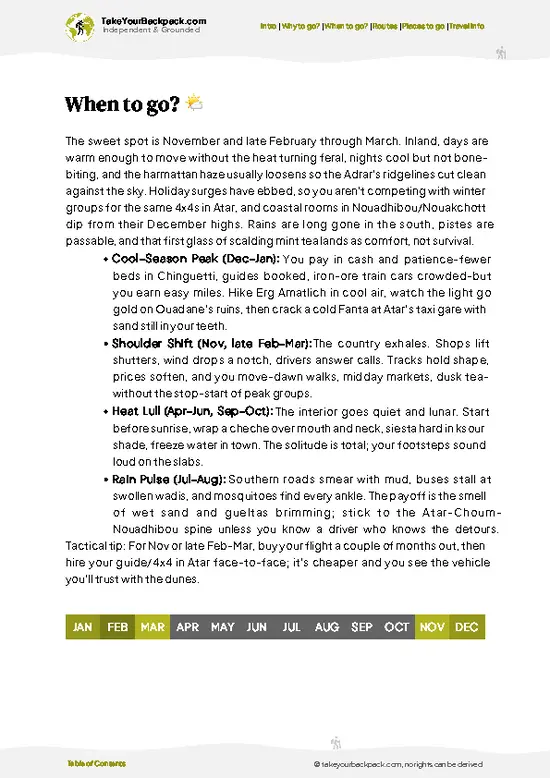
  • Weather: Timbedra bakes under a Saharan sun most of the year. The cooler months from November to February bring daytime highs around 25-30°C (77-86°F), making trekking bearable without the relentless heat that scorches above 40°C (104°F) in summer.

  • Temperature: Nights can drop sharply, especially in winter, dipping to 10°C (50°F). Layering is essential—think breathable fabrics for the day and warm gear for the chill after sunset.

  • Daylight Hours: Days stretch roughly 11 to 12 hours year-round, but the sun sets quickly, so plan hikes and explorations to avoid being caught in the desert dark.

  • Crowds: Timbedra is off the beaten path, so crowds are minimal year-round. Visiting in cooler months means you’ll mostly share the trails with locals and a handful of seasoned travelers.

  • Seasonal
read more 👉

  • Weather: Timbedra bakes under a Saharan sun most of the year. The cooler months from November to February bring daytime highs around 25-30°C (77-86°F), making trekking bearable without the relentless heat that scorches above 40°C (104°F) in summer.

  • Temperature: Nights can drop sharply, especially in winter, dipping to 10°C (50°F). Layering is essential—think breathable fabrics for the day and warm gear for the chill after sunset.

  • Daylight Hours: Days stretch roughly 11 to 12 hours year-round, but the sun sets quickly, so plan hikes and explorations to avoid being caught in the desert dark.

  • Crowds: Timbedra is off the beaten path, so crowds are minimal year-round. Visiting in cooler months means you’ll mostly share the trails with locals and a handful of seasoned travelers.

  • Seasonal Activities: The cooler season aligns with local markets and festivals, offering a richer cultural experience. Summer’s oppressive heat shuts down much of the outdoor life.

  • Price Fluctuations: Accommodation and guides tend to be pricier in the cooler months due to demand, but the comfort and safety gains are worth the premium.


Pro-tip: Aim for late November to early February—when the desert’s harshness softens, the light is golden, and the air carries the scent of dry earth, making every step feel earned and every sunset a reward.


source: climatestotravel.comJANJanuary: excellent for travelingFEBFebruary: excellent for travelingMARMarch: good for travelingAPRApril: fair for travelingMAYMay: below average for travelingJUNJune: below average for travelingJULJuly: below average for travelingAUGAugust: below average for travelingSEPSeptember: fair for travelingOCTOctober: good for travelingNOVNovember: highly recommended for travelingDECDecember: excellent for traveling
when-to-go

✈️ The backpacker research shortcutMauritania Travel Guide

An offline-friendly backpacking guide with optimized travel routes, ranked highlights, transport advice, and the best areas to stay.
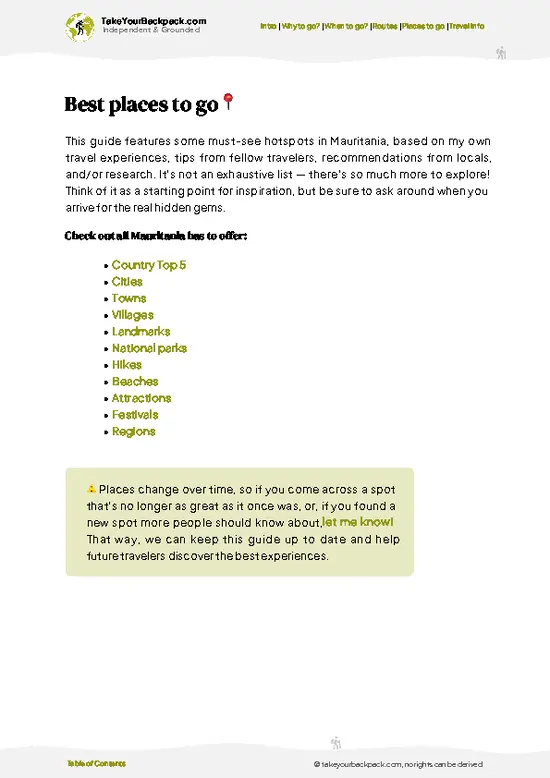
example page 0 from our offline Travel Guide for Mauritania
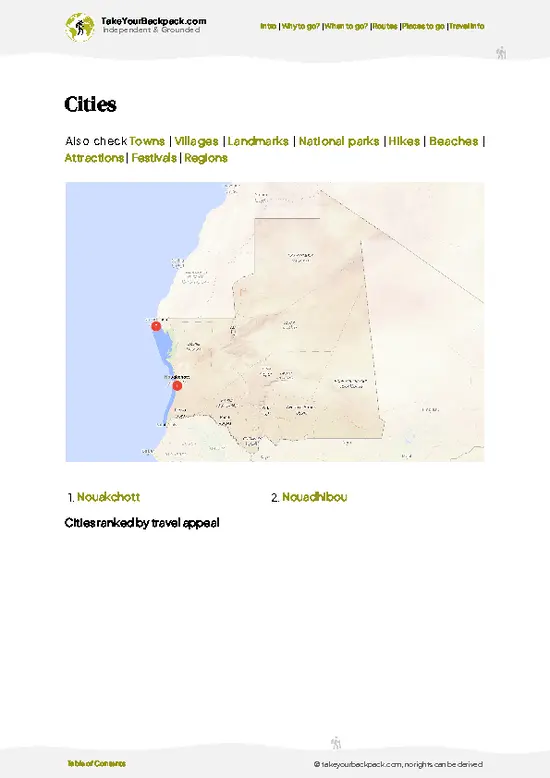
example page 1 from our offline Travel Guide for Mauritania
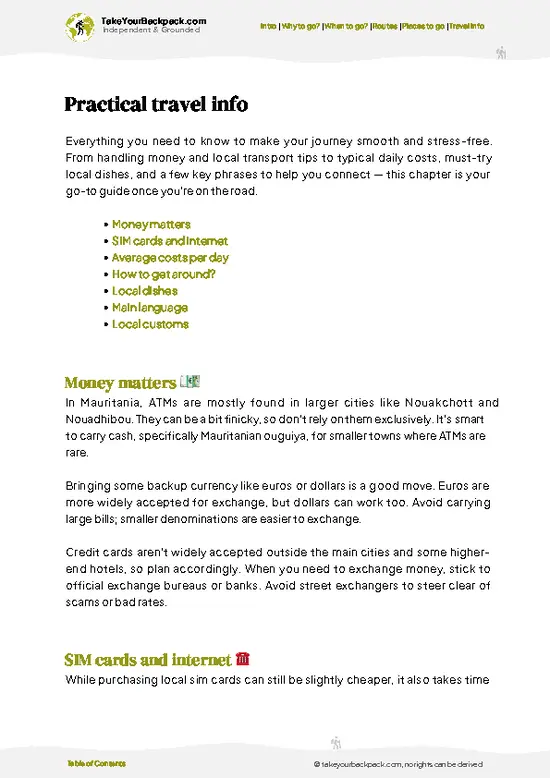
example page 2 from our offline Travel Guide for Mauritania
example page 3 from our offline Travel Guide for Mauritania
example page 4 from our offline Travel Guide for Mauritania
example page 5 from our offline Travel Guide for Mauritania
example page 6 from our offline Travel Guide for Mauritania
example page 7 from our offline Travel Guide for Mauritania
The digital guide (269 pages) contains:
63 highlights, ranked by travel appeal
Optimized 5, 10 & 15-day travel routes
Cities, national parks, landmarks, beaches
How to get around
Offline-friendly for travel without Wi-Fi
👉 Click to see all 30+ guide features

📅 Plan smarter in minutes, not weeks
Month by month travel advice
Festivals & national holidays
Budget expectations

🗺️ Go to the right places, skip the overrated ones
Honest pros & cons of destinations
Top hikes, parks & viewpoints
Lesser-known places most travelers miss
Clear “worth it vs skip it” guidance

🛏️ Travel smoothly without rookie mistakes
Best areas to stay
Transport systems explained simply
Common scams & safety advice
SIM cards, money & practical tips

🌍 Understand the country, not just visit it
Culture & traditions
52 Essential phrases & customs
Festivals worth planning around
Traveler-friendly historical context
Insights that make places more meaningful

📱 Built for real travel conditions
Fully downloadable PDF
Works completely offline
Optimized for phone use
Useful in remote areas & buses
Everything in one place
Save weeks of stressful planning
Get instant access to your full guide. 30‑day money-back guarantee.


By proceeding you agree to our terms.
Sent to your inbox immediately after payment • 100% Secure Checkout
Best Backpacking Travel Advisor 2025 tourism awardBest Backpacking
Travel Advisor
2025
What others say about Take Your Backpack Guides:
⭐⭐⭐⭐⭐
Fantastic, amazing amount of information!
⭐⭐⭐⭐⭐
My goodness this is amazing, it's what I've been looking for hats off too you!
⭐⭐⭐⭐⭐
I think this is absolutely BRILLIANT
⭐⭐⭐⭐
Very complete and informative. It's still missing places, but I gotta to commend you
⭐⭐⭐⭐⭐
This is truly amazing, thank you, can't wait to explore it with my kids!
⭐⭐⭐⭐⭐
Awesome resource, thank you!
⭐⭐⭐⭐⭐
This is amazing! Can't wait to explore the ones I haven't seen
⭐⭐⭐⭐
I love this! Well done, great idea.
⭐⭐⭐⭐⭐
Thanks for taking the time to make this gem!
⭐⭐⭐⭐⭐
This might be the best website I've ever seen.
⭐⭐⭐⭐⭐
Congratulations, and thank you so much for your work; it's incredibly valuable.
⭐⭐⭐⭐
In all seriousness I think you did a great job pointing out the important spots
⭐⭐⭐⭐⭐
10/10 very good
⭐⭐⭐⭐⭐
As someone who's only just starting to visit regularly this is awesome, thank you.
⭐⭐⭐⭐
Thank you very much! I'm going to visit my dad, it's going to be very useful!
⭐⭐⭐⭐⭐
This is really cool! We'll be travelling for the first time and this definitely come in handy.
⭐⭐⭐⭐⭐
You are now our minister of culture, congratulations 👨‍💼
⭐⭐⭐⭐⭐
Just wanted to tell you that this is a pearl! Going to follow your recommendations.
⭐⭐⭐⭐⭐
This is so cool. I'll definitely be using the resource for my travels soon.
⭐⭐⭐⭐⭐
This is very impressive! Good work.
⭐⭐⭐⭐⭐
This is an amazing and informative site. Very well done!

🛏️ Where to stay?How to pick the right area

In Timbedra, the best spot for backpackers is the central market district. It pulses with life from dawn to dusk, where the scent of fresh spices and grilled meat hangs thick in the air. This area is a magnet for budget travelers because it’s safe, well-lit, and packed with small guesthouses and hostels that cater to solo adventurers. Staying here means you’re steps away from local cafés where you can strike up conversations over mint tea, and the streets hum with a steady flow of traders and locals, making it easy to blend in and feel connected.

Compared to the quieter residential neighborhoods, … read more 👉
In Timbedra, the best spot for backpackers is the central market district. It pulses with life from dawn to dusk, where the scent of fresh spices and grilled meat hangs thick in the air. This area is a magnet for budget travelers because it’s safe, well-lit, and packed with small guesthouses and hostels that cater to solo adventurers. Staying here means you’re steps away from local cafés where you can strike up conversations over mint tea, and the streets hum with a steady flow of traders and locals, making it easy to blend in and feel connected.

Compared to the quieter residential neighborhoods, which can feel isolated and less secure after dark, the market district offers a social vibe that’s hard to beat. It’s the place where you’ll find the pulse of Timbedra—raw, real, and welcoming.

🚌 Getting aroundGetting around like a local

Timbedra moves at its own rhythm—neither frantic nor sluggish, but a steady pulse that feels like a slow dance with the sun. The streets hum with a mix of purposeful steps and spontaneous detours, where the scent of fresh bread from corner bakeries mingles with the earthy aroma of the nearby river. Time here isn’t a strict taskmaster but a gentle guide, nudging you to savor moments rather than rush through them. This town’s flow rewards those who lean into its pace, blending the ease of wandering with the reliability of a few key transit lifelines.


  • Walking: The heart of Timbedra beats strongest on foot. Most neighborhoods are compact, with cobblestone streets that invite slow exploration. Walking costs nothing, offers the best chance to catch local life in motion, and lets you absorb the
read more 👉
Timbedra moves at its own rhythm—neither frantic nor sluggish, but a steady pulse that feels like a slow dance with the sun. The streets hum with a mix of purposeful steps and spontaneous detours, where the scent of fresh bread from corner bakeries mingles with the earthy aroma of the nearby river. Time here isn’t a strict taskmaster but a gentle guide, nudging you to savor moments rather than rush through them. This town’s flow rewards those who lean into its pace, blending the ease of wandering with the reliability of a few key transit lifelines.


  • Walking: The heart of Timbedra beats strongest on foot. Most neighborhoods are compact, with cobblestone streets that invite slow exploration. Walking costs nothing, offers the best chance to catch local life in motion, and lets you absorb the shifting light and smells that define the town’s character.


  • Shared Minibuses: These are the budget traveler’s workhorse for longer hops within and just outside Timbedra. They run roughly from 6:00 AM to 8:00 PM, cost a few local currency units, and pack in locals and visitors alike. Expect a lively, sometimes cramped ride with frequent stops—perfect if you want to feel the pulse of daily life.


  • Motorcycle Taxis (Boda Bodas): When time is tight or you’re carrying gear, these zippy two-wheelers are your best bet. They operate all day and into the evening, with fares negotiable but generally affordable. The breeze on your face and the quick weave through traffic make this a memorable way to cover short distances fast.


  • Local Bicycle Rentals: For a bit more freedom without breaking the bank, renting a bike lets you cover more ground than walking while staying close to the street-level experience. Rentals are available from small shops near the market, usually for a few dollars a day. The town’s gentle hills and quiet lanes make cycling a smooth, sensory-rich option.

👛 Costs (as of 5 June 2025)What things cost and how to budget

Backpacking in Timbedra, Mauritania, means embracing a raw, off-the-beaten-path vibe where costs stay modest but the experience is rich in local texture.
  • Dorm Accommodation: Expect simple guesthouses or basic hostels with shared rooms. Prices hover around €8 to €15 per night. These places often lack frills but offer a clean bed and a chance to mingle with fellow travelers or locals.
  • Meals: Street food and small local eateries dominate. A filling meal of traditional Mauritanian dishes like thieboudienne or grilled fish will cost between €2 and €5. Fresh bread, tea, and snacks are even cheaper, making it easy to eat well on a shoestring.
  • Local Transport: Timbedra’s transport options are limited but affordable. Shared taxis or minibuses for short trips within town or nearby villages typically
read more 👉
Backpacking in Timbedra, Mauritania, means embracing a raw, off-the-beaten-path vibe where costs stay modest but the experience is rich in local texture.
  • Dorm Accommodation: Expect simple guesthouses or basic hostels with shared rooms. Prices hover around €8 to €15 per night. These places often lack frills but offer a clean bed and a chance to mingle with fellow travelers or locals.
  • Meals: Street food and small local eateries dominate. A filling meal of traditional Mauritanian dishes like thieboudienne or grilled fish will cost between €2 and €5. Fresh bread, tea, and snacks are even cheaper, making it easy to eat well on a shoestring.
  • Local Transport: Timbedra’s transport options are limited but affordable. Shared taxis or minibuses for short trips within town or nearby villages typically cost under €1. For longer journeys, prices can rise but remain budget-friendly, around €3 to €7 depending on distance.
  • Basic Activities/Entry Fees: Most local attractions or cultural sites don’t charge much, if anything. Budget around €1 to €3 for any small entry fees or guided experiences, which are rare but rewarding when available.
  • Miscellaneous Expenses: This covers essentials like bottled water, occasional snacks, or phone credit. Plan for about €1 to €3 daily, as these small costs add up but remain manageable.

All told, you’re looking at roughly €15 to €30 per day to cover the essentials in Timbedra. It’s a place where every euro stretches far, letting you focus on the slow rhythms of local life without breaking the bank.
⚠️ Prices can change and everyone travels differently, so take this as a rough guide. Hope it helps you plan your adventure!

🚌 Day tripsWhere to go beyond the main area

Timbedra, with its rich history and vibrant culture, serves as a fantastic base for exploring the heart of Mauritania. Here are some day trips that will elevate your experience.

Chinguetti
Just a couple of hours from Timbedra, Chinguetti is a UNESCO World Heritage site steeped in ancient lore. The town’s mud-brick architecture and the haunting silence of the surrounding dunes create an atmosphere that feels like stepping back in time. You can wander through the narrow streets, visit the old libraries filled with centuries-old manuscripts, and soak in the desert sunset. Aim for the cooler months, from November to March, when the heat is more bearable. Expect to spend around $10 on transport and a few bucks for a meal. A common mistake? Many rush through without taking the time to chat with … read more 👉
Timbedra, with its rich history and vibrant culture, serves as a fantastic base for exploring the heart of Mauritania. Here are some day trips that will elevate your experience.

Chinguetti
Just a couple of hours from Timbedra, Chinguetti is a UNESCO World Heritage site steeped in ancient lore. The town’s mud-brick architecture and the haunting silence of the surrounding dunes create an atmosphere that feels like stepping back in time. You can wander through the narrow streets, visit the old libraries filled with centuries-old manuscripts, and soak in the desert sunset. Aim for the cooler months, from November to March, when the heat is more bearable. Expect to spend around $10 on transport and a few bucks for a meal. A common mistake? Many rush through without taking the time to chat with locals, who can share stories that breathe life into the place.
👉 Explore Chinguetti

Ouadane
A bit further afield, Ouadane offers a glimpse into Mauritania’s past as a trading hub. The journey takes about three hours, but the crumbling ruins and the vast, open landscape make it worthwhile. You’ll find remnants of ancient structures and a stark beauty that’s hard to describe. Bring a packed lunch; you’ll want to linger. Costs hover around $15 for transport. The best time to visit is early morning to catch the sunrise over the ruins. First-timers often overlook the importance of water—bring plenty, as options are limited.
👉 Explore Ouadane

Terjit Oasis
Just an hour’s drive from Timbedra, Terjit Oasis is a refreshing escape. The lush palms and cool waters provide a stark contrast to the surrounding desert. Spend the day swimming, picnicking, or simply enjoying the tranquility. The best time to go is during the late afternoon when the sun softens. Expect to spend around $10 for transport and a few more for snacks. A rookie mistake? Not bringing a swimsuit—this oasis is too inviting to miss out on a dip!
👉 Explore Terjit Oasis

Atar
Atar, about two hours away, is a bustling town that offers a taste of local life. Visit the vibrant market, where spices and textiles burst with color and scent. You can grab a cheap meal and soak in the lively atmosphere. The best time to visit is during market days, usually Wednesdays and Saturdays. Budget around $15 for transport and food. Many travelers overlook the chance to engage with vendors; a simple conversation can lead to unexpected insights and connections.
👉 Explore Atar
Want to know what more Mauritania offers?
The Mauritania Travel Guide describes 63 highlights, from cities to national parks, from beaches to hikes

Get the Travel Guide -

🛡️ SafetyStaying Safe: What Travelers Should Know

Timbedra is generally safe, but a few practical tips can enhance your experience. The bustling market is vibrant, but keep your belongings close. Pickpockets can lurk in crowded areas, so wear a crossbody bag and stay aware of your surroundings.

If you’re traveling solo, avoid wandering too far after dark. The streets can feel deserted, and it’s best to stick to well-lit areas.

Common scams are rare, but be cautious when approached by overly friendly locals offering unsolicited help. Politely decline and keep moving.

Annoyances like aggressive street vendors can pop up, but a firm “no, thank you” usually does the trick. Carry yourself confidently, and you’ll blend in just fine, soaking up the rich atmosphere without a hitch.

Other Mauritanian towns near Timbedra

Explore more nearby:

  • Nema—eastern gateway, military base, regional market| 106 km away
  • Aioun El Atrouss—regional capital, military presence, Saharan edge| 160 km away
  • Oualata—painted facades, UNESCO site, Saharan architecture| 170 km away

💡 Not sure where to go next?
Create a personalized itinerary for Mauritania including Timbedra and the places that fit your trip.

Generate my itinerary

👉 Discover all towns

Or checkout all Mauritania has to offer (think cities, towns, villages, national parks, hikes, beaches, festivals)
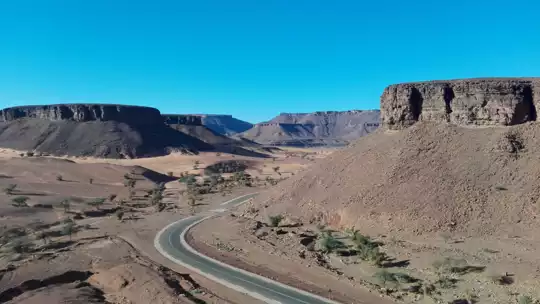
Country photo of Mauritania

We 💚 feedbackKey takeaways before you go

Timbedra has a pulse that’s hard to ignore. The air is thick with the scent of spices and the warmth of genuine smiles. You’ll find the best surprise in the local market—fresh dates and vibrant textiles that tell stories. Just be ready for the heat; it can be relentless. Embrace the slow pace, and you’ll discover a rhythm that feels like home. It’s a place that rewards patience.

✍️ Help improve this page!
The information on this page is based on in-depth research, insights shared by experienced travelers, and feedback from the local travel community in Mauritania. While every effort is made to keep the information accurate and current, conditions can change — so if you spot anything incorrect or outdated, please get in touch.


🙋‍♂️ Give feedback

👋 Meet the founderWho’s Behind Take Your Backpack?

Johan, backpacker and founder of TakeYourBackpackHi, I’m Johan (Netherlands 🇳🇱), the creator of TakeYourBackpack. Over the past decade, I’ve backpacked through 80+ countries across six continents, gaining extensive experience with independent travel, long-term trips, and overland routes.

This site is built on a combination of firsthand travel experience and carefully curated insights from other backpackers. Many guides are based on places I’ve personally visited, while others bring together tips, observations, and practical advice shared by trusted travelers I’ve met along the way.

The goal is to provide realistic, experience-driven guidance — not generic itineraries — so you can explore destinations with better context, clearer expectations, and more confidence.

Get full Mauritania guide •
Instant download • 63 highlights • Full Offline guide