×

Mongolia🇲🇳 | landmarksGobi Desertsand dunes, fossil sites, camel herding | things to do and best time to go

Explore Ulaan Tsutgalan WaterfallExplore Terelj

Backpacking in Gobi Desert
🏆 Top pickunique site ranked #1
By Johan Kruseman 🇳🇱 | Updated June 10, 2026

Your boots crunch on frozen sand while your face is sunburnt and your fingers are numb, and the only sound is your own breath and a camel snorting somewhere behind you. The sky feels too big, the dunes of the Gobi rolling away in pale gold waves across southern Mongolia toward the Chinese border. This isn’t the glossy “perfect dune at sunset” loop you’ve seen online. It’s harsher, emptier, and way more honest. As a backpacker, the Gobi hits you with scale and silence rather than easy wow-factor: long jeep days, basic ger camps, dust in everything, and costs that creep up because you need drivers, fuel, and time. No crowds, though—just the odd tour group at famous dunes or flaming cliffs. Photos are good, but the real payoff is that stripped-down, prehistoric feeling, like you’ve stepped into the planet’s skeleton and left the noise of your life several time zones away.

Discover everything you want to know in the 📖 Mongolia Travel Guide.


Get your Mongolia guide
70 ranked highlights, routes & tips, works offline (280 pages)
Loading the map 🌍
CLICK TO FILTER
cities
towns
villages
landmarks
national parks
hikes
attractions
festivals
regions
SHOW COUNTRY’S BESTSHOW ALL

✨ Why go?
Ranked #1 unique site in Mongolia
What sets this place apart

The Gobi Desert isn’t just a backdrop for your Instagram feed; it’s a vast, rugged expanse that challenges your perception of beauty and adventure. Sure, you’ll encounter crowds at popular spots like the Sand Dunes of Khongoryn Els, but venture a little deeper, and you’ll find solitude in the rolling sands and stark landscapes.

The cost of exploring the Gobi is surprisingly low. With budget-friendly ger camps and local guides, you can experience authentic Mongolian culture without breaking the bank. Plus, the accessibility is better than you think. Many travelers combine their Gobi adventure with a trip to Ulaanbaatar, making it a natural stop on a broader route through Mongolia.

What makes the Gobi truly special is its uniqueness. You’ll witness the flaming cliffs of Bayanzag, where dinosaur … read more 👉
The Gobi Desert isn’t just a backdrop for your Instagram feed; it’s a vast, rugged expanse that challenges your perception of beauty and adventure. Sure, you’ll encounter crowds at popular spots like the Sand Dunes of Khongoryn Els, but venture a little deeper, and you’ll find solitude in the rolling sands and stark landscapes.

The cost of exploring the Gobi is surprisingly low. With budget-friendly ger camps and local guides, you can experience authentic Mongolian culture without breaking the bank. Plus, the accessibility is better than you think. Many travelers combine their Gobi adventure with a trip to Ulaanbaatar, making it a natural stop on a broader route through Mongolia.

What makes the Gobi truly special is its uniqueness. You’ll witness the flaming cliffs of Bayanzag, where dinosaur fossils were discovered, and the surreal beauty of the Yol Valley, home to rare wildlife. This isn’t just a destination; it’s a journey into the heart of a land that feels untouched. The Gobi Desert offers a raw, transformative experience that’s worth every ounce of effort.
Want to include Gobi Desert in your Mongolia route?
Create a personalized Mongolia itinerary that includes Gobi Desert and the places that fit your trip — based on your travel style, budget, and available time. Get your route in seconds.

Generate my trip

💡 HighlightsEssential experiences to have while visiting Gobi Desert

  • Flaming Cliffs (Bayanzag) — Red sandstone cliffs that glow orange at sunrise and sunset and where the first dinosaur eggs in Central Asia were found. The place smells of dry heat and history; you can often see bits of fossil-battered bone on the surface and it’s a photographer’s dream at golden hour.
  • Khongoryn Els (Singing Dunes) — A massive sea of shifting sand dunes with a soundtrack: under the right conditions the dunes “sing” as the sand slides down. Climb a ridge for sweeping views, try dune-surfing, and camp on the crest — my personal favorite because the silence up there at dawn feels otherworldly.
  • Yolyn Am (Vulture’s Mouth) — A narrow, icy gorge in the mountains where ice can persist well into summer and lammergeiers (bearded vultures) circle overhead. The walk down the gorge is
read more 👉
  • Flaming Cliffs (Bayanzag) — Red sandstone cliffs that glow orange at sunrise and sunset and where the first dinosaur eggs in Central Asia were found. The place smells of dry heat and history; you can often see bits of fossil-battered bone on the surface and it’s a photographer’s dream at golden hour.
  • Khongoryn Els (Singing Dunes) — A massive sea of shifting sand dunes with a soundtrack: under the right conditions the dunes “sing” as the sand slides down. Climb a ridge for sweeping views, try dune-surfing, and camp on the crest — my personal favorite because the silence up there at dawn feels otherworldly.
  • Yolyn Am (Vulture’s Mouth) — A narrow, icy gorge in the mountains where ice can persist well into summer and lammergeiers (bearded vultures) circle overhead. The walk down the gorge is short but dramatic; it’s a weird, cool microclimate in the middle of the desert and a good place to cool off.
  • Stay with Nomads / Ger Camp Experience — Sleep in a ger, eat fresh dairy and mutton, and learn how nomadic families move herds across this landscape. It’s not a theme-park “authentic” — it’s real life: ask about milking, herding routes and local stories, and bring small gifts (tea, sugar, meds) if you can.
  • Bactrian Camel Trek — Ride a two-humped camel on a short overnight or multi-day trek and feel how slow travel reshapes time. Camels are steady and oddly comfortable; they’re the classic way to experience the dunes and reach remote views no 4x4 can get to.
  • Tsagaan Suvrag (White Stupa) and Rock Formations — Striking white limestone cliffs and eroded badlands that look like a lunar cathedral. Great for geology nerds and anyone who likes weird landscapes — photo ops at sunrise and interesting fossil/striations underfoot.
  • Wildlife, Paleontology & Starry Skies — Look for wild Bactrian camels, argali sheep, and the extremely rare Gobi bear (rare — don’t count on it). The Gobi is also a prime paleontology zone (museums and local dig displays) and, at night, an incredible dark-sky spot for stars and the Milky Way — bring a headlamp and a warm jacket.
Spotted a mistake or missing something? Contact us.

Things to do near Gobi Desert

Ratings based on Tripadvisor reviews. When you book through this link, you support our work at no extra cost to you.

🌤️ When to go?Seasonal considerations and timing


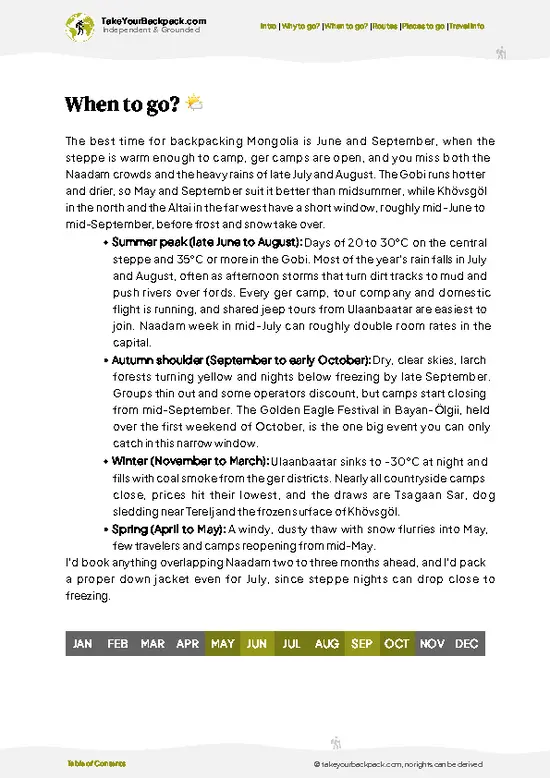
  • Weather: The Gobi Desert is no gentle giant. Summers scorch with highs hitting 35°C (95°F), while winters plunge below -20°C (-4°F). Spring and autumn offer a sweet spot—cooler days and less brutal nights.

  • Temperature: Expect wild swings. Daytime in May-September ranges from 20°C to 30°C (68°F to 86°F), but nights can dip sharply, especially in spring and fall. Pack layers; desert cold bites.

  • Daylight Hours: Long summer days stretch up to 15 hours, giving you plenty of daylight to explore. Winter days shrink to about 9 hours, making early starts essential if you want to cover ground.

  • Crowds: The Gobi isn’t a tourist magnet like the Sahara, but summer months see a spike in visitors, especially July and August. Spring and autumn are quieter, offering a more solitary experience.

  • Seasonal
read more 👉

  • Weather: The Gobi Desert is no gentle giant. Summers scorch with highs hitting 35°C (95°F), while winters plunge below -20°C (-4°F). Spring and autumn offer a sweet spot—cooler days and less brutal nights.

  • Temperature: Expect wild swings. Daytime in May-September ranges from 20°C to 30°C (68°F to 86°F), but nights can dip sharply, especially in spring and fall. Pack layers; desert cold bites.

  • Daylight Hours: Long summer days stretch up to 15 hours, giving you plenty of daylight to explore. Winter days shrink to about 9 hours, making early starts essential if you want to cover ground.

  • Crowds: The Gobi isn’t a tourist magnet like the Sahara, but summer months see a spike in visitors, especially July and August. Spring and autumn are quieter, offering a more solitary experience.

  • Seasonal Activities: Summer is prime for camel treks and exploring sand dunes. Spring and autumn bring wildflower blooms and migratory birds, while winter is for hardcore adventurers ready to brave the cold and frozen landscapes.

  • Price Fluctuations: Peak season (June-August) drives prices up on tours and accommodations. Shoulder seasons (May, September) offer better deals and fewer crowds without sacrificing too much comfort.


Pro-tip: Aim for late April to early June or September to early October—this window balances manageable weather, fewer tourists, and wallet-friendly prices, letting you soak in the Gobi’s raw, unfiltered soul.


source: climatestotravel.comJANJanuary: below average for travelingFEBFebruary: below average for travelingMARMarch: fair for travelingAPRApril: highly recommended for travelingMAYMay: excellent for travelingJUNJune: excellent for travelingJULJuly: highly recommended for travelingAUGAugust: highly recommended for travelingSEPSeptember: excellent for travelingOCTOctober: highly recommended for travelingNOVNovember: fair for travelingDECDecember: below average for traveling
when-to-go

✈️ The backpacker research shortcutMongolia Travel Guide

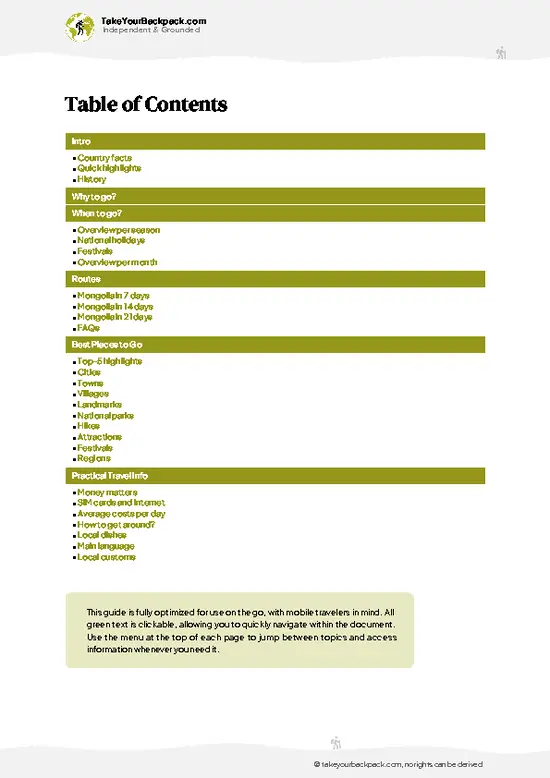
An offline-friendly backpacking guide with optimized travel routes, ranked highlights, transport advice, and the best areas to stay.
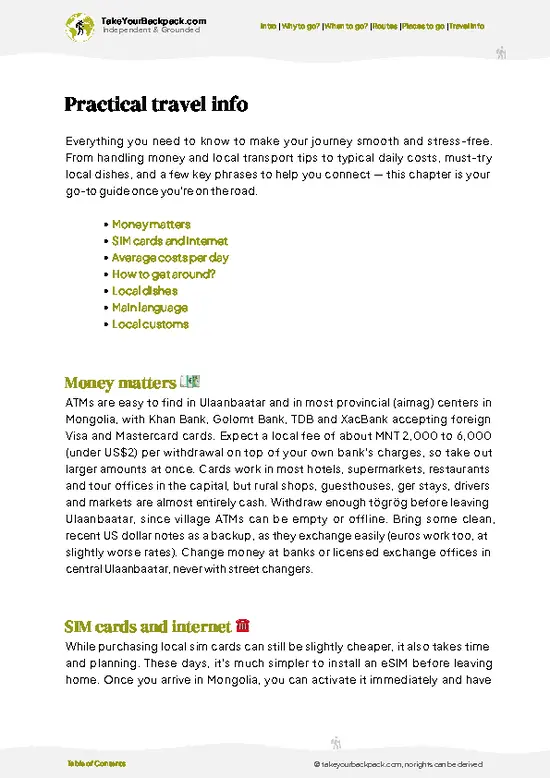
example page 0 from our offline Travel Guide for Mongolia
example page 1 from our offline Travel Guide for Mongolia
example page 2 from our offline Travel Guide for Mongolia
example page 3 from our offline Travel Guide for Mongolia
example page 4 from our offline Travel Guide for Mongolia
example page 5 from our offline Travel Guide for Mongolia
example page 6 from our offline Travel Guide for Mongolia
example page 7 from our offline Travel Guide for Mongolia
The digital guide (280 pages) contains:
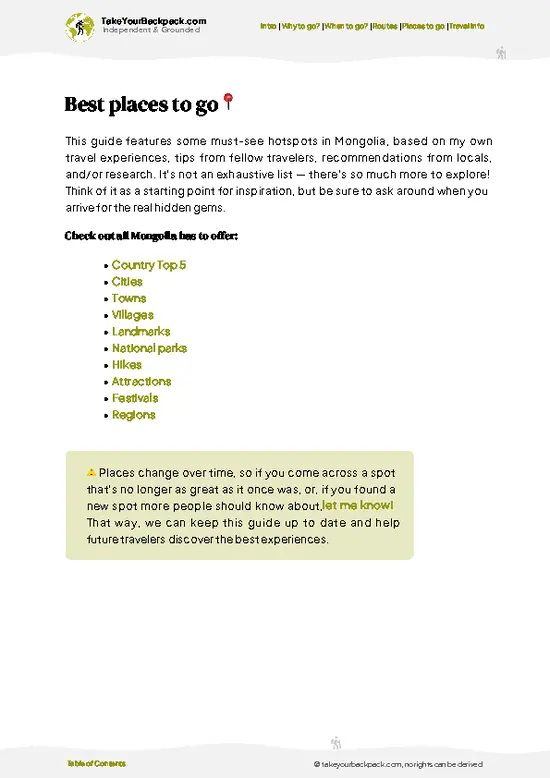
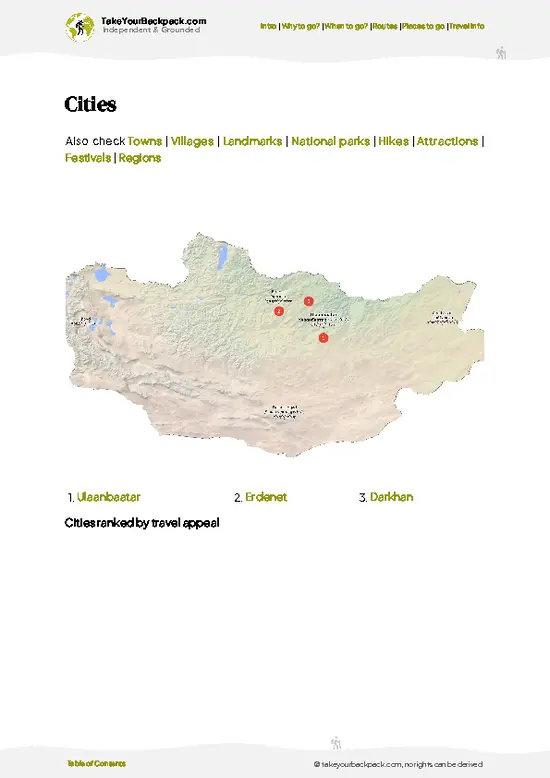
70 highlights, ranked by travel appeal
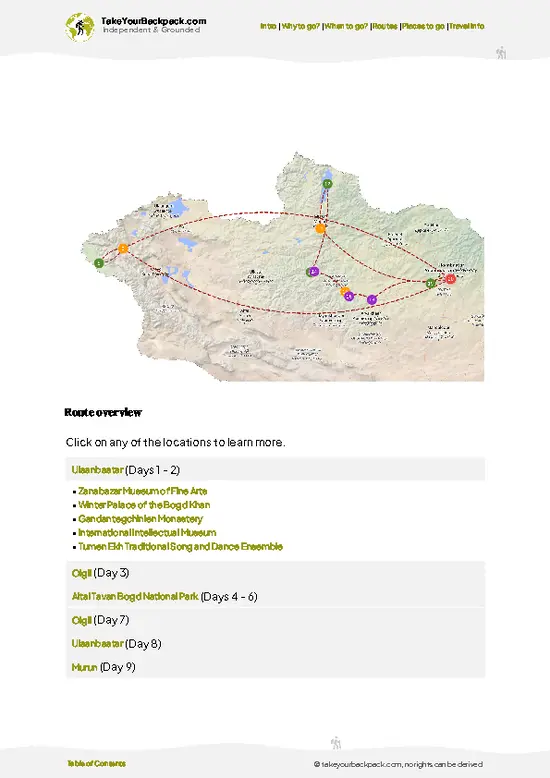
Optimized 7, 14 & 21-day travel routes
Cities, national parks, landmarks, beaches
How to get around
Offline-friendly for travel without Wi-Fi
👉 Click to see all 30+ guide features

📅 Plan smarter in minutes, not weeks
Month by month travel advice
Festivals & national holidays
Budget expectations

🗺️ Go to the right places, skip the overrated ones
Honest pros & cons of destinations
Top hikes, parks & viewpoints
Lesser-known places most travelers miss
Clear “worth it vs skip it” guidance

🛏️ Travel smoothly without rookie mistakes
Best areas to stay
Transport systems explained simply
Common scams & safety advice
SIM cards, money & practical tips

🌍 Understand the country, not just visit it
Culture & traditions
52 Essential phrases & customs
Festivals worth planning around
Traveler-friendly historical context
Insights that make places more meaningful

📱 Built for real travel conditions
Fully downloadable PDF
Works completely offline
Optimized for phone use
Useful in remote areas & buses
Everything in one place
Save weeks of stressful planning
Get instant access to your full guide. 30‑day money-back guarantee.


By proceeding you agree to our terms.
Sent to your inbox immediately after payment • 100% Secure Checkout
Best Backpacking Travel Advisor 2025 tourism awardBest Backpacking
Travel Advisor
2025
What others say about Take Your Backpack Guides:
⭐⭐⭐⭐⭐
Fantastic, amazing amount of information!
⭐⭐⭐⭐⭐
My goodness this is amazing, it's what I've been looking for hats off too you!
⭐⭐⭐⭐⭐
I think this is absolutely BRILLIANT
⭐⭐⭐⭐
Very complete and informative. It's still missing places, but I gotta to commend you
⭐⭐⭐⭐⭐
This is truly amazing, thank you, can't wait to explore it with my kids!
⭐⭐⭐⭐⭐
Awesome resource, thank you!
⭐⭐⭐⭐⭐
This is amazing! Can't wait to explore the ones I haven't seen
⭐⭐⭐⭐
I love this! Well done, great idea.
⭐⭐⭐⭐⭐
Thanks for taking the time to make this gem!
⭐⭐⭐⭐⭐
This might be the best website I've ever seen.
⭐⭐⭐⭐⭐
Congratulations, and thank you so much for your work; it's incredibly valuable.
⭐⭐⭐⭐
In all seriousness I think you did a great job pointing out the important spots
⭐⭐⭐⭐⭐
10/10 very good
⭐⭐⭐⭐⭐
As someone who's only just starting to visit regularly this is awesome, thank you.
⭐⭐⭐⭐
Thank you very much! I'm going to visit my dad, it's going to be very useful!
⭐⭐⭐⭐⭐
This is really cool! We'll be travelling for the first time and this definitely come in handy.
⭐⭐⭐⭐⭐
You are now our minister of culture, congratulations 👨‍💼
⭐⭐⭐⭐⭐
Just wanted to tell you that this is a pearl! Going to follow your recommendations.
⭐⭐⭐⭐⭐
This is so cool. I'll definitely be using the resource for my travels soon.
⭐⭐⭐⭐⭐
This is very impressive! Good work.
⭐⭐⭐⭐⭐
This is an amazing and informative site. Very well done!

🛏️ Where to stay?Choosing the right base

When you’re heading to the Gobi Desert, you want to stay somewhere that feels alive, not just a bed for the night. The towns of Dalanzadgad and Khongoryn Els are your best bets.

Dalanzadgad is the gateway to the Gobi. It’s a bustling hub where you can find fellow travelers and local guides. The vibe is laid-back, and you’ll find plenty of budget-friendly guesthouses. This is where you can swap stories over a shared meal, and trust me, those conversations are gold. The town has a few markets where you can grab supplies, and the locals are friendly, making it easy to feel at home.

Then there’s … read more 👉
When you’re heading to the Gobi Desert, you want to stay somewhere that feels alive, not just a bed for the night. The towns of Dalanzadgad and Khongoryn Els are your best bets.

Dalanzadgad is the gateway to the Gobi. It’s a bustling hub where you can find fellow travelers and local guides. The vibe is laid-back, and you’ll find plenty of budget-friendly guesthouses. This is where you can swap stories over a shared meal, and trust me, those conversations are gold. The town has a few markets where you can grab supplies, and the locals are friendly, making it easy to feel at home.

Then there’s Khongoryn Els, famous for its towering sand dunes. It’s a bit more remote, but that’s part of its charm. You can camp under the stars or stay in a ger (traditional Mongolian yurt). The sunsets here are mind-blowing, and you’ll find a community of backpackers who are just as eager to explore.

Both spots offer a mix of safety and social opportunities. You’ll meet people who share your passion for adventure, and that’s what makes the journey worthwhile. Forget the Instagram hype; these places are where the real magic happens.

👛 Costs (as of 31 July 2025)Money, prices, and spending tips

Visiting the Gobi Desert is a wild ride, but it comes with its own set of costs. Here’s the real deal on what you can expect to spend.
  • Accommodation: Expect to pay between $10 to $50 per night. Budget options like ger camps can be found at the lower end, while more comfortable lodges will push you toward the higher end. Keep in mind that amenities can be basic, but the experience is authentic.
  • Transportation: Getting around can cost anywhere from $20 to $200. If you’re taking a shared taxi or bus, it’ll be on the lower end. Private tours or 4x4 rentals will hit your wallet harder. Factor in fuel costs if you’re driving yourself.
  • Food: Meals can range from $5 to $15 per day. Local eateries offer hearty, simple dishes at budget prices. If you’re dining in touristy spots, expect to pay more for
read more 👉
Visiting the Gobi Desert is a wild ride, but it comes with its own set of costs. Here’s the real deal on what you can expect to spend.
  • Accommodation: Expect to pay between $10 to $50 per night. Budget options like ger camps can be found at the lower end, while more comfortable lodges will push you toward the higher end. Keep in mind that amenities can be basic, but the experience is authentic.
  • Transportation: Getting around can cost anywhere from $20 to $200. If you’re taking a shared taxi or bus, it’ll be on the lower end. Private tours or 4x4 rentals will hit your wallet harder. Factor in fuel costs if you’re driving yourself.
  • Food: Meals can range from $5 to $15 per day. Local eateries offer hearty, simple dishes at budget prices. If you’re dining in touristy spots, expect to pay more for the same basic fare.
  • Activities: Budget around $50 to $150 for excursions. This includes guided tours, camel rides, or visits to national parks. Prices vary based on the length and type of activity, so shop around for the best deals.
  • Entrance Fees: Some parks and attractions charge fees ranging from $1 to $10. These are usually minimal, but they can add up if you’re visiting multiple sites.

The Gobi Desert isn’t just about the price tag; it’s about the experience. The vast landscapes, unique wildlife, and the chance to connect with nomadic culture are what make this journey worthwhile.
⚠️ Prices can change and everyone travels differently, so take this as a rough guide. Hope it helps you plan your adventure!

Other Mongolian landmarks near Gobi Desert

Explore more nearby:


💡 Not sure where to go next?
Create a personalized itinerary for Mongolia including Gobi Desert and the places that fit your trip.

Generate my itinerary

👉 Discover all landmarks

Or checkout all Mongolia has to offer (think cities, towns, villages, national parks, hikes, beaches, festivals)
Country photo of Mongolia

We 💚 feedbackFinal thoughts on visiting Gobi Desert

The Gobi Desert is a wild, sprawling canvas of sand dunes and rugged mountains that feels like stepping into another world. One reason to go? The sheer solitude. You can wander for hours without seeing another soul, which is a rare find these days. But let’s be real: the weather can be brutal. Expect extremes—scorching days and freezing nights. Pack wisely, and embrace the unpredictability. It’s all part of the adventure.

✈️ When did I visit Mongolia?
As part of my 1.5 year travel around the world trip, I visited Mongolia in July 2015. After a month of horse-riding and hitch-hiking I took the TransMongolia express to China.

✍️ Help improve this page!
The information on this page is based on my own backpacking experience in Mongolia, supplemented with up-to-date research and feedback from other travelers. Travel details can change, so if you notice anything outdated or incomplete, feel free to let me know.


🙋‍♂️ Give feedback

👋 Meet the founderWho’s Behind Take Your Backpack?

Johan, backpacker and founder of TakeYourBackpackHi, I’m Johan (Netherlands 🇳🇱), the creator of TakeYourBackpack. Over the past decade, I’ve backpacked through 80+ countries across six continents, gaining extensive experience with independent travel, long-term trips, and overland routes.

This site is built on a combination of firsthand travel experience and carefully curated insights from other backpackers. Many guides are based on places I’ve personally visited, while others bring together tips, observations, and practical advice shared by trusted travelers I’ve met along the way.

The goal is to provide realistic, experience-driven guidance — not generic itineraries — so you can explore destinations with better context, clearer expectations, and more confidence.

Get full Mongolia guide •
Instant download • 70 highlights • Full Offline guide