×
Mount Toubkal

Morocco🇲🇦 | hikesMount Toubkalhighest peak, rocky ascent, alpine refuge, panoramic summit | things to do and best time to go

Explore Imi-n-Ifri Natural BridgeExplore Jebel Saghro

Backpacking in Mount Toubkal
🏆 Top pickhike ranked #1
By Johan Kruseman 🇳🇱 | Updated June 3, 2026

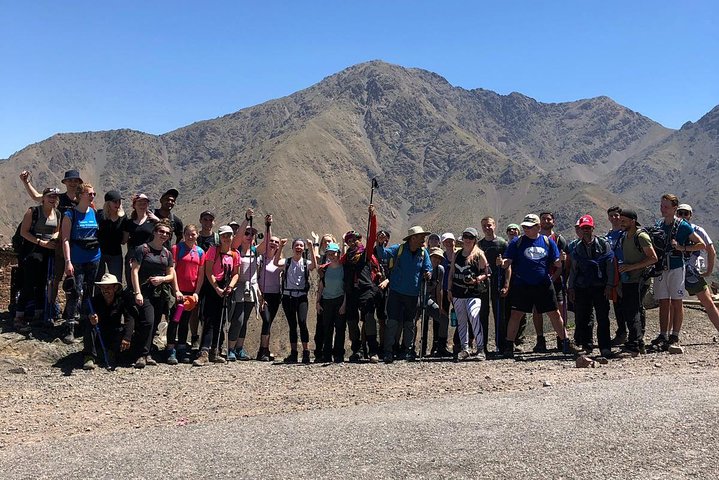
Most people only realize after the fact: you don’t need to be a technical climber or a millionaire to summit Mount Toubkal. That’s the practical magic—this is North Africa’s highest peak, but you can catch a shared taxi from Marrakech, hop out in Imlil, and be on the trail by lunchtime. Toubkal sits in the High Atlas, just south of Marrakech, and the hike is a full-body experience—dusty switchbacks, the metallic clang of mule bells, and the altitude’s slow squeeze on your lungs. The scenery swings from terraced Berber villages to lunar scree fields, with snow lingering late into spring. It’s a relentless climb, not a gentle stroll, and the final push to the summit at 4,167 meters is a pre-dawn, headlamp-lit grind. But when the sun cracks over the Sahara and the wind bites your sweat-soaked shirt, you forget the ache. Compared to the Todra Gorge or the M’Goun Massif, Toubkal is more accessible, more crowded, and—if you crave a sense of scale—absolutely worth the effort.

Discover everything you want to know in the 📖 Morocco Travel Guide.
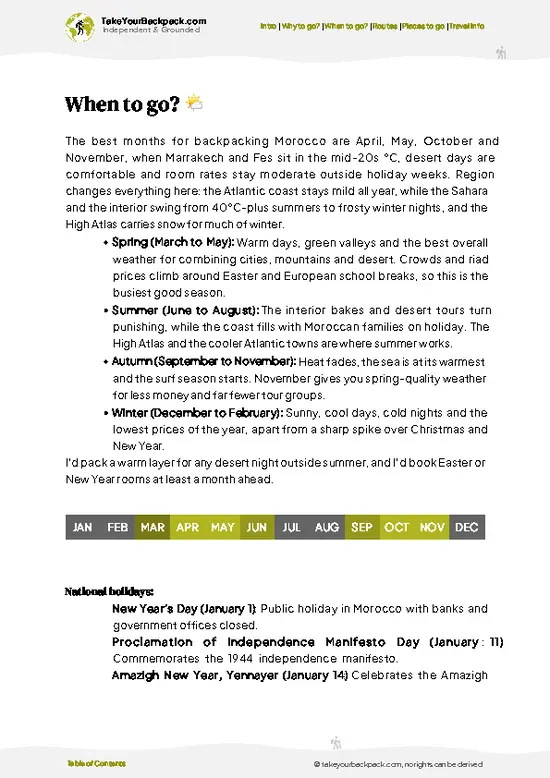
Best time to go: March - June, September - November
Duration: 2 to 3 days
Distance: 18 kilometers
Total ascent: 1,200 meters


Get your Morocco guide
128 ranked highlights, routes & tips, works offline (487 pages)
Loading the map 🌍
CLICK TO FILTER
cities
towns
villages
landmarks
national parks
hikes
beaches
attractions
festivals
regions
SHOW COUNTRY’S BESTSHOW ALL

✨ Why go?
Ranked #1 hike in Morocco
What sets this place apart

Mount Toubkal is a magnet for backpackers, and it’s easy to see why. The scenery-to-effort ratio is off the charts. You’re not just hiking; you’re climbing into the heart of the High Atlas Mountains, where jagged peaks pierce the sky and valleys stretch endlessly below. The public transport access is a breeze. Buses and shared taxis whisk you from Marrakech to Imlil, the trailhead, in just a couple of hours.

Cost? Minimal. You can tackle this adventure without breaking the bank. The flexible distances allow you to customize your trek, whether you’re a weekend warrior or a seasoned pro. You can summit in two days or take your time, soaking in the views and the local culture.

And let’s not forget the payoff. The moment you reach the summit, the 360-degree panorama is a reward that makes … read more 👉
Mount Toubkal is a magnet for backpackers, and it’s easy to see why. The scenery-to-effort ratio is off the charts. You’re not just hiking; you’re climbing into the heart of the High Atlas Mountains, where jagged peaks pierce the sky and valleys stretch endlessly below. The public transport access is a breeze. Buses and shared taxis whisk you from Marrakech to Imlil, the trailhead, in just a couple of hours.

Cost? Minimal. You can tackle this adventure without breaking the bank. The flexible distances allow you to customize your trek, whether you’re a weekend warrior or a seasoned pro. You can summit in two days or take your time, soaking in the views and the local culture.

And let’s not forget the payoff. The moment you reach the summit, the 360-degree panorama is a reward that makes every step worthwhile. The crisp mountain air fills your lungs, and the first cold beer at a nearby refuge tastes like victory. Toubkal fits seamlessly into a longer backpacking route, making it a perfect stop on your Moroccan adventure. Get ready to feel alive!
Want to include Mount Toubkal in your Morocco route?
Create a personalized Morocco itinerary that includes Mount Toubkal and the places that fit your trip — based on your travel style, budget, and available time. Get your route in seconds.

Generate my trip

💡 HighlightsDon't-miss highlights and experiences

  1. Summit of Jebel Toubkal (4,167 m): North Africa’s highest point — that thin-air, big-sky moment you won’t get on most hikes. On a clear day you can pick out ridgelines for miles and even glimpse the Sahara’s haze on the horizon. The mix of altitude, the final scramble, and the raw sense of accomplishment are what make this stand out. (Personal favorite.)
  2. Toubkal Refuge (Refuge du Toubkal, ~3,207 m): A proper mountain hut at high altitude — shared bunks, hot tea, and a flurry of international hikers trading route tips. It’s as much about the people, the cozy stone-and-wood vibe, and quick naps before sunrise as it is about the logistics of summiting. Few trails have a refuge that feels this remote yet lived-in.
  3. Imlil Valley & Berber villages: The approach through terraced fields, mud-brick
read more 👉
  1. Summit of Jebel Toubkal (4,167 m): North Africa’s highest point — that thin-air, big-sky moment you won’t get on most hikes. On a clear day you can pick out ridgelines for miles and even glimpse the Sahara’s haze on the horizon. The mix of altitude, the final scramble, and the raw sense of accomplishment are what make this stand out. (Personal favorite.)
  2. Toubkal Refuge (Refuge du Toubkal, ~3,207 m): A proper mountain hut at high altitude — shared bunks, hot tea, and a flurry of international hikers trading route tips. It’s as much about the people, the cozy stone-and-wood vibe, and quick naps before sunrise as it is about the logistics of summiting. Few trails have a refuge that feels this remote yet lived-in.
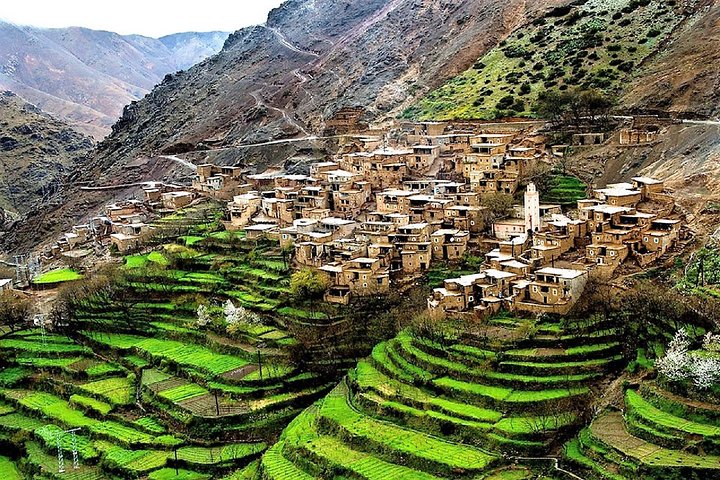
  3. Imlil Valley & Berber villages: The approach through terraced fields, mud-brick houses and mule tracks gives a cultural heartbeat to the hike. Local guides and guesthouses mean real hospitality, fresh mint tea and an easy introduction to High Atlas life — you’re not just walking scenery, you’re walking through communities that rely on the trail.
  4. Sidi Chamharouch shrine: A tiny, colorful pilgrimage site tucked into the scree, draped with cloth and talismans. It’s a striking cultural waypoint where locals stop to leave offerings and rest; it cracks open the spiritual layer of the landscape in a way most mountain trails don’t.
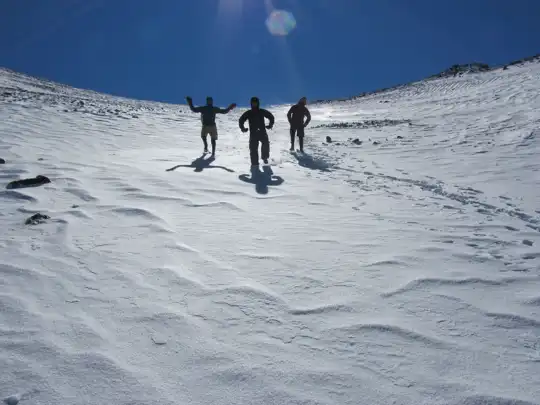
  5. The final ridge, scree and seasonal snowfields: That last stretch—rocky ridges, loose scree and, in winter/spring, snow and ice—turns the hike into a proper alpine feel. It’s short, exposed, sometimes technical, and rewards you with dramatic foreground for the summit view. Plus, keep an eye out for raptors riding the thermals — wildlife you don’t see on lowland treks.
Spotted a mistake or missing something? Contact us.
Things to do around Mount Toubkal

Ratings based on Tripadvisor reviews. When you book through this link, you support our work at no extra cost to you.

🌤️ When to go?Choosing the right time of year


  • Weather: Spring (April to June) and autumn (September to November) deliver the best weather—clear skies and dry trails. Winter drags in snow and ice, turning the climb into a technical challenge, while summer can scorch with daytime highs pushing 30-35°C (86-95°F), making the ascent brutal.

  • Temperature: Expect chilly nights year-round, often dipping below 0°C (32°F) above 3,000 meters. Daytime temps in spring and autumn hover between 10-20°C (50-68°F), perfect for steady trekking without overheating or freezing.

  • Daylight Hours: Longer days in late spring and early autumn mean more daylight to push higher without rushing. Winter’s short days cut your window tight, forcing early starts and early finishes.

  • Crowds: Peak season in summer draws hikers escaping Europe’s heat, swelling the
read more 👉

  • Weather: Spring (April to June) and autumn (September to November) deliver the best weather—clear skies and dry trails. Winter drags in snow and ice, turning the climb into a technical challenge, while summer can scorch with daytime highs pushing 30-35°C (86-95°F), making the ascent brutal.

  • Temperature: Expect chilly nights year-round, often dipping below 0°C (32°F) above 3,000 meters. Daytime temps in spring and autumn hover between 10-20°C (50-68°F), perfect for steady trekking without overheating or freezing.

  • Daylight Hours: Longer days in late spring and early autumn mean more daylight to push higher without rushing. Winter’s short days cut your window tight, forcing early starts and early finishes.

  • Crowds: Peak season in summer draws hikers escaping Europe’s heat, swelling the trails and refuges. Shoulder seasons offer solitude—fewer trekkers, more space to breathe and savor the mountain’s raw edge.

  • Seasonal Activities: Spring and autumn bring wildflowers and crisp air, while winter invites snowshoeing and mountaineering gear. Summer’s heat limits early starts but rewards with alpine views free of snow.

  • Price Fluctuations: Summer’s peak draws higher prices on guides, lodging, and transport. Shoulder seasons offer better deals and more flexible bookings, rewarding those who time it right.


Pro-tip: Aim for late April or early October—when the mountain’s mood is just right, the crowds thin, and the air feels electric with possibility.


source: climatestotravel.comJANJanuary: fair for travelingFEBFebruary: fair for travelingMARMarch: good for travelingAPRApril: excellent for travelingMAYMay: excellent for travelingJUNJune: highly recommended for travelingJULJuly: fair for travelingAUGAugust: fair for travelingSEPSeptember: excellent for travelingOCTOctober: excellent for travelingNOVNovember: highly recommended for travelingDECDecember: fair for traveling
Morocco - Mount Toubkal

✈️ The backpacker research shortcutMorocco Travel Guide

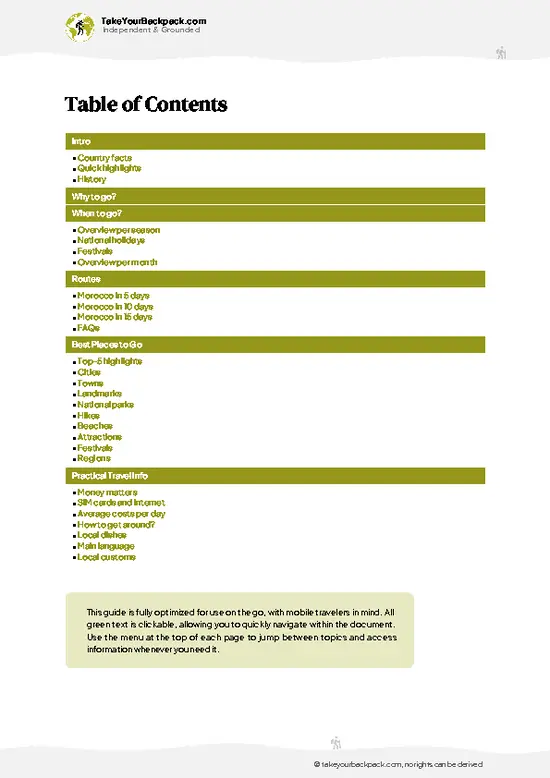
An offline-friendly backpacking guide with optimized travel routes, ranked highlights, transport advice, and the best areas to stay.
example page 0 from our offline Travel Guide for Morocco
example page 1 from our offline Travel Guide for Morocco
example page 2 from our offline Travel Guide for Morocco
example page 3 from our offline Travel Guide for Morocco
example page 4 from our offline Travel Guide for Morocco
example page 5 from our offline Travel Guide for Morocco
example page 6 from our offline Travel Guide for Morocco
example page 7 from our offline Travel Guide for Morocco
The digital guide (487 pages) contains:
128 highlights, ranked by travel appeal
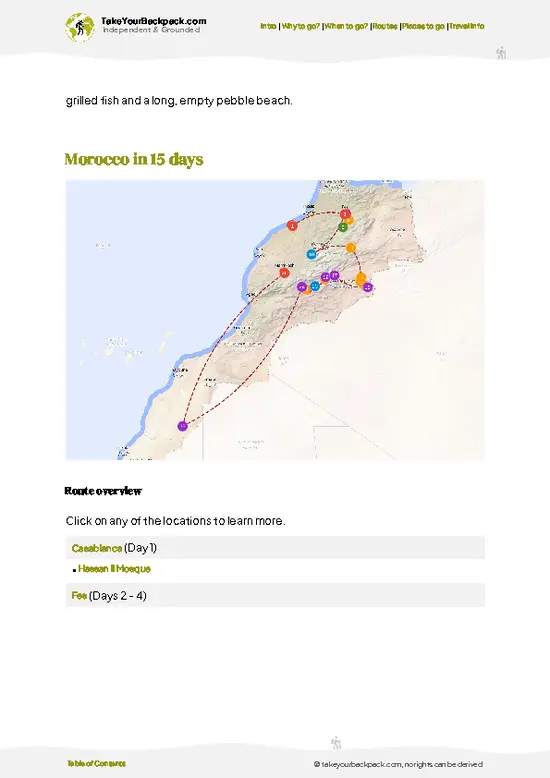
Optimized 5, 10 & 15-day travel routes
Cities, national parks, landmarks, beaches
How to get around
Offline-friendly for travel without Wi-Fi
👉 Click to see all 30+ guide features

📅 Plan smarter in minutes, not weeks
Month by month travel advice
Festivals & national holidays
Budget expectations

🗺️ Go to the right places, skip the overrated ones
Honest pros & cons of destinations
Top hikes, parks & viewpoints
Lesser-known places most travelers miss
Clear “worth it vs skip it” guidance

🛏️ Travel smoothly without rookie mistakes
Best areas to stay
Transport systems explained simply
Common scams & safety advice
SIM cards, money & practical tips

🌍 Understand the country, not just visit it
Culture & traditions
52 Essential phrases & customs
Festivals worth planning around
Traveler-friendly historical context
Insights that make places more meaningful

📱 Built for real travel conditions
Fully downloadable PDF
Works completely offline
Optimized for phone use
Useful in remote areas & buses
Everything in one place
Save weeks of stressful planning
Get instant access to your full guide. 30‑day money-back guarantee.


By proceeding you agree to our terms.
Sent to your inbox immediately after payment • 100% Secure Checkout
Best Backpacking Travel Advisor 2025 tourism awardBest Backpacking
Travel Advisor
2025
What others say about Take Your Backpack Guides:
⭐⭐⭐⭐⭐
Fantastic, amazing amount of information!
⭐⭐⭐⭐⭐
My goodness this is amazing, it's what I've been looking for hats off too you!
⭐⭐⭐⭐⭐
I think this is absolutely BRILLIANT
⭐⭐⭐⭐
Very complete and informative. It's still missing places, but I gotta to commend you
⭐⭐⭐⭐⭐
This is truly amazing, thank you, can't wait to explore it with my kids!
⭐⭐⭐⭐⭐
Awesome resource, thank you!
⭐⭐⭐⭐⭐
This is amazing! Can't wait to explore the ones I haven't seen
⭐⭐⭐⭐
I love this! Well done, great idea.
⭐⭐⭐⭐⭐
Thanks for taking the time to make this gem!
⭐⭐⭐⭐⭐
This might be the best website I've ever seen.
⭐⭐⭐⭐⭐
Congratulations, and thank you so much for your work; it's incredibly valuable.
⭐⭐⭐⭐
In all seriousness I think you did a great job pointing out the important spots
⭐⭐⭐⭐⭐
10/10 very good
⭐⭐⭐⭐⭐
As someone who's only just starting to visit regularly this is awesome, thank you.
⭐⭐⭐⭐
Thank you very much! I'm going to visit my dad, it's going to be very useful!
⭐⭐⭐⭐⭐
This is really cool! We'll be travelling for the first time and this definitely come in handy.
⭐⭐⭐⭐⭐
You are now our minister of culture, congratulations 👨‍💼
⭐⭐⭐⭐⭐
Just wanted to tell you that this is a pearl! Going to follow your recommendations.
⭐⭐⭐⭐⭐
This is so cool. I'll definitely be using the resource for my travels soon.
⭐⭐⭐⭐⭐
This is very impressive! Good work.
⭐⭐⭐⭐⭐
This is an amazing and informative site. Very well done!

🛏️ Where to stay?Best areas to stay in Morocco

If you enjoy meeting fellow travelers, consider choosing hostels with high ratings for atmosphere. On the other hand, if you prefer having your own space, a hotel might be a better option.

🥾 Hike detailsA practical overview of the hike

Total Distance: The total distance of the Mount Toubkal trek is approximately 19 kilometers (about 12 miles) round trip, depending on your route.

Estimated Duration: Most hikers take around 2 days to complete the trek, with the ascent to the summit taking about 6-8 hours and the descent around 4-6 hours. If you’re feeling ambitious, some fit hikers do it in a single day, but that’s not for the faint of heart.

Difficulty Level: This trail is considered challenging. It’s not just the altitude that gets you; the rocky terrain and steep sections can be tough, especially if you’re not acclimatized. … read more 👉
Total Distance: The total distance of the Mount Toubkal trek is approximately 19 kilometers (about 12 miles) round trip, depending on your route.

Estimated Duration: Most hikers take around 2 days to complete the trek, with the ascent to the summit taking about 6-8 hours and the descent around 4-6 hours. If you’re feeling ambitious, some fit hikers do it in a single day, but that’s not for the faint of heart.

Difficulty Level: This trail is considered challenging. It’s not just the altitude that gets you; the rocky terrain and steep sections can be tough, especially if you’re not acclimatized.

Starting Point: The trek begins in Imlil, a small village in the High Atlas Mountains.
  • Getting There: You can reach Imlil via public transport from Marrakech. Take a bus or a shared taxi to Asni, and then catch another taxi to Imlil. The whole journey takes about 1.5 to 2 hours.

Major Landmarks Along the Route:
  • Kasbah du Toubkal: A stunning base camp and guesthouse where you can grab a meal or rest up before your hike.
  • Berber Villages: You’ll pass through several traditional Berber villages, which are great for a quick cultural immersion.
  • Refuge du Toubkal: This is a popular stop for trekkers, where you can stay overnight if you’re breaking the trek into two days.
  • Summit of Mount Toubkal: The pinnacle of your hike, offering breathtaking views of the surrounding mountains and valleys.

Type of Terrain and Scenery: Expect a mix of rocky paths, scree slopes, and some steep ascents. The scenery is stunning, with rugged mountains, lush valleys, and often dramatic weather changes. The higher you go, the more you’ll feel like you’re on top of the world.

Typical Vegetation and Wildlife:
  • Vegetation: Lower down, you’ll see terraced fields, walnut trees, and some wildflowers. As you ascend, the vegetation thins out, giving way to alpine plants.
  • Wildlife: Keep an eye out for Barbary macaques and various bird species. You might even spot some mountain goats if you’re lucky!

Pack plenty of water and snacks, and don’t forget to check the weather before you head out. Happy hiking!
⚠️ Hiking info can sometimes be outdated or inaccurate. Before you hit the trail, check the latest conditions with locals. If you do spot anything that's off, I'd love to hear from you, so I can update it for fellow travelers.

🛡️ SafetyTraveler Safety Guide

Mount Toubkal is a thrilling challenge, but it’s not without its realities. The weather can shift quickly; sunny mornings can morph into chilly afternoons. Layer up and be ready for anything. The altitude hits hard, so pace yourself. Hydrate and take breaks to soak in the views—trust me, they’re worth it.

The terrain is rugged, with steep sections that demand focus. Watch your footing on rocky paths, especially after rain when they can get slippery. Navigation is straightforward, but keep an eye on trail markers. You don’t want to miss that summit view.

Wildlife is generally shy, but you might spot a goat or two. Respect their space; they’re part of the landscape.

Preparation is key. Many first-timers underestimate the chill at higher elevations. Bring a warm hat and gloves, even in summer. … read more 👉
Mount Toubkal is a thrilling challenge, but it’s not without its realities. The weather can shift quickly; sunny mornings can morph into chilly afternoons. Layer up and be ready for anything. The altitude hits hard, so pace yourself. Hydrate and take breaks to soak in the views—trust me, they’re worth it.

The terrain is rugged, with steep sections that demand focus. Watch your footing on rocky paths, especially after rain when they can get slippery. Navigation is straightforward, but keep an eye on trail markers. You don’t want to miss that summit view.

Wildlife is generally shy, but you might spot a goat or two. Respect their space; they’re part of the landscape.

Preparation is key. Many first-timers underestimate the chill at higher elevations. Bring a warm hat and gloves, even in summer. Start early to beat the crowds and enjoy a quieter ascent. The reward? That first cold beer at the base camp, feeling like a champion.

Other Moroccan hikes near Mount Toubkal

Explore more nearby:


💡 Not sure where to go next?
Create a personalized itinerary for Morocco including Mount Toubkal and the places that fit your trip.

Generate my itinerary

👉 Discover all hikes

Or checkout all Morocco has to offer (think cities, towns, villages, national parks, hikes, beaches, festivals)
Country photo of Morocco

We 💚 feedbackFinal thoughts on hiking the Mount Toubkal

Climbing Mount Toubkal is like stepping into a rugged postcard—those sweeping views of the High Atlas are pure magic. You’ll feel every muscle ache, but the payoff is a panorama that makes you forget the struggle. Just know, the altitude can hit hard; acclimatization isn’t optional. It’s a challenge, but if you’re ready to push through, the reward is a slice of Morocco that stays with you long after the hike ends.

✈️ When did I visit Morocco?
In October 2011, I backpacked Morocco for two weeks, with climbing the Mount Toubkal in summer clothing as a highlight.

✍️ Help improve this page!
The information on this page is based on my own backpacking experience in Morocco, supplemented with up-to-date research and feedback from other travelers. Travel details can change, so if you notice anything outdated or incomplete, feel free to let me know.


🙋‍♂️ Give feedback

👋 Meet the founderWho’s Behind Take Your Backpack?

Johan, backpacker and founder of TakeYourBackpackHi, I’m Johan (Netherlands 🇳🇱), the creator of TakeYourBackpack. Over the past decade, I’ve backpacked through 80+ countries across six continents, gaining extensive experience with independent travel, long-term trips, and overland routes.

This site is built on a combination of firsthand travel experience and carefully curated insights from other backpackers. Many guides are based on places I’ve personally visited, while others bring together tips, observations, and practical advice shared by trusted travelers I’ve met along the way.

The goal is to provide realistic, experience-driven guidance — not generic itineraries — so you can explore destinations with better context, clearer expectations, and more confidence.

Get full Morocco guide •
Instant download • 128 highlights • Full Offline guide