×

Morocco🇲🇦 | best hikesTop-Rated 7 hikes in Morocco

Hikes in Morocco come in three distinct flavors, and picking the wrong one wastes days. The High Atlas around Imlil is the main draw: Toubkal at 4,167 meters, mule-carried gear, village homestays, and the biggest crowds. The M’Goun massif is the better call for solitude, with fewer trekkers and rougher logistics. The Rif and Middle Atlas give green forest and cooler walks, and the Anti-Atlas offers dry, empty canyons. Independent backpackers can reach most trailheads by shared grand taxi for a few dollars. Skip the short day-trip packages from Marrakech if you want any quiet. They hit the same valley as everyone else, at peak hour.

By Johan Kruseman 🇳🇱 | Updated October 23, 2026
Explore the best beaches in Morocco

Why go?Why These hike Stand Out

Morocco suits hiking because mountains and culture overlap. Trails follow old Amazigh (Berber) mule routes between villages, so you sleep in family-run gîtes, eat tagine cooked on site, and rarely carry a tent. That setup keeps costs low and logistics simple. The geography is also unusually varied: snow-capped peaks sit within a couple of hours of Marrakech, while the Sahara edge and Atlantic-facing hills lie in the same country.

The infrastructure is uneven, and that matters before you commit. The Toubkal area has marked paths, refuges, and plenty of guides. Elsewhere, signage is sparse, maps are unreliable, and phone coverage drops fast. Do not expect Alpine-style waymarking or rescue response times. Most routes beyond the popular valleys need a local guide, both for navigation and because … read more 👉
Morocco suits hiking because mountains and culture overlap. Trails follow old Amazigh (Berber) mule routes between villages, so you sleep in family-run gîtes, eat tagine cooked on site, and rarely carry a tent. That setup keeps costs low and logistics simple. The geography is also unusually varied: snow-capped peaks sit within a couple of hours of Marrakech, while the Sahara edge and Atlantic-facing hills lie in the same country.

The infrastructure is uneven, and that matters before you commit. The Toubkal area has marked paths, refuges, and plenty of guides. Elsewhere, signage is sparse, maps are unreliable, and phone coverage drops fast. Do not expect Alpine-style waymarking or rescue response times. Most routes beyond the popular valleys need a local guide, both for navigation and because trails cross private grazing land and village terrain.

The climate is the other filter. Altitude brings real winter, with snow and ice on high routes, while lower regions turn dangerously hot in summer. Morocco is not a good pick for casual wandering without planning. It is an excellent pick if you want accessible, culturally grounded trekking with high peaks, at a fraction of European prices.
Evaluating the Top Choices
The list of best hikes in Morocco is created based on scenery, challenge, trail quality, landmarks, and overall enjoyment. If you feel a hike is missing in this list, please let us know.

When to go?Timing Your Visit for the Best Experience

Best months for high mountain hikes: Plan on April to June and September to October: the High Atlas is mostly snow-free on the main routes, daytime highs in villages sit around 15 to 25°C, and skies are generally clear. Nights at refuges near 3,200 meters often drop to 0°C or below even then.

Shoulder seasons and what to skip: March is usable but snow often lingers above 2,500 meters, so crampons and an ice axe may be needed on Toubkal. November is workable early in the month and risky after. July and August are not worth the time for lowland or desert-edge routes: temperatures pass 38°C around Marrakech and the Anti-Atlas. The high peaks stay walkable, though, with afternoon heat in valleys and the occasional thunderstorm.

Winter, December to February, brings real snow to the High and Middle … read more 👉
Best months for high mountain hikes: Plan on April to June and September to October: the High Atlas is mostly snow-free on the main routes, daytime highs in villages sit around 15 to 25°C, and skies are generally clear. Nights at refuges near 3,200 meters often drop to 0°C or below even then.

Shoulder seasons and what to skip: March is usable but snow often lingers above 2,500 meters, so crampons and an ice axe may be needed on Toubkal. November is workable early in the month and risky after. July and August are not worth the time for lowland or desert-edge routes: temperatures pass 38°C around Marrakech and the Anti-Atlas. The high peaks stay walkable, though, with afternoon heat in valleys and the occasional thunderstorm.

Winter, December to February, brings real snow to the High and Middle Atlas, closes some passes, and makes most treks a mountaineering proposition. Rainfall peaks in the Rif and Middle Atlas from November to March, so those forests are best in spring.

Crowds and prices: Imlil is busiest in April, May, and September, and refuge beds can fill. Guide and mule rates barely change by season, but homestay and hotel rates in Marrakech climb 20 to 40 percent around holidays. Ramadan shifts food availability and guide energy, so check dates.

hike hoppingTips for Visiting Multiple Destinations

How many days to allow: A trip combining several hikes in Morocco needs 10 to 16 days, including rest and transit. Fewer than that, and you spend half of it in vans.

Regions that group well: The most sensible cluster is Marrakech, the Toubkal area, and the M’Goun region, all reached by road through the High Atlas. Start in Marrakech, the main flight and bus hub, then move east. Add the Anti-Atlas or Todra and Dades area at the end if you want desert-edge terrain. The Rif and Chefchaouen sit far north and make a separate trip, or an end-of-route add-on via Fes. Do not try to squeeze them in with the High Atlas.

Time per stop and travel times: Give each trekking base 2 to 4 days, plus a buffer day for weather. Marrakech to Imlil takes about 1.5 to 2 hours by grand taxi. Marrakech to Ouarzazate … read more 👉
How many days to allow: A trip combining several hikes in Morocco needs 10 to 16 days, including rest and transit. Fewer than that, and you spend half of it in vans.

Regions that group well: The most sensible cluster is Marrakech, the Toubkal area, and the M’Goun region, all reached by road through the High Atlas. Start in Marrakech, the main flight and bus hub, then move east. Add the Anti-Atlas or Todra and Dades area at the end if you want desert-edge terrain. The Rif and Chefchaouen sit far north and make a separate trip, or an end-of-route add-on via Fes. Do not try to squeeze them in with the High Atlas.

Time per stop and travel times: Give each trekking base 2 to 4 days, plus a buffer day for weather. Marrakech to Imlil takes about 1.5 to 2 hours by grand taxi. Marrakech to Ouarzazate runs 4 to 5 hours over the Tizi n’Tichka pass, and Ouarzazate to Boumalne Dadès adds roughly 2 hours. Marrakech to Fes by train is about 7 to 8 hours.

Planning mistakes: The classic error is stacking back-to-back summit days with long transfers between. Altitude and mountain roads wear you down. Another is booking tight flights after a trek, when snow or washed-out roads can add a day. Leave a margin of one full day before departure, and do harder, higher routes first while you are fresh.

The ListTop hikes of Morocco

1 Mount Toubkal

Highest in North Africa, Neltner Hut, scree bowl, two-day climb

Climb from Imlil through terraced fields to a 3,200 meter refuge, then push up loose scree to a metal tripod at 4,167 meters.

Morocco - Mount Toubkal

2 Toubkal Circuit

Multi-day loop, village gîtes, Tizi n’Tamatert, Lake Ifni detour

Loop through Berber villages and a high juniper pass over three to five days, with the Toubkal summit and a blue lake as options.

Morocco - Toubkal Circuit

3 M’Goun Massif

4,071 m summit, 4 to 6 day traverse, Arous gorges, shepherd camps

Traverse scree ridges to the second highest summit in the High Atlas, then drop through red-walled gorges toward Tessaout villages.

morocco-hike-mgoun-massif
© Google |

4 Ait Bouguemez Valley

Walnut terraces, mud-brick villages, canal paths, Agouti granary

Follow flat to rolling paths between river-side villages and barley fields, with a short climb to a communal granary above Agouti.

5 Jebel Saghro

Black basalt, mule tracks, nomad plateaus, guide-led

Cross dark volcanic ridges and open grazing plateaus from Nekob, finishing with palm-lined canyons and a gateway of basalt pinnacles.

morocco-hike-jebel-saghro
© Google |

6 Siroua Massif

Volcanic peak, saffron valleys, Anti-Atlas terraces, thin waymarking

Walk volcanic ridges to a 3,304 meter summit, passing walnut villages, hand-tended irrigation terraces and the saffron fields around Taliouine.

7 Paradise Valley

Emerald pools, boulder scrambling, half-day swim, riverside cafés

Scramble upstream along the Tamraght river between red and gray rock walls, with deep green pools for swimming and palm shade.

Loading the map 🌍

Expert viewPro Tips for Exploring the Best

How many hikes to plan: I advise three to four hikes on a first trip. Each needs two to four days with travel, acclimatization, and a weather buffer, and more than that turns the trip into a transport schedule. Two multi-day treks plus one or two shorter walks give variety without burnout.

Choosing by travel style: First-timers and those short on time should pick the Toubkal area. It has marked paths, plenty of guides, and refuges, and the summit is doable in two days. If you want quiet, choose the M’Goun or Anti-Atlas routes, where you will see few other trekkers but need more preparation and a guide. The Rif and Middle Atlas suit slower travelers who prefer cedar forest and cooler walking over alpine summits. Day-trip packages from Marrakech are poor value: you pay for a long drive and … read more 👉
How many hikes to plan: I advise three to four hikes on a first trip. Each needs two to four days with travel, acclimatization, and a weather buffer, and more than that turns the trip into a transport schedule. Two multi-day treks plus one or two shorter walks give variety without burnout.

Choosing by travel style: First-timers and those short on time should pick the Toubkal area. It has marked paths, plenty of guides, and refuges, and the summit is doable in two days. If you want quiet, choose the M’Goun or Anti-Atlas routes, where you will see few other trekkers but need more preparation and a guide. The Rif and Middle Atlas suit slower travelers who prefer cedar forest and cooler walking over alpine summits. Day-trip packages from Marrakech are poor value: you pay for a long drive and share a valley with dozens of groups.

What it costs: Expect US$25 to 50 a day (about 250 to 500 MAD) on a budget trek including food, a homestay, and shared transport. Add a certified guide at roughly 400 to 700 MAD a day (US$40 to 70), and a mule at around 200 to 300 MAD. Refuge beds near Toubkal cost about 150 to 250 MAD with half board. Imlil is the main cost trap: prices rise at the last hotels and shops, so book directly with a gîte or the guides’ bureau. National park fees are small or absent. A solid trip of three or four hikes comes to roughly US$350 to 700 excluding flights.

Safety: Altitude is the main risk. Toubkal’s summit is over 4,100 meters, and altitude sickness appears from about 3,000. Ascend gradually and drink plenty. Weather turns fast: snow and ice linger into May, and summer storms can flood valleys. Carry a headlamp, layers, and a paper map, since phone coverage is patchy. Use only certified guides with an official badge, and avoid unlicensed touts at bus stops.

Cultural considerations: Villages are conservative. Dress modestly in settlements, with covered shoulders and knees, particularly for women. Ask before photographing people. Accept tea when offered, and tip the guide, cook, and muleteer (roughly 10 percent of the trip cost is common). During Ramadan, eat and drink discreetly in villages. The reward is clear: warm hospitality, simple food, and summit views for a fraction of European prices.

✈️ The backpacker research shortcutMorocco Travel Guide

An offline-friendly backpacking guide with optimized travel routes, ranked highlights, transport advice, and the best areas to stay.
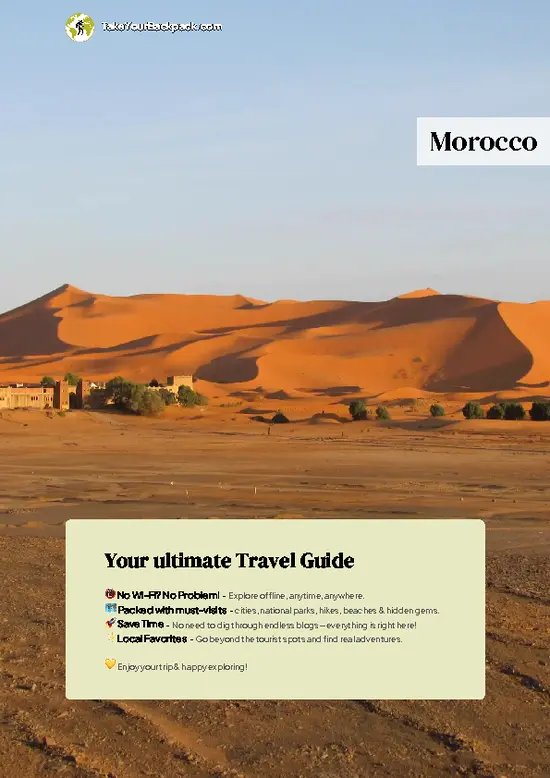
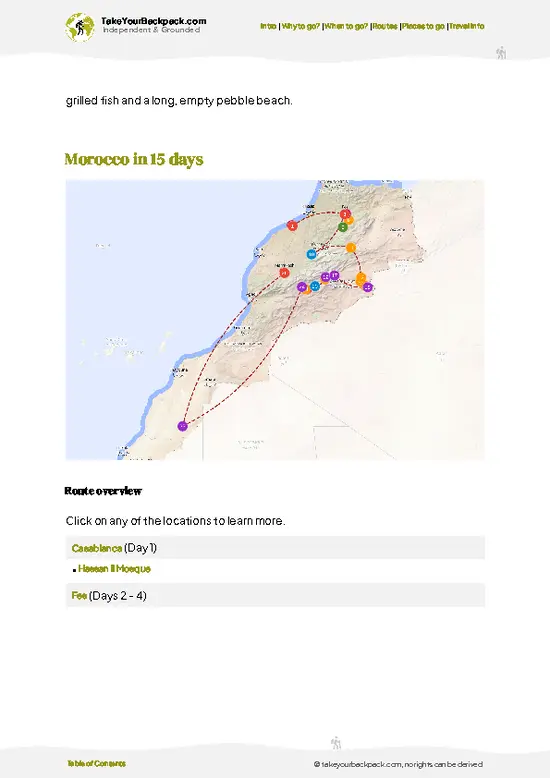
example page 0 from our offline Travel Guide for Morocco
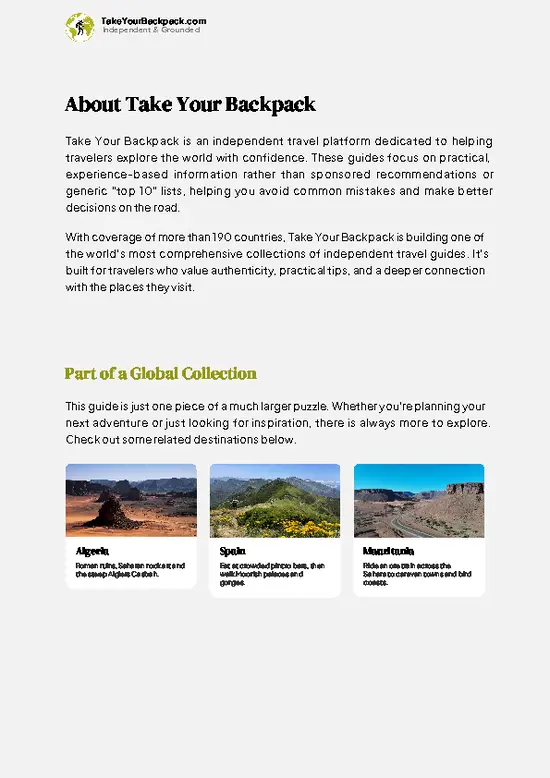
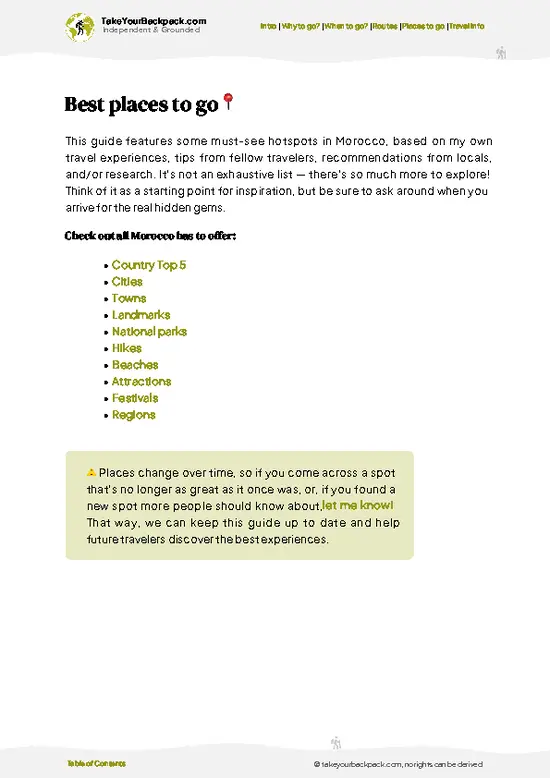
example page 1 from our offline Travel Guide for Morocco
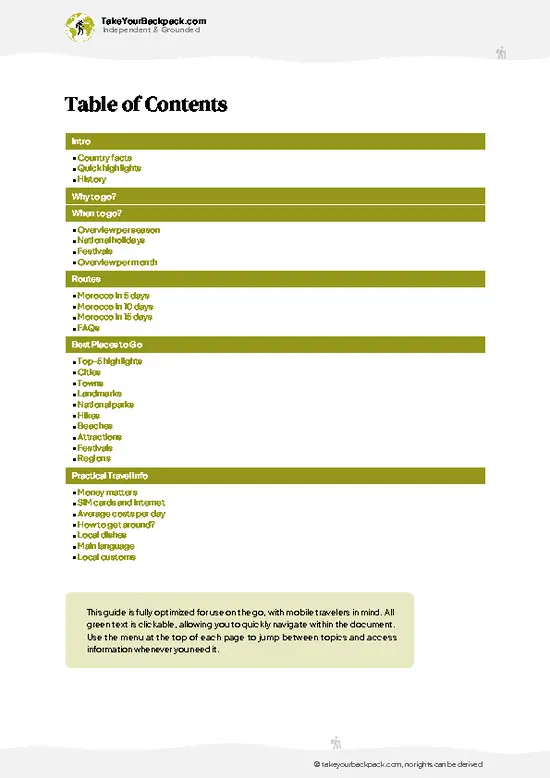
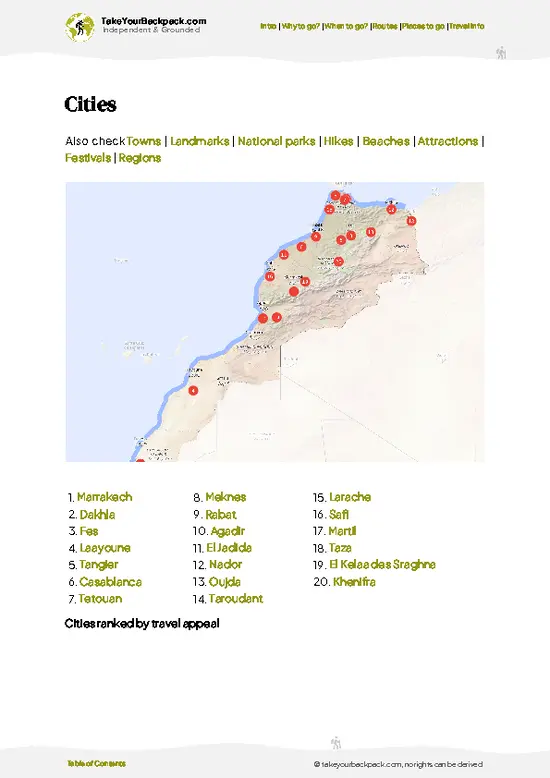
example page 2 from our offline Travel Guide for Morocco
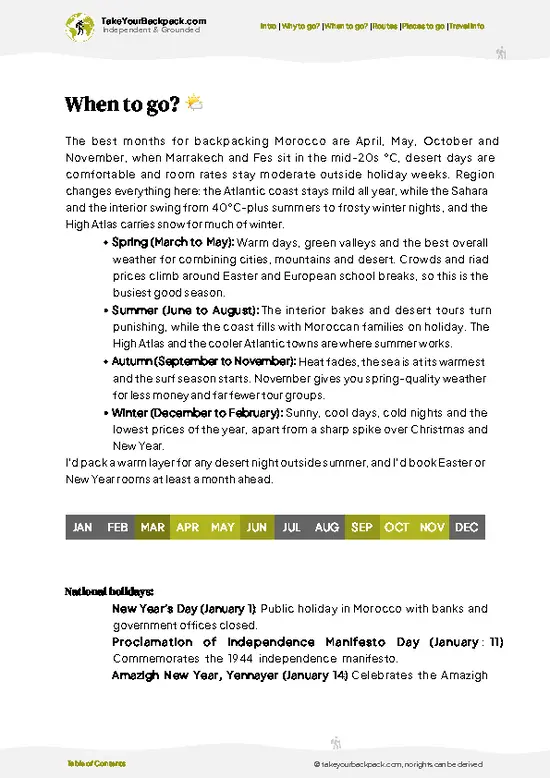
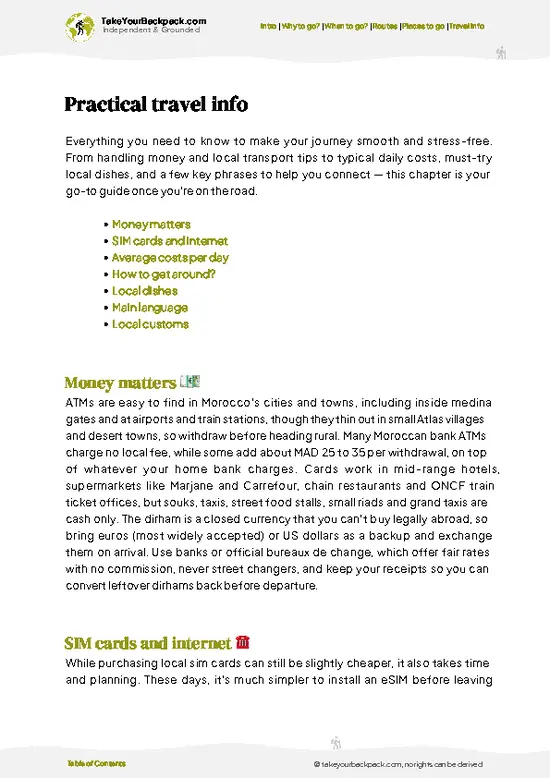
example page 3 from our offline Travel Guide for Morocco
example page 4 from our offline Travel Guide for Morocco
example page 5 from our offline Travel Guide for Morocco
example page 6 from our offline Travel Guide for Morocco
example page 7 from our offline Travel Guide for Morocco
The digital guide (424 pages) contains:
✅ 112 highlights, ranked by travel appeal
✅ Optimized 5, 10 & 15-day travel routes
✅ Cities, national parks, landmarks, beaches
✅ How to get around
✅ Offline-friendly for travel without Wi-Fi
👉 Click to see all 30+ guide features

📅 Plan smarter in minutes, not weeks
✅ Month by month travel advice
✅ Festivals & national holidays
✅ Budget expectations

🗺️ Go to the right places, skip the overrated ones
✅ Honest pros & cons of destinations
✅ Top hikes, parks & viewpoints
✅ Lesser-known places most travelers miss
✅ Clear “worth it vs skip it” guidance

🛏️ Travel smoothly without rookie mistakes
✅ Best areas to stay
✅ Transport systems explained simply
✅ Common scams & safety advice
✅ SIM cards, money & practical tips

🌍 Understand the country, not just visit it
✅ Culture & traditions
✅ 52 Essential phrases & customs
✅ Festivals worth planning around
✅ Traveler-friendly historical context
✅ Insights that make places more meaningful

📱 Built for real travel conditions
✅ Fully downloadable PDF
✅ Works completely offline
✅ Optimized for phone use
✅ Useful in remote areas & buses
✅ Everything in one place
Stop searching, start planning
Get instant access to your full guide. 30‑day money-back guarantee.
+ Add another guide for just

By proceeding you agree to our terms.
Sent to your inbox immediately after payment • 100% Secure Checkout
Best Backpacking Travel Advisor 2025 tourism awardBest Backpacking
Travel Advisor
2025
What others say about Take Your Backpack Guides:
⭐⭐⭐⭐⭐
Fantastic, amazing amount of information!
⭐⭐⭐⭐⭐
My goodness this is amazing, it's what I've been looking for hats off too you!
⭐⭐⭐⭐⭐
I think this is absolutely BRILLIANT
⭐⭐⭐⭐
Very complete and informative. It's still missing places, but I gotta to commend you
⭐⭐⭐⭐⭐
This is truly amazing, thank you, can't wait to explore it with my kids!
⭐⭐⭐⭐⭐
Awesome resource, thank you!
⭐⭐⭐⭐⭐
This is amazing! Can't wait to explore the ones I haven't seen
⭐⭐⭐⭐
I love this! Well done, great idea.
⭐⭐⭐⭐⭐
Thanks for taking the time to make this gem!
⭐⭐⭐⭐⭐
This might be the best website I've ever seen.
⭐⭐⭐⭐⭐
Congratulations, and thank you so much for your work; it's incredibly valuable.
⭐⭐⭐⭐
In all seriousness I think you did a great job pointing out the important spots
⭐⭐⭐⭐⭐
10/10 very good
⭐⭐⭐⭐⭐
As someone who's only just starting to visit regularly this is awesome, thank you.
⭐⭐⭐⭐
Thank you very much! I'm going to visit my dad, it's going to be very useful!
⭐⭐⭐⭐⭐
This is really cool! We'll be travelling for the first time and this definitely come in handy.
⭐⭐⭐⭐⭐
You are now our minister of culture, congratulations 👨‍💼
⭐⭐⭐⭐⭐
Just wanted to tell you that this is a pearl! Going to follow your recommendations.
⭐⭐⭐⭐⭐
This is so cool. I'll definitely be using the resource for my travels soon.
⭐⭐⭐⭐⭐
This is very impressive! Good work.
⭐⭐⭐⭐⭐
This is an amazing and informative site. Very well done!

🛏️ Where to stay?Where to Base Yourself

Morocco has plenty of hostels and budget guesthouses, most set in converted riads with dorms around a tiled courtyard and a rooftop terrace where breakfast is usually included. In Marrakech, the Medina near Jemaa el-Fnaa keeps you walking distance from the souks and food stalls but comes with motorbike noise, touts and confusing alleys after dark, while Gueliz is calmer and has most of the city’s bars, at the cost of a 20 to 30 minute walk to the old town. In Fes, staying inside Fes el-Bali puts the tanneries and medersas on your doorstep (the lanes go quiet and dim at night, so note your route), whereas the medinas of Chefchaouen and Essaouira are smaller, safer-feeling and easy to find your … read more 👉
Morocco has plenty of hostels and budget guesthouses, most set in converted riads with dorms around a tiled courtyard and a rooftop terrace where breakfast is usually included. In Marrakech, the Medina near Jemaa el-Fnaa keeps you walking distance from the souks and food stalls but comes with motorbike noise, touts and confusing alleys after dark, while Gueliz is calmer and has most of the city’s bars, at the cost of a 20 to 30 minute walk to the old town. In Fes, staying inside Fes el-Bali puts the tanneries and medersas on your doorstep (the lanes go quiet and dim at night, so note your route), whereas the medinas of Chefchaouen and Essaouira are smaller, safer-feeling and easy to find your way around, and Taghazout near Agadir is packed with surf hostels that suit a social crowd more than sightseers.

If you enjoy meeting fellow travelers, consider choosing hostels with high ratings for atmosphere. On the other hand, if you prefer having your own space, a hotel might be a better option.

MoroccoExpand Your Journey

👋 Meet the founderWho’s Behind Take Your Backpack?

Johan, backpacker and founder of TakeYourBackpackHi, I’m Johan (Netherlands 🇳🇱), the creator of TakeYourBackpack. Over the past 3 decades, I’ve backpacked through 90+ countries across six continents, gaining extensive experience with independent travel, long-term trips, and overland routes.

This site is built on a combination of firsthand travel experience and carefully curated insights from other backpackers. Many guides are based on places I’ve personally visited, while others bring together tips, observations, and practical advice shared by trusted travelers I’ve met along the way.

The goal is to provide realistic, experience-driven guidance — not generic itineraries — so you can explore destinations with better context, clearer expectations, and more confidence.