×

Morocco🇲🇦 | hikesSiroua Massifsaffron fields, volcanic domes, remote trails, spring wildflowers | things to do and best time to go

Explore Tafraoute Granite MountainsExplore Zemour Range

Backpacking in Siroua Massif
👌 Worth visitinghike ranked #7
By Johan Kruseman 🇳🇱 | Updated June 3, 2026

Most travelers only realize after the fact: Siroua Massif’s biggest gift is solitude. You can walk for hours without seeing another soul—just the wind, the crunch of volcanic gravel, and the distant bleat of goats. Tucked between the High Atlas and Anti-Atlas in southern Morocco, Siroua is a raw, volcanic playground that feels a world away from the tourist conveyor belt of Toubkal. The trails here are long—expect multi-day treks, not afternoon strolls—and the climbs are relentless, but the payoff is a horizon painted with saffron fields and jagged black peaks. Getting to the trailhead by public transport is a logistical puzzle, often requiring a mash-up of buses and shared taxis, but that’s part of the filter: those who make it earn the right to watch the sun drop behind a Martian landscape, beer in hand, with nobody asking for a selfie.

Discover everything you want to know in the 📖 Morocco Travel Guide.
Best time to go: March - June, September - November
Duration: 5 days
Distance: 70 kilometers
Total ascent: 1,200 meters


Get your Morocco guide
128 ranked highlights, routes & tips, works offline (487 pages)
Loading the map 🌍
CLICK TO FILTER
cities
towns
villages
landmarks
national parks
hikes
beaches
attractions
festivals
regions
SHOW COUNTRY’S BESTSHOW ALL

✨ Why go?
Ranked #7 hike in Morocco
What makes this hike worth hiking

The Siroua Massif in Morocco is a magnet for backpackers craving a blend of challenge and reward. The scenery-to-effort ratio here is off the charts. You’ll trek through rugged terrain, where the crimson peaks rise sharply against the sky, and the valleys below burst with wildflowers. Each step is a dance with the elements, but the payoff? Breathtaking vistas that make you forget the burn in your legs.

Getting there is a breeze. Public transport options are plentiful, whisking you from bustling Marrakech to the trailhead without breaking the bank. Speaking of costs, this hike is a steal. You can tailor your journey to fit your pace, with flexible distances that cater to both the ambitious and the leisurely.

Plus, it seamlessly integrates into a longer backpacking route through Morocco. … read more 👉
The Siroua Massif in Morocco is a magnet for backpackers craving a blend of challenge and reward. The scenery-to-effort ratio here is off the charts. You’ll trek through rugged terrain, where the crimson peaks rise sharply against the sky, and the valleys below burst with wildflowers. Each step is a dance with the elements, but the payoff? Breathtaking vistas that make you forget the burn in your legs.

Getting there is a breeze. Public transport options are plentiful, whisking you from bustling Marrakech to the trailhead without breaking the bank. Speaking of costs, this hike is a steal. You can tailor your journey to fit your pace, with flexible distances that cater to both the ambitious and the leisurely.

Plus, it seamlessly integrates into a longer backpacking route through Morocco. After a day on the trail, nothing beats that first cold beer in a local café, celebrating the grit of the hike and the beauty of the moment.
Want to include Siroua Massif in your Morocco route?
Create a personalized Morocco itinerary that includes Siroua Massif and the places that fit your trip — based on your travel style, budget, and available time. Get your route in seconds.

Generate my trip

💡 HighlightsWhat this place is best known for

  1. Jebel Siroua summit — The high ridge gives one of those rare 360° vistas where Anti-Atlas ridges fall away on one side and the plains toward the Sahara stretch out on the other. Sunrise up here feels vast and quiet in a way most crowded mountain trails aren’t.
  2. Volcanic domes and basalt cliffs — Strange, blocky lava domes and dark basalt faces sculpted by erosion make the routes feel more geological playground than ordinary trail. It’s excellent terrain for photographers and anyone who likes scrambling over dramatic rock formations.
  3. Amazigh villages and terraced fields — Tiny Berber hamlets, stacked stone houses and long-used terraces break up the wild landscape. You get real, everyday mountain culture: shepherding rhythms, stone irrigation lines and the chance for a mint-tea stop that
read more 👉
  1. Jebel Siroua summit — The high ridge gives one of those rare 360° vistas where Anti-Atlas ridges fall away on one side and the plains toward the Sahara stretch out on the other. Sunrise up here feels vast and quiet in a way most crowded mountain trails aren’t.
  2. Volcanic domes and basalt cliffs — Strange, blocky lava domes and dark basalt faces sculpted by erosion make the routes feel more geological playground than ordinary trail. It’s excellent terrain for photographers and anyone who likes scrambling over dramatic rock formations.
  3. Amazigh villages and terraced fields — Tiny Berber hamlets, stacked stone houses and long-used terraces break up the wild landscape. You get real, everyday mountain culture: shepherding rhythms, stone irrigation lines and the chance for a mint-tea stop that feels human in a very remote place.
  4. Spring wildflower carpets and orchids — Personal favorite. After winter rains the slopes explode with geophytes and little orchids you won’t see on typical tourist trails. It’s a botanist’s surprise and a softer, smellier counterpoint to the sharp volcanic scenery.
  5. Gorges, dry riverbeds and hidden pools — Deep wadis cut into the massif create shaded, cooler microclimates and occasional secret pools. They offer variety in route planning, good birdwatching (raptors), and a real sense of discovery compared with flatter desert hikes.
Spotted a mistake or missing something? Contact us.

Things to do near Siroua Massif

Ratings based on Tripadvisor reviews. When you book through this link, you support our work at no extra cost to you.

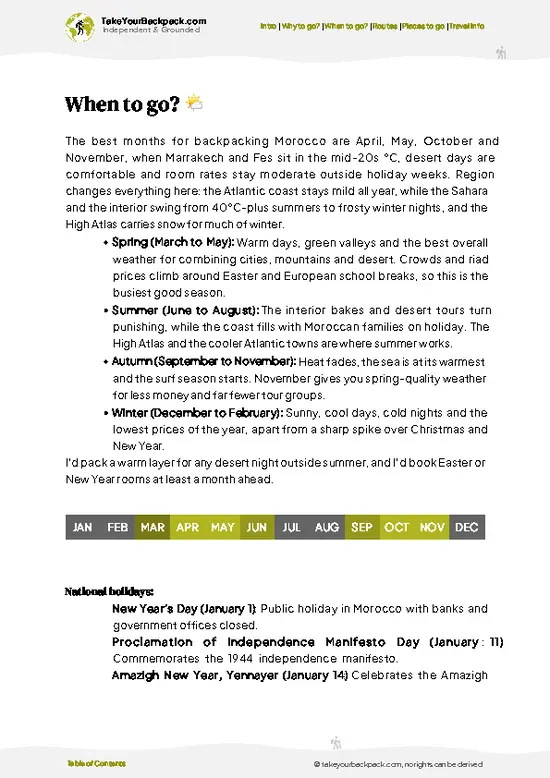
🌤️ When to go?Weather, crowds, and seasonal trade-offs


  • Weather: Spring (March to May) and autumn (September to November) deliver the best conditions. Expect dry days with clear skies, perfect for tackling rugged trails without the oppressive heat or winter chill.

  • Temperature: Daytime highs hover around 20-25°C (68-77°F) in spring and fall, ideal for sustained hiking. Nights can dip to 5-10°C (41-50°F), so pack layers for early mornings and evenings.

  • Daylight Hours: Spring and autumn offer balanced daylight—about 11 to 13 hours—enough time to push deep into the massif without rushing or risking nightfall on tricky terrain.

  • Crowds: The Siroua Massif stays relatively quiet year-round, but spring attracts local trekkers and shepherds moving flocks, adding authentic encounters without overwhelming numbers.

  • Seasonal Activities: Spring brings
read more 👉

  • Weather: Spring (March to May) and autumn (September to November) deliver the best conditions. Expect dry days with clear skies, perfect for tackling rugged trails without the oppressive heat or winter chill.

  • Temperature: Daytime highs hover around 20-25°C (68-77°F) in spring and fall, ideal for sustained hiking. Nights can dip to 5-10°C (41-50°F), so pack layers for early mornings and evenings.

  • Daylight Hours: Spring and autumn offer balanced daylight—about 11 to 13 hours—enough time to push deep into the massif without rushing or risking nightfall on tricky terrain.

  • Crowds: The Siroua Massif stays relatively quiet year-round, but spring attracts local trekkers and shepherds moving flocks, adding authentic encounters without overwhelming numbers.

  • Seasonal Activities: Spring brings wildflowers and grazing livestock, enriching the landscape’s texture. Autumn offers harvest time in nearby Berber villages, a chance to witness traditional life up close.

  • Price Fluctuations: Off-peak seasons (winter and summer) see lower prices but harsher conditions. Spring and autumn strike a balance—moderate rates with prime hiking weather.


Pro-tip: Aim for late April or early October to catch the massif in full stride—mild temps, blooming flora, and the quiet pulse of mountain life at its best.


source: climatestotravel.comJANJanuary: fair for travelingFEBFebruary: fair for travelingMARMarch: highly recommended for travelingAPRApril: excellent for travelingMAYMay: highly recommended for travelingJUNJune: good for travelingJULJuly: below average for travelingAUGAugust: below average for travelingSEPSeptember: highly recommended for travelingOCTOctober: excellent for travelingNOVNovember: highly recommended for travelingDECDecember: fair for traveling
when-to-go

✈️ The backpacker research shortcutMorocco Travel Guide

An offline-friendly backpacking guide with optimized travel routes, ranked highlights, transport advice, and the best areas to stay.
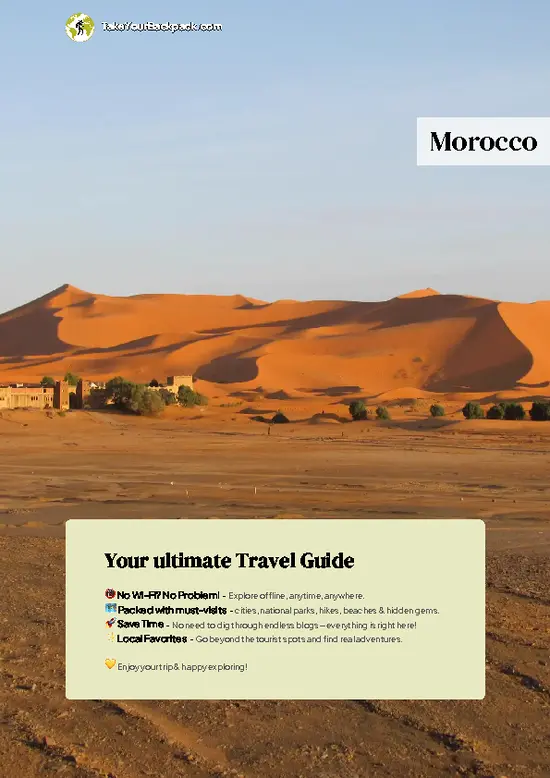
example page 0 from our offline Travel Guide for Morocco
example page 1 from our offline Travel Guide for Morocco
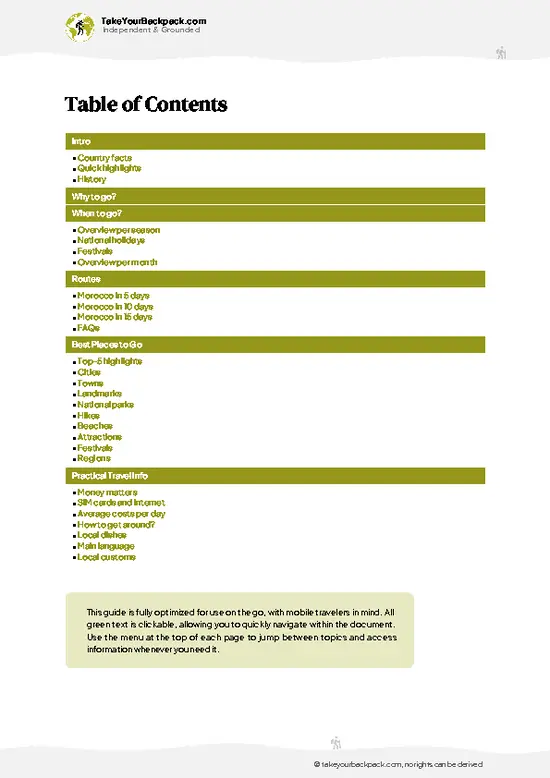
example page 2 from our offline Travel Guide for Morocco
example page 3 from our offline Travel Guide for Morocco
example page 4 from our offline Travel Guide for Morocco
example page 5 from our offline Travel Guide for Morocco
example page 6 from our offline Travel Guide for Morocco
example page 7 from our offline Travel Guide for Morocco
The digital guide (487 pages) contains:
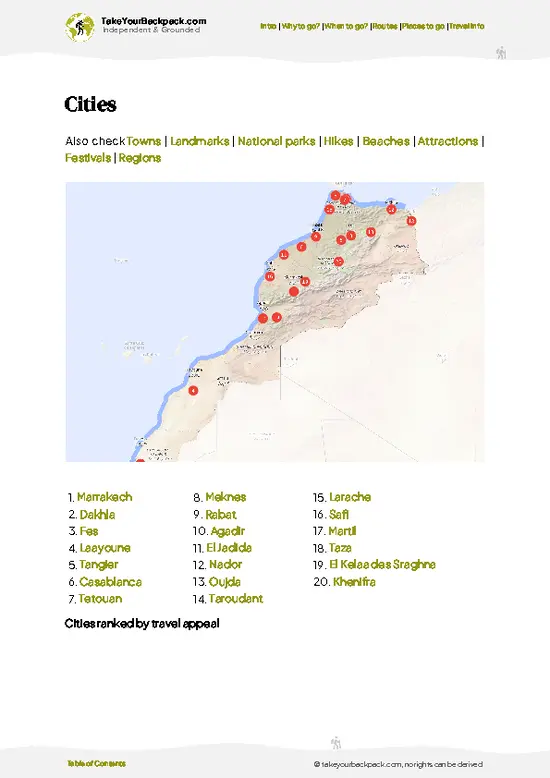
128 highlights, ranked by travel appeal
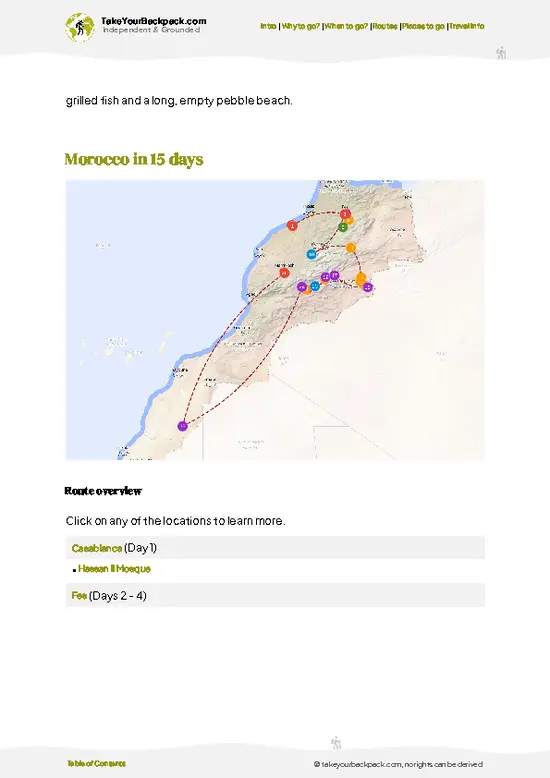
Optimized 5, 10 & 15-day travel routes
Cities, national parks, landmarks, beaches
How to get around
Offline-friendly for travel without Wi-Fi
👉 Click to see all 30+ guide features

📅 Plan smarter in minutes, not weeks
Month by month travel advice
Festivals & national holidays
Budget expectations

🗺️ Go to the right places, skip the overrated ones
Honest pros & cons of destinations
Top hikes, parks & viewpoints
Lesser-known places most travelers miss
Clear “worth it vs skip it” guidance

🛏️ Travel smoothly without rookie mistakes
Best areas to stay
Transport systems explained simply
Common scams & safety advice
SIM cards, money & practical tips

🌍 Understand the country, not just visit it
Culture & traditions
52 Essential phrases & customs
Festivals worth planning around
Traveler-friendly historical context
Insights that make places more meaningful

📱 Built for real travel conditions
Fully downloadable PDF
Works completely offline
Optimized for phone use
Useful in remote areas & buses
Everything in one place
Save weeks of stressful planning
Get instant access to your full guide. 30‑day money-back guarantee.


By proceeding you agree to our terms.
Sent to your inbox immediately after payment • 100% Secure Checkout
Best Backpacking Travel Advisor 2025 tourism awardBest Backpacking
Travel Advisor
2025
What others say about Take Your Backpack Guides:
⭐⭐⭐⭐⭐
Fantastic, amazing amount of information!
⭐⭐⭐⭐⭐
My goodness this is amazing, it's what I've been looking for hats off too you!
⭐⭐⭐⭐⭐
I think this is absolutely BRILLIANT
⭐⭐⭐⭐
Very complete and informative. It's still missing places, but I gotta to commend you
⭐⭐⭐⭐⭐
This is truly amazing, thank you, can't wait to explore it with my kids!
⭐⭐⭐⭐⭐
Awesome resource, thank you!
⭐⭐⭐⭐⭐
This is amazing! Can't wait to explore the ones I haven't seen
⭐⭐⭐⭐
I love this! Well done, great idea.
⭐⭐⭐⭐⭐
Thanks for taking the time to make this gem!
⭐⭐⭐⭐⭐
This might be the best website I've ever seen.
⭐⭐⭐⭐⭐
Congratulations, and thank you so much for your work; it's incredibly valuable.
⭐⭐⭐⭐
In all seriousness I think you did a great job pointing out the important spots
⭐⭐⭐⭐⭐
10/10 very good
⭐⭐⭐⭐⭐
As someone who's only just starting to visit regularly this is awesome, thank you.
⭐⭐⭐⭐
Thank you very much! I'm going to visit my dad, it's going to be very useful!
⭐⭐⭐⭐⭐
This is really cool! We'll be travelling for the first time and this definitely come in handy.
⭐⭐⭐⭐⭐
You are now our minister of culture, congratulations 👨‍💼
⭐⭐⭐⭐⭐
Just wanted to tell you that this is a pearl! Going to follow your recommendations.
⭐⭐⭐⭐⭐
This is so cool. I'll definitely be using the resource for my travels soon.
⭐⭐⭐⭐⭐
This is very impressive! Good work.
⭐⭐⭐⭐⭐
This is an amazing and informative site. Very well done!

🛏️ Where to stay?Where staying makes the most sense

If you enjoy meeting fellow travelers, consider choosing hostels with high ratings for atmosphere. On the other hand, if you prefer having your own space, a hotel might be a better option.

🥾 Hike detailsRoute, distance, and difficulty explained

Total Distance: The Siroua Massif trail spans approximately 60 kilometers, depending on the exact route you choose. Most trekkers tackle it in a loop, which can be adjusted based on your pace and interests.

Estimated Duration: Expect to spend around 4 to 6 days on this trail. It really depends on how much you want to explore and soak in the views. If you’re moving at a leisurely pace, you might want to stretch it out a bit.

Difficulty Level: This trail is generally considered moderate to challenging. There are some steep ascents and rocky sections that require a bit of scrambling, but nothing … read more 👉
Total Distance: The Siroua Massif trail spans approximately 60 kilometers, depending on the exact route you choose. Most trekkers tackle it in a loop, which can be adjusted based on your pace and interests.

Estimated Duration: Expect to spend around 4 to 6 days on this trail. It really depends on how much you want to explore and soak in the views. If you’re moving at a leisurely pace, you might want to stretch it out a bit.

Difficulty Level: This trail is generally considered moderate to challenging. There are some steep ascents and rocky sections that require a bit of scrambling, but nothing too extreme if you’re used to hiking.

Starting Point: The trail typically starts in the village of Imlil. To get there by public transport, catch a bus or shared taxi from Marrakech to Asni. From Asni, you can grab another shared taxi to Imlil. The whole journey takes about 1.5 to 2 hours.

Major Landmarks Along the Route:
  • Jebel Siroua: The highest peak in the massif, offering stunning panoramic views once you reach the summit.
  • Berber Villages: You’ll pass through charming villages like Tazaghart and Ait Souka, where you can experience local culture and hospitality.
  • Ancient Irrigation Channels: These traditional channels, known as “khettaras,” are fascinating to see and highlight the ingenuity of local agriculture.

Type of Terrain and Scenery: The terrain varies quite a bit. You’ll encounter rocky paths, grassy meadows, and some steep ascents. The scenery is absolutely breathtaking, with views of snow-capped peaks, lush valleys, and traditional Berber architecture. The contrast between the rugged mountains and the vibrant greenery is something else.

Typical Vegetation and Wildlife: As you hike, you’ll see a mix of wildflowers, juniper trees, and various shrubs. In terms of wildlife, keep an eye out for birds like the golden eagle and maybe even some mountain goats if you’re lucky. The area is a bit remote, so it’s not overly populated with critters, but the occasional lizard or rabbit might cross your path.
⚠️ Hiking info can sometimes be outdated or inaccurate. Before you hit the trail, check the latest conditions with locals. If you do spot anything that's off, I'd love to hear from you, so I can update it for fellow travelers.

🛡️ SafetyTraveler Safety Guide

The Siroua Massif offers a thrilling mix of challenge and reward. Expect weather shifts; mornings can be crisp, while afternoons heat up quickly. Dress in layers to adapt. The trails are rugged, with steep sections that demand focus. Good footing is essential, especially on rocky paths. Navigation is straightforward, but a map or GPS can save you from unnecessary detours.

Wildlife is generally shy, but keep your distance from any goats or sheep you encounter. They’re part of the local culture, not just scenery.

Prepare for altitude; the air thins as you climb. Hydration is key—carry enough water, especially on warmer days. Timing your hike for early morning helps avoid the heat and gives you a chance to savor the stunning views at the summit. Embrace the grind; the payoff is worth every step.

Other Moroccan hikes near Siroua Massif

Explore more nearby:

  • Mount Toubkal—highest peak, rocky ascent, alpine refuge, panoramic summit| 62 km away
  • Toubkal Circuit—multi-day loop, high passes, remote valleys, Berber hospitality| 62 km away
  • Imi-n-Ifri Natural Bridge—limestone arch, river gorge, fossil formations| 118 km away

💡 Not sure where to go next?
Create a personalized itinerary for Morocco including Siroua Massif and the places that fit your trip.

Generate my itinerary

👉 Discover all hikes

Or checkout all Morocco has to offer (think cities, towns, villages, national parks, hikes, beaches, festivals)
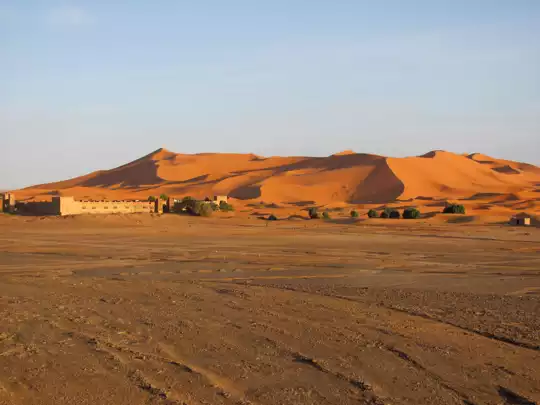
Country photo of Morocco

We 💚 feedbackParting advice and final tips

The Siroua Massif is a wild playground, where the rugged trails challenge your legs but reward your spirit with jaw-dropping views of the Atlas peaks. You’ll feel the pulse of the earth beneath your boots. Just know, the altitude can hit hard; acclimatization is key. Push through the burn, and you’ll find a cold beer waiting in the village below, a perfect end to a day well spent.

✈️ When did I visit Morocco?
In October 2011, I backpacked Morocco for two weeks, with climbing the Mount Toubkal in summer clothing as a highlight.

✍️ Help improve this page!
The information on this page is based on my own backpacking experience in Morocco, supplemented with up-to-date research and feedback from other travelers. Travel details can change, so if you notice anything outdated or incomplete, feel free to let me know.


🙋‍♂️ Give feedback

👋 Meet the founderWho’s Behind Take Your Backpack?

Johan, backpacker and founder of TakeYourBackpackHi, I’m Johan (Netherlands 🇳🇱), the creator of TakeYourBackpack. Over the past decade, I’ve backpacked through 80+ countries across six continents, gaining extensive experience with independent travel, long-term trips, and overland routes.

This site is built on a combination of firsthand travel experience and carefully curated insights from other backpackers. Many guides are based on places I’ve personally visited, while others bring together tips, observations, and practical advice shared by trusted travelers I’ve met along the way.

The goal is to provide realistic, experience-driven guidance — not generic itineraries — so you can explore destinations with better context, clearer expectations, and more confidence.

Get full Morocco guide •
Instant download • 128 highlights • Full Offline guide