Unique Sites OverviewMozambique is a patchwork of experiences, each site offering a slice of the country’s rich tapestry. Aim for three to five unique sites to get a real taste of what Mozambique has to offer. This isn’t a race; it’s about savoring the journey. Each site demands time and energy, so prioritize based on your interests—whether it’s pristine beaches, wildlife, or cultural encounters.
Access ConstraintsGetting around can be a challenge. Roads vary from well-paved to rugged tracks that test your patience and vehicle’s durability. Expect delays, especially during the rainy season when some routes become impassable. If you’re planning to visit remote areas, a 4x4 is often non-negotiable. Public transport exists but can be unpredictable. Factor in extra time for travel; it’s part …
read more 👉 Unique Sites OverviewMozambique is a patchwork of experiences, each site offering a slice of the country’s rich tapestry. Aim for three to five unique sites to get a real taste of what Mozambique has to offer. This isn’t a race; it’s about savoring the journey. Each site demands time and energy, so prioritize based on your interests—whether it’s pristine beaches, wildlife, or cultural encounters.
Access ConstraintsGetting around can be a challenge. Roads vary from well-paved to rugged tracks that test your patience and vehicle’s durability. Expect delays, especially during the rainy season when some routes become impassable. If you’re planning to visit remote areas, a 4x4 is often non-negotiable. Public transport exists but can be unpredictable. Factor in extra time for travel; it’s part of the adventure.
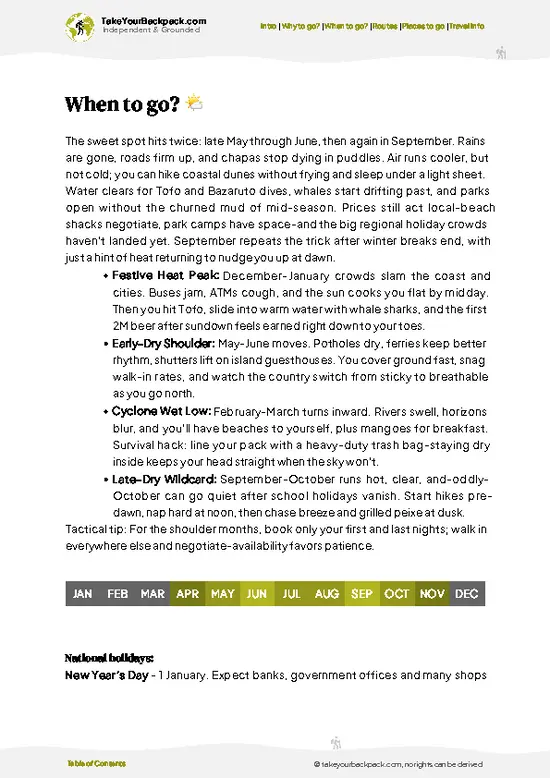
Crowd PatternsTourist traffic ebbs and flows with the seasons. The dry season, from May to October, draws more visitors, especially to coastal areas and national parks. If you prefer solitude, consider visiting during the shoulder months—April or November—when the weather is still pleasant but the crowds are thinner. This is when you can truly connect with the landscape and the locals, who are often more relaxed and willing to share their stories.
Combining SitesRealistically, you can combine two to three sites in a week, depending on their proximity and your mode of transport. For instance, if you’re drawn to the coast, you might pair a beach visit with a nearby cultural site. However, don’t over-schedule. Each site deserves your full attention, and rushing through them diminishes the experience.
Planning and PrioritizingStart with what excites you most. Are you drawn to the marine life of the Quirimbas Archipelago or the wildlife in Gorongosa National Park? Research the logistics of each site. Some may require permits or advance bookings, especially for guided tours. Local guides can enhance your experience, providing insights that you won’t find in guidebooks. They can also help navigate cultural nuances, which is crucial for respectful interactions.
Regional VariationMozambique’s diversity is staggering. The north is known for its untouched beauty and rich cultural heritage, while the south offers a more developed infrastructure and vibrant nightlife. Each region has its own rhythm and vibe. Be prepared for varying levels of comfort and amenities. In more remote areas, you might find yourself camping under the stars, while coastal towns may offer boutique hotels.
Safety and Cultural ConsiderationsSafety is generally good, but stay aware of your surroundings, especially in urban areas. Petty crime can occur, so keep valuables secure and avoid displaying them. Engage with locals respectfully; they’re often eager to share their culture but appreciate when you show genuine interest. Learning a few basic phrases in Portuguese can go a long way in breaking the ice.
Final ThoughtsMozambique is a land of contrasts, where every site tells a story. Embrace the grit of the streets and the burn of the trails, but remember that the real reward lies in the connections you make and the moments you savor. Each step, each conversation, and each breathtaking view is a piece of the mosaic that makes Mozambique uniquely captivating.
v2.webp)
 Best Backpacking
.jpg) Hi, I’m Johan (Netherlands 🇳🇱), the creator of TakeYourBackpack. Over the past decade, I’ve backpacked through 80+ countries across six continents, gaining extensive experience with independent travel, long-term trips, and overland routes.
Hi, I’m Johan (Netherlands 🇳🇱), the creator of TakeYourBackpack. Over the past decade, I’ve backpacked through 80+ countries across six continents, gaining extensive experience with independent travel, long-term trips, and overland routes.