×

Myanmar🇲🇲 | citiesPakokkutobacco markets, river port, monastery town | things to do and best time to go

Explore MagwayExplore Sagaing

Backpacking in Pakokku
👌 Worth visitingcity ranked #22
By Johan Kruseman 🇳🇱 | Updated June 7, 2026

Most people skip Pakokku as “just a bus junction,” but it’s one of the cheapest, most authentic river towns I’ve hit in central Myanmar. Sitting on the west bank of the Ayeyarwady, just northwest of Bagan, it’s a dusty trading hub with zero backpacker gloss, patchy nightlife, and almost no hostel scene, so meeting other travelers is hard. But that’s the trade: rock-bottom prices, curious locals, gritty markets, old monasteries, and a raw, workaday vibe that makes Bagan feel polished.

Discover everything you want to know in the 📖 Myanmar Travel Guide.
Safety warning

The current risk level for Myanmar is high. Check the advice before going.


Get your Myanmar guide
110 ranked highlights, routes & tips, works offline (405 pages)
Loading the map 🌍
CLICK TO FILTER
cities
towns
landmarks
national parks
hikes
beaches
attractions
festivals
regions
SHOW COUNTRY’S BESTSHOW ALL

✨ Why go?
Ranked #22 city in Myanmar
Why visitors keep coming back

Pakokku serves as a strategic basecamp for backpackers navigating Myanmar. It’s not just about the highlights; it’s the affordability of hostels and the delicious street food that keep travelers lingering. The city’s walkability makes it easy to explore local life, while a vibrant nightlife offers a taste of the unexpected. Plus, its location allows for easy onward travel to other destinations, making it a practical stop. If you’re looking for a place that balances comfort and value, Pakokku fits the bill, but don’t expect to linger too long unless you’re drawn to its unique charm.
Want to include Pakokku in your Myanmar route?
Create a personalized Myanmar itinerary that includes Pakokku and the places that fit your trip — based on your travel style, budget, and available time. Get your route in seconds.

Generate my trip

💡 HighlightsKey sights and experiences for travelers

  • Pakokku Morning Market (Pakokku Myoma Market) — Gigantic, bustling market where you feel the town’s pulse: wholesale piles of beans and pulses, local produce, dried fish, oil, and endless bargaining. Best early morning for sensory overload and authentic trading life.
  • Irrawaddy Riverfront and Boat Landing — Wide riverbank with constant boat traffic, landing jetties and great sunset views; the riverfront is where local life, loading/unloading and passenger boats happen, so you get real river-trade atmosphere and boat-trip options.
  • Pakokku Bridge (Irrawaddy crossing) — Important river span that locals use daily; walking parts of the bridge gives panoramic views of the Irrawaddy and the working river below, plus it feels like a gateway between Pakokku and the Bagan plain.
  • Pulse and Commodity
read more 👉
  • Pakokku Morning Market (Pakokku Myoma Market) — Gigantic, bustling market where you feel the town’s pulse: wholesale piles of beans and pulses, local produce, dried fish, oil, and endless bargaining. Best early morning for sensory overload and authentic trading life.
  • Irrawaddy Riverfront and Boat Landing — Wide riverbank with constant boat traffic, landing jetties and great sunset views; the riverfront is where local life, loading/unloading and passenger boats happen, so you get real river-trade atmosphere and boat-trip options.
  • Pakokku Bridge (Irrawaddy crossing) — Important river span that locals use daily; walking parts of the bridge gives panoramic views of the Irrawaddy and the working river below, plus it feels like a gateway between Pakokku and the Bagan plain.
  • Pulse and Commodity Wharves — The clustered wharves and packing yards along the river where pulses, beans and oilseeds are weighed, bagged and loaded onto boats; visiting gives a hands-on look at the area’s main industry and makes for great photography of trade in action.
  • Pakokku Railway Station — Functional, small-town rail hub that links Pakokku with the rest of Upper Myanmar; the station area captures colonial-era travel rhythms and is a practical spot to observe local commuting, freight handling and old-style station life.
A few close day-trip highlights outside the city: the Bagan temple plain (best for sunrise/sunset and temple-hopping), the teak-monastery town of Salay, and Mount Popa with its shrine and views — my personal favorite to visit from Pakokku is Bagan.
Spotted a mistake or missing something? Contact us.

Things to do near Pakokku

Ratings based on Tripadvisor reviews. When you book through this link, you support our work at no extra cost to you.

🏘️ NeighborhoodsWhere things are and how it's laid out

Pakokku offers a unique blend of culture and convenience for backpackers. Here’s how the neighborhoods stack up:

City Center: The heartbeat of Pakokku. It’s bustling with local markets and street food stalls. Affordable accommodations are plentiful, making it ideal for budget travelers. Walkable streets mean you can explore easily. Nightlife is low-key, perfect for those who prefer a quiet evening after a day of sightseeing.

North Pakokku: A bit more residential, this area is quieter and offers a glimpse into local life. It’s less touristy, which means lower prices and a more authentic vibe. Transport options are decent, but you might need to walk a bit more. Great for longer stays if you want to immerse yourself in the culture.

South Pakokku: Known for its temples and scenic views. It’s … read more 👉
Pakokku offers a unique blend of culture and convenience for backpackers. Here’s how the neighborhoods stack up:

City Center: The heartbeat of Pakokku. It’s bustling with local markets and street food stalls. Affordable accommodations are plentiful, making it ideal for budget travelers. Walkable streets mean you can explore easily. Nightlife is low-key, perfect for those who prefer a quiet evening after a day of sightseeing.

North Pakokku: A bit more residential, this area is quieter and offers a glimpse into local life. It’s less touristy, which means lower prices and a more authentic vibe. Transport options are decent, but you might need to walk a bit more. Great for longer stays if you want to immerse yourself in the culture.

South Pakokku: Known for its temples and scenic views. It’s a bit farther from the main action, so expect to spend more time commuting. However, the tranquility is worth it for those seeking a peaceful retreat. Ideal for short stays focused on exploration.

⌛️ 1 dayA smart one-day plan

Pakokku, Myanmar, is a charming town that often flies under the radar, yet it’s rich in local culture and history. Start your day at the bustling morning market in the heart of town. The vibrant stalls overflow with fresh produce, spices, and handmade goods. Grab a traditional breakfast of mohinga, a fish soup with rice noodles, from a local vendor.

After fueling up, stroll through the quaint streets of the old town, where colonial-era buildings whisper stories of the past. Don’t miss the iconic Pakokku Bridge, a perfect spot for photos and a moment of reflection.

In the afternoon, head to the nearby village of Pakkoku, where you can witness traditional pottery-making. This isn’t on most tourist maps, but it’s a genuine slice of local life.

As evening falls, return to the riverside for … read more 👉
Pakokku, Myanmar, is a charming town that often flies under the radar, yet it’s rich in local culture and history. Start your day at the bustling morning market in the heart of town. The vibrant stalls overflow with fresh produce, spices, and handmade goods. Grab a traditional breakfast of mohinga, a fish soup with rice noodles, from a local vendor.

After fueling up, stroll through the quaint streets of the old town, where colonial-era buildings whisper stories of the past. Don’t miss the iconic Pakokku Bridge, a perfect spot for photos and a moment of reflection.

In the afternoon, head to the nearby village of Pakkoku, where you can witness traditional pottery-making. This isn’t on most tourist maps, but it’s a genuine slice of local life.

As evening falls, return to the riverside for a sunset view over the Ayeyarwady River. Enjoy a simple dinner at a local eatery, savoring the flavors of Myanmar. This day in Pakokku is a blend of culture, community, and culinary delight, leaving you with a deeper connection to the heart of Myanmar.
Turn your Pakokku visit into an Myanmar adventure
Build a complete Myanmar route with Pakokku, hidden gems, must-see destinations, and realistic travel times included.

Generate my trip

🌤️ When to go?Choosing the right time of year


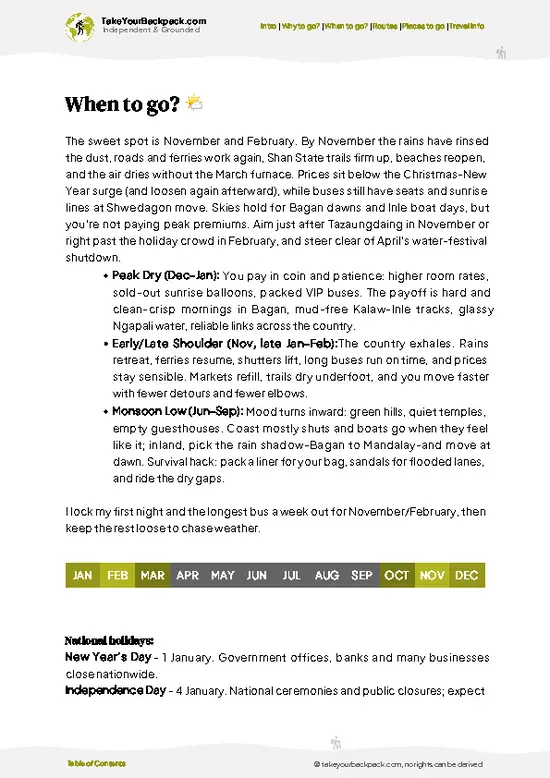
  • Weather: The dry season from November to February is your best bet—low humidity and minimal rain make trekking and exploring comfortable. Avoid the monsoon months (June to September) when heavy rains can turn paths into mudslides.

  • Temperature: Expect mild days around 25-30°C (77-86°F) in the dry season, perfect for daytime adventures without overheating. The hot season (March to May) can spike above 35°C (95°F), which drains energy fast.

  • Daylight Hours: Daylight stays steady year-round at about 11-12 hours, so no big shifts in your daily schedule—plan your hikes and visits accordingly.

  • Crowds: Tourist numbers peak in the dry season, especially December and January, so expect busier sites and slightly higher prices. Off-season offers solitude but at the cost of weather challenges.

read more 👉

  • Weather: The dry season from November to February is your best bet—low humidity and minimal rain make trekking and exploring comfortable. Avoid the monsoon months (June to September) when heavy rains can turn paths into mudslides.

  • Temperature: Expect mild days around 25-30°C (77-86°F) in the dry season, perfect for daytime adventures without overheating. The hot season (March to May) can spike above 35°C (95°F), which drains energy fast.

  • Daylight Hours: Daylight stays steady year-round at about 11-12 hours, so no big shifts in your daily schedule—plan your hikes and visits accordingly.

  • Crowds: Tourist numbers peak in the dry season, especially December and January, so expect busier sites and slightly higher prices. Off-season offers solitude but at the cost of weather challenges.

  • Seasonal Activities: The dry season aligns with local festivals and river activities, adding cultural depth to your trip. Monsoon months limit outdoor options but bring lush landscapes if you’re okay with the wet.

  • Price Fluctuations: Accommodation and transport costs rise during peak season; booking early can save money. The off-season offers bargains but prepare for fewer services and possible closures.


Pro-tip: Aim for late November or early February—sweet spot for weather, manageable crowds, and cultural events without the premium price tag.


source: climatestotravel.comJANJanuary: highly recommended for travelingFEBFebruary: excellent for travelingMARMarch: fair for travelingAPRApril: fair for travelingMAYMay: fair for travelingJUNJune: below average for travelingJULJuly: below average for travelingAUGAugust: below average for travelingSEPSeptember: below average for travelingOCTOctober: good for travelingNOVNovember: excellent for travelingDECDecember: highly recommended for traveling
when-to-go

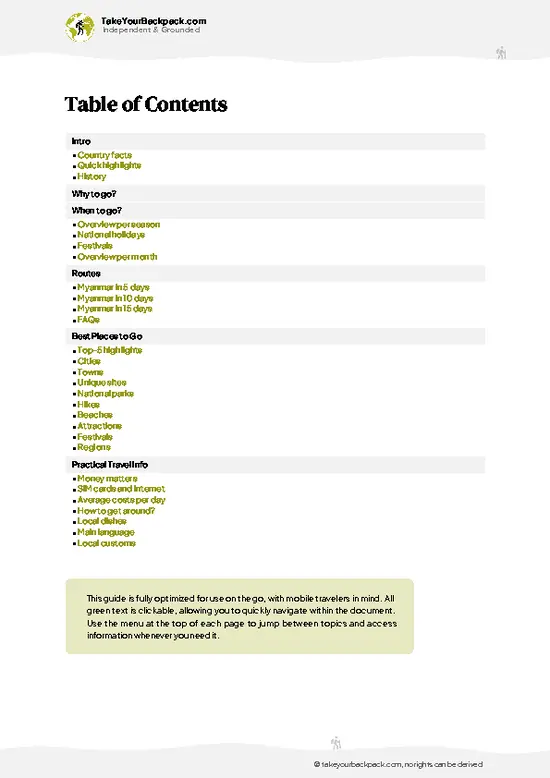
✈️ The backpacker research shortcutMyanmar Travel Guide

An offline-friendly backpacking guide with optimized travel routes, ranked highlights, transport advice, and the best areas to stay.
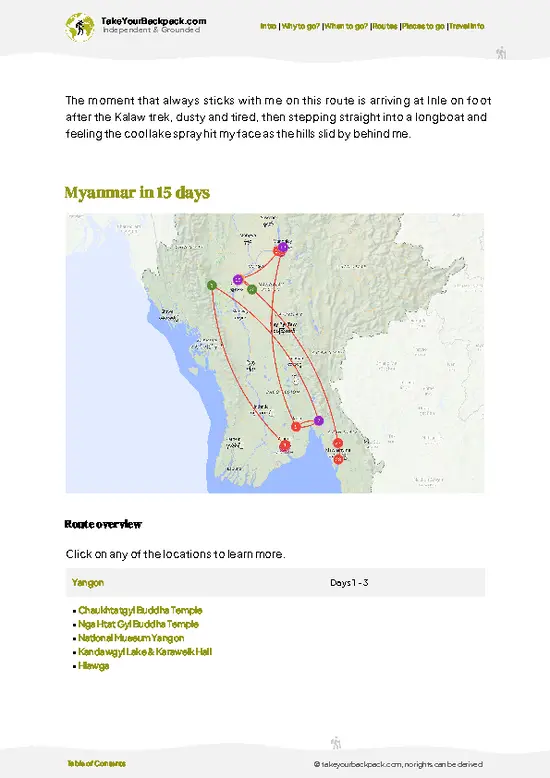
example page 0 from our offline Travel Guide for Myanmar
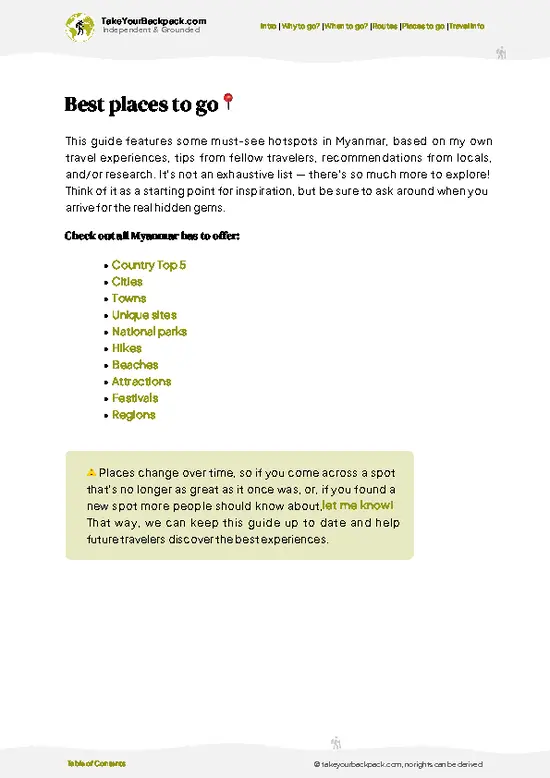
example page 1 from our offline Travel Guide for Myanmar
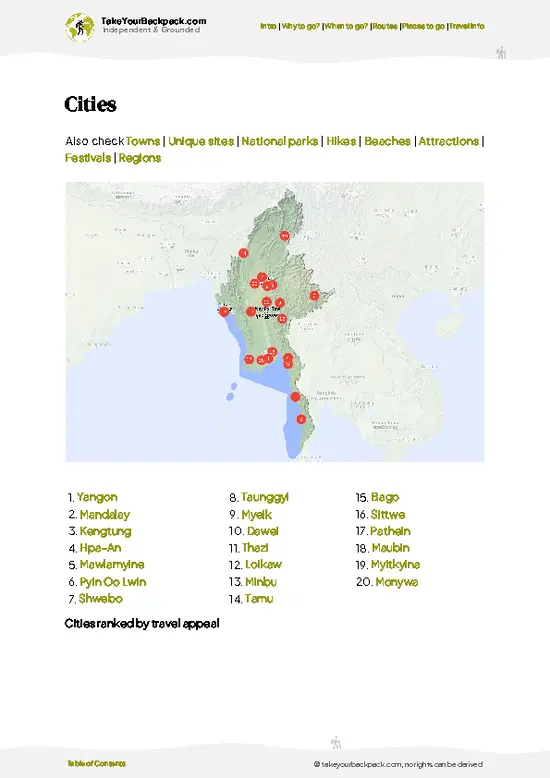
example page 2 from our offline Travel Guide for Myanmar
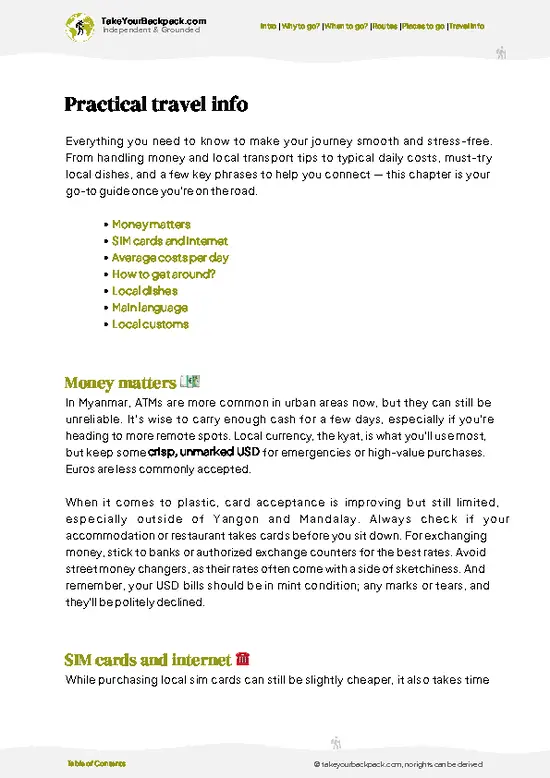
example page 3 from our offline Travel Guide for Myanmar
example page 4 from our offline Travel Guide for Myanmar
example page 5 from our offline Travel Guide for Myanmar
example page 6 from our offline Travel Guide for Myanmar
example page 7 from our offline Travel Guide for Myanmar
The digital guide (405 pages) contains:
110 highlights, ranked by travel appeal
Optimized 5, 10 & 15-day travel routes
Cities, national parks, landmarks, beaches
How to get around
Offline-friendly for travel without Wi-Fi
👉 Click to see all 30+ guide features

📅 Plan smarter in minutes, not weeks
Month by month travel advice
Festivals & national holidays
Budget expectations

🗺️ Go to the right places, skip the overrated ones
Honest pros & cons of destinations
Top hikes, parks & viewpoints
Lesser-known places most travelers miss
Clear “worth it vs skip it” guidance

🛏️ Travel smoothly without rookie mistakes
Best areas to stay
Transport systems explained simply
Common scams & safety advice
SIM cards, money & practical tips

🌍 Understand the country, not just visit it
Culture & traditions
52 Essential phrases & customs
Festivals worth planning around
Traveler-friendly historical context
Insights that make places more meaningful

📱 Built for real travel conditions
Fully downloadable PDF
Works completely offline
Optimized for phone use
Useful in remote areas & buses
Everything in one place
Save weeks of stressful planning
Get instant access to your full guide. 30‑day money-back guarantee.


By proceeding you agree to our terms.
Sent to your inbox immediately after payment • 100% Secure Checkout
Best Backpacking Travel Advisor 2025 tourism awardBest Backpacking
Travel Advisor
2025
What others say about Take Your Backpack Guides:
⭐⭐⭐⭐⭐
Fantastic, amazing amount of information!
⭐⭐⭐⭐⭐
My goodness this is amazing, it's what I've been looking for hats off too you!
⭐⭐⭐⭐⭐
I think this is absolutely BRILLIANT
⭐⭐⭐⭐
Very complete and informative. It's still missing places, but I gotta to commend you
⭐⭐⭐⭐⭐
This is truly amazing, thank you, can't wait to explore it with my kids!
⭐⭐⭐⭐⭐
Awesome resource, thank you!
⭐⭐⭐⭐⭐
This is amazing! Can't wait to explore the ones I haven't seen
⭐⭐⭐⭐
I love this! Well done, great idea.
⭐⭐⭐⭐⭐
Thanks for taking the time to make this gem!
⭐⭐⭐⭐⭐
This might be the best website I've ever seen.
⭐⭐⭐⭐⭐
Congratulations, and thank you so much for your work; it's incredibly valuable.
⭐⭐⭐⭐
In all seriousness I think you did a great job pointing out the important spots
⭐⭐⭐⭐⭐
10/10 very good
⭐⭐⭐⭐⭐
As someone who's only just starting to visit regularly this is awesome, thank you.
⭐⭐⭐⭐
Thank you very much! I'm going to visit my dad, it's going to be very useful!
⭐⭐⭐⭐⭐
This is really cool! We'll be travelling for the first time and this definitely come in handy.
⭐⭐⭐⭐⭐
You are now our minister of culture, congratulations 👨‍💼
⭐⭐⭐⭐⭐
Just wanted to tell you that this is a pearl! Going to follow your recommendations.
⭐⭐⭐⭐⭐
This is so cool. I'll definitely be using the resource for my travels soon.
⭐⭐⭐⭐⭐
This is very impressive! Good work.
⭐⭐⭐⭐⭐
This is an amazing and informative site. Very well done!

🛏️ Where to stay?Where staying makes the most sense

In Pakokku, the best spot for backpackers is the area around the main market and riverfront. It’s where you find a cluster of budget hostels and guesthouses, making it easy to meet fellow travelers without feeling like you’re in a tourist bubble. This zone balances safety with social energy—streets are lively but not chaotic, and local eateries keep costs low without sacrificing flavor. Compared to the quieter outskirts or the more residential zones, staying here means less time and money spent on transport, and more chances to soak in daily life and strike up conversations. It’s the sweet spot … read more 👉
In Pakokku, the best spot for backpackers is the area around the main market and riverfront. It’s where you find a cluster of budget hostels and guesthouses, making it easy to meet fellow travelers without feeling like you’re in a tourist bubble. This zone balances safety with social energy—streets are lively but not chaotic, and local eateries keep costs low without sacrificing flavor. Compared to the quieter outskirts or the more residential zones, staying here means less time and money spent on transport, and more chances to soak in daily life and strike up conversations. It’s the sweet spot where comfort meets value, perfect for solo adventurers who want to plug into the city’s rhythm without overspending.

🚌 Getting aroundHow to get from A to B

Pakokku moves at a pace that’s neither frantic nor sluggish—it’s a city where the rhythm feels organic, shaped by the river’s flow and the steady hum of daily life. You won’t find a strict timetable stamped on every corner, but there’s a dependable pulse if you know where to look. Here, time bends around the needs of the people, not the other way around. Your choices between speed, cost, and comfort will define how you experience the city’s heartbeat.


  • Walking: The ultimate budget option. Pakokku’s compact center makes walking not just free but immersive—expect 10-20 minutes between major spots. No schedule, pure freedom, and a chance to soak in local life up close.

  • Local Bus: Runs roughly from 6:00 AM to 7:00 PM. Costs under 500 kyat, slow but reliable. Expect crowded rides and frequent
read more 👉
Pakokku moves at a pace that’s neither frantic nor sluggish—it’s a city where the rhythm feels organic, shaped by the river’s flow and the steady hum of daily life. You won’t find a strict timetable stamped on every corner, but there’s a dependable pulse if you know where to look. Here, time bends around the needs of the people, not the other way around. Your choices between speed, cost, and comfort will define how you experience the city’s heartbeat.


  • Walking: The ultimate budget option. Pakokku’s compact center makes walking not just free but immersive—expect 10-20 minutes between major spots. No schedule, pure freedom, and a chance to soak in local life up close.

  • Local Bus: Runs roughly from 6:00 AM to 7:00 PM. Costs under 500 kyat, slow but reliable. Expect crowded rides and frequent stops, which means you sacrifice speed for a genuine slice of daily routine.

  • Shared Trishaw: Available all day, fares around 1,000-1,500 kyat depending on distance. Faster than walking, more flexible than buses, but comfort varies with weather and traffic. Great for short hops when you want to save time without splurging.

  • Motorbike Taxi: Operates dawn to dusk, about 2,000 kyat for typical city trips. Fast and nimble, but less comfortable and riskier. Ideal if you value speed and are okay with a bit of adrenaline.

👛 Costs (as of 31 January 2026)Typical daily expenses

Backpacking in Pakokku, Myanmar, is a study in balancing modest costs with the occasional splurge for comfort or convenience. Here’s the breakdown of what you’re likely to spend daily, giving you the power to decide where to tighten or loosen your belt.
  • Dorm Accommodation (High Season): Expect to pay around $6 to $10 per night. High season pushes prices up slightly due to demand, but options remain basic—think simple beds with fan or shared bathroom facilities.
  • Dorm Accommodation (Off-Season): Dropping to about $4 to $7, off-season rates offer a chance to snag quieter, cheaper stays. The trade-off is fewer amenities and possibly less reliable hot water.
  • Meals: Street food and local eateries dominate here. Budget around $3 to $6 daily if you stick to traditional Burmese dishes like mohinga
read more 👉
Backpacking in Pakokku, Myanmar, is a study in balancing modest costs with the occasional splurge for comfort or convenience. Here’s the breakdown of what you’re likely to spend daily, giving you the power to decide where to tighten or loosen your belt.
  • Dorm Accommodation (High Season): Expect to pay around $6 to $10 per night. High season pushes prices up slightly due to demand, but options remain basic—think simple beds with fan or shared bathroom facilities.
  • Dorm Accommodation (Off-Season): Dropping to about $4 to $7, off-season rates offer a chance to snag quieter, cheaper stays. The trade-off is fewer amenities and possibly less reliable hot water.
  • Meals: Street food and local eateries dominate here. Budget around $3 to $6 daily if you stick to traditional Burmese dishes like mohinga or tea leaf salad. Western-style meals or dining in tourist spots can push this higher.
  • Local Transport: Getting around town mostly means motorbike taxis or shared trishaws. A typical short ride costs about $0.50 to $1.50. Budget $2 to $4 daily if you’re hopping around frequently.
  • City Transport Pass: Pakokku doesn’t have a formal city transport pass system. Instead, daily transport costs depend on your itinerary and negotiation skills with drivers.
  • Basic Activities/Entry Fees: Most local temples and markets are free or ask for a small donation, around $1 to $3. If you plan to visit any paid sites or take guided tours, budget an extra $5 to $10 per day.
  • Miscellaneous Expenses: This covers bottled water, snacks, occasional coffee, or small souvenirs. Around $1 to $3 daily keeps you covered without surprises.

All told, you’re looking at a daily spend between roughly $15 and $30. The lower end means embracing simplicity and local rhythms; the upper end buys a bit more comfort or flexibility. Pakokku rewards those who know where to save and where to invest a little extra, turning everyday choices into a strategic game of value.
⚠️ Prices can change and everyone travels differently, so take this as a rough guide. Hope it helps you plan your adventure!

🚌 Day tripsEasy escapes and nearby places

Pakokku is a fantastic launchpad for day trips that blend culture, nature, and adventure, all while keeping your budget in check.

**Mount Popa**
Just an hour’s drive from Pakokku, Mount Popa is a sacred site that offers both spiritual significance and stunning views. The climb up the 777 steps to the summit is a workout, but the panoramic vistas and the chance to spot monkeys make it worthwhile. Expect to spend around $10 for transport and entrance fees. The best time to visit is early morning to avoid the heat and crowds. A common mistake? Underestimating the climb—bring water and wear sturdy shoes.


**Salay**
A quick 30-minute ride will take you to Salay, a charming town rich in history. Explore ancient temples and the unique wooden monastery, which is a feast for the eyes. You … read more 👉
Pakokku is a fantastic launchpad for day trips that blend culture, nature, and adventure, all while keeping your budget in check.

**Mount Popa**
Just an hour’s drive from Pakokku, Mount Popa is a sacred site that offers both spiritual significance and stunning views. The climb up the 777 steps to the summit is a workout, but the panoramic vistas and the chance to spot monkeys make it worthwhile. Expect to spend around $10 for transport and entrance fees. The best time to visit is early morning to avoid the heat and crowds. A common mistake? Underestimating the climb—bring water and wear sturdy shoes.


**Salay**
A quick 30-minute ride will take you to Salay, a charming town rich in history. Explore ancient temples and the unique wooden monastery, which is a feast for the eyes. You can easily spend a few hours wandering the streets and soaking in the local vibe. Budget around $5 for transport and snacks. The dry season, from November to February, is ideal for this trip. Many first-timers miss the local market—don’t skip it!


**Inle Lake**
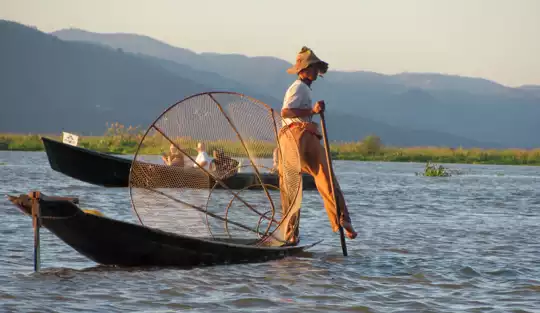
Though a bit further at about two hours away, Inle Lake is worth the trek. Known for its floating gardens and unique fishing techniques, a boat tour here is a must. Expect to pay around $15 for transport and a boat ride. The best time to go is during the cool months, from November to January. A common pitfall is not negotiating boat prices—always ask around first!
👉 Explore Inle Lake
Want to know what more Myanmar offers?
The Myanmar Travel Guide describes 110 highlights, from cities to national parks, from beaches to hikes

Get the Travel Guide -

🍲 FoodEating & Drinking in Pakokku

In **Pakokku**, the food scene is a delightful maze of **flavors** and **textures**. Dive into **Mohinga**, a fragrant fish soup that’s a breakfast staple, or savor **Tea Leaf Salad**, a crunchy mix that’s both refreshing and addictive. Street vendors line the bustling markets, serving up **grilled skewers** and **noodle dishes** that burst with local spices.

Don’t miss the **tea shops** where locals gather, sipping strong brews and sharing stories. It’s customary to greet with a smile and a nod, embracing the communal vibe. Eating with your hands is common, so dig in and enjoy the tactile experience. Each bite tells a story, making your culinary journey in Pakokku truly special.

🛡️ SafetySafety Tips and Common Scams in Pakokku

Pakokku is generally safe for backpackers, but a few situational awareness tips can enhance your experience. Stick to well-lit areas at night, especially if you’re solo; the streets can feel quiet, and a little caution goes a long way.

Watch for common scams, like overly friendly locals offering unsolicited tours or rides. Politely decline and trust your instincts. Everyday annoyances might include aggressive street vendors; a firm but friendly ”no, thank you” usually does the trick. Carry yourself confidently, and you’ll navigate the city with ease.

Other Burmese cities near Pakokku

Explore more nearby:

  • Monywa—giant Buddhas, Chindwin River, mural caves| 87 km away
  • Meiktila—lakeside town, crossroads junction, university hub| 97 km away
  • Yenangyaung—oil heritage, dry zone, rural landscapes| 100 km away

💡 Not sure where to go next?
Create a personalized itinerary for Myanmar including Pakokku and the places that fit your trip.

Generate my itinerary

👉 Discover all cities

Or checkout all Myanmar has to offer (think cities, towns, villages, national parks, hikes, beaches, festivals)
Country photo of Myanmar

We 💚 feedbackParting advice and final tips

Pakokku is a treasure trove of authentic local life, where you can sip tea with friendly locals and explore vibrant markets. Just know that the infrastructure isn’t polished; expect some bumpy roads and limited amenities. Embrace the quirks, and you’ll find the charm.

✈️ When did I visit Myanmar?
In November 2013 I backpacked through Myanmar, bringing a full stack of pristine dollar bills as they had no ATMs back then.

✍️ Help improve this page!
The information on this page is based on my own backpacking experience in Myanmar, supplemented with up-to-date research and feedback from other travelers. Travel details can change, so if you notice anything outdated or incomplete, feel free to let me know.


🙋‍♂️ Give feedback

👋 Meet the founderWho’s Behind Take Your Backpack?

Johan, backpacker and founder of TakeYourBackpackHi, I’m Johan (Netherlands 🇳🇱), the creator of TakeYourBackpack. Over the past decade, I’ve backpacked through 80+ countries across six continents, gaining extensive experience with independent travel, long-term trips, and overland routes.

This site is built on a combination of firsthand travel experience and carefully curated insights from other backpackers. Many guides are based on places I’ve personally visited, while others bring together tips, observations, and practical advice shared by trusted travelers I’ve met along the way.

The goal is to provide realistic, experience-driven guidance — not generic itineraries — so you can explore destinations with better context, clearer expectations, and more confidence.

Get full Myanmar guide •
Instant download • 110 highlights • Full Offline guide