×

Myanmar🇲🇲 | citiesSagaingmonastic hills, meditation centers, pagoda clusters | things to do and best time to go

Explore PakokkuExplore Yenangyaung

Backpacking in Sagaing
👌 Worth visitingcity ranked #20
By Johan Kruseman 🇳🇱 | Updated June 9, 2026

A decade ago Sagaing felt almost monastic: quiet hills, monks outnumbering visitors, sunset from Sagaing Hill shared with a handful of pilgrims. Today it’s still calm by Myanmar standards, but you feel Mandalay’s gravity creeping in via day-trippers and construction. Sitting just southwest of Mandalay across the Ayeyarwady, it’s more spiritual suburb than standalone backpacker hub: cheap, safe-feeling, light on nightlife, thin on hostels, but rich in pagoda-dotted hills, river views, and slow, contemplative walks that Mandalay rarely gives you.

Discover everything you want to know in the 📖 Myanmar Travel Guide.
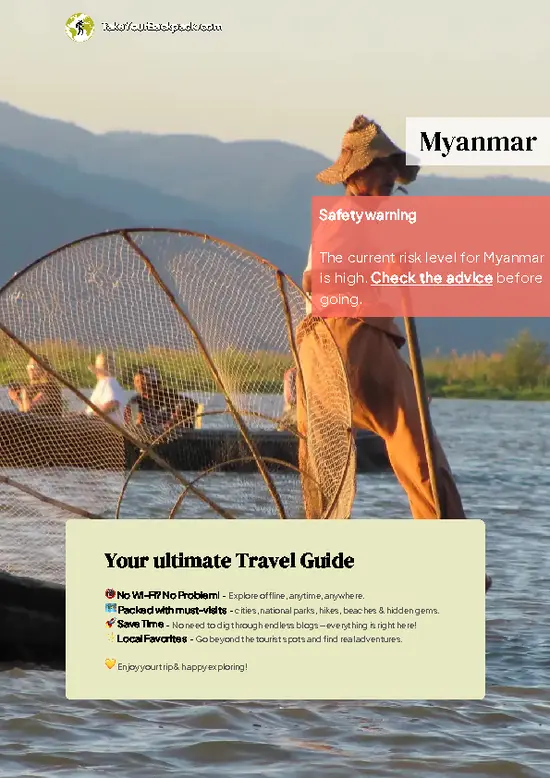
Safety warning

The current risk level for Myanmar is high. Check the advice before going.


Get your Myanmar guide
110 ranked highlights, routes & tips, works offline (405 pages)
Loading the map 🌍
CLICK TO FILTER
cities
towns
landmarks
national parks
hikes
beaches
attractions
festivals
regions
SHOW COUNTRY’S BESTSHOW ALL

✨ Why go?
Ranked #20 city in Myanmar
What makes this city worth visiting

Sagaing is a strategic stop for backpackers weaving through Myanmar. It offers a basecamp value for day trips to nearby highlights, making it easy to explore without the hassle of constant packing. The hostel scene is vibrant, with budget-friendly options that foster a sense of community. Food stalls serve up local flavors, and the walkability of the city allows for spontaneous discoveries. While nightlife isn’t wild, the laid-back vibe suits those looking to unwind. Plus, onward travel is a breeze, connecting you to major routes. If you’re after a mix of culture and convenience, Sagaing is worth your time.
Want to include Sagaing in your Myanmar route?
Create a personalized Myanmar itinerary that includes Sagaing and the places that fit your trip — based on your travel style, budget, and available time. Get your route in seconds.

Generate my trip

💡 HighlightsPlaces and moments you shouldn't skip

  • Sagaing Hill (the pagoda ridge) — The spine of the town: hundreds of small pagodas and monasteries, easy walking/scooter routes, and the best way to feel Sagaing’s monastic buzz and get wide river-and-valley views.
  • Soon U Ponya Shin Pagoda — The town’s most photographed gilded stupa; climb the long stairway for a panoramic sweep of the Irrawaddy and the clump of monasteries below.
  • U Min Thonze Pagoda — Famous semicircular terrace lined with dozens of seated Buddha images carved into arched niches — peaceful, photogenic, and a neat contrast to the taller stupas nearby.
  • Kaunghmudaw Pagoda — A massive white, domed pagoda with a very different silhouette from the usual Burmese stupas; walk its base and upper terraces for a calm, architectural highlight.
  • Yoke Sone (Yokesone) Monastery — Traditional
read more 👉
  • Sagaing Hill (the pagoda ridge) — The spine of the town: hundreds of small pagodas and monasteries, easy walking/scooter routes, and the best way to feel Sagaing’s monastic buzz and get wide river-and-valley views.
  • Soon U Ponya Shin Pagoda — The town’s most photographed gilded stupa; climb the long stairway for a panoramic sweep of the Irrawaddy and the clump of monasteries below.
  • U Min Thonze Pagoda — Famous semicircular terrace lined with dozens of seated Buddha images carved into arched niches — peaceful, photogenic, and a neat contrast to the taller stupas nearby.
  • Kaunghmudaw Pagoda — A massive white, domed pagoda with a very different silhouette from the usual Burmese stupas; walk its base and upper terraces for a calm, architectural highlight.
  • Yoke Sone (Yokesone) Monastery — Traditional teak monastery on the hill with intricate woodcarving and lively monk life; it’s an authentic window into everyday monastic routine.
  • Setkyathiha Pagoda — One of the older, quieter shrines on the hill where locals come to pray; good for a calmer stop away from the main tourist clusters.
  • Sagaing Market (main town market) — A real local market with fresh produce, snacks, dried goods and cheap street food; excellent place to eat cheaply and watch everyday life off the pilgrimage trails.
  • Irrawaddy riverfront & the ferry landings — The river is central to Sagaing’s feel: take the ferries, watch cargo boats, or grab a short boat trip for a different angle on the town and nearby riverine villages.
  • Monastic teashops and the morning alms routes — Not a single building but an experience: early-morning alms rounds and the teashops that host monks and locals make for the most genuine social encounters you’ll have in Sagaing.
  • Sunset viewpoints and lesser-known pagoda paths — Walk the tiny trails between lesser shrines for intimate views, quiet bells, and fewer visitors; ideal for slow photography and reflective moments away from the main temples.
A few close day-trip highlights outside Sagaing are Mandalay (royal sites and markets), the river-town ruins of Inwa (Ava) and the Mingun pagodas and Hsinbyume — my personal favorite for a half-day trip is Inwa, for its ruined palace grounds, tuk-tuk/horse-cart feel and calm, slightly out-of-time atmosphere.
Spotted a mistake or missing something? Contact us.

Things to do in Sagaing

Ratings based on Tripadvisor reviews. When you book through this link, you support our work at no extra cost to you.

🏘️ NeighborhoodsWhere things are and how it's laid out

Sagaing is a captivating blend of spirituality and local life, perfect for backpackers seeking authenticity. Here’s how the neighborhoods stack up:

Sagaing Hill: This area is all about tranquility and stunning views. It’s a bit of a climb, but the serene pagodas and meditation centers make it worthwhile. Ideal for longer stays if you want to soak in the peaceful vibe.

Innwa (Ava): Rich in history, this former royal capital offers horse-drawn carts and ancient ruins. It’s walkable and budget-friendly, perfect for a day trip or a short stay. The atmosphere is relaxed, with a few local eateries.

Shwebo: A bit off the beaten path, Shwebo is less touristy. It’s a great spot for those wanting to dive deeper into local culture. Transport options are limited, so it’s better for longer stays where … read more 👉
Sagaing is a captivating blend of spirituality and local life, perfect for backpackers seeking authenticity. Here’s how the neighborhoods stack up:

Sagaing Hill: This area is all about tranquility and stunning views. It’s a bit of a climb, but the serene pagodas and meditation centers make it worthwhile. Ideal for longer stays if you want to soak in the peaceful vibe.

Innwa (Ava): Rich in history, this former royal capital offers horse-drawn carts and ancient ruins. It’s walkable and budget-friendly, perfect for a day trip or a short stay. The atmosphere is relaxed, with a few local eateries.

Shwebo: A bit off the beaten path, Shwebo is less touristy. It’s a great spot for those wanting to dive deeper into local culture. Transport options are limited, so it’s better for longer stays where you can explore at your own pace.

Each area has its own flavor, so choose based on what you value most!

⌛️ 1 dayHow to make the most of one day

Sagaing, Myanmar, is a captivating blend of spiritual serenity and local life, where the hills are dotted with over 600 stupas and monasteries. Start your day early in the peaceful neighborhood of Sagaing Hill. The sunrise casts a golden hue over the ancient pagodas, making it the perfect backdrop for reflection. Climb to the top of Soon U Ponya Shin Pagoda for panoramic views that will set the tone for your adventure.

After soaking in the sights, head down to the local market in the bustling town center. Here, you can sample fresh fruits and local snacks while mingling with friendly vendors. It’s a slice of daily life that tourists often miss, and it’s a great way to connect with the community.

In the afternoon, visit the lesser-known U Min Thonze Pagoda, famous for its 45 Buddha statues. … read more 👉
Sagaing, Myanmar, is a captivating blend of spiritual serenity and local life, where the hills are dotted with over 600 stupas and monasteries. Start your day early in the peaceful neighborhood of Sagaing Hill. The sunrise casts a golden hue over the ancient pagodas, making it the perfect backdrop for reflection. Climb to the top of Soon U Ponya Shin Pagoda for panoramic views that will set the tone for your adventure.

After soaking in the sights, head down to the local market in the bustling town center. Here, you can sample fresh fruits and local snacks while mingling with friendly vendors. It’s a slice of daily life that tourists often miss, and it’s a great way to connect with the community.

In the afternoon, visit the lesser-known U Min Thonze Pagoda, famous for its 45 Buddha statues. The tranquility here is palpable, and you’ll find fewer tourists, allowing for a more intimate experience. As the sun begins to set, make your way to the banks of the Irrawaddy River. Grab a seat at a riverside café, sip on some tea, and watch the boats glide by as the sky turns fiery orange. This day in Sagaing isn’t just about sights; it’s about feeling the pulse of a city that thrives on simplicity and spirituality.
Turn your Sagaing visit into an Myanmar adventure
Build a complete Myanmar route with Sagaing, hidden gems, must-see destinations, and realistic travel times included.

Generate my trip

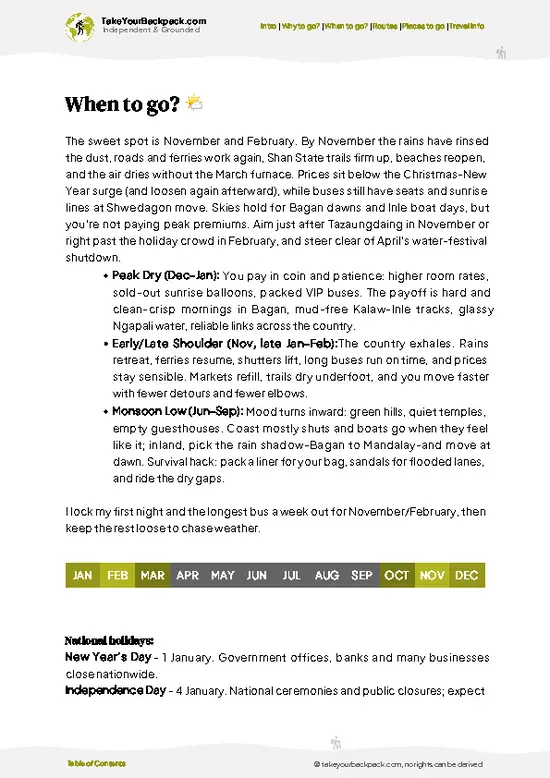
🌤️ When to go?Weather, crowds, and seasonal trade-offs


  • Topic: Weather – The dry season from November to February offers clear skies and minimal rain, perfect for trekking and temple visits. Avoid the monsoon months (June to September) when heavy rains can disrupt plans and muddy trails.

  • Topic: Temperature – Expect comfortable daytime highs around 25-30°C (77-86°F) in the dry season, dropping to cooler nights near 15°C (59°F). The hot season (March to May) can spike above 35°C (95°F), making midday exploration tough.

  • Topic: Daylight Hours – Daylight stays steady at about 11-12 hours year-round, so early starts are always a smart move to maximize sightseeing before afternoon heat or rain.

  • Topic: Crowds – Peak tourist flow aligns with the dry season, especially December and January. If you want fewer people, shoulder months like November
read more 👉

  • Topic: Weather – The dry season from November to February offers clear skies and minimal rain, perfect for trekking and temple visits. Avoid the monsoon months (June to September) when heavy rains can disrupt plans and muddy trails.

  • Topic: Temperature – Expect comfortable daytime highs around 25-30°C (77-86°F) in the dry season, dropping to cooler nights near 15°C (59°F). The hot season (March to May) can spike above 35°C (95°F), making midday exploration tough.

  • Topic: Daylight Hours – Daylight stays steady at about 11-12 hours year-round, so early starts are always a smart move to maximize sightseeing before afternoon heat or rain.

  • Topic: Crowds – Peak tourist flow aligns with the dry season, especially December and January. If you want fewer people, shoulder months like November or February balance decent weather with quieter sites.

  • Topic: Seasonal Activities – Festivals like the Sagaing Pagoda Festival in February add cultural depth but also bring crowds and higher prices. Weigh the trade-off between immersive experience and tranquility.

  • Topic: Price Fluctuations – Accommodation and transport costs rise during peak season and festival times. Booking ahead can lock in better rates, while off-season offers bargains but with weather risks.


Pro-tip: Target late November to early February for the smartest balance of weather, crowd control, and wallet-friendly options—your best shot at winning the Sagaing timing game.


source: climatestotravel.comJANJanuary: excellent for travelingFEBFebruary: highly recommended for travelingMARMarch: fair for travelingAPRApril: fair for travelingMAYMay: fair for travelingJUNJune: below average for travelingJULJuly: below average for travelingAUGAugust: below average for travelingSEPSeptember: below average for travelingOCTOctober: good for travelingNOVNovember: highly recommended for travelingDECDecember: excellent for traveling
when-to-go

✈️ The backpacker research shortcutMyanmar Travel Guide

An offline-friendly backpacking guide with optimized travel routes, ranked highlights, transport advice, and the best areas to stay.
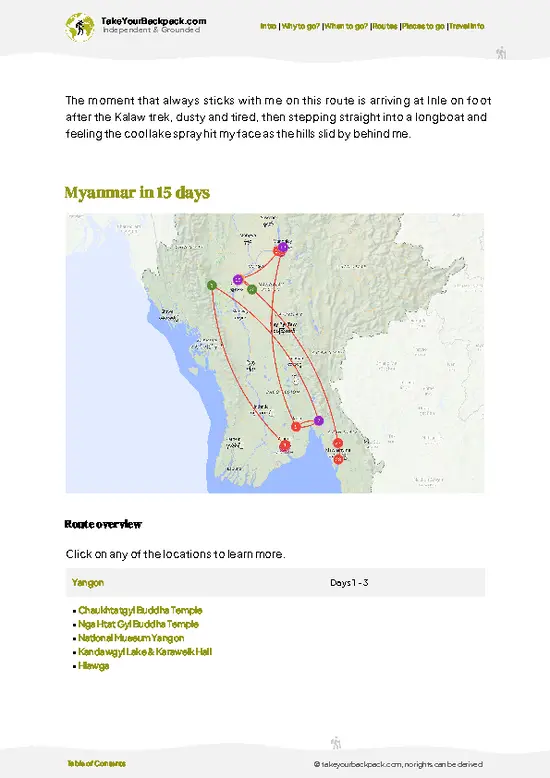
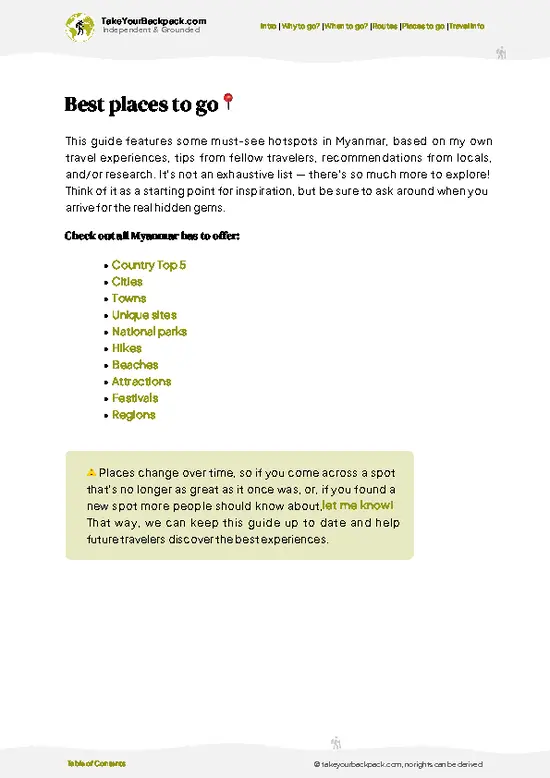
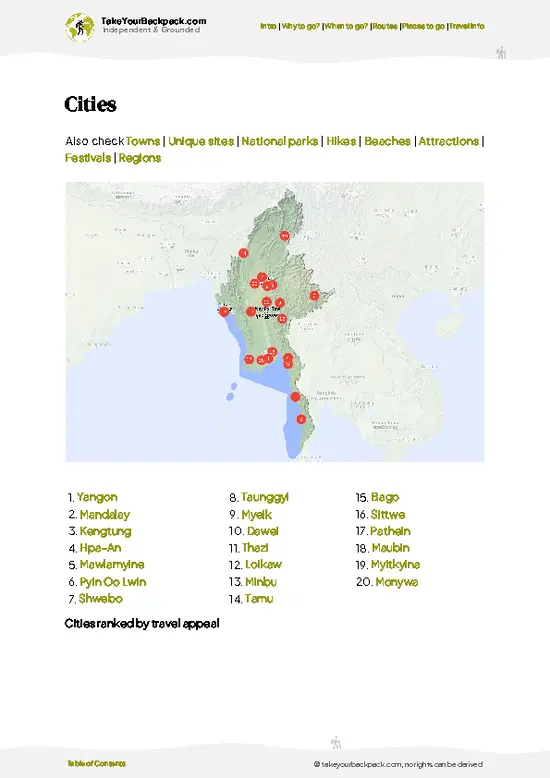
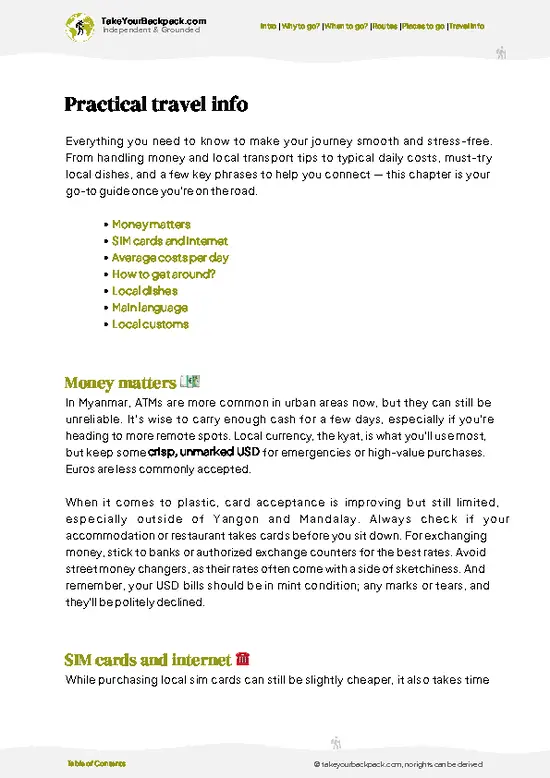
example page 0 from our offline Travel Guide for Myanmar
example page 1 from our offline Travel Guide for Myanmar
example page 2 from our offline Travel Guide for Myanmar
example page 3 from our offline Travel Guide for Myanmar
example page 4 from our offline Travel Guide for Myanmar
example page 5 from our offline Travel Guide for Myanmar
example page 6 from our offline Travel Guide for Myanmar
example page 7 from our offline Travel Guide for Myanmar
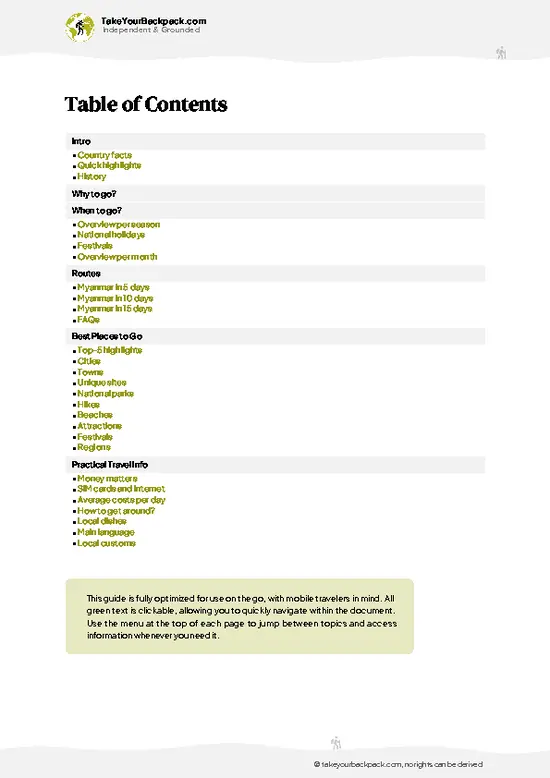
The digital guide (405 pages) contains:
110 highlights, ranked by travel appeal
Optimized 5, 10 & 15-day travel routes
Cities, national parks, landmarks, beaches
How to get around
Offline-friendly for travel without Wi-Fi
👉 Click to see all 30+ guide features

📅 Plan smarter in minutes, not weeks
Month by month travel advice
Festivals & national holidays
Budget expectations

🗺️ Go to the right places, skip the overrated ones
Honest pros & cons of destinations
Top hikes, parks & viewpoints
Lesser-known places most travelers miss
Clear “worth it vs skip it” guidance

🛏️ Travel smoothly without rookie mistakes
Best areas to stay
Transport systems explained simply
Common scams & safety advice
SIM cards, money & practical tips

🌍 Understand the country, not just visit it
Culture & traditions
52 Essential phrases & customs
Festivals worth planning around
Traveler-friendly historical context
Insights that make places more meaningful

📱 Built for real travel conditions
Fully downloadable PDF
Works completely offline
Optimized for phone use
Useful in remote areas & buses
Everything in one place
Save weeks of stressful planning
Get instant access to your full guide. 30‑day money-back guarantee.


By proceeding you agree to our terms.
Sent to your inbox immediately after payment • 100% Secure Checkout
Best Backpacking Travel Advisor 2025 tourism awardBest Backpacking
Travel Advisor
2025
What others say about Take Your Backpack Guides:
⭐⭐⭐⭐⭐
Fantastic, amazing amount of information!
⭐⭐⭐⭐⭐
My goodness this is amazing, it's what I've been looking for hats off too you!
⭐⭐⭐⭐⭐
I think this is absolutely BRILLIANT
⭐⭐⭐⭐
Very complete and informative. It's still missing places, but I gotta to commend you
⭐⭐⭐⭐⭐
This is truly amazing, thank you, can't wait to explore it with my kids!
⭐⭐⭐⭐⭐
Awesome resource, thank you!
⭐⭐⭐⭐⭐
This is amazing! Can't wait to explore the ones I haven't seen
⭐⭐⭐⭐
I love this! Well done, great idea.
⭐⭐⭐⭐⭐
Thanks for taking the time to make this gem!
⭐⭐⭐⭐⭐
This might be the best website I've ever seen.
⭐⭐⭐⭐⭐
Congratulations, and thank you so much for your work; it's incredibly valuable.
⭐⭐⭐⭐
In all seriousness I think you did a great job pointing out the important spots
⭐⭐⭐⭐⭐
10/10 very good
⭐⭐⭐⭐⭐
As someone who's only just starting to visit regularly this is awesome, thank you.
⭐⭐⭐⭐
Thank you very much! I'm going to visit my dad, it's going to be very useful!
⭐⭐⭐⭐⭐
This is really cool! We'll be travelling for the first time and this definitely come in handy.
⭐⭐⭐⭐⭐
You are now our minister of culture, congratulations 👨‍💼
⭐⭐⭐⭐⭐
Just wanted to tell you that this is a pearl! Going to follow your recommendations.
⭐⭐⭐⭐⭐
This is so cool. I'll definitely be using the resource for my travels soon.
⭐⭐⭐⭐⭐
This is very impressive! Good work.
⭐⭐⭐⭐⭐
This is an amazing and informative site. Very well done!

🛏️ Where to stay?Choosing the right base

Sagaing’s best backpacker turf clusters around the central town area near the Irrawaddy River, where safety and social energy intersect. This zone offers a compact, walkable layout with guesthouses and hostels catering to budget travelers, making it easy to meet fellow adventurers without the hassle of long commutes. Compared to the quieter, more residential outskirts, this central strip pulses with local markets, street food stalls, and easy access to pagodas, blending comfort with authentic immersion. While options are modest, the vibe here leans toward relaxed camaraderie rather than party … read more 👉
Sagaing’s best backpacker turf clusters around the central town area near the Irrawaddy River, where safety and social energy intersect. This zone offers a compact, walkable layout with guesthouses and hostels catering to budget travelers, making it easy to meet fellow adventurers without the hassle of long commutes. Compared to the quieter, more residential outskirts, this central strip pulses with local markets, street food stalls, and easy access to pagodas, blending comfort with authentic immersion. While options are modest, the vibe here leans toward relaxed camaraderie rather than party chaos, perfect for solo travelers who want connection without sacrificing peace of mind.

🚌 Getting aroundHow to get from A to B

Sagaing moves at its own rhythm—less a clockwork machine and more a river flowing with local intuition. Here, timetables are suggestions, not laws, and the pulse of the city is set by the ebb and flow of people rather than rigid schedules. You’ll find that patience and flexibility are your best allies. The trade-off between time, money, and comfort is a dance where you decide which step to lead.


  • Walking: The cheapest and most flexible way to explore Sagaing’s hills and pagodas. No cost, zero schedule, but expect uneven paths and tropical heat that can slow your pace.

  • Local Bus: Runs roughly from 6 AM to 7 PM, fares under $1. Slow and crowded, but unbeatable for budget travelers wanting to cover longer distances without breaking the bank.

  • Shared Trishaw: A step up in comfort and speed,
read more 👉
Sagaing moves at its own rhythm—less a clockwork machine and more a river flowing with local intuition. Here, timetables are suggestions, not laws, and the pulse of the city is set by the ebb and flow of people rather than rigid schedules. You’ll find that patience and flexibility are your best allies. The trade-off between time, money, and comfort is a dance where you decide which step to lead.


  • Walking: The cheapest and most flexible way to explore Sagaing’s hills and pagodas. No cost, zero schedule, but expect uneven paths and tropical heat that can slow your pace.

  • Local Bus: Runs roughly from 6 AM to 7 PM, fares under $1. Slow and crowded, but unbeatable for budget travelers wanting to cover longer distances without breaking the bank.

  • Shared Trishaw: A step up in comfort and speed, these motorized rickshaws run all day and negotiate fares on the spot—usually $1–$2 for short trips. You trade a bit of unpredictability for quicker, more direct routes.

  • Private Taxi: Available but pricey relative to local income, expect $10+ for a half-day hire. Offers maximum comfort and control over your schedule, ideal if time is tight and you want to avoid waiting.


Understanding these options lets you play the game smart—sacrificing a bit of comfort for time or money, or splurging strategically to unlock experiences that stick with you long after the trip ends.

👛 Costs (as of 31 January 2026)Travel costs and budget guide for Sagaing

Backpacking in Sagaing, Myanmar, is a study in balancing modest costs with authentic experiences. Here’s how your daily expenses typically break down:
  • Dorm Accommodation (High Season): Expect to pay around $6 to $10 per night. High season pushes prices up slightly due to demand, but dorms remain basic and clean, often with shared bathrooms.
  • Dorm Accommodation (Off-Season): Prices drop to about $4 to $7 per night. Off-season means quieter hostels and a bit more bargaining power, though some places may close temporarily.
  • Meals: Street food and local eateries dominate here, with meals costing between $1.50 and $3. A full day of eating well on local fare rarely exceeds $6, especially if you stick to traditional Burmese dishes.
  • Local Transport: Short tuk-tuk rides or motorbike taxis typically
read more 👉
Backpacking in Sagaing, Myanmar, is a study in balancing modest costs with authentic experiences. Here’s how your daily expenses typically break down:
  • Dorm Accommodation (High Season): Expect to pay around $6 to $10 per night. High season pushes prices up slightly due to demand, but dorms remain basic and clean, often with shared bathrooms.
  • Dorm Accommodation (Off-Season): Prices drop to about $4 to $7 per night. Off-season means quieter hostels and a bit more bargaining power, though some places may close temporarily.
  • Meals: Street food and local eateries dominate here, with meals costing between $1.50 and $3. A full day of eating well on local fare rarely exceeds $6, especially if you stick to traditional Burmese dishes.
  • Local Transport: Short tuk-tuk rides or motorbike taxis typically cost $0.50 to $1.50 per trip. Negotiating fares upfront is common and necessary to avoid surprises.
  • City Transport Pass: Sagaing doesn’t have a formal city transport pass system. Budgeting for individual rides is the norm, so plan accordingly.
  • Basic Activities/Entry Fees: Visiting pagodas and monasteries usually costs between $1 and $3. Some sites are free, but the more famous spots may have small entrance fees.
  • Miscellaneous Expenses: This includes bottled water, snacks, or occasional internet cafes, typically around $1 to $2 daily.

All told, you’re looking at roughly $15 to $25 per day for a no-frills but comfortable backpacking experience in Sagaing. This range gives you room to choose between tighter budgeting and a bit more comfort or flexibility. Knowing these trade-offs upfront means you can decide where to save and where to splurge, turning your trip into a smart, well-played game rather than a guessing exercise.


source: myanmar.travel
⚠️ Prices can change and everyone travels differently, so take this as a rough guide. Hope it helps you plan your adventure!

🚌 Day tripsExploring the surroundings

Sagaing is a backpacker’s dream base for day trips, offering a rich tapestry of culture, history, and stunning landscapes. Here’s how to make the most of your time.

**U Bein Bridge**
A trip to the iconic U Bein Bridge is a must. Just a 30-minute ride from Sagaing, this 1.2-kilometer teak bridge is perfect for a sunset stroll. The vibrant local life around the bridge adds to the experience. Expect to spend around $5 for transportation and snacks. First-timers often underestimate the crowds at sunset, so arrive early to snag a good spot.
👉 Explore U Bein Bridge

**Mount Popa**
About an hour and a half away, Mount Popa is a sacred site with breathtaking views. The hike up the 777 steps is invigorating, and the panoramic vistas are worth every drop of sweat. Budget around $10 for transport … read more 👉
Sagaing is a backpacker’s dream base for day trips, offering a rich tapestry of culture, history, and stunning landscapes. Here’s how to make the most of your time.

**U Bein Bridge**
A trip to the iconic U Bein Bridge is a must. Just a 30-minute ride from Sagaing, this 1.2-kilometer teak bridge is perfect for a sunset stroll. The vibrant local life around the bridge adds to the experience. Expect to spend around $5 for transportation and snacks. First-timers often underestimate the crowds at sunset, so arrive early to snag a good spot.
👉 Explore U Bein Bridge

**Mount Popa**
About an hour and a half away, Mount Popa is a sacred site with breathtaking views. The hike up the 777 steps is invigorating, and the panoramic vistas are worth every drop of sweat. Budget around $10 for transport and entrance fees. The best time to visit is early morning to avoid the heat. A common mistake is not bringing enough water; it’s a climb, not a stroll!


**Inwa (Ava)**
Just a 40-minute journey from Sagaing, Inwa offers a glimpse into Myanmar’s past with its ancient pagodas and horse-drawn carts. Rent a bike for about $2 to explore at your own pace. The best time to visit is during the cooler months, from November to February. Many travelers miss the hidden temples tucked away from the main roads, so keep your eyes peeled.


**Mingun**
A quick boat ride of about 30 minutes takes you to Mingun, home to the unfinished Mingun Pagoda and the world’s largest bell. The boat fare is around $3, and the sights are free to explore. Go in the morning to beat the heat and the crowds. A common pitfall is rushing through; take your time to soak in the atmosphere.


**Saging Hill**
Only a 20-minute drive away, Saging Hill offers stunning views of the Irrawaddy River and the surrounding area. It’s a peaceful spot to reflect and enjoy the scenery. Expect to spend about $5 for transport. The best time to visit is early morning or late afternoon. First-timers often overlook the small temples scattered around, which are worth a quick visit.


These day trips from Sagaing are not just about the destinations; they’re about the journey and the stories you’ll collect along the way.
Want to know what more Myanmar offers?
The Myanmar Travel Guide describes 110 highlights, from cities to national parks, from beaches to hikes

Get the Travel Guide -

🍲 FoodWhat to Eat & Drink

In Sagaing, **food** is a vibrant tapestry of flavors. Dive into **Mohinga**, a fragrant fish soup with rice noodles, often enjoyed for breakfast. Don’t miss **Tea Leaf Salad**—a crunchy, tangy mix that’s a local favorite. Street vendors line the bustling markets, offering **grilled skewers** and **fried snacks** that are perfect for a quick bite.

As for drinks, try the local **palm wine**; it’s sweet and refreshing, perfect for cooling off after a day of exploring. Eating here is communal; share dishes and enjoy the lively chatter around you. Remember, it’s polite to eat with your right hand, a nod to local customs that adds a layer of connection to your experience.

🛡️ SafetyTraveler Safety Guide

Sagaing is generally safe, but staying aware enhances your experience. Stick to well-lit areas at night, especially around the pagodas. Solo travelers should blend in; avoid flashy attire and keep valuables discreet.

Scams are rare, but be cautious with overly friendly locals offering unsolicited help. Politely decline and trust your instincts. Everyday annoyances might include persistent vendors; a firm but friendly “no, thank you” usually does the trick. Carry yourself confidently, and you’ll navigate the city with ease, enjoying its charm without unnecessary distractions.

Other Burmese cities near Sagaing

Explore more nearby:

  • Mandalay—royal palace, artisan quarters, Irrawaddy views| 14 km away
  • Pyin Oo Lwin—botanical gardens, colonial mansions, cool climate| 54 km away
  • Shwebo—royal ruins, dry zone, irrigation canals| 79 km away

💡 Not sure where to go next?
Create a personalized itinerary for Myanmar including Sagaing and the places that fit your trip.

Generate my itinerary

👉 Discover all cities

Or checkout all Myanmar has to offer (think cities, towns, villages, national parks, hikes, beaches, festivals)
Country photo of Myanmar

We 💚 feedbackSumming up the experience

Sagaing’s charm lies in its serene pagodas and the sweeping views of the Irrawaddy River. You’ll feel a deep sense of peace here. But be ready for the heat; it can be stifling. Embrace the sweat, and you’ll find a rewarding experience waiting for you.

✈️ When did I visit Myanmar?
In November 2013 I backpacked through Myanmar, bringing a full stack of pristine dollar bills as they had no ATMs back then.

✍️ Help improve this page!
The information on this page is based on my own backpacking experience in Myanmar, supplemented with up-to-date research and feedback from other travelers. Travel details can change, so if you notice anything outdated or incomplete, feel free to let me know.


🙋‍♂️ Give feedback

👋 Meet the founderWho’s Behind Take Your Backpack?

Johan, backpacker and founder of TakeYourBackpackHi, I’m Johan (Netherlands 🇳🇱), the creator of TakeYourBackpack. Over the past decade, I’ve backpacked through 80+ countries across six continents, gaining extensive experience with independent travel, long-term trips, and overland routes.

This site is built on a combination of firsthand travel experience and carefully curated insights from other backpackers. Many guides are based on places I’ve personally visited, while others bring together tips, observations, and practical advice shared by trusted travelers I’ve met along the way.

The goal is to provide realistic, experience-driven guidance — not generic itineraries — so you can explore destinations with better context, clearer expectations, and more confidence.

Get full Myanmar guide •
Instant download • 110 highlights • Full Offline guide