×

Namibia🇳🇦 | regionsKalahari DesertRed sand dunes, acacia woodlands, San communities, seasonal pans | things to do and best time to go

Explore DamaralandExplore Namib Desert

Backpacking in Kalahari Desert
👀 For curious travelersregion ranked #6
By Johan Kruseman 🇳🇱 | Updated May 31, 2026

Here’s the twist nobody tells you: the Kalahari isn’t a true desert—at least not in the way you picture endless sand dunes. It’s a sea of red earth, golden grass, and acacia trees, more alive than barren, and it sprawls across eastern Namibia like a secret. For backpackers, the Kalahari is a test of patience and payoff. You’ll find raw, wide-open spaces, San bushman culture that’s the real deal (not a tourist show), and wildlife that actually feels wild—meerkats, oryx, and the occasional lion if you’re lucky. But you’ll pay for that authenticity with long, dusty bus rides and towns that are more outpost than hub. Costs are lower than Etosha or Swakopmund, but don’t expect a party scene or easy hostel-hopping. The Kalahari is for those who want Namibia’s soul, not its Instagram highlights.

Discover everything you want to know in the 📖 Namibia Travel Guide.


Get your Namibia guide
79 ranked highlights, routes & tips, works offline (319 pages)
Loading the map 🌍
CLICK TO FILTER
cities
towns
villages
landmarks
national parks
hikes
beaches
attractions
festivals
regions
SHOW COUNTRY’S BESTSHOW ALL

✨ Why go?
Ranked #6 region in Namibia
Reasons people choose to visit here

The Kalahari Desert in Namibia is a backpacker’s playground, and here’s why savvy travelers flock to this vast expanse. First off, the variety of landscapes is mind-blowing. You’ve got red dunes, salt pans, and lush riverbeds all within reach. This means you can dive into multiple experiences without the hassle of constant relocation.

Transport flexibility is another perk. Renting a 4x4 gives you the freedom to explore at your own pace, hitting remote spots that tour buses can’t touch. You can camp under the stars one night and stay in a cozy lodge the next, mixing nature and culture seamlessly.

And let’s talk about slow travel. You’re not just ticking boxes; you’re soaking in the local culture, from interacting with the San people to savoring traditional meals. This isn’t just a trip; … read more 👉
The Kalahari Desert in Namibia is a backpacker’s playground, and here’s why savvy travelers flock to this vast expanse. First off, the variety of landscapes is mind-blowing. You’ve got red dunes, salt pans, and lush riverbeds all within reach. This means you can dive into multiple experiences without the hassle of constant relocation.

Transport flexibility is another perk. Renting a 4x4 gives you the freedom to explore at your own pace, hitting remote spots that tour buses can’t touch. You can camp under the stars one night and stay in a cozy lodge the next, mixing nature and culture seamlessly.

And let’s talk about slow travel. You’re not just ticking boxes; you’re soaking in the local culture, from interacting with the San people to savoring traditional meals. This isn’t just a trip; it’s an adventure that allows you to connect deeply with the land and its people. Choose wisely, and you’ll walk away with stories that last a lifetime.
Want to include Kalahari Desert in your Namibia route?
Create a personalized Namibia itinerary that includes Kalahari Desert and the places that fit your trip — based on your travel style, budget, and available time. Get your route in seconds.

Generate my trip

💡 HighlightsPlaces and moments you shouldn't skip

  1. Nyae Nyae Conservancy & Tsumkwe — The heart of Namibia’s Kalahari bush. Indigenous San communities run guided tracking and foraging walks here, showing their stone tools, survival tricks and seasonal pans that fill with water after rains. It’s one of the few places where cultural insight and real Kalahari ecology come together, not a sanitized tourist show.
  2. Khaudum National Park — Properly remote Kalahari: endless red sand, mopane islands, and very few other people. Walks and 4x4 drives can reveal elephant tracks, brown hyena signs and an absolute sense of space. If you want silence and raw desert wildlife, this is it.
  3. Hardap Dam & Hardap Recreation Area (Mariental) — An unlikely oasis on the Kalahari’s edge. The dam draws huge flocks of waterbirds (flamingos in season), creates
read more 👉
  1. Nyae Nyae Conservancy & Tsumkwe — The heart of Namibia’s Kalahari bush. Indigenous San communities run guided tracking and foraging walks here, showing their stone tools, survival tricks and seasonal pans that fill with water after rains. It’s one of the few places where cultural insight and real Kalahari ecology come together, not a sanitized tourist show.
  2. Khaudum National Park — Properly remote Kalahari: endless red sand, mopane islands, and very few other people. Walks and 4x4 drives can reveal elephant tracks, brown hyena signs and an absolute sense of space. If you want silence and raw desert wildlife, this is it.
  3. Hardap Dam & Hardap Recreation Area (Mariental) — An unlikely oasis on the Kalahari’s edge. The dam draws huge flocks of waterbirds (flamingos in season), creates stark contrasts with the surrounding red dunes, and is a good base for cheap birding, sunset dune walks and local farm visits.
  4. Gobabis and the red-dune cattle country — Not glamorous, but essential: this is where Kalahari pastoral life happens. Gobabis markets, cattle posts and short guided dune drives give a practical feel for the landscape’s role in local livelihoods — and you’ll see herds of gemsbok and the odd jackal along the roads.
  5. Eiseb Conservancy — Hidden gem. A low-profile community conservancy northeast of Tsumkwe with seasonal pans, quiet tracks and local guides who still hunt and trap for subsistence. It’s under-visited, which means authentic encounters and solitude for anyone willing to accept basic facilities.
  6. Epukiro and Otjinene village circuits — Hidden gem. Small towns on the Kalahari fringe where Herero and Himba culture, mission history and cattle-farming mix. Visit on market days for handcrafts, local food stalls and genuine interactions — no curated tourist veneer, just village life.
  7. San rock-art spots and pans around Tsumkwe — Hidden gem. Scattered rock shelters and shallow pans hold faint paintings and engravings that connect to San cosmology; many visitors miss them because they’re off the beaten track. A local guide makes the difference — they’ll point out details and tell the real stories.
  8. Private Kalahari game farms (day visits from Mariental/Gobabis) — These working farms open for day drives and cheap overnight stays; they’re where you’ll see concentrated herds of oryx, springbok, bat-eared foxes and good sunset dune silhouettes without the crowds or expense of big lodges.
  9. Kalahari dune-scapes and red-sand drives — It’s easy to underestimate how distinctive the Kalahari dunes are until you drive a ridge at golden hour. The light makes everything red, the vegetation patterns are unique, and the quiet after sundown — when the desert cools and animals move — is a bucket-list Kalahari moment.
  10. Night sky and bush-camp stargazing — The Kalahari’s low humidity and near-zero light pollution make for bonkers stargazing: Milky Way arcs, shooting stars and crisp planets. Combine a simple bush camp with a local guide who knows constellations and stories, and it becomes a cultural as well as natural highlight.
Spotted a mistake or missing something? Contact us.

⌛️ 5 daysA smart one-week plan

Day 1: Windhoek
Start your journey in Windhoek, the capital. It’s your launchpad into the Kalahari. The transport system here is straightforward, with shuttle services and rental cars readily available. Grab a vehicle; it gives you the freedom to explore at your own pace. Spend the day acclimating and stocking up on supplies. Trust me, you’ll want snacks for the road.

Day 2: Kalahari Desert
Hit the road early for the Kalahari. The drive is about 3-4 hours, but the scenery is mesmerizing. You’ll see vast red dunes and endless horizons. This is where the magic begins. Settle into your accommodation, and take a late afternoon walk to soak in the desert’s tranquility. The stillness here is a balm for the soul.

Day 3: Sossusvlei
This is the day to conquer Sossusvlei. It’s a 5-hour drive, … read more 👉
Day 1: Windhoek
Start your journey in Windhoek, the capital. It’s your launchpad into the Kalahari. The transport system here is straightforward, with shuttle services and rental cars readily available. Grab a vehicle; it gives you the freedom to explore at your own pace. Spend the day acclimating and stocking up on supplies. Trust me, you’ll want snacks for the road.

Day 2: Kalahari Desert
Hit the road early for the Kalahari. The drive is about 3-4 hours, but the scenery is mesmerizing. You’ll see vast red dunes and endless horizons. This is where the magic begins. Settle into your accommodation, and take a late afternoon walk to soak in the desert’s tranquility. The stillness here is a balm for the soul.

Day 3: Sossusvlei
This is the day to conquer Sossusvlei. It’s a 5-hour drive, but it’s worth every minute. Get there before dawn to catch the sunrise over the dunes. The light transforms the landscape into a painter’s palette. You’ll feel like you’re on another planet. The climb up Dune 45 is a rite of passage. The view? Absolutely killer.

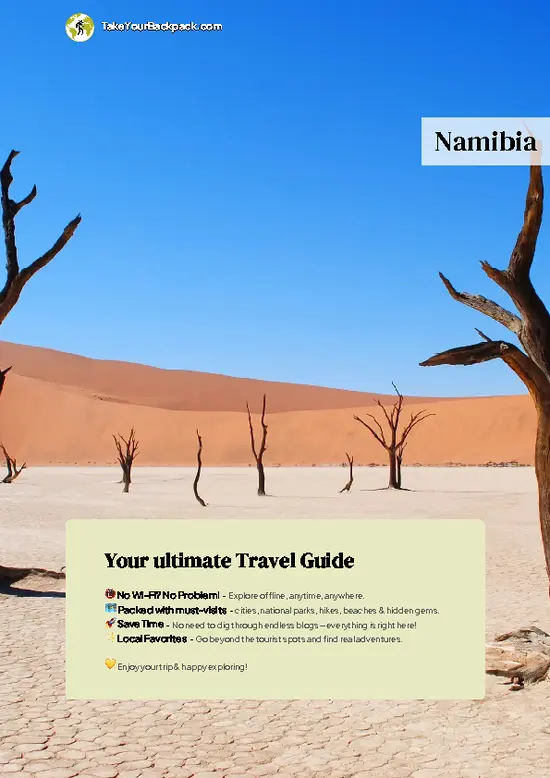
Day 4: Off-Path Reward: Deadvlei
Take a detour to Deadvlei, just a short drive from Sossusvlei. This surreal landscape of ancient trees against white clay is a photographer’s dream. It’s less crowded, so you can enjoy the eerie beauty in peace. This stop adds depth to your desert experience without straying too far from your route.

Day 5: Return to Windhoek
Make your way back to Windhoek, but take your time. Stop at local markets or roadside stalls for crafts and snacks. This is your chance to connect with the culture. The journey back is just as important as the destination.

The must-do day? Day 3 in Sossusvlei. It’s the heart of the Kalahari experience, and you’ll leave with memories that linger long after you’ve returned home.
Turn your Kalahari Desert visit into an Namibia adventure
Build a complete Namibia route with Kalahari Desert, hidden gems, must-see destinations, and realistic travel times included.

Generate my trip

🌤️ When to go?Seasonal considerations and timing


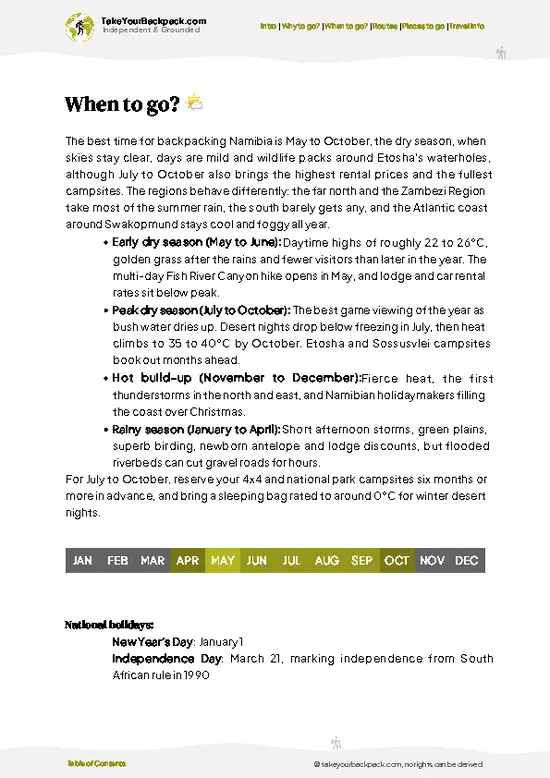
  • Weather: The Kalahari’s dry season, May to October, is your sweet spot. Days hover around 20-25°C (68-77°F), crisp nights dip to 5°C (41°F). No sweat, no mud—just clear skies and that iconic red sand stretching endlessly.

  • Temperature: Avoid the scorching summer months, November to April, when temps soar past 35°C (95°F). It’s brutal for trekking and wildlife tends to hide from the heat, making sightings rare.

  • Daylight Hours: Winter months bring shorter days, roughly 10 hours of light, but the sun rises late and sets early, giving you cooler mornings and evenings perfect for game drives.

  • Crowds: The dry season draws the serious adventurers, but the Kalahari never feels packed. Still, June to August sees a slight uptick—plan ahead if you want the quietest trails.

  • Seasonal Activities: Dry season
read more 👉

  • Weather: The Kalahari’s dry season, May to October, is your sweet spot. Days hover around 20-25°C (68-77°F), crisp nights dip to 5°C (41°F). No sweat, no mud—just clear skies and that iconic red sand stretching endlessly.

  • Temperature: Avoid the scorching summer months, November to April, when temps soar past 35°C (95°F). It’s brutal for trekking and wildlife tends to hide from the heat, making sightings rare.

  • Daylight Hours: Winter months bring shorter days, roughly 10 hours of light, but the sun rises late and sets early, giving you cooler mornings and evenings perfect for game drives.

  • Crowds: The dry season draws the serious adventurers, but the Kalahari never feels packed. Still, June to August sees a slight uptick—plan ahead if you want the quietest trails.

  • Seasonal Activities: Dry season means waterholes concentrate wildlife, turning game viewing into a front-row seat. Plus, clear skies make stargazing legendary—bring your binoculars.

  • Price Fluctuations: Peak dry season nudges prices up, especially July and August. Shoulder months May and September offer better deals without sacrificing the experience.


Pro-tip: Arrive late May or early September to snag cooler temps, fewer crowds, and wallet-friendly rates—like a local who knows when to slip in and out.


source: climatestotravel.comJANJanuary: below average for travelingFEBFebruary: below average for travelingMARMarch: below average for travelingAPRApril: fair for travelingMAYMay: highly recommended for travelingJUNJune: highly recommended for travelingJULJuly: good for travelingAUGAugust: good for travelingSEPSeptember: highly recommended for travelingOCTOctober: highly recommended for travelingNOVNovember: below average for travelingDECDecember: below average for traveling
when-to-go

✈️ The backpacker research shortcutNamibia Travel Guide

An offline-friendly backpacking guide with optimized travel routes, ranked highlights, transport advice, and the best areas to stay.
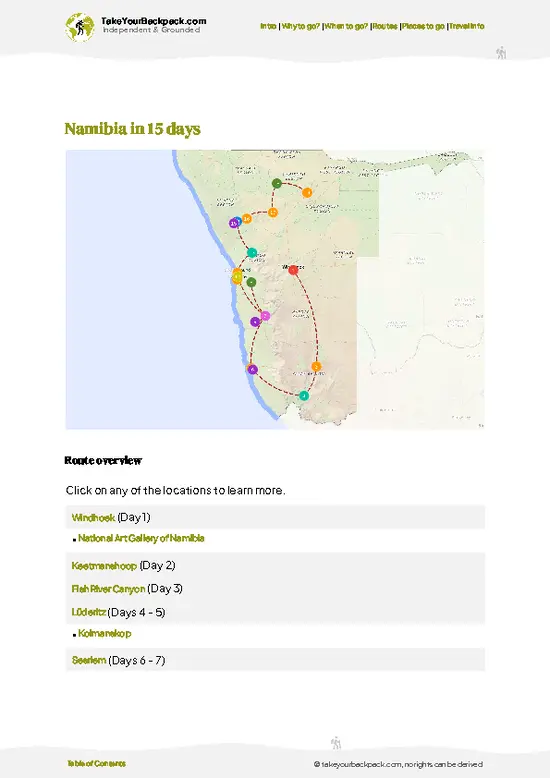
example page 0 from our offline Travel Guide for Namibia
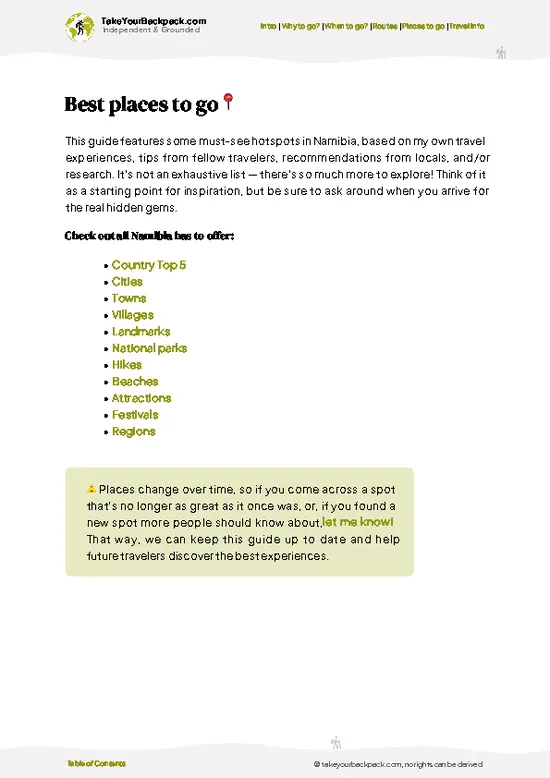
example page 1 from our offline Travel Guide for Namibia
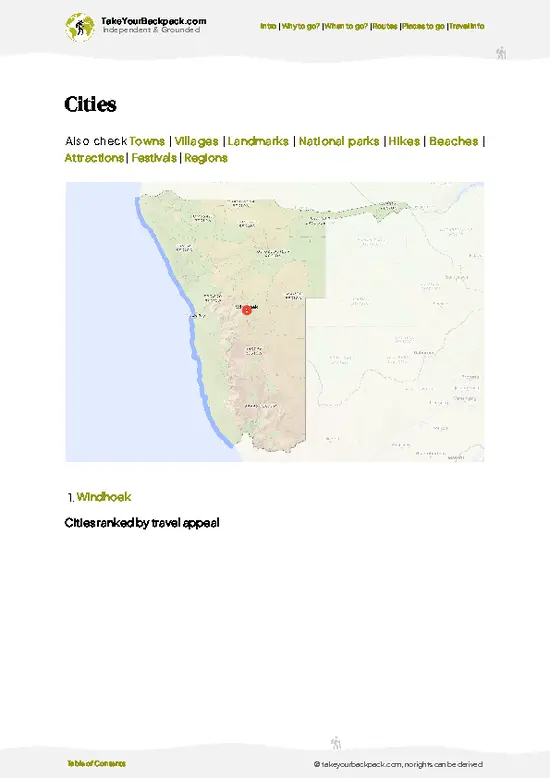
example page 2 from our offline Travel Guide for Namibia
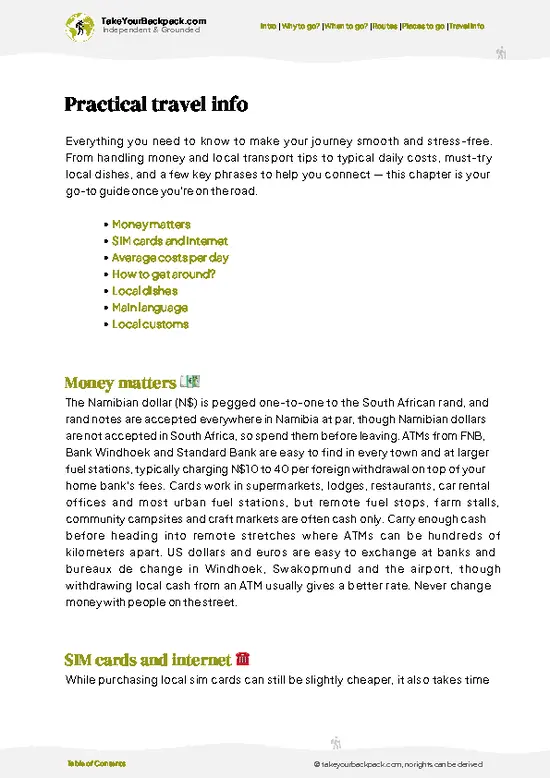
example page 3 from our offline Travel Guide for Namibia
example page 4 from our offline Travel Guide for Namibia
example page 5 from our offline Travel Guide for Namibia
example page 6 from our offline Travel Guide for Namibia
example page 7 from our offline Travel Guide for Namibia
The digital guide (319 pages) contains:
79 highlights, ranked by travel appeal
Optimized 5, 10 & 15-day travel routes
Cities, national parks, landmarks, beaches
How to get around
Offline-friendly for travel without Wi-Fi
👉 Click to see all 30+ guide features

📅 Plan smarter in minutes, not weeks
Month by month travel advice
Festivals & national holidays
Budget expectations

🗺️ Go to the right places, skip the overrated ones
Honest pros & cons of destinations
Top hikes, parks & viewpoints
Lesser-known places most travelers miss
Clear “worth it vs skip it” guidance

🛏️ Travel smoothly without rookie mistakes
Best areas to stay
Transport systems explained simply
Common scams & safety advice
SIM cards, money & practical tips

🌍 Understand the country, not just visit it
Culture & traditions
52 Essential phrases & customs
Festivals worth planning around
Traveler-friendly historical context
Insights that make places more meaningful

📱 Built for real travel conditions
Fully downloadable PDF
Works completely offline
Optimized for phone use
Useful in remote areas & buses
Everything in one place
Save weeks of stressful planning
Get instant access to your full guide. 30‑day money-back guarantee.


By proceeding you agree to our terms.
Sent to your inbox immediately after payment • 100% Secure Checkout
Best Backpacking Travel Advisor 2025 tourism awardBest Backpacking
Travel Advisor
2025
What others say about Take Your Backpack Guides:
⭐⭐⭐⭐⭐
Fantastic, amazing amount of information!
⭐⭐⭐⭐⭐
My goodness this is amazing, it's what I've been looking for hats off too you!
⭐⭐⭐⭐⭐
I think this is absolutely BRILLIANT
⭐⭐⭐⭐
Very complete and informative. It's still missing places, but I gotta to commend you
⭐⭐⭐⭐⭐
This is truly amazing, thank you, can't wait to explore it with my kids!
⭐⭐⭐⭐⭐
Awesome resource, thank you!
⭐⭐⭐⭐⭐
This is amazing! Can't wait to explore the ones I haven't seen
⭐⭐⭐⭐
I love this! Well done, great idea.
⭐⭐⭐⭐⭐
Thanks for taking the time to make this gem!
⭐⭐⭐⭐⭐
This might be the best website I've ever seen.
⭐⭐⭐⭐⭐
Congratulations, and thank you so much for your work; it's incredibly valuable.
⭐⭐⭐⭐
In all seriousness I think you did a great job pointing out the important spots
⭐⭐⭐⭐⭐
10/10 very good
⭐⭐⭐⭐⭐
As someone who's only just starting to visit regularly this is awesome, thank you.
⭐⭐⭐⭐
Thank you very much! I'm going to visit my dad, it's going to be very useful!
⭐⭐⭐⭐⭐
This is really cool! We'll be travelling for the first time and this definitely come in handy.
⭐⭐⭐⭐⭐
You are now our minister of culture, congratulations 👨‍💼
⭐⭐⭐⭐⭐
Just wanted to tell you that this is a pearl! Going to follow your recommendations.
⭐⭐⭐⭐⭐
This is so cool. I'll definitely be using the resource for my travels soon.
⭐⭐⭐⭐⭐
This is very impressive! Good work.
⭐⭐⭐⭐⭐
This is an amazing and informative site. Very well done!

🛏️ Where to stay?Choosing the right base

When you’re roaming the Kalahari Desert, the right base can make all the difference. Let’s dive into the spots that’ll keep your wallet happy and your spirit high.

Start in Windhoek, the capital. It’s a hub for backpackers, with a lively atmosphere and plenty of social spots. You’ll find a mix of locals and travelers, making it easy to connect. Plus, it’s a great launchpad for your desert adventures.

Next up, consider Gobabis. It’s a quieter town, but that’s where the charm lies. You’ll meet fellow backpackers at local markets and cafes. The vibe is relaxed, and it’s a perfect place to recharge … read more 👉
When you’re roaming the Kalahari Desert, the right base can make all the difference. Let’s dive into the spots that’ll keep your wallet happy and your spirit high.

Start in Windhoek, the capital. It’s a hub for backpackers, with a lively atmosphere and plenty of social spots. You’ll find a mix of locals and travelers, making it easy to connect. Plus, it’s a great launchpad for your desert adventures.

Next up, consider Gobabis. It’s a quieter town, but that’s where the charm lies. You’ll meet fellow backpackers at local markets and cafes. The vibe is relaxed, and it’s a perfect place to recharge before heading deeper into the desert.

Then there’s Mariental. This town is often overlooked, but it’s a strategic stop. It’s safe, and you can easily find transport to the Kalahari. The community is welcoming, and you’ll get a taste of authentic Namibian life.

Each of these spots offers a unique flavor of the Kalahari experience. Choose wisely, and you’ll find the right balance of time, money, and comfort.

🚌 Getting aroundGetting around like a local

The Kalahari Desert is a land of contrasts, where the sun scorches the earth by day and the stars blanket the sky by night. Here, schedules are more like suggestions, and the rhythm of travel flows with the pulse of the land. You’ll find that getting around isn’t about rigid itineraries; it’s about embracing the unexpected. Whether you’re bouncing along a dusty track or sipping a cold drink while waiting for your ride, the journey becomes part of the adventure. So, let’s dive into the transport options that will keep you moving through this vast, enchanting expanse without breaking the bank.


  • Shared Shuttle Services: These are your best bet for budget travel. They typically run from early morning until late afternoon, with prices around $30-$50 per trip. Expect a mix of comfort levels, but
read more 👉
The Kalahari Desert is a land of contrasts, where the sun scorches the earth by day and the stars blanket the sky by night. Here, schedules are more like suggestions, and the rhythm of travel flows with the pulse of the land. You’ll find that getting around isn’t about rigid itineraries; it’s about embracing the unexpected. Whether you’re bouncing along a dusty track or sipping a cold drink while waiting for your ride, the journey becomes part of the adventure. So, let’s dive into the transport options that will keep you moving through this vast, enchanting expanse without breaking the bank.


  • Shared Shuttle Services: These are your best bet for budget travel. They typically run from early morning until late afternoon, with prices around $30-$50 per trip. Expect a mix of comfort levels, but they’re generally reliable and a great way to meet fellow travelers.


  • 4x4 Rental: If you’re feeling adventurous, renting a 4x4 gives you the freedom to explore at your own pace. Prices start at about $100 per day, but factor in fuel costs. This option offers the most comfort and flexibility, especially for reaching remote campsites.


  • Local Buses: These are the backbone of budget travel in the Kalahari. They run on a loose schedule, often leaving when full, and cost around $10-$20 for longer distances. While not the fastest option, they provide a genuine local experience and a chance to see the landscape unfold.


  • Guided Tours: If you want to dive deep into the culture and wildlife, consider a guided tour. Prices vary widely, but expect to pay $150-$300 for a full day. This option includes transport, meals, and insights from knowledgeable guides, making it a comfortable way to absorb the region.


  • Hitchhiking: This is a viable option for the adventurous spirit. It’s free, but you’ll need patience and a good sense of humor. Locals are often friendly and willing to give you a lift, but be prepared for long waits and unpredictable routes.


For efficient travel across the Kalahari, consider timing your shared shuttles or local buses to coincide with the cooler parts of the day. Early mornings or late afternoons not only make for a more pleasant ride but also maximize your exploration time in this stunning desert landscape.

🍲 FoodLocal Cuisine & Drinks

In the Kalahari Desert, food is a celebration of local culture and resourcefulness. You can’t miss trying biltong, a dried meat snack that’s a staple here. It’s chewy, flavorful, and perfect for those long hikes. Pair it with sorghum porridge, a hearty dish that fills you up and connects you to the land.

For a true local experience, hit up the open-air markets. The vibrant stalls are filled with fresh produce, spices, and the unmistakable scent of grilled meats. Grab a boerewors roll, a spicy sausage served in a bun, and wash it down with a cold Windhoek Lager. The atmosphere is electric, with locals chatting and sharing stories, making it easy to feel like part of the community.

Dining customs here are relaxed. Don’t be surprised if you’re invited to share a meal; it’s a sign of friendship. … read more 👉
In the Kalahari Desert, food is a celebration of local culture and resourcefulness. You can’t miss trying biltong, a dried meat snack that’s a staple here. It’s chewy, flavorful, and perfect for those long hikes. Pair it with sorghum porridge, a hearty dish that fills you up and connects you to the land.

For a true local experience, hit up the open-air markets. The vibrant stalls are filled with fresh produce, spices, and the unmistakable scent of grilled meats. Grab a boerewors roll, a spicy sausage served in a bun, and wash it down with a cold Windhoek Lager. The atmosphere is electric, with locals chatting and sharing stories, making it easy to feel like part of the community.

Dining customs here are relaxed. Don’t be surprised if you’re invited to share a meal; it’s a sign of friendship. Just remember to greet everyone with a smile and a friendly nod. Eating with your hands is common, especially with traditional dishes, so dive in and enjoy the tactile experience. Embrace the flavors and the warmth of the Kalahari; it’s all part of the adventure.

Other Namibian regions near Kalahari Desert

Explore more nearby:

  • Namib Desert—Gravel plains, fog-belt coast, isolated canyons, desert flora| 522 km away
  • Namib Sand Sea—Towering dunes, shifting sands, Sossusvlei pans, fossilized trees| 522 km away
  • Damaraland—Granite outcrops, desert-adapted elephants, ancient rock art, open savannah| 632 km away

💡 Not sure where to go next?
Create a personalized itinerary for Namibia including Kalahari Desert and the places that fit your trip.

Generate my itinerary

👉 Discover all regions

Or checkout all Namibia has to offer (think cities, towns, villages, national parks, hikes, beaches, festivals)
Country photo of Namibia

We 💚 feedbackIs it worth it?

You’ll feel the Kalahari’s pulse in the quiet moments—like when the sun dips below the horizon, painting the sky in fiery oranges. Don’t skip the night drives; that’s when the desert comes alive with sounds you didn’t know existed. Just a heads-up: the heat can be relentless, so plan your hikes for early morning or late afternoon. Embrace the stillness, and you’ll find a connection that’s hard to shake off. Trust me, it’s worth every ounce of sweat.

✍️ Help improve this page!
The information on this page is based on in-depth research, insights shared by experienced travelers, and feedback from the local travel community in Namibia. While every effort is made to keep the information accurate and current, conditions can change — so if you spot anything incorrect or outdated, please get in touch.


🙋‍♂️ Give feedback

👋 Meet the founderWho’s Behind Take Your Backpack?

Johan, backpacker and founder of TakeYourBackpackHi, I’m Johan (Netherlands 🇳🇱), the creator of TakeYourBackpack. Over the past decade, I’ve backpacked through 80+ countries across six continents, gaining extensive experience with independent travel, long-term trips, and overland routes.

This site is built on a combination of firsthand travel experience and carefully curated insights from other backpackers. Many guides are based on places I’ve personally visited, while others bring together tips, observations, and practical advice shared by trusted travelers I’ve met along the way.

The goal is to provide realistic, experience-driven guidance — not generic itineraries — so you can explore destinations with better context, clearer expectations, and more confidence.

Get full Namibia guide •
Instant download • 79 highlights • Full Offline guide