×

Namibia🇳🇦 | regionsNamib Sand SeaTowering dunes, shifting sands, Sossusvlei pans, fossilized trees | things to do and best time to go

Explore Namib DesertExplore Kunene Region

Backpacking in Namib Sand Sea
UNESCO World Heritage site
👌 Worth visitingregion ranked #5
By Johan Kruseman 🇳🇱 | Updated June 6, 2026

Here’s what nobody tells you: the Namib Sand Sea isn’t just endless dunes—there are pockets where fog rolls in so thick you’ll wake up damp, not parched, and beetles literally do headstands to drink the moisture off their backs. You’ll find the Namib Sand Sea stretching along Namibia’s southwest, inside Namib-Naukluft National Park, wedged between the Atlantic and the scorched interior. For backpackers, this place is a paradox: the landscapes are Martian, the colors shift by the hour, and Sossusvlei’s red dunes are as photogenic as promised, but getting here is a logistical puzzle. Public transport is rare, so you’re either hitchhiking, splurging on a tour, or making friends with someone who has a 4x4. Swakopmund and Sesriem are your main launchpads—Swakopmund has a quirky German vibe and cold surf, while Sesriem is pure desert outpost. Compared to Etosha’s wildlife or the Caprivi’s river life, the Namib Sand Sea is about silence, scale, and feeling small. It’s not overrun, but it’s not cheap either—worth it if you want to feel like you’ve landed on another planet.

Discover everything you want to know in the 📖 Namibia Travel Guide.


Get your Namibia guide
79 ranked highlights, routes & tips, works offline (319 pages)
Loading the map 🌍
CLICK TO FILTER
cities
towns
villages
landmarks
national parks
hikes
beaches
attractions
festivals
regions
SHOW COUNTRY’S BESTSHOW ALL

✨ Why go?
Ranked #5 region in Namibia
What makes it a must-see region

The Namib Sand Sea is a backpacker’s playground, and here’s why savvy travelers flock to this stunning region. First off, the variety of landscapes is mind-blowing. You’ve got everything from towering dunes to rugged mountains, all within a short drive. This means you can soak in diverse experiences without the hassle of constant relocation.

Transport flexibility is another big win. Renting a 4x4 gives you the freedom to explore at your own pace. You can hit iconic spots like Sossusvlei at sunrise, when the light paints the dunes in fiery hues.

But it’s not just about nature; you can mix in local culture too. Spend time in nearby towns to connect with the Himba people or sample traditional dishes. This blend of nature and culture through slow travel lets you savor every moment, making your … read more 👉
The Namib Sand Sea is a backpacker’s playground, and here’s why savvy travelers flock to this stunning region. First off, the variety of landscapes is mind-blowing. You’ve got everything from towering dunes to rugged mountains, all within a short drive. This means you can soak in diverse experiences without the hassle of constant relocation.

Transport flexibility is another big win. Renting a 4x4 gives you the freedom to explore at your own pace. You can hit iconic spots like Sossusvlei at sunrise, when the light paints the dunes in fiery hues.

But it’s not just about nature; you can mix in local culture too. Spend time in nearby towns to connect with the Himba people or sample traditional dishes. This blend of nature and culture through slow travel lets you savor every moment, making your trip feel rich and layered.

So, if you’re after high-value experiences, the Namib Sand Sea is where it’s at.
Want to include Namib Sand Sea in your Namibia route?
Create a personalized Namibia itinerary that includes Namib Sand Sea and the places that fit your trip — based on your travel style, budget, and available time. Get your route in seconds.

Generate my trip

💡 HighlightsDon't-miss highlights and experiences

  1. Sossusvlei (the salt-and-clay pan) — The broad, white pan at the end of the Tsauchab River that contrasts with the red dunes; nothing else looks like the flat, bleached floor surrounded by towering sand walls. Best at sunrise when the light carves the dunes and you get that unreal “end-of-the-desert” feeling.
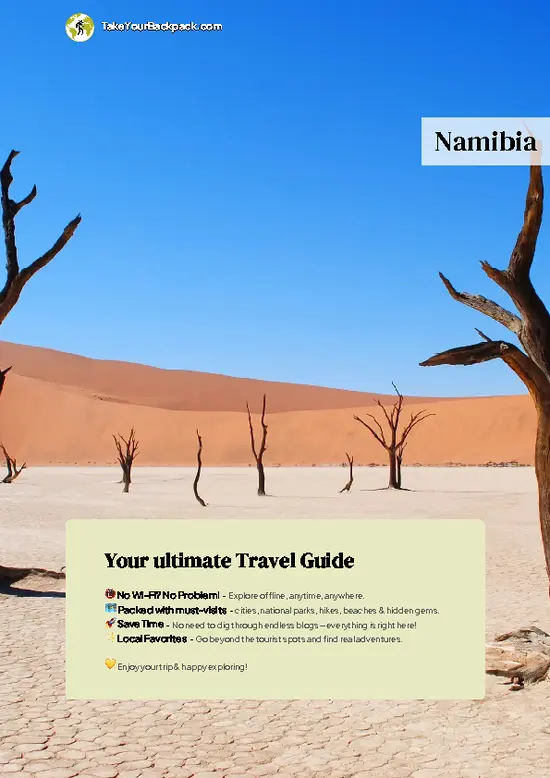
  2. Deadvlei (the bleached acacia graveyard) — Black, dead camel-thorn skeletons standing on a blinding white pan beneath orange dunes — it’s photogenic for a reason and an odd, almost lunar landscape you won’t find elsewhere. Visit early for soft light and to appreciate how long those trees have been frozen in time.
  3. Dune 45 — A convenient, hugely popular climb right beside the access road; it’s an easy stop for the classic dune silhouette shot and a quick way to feel the scale of the
read more 👉
  1. Sossusvlei (the salt-and-clay pan) — The broad, white pan at the end of the Tsauchab River that contrasts with the red dunes; nothing else looks like the flat, bleached floor surrounded by towering sand walls. Best at sunrise when the light carves the dunes and you get that unreal “end-of-the-desert” feeling.
  2. Deadvlei (the bleached acacia graveyard) — Black, dead camel-thorn skeletons standing on a blinding white pan beneath orange dunes — it’s photogenic for a reason and an odd, almost lunar landscape you won’t find elsewhere. Visit early for soft light and to appreciate how long those trees have been frozen in time.
  3. Dune 45 — A convenient, hugely popular climb right beside the access road; it’s an easy stop for the classic dune silhouette shot and a quick way to feel the scale of the Sand Sea. It’s busy for a reason: the sand, slope and view are textbook Namib.
  4. Big Daddy (the giant dune above Deadvlei) — One of the tallest dunes in the area (and one of the best viewpoints) — the climb is steep and sandy but the panorama over Deadvlei and the surrounding sand sea is unforgettable. If you want one “top of the world” moment in the Namib, this is it.
  5. Sesriem Canyon — A short, shady slot canyon carved by the Tsauchab River; great for a cool, walkable contrast to the dunes and for glimpses of rock strata, seasonal pools and resident birds. It’s an accessible little geological puzzle that reminds you water shaped this desert.
  6. Elim Dune (viewpoint and photo dune) — A comparatively low, nearby dune that gives a quieter, less crowded angle over the Sossusvlei plains; locals use it for short walks and sunrise photos without the Dune 45 crush. It’s a good, underrated spot for a quick climb and panoramic shots.
  7. Hiddenvlei (a tucked-away clay pan) — Hiddenvlei is a smaller, more secluded pan like Deadvlei but reached by walking off the main route; fewer visitors, similar eerie trees and a much calmer atmosphere. True hidden-gem vibes — bring water and time to linger.
  8. Singing dunes (acoustic sand phenomena) — Several dunes in the Sand Sea will “sing” or boom when sand avalanches down the slipface; it’s a physical, low-tech spectacle you won’t replicate in other deserts. Try it at dusk or after a windy day — slide or stamp on dry sand and listen.
  9. Tsauchab floodplain & seasonal Sossusvlei (wet-season transformation) — When rare rains reach the pan the place turns into a shallow lake with migrating birds, green grasses and a very different mood — the contrast between wet-season life and usual desert silence is uniquely Namib Sand Sea. Timing is everything, but if you hit it you’ll see the desert’s most dramatic flip.
  10. The last 4x4 stretch to Deadvlei (dune corridor drive) — The short, sandy drive from the main parking area into the pans is an experience in itself: cut tracks between dunes, sudden openings onto vast pans and the tactile feel of dune travel. It’s not just transportation — it’s the transition from road to sand that makes visiting Deadvlei special.
Spotted a mistake or missing something? Contact us.

Things to do near Namib Sand Sea

Ratings based on Tripadvisor reviews. When you book through this link, you support our work at no extra cost to you.

⌛️ 5 daysWhat you can realistically do in a week

Day 1: Sossusvlei
The journey kicks off in Sossusvlei, where the iconic red dunes rise like ancient sentinels. You’ll want to arrive early to catch the sunrise; it’s a game-changer. The drive from Windhoek takes about five hours, but the scenery is a feast for the eyes. The transport system here is straightforward—rent a 4x4 for the best access to the park. This is your base for the next couple of days, and it sets the pace for your adventure.

Day 2: Deadvlei
After a night under the stars, head to Deadvlei. It’s a short drive from Sossusvlei, but the surreal landscape of dead camel thorn trees against the backdrop of towering dunes is worth every second. The early morning light creates a magical atmosphere. Spend the day exploring and snapping photos. The transport is simple; the park … read more 👉
Day 1: Sossusvlei
The journey kicks off in Sossusvlei, where the iconic red dunes rise like ancient sentinels. You’ll want to arrive early to catch the sunrise; it’s a game-changer. The drive from Windhoek takes about five hours, but the scenery is a feast for the eyes. The transport system here is straightforward—rent a 4x4 for the best access to the park. This is your base for the next couple of days, and it sets the pace for your adventure.

Day 2: Deadvlei
After a night under the stars, head to Deadvlei. It’s a short drive from Sossusvlei, but the surreal landscape of dead camel thorn trees against the backdrop of towering dunes is worth every second. The early morning light creates a magical atmosphere. Spend the day exploring and snapping photos. The transport is simple; the park roads are well-maintained, so you can focus on soaking in the beauty.

Day 3: Swakopmund
Time to shift gears. Drive to Swakopmund, about four hours away. This coastal town offers a refreshing contrast to the desert. The transport system is reliable, with plenty of options for guided tours or self-drive. Here, you can indulge in adventure sports or just relax by the ocean. This is where you can recharge before diving back into the wild.

Day 4: Skeleton Coast
Take a detour to the Skeleton Coast. It’s a bit off the main route, but the haunting shipwrecks and desolate beauty are worth it. This detour adds a layer of adventure and history to your trip. The roads can be rough, so be prepared for a bumpy ride, but the isolation is a reward in itself.

Day 5: Namib-Naukluft National Park
Wrap up your journey in Namib-Naukluft. It’s a vast playground for hiking and wildlife spotting. The transport here is flexible; you can join guided tours or explore on your own. This day is the cherry on top, offering a chance to reflect on your adventure.

The must-do day? Day 2 in Deadvlei. The combination of surreal landscapes and the early morning light creates an experience that’s hard to beat. It’s the heart of the Namib Sand Sea, and you’ll carry that memory with you long after you leave.
Turn your Namib Sand Sea visit into an Namibia adventure
Build a complete Namibia route with Namib Sand Sea, hidden gems, must-see destinations, and realistic travel times included.

Generate my trip

🌤️ When to go?Best time to visit Namib Sand Sea


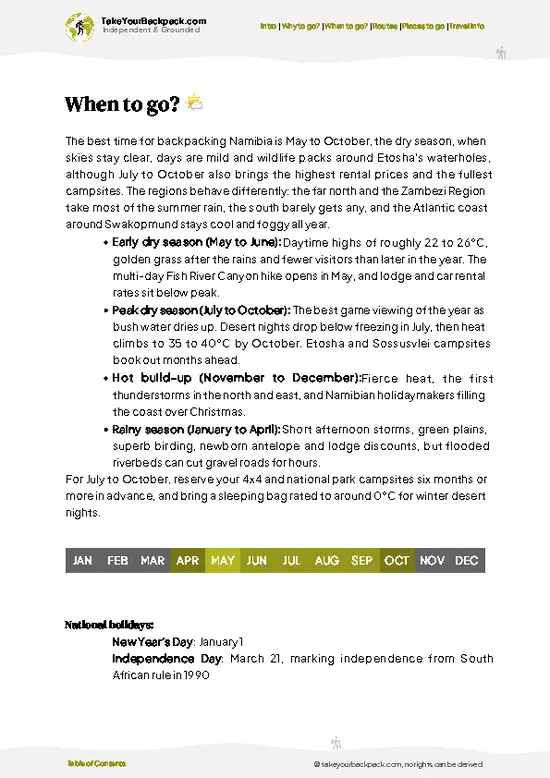
  • Topic: Weather – The Namib Sand Sea is a desert, so expect scorching days and chilly nights. From May to September, temperatures hover between 15-25°C (59-77°F), making it the sweet spot for backpackers who want to avoid heat exhaustion.

  • Topic: Temperature Swings – Nights can dip below 5°C (41°F) in winter months, so pack layers. Daytime warmth contrasts sharply with cold nights, a classic desert drama you’ll want to be ready for.

  • Topic: Daylight Hours – Around June and July, daylight stretches to about 11 hours, giving you plenty of time to explore before the desert cools off. Early mornings and late afternoons are prime for photography and wildlife spotting.

  • Topic: Crowds – Peak season aligns with dry, cooler months (June-August). Expect more tourists, especially around iconic dunes.
read more 👉

  • Topic: Weather – The Namib Sand Sea is a desert, so expect scorching days and chilly nights. From May to September, temperatures hover between 15-25°C (59-77°F), making it the sweet spot for backpackers who want to avoid heat exhaustion.

  • Topic: Temperature Swings – Nights can dip below 5°C (41°F) in winter months, so pack layers. Daytime warmth contrasts sharply with cold nights, a classic desert drama you’ll want to be ready for.

  • Topic: Daylight Hours – Around June and July, daylight stretches to about 11 hours, giving you plenty of time to explore before the desert cools off. Early mornings and late afternoons are prime for photography and wildlife spotting.

  • Topic: Crowds – Peak season aligns with dry, cooler months (June-August). Expect more tourists, especially around iconic dunes. If you want solitude, shoulder months like April or September offer quieter trails without sacrificing comfort.

  • Topic: Seasonal Activities – Winter months bring clearer skies for stargazing and better chances to spot desert-adapted wildlife. Summer rains (November-March) turn the desert briefly green but can make some tracks impassable.

  • Topic: Price Fluctuations – High season means higher prices on campsites and tours. Booking in shoulder seasons can save you a bundle while still delivering excellent conditions.


Pro-tip: Arrive late April or early September to dodge crowds, enjoy mild weather, and snag better deals—your desert adventure’s sweet spot.


source: climatestotravel.comJANJanuary: fair for travelingFEBFebruary: fair for travelingMARMarch: good for travelingAPRApril: highly recommended for travelingMAYMay: highly recommended for travelingJUNJune: excellent for travelingJULJuly: excellent for travelingAUGAugust: excellent for travelingSEPSeptember: highly recommended for travelingOCTOctober: good for travelingNOVNovember: fair for travelingDECDecember: fair for traveling
namibia-region-namib-sand-sea
© Google |

✈️ The backpacker research shortcutNamibia Travel Guide

An offline-friendly backpacking guide with optimized travel routes, ranked highlights, transport advice, and the best areas to stay.
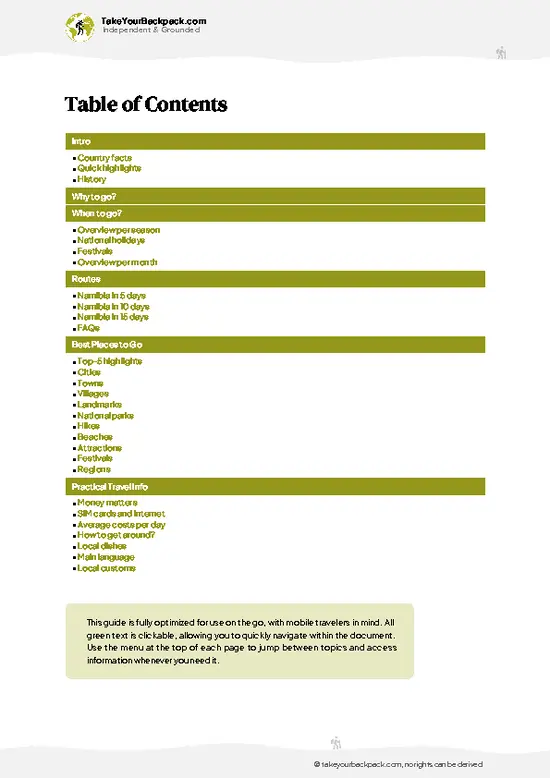
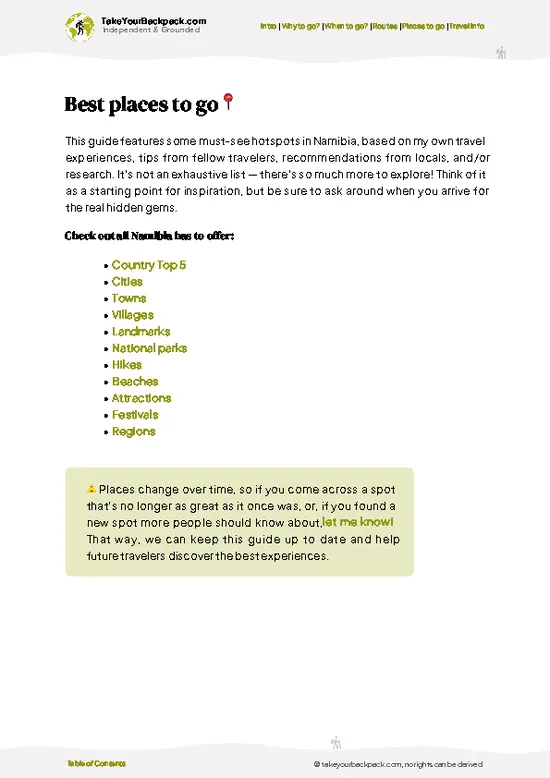
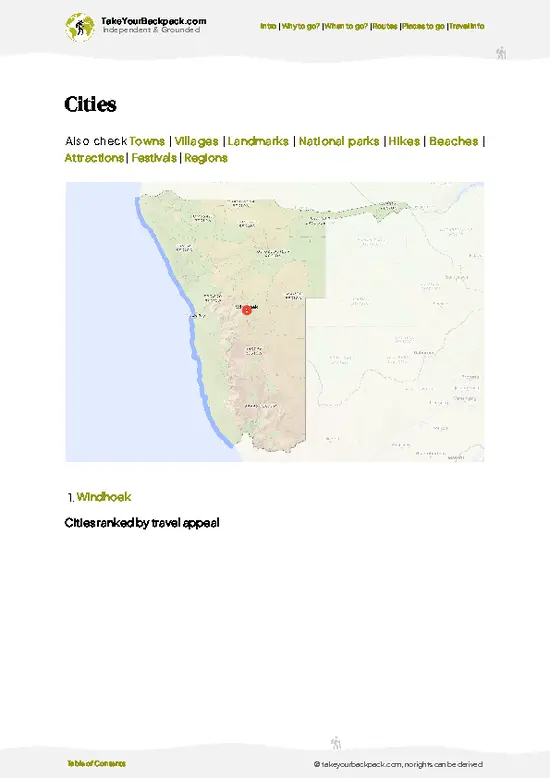
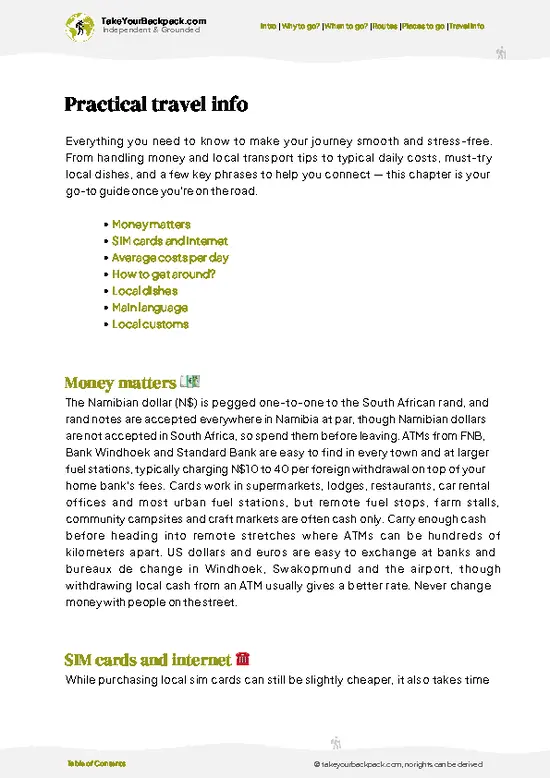
example page 0 from our offline Travel Guide for Namibia
example page 1 from our offline Travel Guide for Namibia
example page 2 from our offline Travel Guide for Namibia
example page 3 from our offline Travel Guide for Namibia
example page 4 from our offline Travel Guide for Namibia
example page 5 from our offline Travel Guide for Namibia
example page 6 from our offline Travel Guide for Namibia
example page 7 from our offline Travel Guide for Namibia
The digital guide (319 pages) contains:
79 highlights, ranked by travel appeal
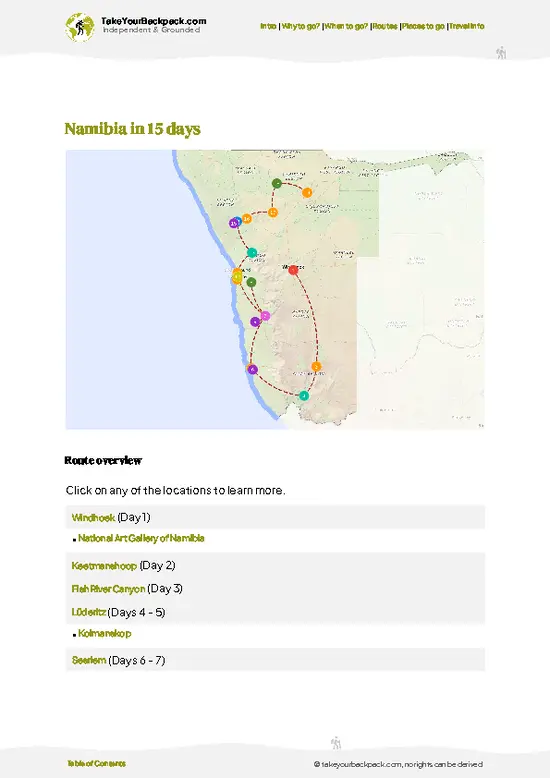
Optimized 5, 10 & 15-day travel routes
Cities, national parks, landmarks, beaches
How to get around
Offline-friendly for travel without Wi-Fi
👉 Click to see all 30+ guide features

📅 Plan smarter in minutes, not weeks
Month by month travel advice
Festivals & national holidays
Budget expectations

🗺️ Go to the right places, skip the overrated ones
Honest pros & cons of destinations
Top hikes, parks & viewpoints
Lesser-known places most travelers miss
Clear “worth it vs skip it” guidance

🛏️ Travel smoothly without rookie mistakes
Best areas to stay
Transport systems explained simply
Common scams & safety advice
SIM cards, money & practical tips

🌍 Understand the country, not just visit it
Culture & traditions
52 Essential phrases & customs
Festivals worth planning around
Traveler-friendly historical context
Insights that make places more meaningful

📱 Built for real travel conditions
Fully downloadable PDF
Works completely offline
Optimized for phone use
Useful in remote areas & buses
Everything in one place
Save weeks of stressful planning
Get instant access to your full guide. 30‑day money-back guarantee.


By proceeding you agree to our terms.
Sent to your inbox immediately after payment • 100% Secure Checkout
Best Backpacking Travel Advisor 2025 tourism awardBest Backpacking
Travel Advisor
2025
What others say about Take Your Backpack Guides:
⭐⭐⭐⭐⭐
Fantastic, amazing amount of information!
⭐⭐⭐⭐⭐
My goodness this is amazing, it's what I've been looking for hats off too you!
⭐⭐⭐⭐⭐
I think this is absolutely BRILLIANT
⭐⭐⭐⭐
Very complete and informative. It's still missing places, but I gotta to commend you
⭐⭐⭐⭐⭐
This is truly amazing, thank you, can't wait to explore it with my kids!
⭐⭐⭐⭐⭐
Awesome resource, thank you!
⭐⭐⭐⭐⭐
This is amazing! Can't wait to explore the ones I haven't seen
⭐⭐⭐⭐
I love this! Well done, great idea.
⭐⭐⭐⭐⭐
Thanks for taking the time to make this gem!
⭐⭐⭐⭐⭐
This might be the best website I've ever seen.
⭐⭐⭐⭐⭐
Congratulations, and thank you so much for your work; it's incredibly valuable.
⭐⭐⭐⭐
In all seriousness I think you did a great job pointing out the important spots
⭐⭐⭐⭐⭐
10/10 very good
⭐⭐⭐⭐⭐
As someone who's only just starting to visit regularly this is awesome, thank you.
⭐⭐⭐⭐
Thank you very much! I'm going to visit my dad, it's going to be very useful!
⭐⭐⭐⭐⭐
This is really cool! We'll be travelling for the first time and this definitely come in handy.
⭐⭐⭐⭐⭐
You are now our minister of culture, congratulations 👨‍💼
⭐⭐⭐⭐⭐
Just wanted to tell you that this is a pearl! Going to follow your recommendations.
⭐⭐⭐⭐⭐
This is so cool. I'll definitely be using the resource for my travels soon.
⭐⭐⭐⭐⭐
This is very impressive! Good work.
⭐⭐⭐⭐⭐
This is an amazing and informative site. Very well done!

🛏️ Where to stay?Where staying makes the most sense

When you’re diving into the Namib Sand Sea, you want to land in spots that buzz with energy and camaraderie. Start in Swakopmund. This coastal town is a backpacker’s paradise, blending adventure with a laid-back vibe. Think sandboarding, quad biking, and a vibrant café scene where you can swap stories with fellow travelers. The ocean breeze adds a refreshing touch after a day of exploring.

Next, consider Sesriem. It’s the gateway to Sossusvlei, and while it’s smaller, it’s a hub for those eager to catch the sunrise over the iconic dunes. The atmosphere is friendly, and you’ll find plenty of fellow … read more 👉
When you’re diving into the Namib Sand Sea, you want to land in spots that buzz with energy and camaraderie. Start in Swakopmund. This coastal town is a backpacker’s paradise, blending adventure with a laid-back vibe. Think sandboarding, quad biking, and a vibrant café scene where you can swap stories with fellow travelers. The ocean breeze adds a refreshing touch after a day of exploring.

Next, consider Sesriem. It’s the gateway to Sossusvlei, and while it’s smaller, it’s a hub for those eager to catch the sunrise over the iconic dunes. The atmosphere is friendly, and you’ll find plenty of fellow adventurers ready to share tips on the best trails and sights.

Don’t overlook Windhoek. While it’s a bit of a detour, it’s the capital and offers a unique blend of cultures. The social scene is lively, with markets and bars where you can mingle with locals and other backpackers.

Each of these spots offers safety and a sense of community, making them perfect for solo travelers or those on a budget. Choose wisely, and you’ll create memories that last long after the sand has settled.

🚌 Getting aroundMoving around without the hassle

The Namib Sand Sea is a realm where time feels elastic, stretching and contracting like the dunes that shift with the wind. Here, rigid schedules are more of a suggestion than a rule. You’ll find yourself swept up in the rhythm of the desert, where the sun dictates your day and spontaneity reigns supreme. It’s a place that invites you to embrace the unexpected, whether that means catching a ride with a local or waiting for the next shuttle to roll by. The beauty lies in the journey itself, not just the destination. So, let’s break down your transport options, shall we?


  • Rental Car: Ideal for those who crave freedom. Prices start around $50 per day, depending on the vehicle. You’ll have the flexibility to explore at your own pace, but be prepared for some rugged roads. Just remember, fuel
read more 👉
The Namib Sand Sea is a realm where time feels elastic, stretching and contracting like the dunes that shift with the wind. Here, rigid schedules are more of a suggestion than a rule. You’ll find yourself swept up in the rhythm of the desert, where the sun dictates your day and spontaneity reigns supreme. It’s a place that invites you to embrace the unexpected, whether that means catching a ride with a local or waiting for the next shuttle to roll by. The beauty lies in the journey itself, not just the destination. So, let’s break down your transport options, shall we?


  • Rental Car: Ideal for those who crave freedom. Prices start around $50 per day, depending on the vehicle. You’ll have the flexibility to explore at your own pace, but be prepared for some rugged roads. Just remember, fuel stations are sparse, so fill up whenever you can.


  • Shuttle Services: A budget-friendly option, with fares typically between $30-$50 for longer routes. Shuttles run several times a day, but check local schedules as they can vary. Comfort is decent, but expect a few stops along the way to pick up other travelers.


  • Public Buses: The ultimate budget choice, costing around $10-$20 for longer trips. Buses are less frequent, often running only a couple of times a week, so plan ahead. While not the fastest option, you’ll get a taste of local life and maybe even make a few friends along the way.


  • Guided Tours: If you want to soak in the sights without the hassle, consider a guided tour. Prices vary widely, but expect to pay around $100-$200 for a day trip. You’ll travel in comfort and gain insights from knowledgeable guides, making it worth the splurge.


Master Tactical Tip: Always keep an eye on the sunset. The golden hour in the Namib is magical, and if you time your travels to catch it, you’ll not only enjoy breathtaking views but also avoid the heat of midday. Plus, it’s a great way to meet fellow travelers who are equally enchanted by the desert’s allure.

🍲 FoodEating & Drinking in Namib Sand Sea

In the Namib Sand Sea, food is a celebration of local flavors and culture. Dive into braai, a traditional barbecue where locals grill marinated meats over open flames. The aroma of sizzling boerewors (sausage) wafts through the air, mingling with the earthy scent of the desert. Don’t miss out on biltong, a dried meat snack that’s a staple for any backpacker; it’s chewy, savory, and perfect for the trail.

For a true taste of the region, head to local markets. Vendors serve up kapana, street-side grilled meat skewers, often paired with spicy chili sauce. The vibrant chatter and laughter create an electric atmosphere. Cafés in towns like Swakopmund offer a mix of German and Namibian cuisine; try a slice of kuchen (cake) with your coffee for a sweet pick-me-up.

Dining here is casual. Expect … read more 👉
In the Namib Sand Sea, food is a celebration of local flavors and culture. Dive into braai, a traditional barbecue where locals grill marinated meats over open flames. The aroma of sizzling boerewors (sausage) wafts through the air, mingling with the earthy scent of the desert. Don’t miss out on biltong, a dried meat snack that’s a staple for any backpacker; it’s chewy, savory, and perfect for the trail.

For a true taste of the region, head to local markets. Vendors serve up kapana, street-side grilled meat skewers, often paired with spicy chili sauce. The vibrant chatter and laughter create an electric atmosphere. Cafés in towns like Swakopmund offer a mix of German and Namibian cuisine; try a slice of kuchen (cake) with your coffee for a sweet pick-me-up.

Dining here is casual. Expect to share tables and engage in friendly banter. When you’re invited to join a meal, it’s a sign of hospitality—embrace it! Just remember, locals often eat with their hands, so don’t be shy about digging in. This is where the heart of the Namibian experience truly lies.

Other Namibian regions near Namib Sand Sea

Explore more nearby:

  • Namib Desert—Gravel plains, fog-belt coast, isolated canyons, desert flora
  • Damaraland—Granite outcrops, desert-adapted elephants, ancient rock art, open savannah| 393 km away
  • Kalahari Desert—Red sand dunes, acacia woodlands, San communities, seasonal pans| 522 km away

💡 Not sure where to go next?
Create a personalized itinerary for Namibia including Namib Sand Sea and the places that fit your trip.

Generate my itinerary

👉 Discover all regions

Or checkout all Namibia has to offer (think cities, towns, villages, national parks, hikes, beaches, festivals)
Country photo of Namibia

We 💚 feedbackParting advice and final tips

When you’re in the Namib Sand Sea, embrace the quiet. The vastness can feel surreal, almost otherworldly. Don’t rush; sunrise and sunset are magic. The colors shift like a painter’s palette.

A surprise? The eerie silence—it’s a blanket that wraps around you. Just a heads-up: the heat can be brutal. Hydrate like it’s your job, and don’t underestimate the power of shade. This place is a canvas; let it inspire you.

✍️ Help improve this page!
The information on this page is based on in-depth research, insights shared by experienced travelers, and feedback from the local travel community in Namibia. While every effort is made to keep the information accurate and current, conditions can change — so if you spot anything incorrect or outdated, please get in touch.


🙋‍♂️ Give feedback

👋 Meet the founderWho’s Behind Take Your Backpack?

Johan, backpacker and founder of TakeYourBackpackHi, I’m Johan (Netherlands 🇳🇱), the creator of TakeYourBackpack. Over the past decade, I’ve backpacked through 80+ countries across six continents, gaining extensive experience with independent travel, long-term trips, and overland routes.

This site is built on a combination of firsthand travel experience and carefully curated insights from other backpackers. Many guides are based on places I’ve personally visited, while others bring together tips, observations, and practical advice shared by trusted travelers I’ve met along the way.

The goal is to provide realistic, experience-driven guidance — not generic itineraries — so you can explore destinations with better context, clearer expectations, and more confidence.

Get full Namibia guide •
Instant download • 79 highlights • Full Offline guide