×

Namibia🇳🇦 | best regionsYour Guide to the 6 Best regions in Namibia

In Namibia, the landscape is a canvas of extremes, from the towering dunes of Sossusvlei to the rugged beauty of the Fish River Canyon. Each region offers distinct climate and cultural character, shaping your backpacking experience. The arid north is rich in indigenous culture, while the coastal towns pulse with maritime charm. Seasonal nuances dictate wildlife visibility and accessibility, influencing your budget and safety. Choosing the right region not only enhances your vibe but also determines the ease of travel and depth of cultural immersion. Understanding these dynamics unlocks a more rewarding journey through this diverse land.

By Johan Kruseman 🇳🇱 | Updated June 15, 2026
Explore the best cities in Namibia

Why go?Understanding Their Importance

Namibia stands out for its climatic diversity, which ranges from the arid Namib Desert to the lush Zambezi Region. This variation creates unique ecosystems and experiences, allowing travelers to witness everything from towering sand dunes to vibrant wetlands. However, this diversity comes with trade-offs. The vast distances between regions mean that travel time can be significant, often requiring careful planning to maximize exploration without feeling rushed.

Culturally, Namibia is a mosaic of indigenous groups, each with distinct traditions and languages. This rich tapestry offers travelers a chance to engage with authentic customs, but accessibility can be a challenge. Some areas are remote, requiring a willingness to venture off the beaten path for deeper connections.

Geographically, … read more 👉
Namibia stands out for its climatic diversity, which ranges from the arid Namib Desert to the lush Zambezi Region. This variation creates unique ecosystems and experiences, allowing travelers to witness everything from towering sand dunes to vibrant wetlands. However, this diversity comes with trade-offs. The vast distances between regions mean that travel time can be significant, often requiring careful planning to maximize exploration without feeling rushed.

Culturally, Namibia is a mosaic of indigenous groups, each with distinct traditions and languages. This rich tapestry offers travelers a chance to engage with authentic customs, but accessibility can be a challenge. Some areas are remote, requiring a willingness to venture off the beaten path for deeper connections.

Geographically, Namibia’s landscapes are breathtaking yet demanding. The rugged terrain can make some regions less suitable for casual travelers, necessitating a more adventurous spirit. Infrastructure varies; while major routes are generally well-maintained, secondary roads can be rough, impacting travel speed and comfort.

Understanding these factors is crucial. The allure of Namibia lies in its contrasts—between the desolate and the lush, the accessible and the remote. Embracing these trade-offs enhances the journey, transforming challenges into opportunities for profound exploration.
Our Approach to Ranking
The list of best regions in Namibia is created based on landscapes, local culture, attractions, vibes, and overall appeal. If you feel a region is missing in this list, please let us know.

When to go?Best Time to Visit Namibia for regions

Climate Variation
Namibia’s climate is largely arid, with significant variation across regions. The country experiences two main seasons: the dry season and the wet season. The dry season, from May to October, offers cooler temperatures and clear skies, ideal for wildlife viewing. However, the wet season, from November to April, transforms the landscape, bringing lush greenery and vibrant wildlife activity, but also higher humidity and occasional rain.

Optimal Months
The best time to visit is during the dry season. Wildlife congregates around water sources, making sightings more predictable. However, late November to early December can be a sweet spot, as the rains begin, and the landscape bursts into life, yet crowds remain manageable.

Shoulder Seasons
Shoulder seasons, particularly … read more 👉
Climate Variation
Namibia’s climate is largely arid, with significant variation across regions. The country experiences two main seasons: the dry season and the wet season. The dry season, from May to October, offers cooler temperatures and clear skies, ideal for wildlife viewing. However, the wet season, from November to April, transforms the landscape, bringing lush greenery and vibrant wildlife activity, but also higher humidity and occasional rain.

Optimal Months
The best time to visit is during the dry season. Wildlife congregates around water sources, making sightings more predictable. However, late November to early December can be a sweet spot, as the rains begin, and the landscape bursts into life, yet crowds remain manageable.

Shoulder Seasons
Shoulder seasons, particularly April and November, present trade-offs. These months can offer lower prices and fewer tourists, but weather can be unpredictable. Rain may still linger, affecting travel plans and accessibility to certain areas.

Peak Periods
Peak periods coincide with school holidays and major festivals, drawing larger crowds. While the atmosphere is lively, accommodations may be pricier and harder to secure.

Seasonal Constraints
Travelers should consider that some regions may become inaccessible during heavy rains, while others may be too hot in peak summer months. Balancing comfort with experience is key to unlocking Namibia’s diverse offerings.

region hoppingTips for Visiting Multiple Destinations

Start in Windhoek to acclimate and gather supplies. This capital city offers essential services and a taste of local culture. From here, head north to the Etosha National Park. Allocate at least three days to explore its vast salt pans and abundant wildlife. Early mornings and late afternoons are prime for game viewing, while the midday heat can be punishing.

Next, cluster around the Damaraland region. This area is rich in rock art and unique landscapes. Spend two days here, balancing exploration with downtime. The drive from Etosha to Damaraland is scenic but requires attention; road conditions can vary.

Then, make your way to Swakopmund, a coastal town that contrasts sharply with the arid interior. Here, you can indulge in adventure sports or simply enjoy the ocean breeze. A two-day … read more 👉
Start in Windhoek to acclimate and gather supplies. This capital city offers essential services and a taste of local culture. From here, head north to the Etosha National Park. Allocate at least three days to explore its vast salt pans and abundant wildlife. Early mornings and late afternoons are prime for game viewing, while the midday heat can be punishing.

Next, cluster around the Damaraland region. This area is rich in rock art and unique landscapes. Spend two days here, balancing exploration with downtime. The drive from Etosha to Damaraland is scenic but requires attention; road conditions can vary.

Then, make your way to Swakopmund, a coastal town that contrasts sharply with the arid interior. Here, you can indulge in adventure sports or simply enjoy the ocean breeze. A two-day stop allows for both relaxation and exploration.

Finally, head south to Sossusvlei. The iconic red dunes are best experienced at sunrise. A day or two here is sufficient to soak in the surreal landscapes.

Common mistakes include trying to cram too many stops into a short timeframe, which leads to fatigue rather than enjoyment. Prioritize experiences over sheer quantity. Balancing speed with depth enhances the journey, allowing for spontaneous detours and deeper connections with the land.

The ListHighly Recommended regions of Namibia

1 Namib Desert

Gravel plains, fog-belt coast, isolated canyons, desert flora

Witness dramatic transitions from barren interior to misty Atlantic shores, with unique plant life thriving in one of the world’s oldest deserts.

namibia-region-namib-desert
© Google |

2 Caprivi Strip

Floodplains, riverine forests, wildlife corridors, border crossings

Travel through a narrow, water-rich corridor where elephants roam freely and rivers shape both the landscape and daily life.

3 Damaraland

Granite outcrops, desert-adapted elephants, ancient rock art, open savannah

Experience stark beauty among scattered boulders, search for rare wildlife, and discover prehistoric engravings in a landscape shaped by time.

namibia-region-damaraland
© Google |

4 Kunene Region

Epupa Falls, Himba villages, rugged escarpments, remote tracks

Navigate untamed terrain where river valleys cut through arid plateaus, and encounter traditional communities living far from Namibia’s main routes.

5 Namib Sand Sea

Towering dunes, shifting sands, Sossusvlei pans, fossilized trees

Climb immense ochre dunes and explore surreal salt pans where wind and light constantly reshape the contours of the desert.

namibia-region-namib-sand-sea
© Google |

6 Kalahari Desert

Red sand dunes, acacia woodlands, San communities, seasonal pans

Cross vast semi-arid expanses where shifting sands meet grasslands, and observe how people and wildlife adapt to scarce water.

Loading the map 🌍

Expert viewExpert Commentary on regions

Geographic Diversity
Namibia’s landscape is a patchwork of extremes, from the arid Namib Desert to the lush Caprivi Strip. Each region offers a distinct flavor, shaped by climate, geology, and culture. When planning your journey, consider visiting at least three regions to appreciate this diversity fully. The Namib Desert’s stark beauty contrasts sharply with the verdant Okavango Delta. This juxtaposition is not just scenic; it’s a sensory experience that enriches your understanding of the country. However, be prepared for the reality that travel times can be lengthy. Distances are vast, and road conditions vary. A smooth drive through the desert can quickly turn into a bumpy trek through rugged terrain.

Transport Between Regions
Getting around Namibia requires a bit of strategy. While … read more 👉
Geographic Diversity
Namibia’s landscape is a patchwork of extremes, from the arid Namib Desert to the lush Caprivi Strip. Each region offers a distinct flavor, shaped by climate, geology, and culture. When planning your journey, consider visiting at least three regions to appreciate this diversity fully. The Namib Desert’s stark beauty contrasts sharply with the verdant Okavango Delta. This juxtaposition is not just scenic; it’s a sensory experience that enriches your understanding of the country. However, be prepared for the reality that travel times can be lengthy. Distances are vast, and road conditions vary. A smooth drive through the desert can quickly turn into a bumpy trek through rugged terrain.

Transport Between Regions
Getting around Namibia requires a bit of strategy. While self-driving is popular and offers flexibility, it demands a solid understanding of local conditions. Roads can be well-maintained in some areas and rough in others, especially in remote regions. If you’re not comfortable behind the wheel, consider guided tours that can navigate the complexities for you. However, these tours may limit your ability to linger in places that catch your interest. Balancing your desire for spontaneity with the need for efficient travel is key. Allocate sufficient time for each region, ideally a week per area, to soak in the atmosphere without feeling rushed.

Cultural Variation
Cultural experiences vary dramatically across Namibia. The Himba people in the north offer a glimpse into a traditional lifestyle, while the coastal towns reflect a blend of German colonial history and African culture. Engaging with local communities can be rewarding, but it requires sensitivity. Always approach cultural sites with respect, and be mindful of photography etiquette. Some communities may prefer not to be photographed, and understanding these nuances can deepen your experience. The trade-off here is time; immersing yourself in local culture often means spending longer in one place, which can limit your ability to see multiple regions.

Pacing Trade-Offs
Pacing your trip is crucial. Namibia’s vastness can lead to travel fatigue if you try to see too much too quickly. A well-planned itinerary allows for downtime, which is essential for appreciating the subtle beauty of the landscape. For instance, spending a few days in the Skeleton Coast can be transformative, allowing you to witness the interplay of light and shadow on the dunes at sunrise and sunset. However, this slower pace might mean sacrificing visits to other regions. Prioritize what resonates most with you—whether it’s the thrill of wildlife in Etosha or the solitude of the desert.

Safety & Cultural Considerations
Safety is generally good in Namibia, but it’s wise to stay informed about local customs and regulations. Some areas may have restrictions on where you can travel, especially regarding wildlife conservation zones. Always check in with local authorities or your accommodation for the latest information. Additionally, be aware of the cultural significance of certain sites. Engaging with local guides can enhance your understanding and ensure respectful interactions. This approach not only enriches your experience but also supports local economies.

In summary, Namibia is a land of contrasts that rewards thoughtful planning. Embrace the diversity, respect the culture, and pace yourself to truly unlock the magic of this remarkable country.

✈️ The backpacker research shortcutNamibia Travel Guide

An offline-friendly backpacking guide with optimized travel routes, ranked highlights, transport advice, and the best areas to stay.
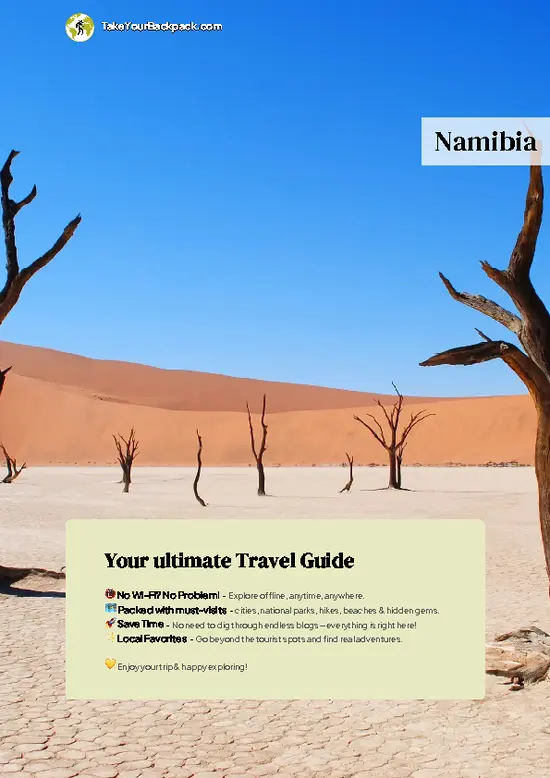
example page 0 from our offline Travel Guide for Namibia
example page 1 from our offline Travel Guide for Namibia
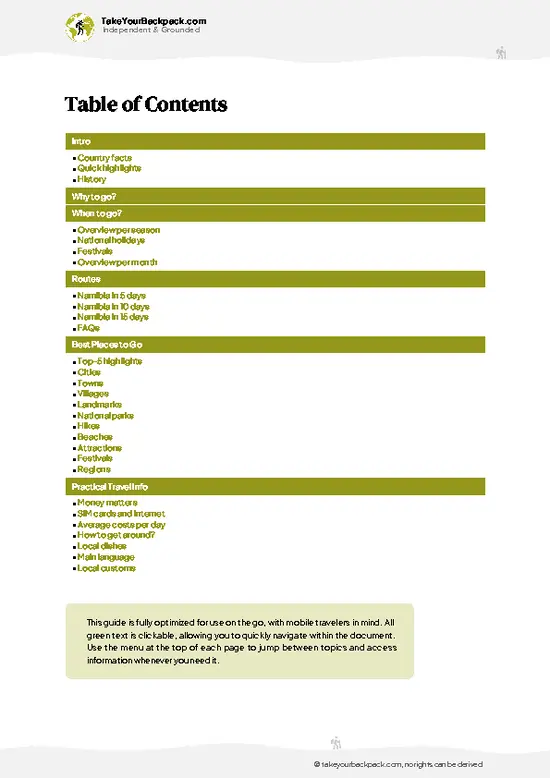
example page 2 from our offline Travel Guide for Namibia
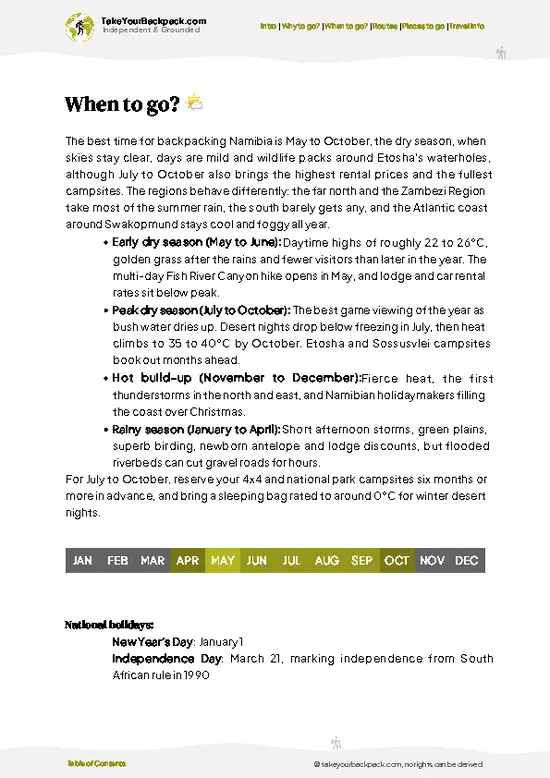
example page 3 from our offline Travel Guide for Namibia
example page 4 from our offline Travel Guide for Namibia
example page 5 from our offline Travel Guide for Namibia
example page 6 from our offline Travel Guide for Namibia
example page 7 from our offline Travel Guide for Namibia
The digital guide (318 pages) contains:
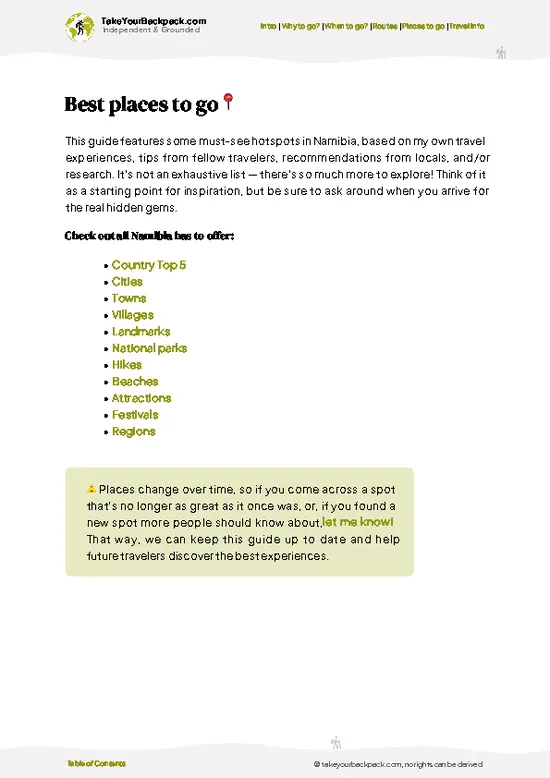
79 highlights, ranked by travel appeal
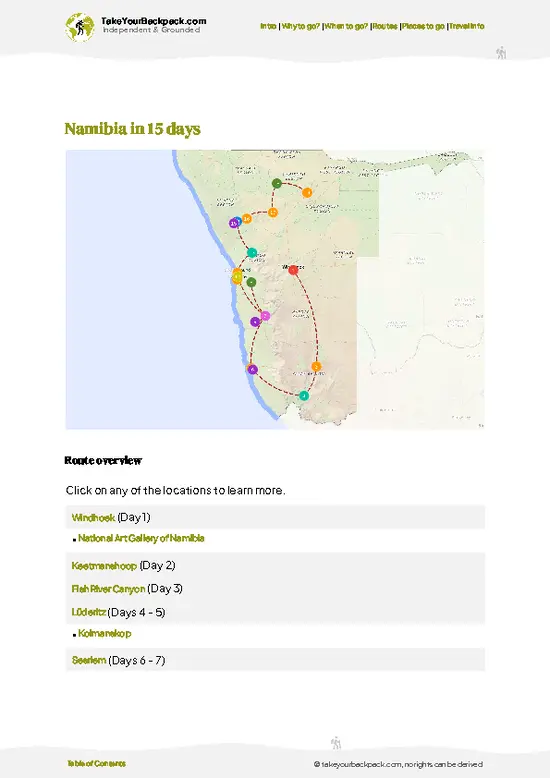
Optimized 5, 10 & 15-day travel routes
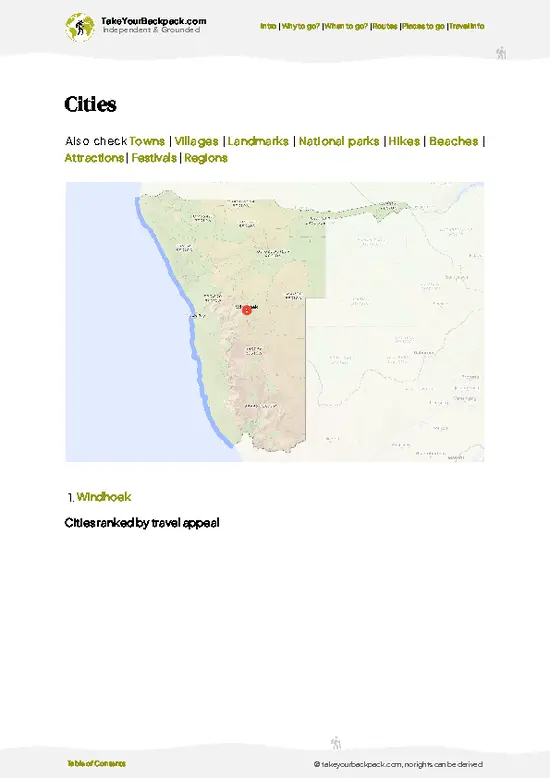
Cities, national parks, landmarks, beaches
How to get around
Offline-friendly for travel without Wi-Fi
👉 Click to see all 30+ guide features

📅 Plan smarter in minutes, not weeks
Month by month travel advice
Festivals & national holidays
Budget expectations

🗺️ Go to the right places, skip the overrated ones
Honest pros & cons of destinations
Top hikes, parks & viewpoints
Lesser-known places most travelers miss
Clear “worth it vs skip it” guidance

🛏️ Travel smoothly without rookie mistakes
Best areas to stay
Transport systems explained simply
Common scams & safety advice
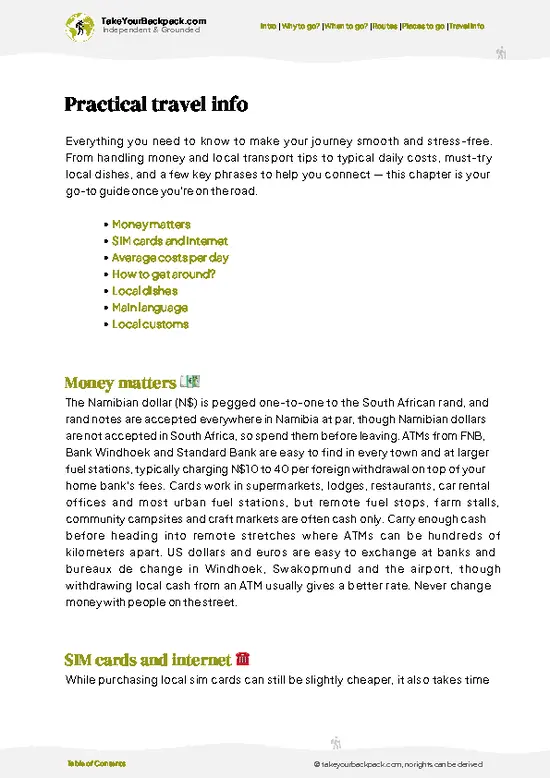
SIM cards, money & practical tips

🌍 Understand the country, not just visit it
Culture & traditions
52 Essential phrases & customs
Festivals worth planning around
Traveler-friendly historical context
Insights that make places more meaningful

📱 Built for real travel conditions
Fully downloadable PDF
Works completely offline
Optimized for phone use
Useful in remote areas & buses
Everything in one place
Save weeks of stressful planning
Get instant access to your full guide. 30‑day money-back guarantee.


By proceeding you agree to our terms.
Sent to your inbox immediately after payment • 100% Secure Checkout
Best Backpacking Travel Advisor 2025 tourism awardBest Backpacking
Travel Advisor
2025
What others say about Take Your Backpack Guides:
⭐⭐⭐⭐⭐
Fantastic, amazing amount of information!
⭐⭐⭐⭐⭐
My goodness this is amazing, it's what I've been looking for hats off too you!
⭐⭐⭐⭐⭐
I think this is absolutely BRILLIANT
⭐⭐⭐⭐
Very complete and informative. It's still missing places, but I gotta to commend you
⭐⭐⭐⭐⭐
This is truly amazing, thank you, can't wait to explore it with my kids!
⭐⭐⭐⭐⭐
Awesome resource, thank you!
⭐⭐⭐⭐⭐
This is amazing! Can't wait to explore the ones I haven't seen
⭐⭐⭐⭐
I love this! Well done, great idea.
⭐⭐⭐⭐⭐
Thanks for taking the time to make this gem!
⭐⭐⭐⭐⭐
This might be the best website I've ever seen.
⭐⭐⭐⭐⭐
Congratulations, and thank you so much for your work; it's incredibly valuable.
⭐⭐⭐⭐
In all seriousness I think you did a great job pointing out the important spots
⭐⭐⭐⭐⭐
10/10 very good
⭐⭐⭐⭐⭐
As someone who's only just starting to visit regularly this is awesome, thank you.
⭐⭐⭐⭐
Thank you very much! I'm going to visit my dad, it's going to be very useful!
⭐⭐⭐⭐⭐
This is really cool! We'll be travelling for the first time and this definitely come in handy.
⭐⭐⭐⭐⭐
You are now our minister of culture, congratulations 👨‍💼
⭐⭐⭐⭐⭐
Just wanted to tell you that this is a pearl! Going to follow your recommendations.
⭐⭐⭐⭐⭐
This is so cool. I'll definitely be using the resource for my travels soon.
⭐⭐⭐⭐⭐
This is very impressive! Good work.
⭐⭐⭐⭐⭐
This is an amazing and informative site. Very well done!

🛏️ Where to stay?Where to Base Yourself

Yes — Namibia has hostels and budget accommodation concentrated in Windhoek (city centre and safer suburbs for arrivals and supplies), Swakopmund (coastal town with the most hostel choices), the Sesriem/Sossusvlei area and Etosha gateway towns (Namutoni/Okaukuejo/Outjo).

Windhoek offers cheapest supplies, reliable transport links and some nightlife but watch petty crime and pick central or well-lit suburbs; Swakopmund has the highest hostel density, beach access and adventure options but is pricier and often cold/foggy; Sesriem is the practical low-cost base for Sossusvlei but facilities are basic and campsites fill fast; Etosha gateways put you closest to the park for early drives but budget … read more 👉
Yes — Namibia has hostels and budget accommodation concentrated in Windhoek (city centre and safer suburbs for arrivals and supplies), Swakopmund (coastal town with the most hostel choices), the Sesriem/Sossusvlei area and Etosha gateway towns (Namutoni/Okaukuejo/Outjo).

Windhoek offers cheapest supplies, reliable transport links and some nightlife but watch petty crime and pick central or well-lit suburbs; Swakopmund has the highest hostel density, beach access and adventure options but is pricier and often cold/foggy; Sesriem is the practical low-cost base for Sossusvlei but facilities are basic and campsites fill fast; Etosha gateways put you closest to the park for early drives but budget beds are fewer, services are spread out and long dirt roads add travel time.

If you enjoy meeting fellow travelers, consider choosing hostels with high ratings for atmosphere. On the other hand, if you prefer having your own space, a hotel might be a better option.

NamibiaExpand Your Journey

👋 Meet the founderWho’s Behind Take Your Backpack?

Johan, backpacker and founder of TakeYourBackpackHi, I’m Johan (Netherlands 🇳🇱), the creator of TakeYourBackpack. Over the past decade, I’ve backpacked through 80+ countries across six continents, gaining extensive experience with independent travel, long-term trips, and overland routes.

This site is built on a combination of firsthand travel experience and carefully curated insights from other backpackers. Many guides are based on places I’ve personally visited, while others bring together tips, observations, and practical advice shared by trusted travelers I’ve met along the way.

The goal is to provide realistic, experience-driven guidance — not generic itineraries — so you can explore destinations with better context, clearer expectations, and more confidence.

Get full Namibia guide •
Instant download • 79 highlights • Full Offline guide