×

Namibia🇳🇦 | townsLüderitzDiamond ghost town, Art Nouveau, Atlantic wind | things to do and best time to go

Explore Kunene RegionExplore Opuwo

Backpacking in Lüderitz
🏆 Top picktown ranked #3
By Johan Kruseman 🇳🇱 | Updated October 22, 2026

Lüderitz sits on the Atlantic coast, not in the desert-dune country of Sossusvlei that many travelers assume it shares a road with, and the town is a German-colonial harbor wedged between rocky shore and the Namib. It lies in the south of Namibia, at the end of a long road across gravel plains. That isolation is both the charm and the chore: getting here takes effort, and the wind can blow hard enough to sandblast your sunglasses. In return you get pastel Art Nouveau houses on steep streets, cold fog rolling in at dawn, the smell of kelp and diesel at the jetty, and fresh oysters eaten at a plastic table. The town is small, quiet in the evenings, with a handful of guesthouses and cafés where you will meet other overlanders and self-drivers rather than a party crowd. Walk up to Felsenkirche at dusk and the whole bay glows below you, with the wind rattling the church door.

Discover everything you want to know in the 📖 Namibia Travel Guide.


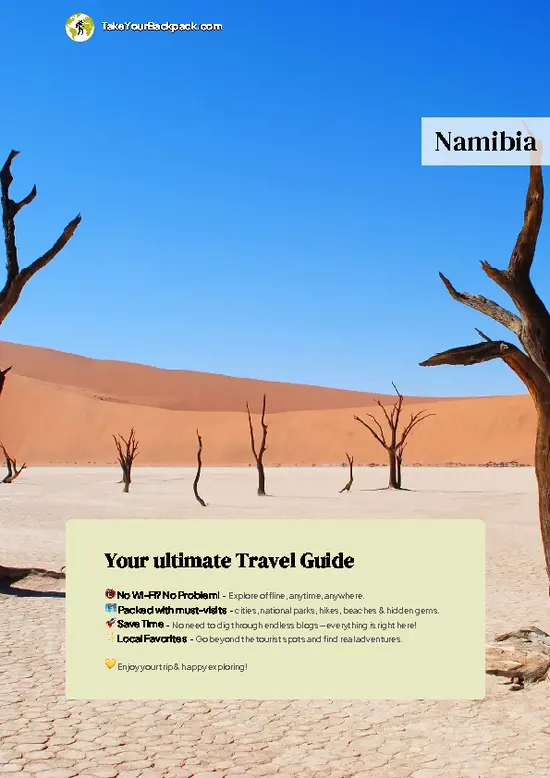
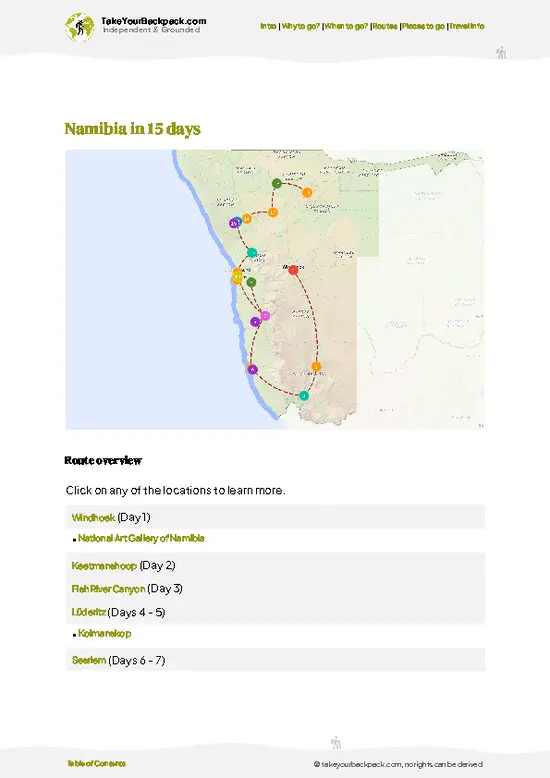
example page 0 from our offline Travel Guide for Namibia
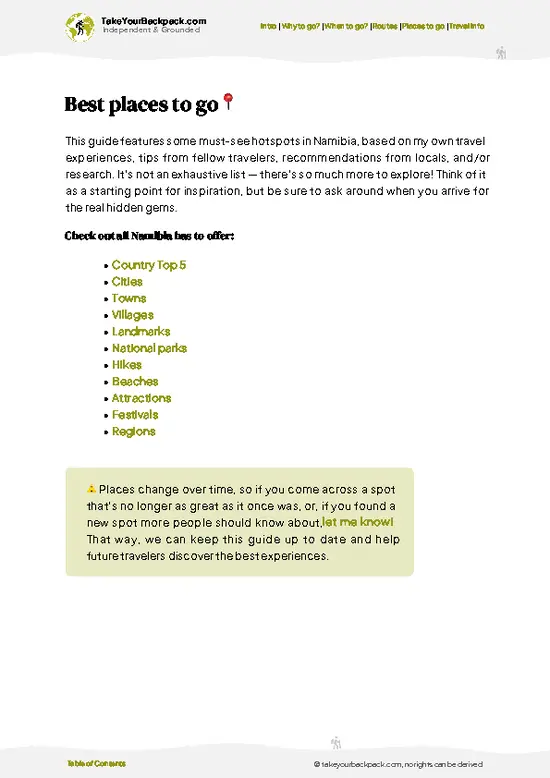
example page 1 from our offline Travel Guide for Namibia
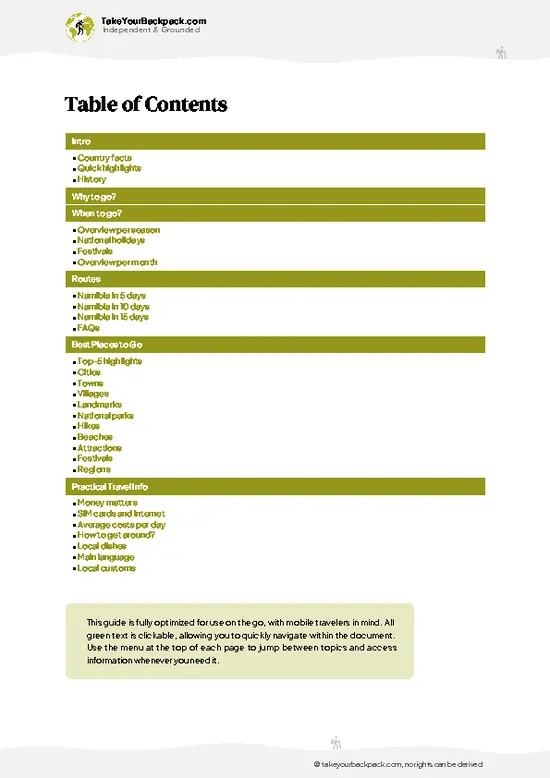
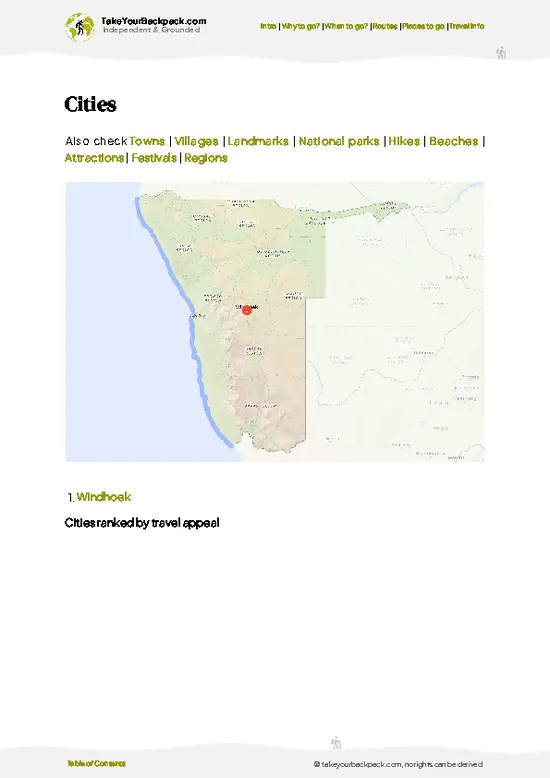
example page 2 from our offline Travel Guide for Namibia
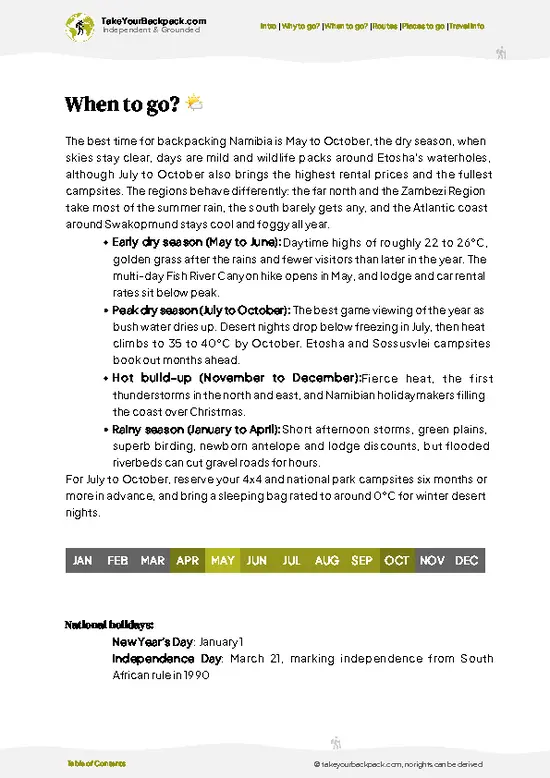
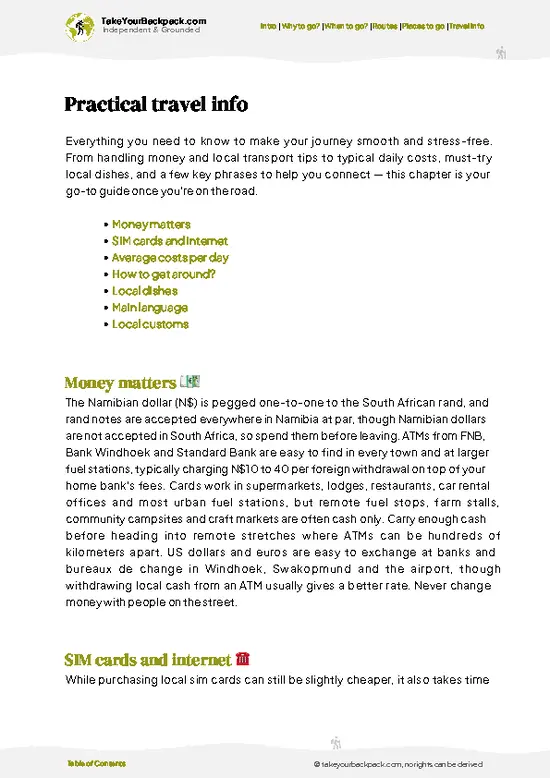
example page 3 from our offline Travel Guide for Namibia
example page 4 from our offline Travel Guide for Namibia
example page 5 from our offline Travel Guide for Namibia
example page 6 from our offline Travel Guide for Namibia
example page 7 from our offline Travel Guide for Namibia
Loading the map 🌍
CLICK TO FILTER
cities
towns
villages
landmarks
national parks
hikes
beaches
attractions
festivals
regions
SHOW COUNTRY’S BESTSHOW ALL

✨ Why go?
Ranked #3 town in Namibia
Reasons people choose to visit here

Lüderitz works for travelers who like their destinations a little remote, with real history underfoot. The draw is the combination of the ghost town of Kolmanskop, sand-swallowed diamond-era houses a short drive away, and the wild Lüderitz Peninsula, where granite boulders meet cold surf and flamingos feed in shallow lagoons. Add a seafood scene built on local oysters and crayfish, and you have a place that rewards two or three nights rather than a quick stop. Most people arrive by car or on a tour and stay long enough to see the ghost town, walk the old streets and eat well. Photographers, history lovers, solo road-trippers and slow travelers get the most from it. The social scene is low-key: a few guesthouse breakfasts, a harbor-side beer, and conversations with people who all drove a long … read more 👉
Lüderitz works for travelers who like their destinations a little remote, with real history underfoot. The draw is the combination of the ghost town of Kolmanskop, sand-swallowed diamond-era houses a short drive away, and the wild Lüderitz Peninsula, where granite boulders meet cold surf and flamingos feed in shallow lagoons. Add a seafood scene built on local oysters and crayfish, and you have a place that rewards two or three nights rather than a quick stop. Most people arrive by car or on a tour and stay long enough to see the ghost town, walk the old streets and eat well. Photographers, history lovers, solo road-trippers and slow travelers get the most from it. The social scene is low-key: a few guesthouse breakfasts, a harbor-side beer, and conversations with people who all drove a long way to be here. If you need nightlife, markets and constant activity, this is not your town. If you want fog, wind, and a very different Namibia from the dunes and safari parks, it is excellent.

💡 HighlightsEssential experiences to have while visiting Lüderitz

  1. Kolmanskop Ghost Town: Abandoned diamond-rush houses slowly filling with sand, with a casino hall, bowling alley and hospital still standing. Guided tours run in the morning and photography permits allow longer sunrise visits. Entry is roughly US$ 5 to 10 plus tour fees, and you need 1.5 to 2 hours.
  2. Felsenkirche (Rock Church): The 1912 Lutheran church perched above town with stained glass donated by Kaiser Wilhelm II. Come late afternoon when light hits the windows. Entry is free or by small donation, and 20 to 30 minutes is plenty.
  3. Lüderitz Museum: A compact museum covering the town’s colonial history, diamond era and local Nama culture, with old photographs and mining artifacts. Entry is about US$ 1 to 3, and visits take 45 minutes to an hour.
  4. Shark Island: A rocky peninsula connected by a
… read more 👉
  1. Kolmanskop Ghost Town: Abandoned diamond-rush houses slowly filling with sand, with a casino hall, bowling alley and hospital still standing. Guided tours run in the morning and photography permits allow longer sunrise visits. Entry is roughly US$ 5 to 10 plus tour fees, and you need 1.5 to 2 hours.
  2. Felsenkirche (Rock Church): The 1912 Lutheran church perched above town with stained glass donated by Kaiser Wilhelm II. Come late afternoon when light hits the windows. Entry is free or by small donation, and 20 to 30 minutes is plenty.
  3. Lüderitz Museum: A compact museum covering the town’s colonial history, diamond era and local Nama culture, with old photographs and mining artifacts. Entry is about US$ 1 to 3, and visits take 45 minutes to an hour.
  4. Shark Island: A rocky peninsula connected by a causeway, with a lighthouse, sea views and a memorial to the victims of the colonial-era concentration camp that stood here. Visit in daylight for the best view. Free to enter, 30 to 60 minutes.
  5. Diaz Point: A windswept headland topped by a replica of the stone cross left by the Portuguese navigator Bartolomeu Dias in 1488, with seals and seabirds below. Visit on a calm morning. Entry is about US$ 2 to 5, and 45 minutes to an hour is enough.
Lüderitz also makes a good base for the Lüderitz Peninsula’s lagoons, Grosse Bucht beach, and the long drive toward Aus and its wild horses of the Namib. Kolmanskop in the morning and the Felsenkirche at dusk combine neatly into one day.
Spotted a mistake or missing something? Contact us.

🏘️ NeighborhoodsHow different areas shape the experience

Lüderitz is small enough that its three areas blur together on foot, but each has a distinct feel, and the wind is the one constant.
  • Town Center and Bismarck Street: German colonial facades in pastel yellows and blues line the main drag, with the Goerke Haus and the Felsenkirche church perched on the rock above. Cafes serve fresh oysters and strong coffee, the pavement smells of salt and diesel, and everything is walkable in 20 minutes. You come away with the best photo of the town from the church steps.
  • Waterfront and Harbor: Fishing boats creak at the jetties and gulls scream over the fish plant, while the Waterfront area has the better sit-down restaurants. Order the local rock lobster or oysters with the Atlantic slapping the quay beside you. It gets deserted and cold after dark, so evenings
… read more 👉
Lüderitz is small enough that its three areas blur together on foot, but each has a distinct feel, and the wind is the one constant.
  • Town Center and Bismarck Street: German colonial facades in pastel yellows and blues line the main drag, with the Goerke Haus and the Felsenkirche church perched on the rock above. Cafes serve fresh oysters and strong coffee, the pavement smells of salt and diesel, and everything is walkable in 20 minutes. You come away with the best photo of the town from the church steps.
  • Waterfront and Harbor: Fishing boats creak at the jetties and gulls scream over the fish plant, while the Waterfront area has the better sit-down restaurants. Order the local rock lobster or oysters with the Atlantic slapping the quay beside you. It gets deserted and cold after dark, so evenings here are for a meal, not a wander.
  • Shark Island and Nautilus Bay: A causeway leads to a bare, wind-scoured granite peninsula with a campsite, a grim concentration camp memorial and sweeping ocean views. Walking it takes under an hour, with sand in your teeth and spray on your face. The reward is the quiet, and a sobering sense of the region’s history.
  • Nautilus and Diaz Point Road: Residential streets and township edges lead out toward the peninsula, with little to see and no nightlife. It suits a taxi, not a stroll, but the open coastline beyond is worth the ride.

⌛️ 1 dayHow to make the most of one day

7:30 AM, Kolmanskop Ghost Town: Start with the sand-filled houses while the light is low and the tour groups have not arrived. Wander the casino, the hospital and the old homes with dunes spilling through the doors. Allow two hours, then drive back into town.
10:30 AM, Lüderitz Museum: A short stop for the diamond-rush story, with photographs that make the ghost town make sense. Then stroll along Bismarck Street, past Art Nouveau facades and the old railway station.
12:30 PM, Waterfront lunch: Sit near the harbor for local oysters or fresh fish, with gulls overhead and the smell of salt in the air. Take your time, since the wind is often strongest in the afternoon.
2:30 PM, Shark Island: Cross the causeway to the lighthouse and the memorial. Quiet, windy and reflective, it adds a sober layer … read more 👉
7:30 AM, Kolmanskop Ghost Town: Start with the sand-filled houses while the light is low and the tour groups have not arrived. Wander the casino, the hospital and the old homes with dunes spilling through the doors. Allow two hours, then drive back into town.
10:30 AM, Lüderitz Museum: A short stop for the diamond-rush story, with photographs that make the ghost town make sense. Then stroll along Bismarck Street, past Art Nouveau facades and the old railway station.
12:30 PM, Waterfront lunch: Sit near the harbor for local oysters or fresh fish, with gulls overhead and the smell of salt in the air. Take your time, since the wind is often strongest in the afternoon.
2:30 PM, Shark Island: Cross the causeway to the lighthouse and the memorial. Quiet, windy and reflective, it adds a sober layer to the town’s story. Walk the rocky shore before heading back.
4:00 PM, Agate Beach and the Grosse Bucht side: Drive or cycle out along the peninsula to rarely visited rocky coves where sea spray and flamingos make a quieter alternative to the main sights. Bring a windbreaker.
5:30 PM, Felsenkirche: Climb the steps to the church as the sun lowers, and look down over the harbor and rooftops. Stay until the glass catches the last light.
7:00 PM, Dinner in town: Finish with crayfish or oysters at a local restaurant and a cold local beer.

🌤️ When to go?When to go for the best experience

Lüderitz is cool and windy all year, so timing is more about wind and fog than heat.
  • Winter (June to August): Days reach 18 to 20°C (64 to 68°F) and nights drop to 8 to 10°C (46 to 50°F). Skies are often clear and the wind eases, which makes the Kolmanskop ghost town photogenic. Daylight runs about 11 hours.
  • Spring (September to November): Strong southerly winds build and blow sand across the streets. Highs are 18 to 22°C (64 to 72°F). Spring wildflowers and whales sometimes show up along the coast.
  • Summer (December to March): Highs of 20 to 25°C (68 to 77°F), with long days around 13.5 hours of light. Namibian school holidays in December and January fill the guesthouses and push prices up. Morning fog is common.
  • Autumn (April to May): Calmer winds, around 19 to 22°C (66 to 72°F), thinner crowds
… read more 👉
Lüderitz is cool and windy all year, so timing is more about wind and fog than heat.
  • Winter (June to August): Days reach 18 to 20°C (64 to 68°F) and nights drop to 8 to 10°C (46 to 50°F). Skies are often clear and the wind eases, which makes the Kolmanskop ghost town photogenic. Daylight runs about 11 hours.
  • Spring (September to November): Strong southerly winds build and blow sand across the streets. Highs are 18 to 22°C (64 to 72°F). Spring wildflowers and whales sometimes show up along the coast.
  • Summer (December to March): Highs of 20 to 25°C (68 to 77°F), with long days around 13.5 hours of light. Namibian school holidays in December and January fill the guesthouses and push prices up. Morning fog is common.
  • Autumn (April to May): Calmer winds, around 19 to 22°C (66 to 72°F), thinner crowds and the best value on beds.
Book the oyster and Kolmanskop permit mornings early in peak months, as fog and wind can disrupt plans.


source: climatestotravel.comJANJanuary: highly recommended for travelingFEBFebruary: excellent for travelingMARMarch: excellent for travelingAPRApril: highly recommended for travelingMAYMay: highly recommended for travelingJUNJune: highly recommended for travelingJULJuly: highly recommended for travelingAUGAugust: highly recommended for travelingSEPSeptember: highly recommended for travelingOCTOctober: highly recommended for travelingNOVNovember: highly recommended for travelingDECDecember: highly recommended for traveling
when-to-go

✈️ The backpacker research shortcutNamibia Travel Guide

An offline-friendly backpacking guide with optimized travel routes, ranked highlights, transport advice, and the best areas to stay.
example page 0 from our offline Travel Guide for Namibia
example page 1 from our offline Travel Guide for Namibia
example page 2 from our offline Travel Guide for Namibia
example page 3 from our offline Travel Guide for Namibia
example page 4 from our offline Travel Guide for Namibia
example page 5 from our offline Travel Guide for Namibia
example page 6 from our offline Travel Guide for Namibia
example page 7 from our offline Travel Guide for Namibia
The digital guide (294 pages) contains:
✅ 71 highlights, ranked by travel appeal
✅ Optimized 5, 10 & 15-day travel routes
✅ Cities, national parks, landmarks, beaches
✅ How to get around
✅ Offline-friendly for travel without Wi-Fi
👉 Click to see all 30+ guide features

📅 Plan smarter in minutes, not weeks
✅ Month by month travel advice
✅ Festivals & national holidays
✅ Budget expectations

🗺️ Go to the right places, skip the overrated ones
✅ Honest pros & cons of destinations
✅ Top hikes, parks & viewpoints
✅ Lesser-known places most travelers miss
✅ Clear “worth it vs skip it” guidance

🛏️ Travel smoothly without rookie mistakes
✅ Best areas to stay
✅ Transport systems explained simply
✅ Common scams & safety advice
✅ SIM cards, money & practical tips

🌍 Understand the country, not just visit it
✅ Culture & traditions
✅ 52 Essential phrases & customs
✅ Festivals worth planning around
✅ Traveler-friendly historical context
✅ Insights that make places more meaningful

📱 Built for real travel conditions
✅ Fully downloadable PDF
✅ Works completely offline
✅ Optimized for phone use
✅ Useful in remote areas & buses
✅ Everything in one place
Stop searching, start planning
Get instant access to your full guide. 30‑day money-back guarantee.
+ Add another guide for just

By proceeding you agree to our terms.
Sent to your inbox immediately after payment • 100% Secure Checkout
Best Backpacking Travel Advisor 2025 tourism awardBest Backpacking
Travel Advisor
2025
What others say about Take Your Backpack Guides:
⭐⭐⭐⭐⭐
Fantastic, amazing amount of information!
⭐⭐⭐⭐⭐
My goodness this is amazing, it's what I've been looking for hats off too you!
⭐⭐⭐⭐⭐
I think this is absolutely BRILLIANT
⭐⭐⭐⭐
Very complete and informative. It's still missing places, but I gotta to commend you
⭐⭐⭐⭐⭐
This is truly amazing, thank you, can't wait to explore it with my kids!
⭐⭐⭐⭐⭐
Awesome resource, thank you!
⭐⭐⭐⭐⭐
This is amazing! Can't wait to explore the ones I haven't seen
⭐⭐⭐⭐
I love this! Well done, great idea.
⭐⭐⭐⭐⭐
Thanks for taking the time to make this gem!
⭐⭐⭐⭐⭐
This might be the best website I've ever seen.
⭐⭐⭐⭐⭐
Congratulations, and thank you so much for your work; it's incredibly valuable.
⭐⭐⭐⭐
In all seriousness I think you did a great job pointing out the important spots
⭐⭐⭐⭐⭐
10/10 very good
⭐⭐⭐⭐⭐
As someone who's only just starting to visit regularly this is awesome, thank you.
⭐⭐⭐⭐
Thank you very much! I'm going to visit my dad, it's going to be very useful!
⭐⭐⭐⭐⭐
This is really cool! We'll be travelling for the first time and this definitely come in handy.
⭐⭐⭐⭐⭐
You are now our minister of culture, congratulations 👨‍💼
⭐⭐⭐⭐⭐
Just wanted to tell you that this is a pearl! Going to follow your recommendations.
⭐⭐⭐⭐⭐
This is so cool. I'll definitely be using the resource for my travels soon.
⭐⭐⭐⭐⭐
This is very impressive! Good work.
⭐⭐⭐⭐⭐
This is an amazing and informative site. Very well done!

🛏️ Where to stay?How to pick the right area

The town center around Bismarck Street is the best base, with most of the budget beds, guesthouses and a handful of dorm-style rooms within a few blocks of each other. It is compact, so you can walk to restaurants, the supermarket, the tour offices and the taxi stands without paying for transport. Expect dorm beds and basic rooms rather than a large hostel scene, since Lüderitz has limited supply and fills up fast in December and January.

The area is quiet at night and generally comfortable to walk after dinner, though the wind and cold make it unappealing late. Noise is rarely a problem apart … read more 👉
The town center around Bismarck Street is the best base, with most of the budget beds, guesthouses and a handful of dorm-style rooms within a few blocks of each other. It is compact, so you can walk to restaurants, the supermarket, the tour offices and the taxi stands without paying for transport. Expect dorm beds and basic rooms rather than a large hostel scene, since Lüderitz has limited supply and fills up fast in December and January.

The area is quiet at night and generally comfortable to walk after dinner, though the wind and cold make it unappealing late. Noise is rarely a problem apart from gulls at dawn and the occasional bar spillover on weekends. Some places on the hillside near the church have sea views and slightly calmer evenings, but the climb back up is steep.

The Waterfront and Shark Island campsite is the second option. Camping is cheaper and puts you right by the ocean, but you will battle wind, and security and shelter are more limited than in town. Travelers with a tent and a car do well here, while those without transport are better off in the center. Book ahead in peak months, as there are few alternatives.

🚌 Getting aroundMoving around without the hassle

Lüderitz is best covered on foot, because the colonial center, harbor and waterfront all sit within a 20-minute stroll and the streets are rarely crowded. The wind is the main hazard, funneling sand and cold spray up the hills, so a windbreaker matters more than good shoes. Public transport is minimal, and most visitors lean on taxis or a rental car for anything beyond the center.
  • Walking: Free and the best option for the center. You climb a few steep lanes to the Felsenkirche and are rewarded with a view over red rooftops and the bay. Expect gusts, so keep a hand on your hat.
  • Local taxis: Short rides in town cost about US$3 to 6, and trips out to Kolmanskop (about 10 km) run US$12 to 20 return with waiting time. Taxis are easy to flag near the harbor or call through your guesthouse, and the
… read more 👉
Lüderitz is best covered on foot, because the colonial center, harbor and waterfront all sit within a 20-minute stroll and the streets are rarely crowded. The wind is the main hazard, funneling sand and cold spray up the hills, so a windbreaker matters more than good shoes. Public transport is minimal, and most visitors lean on taxis or a rental car for anything beyond the center.
  • Walking: Free and the best option for the center. You climb a few steep lanes to the Felsenkirche and are rewarded with a view over red rooftops and the bay. Expect gusts, so keep a hand on your hat.
  • Local taxis: Short rides in town cost about US$3 to 6, and trips out to Kolmanskop (about 10 km) run US$12 to 20 return with waiting time. Taxis are easy to flag near the harbor or call through your guesthouse, and the driver usually tells you the story of the ghost town on the way.
  • Rental car: Around US$50 to 90 a day for a small vehicle, and the only practical way to reach Diaz Point, Agate Beach or the Grosse Bucht coast on your own schedule. Roads are paved to the edge of town but gravel beyond, so leave daylight to spare for the 120 km drive back toward Aus.
  • Tours and shuttles: Guided Kolmanskop tours and Diaz Point trips cost about US$20 to 45. Some operators run shared transfers between Lüderitz and Aus, usually US$25 to 45 one way, taking roughly 1.5 hours across stark desert with wild horses as a possible bonus.
  • Hitchhiking and long-distance buses: Few scheduled buses reach Lüderitz. Shared minibuses toward Keetmanshoop leave irregularly, take around 4 hours and cost roughly US$15 to 25, usually departing in the morning. Hitching along the B4 is possible but slow, with sparse traffic and strong sun.

👛 Costs (as of 22 October 2026)Money, prices, and spending tips

Lüderitz costs around US$61 to 108 per day for a backpacker, and the town is pricier than most of Namibia because of its remote location.
CategoryBudget RangeLocal Reality
Dorm accommodationUS$20 to 35Dorm beds are few, so budget rooms or campsites are the usual choice, with prices peaking in December and January.
MealsUS$18 to 28Supermarket groceries keep costs down, while a seafood meal with oysters or kingklip runs US$12 to 20.
Local transportUS$6 to 15Short taxi rides cost US$3 to 6, and Kolmanskop return is roughly US$12 to 20.
Basic activities/entry feesUS$12 to 20Kolmanskop entry is about US$12 to 15, while Diaz Point and the Felsenkirche are cheap or free.
MiscellaneousUS$5 to 10Coffee, snacks, laundry and the occasional beer or souvenir.
Total Daily BudgetUS$61 to 108About US$85 for most
… read more 👉
Lüderitz costs around US$61 to 108 per day for a backpacker, and the town is pricier than most of Namibia because of its remote location.
CategoryBudget RangeLocal Reality
Dorm accommodationUS$20 to 35Dorm beds are few, so budget rooms or campsites are the usual choice, with prices peaking in December and January.
MealsUS$18 to 28Supermarket groceries keep costs down, while a seafood meal with oysters or kingklip runs US$12 to 20.
Local transportUS$6 to 15Short taxi rides cost US$3 to 6, and Kolmanskop return is roughly US$12 to 20.
Basic activities/entry feesUS$12 to 20Kolmanskop entry is about US$12 to 15, while Diaz Point and the Felsenkirche are cheap or free.
MiscellaneousUS$5 to 10Coffee, snacks, laundry and the occasional beer or souvenir.
Total Daily BudgetUS$61 to 108About US$85 for most travelers
Cook at your guesthouse or camp to save the most, and share taxi costs with other travelers to Kolmanskop. Travelers pay in Namibian dollars or South African rand, and cards are widely accepted in town.
⚠️ Prices can change and everyone travels differently, so take this as a rough guide. Hope it helps you plan your adventure!

🚌 Day tripsExploring the surroundings

Lüderitz works well as a base for day trips, since the best sights lie within a short drive on mostly paved or good gravel roads, though public transport is almost nonexistent and you will want a car or a guided seat.
Kolmanskop Ghost Town:
Sand-filled houses and a diamond-era casino sit just 10 km away, and the early light through broken windows is the best part. Tours start in the morning and cost about US$12 to 15 entry, plus US$12 to 20 for a taxi. Go in winter when the wind is lower. First-timers often arrive in the afternoon, when the crowds and shadows spoil photography.
👉 Explore Kolmanskop
Diaz Point:
A windswept cape with a stone cross, about 20 km from town on a gravel road. Seals rest on the rocks below, and the walk to the lighthouse takes 30 minutes. Allow half a day and US$10 to … read more 👉
Lüderitz works well as a base for day trips, since the best sights lie within a short drive on mostly paved or good gravel roads, though public transport is almost nonexistent and you will want a car or a guided seat.
Kolmanskop Ghost Town:
Sand-filled houses and a diamond-era casino sit just 10 km away, and the early light through broken windows is the best part. Tours start in the morning and cost about US$12 to 15 entry, plus US$12 to 20 for a taxi. Go in winter when the wind is lower. First-timers often arrive in the afternoon, when the crowds and shadows spoil photography.
👉 Explore Kolmanskop
Diaz Point:
A windswept cape with a stone cross, about 20 km from town on a gravel road. Seals rest on the rocks below, and the walk to the lighthouse takes 30 minutes. Allow half a day and US$10 to 25 for a shared ride or fuel. Bring a jacket, as the wind is relentless even on warm days.

Agate Beach and Grosse Bucht:
A bleak stretch of coast south of town, where flamingos and seals gather and the sand glints with pebbles. A rental car is nearly essential, and the round trip is about 3 to 4 hours with stops. Fuel and entry cost roughly US$10 to 20. Visit in calm weather to see wildlife, and do not cross unsigned sand tracks.

Aus and the Wild Horses:
The desert town of Aus lies 120 km inland, with the Garub waterhole about 20 km beyond, where wild horses gather. It takes 1.5 hours each way and costs US$40 to 70 with fuel or a shared lift. Go in the morning and leave early to be back before dark.

🛡️ SafetyTraveler Safety Guide

Lüderitz is a quiet, small town where violent crime against travelers is rare, and the biggest annoyances are wind, sun and distance. The center around Bismarck Street and the waterfront feels calm by day, though empty streets after dark deserve a little care. Walk in pairs if you can, take a taxi from the restaurant to your bed, and keep phones and cameras out of sight. Solo travelers, including women, generally report few problems, but the township edges are best visited with a local guide.

Opportunistic theft from parked cars happens, so never leave bags visible and avoid unattended items on the beach. Diamond areas around Kolmanskop and the Sperrgebiet are restricted, so stay on marked paths and do not wander into fenced zones. The coastal fog and gravel roads can be risky for drivers, … read more 👉
Lüderitz is a quiet, small town where violent crime against travelers is rare, and the biggest annoyances are wind, sun and distance. The center around Bismarck Street and the waterfront feels calm by day, though empty streets after dark deserve a little care. Walk in pairs if you can, take a taxi from the restaurant to your bed, and keep phones and cameras out of sight. Solo travelers, including women, generally report few problems, but the township edges are best visited with a local guide.

Opportunistic theft from parked cars happens, so never leave bags visible and avoid unattended items on the beach. Diamond areas around Kolmanskop and the Sperrgebiet are restricted, so stay on marked paths and do not wander into fenced zones. The coastal fog and gravel roads can be risky for drivers, so keep speeds down and carry extra water, a spare tire and fuel.

FAQFrequently asked questions about Lüderitz

Lüderitz is worth a detour of its own, not a quick overnight stop on the way elsewhere. The Art Nouveau and German colonial buildings on Bismarck Street and Shark Island, the wind-scoured Diaz Point peninsula, and the abandoned diamond town of Kolmanskop (entry about US$12 to 15) give the town more than enough substance. The desert road in from Aus is about 125 km of nothing but sand, wild horses near Garub and rock, which makes the arrival itself part of the experience.
Two full days is the practical minimum for Lüderitz, and three suit travelers who want to add a boat trip. Day one covers Kolmanskop in the morning (photography permits cost extra, so go early for the best light) and the town center on foot. Day two can take in Diaz Point and Agate Beach on the peninsula, plus a cruise to Halifax Island penguins, usually US$40 to 60. A third day lets you reach Elizabeth Bay or the Grosse Bucht flamingos without rushing.
Lüderitz makes a poor day trip from any other city, because the nearest town of size, Keetmanshoop, lies about 340 km away, roughly 3.5 to 4 hours each way by road. Even from Aus, the closest settlement, the drive is around 1.5 hours one way, so a round trip leaves little time on the ground. Public transport is thin, with few scheduled shuttles, so most travelers arrive by rental car or shared transfer and sleep at least one night. Staying over lets you see Kolmanskop in the soft morning light and still have an afternoon for the town.
⚠️ Things can change over time, so always validate details locally before you go.

Other Namibian towns near Lüderitz

Explore more nearby:

  • Oranjemund—Diamond company town, river mouth, cold surf| 246 km away
  • Keetmanshoop—Quiver trees, dolerite blocks, rail-town stop| 295 km away
  • Mariental—Hardap Dam, Kalahari dunes, B1 halt| 359 km away

💡 Not sure where to go next?
Create a personalized itinerary for Namibia including Lüderitz and the places that fit your trip.

Generate my itinerary

👉 Discover all towns

Or checkout all Namibia has to offer (think cities, towns, villages, national parks, hikes, beaches, festivals)
Country photo of Namibia

We 💚 feedbackIs it worth it?

Lüderitz is best on a still, cool morning, ideally between the cooler months, when the fog lifts slowly off the bay and Kolmanskop is nearly empty. I would book a Kolmanskop photography permit for sunrise, bring a windproof jacket, and save oysters for the evening, once the wind has finally dropped.

✍️ Help improve this page!
The information on this page is based on in-depth research, insights shared by experienced travelers, and feedback from the local travel community in Namibia. While every effort is made to keep the information accurate and current, conditions can change — so if you spot anything incorrect or outdated, please get in touch.


🙋‍♂️ Give feedback

👋 Meet the founderWho’s Behind Take Your Backpack?

Johan, backpacker and founder of TakeYourBackpackHi, I’m Johan (Netherlands 🇳🇱), the creator of TakeYourBackpack. Over the past 3 decades, I’ve backpacked through 90+ countries across six continents, gaining extensive experience with independent travel, long-term trips, and overland routes.

This site is built on a combination of firsthand travel experience and carefully curated insights from other backpackers. Many guides are based on places I’ve personally visited, while others bring together tips, observations, and practical advice shared by trusted travelers I’ve met along the way.

The goal is to provide realistic, experience-driven guidance — not generic itineraries — so you can explore destinations with better context, clearer expectations, and more confidence.