
×

Namibia🇳🇦 | townsOpuwoHimba communities, remote outpost, rugged hills, cultural crossroads | things to do and best time to go

Explore LüderitzExplore Swakopmund

Backpacking in Opuwo
🏆 Top picktown ranked #4
By Johan Kruseman 🇳🇱 | Updated July 27, 2026

You’re standing in Opuwo’s main street at dusk, the air thick with woodsmoke and the low thrum of distant music. A Himba woman in ochre-red braids passes, her laughter mixing with the shouts of kids chasing goats across the dusty road. Opuwo sits in Namibia’s northwest, the last real town before the wilds of Kaokoland swallow the map. For backpackers, Opuwo is less a destination than a crossroads—part supply run, part cultural jolt. The town’s raw, practical energy is a far cry from the tourist gloss of Swakopmund or the safari polish of Etosha. Here, you’ll find a handful of hostels, a market where you can haggle for mangoes, and a few bars where travelers and locals actually mingle. It’s not especially cheap or especially safe—watch your bag, especially after dark—but it’s real, and it’s social if you lean in. Buses and shared taxis connect Opuwo to the south, but once you’re here, you’ll need your feet or a 4x4 to go further. Opuwo is where you catch your breath, stock up, and decide how far off the grid you’re willing to go.

Discover everything you want to know in the 📖 Namibia Travel Guide.


Get your Namibia guide
75 ranked highlights, routes & tips, works offline (305 pages)
Loading the map 🌍
CLICK TO FILTER
cities
towns
villages
landmarks
national parks
hikes
beaches
attractions
festivals
regions
SHOW COUNTRY’S BESTSHOW ALL

✨ Why go?
Ranked #4 town in Namibia
What sets this place apart

Opuwo serves as a gateway for backpackers exploring Namibia’s rugged beauty and rich culture. Nestled in the Kaokoland region, it’s a convenient base for hikes into the nearby Epupa Falls or the Himba villages, where you can immerse yourself in local traditions. The town’s walkable streets are lined with small-scale guesthouses and hostels, offering a cozy atmosphere that encourages interaction among travelers. Expect to share stories over a plate of local cuisine, perhaps a hearty stew or freshly baked bread, while soaking in the laid-back vibe.

Most backpackers tend to stay for a few days, allowing time to soak up the cultural richness and explore the surrounding landscapes. It’s a place for slow travelers and solo adventurers who appreciate a friendly, communal feel without the distractions … read more 👉
Opuwo serves as a gateway for backpackers exploring Namibia’s rugged beauty and rich culture. Nestled in the Kaokoland region, it’s a convenient base for hikes into the nearby Epupa Falls or the Himba villages, where you can immerse yourself in local traditions. The town’s walkable streets are lined with small-scale guesthouses and hostels, offering a cozy atmosphere that encourages interaction among travelers. Expect to share stories over a plate of local cuisine, perhaps a hearty stew or freshly baked bread, while soaking in the laid-back vibe.

Most backpackers tend to stay for a few days, allowing time to soak up the cultural richness and explore the surrounding landscapes. It’s a place for slow travelers and solo adventurers who appreciate a friendly, communal feel without the distractions of nightlife. If you’re looking for a spot to recharge and connect with fellow explorers, Opuwo is more than just a stop; it’s a meaningful part of your Namibian journey.
Want to include Opuwo in your Namibia route?
Create a personalized Namibia itinerary that includes Opuwo and the places that fit your trip — based on your travel style, budget, and available time. Get your route in seconds.

Generate my trip

💡 HighlightsKey sights and experiences for travelers

  • Main Open-Air Market (Town Market) — The heart of Opuwo’s daily life: early-morning stalls, fresh produce, and the best place to see Himba and Herero people trading and meeting. Raw, loud, photogenic and utterly real.
  • Himba Trading Cluster (petrol-station area) — Not a museum but a living scene: Himba women regularly sell jewelry, ochre and crafts here. Great for up-close cultural exchange if you’re respectful and buy something small.
  • Opuwo Craft Centre / Community Stalls — Local artisans make beadwork, leather goods and mopane carvings. You’ll find better prices and more authentic items than at highway roadside stands, and many sellers will show how pieces are made.
  • Livestock/Stockyard Area (market days) — Watching cattle and goat trading gives a direct window into pastoral life in Kaokoland.
read more 👉
  • Main Open-Air Market (Town Market) — The heart of Opuwo’s daily life: early-morning stalls, fresh produce, and the best place to see Himba and Herero people trading and meeting. Raw, loud, photogenic and utterly real.
  • Himba Trading Cluster (petrol-station area) — Not a museum but a living scene: Himba women regularly sell jewelry, ochre and crafts here. Great for up-close cultural exchange if you’re respectful and buy something small.
  • Opuwo Craft Centre / Community Stalls — Local artisans make beadwork, leather goods and mopane carvings. You’ll find better prices and more authentic items than at highway roadside stands, and many sellers will show how pieces are made.
  • Livestock/Stockyard Area (market days) — Watching cattle and goat trading gives a direct window into pastoral life in Kaokoland. It’s noisy, slightly chaotic and a proper local spectacle on market days.
  • Opuwo Country Hotel / Local Pubs — Social hubs where travelers, guides and locals mix. Good spot for a cold drink, asking about day tours, and grabbing a terrace view of the dry riverbed at sunset.
  • Town Koppie / Local Viewpoint — A short climb on the outskirts of town rewards you with broad views over Opuwo’s dusty streets, corrugated roofs and the surrounding plain — useful for orientation and photos.
  • Opuwo Airstrip — Small, working bush airstrip where you can watch light aircraft arrive and depart; gives a real sense of how remote travel works in northern Namibia.
  • Mission / Local Church — The mission/church compound is part history, part community center — often a calm counterpoint to market bustle and a place where you can learn about the town’s more recent past.
  • Visitor / Tour Office and Guide Stands — Not glamorous, but essential: this is where you arrange ethical village visits, local guides, and day trips. The people you meet here make the rest of the region accessible and meaningful.
  • Community Workshops and Demonstrations — Scattered through town you’ll find small workshops where leatherworkers, beadmakers and weavers will show their craft. Hands-on if you ask — and a great way to support local incomes.
A few real day-trip highlights just outside Opuwo worth planning for: Epupa Falls, nearby Himba village visits in the Kunene region, and the wide Kaokoveld/Kaoko escarpment landscapes — all reachable from Opuwo with a vehicle and a local guide.
Spotted a mistake or missing something? Contact us.

🏘️ NeighborhoodsWhere things are and how it's laid out

Opuwo is a vibrant hub in Namibia, offering a unique blend of culture and adventure. Here’s how to navigate its neighborhoods for a smoother experience.

Opuwo Town Center
This is the heartbeat of Opuwo. It’s bustling with local markets and shops. The vibe is energetic, perfect for those who want to soak in the local culture. Walkability is decent; you can easily explore on foot. Costs here are reasonable, making it suitable for budget travelers. Nightlife is minimal, but you’ll find a few bars where locals gather. Short stays work well here, as you can quickly access transport for further adventures.

Opuwo Lodge Area
A bit quieter, this area offers a more relaxed atmosphere. It’s ideal for those seeking comfort after a long day of exploring. Accommodations can be pricier, but the amenities … read more 👉
Opuwo is a vibrant hub in Namibia, offering a unique blend of culture and adventure. Here’s how to navigate its neighborhoods for a smoother experience.

Opuwo Town Center
This is the heartbeat of Opuwo. It’s bustling with local markets and shops. The vibe is energetic, perfect for those who want to soak in the local culture. Walkability is decent; you can easily explore on foot. Costs here are reasonable, making it suitable for budget travelers. Nightlife is minimal, but you’ll find a few bars where locals gather. Short stays work well here, as you can quickly access transport for further adventures.

Opuwo Lodge Area
A bit quieter, this area offers a more relaxed atmosphere. It’s ideal for those seeking comfort after a long day of exploring. Accommodations can be pricier, but the amenities are worth it. The lodge is a short drive from the town center, so transport is necessary. This area is better for longer stays, allowing you to unwind and enjoy the surrounding landscapes.

Himba Village Outskirts
For the adventurous, this area offers a glimpse into the Himba culture. It’s less developed, so expect a more rugged experience. Costs can vary, but you’ll find authentic interactions here. Walkability is limited; transport is essential. This area is perfect for longer stays, as you’ll want time to engage with the community and explore the stunning landscapes.

⌛️ 1 daySeeing the highlights in 24 hours

Opuwo, the gateway to Namibia’s remote Kaokoland, pulses with a unique blend of cultures and landscapes. This town is a vibrant tapestry of Himba traditions and modern influences, where the scent of wood smoke mingles with the earthy aroma of the surrounding hills. Spending a day here is about diving into the heart of its community and landscapes.

Start your morning at the Opuwo Market, where the colors of traditional Himba attire pop against the dusty backdrop. The market buzzes with life; vendors sell everything from handmade crafts to fresh produce. Grab a local breakfast of pap and stew, and soak in the atmosphere. The early light casts a warm glow, making it the perfect time for candid photos and friendly exchanges.

In the afternoon, head to the nearby Himba village, a spot often overlooked … read more 👉
Opuwo, the gateway to Namibia’s remote Kaokoland, pulses with a unique blend of cultures and landscapes. This town is a vibrant tapestry of Himba traditions and modern influences, where the scent of wood smoke mingles with the earthy aroma of the surrounding hills. Spending a day here is about diving into the heart of its community and landscapes.

Start your morning at the Opuwo Market, where the colors of traditional Himba attire pop against the dusty backdrop. The market buzzes with life; vendors sell everything from handmade crafts to fresh produce. Grab a local breakfast of pap and stew, and soak in the atmosphere. The early light casts a warm glow, making it the perfect time for candid photos and friendly exchanges.

In the afternoon, head to the nearby Himba village, a spot often overlooked by tourists. Here, you’ll witness the daily rhythms of life, from milking goats to traditional dances. Engage with the locals; they’re often eager to share their stories. This isn’t just sightseeing; it’s a chance to connect deeply with a culture that thrives in harmony with its environment.

As the sun begins to set, make your way to the Opuwo Lodge for a panoramic view of the landscape. The golden hour transforms the hills into a canvas of oranges and purples. Enjoy a cold drink on the terrace, reflecting on the day’s experiences.

Wrap up your evening with a stroll through the town, where the sounds of laughter and music spill from local bars. Opuwo isn’t just a stopover; it’s a place that invites you to slow down, breathe in, and truly engage with its spirit.
Turn your Opuwo visit into an Namibia adventure
Build a complete Namibia route with Opuwo, hidden gems, must-see destinations, and realistic travel times included.

Generate my trip

🌤️ When to go?Choosing the right time of year


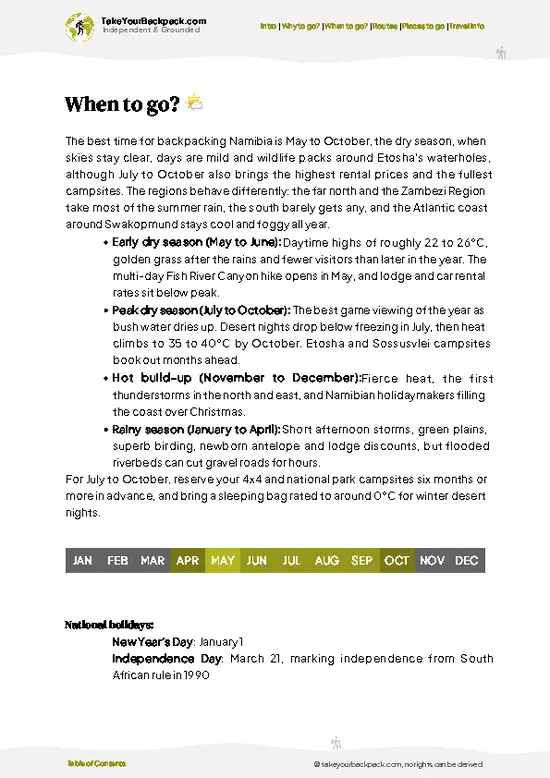
  • Weather: Opuwo’s dry season runs from May to October, offering clear skies and minimal rain. This means dusty trails and crisp air, perfect for trekking without the mud or humidity that arrives in the wet season.

  • Temperature: Daytime highs hover around 25-30°C (77-86°F) during dry months, cooling sharply at night to 5-10°C (41-50°F). Pack layers because the desert chill sneaks in after sunset, making early mornings brisk but refreshing.

  • Daylight Hours: Expect roughly 11 to 12 hours of daylight year-round, with slightly longer days in the southern hemisphere’s summer (November to February). This gives you ample time to explore without rushing.

  • Crowds: The dry season attracts more visitors, especially between June and August, when cultural festivals peak. If you want fewer people, aim
read more 👉

  • Weather: Opuwo’s dry season runs from May to October, offering clear skies and minimal rain. This means dusty trails and crisp air, perfect for trekking without the mud or humidity that arrives in the wet season.

  • Temperature: Daytime highs hover around 25-30°C (77-86°F) during dry months, cooling sharply at night to 5-10°C (41-50°F). Pack layers because the desert chill sneaks in after sunset, making early mornings brisk but refreshing.

  • Daylight Hours: Expect roughly 11 to 12 hours of daylight year-round, with slightly longer days in the southern hemisphere’s summer (November to February). This gives you ample time to explore without rushing.

  • Crowds: The dry season attracts more visitors, especially between June and August, when cultural festivals peak. If you want fewer people, aim for shoulder months like May or September.

  • Seasonal Activities: June to August is prime for Himba cultural experiences and local markets, where the air fills with the scent of firewood and spices. The wet season (November to April) brings lush landscapes but limits access to some remote areas.

  • Price Fluctuations: Accommodation and tours spike in the dry season’s high months due to demand. Booking ahead can save you a premium, while the off-season offers better deals but fewer options.


Pro-tip: Visit just before or after peak season to catch good weather, vibrant local life, and better prices—where the light softens and the town feels like it’s waking up just for you.


source: climatestotravel.comJANJanuary: fair for travelingFEBFebruary: fair for travelingMARMarch: fair for travelingAPRApril: good for travelingMAYMay: highly recommended for travelingJUNJune: excellent for travelingJULJuly: excellent for travelingAUGAugust: excellent for travelingSEPSeptember: highly recommended for travelingOCTOctober: good for travelingNOVNovember: fair for travelingDECDecember: fair for traveling
when-to-go

✈️ The backpacker research shortcutNamibia Travel Guide

An offline-friendly backpacking guide with optimized travel routes, ranked highlights, transport advice, and the best areas to stay.
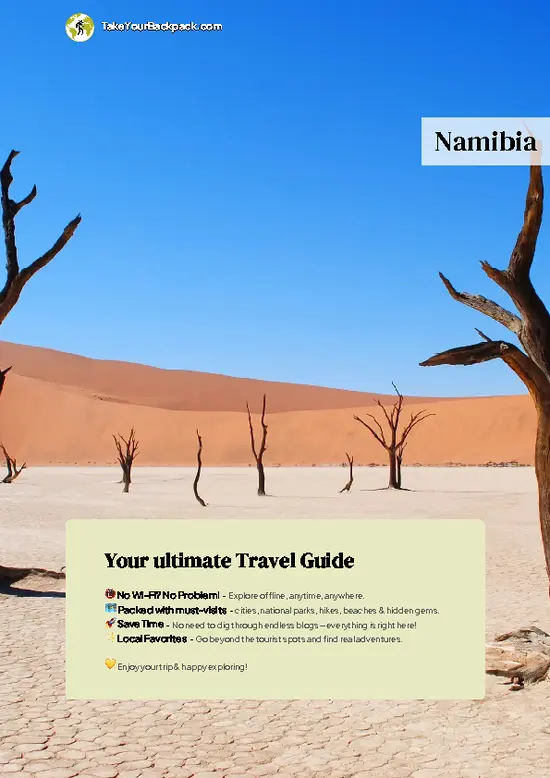
example page 0 from our offline Travel Guide for Namibia
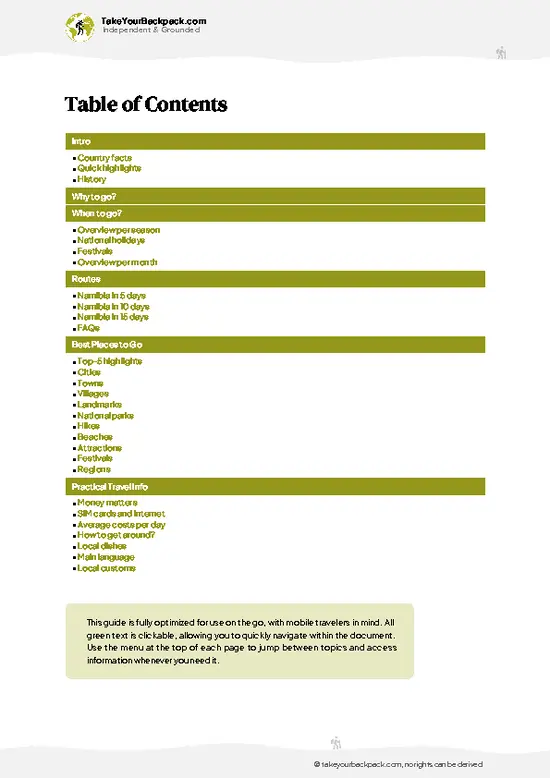
example page 1 from our offline Travel Guide for Namibia
example page 2 from our offline Travel Guide for Namibia
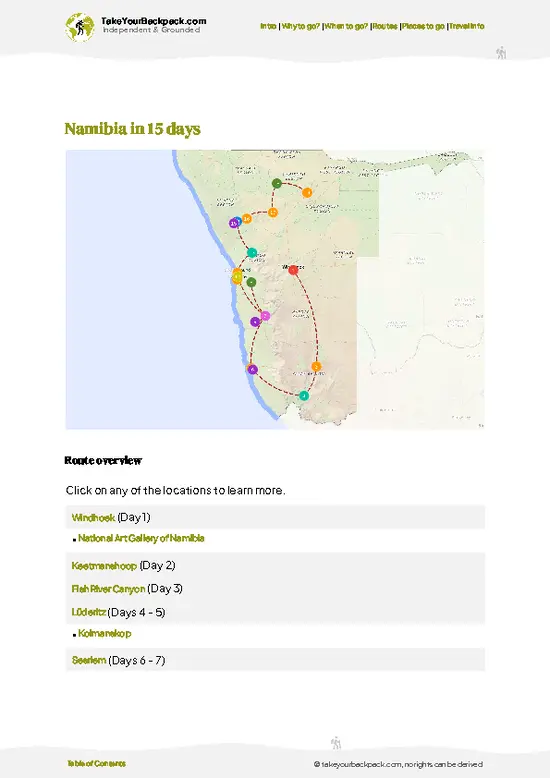
example page 3 from our offline Travel Guide for Namibia
example page 4 from our offline Travel Guide for Namibia
example page 5 from our offline Travel Guide for Namibia
example page 6 from our offline Travel Guide for Namibia
example page 7 from our offline Travel Guide for Namibia
The digital guide (305 pages) contains:
75 highlights, ranked by travel appeal
Optimized 5, 10 & 15-day travel routes
Cities, national parks, landmarks, beaches
How to get around
Offline-friendly for travel without Wi-Fi
👉 Click to see all 30+ guide features

📅 Plan smarter in minutes, not weeks
Month by month travel advice
Festivals & national holidays
Budget expectations

🗺️ Go to the right places, skip the overrated ones
Honest pros & cons of destinations
Top hikes, parks & viewpoints
Lesser-known places most travelers miss
Clear “worth it vs skip it” guidance

🛏️ Travel smoothly without rookie mistakes
Best areas to stay
Transport systems explained simply
Common scams & safety advice
SIM cards, money & practical tips

🌍 Understand the country, not just visit it
Culture & traditions
52 Essential phrases & customs
Festivals worth planning around
Traveler-friendly historical context
Insights that make places more meaningful

📱 Built for real travel conditions
Fully downloadable PDF
Works completely offline
Optimized for phone use
Useful in remote areas & buses
Everything in one place
Save weeks of stressful planning
Get instant access to your full guide. 30‑day money-back guarantee.


By proceeding you agree to our terms.
Sent to your inbox immediately after payment • 100% Secure Checkout
Best Backpacking Travel Advisor 2025 tourism awardBest Backpacking
Travel Advisor
2025
What others say about Take Your Backpack Guides:
⭐⭐⭐⭐⭐
Fantastic, amazing amount of information!
⭐⭐⭐⭐⭐
My goodness this is amazing, it's what I've been looking for hats off too you!
⭐⭐⭐⭐⭐
I think this is absolutely BRILLIANT
⭐⭐⭐⭐
Very complete and informative. It's still missing places, but I gotta to commend you
⭐⭐⭐⭐⭐
This is truly amazing, thank you, can't wait to explore it with my kids!
⭐⭐⭐⭐⭐
Awesome resource, thank you!
⭐⭐⭐⭐⭐
This is amazing! Can't wait to explore the ones I haven't seen
⭐⭐⭐⭐
I love this! Well done, great idea.
⭐⭐⭐⭐⭐
Thanks for taking the time to make this gem!
⭐⭐⭐⭐⭐
This might be the best website I've ever seen.
⭐⭐⭐⭐⭐
Congratulations, and thank you so much for your work; it's incredibly valuable.
⭐⭐⭐⭐
In all seriousness I think you did a great job pointing out the important spots
⭐⭐⭐⭐⭐
10/10 very good
⭐⭐⭐⭐⭐
As someone who's only just starting to visit regularly this is awesome, thank you.
⭐⭐⭐⭐
Thank you very much! I'm going to visit my dad, it's going to be very useful!
⭐⭐⭐⭐⭐
This is really cool! We'll be travelling for the first time and this definitely come in handy.
⭐⭐⭐⭐⭐
You are now our minister of culture, congratulations 👨‍💼
⭐⭐⭐⭐⭐
Just wanted to tell you that this is a pearl! Going to follow your recommendations.
⭐⭐⭐⭐⭐
This is so cool. I'll definitely be using the resource for my travels soon.
⭐⭐⭐⭐⭐
This is very impressive! Good work.
⭐⭐⭐⭐⭐
This is an amazing and informative site. Very well done!

🛏️ Where to stay?Best areas and accommodation options

Opuwo’s heart for backpackers pulses strongest around the town center and the adjacent residential pockets just off the main road. This is where you’ll find the best mix of safety, social buzz, and budget-friendly options. Staying here means you’re close enough to the local markets and eateries to soak in the scent of fresh mopane worms roasting over open fires and the earthy aroma of red dust stirred by passing trucks. The vibe is unpretentious and welcoming—travelers swap stories over cold drinks under the shade of acacia trees, and locals move with a calm rhythm that invites you to slow down … read more 👉
Opuwo’s heart for backpackers pulses strongest around the town center and the adjacent residential pockets just off the main road. This is where you’ll find the best mix of safety, social buzz, and budget-friendly options. Staying here means you’re close enough to the local markets and eateries to soak in the scent of fresh mopane worms roasting over open fires and the earthy aroma of red dust stirred by passing trucks. The vibe is unpretentious and welcoming—travelers swap stories over cold drinks under the shade of acacia trees, and locals move with a calm rhythm that invites you to slow down and listen.

Compared to the outskirts, which can feel isolated and less secure after dark, the central areas offer a natural safety net. You’re never far from a friendly face or a communal fire where the night’s conversations unfold. Hostels and guesthouses cluster here, providing not just a bed but a social hub where solo travelers find instant company. The light in this part of Opuwo hits just right in the late afternoon—golden and soft—perfect for wandering the dusty streets and catching glimpses of Himba women adorned in ochre and beads. This neighborhood isn’t just a place to crash; it’s where the pulse of Opuwo’s culture and community beats strongest for the curious backpacker.

🚌 Getting aroundMoving around without the hassle

Opuwo moves at its own rhythm—less a clock-driven town and more a place where the sun’s position and the dust on the road dictate your pace. The air carries the dry scent of earth and leather, and the streets hum with a mix of local chatter and the occasional engine’s sputter. It’s not a place where you’ll find strict timetables or polished transit hubs. Instead, you navigate by intuition, eye contact, and a bit of patience. This isn’t about rushing; it’s about syncing with the town’s pulse, where every ride feels like a small adventure rather than a chore.


  • Walking: The heart of Opuwo is compact enough to explore on foot. Walking lets you soak in the cracked earth underfoot, the vibrant market stalls, and the occasional stray goat. It’s free, flexible, and the best way to catch the town’s
read more 👉
Opuwo moves at its own rhythm—less a clock-driven town and more a place where the sun’s position and the dust on the road dictate your pace. The air carries the dry scent of earth and leather, and the streets hum with a mix of local chatter and the occasional engine’s sputter. It’s not a place where you’ll find strict timetables or polished transit hubs. Instead, you navigate by intuition, eye contact, and a bit of patience. This isn’t about rushing; it’s about syncing with the town’s pulse, where every ride feels like a small adventure rather than a chore.


  • Walking: The heart of Opuwo is compact enough to explore on foot. Walking lets you soak in the cracked earth underfoot, the vibrant market stalls, and the occasional stray goat. It’s free, flexible, and the best way to catch the town’s authentic vibe, especially early morning or late afternoon when the light softens and the heat eases.


  • Shared Minibus Taxis: These are the backbone of local transit. They don’t run on a strict schedule but usually start filling up around 7 AM and taper off by 6 PM. Fares hover around a few Namibian dollars, making them budget-friendly. They’re not the most comfortable—expect bumpy rides on dirt roads—but they’re fast enough to get you between Opuwo and nearby villages or the airport.


  • Motorcycle Taxis (Okadas): For quick hops within town or to nearby spots, motorcycle taxis are your go-to. They’re nimble, weaving through dust and crowds, and cost a bit more than minibuses but save you time. Negotiate the fare upfront—typically under 50 NAD for short trips—and hold tight, because the ride can be rough but exhilarating.


  • Car Rentals: If you’re planning to explore beyond Opuwo’s limits—like the Himba villages or Epupa Falls—renting a 4x4 is a smart move. Roads can be unpredictable, and a sturdy vehicle gives you freedom and safety. Prices vary, but expect to pay a premium compared to local transit. Still, the control and comfort make it worth the splurge for serious adventurers.


  • Airport Shuttle: The Opuwo Airport is small but functional. Shuttle services to town run irregularly, often timed with flight arrivals and departures. If you’re catching a flight, arrange your shuttle in advance to avoid long waits. The ride is short, about 15 minutes, and costs a modest fee, offering a smooth transition from air to earth.

👛 Costs (as of 19 January 2025)How expensive it really is

Backpacking in Opuwo, Namibia, carries a distinct rhythm shaped by its remote location and unique cultural backdrop. The costs reflect both the simplicity and the occasional premium of traveling off the beaten path.
  • Dorm Accommodation: Expect to pay around $10 to $20 per night for a bed in a basic hostel dormitory. Options are limited, so prices can lean toward the higher end during peak seasons. The rooms are simple, often with shared bathrooms, but clean and functional.
  • Meals: Local eateries serve hearty, straightforward meals for about $3 to $7. Think staple dishes like maize porridge or grilled meats, often accompanied by fresh vegetables. Western-style meals or imported goods will push the price higher, sometimes up to $10 or more.
  • Local Transport: Getting around Opuwo usually means
read more 👉
Backpacking in Opuwo, Namibia, carries a distinct rhythm shaped by its remote location and unique cultural backdrop. The costs reflect both the simplicity and the occasional premium of traveling off the beaten path.
  • Dorm Accommodation: Expect to pay around $10 to $20 per night for a bed in a basic hostel dormitory. Options are limited, so prices can lean toward the higher end during peak seasons. The rooms are simple, often with shared bathrooms, but clean and functional.
  • Meals: Local eateries serve hearty, straightforward meals for about $3 to $7. Think staple dishes like maize porridge or grilled meats, often accompanied by fresh vegetables. Western-style meals or imported goods will push the price higher, sometimes up to $10 or more.
  • Local Transport: Getting around Opuwo usually means shared taxis or minibus rides, costing roughly $1 to $3 per trip within town. For longer distances, like trips to nearby Himba villages, expect to pay $20 to $40 depending on negotiation and group size. The roads are dusty and bumpy, so travel times can stretch out.
  • Basic Activities/Entry Fees: Visiting cultural sites or local markets often involves small entry fees or donations, typically $2 to $5. Guided tours to Himba communities or natural attractions start around $30 and can go up to $60, reflecting the effort and expertise involved in these experiences.
  • Miscellaneous Expenses: Budget around $2 to $5 daily for essentials like bottled water, snacks, or phone credit. Internet access is patchy and often costly, so plan accordingly. Souvenirs or crafts from local artisans can vary widely but expect to pay $5 to $15 for quality pieces.

All told, a realistic daily budget for backpacking in Opuwo falls between $20 and $60. This range balances the basics with occasional splurges on cultural tours or better meals, giving you a grounded sense of the costs without surprises.
⚠️ Prices can change and everyone travels differently, so take this as a rough guide. Hope it helps you plan your adventure!

🚌 Day tripsShort trips worth adding

Opuwo, Namibia, is a backpacker’s dream base for exploring the rugged beauty of the Kunene region. With its unique blend of cultures and landscapes, you can easily dive into adventures that feel both authentic and rewarding.

Epupa Falls
A trip to Epupa Falls is a must. The sound of cascading water fills the air as you approach, and the lush palm trees provide a stark contrast to the arid landscape. It’s about a two-hour drive from Opuwo, and the road can be bumpy, so brace yourself. Expect to spend around $10 for transport and entry. The best time to visit is during the rainy season (November to April) when the falls are at their most powerful. A common mistake is underestimating the time needed to soak in the atmosphere—don’t rush your visit; linger and enjoy the local craft stalls.
read more 👉
Opuwo, Namibia, is a backpacker’s dream base for exploring the rugged beauty of the Kunene region. With its unique blend of cultures and landscapes, you can easily dive into adventures that feel both authentic and rewarding.

Epupa Falls
A trip to Epupa Falls is a must. The sound of cascading water fills the air as you approach, and the lush palm trees provide a stark contrast to the arid landscape. It’s about a two-hour drive from Opuwo, and the road can be bumpy, so brace yourself. Expect to spend around $10 for transport and entry. The best time to visit is during the rainy season (November to April) when the falls are at their most powerful. A common mistake is underestimating the time needed to soak in the atmosphere—don’t rush your visit; linger and enjoy the local craft stalls.
👉 Explore Epupa Falls

Himba Village Visit
Immerse yourself in the culture by visiting a Himba village. Just a short drive from Opuwo, this experience offers a glimpse into a way of life that’s both fascinating and humbling. Expect to pay around $5 for a guided tour, which is well worth it for the stories and insights you’ll gain. Early morning is the best time to go, as the light is soft and the villagers are more active. Many first-timers forget to ask questions; engage with the locals to make the experience richer.


Kaokoland Scenic Drive
For those who love a good road trip, the scenic drive through Kaokoland is breathtaking. The rugged mountains and vast plains create a stunning backdrop. It takes about three hours to reach the heart of Kaokoland, and you’ll want to budget for fuel—around $20 for a round trip. The dry season (May to October) is ideal for clear views. A common pitfall is not packing enough water and snacks; the remoteness can catch you off guard.


Opuwo Market
Don’t overlook the local market in Opuwo itself. It’s a vibrant hub of activity where you can find everything from fresh produce to handmade crafts. Spend a couple of hours here, and you’ll get a taste of local life. It’s free to wander, but bring some cash for snacks or souvenirs. Mornings are best, as the market buzzes with energy. First-timers often miss out on trying local delicacies—don’t skip the biltong!
Want to know what more Namibia offers?
The Namibia Travel Guide describes 75 highlights, from cities to national parks, from beaches to hikes

Get the Travel Guide -

🛡️ SafetyScams, Hazards, and Annoyances

Opuwo is generally safe, but like any place, a bit of awareness goes a long way. The town has a relaxed vibe, but keep your wits about you, especially in crowded markets where distractions can lead to pickpocketing.

If you’re solo, avoid wandering too far after dark. The streets can feel empty, and while locals are friendly, it’s best to stick to well-lit areas.

Scams are rare, but be cautious if someone approaches you with overly friendly offers. A common annoyance is aggressive bargaining in markets; stay firm and don’t rush.

Carry yourself confidently, make eye contact, and engage with locals. This not only enhances your experience but also signals that you’re aware and in control. Enjoy the rich culture and warmth of Opuwo, but remember: a little caution can unlock a smoother adventure.

Other Namibian towns near Opuwo

Explore more nearby:

  • Oshakati—northern business center, open-air markets, floodplain setting, urban sprawl| 200 km away
  • Ondangwa—northern crossroads, airport access, local commerce, transport hub| 227 km away
  • Khorixas—petrified forest, Damaraland base, rock engravings, dry riverbeds| 283 km away

💡 Not sure where to go next?
Create a personalized itinerary for Namibia including Opuwo and the places that fit your trip.

Generate my itinerary

👉 Discover all towns

Or checkout all Namibia has to offer (think cities, towns, villages, national parks, hikes, beaches, festivals)
Country photo of Namibia

We 💚 feedbackKey takeaways before you go

Opuwo is a place where the air hums with the rhythm of life. The unexpected warmth of the Himba people will catch you off guard; their vibrant culture is a living canvas. But be prepared: the roads can be rough, and the heat is relentless. Embrace the discomfort; it’s part of the experience. The best surprise? Watching the sunset paint the sky while sharing stories with locals. It’s raw, real, and worth every bump along the way.

✍️ Help improve this page!
The information on this page is based on in-depth research, insights shared by experienced travelers, and feedback from the local travel community in Namibia. While every effort is made to keep the information accurate and current, conditions can change — so if you spot anything incorrect or outdated, please get in touch.


🙋‍♂️ Give feedback

👋 Meet the founderWho’s Behind Take Your Backpack?

Johan, backpacker and founder of TakeYourBackpackHi, I’m Johan (Netherlands 🇳🇱), the creator of TakeYourBackpack. Over the past decade, I’ve backpacked through 80+ countries across six continents, gaining extensive experience with independent travel, long-term trips, and overland routes.

This site is built on a combination of firsthand travel experience and carefully curated insights from other backpackers. Many guides are based on places I’ve personally visited, while others bring together tips, observations, and practical advice shared by trusted travelers I’ve met along the way.

The goal is to provide realistic, experience-driven guidance — not generic itineraries — so you can explore destinations with better context, clearer expectations, and more confidence.

Get full Namibia guide •
Instant download • 75 highlights • Full Offline guide