×

Namibia🇳🇦 | regionsKunene RegionEpupa Falls, Himba villages, rugged escarpments, remote tracks | things to do and best time to go

Explore Namib Sand SeaExplore Lüderitz

Backpacking in Kunene Region
👍 Recommendedregion ranked #4
By Johan Kruseman 🇳🇱 | Updated June 9, 2026

Your boots crunch over red dust as a Himba woman’s ochre-painted skin glows in the late afternoon sun, the air thick with woodsmoke and the distant rush of Epupa Falls. This is Kunene, Namibia’s wild northwest—wedged between Angola and the Skeleton Coast, where the map turns from roads to rumors. Kunene is the Namibia you brag about finding before everyone else: raw, untamed, and still more cattle track than tourist bus. The landscapes swing from Martian desert to lush river valleys, with elephants and nomads sharing the same horizon. Backpackers get a real adventure here—yes, it’s pricier and slower than the backpacker circuits down south, and public transport is a test of patience (and your tailbone). But the payoff? Fewer crowds, real cultural encounters, and scenery that makes Etosha feel like a petting zoo. Opuwo is your gritty, fascinating hub; Epupa Falls is the exclamation point. This is not the region for WiFi-chasing comfort seekers. It’s for those who want Namibia’s soul, not just its postcards.

Discover everything you want to know in the 📖 Namibia Travel Guide.


Get your Namibia guide
79 ranked highlights, routes & tips, works offline (318 pages)
Loading the map 🌍
CLICK TO FILTER
cities
towns
villages
landmarks
national parks
hikes
beaches
attractions
festivals
regions
SHOW COUNTRY’S BESTSHOW ALL

✨ Why go?
Ranked #4 region in Namibia
What makes it a must-see region

In the Kunene Region of Namibia, backpackers find a sweet spot where time, money, and comfort intersect beautifully. This area offers a variety of landscapes—from rugged mountains to sweeping deserts—so you can soak in diverse scenery without the hassle of constant relocation.

You can easily spend days exploring the Epupa Falls, where the sound of cascading water is a soothing backdrop to your adventures. Or venture into the Himba villages, where you’ll experience rich culture and traditions that feel authentic, not staged.

Transport flexibility is a game-changer here. Renting a 4x4 gives you the freedom to roam at your own pace, hitting those off-the-beaten-path spots that make your trip feel personal.

Plus, the slow travel vibe allows you to truly connect with both nature and people. … read more 👉
In the Kunene Region of Namibia, backpackers find a sweet spot where time, money, and comfort intersect beautifully. This area offers a variety of landscapes—from rugged mountains to sweeping deserts—so you can soak in diverse scenery without the hassle of constant relocation.

You can easily spend days exploring the Epupa Falls, where the sound of cascading water is a soothing backdrop to your adventures. Or venture into the Himba villages, where you’ll experience rich culture and traditions that feel authentic, not staged.

Transport flexibility is a game-changer here. Renting a 4x4 gives you the freedom to roam at your own pace, hitting those off-the-beaten-path spots that make your trip feel personal.

Plus, the slow travel vibe allows you to truly connect with both nature and people. You’re not just ticking boxes; you’re immersing yourself in the rhythm of the land. This is where the real magic happens, and it’s all about making choices that elevate your experience without breaking the bank.
Want to include Kunene Region in your Namibia route?
Create a personalized Namibia itinerary that includes Kunene Region and the places that fit your trip — based on your travel style, budget, and available time. Get your route in seconds.

Generate my trip

💡 HighlightsThe experiences that define the visit

  1. Epupa Falls: A string of dramatic waterfalls on the Kunene River fringed by towering mopane and doum palms — great for camping, photography at golden hour, and short hikes. The combination of water in an otherwise arid landscape and nearby Himba camps makes this uniquely Kaokoveld; it’s not just a pretty waterfall, it’s a meeting point of river life and local culture.
  2. Himba villages around Opuwo (Kaokoland cultural visits): Visiting living Himba homesteads gives a rare chance to see traditional red-ochre bodywork, braided hairstyles that tell status and age, and livestock-based lifeways still practiced today. Organized, respectful village visits let you learn directly from hosts — this kind of intimate cultural exchange is specific to the Kunene/Kaokoveld.
  3. Twyfelfontein rock engravings:
read more 👉
  1. Epupa Falls: A string of dramatic waterfalls on the Kunene River fringed by towering mopane and doum palms — great for camping, photography at golden hour, and short hikes. The combination of water in an otherwise arid landscape and nearby Himba camps makes this uniquely Kaokoveld; it’s not just a pretty waterfall, it’s a meeting point of river life and local culture.
  2. Himba villages around Opuwo (Kaokoland cultural visits): Visiting living Himba homesteads gives a rare chance to see traditional red-ochre bodywork, braided hairstyles that tell status and age, and livestock-based lifeways still practiced today. Organized, respectful village visits let you learn directly from hosts — this kind of intimate cultural exchange is specific to the Kunene/Kaokoveld.
  3. Twyfelfontein rock engravings: One of Africa’s richest petroglyph sites with thousands of engravings and paintings carved into sandstone by early hunter-gatherers. The art, set amid stark Damaraland scenery, tells a human story over millennia and is very different from modern museums — you can walk among the panels and feel the scale of time.
  4. Petrified Forest (near Khorixas): A field of fossilized tree trunks turned to stone over 200 million years ago; you can walk among the trunks and see the texture of wood preserved in mineral form. It’s a quietly surreal place — fewer crowds than the big-name sites, and the geology is literally tangible beneath your boots.
  5. Organ Pipes (basalt formations): Tall, columnar basalt pillars clustered in the Damaraland badlands, formed by cooling lava and erosion — the shapes are geometric and photogenic. The site sits close to Twyfelfontein and feels otherworldly, a geological signature that you won’t easily find elsewhere in Namibia.
  6. Burnt Mountain: A short drive from the Organ Pipes, this low ridge glows in bands of rust, black and blue at dawn and dusk thanks to ancient volcanic deposits. It’s a compact, dramatic stop that pairs perfectly with nearby geological features for a one-two punch of Damaraland scenery.
  7. Vingerklip (the “Finger” rock): A freestanding sandstone pillar that rises above a scrub plain — an easy walk and viewpoint with surprisingly good panoramas over the Ugab Riverlands. It’s a simple, photogenic landmark that feels like a natural watchtower and makes a nice short outing if you’re crossing the region.
  8. Palmwag and the Hoanib Wilderness: The Palmwag concession is a gateway to the Hoanib and Hoarusib dry river systems where desert-adapted elephants, giraffe, and the occasional rhino roam. Visiting on a guided 4x4 range drive gives you a real sense of wildlife surviving against the odds — an ecosystem you won’t replicate outside northwestern Namibia.
  9. Sesfontein and Fort Sesfontein (Hidden gem): A quiet, out-of-the-way settlement where a small German-era fort and natural springs anchor a surprisingly green pocket in the north. Few tourists linger here, so it’s a great place to feel the slow rhythm of Kaokoveld life and explore nearby rocky ridges without the crowds.
  10. Purros and the Hoarusib River valley (Hidden gem): A tiny riverside settlement where seasonal riverine life, remote Himba homesteads, and dramatic gorges come together — excellent for true off-grid exploration, basic local hospitality, and watching nightly skies free of light pollution. Most travelers breeze past; staying here gives an authentic, very local slice of Kunene.
Spotted a mistake or missing something? Contact us.

⌛️ 5 days5-day itinerary for Kunene Region

Day 1: Opuwo
The journey kicks off in Opuwo, the gateway to the Kunene Region. This town is your base for the next few days, so take a moment to soak in the local culture. The transport system here is a mix of 4x4 rentals and shared taxis, which can be a bit chaotic but adds to the adventure. Spend the day acclimatizing and gathering supplies. Trust me, you’ll want snacks for the road.

Day 2: Epupa Falls
Hit the road early for Epupa Falls, about a two-hour drive from Opuwo. The route is stunning, with the Kunene River cutting through the arid landscape. This is where you’ll feel the pulse of the region. The falls are a sight to behold, and you can take a refreshing dip. The drive can be bumpy, but the scenery makes it worthwhile.

Day 3: Himba Villages
Today, dive into the culture. … read more 👉
Day 1: Opuwo
The journey kicks off in Opuwo, the gateway to the Kunene Region. This town is your base for the next few days, so take a moment to soak in the local culture. The transport system here is a mix of 4x4 rentals and shared taxis, which can be a bit chaotic but adds to the adventure. Spend the day acclimatizing and gathering supplies. Trust me, you’ll want snacks for the road.

Day 2: Epupa Falls
Hit the road early for Epupa Falls, about a two-hour drive from Opuwo. The route is stunning, with the Kunene River cutting through the arid landscape. This is where you’ll feel the pulse of the region. The falls are a sight to behold, and you can take a refreshing dip. The drive can be bumpy, but the scenery makes it worthwhile.

Day 3: Himba Villages
Today, dive into the culture. Visit nearby Himba villages, where you can learn about their traditions and way of life. The transport here is flexible; you can hire a local guide who knows the ins and outs. This is your chance to connect with the people and capture some incredible photos.

Day 4: Off-Path Reward: Marienfluss Valley
Take a detour to the Marienfluss Valley. It’s a bit off the beaten path, but the dramatic landscapes and wildlife make it a hidden treasure. The drive is longer, but you’ll feel like a true explorer. This is where the region’s raw beauty shines.

Day 5: Return to Opuwo
Wrap up your adventure by heading back to Opuwo. Reflect on your experiences and maybe pick up some local crafts. This day is about savoring the journey home and planning your next adventure.

The must-do day? Day 2 at Epupa Falls. It’s the heart of the Kunene experience, blending natural beauty with cultural richness. You’ll leave with stories that last a lifetime.
Turn your Kunene Region visit into an Namibia adventure
Build a complete Namibia route with Kunene Region, hidden gems, must-see destinations, and realistic travel times included.

Generate my trip

🌤️ When to go?Best time to visit Kunene Region


  • Weather: The Kunene Region is a desert landscape, so the dry season from May to October is your best bet. Expect clear skies and almost no rain, which means dusty trails but unbeatable views. The wet season (November to April) brings unpredictable rains that can turn roads into mud traps.

  • Temperature: Daytime highs in the dry season hover around 25-30°C (77-86°F), perfect for trekking without frying. Nights can drop sharply to 5-10°C (41-50°F), so pack layers. The wet season heats up to 35°C (95°F) or more, and humidity spikes, making hiking a sweaty slog.

  • Daylight Hours: From May to August, you get long, bright days—up to 11-12 hours of daylight—ideal for squeezing in early starts and late finishes without rushing.

  • Crowds: Kunene is off the beaten path, but the dry season attracts
read more 👉

  • Weather: The Kunene Region is a desert landscape, so the dry season from May to October is your best bet. Expect clear skies and almost no rain, which means dusty trails but unbeatable views. The wet season (November to April) brings unpredictable rains that can turn roads into mud traps.

  • Temperature: Daytime highs in the dry season hover around 25-30°C (77-86°F), perfect for trekking without frying. Nights can drop sharply to 5-10°C (41-50°F), so pack layers. The wet season heats up to 35°C (95°F) or more, and humidity spikes, making hiking a sweaty slog.

  • Daylight Hours: From May to August, you get long, bright days—up to 11-12 hours of daylight—ideal for squeezing in early starts and late finishes without rushing.

  • Crowds: Kunene is off the beaten path, but the dry season attracts more travelers, especially July and August. If you want near solitude, aim for shoulder months May or September.

  • Seasonal Activities: Wildlife spotting peaks in the dry months when animals gather around scarce waterholes. The Himba cultural tours are year-round but more accessible in dry conditions.

  • Price Fluctuations: Expect higher prices and booked-up campsites in peak dry months. Shoulder seasons offer better deals and more flexible bookings.


Pro-tip: Arrive just before the dry season kicks in—late April—to catch the tail end of the rains when the landscape is still green but the crowds haven’t arrived.


source: climatestotravel.comJANJanuary: fair for travelingFEBFebruary: fair for travelingMARMarch: fair for travelingAPRApril: good for travelingMAYMay: highly recommended for travelingJUNJune: highly recommended for travelingJULJuly: excellent for travelingAUGAugust: excellent for travelingSEPSeptember: highly recommended for travelingOCTOctober: good for travelingNOVNovember: fair for travelingDECDecember: fair for traveling
when-to-go

✈️ The backpacker research shortcutNamibia Travel Guide

An offline-friendly backpacking guide with optimized travel routes, ranked highlights, transport advice, and the best areas to stay.
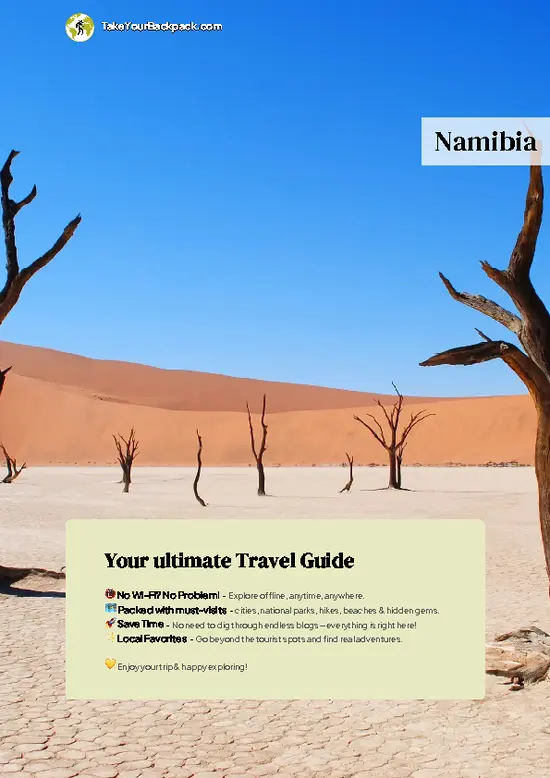
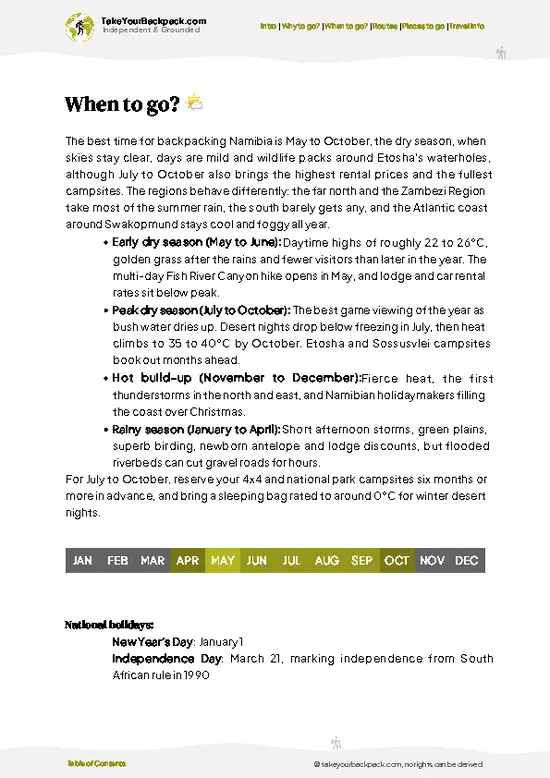
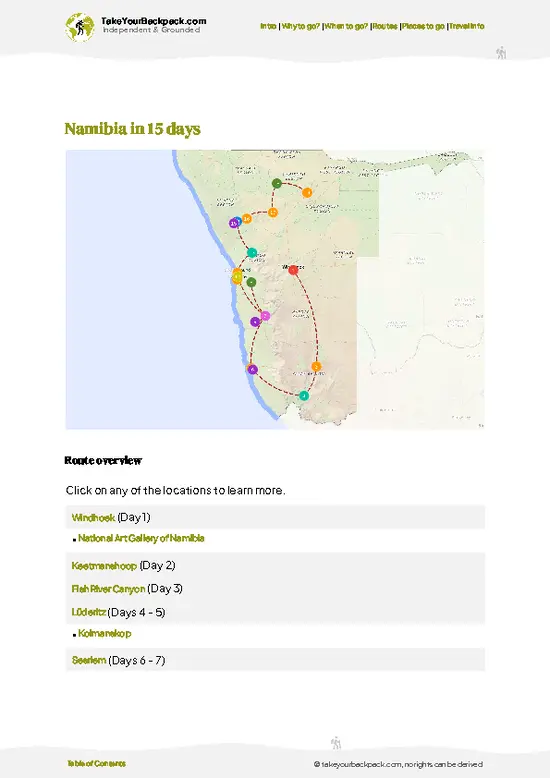
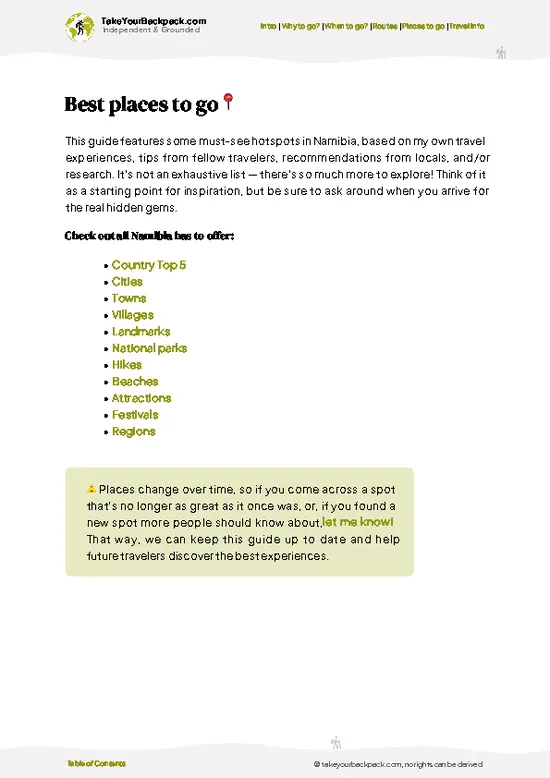
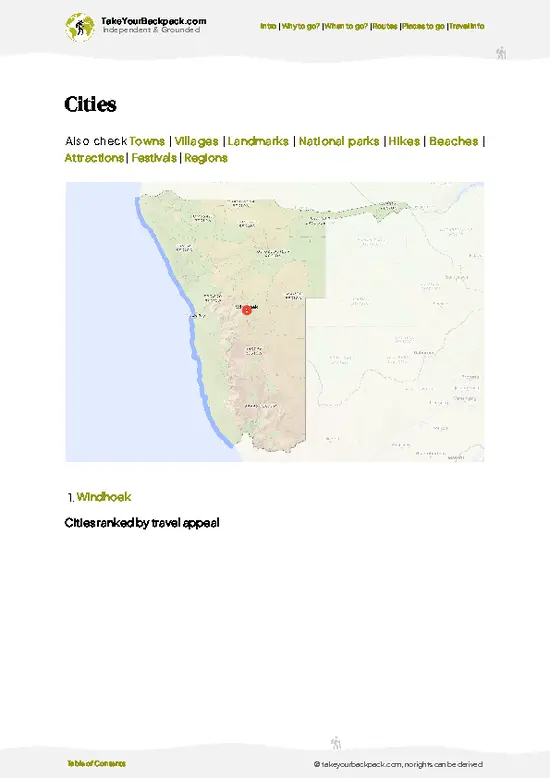
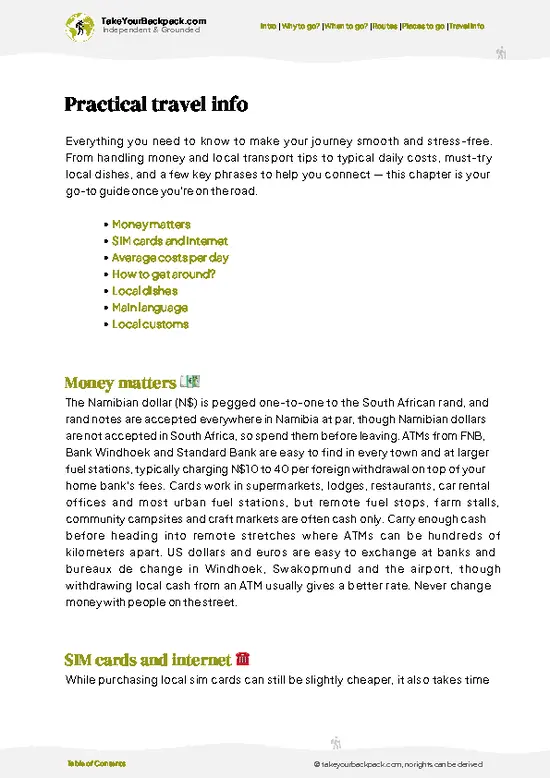
example page 0 from our offline Travel Guide for Namibia
example page 1 from our offline Travel Guide for Namibia
example page 2 from our offline Travel Guide for Namibia
example page 3 from our offline Travel Guide for Namibia
example page 4 from our offline Travel Guide for Namibia
example page 5 from our offline Travel Guide for Namibia
example page 6 from our offline Travel Guide for Namibia
example page 7 from our offline Travel Guide for Namibia
The digital guide (318 pages) contains:
79 highlights, ranked by travel appeal
Optimized 5, 10 & 15-day travel routes
Cities, national parks, landmarks, beaches
How to get around
Offline-friendly for travel without Wi-Fi
👉 Click to see all 30+ guide features

📅 Plan smarter in minutes, not weeks
Month by month travel advice
Festivals & national holidays
Budget expectations

🗺️ Go to the right places, skip the overrated ones
Honest pros & cons of destinations
Top hikes, parks & viewpoints
Lesser-known places most travelers miss
Clear “worth it vs skip it” guidance

🛏️ Travel smoothly without rookie mistakes
Best areas to stay
Transport systems explained simply
Common scams & safety advice
SIM cards, money & practical tips

🌍 Understand the country, not just visit it
Culture & traditions
52 Essential phrases & customs
Festivals worth planning around
Traveler-friendly historical context
Insights that make places more meaningful

📱 Built for real travel conditions
Fully downloadable PDF
Works completely offline
Optimized for phone use
Useful in remote areas & buses
Everything in one place
Save weeks of stressful planning
Get instant access to your full guide. 30‑day money-back guarantee.


By proceeding you agree to our terms.
Sent to your inbox immediately after payment • 100% Secure Checkout
Best Backpacking Travel Advisor 2025 tourism awardBest Backpacking
Travel Advisor
2025
What others say about Take Your Backpack Guides:
⭐⭐⭐⭐⭐
Fantastic, amazing amount of information!
⭐⭐⭐⭐⭐
My goodness this is amazing, it's what I've been looking for hats off too you!
⭐⭐⭐⭐⭐
I think this is absolutely BRILLIANT
⭐⭐⭐⭐
Very complete and informative. It's still missing places, but I gotta to commend you
⭐⭐⭐⭐⭐
This is truly amazing, thank you, can't wait to explore it with my kids!
⭐⭐⭐⭐⭐
Awesome resource, thank you!
⭐⭐⭐⭐⭐
This is amazing! Can't wait to explore the ones I haven't seen
⭐⭐⭐⭐
I love this! Well done, great idea.
⭐⭐⭐⭐⭐
Thanks for taking the time to make this gem!
⭐⭐⭐⭐⭐
This might be the best website I've ever seen.
⭐⭐⭐⭐⭐
Congratulations, and thank you so much for your work; it's incredibly valuable.
⭐⭐⭐⭐
In all seriousness I think you did a great job pointing out the important spots
⭐⭐⭐⭐⭐
10/10 very good
⭐⭐⭐⭐⭐
As someone who's only just starting to visit regularly this is awesome, thank you.
⭐⭐⭐⭐
Thank you very much! I'm going to visit my dad, it's going to be very useful!
⭐⭐⭐⭐⭐
This is really cool! We'll be travelling for the first time and this definitely come in handy.
⭐⭐⭐⭐⭐
You are now our minister of culture, congratulations 👨‍💼
⭐⭐⭐⭐⭐
Just wanted to tell you that this is a pearl! Going to follow your recommendations.
⭐⭐⭐⭐⭐
This is so cool. I'll definitely be using the resource for my travels soon.
⭐⭐⭐⭐⭐
This is very impressive! Good work.
⭐⭐⭐⭐⭐
This is an amazing and informative site. Very well done!

🛏️ Where to stay?Best areas to stay in Namibia

In the Kunene Region, Namibia, you’ll find a few standout spots that cater to backpackers looking for safety, social vibes, and budget-friendly options.

Start in Opuwo, the region’s capital. It’s a melting pot of cultures, where you can mingle with locals and fellow travelers alike. The atmosphere is relaxed, and you’ll find plenty of communal spaces to swap stories over a cold drink. Plus, it’s a great base for exploring nearby Himba villages, giving you that authentic experience without breaking the bank.

Next up is Epupa Falls. This stunning area isn’t just about the waterfalls; it’s a backpacker’s … read more 👉
In the Kunene Region, Namibia, you’ll find a few standout spots that cater to backpackers looking for safety, social vibes, and budget-friendly options.

Start in Opuwo, the region’s capital. It’s a melting pot of cultures, where you can mingle with locals and fellow travelers alike. The atmosphere is relaxed, and you’ll find plenty of communal spaces to swap stories over a cold drink. Plus, it’s a great base for exploring nearby Himba villages, giving you that authentic experience without breaking the bank.

Next up is Epupa Falls. This stunning area isn’t just about the waterfalls; it’s a backpacker’s paradise. You’ll find campsites and lodges that encourage socializing, often hosting evening gatherings around the fire. The sound of rushing water and the backdrop of palm trees create a chill vibe that’s hard to resist.

Don’t overlook Sesfontein. It’s a quieter option but offers a unique glimpse into rural life. The local community is welcoming, and you can easily connect with guides for hikes or cultural tours.

Each of these spots has its own flavor, so you can choose based on whether you want a lively scene or a more laid-back experience. Just remember, the best stories often come from the places where you feel most at home.

🚌 Getting aroundTransportation options and practical tips

The Kunene Region in Namibia is a wild dance of rugged landscapes and vibrant cultures, where schedules are more of a suggestion than a rule. Here, the rhythm of travel flows like the Kunene River—sometimes calm, sometimes chaotic. You’ll find that getting from point A to B is less about precision and more about embracing the journey. Whether you’re bouncing along dusty roads in a shared taxi or waiting for a local bus that might show up when it feels like it, the experience is all part of the adventure. This isn’t a place for the rigid planner; it’s for those who thrive on spontaneity and the thrill of the unknown.


  • Shared Taxis (Kombis): These are your go-to for budget travel. They run frequently between major towns like Opuwo and Epupa Falls, usually starting around 6 AM and wrapping up
read more 👉
The Kunene Region in Namibia is a wild dance of rugged landscapes and vibrant cultures, where schedules are more of a suggestion than a rule. Here, the rhythm of travel flows like the Kunene River—sometimes calm, sometimes chaotic. You’ll find that getting from point A to B is less about precision and more about embracing the journey. Whether you’re bouncing along dusty roads in a shared taxi or waiting for a local bus that might show up when it feels like it, the experience is all part of the adventure. This isn’t a place for the rigid planner; it’s for those who thrive on spontaneity and the thrill of the unknown.


  • Shared Taxis (Kombis): These are your go-to for budget travel. They run frequently between major towns like Opuwo and Epupa Falls, usually starting around 6 AM and wrapping up by 5 PM. Expect to pay about 50-100 NAD for a ride, depending on distance. It’s a bumpy but social experience, often packed with locals and their stories.


  • Public Buses: A bit slower but cheaper, these buses connect larger towns. They typically leave in the morning, around 7 AM, and can take up to 6 hours to reach your destination. Prices hover around 30-80 NAD. Comfort varies, but you’ll get a chance to soak in the scenery and chat with fellow travelers.


  • Rental Cars: If you’re feeling adventurous and have a bit more cash, renting a 4x4 is a game-changer. Rates start at around 800 NAD per day. This gives you the freedom to explore remote areas at your own pace, but fuel costs can add up quickly. Just be prepared for some rough roads!


  • Guided Tours: For those who prefer a structured experience, consider joining a guided tour. Prices vary widely, but expect to pay upwards of 1,500 NAD for a day trip. This option often includes transport, meals, and a local guide, making it a hassle-free way to see the highlights.


Master Tactical Tip: Always negotiate your fare before hopping into a taxi or kombi. It’s a common practice and can save you a few bucks. Plus, don’t hesitate to ask locals for the best transport options—they often have the inside scoop on the most reliable rides.

🍲 FoodWhat to Eat & Drink

In the Kunene Region, food is a celebration of local culture and tradition. You can’t miss the braai, a communal barbecue where locals grill up game meat like oryx or springbok. The smoky aroma wafts through the air, inviting you to join in. Pair it with pap, a maize porridge that’s a staple here, and you’ve got a meal that’s both hearty and authentic.

For a true taste of the region, seek out street vendors in small towns. They serve up biltong, dried cured meat that’s a perfect snack while you explore. Wash it down with a local brew like Windhoek Lager or, if you’re feeling adventurous, try sorghum beer—a traditional drink that’s slightly sour and packed with character.

Dining customs are relaxed but communal. Expect to share meals, and don’t be surprised if you’re invited to join a table. … read more 👉
In the Kunene Region, food is a celebration of local culture and tradition. You can’t miss the braai, a communal barbecue where locals grill up game meat like oryx or springbok. The smoky aroma wafts through the air, inviting you to join in. Pair it with pap, a maize porridge that’s a staple here, and you’ve got a meal that’s both hearty and authentic.

For a true taste of the region, seek out street vendors in small towns. They serve up biltong, dried cured meat that’s a perfect snack while you explore. Wash it down with a local brew like Windhoek Lager or, if you’re feeling adventurous, try sorghum beer—a traditional drink that’s slightly sour and packed with character.

Dining customs are relaxed but communal. Expect to share meals, and don’t be surprised if you’re invited to join a table. It’s all about connection here. When you’re at a market, embrace the chaos: vendors shouting, spices mingling in the air, and laughter echoing around you.

Remember, meals are often enjoyed slowly, so take your time and soak in the vibrant atmosphere. This isn’t just food; it’s a way to experience the heart of Namibia.

Other Namibian regions near Kunene Region

Explore more nearby:

  • Damaraland—Granite outcrops, desert-adapted elephants, ancient rock art, open savannah| 319 km away
  • Namib Desert—Gravel plains, fog-belt coast, isolated canyons, desert flora| 699 km away
  • Namib Sand Sea—Towering dunes, shifting sands, Sossusvlei pans, fossilized trees| 699 km away

💡 Not sure where to go next?
Create a personalized itinerary for Namibia including Kunene Region and the places that fit your trip.

Generate my itinerary

👉 Discover all regions

Or checkout all Namibia has to offer (think cities, towns, villages, national parks, hikes, beaches, festivals)
Country photo of Namibia

We 💚 feedbackIs it worth it?

If you find yourself in the Kunene Region, don’t rush. The vibe here is laid-back, almost meditative. Spend an afternoon with the Himba people; their warmth and stories will surprise you. Just a heads-up: the roads can be rough, so don’t expect to cover a lot of ground quickly. But that’s part of the charm. Embrace the slow pace, and you’ll uncover the region’s soul. Trust me, it’s worth every bump along the way.

✍️ Help improve this page!
The information on this page is based on in-depth research, insights shared by experienced travelers, and feedback from the local travel community in Namibia. While every effort is made to keep the information accurate and current, conditions can change — so if you spot anything incorrect or outdated, please get in touch.


🙋‍♂️ Give feedback

👋 Meet the founderWho’s Behind Take Your Backpack?

Johan, backpacker and founder of TakeYourBackpackHi, I’m Johan (Netherlands 🇳🇱), the creator of TakeYourBackpack. Over the past decade, I’ve backpacked through 80+ countries across six continents, gaining extensive experience with independent travel, long-term trips, and overland routes.

This site is built on a combination of firsthand travel experience and carefully curated insights from other backpackers. Many guides are based on places I’ve personally visited, while others bring together tips, observations, and practical advice shared by trusted travelers I’ve met along the way.

The goal is to provide realistic, experience-driven guidance — not generic itineraries — so you can explore destinations with better context, clearer expectations, and more confidence.

Get full Namibia guide •
Instant download • 79 highlights • Full Offline guide