×

Namibia🇳🇦 | townsUsakosSpitzkoppe turnoff, railway workshops, granite plains | things to do and best time to go

Explore KhorixasExplore Omaruru

Backpacking in Usakos
👀 For curious travelerstown ranked #19
By Johan Kruseman 🇳🇱 | Updated October 22, 2026

Most people know Usakos for the Spitzkoppe turnoff and the old railway workshops, yet the quiet gravel streets and sleepy bakery stops matter just as much. Usakos sits in the Erongo Region of Namibia, in the dry plains below the Erongo massif. Light is hard and bright, trains rumble at odd hours, and dust hangs in the air. The town itself deserves an hour, not a day. Spend your time in the granite country around it. Fill your fuel tank before heading out.

Discover everything you want to know in the 📖 Namibia Travel Guide.


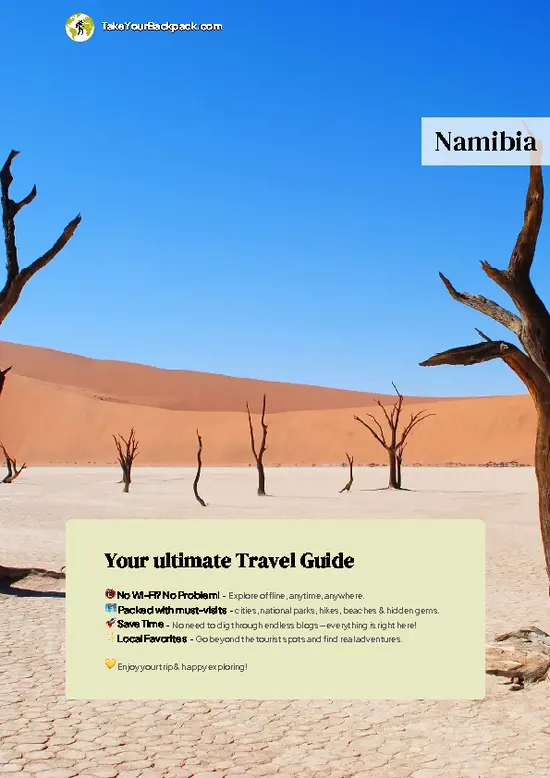
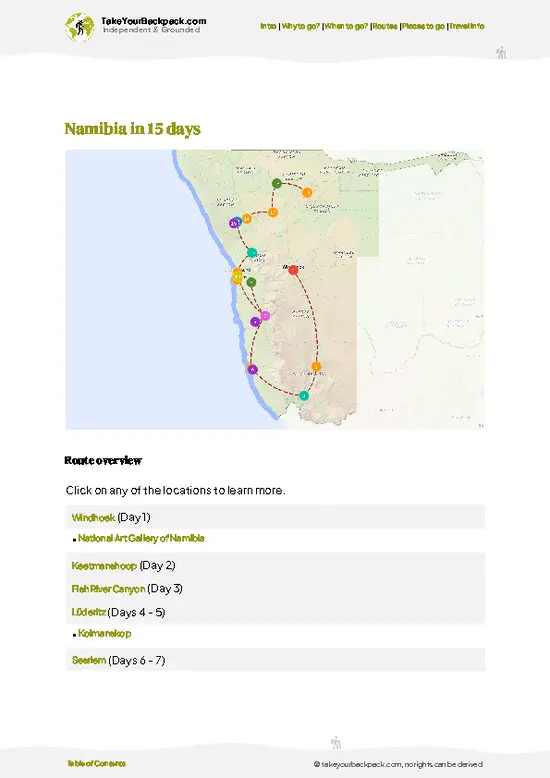
example page 0 from our offline Travel Guide for Namibia
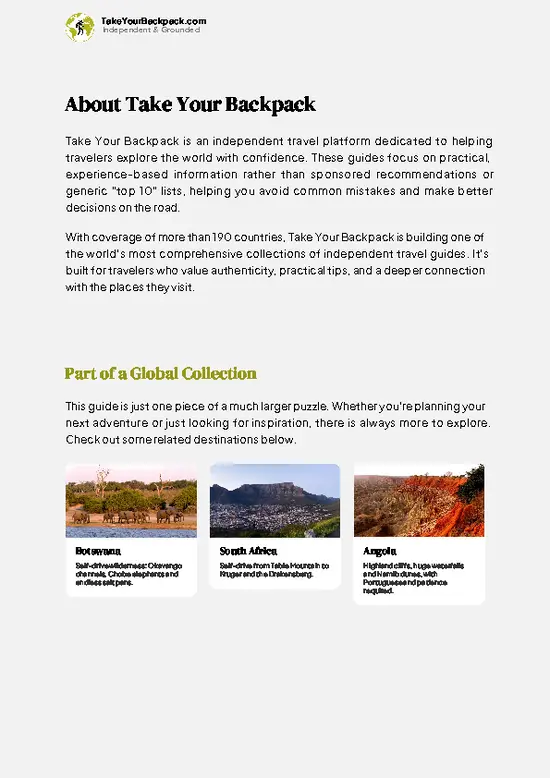
example page 1 from our offline Travel Guide for Namibia
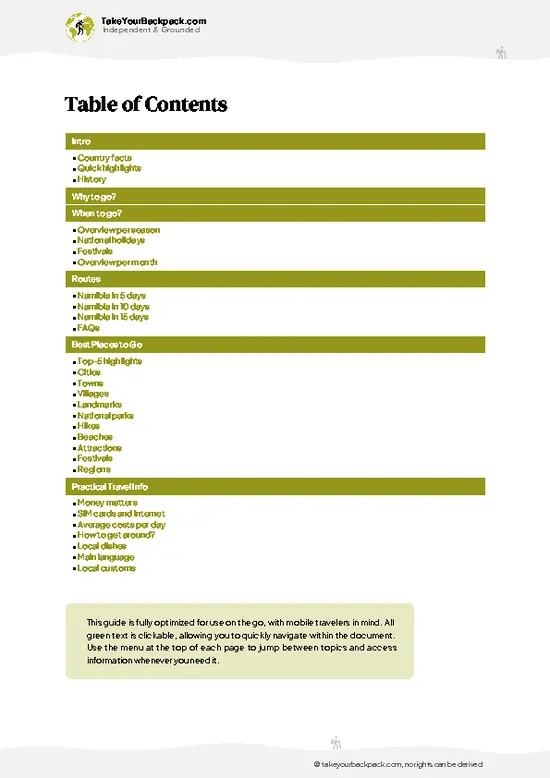
example page 2 from our offline Travel Guide for Namibia
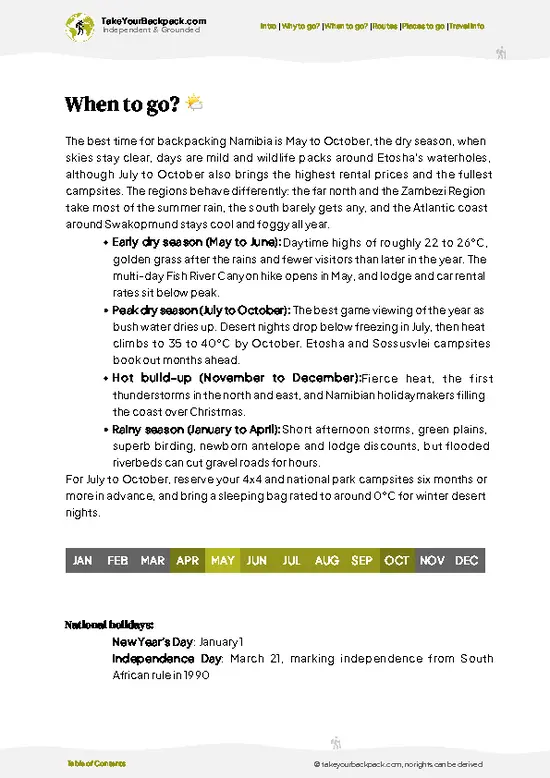
example page 3 from our offline Travel Guide for Namibia
example page 4 from our offline Travel Guide for Namibia
example page 5 from our offline Travel Guide for Namibia
example page 6 from our offline Travel Guide for Namibia
example page 7 from our offline Travel Guide for Namibia
Loading the map 🌍
CLICK TO FILTER
cities
towns
villages
landmarks
national parks
hikes
beaches
attractions
festivals
regions
SHOW COUNTRY’S BESTSHOW ALL

✨ Why go?
Ranked #19 town in Namibia
What makes it a must-see town

Usakos works because it sits at the junction of the roads to the coast, the capital and the granite wilderness, so it makes a practical overnight for drivers and hitchers heading to Spitzkoppe. Most travelers stay one night. Guesthouses are small and owner-run, and evenings are quiet, with a few locals at a bar and the occasional freight train. It suits self-drivers, photographers and solo travelers who like empty landscapes more than nightlife. The Usakos Railway Museum and old German-era buildings give you something to do between breakfast and the road.

💡 HighlightsThe experiences that define the visit

  1. Spitzkoppe turnoff and viewpoint approach: The granite peaks rise on the horizon west of town and are the reason most people stop here. Gaze at them at dawn or in the last hour of daylight when the rock glows orange. Free from the road, 15 to 30 minutes.
  2. Usakos Railway Museum: Small displays about the narrow gauge line and the workshops that once employed much of the town. Rail fans enjoy the rusting machinery. Morning is best. Entry is usually a small donation of US$1 to 3, about 30 to 45 minutes.
  3. Old railway station and workshop area: Colonial-era buildings and tracks that explain why the town exists. Light is best in the morning. Free, 20 to 30 minutes on foot.
  4. Town streets and local bakery stop: A slow walk past low houses, shaded trees and corner shops gives a real feel for a working Namibian
… read more 👉
  1. Spitzkoppe turnoff and viewpoint approach: The granite peaks rise on the horizon west of town and are the reason most people stop here. Gaze at them at dawn or in the last hour of daylight when the rock glows orange. Free from the road, 15 to 30 minutes.
  2. Usakos Railway Museum: Small displays about the narrow gauge line and the workshops that once employed much of the town. Rail fans enjoy the rusting machinery. Morning is best. Entry is usually a small donation of US$1 to 3, about 30 to 45 minutes.
  3. Old railway station and workshop area: Colonial-era buildings and tracks that explain why the town exists. Light is best in the morning. Free, 20 to 30 minutes on foot.
  4. Town streets and local bakery stop: A slow walk past low houses, shaded trees and corner shops gives a real feel for a working Namibian town. Go in the cooler morning. Pies and bread cost US$1 to 3, about an hour.
  5. Dry Khan riverbed viewpoint: The sandy bed of the seasonal Khan River lies near the town edge. Watch for birds and tracks after rain. Late afternoon is pleasant. Free, about 30 minutes.
Day trips from Usakos include Spitzkoppe, the Erongo Mountains and Omaruru. The railway museum and the old station combine well in one morning.
Spotted a mistake or missing something? Contact us.

🏘️ NeighborhoodsNeighborhood guide to Usakos

Usakos is small enough that its three parts take one lazy morning, and the railway side deserves the most of your time.
  • Railway and Main Street area: The old railway workshops and station give the town its reason for existing, and the rust, gravel and long freight horns carry real atmosphere. Walk it in an hour, and eat simple grilled meat and fries from the fuel-station kiosks.
  • Hakahana (the township): Hot concrete, braai smoke and kids playing football in the dust. Visit by day with a local guide or host, since there are no sights to tick off.
  • Edge of town toward the Erongo: Granite boulders glow orange in late light and the silence is total. This is where I would spend my evenings.

⌛️ 1 dayHow to make the most of one day

7:00 AM, road toward Spitzkoppe: Drive or ride out west for the first view of the granite peaks in low sun. Stop at the roadside, then return to town.
9:00 AM, Usakos bakery: Eat a hot pie and coffee at a local bakery, a good place to chat with locals.
10:30 AM, Railway Museum: Walk over for engines, photos and stories of the workshops.
12:30 PM, old station and workshops: Stroll along the tracks and the old brick buildings, then rest in the shade.
3:30 PM, Khan riverbed: Walk the dry sand edge for birds and quiet, an off-route stop few visitors bother with.
5:30 PM, guesthouse stoep: Watch the light fade over the plains and listen for the evening train.

🌤️ When to go?When to go for the best experience

  • May to August (cool, dry): Days reach 22 to 26°C (72 to 79°F), nights drop to 5 to 8°C (41 to 46°F), and the sun sets early. Crowds are thin, with moderate prices.
  • September to November: Heat climbs to 30 to 36°C (86 to 97°F), with dry, dusty air.
  • December to April: Hot at 32 to 38°C (90 to 100°F), with brief afternoon thunderstorms that briefly turn the gravel roads soft, and greener hills.
Aim for June or July if you plan to hike the granite hills, since midday rock gets painfully hot later in the year.

source: climatestotravel.comJANJanuary: fair for travelingFEBFebruary: fair for travelingMARMarch: fair for travelingAPRApril: good for travelingMAYMay: highly recommended for travelingJUNJune: excellent for travelingJULJuly: excellent for travelingAUGAugust: excellent for travelingSEPSeptember: highly recommended for travelingOCTOctober: good for travelingNOVNovember: fair for travelingDECDecember: fair for traveling
when-to-go

✈️ The backpacker research shortcutNamibia Travel Guide

An offline-friendly backpacking guide with optimized travel routes, ranked highlights, transport advice, and the best areas to stay.
example page 0 from our offline Travel Guide for Namibia
example page 1 from our offline Travel Guide for Namibia
example page 2 from our offline Travel Guide for Namibia
example page 3 from our offline Travel Guide for Namibia
example page 4 from our offline Travel Guide for Namibia
example page 5 from our offline Travel Guide for Namibia
example page 6 from our offline Travel Guide for Namibia
example page 7 from our offline Travel Guide for Namibia
The digital guide (294 pages) contains:
✅ 71 highlights, ranked by travel appeal
✅ Optimized 5, 10 & 15-day travel routes
✅ Cities, national parks, landmarks, beaches
✅ How to get around
✅ Offline-friendly for travel without Wi-Fi
👉 Click to see all 30+ guide features

📅 Plan smarter in minutes, not weeks
✅ Month by month travel advice
✅ Festivals & national holidays
✅ Budget expectations

🗺️ Go to the right places, skip the overrated ones
✅ Honest pros & cons of destinations
✅ Top hikes, parks & viewpoints
✅ Lesser-known places most travelers miss
✅ Clear “worth it vs skip it” guidance

🛏️ Travel smoothly without rookie mistakes
✅ Best areas to stay
✅ Transport systems explained simply
✅ Common scams & safety advice
✅ SIM cards, money & practical tips

🌍 Understand the country, not just visit it
✅ Culture & traditions
✅ 52 Essential phrases & customs
✅ Festivals worth planning around
✅ Traveler-friendly historical context
✅ Insights that make places more meaningful

📱 Built for real travel conditions
✅ Fully downloadable PDF
✅ Works completely offline
✅ Optimized for phone use
✅ Useful in remote areas & buses
✅ Everything in one place
Stop searching, start planning
Get instant access to your full guide. 30‑day money-back guarantee.
+ Add another guide for just

By proceeding you agree to our terms.
Sent to your inbox immediately after payment • 100% Secure Checkout
Best Backpacking Travel Advisor 2025 tourism awardBest Backpacking
Travel Advisor
2025
What others say about Take Your Backpack Guides:
⭐⭐⭐⭐⭐
Fantastic, amazing amount of information!
⭐⭐⭐⭐⭐
My goodness this is amazing, it's what I've been looking for hats off too you!
⭐⭐⭐⭐⭐
I think this is absolutely BRILLIANT
⭐⭐⭐⭐
Very complete and informative. It's still missing places, but I gotta to commend you
⭐⭐⭐⭐⭐
This is truly amazing, thank you, can't wait to explore it with my kids!
⭐⭐⭐⭐⭐
Awesome resource, thank you!
⭐⭐⭐⭐⭐
This is amazing! Can't wait to explore the ones I haven't seen
⭐⭐⭐⭐
I love this! Well done, great idea.
⭐⭐⭐⭐⭐
Thanks for taking the time to make this gem!
⭐⭐⭐⭐⭐
This might be the best website I've ever seen.
⭐⭐⭐⭐⭐
Congratulations, and thank you so much for your work; it's incredibly valuable.
⭐⭐⭐⭐
In all seriousness I think you did a great job pointing out the important spots
⭐⭐⭐⭐⭐
10/10 very good
⭐⭐⭐⭐⭐
As someone who's only just starting to visit regularly this is awesome, thank you.
⭐⭐⭐⭐
Thank you very much! I'm going to visit my dad, it's going to be very useful!
⭐⭐⭐⭐⭐
This is really cool! We'll be travelling for the first time and this definitely come in handy.
⭐⭐⭐⭐⭐
You are now our minister of culture, congratulations 👨‍💼
⭐⭐⭐⭐⭐
Just wanted to tell you that this is a pearl! Going to follow your recommendations.
⭐⭐⭐⭐⭐
This is so cool. I'll definitely be using the resource for my travels soon.
⭐⭐⭐⭐⭐
This is very impressive! Good work.
⭐⭐⭐⭐⭐
This is an amazing and informative site. Very well done!

🛏️ Where to stay?Best areas to stay in Namibia

The streets around Main Street and the railway are the best choice for budget travelers, since guesthouses, small lodges and a campsite sit within a ten-minute walk of the fuel stations, shops and the road to the coast. Dorm beds are scarce here, so private rooms and camping are the normal budget options. Nights are quiet, apart from occasional freight trains, and the central streets feel calm after dark. Staying near the B2 also makes it easy to flag a minibus in the morning. The township side has little accommodation and is less convenient.

🚌 Getting aroundHow to get around Usakos

Usakos has no city buses, and a shared taxi inside town costs about US$1 to 2, paid in cash in Namibian dollars to the driver. Most backpackers walk, because the grid of streets crosses in about 15 minutes and traffic is a trickle of bakkies and the occasional truck.
  • Walking: Free, flat and best at dawn, when the air smells of dust and woodsmoke. Take a hat by 10 am.
  • Local taxi: A few sedans wait near the fuel stations. Agree the fare first, usually US$1 to 3 for a trip within town.
  • Intercity minibus: Minibuses run along the B2 toward Windhoek and Swakopmund, roughly US$8 to 15 each way, and leave when full, mostly in the morning. Expect a tight seat and a long, hot wait.
  • Hitchhiking: Common along the B2 and workable with patience. Carry water and stay visible, as trucks pass faster than you
… read more 👉
Usakos has no city buses, and a shared taxi inside town costs about US$1 to 2, paid in cash in Namibian dollars to the driver. Most backpackers walk, because the grid of streets crosses in about 15 minutes and traffic is a trickle of bakkies and the occasional truck.
  • Walking: Free, flat and best at dawn, when the air smells of dust and woodsmoke. Take a hat by 10 am.
  • Local taxi: A few sedans wait near the fuel stations. Agree the fare first, usually US$1 to 3 for a trip within town.
  • Intercity minibus: Minibuses run along the B2 toward Windhoek and Swakopmund, roughly US$8 to 15 each way, and leave when full, mostly in the morning. Expect a tight seat and a long, hot wait.
  • Hitchhiking: Common along the B2 and workable with patience. Carry water and stay visible, as trucks pass faster than you think.
Skip a rental car only if you plan to stay in town. Reaching the Erongo granite and rock-art sites is far easier with your own wheels.

👛 Costs (as of 22 October 2026)What things cost and how to budget

Usakos costs about US$15 to 30 per day for a backpacker, with a total daily budget near US$67. Dorm beds are rare, so the accommodation row reflects a basic guesthouse room or campsite.
CategoryBudget RangeLocal Reality
Dorm accommodationUS$15 to 30Camping or simple rooms, since dorms are scarce
MealsUS$12 to 20Grilled meat, fries, and supermarket groceries
Local transportUS$3 to 8Short taxi hops or minibuses on the B2
Basic activities/entry feesUS$5 to 12Hiking, rock areas, small entry fees
Miscellaneous expensesUS$4 to 10Water, snacks, and airtime
Total Daily BudgetUS$39 to 80About US$67 with a mid-range room
Shop at the supermarket and cook at camp to cut food costs sharply.
⚠️ Prices can change and everyone travels differently, so take this as a rough guide. Hope it helps you plan your adventure!

🚌 Day tripsWhere to go beyond the main area

Usakos works as a quiet base for short loops into the Erongo area, though most trips need your own vehicle or a lift.Erongo Mountains and Omaruru road: The granite massif rises about 30 to 45 minutes' drive away on gravel roads, with boulder hiking and views across the plains. Budget US$10 to 25 for fuel and entry. Go in cooler months, and start early because the rock heats fast. A common mistake is skipping a map, as tracks branch without signs.
Spitzkoppe: Its bare granite peak is about 1.5 hours away, with sunset-lit rock arches and San paintings. Entry and day use cost roughly US$8 to 12, plus fuel or a shared ride. Bring all your own food and water, because none is sold at the gate.
👉 Explore SpitzkoppeKaribib: This marble and granite town is about 40 minutes east, with old German buildings … read more 👉
Usakos works as a quiet base for short loops into the Erongo area, though most trips need your own vehicle or a lift.Erongo Mountains and Omaruru road: The granite massif rises about 30 to 45 minutes' drive away on gravel roads, with boulder hiking and views across the plains. Budget US$10 to 25 for fuel and entry. Go in cooler months, and start early because the rock heats fast. A common mistake is skipping a map, as tracks branch without signs.
Spitzkoppe: Its bare granite peak is about 1.5 hours away, with sunset-lit rock arches and San paintings. Entry and day use cost roughly US$8 to 12, plus fuel or a shared ride. Bring all your own food and water, because none is sold at the gate.
👉 Explore SpitzkoppeKaribib: This marble and granite town is about 40 minutes east, with old German buildings and quarry views. Costs stay under US$10 by minibus. Allow half a day, and check bus times for the return.

🛡️ SafetyTraveler Safety Guide

Usakos is quiet and broadly safe, with petty theft the main issue. Keep phones and bags out of sight when walking after dark, and avoid unlit side streets, especially alone. Visit the township with a local host. Roadside hitchhiking is common, but use only daylight and carry water. Fuel stations are the places to ask for help. Beggars and informal sellers are polite, and a firm no is enough.

FAQCommon questions from travelers

Usakos is a worthwhile short stop rather than a destination, mainly for its railway history and access to the Erongo granite. Spitzkoppe lies about 1.5 hours away, and the town itself takes under two hours to walk. Nights are cheap, at roughly US$15 to 30 for a basic room or campsite.
Usakos needs one night, or two days if you want to hike in the Erongo area. One afternoon covers the railway quarter and Main Street. A day trip to Spitzkoppe adds about 3 hours of driving, and costs roughly US$8 to 12 for entry.
Usakos can be done as a day trip from Swakopmund, which is about 1.5 hours away by road along the B2, or from Windhoek at roughly 2.5 to 3 hours. Minibuses cost around US$8 to 15 each way. A rental car makes a loop with Spitzkoppe or the Erongo area far easier.
⚠️ Things can change over time, so always validate details locally before you go.

Other Namibian towns near Usakos

Explore more nearby:

  • Omaruru—Shaded river bed, galleries, desert wine| 75 km away
  • Swakopmund—Fog coast, jetty, adrenaline sports, German facades| 132 km away
  • Henties Bay—Surf angling, fog coast, river mouth| 135 km away

💡 Not sure where to go next?
Create a personalized itinerary for Namibia including Usakos and the places that fit your trip.

Generate my itinerary

👉 Discover all towns

Or checkout all Namibia has to offer (think cities, towns, villages, national parks, hikes, beaches, festivals)
Country photo of Namibia

We 💚 feedbackParting advice and final tips

Usakos suits road-trippers, railway fans and anyone who likes empty places and honest small-town stops. Sleep here, wake early for the granite peaks, and carry cash because card machines can be unreliable.

✍️ Help improve this page!
The information on this page is based on in-depth research, insights shared by experienced travelers, and feedback from the local travel community in Namibia. While every effort is made to keep the information accurate and current, conditions can change — so if you spot anything incorrect or outdated, please get in touch.


🙋‍♂️ Give feedback

👋 Meet the founderWho’s Behind Take Your Backpack?

Johan, backpacker and founder of TakeYourBackpackHi, I’m Johan (Netherlands 🇳🇱), the creator of TakeYourBackpack. Over the past 3 decades, I’ve backpacked through 90+ countries across six continents, gaining extensive experience with independent travel, long-term trips, and overland routes.

This site is built on a combination of firsthand travel experience and carefully curated insights from other backpackers. Many guides are based on places I’ve personally visited, while others bring together tips, observations, and practical advice shared by trusted travelers I’ve met along the way.

The goal is to provide realistic, experience-driven guidance — not generic itineraries — so you can explore destinations with better context, clearer expectations, and more confidence.