×

Namibia🇳🇦 | townsSwakopmundGerman facades, desert meets ocean, adventure sports, palm-lined promenades | things to do and best time to go

Explore OpuwoExplore Walvis Bay

Backpacking in Swakopmund
🏆 Top picktown ranked #1
By Johan Kruseman 🇳🇱 | Updated June 9, 2026

The first real decision in Swakopmund is whether to treat it as a quick pit stop or to linger and let the Atlantic fog seep into your bones. That choice matters: rush through and you’ll miss the slow-burn charm that only reveals itself after a night or two. Swakopmund sits on Namibia’s Skeleton Coast, wedged between the desert’s rust-red dunes and the cold, restless sea—a town that feels like a mirage built by German architects and left to weather in the salt air. For backpackers, it’s both a soft landing after the heat and dust of the interior and a launchpad for sandboarding, skydiving, or just walking the windswept beach with a pastry from a bakery that smells like real butter. The old center is compact and walkable, but the town sprawls; you’ll want a bike or a cheap taxi if you’re chasing sunset at the jetty or a currywurst at a local haunt. Hostels here are sociable, not rowdy—think card games and shared stories, not wild parties. Swakopmund is safer and more relaxed than Walvis Bay, less gritty than Windhoek, and far more practical than the tiny coastal hamlets. Costs are mid-range for Namibia: pricier than the bush, cheaper than Cape Town. The payoff? A place where the cold air wakes you up, the dunes remind you you’re on the edge of something wild, and the slow pace lets you actually meet the people passing through.

Discover everything you want to know in the 📖 Namibia Travel Guide.


Get your Namibia guide
79 ranked highlights, routes & tips, works offline (319 pages)
Loading the map 🌍
CLICK TO FILTER
cities
towns
villages
landmarks
national parks
hikes
beaches
attractions
festivals
regions
SHOW COUNTRY’S BESTSHOW ALL

✨ Why go?
Ranked #1 town in Namibia
Why Swakopmund should be on your travel list

Swakopmund is a backpacker’s hub that serves as a vital waypoint on the Namibian route. Its proximity to adventure is undeniable. Just a short drive away, you’ll find the dunes of Sossusvlei and the Skeleton Coast, perfect for day hikes or thrilling sandboarding. The town itself offers a laid-back vibe, with walkable streets lined with small-scale hostels and guesthouses that foster a friendly atmosphere. You can easily strike up conversations over a shared meal of local seafood or braai at a cozy eatery.

Most travelers tend to linger here for a few days, soaking in the ocean breeze and the distinctive German colonial architecture. It’s a place where slow travelers and solo adventurers feel at home, while small groups can enjoy the communal spirit. The beaches are inviting, but don’t expect … read more 👉
Swakopmund is a backpacker’s hub that serves as a vital waypoint on the Namibian route. Its proximity to adventure is undeniable. Just a short drive away, you’ll find the dunes of Sossusvlei and the Skeleton Coast, perfect for day hikes or thrilling sandboarding. The town itself offers a laid-back vibe, with walkable streets lined with small-scale hostels and guesthouses that foster a friendly atmosphere. You can easily strike up conversations over a shared meal of local seafood or braai at a cozy eatery.

Most travelers tend to linger here for a few days, soaking in the ocean breeze and the distinctive German colonial architecture. It’s a place where slow travelers and solo adventurers feel at home, while small groups can enjoy the communal spirit. The beaches are inviting, but don’t expect a bustling nightlife; instead, you’ll find a calm social scene perfect for unwinding after a day of exploration. Swakopmund isn’t just a stopover; it’s a chance to recharge and connect with fellow travelers before diving deeper into Namibia’s wild landscapes.
Want to include Swakopmund in your Namibia route?
Create a personalized Namibia itinerary that includes Swakopmund and the places that fit your trip — based on your travel style, budget, and available time. Get your route in seconds.

Generate my trip

💡 HighlightsThe experiences that define the visit

  • Swakopmund Jetty (An der Mole) — The town’s signature pier: great for a stroll, sea air, birdlife and sunset photos, and you’ll often see fishermen, seals and kids flying kites here.
  • Swakopmund Lighthouse — The squat red-and-white beacon by the Mole is a short walk from town and a classic photo stop; it anchors the waterfront and hints at Swakopmund’s maritime past.
  • Swakopmund Museum (Woermannhaus) — Compact but rich: cultural exhibits, colonial-era displays, natural history and local archaeology that actually explain how the coast and communities here developed.
  • Swakopmund Aquarium / Marine Interpretive Centre — Small tanks and local marine displays focused on the cold Benguela current life; good for seeing local species up close and learning about coastal ecology.
  • The Esplanade & Beach
read more 👉
  • Swakopmund Jetty (An der Mole) — The town’s signature pier: great for a stroll, sea air, birdlife and sunset photos, and you’ll often see fishermen, seals and kids flying kites here.
  • Swakopmund Lighthouse — The squat red-and-white beacon by the Mole is a short walk from town and a classic photo stop; it anchors the waterfront and hints at Swakopmund’s maritime past.
  • Swakopmund Museum (Woermannhaus) — Compact but rich: cultural exhibits, colonial-era displays, natural history and local archaeology that actually explain how the coast and communities here developed.
  • Swakopmund Aquarium / Marine Interpretive Centre — Small tanks and local marine displays focused on the cold Benguela current life; good for seeing local species up close and learning about coastal ecology.
  • The Esplanade & Beach (Strand) — A broad, sandy shoreline right by town where locals walk, fly kites, spot seals and watch the light change over the Atlantic—simple but very Swakopmund.
  • Hauptstraße & German colonial architecture — Wander the main streets for beautifully preserved German-era buildings, distinctive facades and cafés; a walking tour that places the town’s character in context.
  • Kristall Galerie (Glass & Gem Gallery) — A fun stop for hand-blown glass demonstrations, local gemstones and quirky souvenirs; it’s one of those places where watching the craft is as interesting as buying the goods.
  • Swakopmund Railway Station & Historic Buildings — The handsome old station and nearby heritage structures give a feel for the transport and trade history that shaped the town; good for photos and atmosphere.
  • Harbour / Mole Boat Cruises — Small operators run dolphin and seal cruises and short marine trips from the harbour area; an easy, local way to experience the sea and wildlife without leaving town.
  • Swakopmund Craft Markets & Local Shops — Drop into the jetty-side stalls and indoor craft markets for Namibian carvings, textiles and conversation with local makers—better than the usual tourist mall experience.
A few nearby day-trip highlights: Walvis Bay lagoon and Pelican Point (flamingos, pelicans and boat trips), the Sandwich Harbour dunes where desert meets sea, and the Cape Cross seal colony further up the coast.
Spotted a mistake or missing something? Contact us.

Things to do around Swakopmund

Ratings based on Tripadvisor reviews. When you book through this link, you support our work at no extra cost to you.

🏘️ NeighborhoodsHow different areas shape the experience

Swakopmund is a quirky coastal town where the desert meets the Atlantic, offering a unique blend of adventure and relaxation. Here’s how to navigate its neighborhoods like a pro:

Central Swakopmund
This is the heart of the action. You’ll find a mix of budget hostels and charming guesthouses. The vibe is lively, with cafes and shops lining the streets. Walkability is a breeze; everything is within a few blocks. Perfect for short stays, you can easily explore the local markets and enjoy the nightlife without needing transport. The salty ocean breeze adds a refreshing touch to your evening strolls.

Vineta
A quieter residential area, Vineta is ideal for longer stays. It’s a bit removed from the hustle, but still walkable to the beach and town center. Here, you’ll find guesthouses that feel … read more 👉
Swakopmund is a quirky coastal town where the desert meets the Atlantic, offering a unique blend of adventure and relaxation. Here’s how to navigate its neighborhoods like a pro:

Central Swakopmund
This is the heart of the action. You’ll find a mix of budget hostels and charming guesthouses. The vibe is lively, with cafes and shops lining the streets. Walkability is a breeze; everything is within a few blocks. Perfect for short stays, you can easily explore the local markets and enjoy the nightlife without needing transport. The salty ocean breeze adds a refreshing touch to your evening strolls.

Vineta
A quieter residential area, Vineta is ideal for longer stays. It’s a bit removed from the hustle, but still walkable to the beach and town center. Here, you’ll find guesthouses that feel more like home. The atmosphere is laid-back, perfect for those seeking a slower pace. Public transport is accessible, but you might want to rent a bike to soak in the local scenery.

Meersig
This neighborhood offers a blend of local life and convenience. It’s slightly more affordable, making it great for budget-conscious backpackers. The vibe is relaxed, with a few local eateries and shops. While it’s not as walkable as Central Swakopmund, it’s just a short taxi ride away from the main attractions. Ideal for those who want a taste of everyday life in Swakopmund while still being close to the action.

Ocean View
As the name suggests, this area boasts stunning ocean views. It’s a bit pricier, but the experience is worth it. The atmosphere is tranquil, perfect for unwinding after a day of adventure. While it’s not the most walkable, the views make up for it. A great choice for those looking to splurge a little on comfort while still being close to the beach.

⌛️ 1 daySeeing the highlights in 24 hours

Swakopmund, Namibia, is a quirky blend of German colonial architecture and the stark beauty of the Namib Desert. The salty breeze from the Atlantic mingles with the scent of freshly baked bread from local bakeries, creating an atmosphere that feels both nostalgic and adventurous. This coastal town is a playground for thrill-seekers and a haven for those who appreciate the slower pace of life.

Start your day with a hearty breakfast at the charming Café Anton. The aroma of coffee fills the air as you savor a slice of their famous Black Forest cake—yes, it’s breakfast, and yes, it’s worth it. After fueling up, take a stroll along the Swakopmund Jetty. The sound of waves crashing against the wooden pillars is invigorating, and the view of the ocean stretching to the horizon is a perfect backdrop … read more 👉
Swakopmund, Namibia, is a quirky blend of German colonial architecture and the stark beauty of the Namib Desert. The salty breeze from the Atlantic mingles with the scent of freshly baked bread from local bakeries, creating an atmosphere that feels both nostalgic and adventurous. This coastal town is a playground for thrill-seekers and a haven for those who appreciate the slower pace of life.

Start your day with a hearty breakfast at the charming Café Anton. The aroma of coffee fills the air as you savor a slice of their famous Black Forest cake—yes, it’s breakfast, and yes, it’s worth it. After fueling up, take a stroll along the Swakopmund Jetty. The sound of waves crashing against the wooden pillars is invigorating, and the view of the ocean stretching to the horizon is a perfect backdrop for your morning.

In the afternoon, head to the Swakopmund Museum. It’s often overlooked by tourists, but it offers a fascinating glimpse into the region’s history and culture. The exhibits are engaging, showcasing everything from local flora and fauna to the impact of colonialism. Afterward, wander through the nearby streets of the old town, where the pastel-colored buildings whisper stories of the past. Don’t miss the vibrant craft market, where you can pick up unique handmade souvenirs.

As the sun begins to dip, make your way to the dunes just outside of town. The golden light casts long shadows, creating a stunning contrast against the deep orange sands. If you’re feeling adventurous, try sandboarding down the slopes—an exhilarating way to embrace the landscape.

Wrap up your day with dinner at The Tug, where the fresh seafood is a must-try. Enjoy the view of the ocean as the sun sets, painting the sky in hues of pink and purple. This day in Swakopmund, filled with sensory experiences and local charm, will leave you feeling connected to both the land and its people.
Turn your Swakopmund visit into an Namibia adventure
Build a complete Namibia route with Swakopmund, hidden gems, must-see destinations, and realistic travel times included.

Generate my trip

🌤️ When to go?Seasonal considerations and timing


  • Weather: Swakopmund’s coastal desert climate means mild, dry conditions year-round, but the best weather hits between May and September. Expect crisp, clear days with temperatures hovering around 20-25°C (68-77°F), perfect for exploring without the oppressive heat of summer.

  • Temperature: Summer months (October to April) can push highs to 30°C (86°F) or more, but the cold Atlantic breeze keeps things bearable. Winters bring cooler nights, sometimes dipping to 7°C (45°F), so pack layers for early mornings and evenings.

  • Daylight Hours: Around June, daylight shrinks to about 10 hours, which means earlier sunsets but cooler, softer light—ideal for photography and evening strolls. In summer, expect up to 14 hours of daylight, giving you more time to soak in the town’s unique vibe.

  • Crowds:
read more 👉

  • Weather: Swakopmund’s coastal desert climate means mild, dry conditions year-round, but the best weather hits between May and September. Expect crisp, clear days with temperatures hovering around 20-25°C (68-77°F), perfect for exploring without the oppressive heat of summer.

  • Temperature: Summer months (October to April) can push highs to 30°C (86°F) or more, but the cold Atlantic breeze keeps things bearable. Winters bring cooler nights, sometimes dipping to 7°C (45°F), so pack layers for early mornings and evenings.

  • Daylight Hours: Around June, daylight shrinks to about 10 hours, which means earlier sunsets but cooler, softer light—ideal for photography and evening strolls. In summer, expect up to 14 hours of daylight, giving you more time to soak in the town’s unique vibe.

  • Crowds: Peak tourist season aligns with Namibian school holidays (July and December-January), swelling the town with families and tour groups. Visiting just outside these windows means quieter streets and easier access to popular activities like sandboarding and quad biking.

  • Seasonal Activities: Winter months bring calmer seas, making boat tours and dolphin watching more reliable. Summer’s warmer water tempts swimmers but can stir up fog and wind, which might limit some outdoor plans.

  • Price Fluctuations: Accommodation and tours spike during peak months, especially July and December. Booking in shoulder seasons (April-May or September-October) often nets better deals without sacrificing the experience.


Pro-tip: Aim for late May to early June to catch cool, clear days with fewer tourists and better prices—Swakopmund feels like a secret then, with the Atlantic breeze carrying just enough chill to keep you alert and energized.


source: climatestotravel.comJANJanuary: good for travelingFEBFebruary: good for travelingMARMarch: good for travelingAPRApril: highly recommended for travelingMAYMay: excellent for travelingJUNJune: excellent for travelingJULJuly: good for travelingAUGAugust: highly recommended for travelingSEPSeptember: highly recommended for travelingOCTOctober: highly recommended for travelingNOVNovember: good for travelingDECDecember: good for traveling
when-to-go

✈️ The backpacker research shortcutNamibia Travel Guide

An offline-friendly backpacking guide with optimized travel routes, ranked highlights, transport advice, and the best areas to stay.
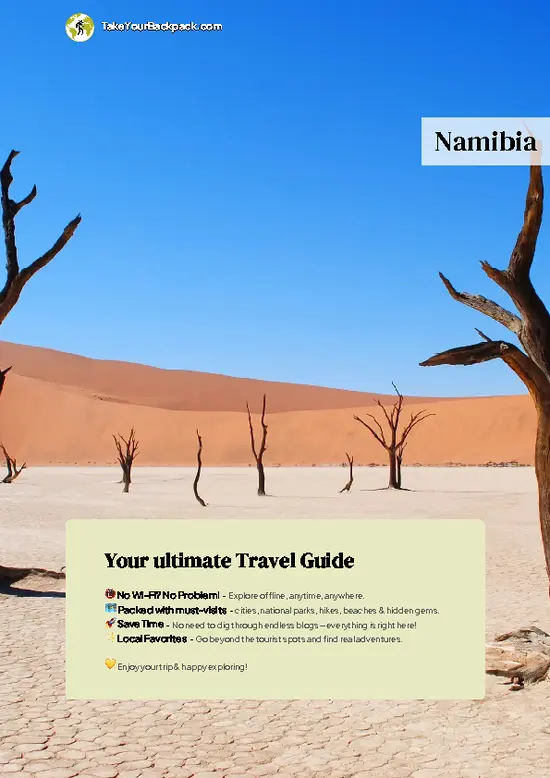
example page 0 from our offline Travel Guide for Namibia
example page 1 from our offline Travel Guide for Namibia
example page 2 from our offline Travel Guide for Namibia
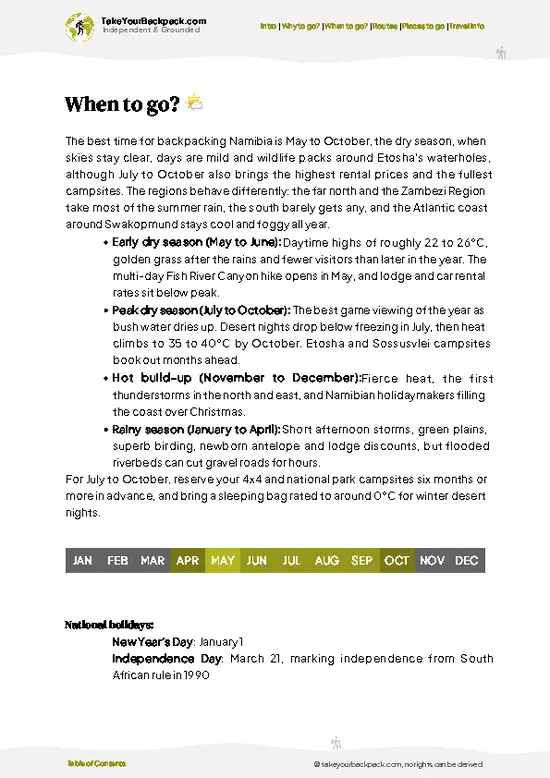
example page 3 from our offline Travel Guide for Namibia
example page 4 from our offline Travel Guide for Namibia
example page 5 from our offline Travel Guide for Namibia
example page 6 from our offline Travel Guide for Namibia
example page 7 from our offline Travel Guide for Namibia
The digital guide (319 pages) contains:
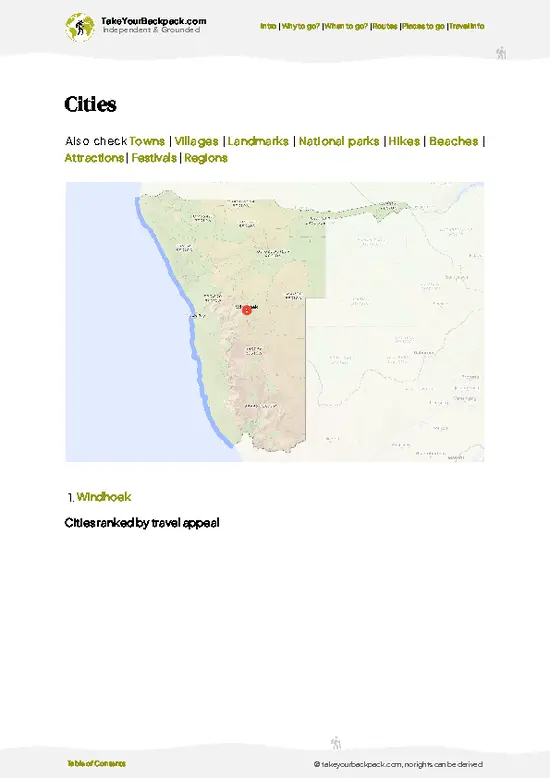
79 highlights, ranked by travel appeal
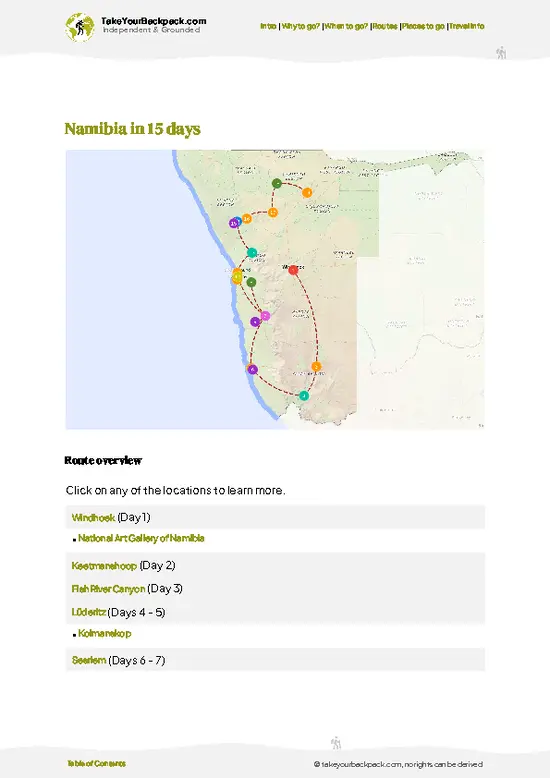
Optimized 5, 10 & 15-day travel routes
Cities, national parks, landmarks, beaches
How to get around
Offline-friendly for travel without Wi-Fi
👉 Click to see all 30+ guide features

📅 Plan smarter in minutes, not weeks
Month by month travel advice
Festivals & national holidays
Budget expectations

🗺️ Go to the right places, skip the overrated ones
Honest pros & cons of destinations
Top hikes, parks & viewpoints
Lesser-known places most travelers miss
Clear “worth it vs skip it” guidance

🛏️ Travel smoothly without rookie mistakes
Best areas to stay
Transport systems explained simply
Common scams & safety advice
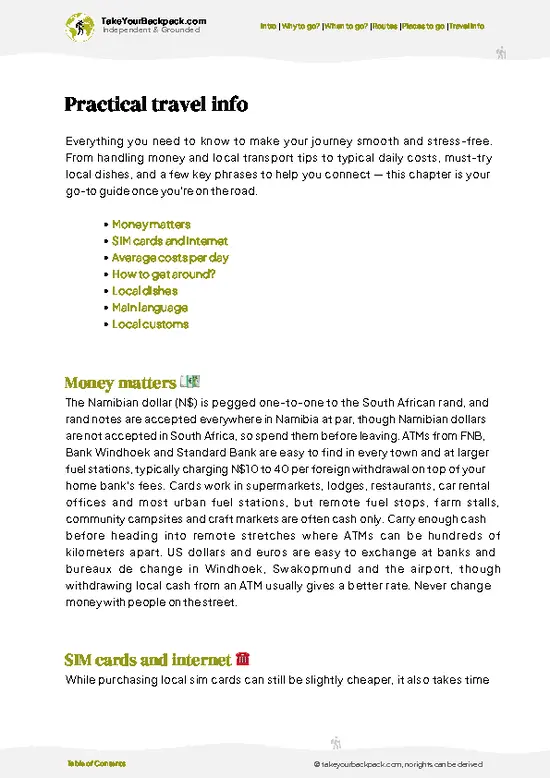
SIM cards, money & practical tips

🌍 Understand the country, not just visit it
Culture & traditions
52 Essential phrases & customs
Festivals worth planning around
Traveler-friendly historical context
Insights that make places more meaningful

📱 Built for real travel conditions
Fully downloadable PDF
Works completely offline
Optimized for phone use
Useful in remote areas & buses
Everything in one place
Save weeks of stressful planning
Get instant access to your full guide. 30‑day money-back guarantee.


By proceeding you agree to our terms.
Sent to your inbox immediately after payment • 100% Secure Checkout
Best Backpacking Travel Advisor 2025 tourism awardBest Backpacking
Travel Advisor
2025
What others say about Take Your Backpack Guides:
⭐⭐⭐⭐⭐
Fantastic, amazing amount of information!
⭐⭐⭐⭐⭐
My goodness this is amazing, it's what I've been looking for hats off too you!
⭐⭐⭐⭐⭐
I think this is absolutely BRILLIANT
⭐⭐⭐⭐
Very complete and informative. It's still missing places, but I gotta to commend you
⭐⭐⭐⭐⭐
This is truly amazing, thank you, can't wait to explore it with my kids!
⭐⭐⭐⭐⭐
Awesome resource, thank you!
⭐⭐⭐⭐⭐
This is amazing! Can't wait to explore the ones I haven't seen
⭐⭐⭐⭐
I love this! Well done, great idea.
⭐⭐⭐⭐⭐
Thanks for taking the time to make this gem!
⭐⭐⭐⭐⭐
This might be the best website I've ever seen.
⭐⭐⭐⭐⭐
Congratulations, and thank you so much for your work; it's incredibly valuable.
⭐⭐⭐⭐
In all seriousness I think you did a great job pointing out the important spots
⭐⭐⭐⭐⭐
10/10 very good
⭐⭐⭐⭐⭐
As someone who's only just starting to visit regularly this is awesome, thank you.
⭐⭐⭐⭐
Thank you very much! I'm going to visit my dad, it's going to be very useful!
⭐⭐⭐⭐⭐
This is really cool! We'll be travelling for the first time and this definitely come in handy.
⭐⭐⭐⭐⭐
You are now our minister of culture, congratulations 👨‍💼
⭐⭐⭐⭐⭐
Just wanted to tell you that this is a pearl! Going to follow your recommendations.
⭐⭐⭐⭐⭐
This is so cool. I'll definitely be using the resource for my travels soon.
⭐⭐⭐⭐⭐
This is very impressive! Good work.
⭐⭐⭐⭐⭐
This is an amazing and informative site. Very well done!

🛏️ Where to stay?Where staying makes the most sense

Swakopmund’s heart for backpackers pulses strongest around the central beachfront and the adjacent town center. This stretch is where the Atlantic breeze carries a salty tang that wakes you up better than any coffee. Staying here means you’re steps from the ocean’s restless rhythm, where the sand’s cool grit underfoot contrasts with the warm sun overhead. It’s not just about the view—it’s about the vibe. This area hums with a mix of travelers swapping stories over cheap beers and locals running small cafés and craft shops. The streets are safe, well-lit, and lively enough to feel secure even after … read more 👉
Swakopmund’s heart for backpackers pulses strongest around the central beachfront and the adjacent town center. This stretch is where the Atlantic breeze carries a salty tang that wakes you up better than any coffee. Staying here means you’re steps from the ocean’s restless rhythm, where the sand’s cool grit underfoot contrasts with the warm sun overhead. It’s not just about the view—it’s about the vibe. This area hums with a mix of travelers swapping stories over cheap beers and locals running small cafés and craft shops. The streets are safe, well-lit, and lively enough to feel secure even after dark, which is a rare luxury in many African towns.

Hostels cluster here, offering dorms and private rooms that cater to solo adventurers and budget travelers alike. The social energy is tangible—communal kitchens and lounges invite you to connect without forcing it. Compared to the quieter, more residential suburbs, this zone keeps you plugged into the pulse of Swakopmund’s quirky, laid-back culture. You’re close to essential services, tour operators, and the odd street market, so logistics are smooth.

If you wander too far inland or toward the industrial edges, you lose that easy access to both the ocean and the social scene. The payoff for sticking close to the coast and town center is a seamless blend of safety, camaraderie, and the unmistakable scent of salt and adventure in the air.

🚌 Getting aroundTransportation options and practical tips

Swakopmund moves at its own rhythm—a laid-back coastal town where the Atlantic breeze carries a salty chill and the scent of fresh fish markets. The streets don’t pulse with the urgency of a city, but they aren’t aimless either. Here, time feels elastic: mornings stretch with soft golden light, and afternoons hum with the quiet buzz of locals and tourists weaving between art galleries, cafés, and the occasional dusty dune adventure. The town’s flow is a mix of predictable routines and spontaneous detours, so mastering its transit means blending patience with a bit of local intuition. You won’t find a rigid timetable stamped on every corner, but you will find reliable ways to get around if you know where to look.

Walking: Swakopmund’s compact layout makes walking the top choice for budget … read more 👉
Swakopmund moves at its own rhythm—a laid-back coastal town where the Atlantic breeze carries a salty chill and the scent of fresh fish markets. The streets don’t pulse with the urgency of a city, but they aren’t aimless either. Here, time feels elastic: mornings stretch with soft golden light, and afternoons hum with the quiet buzz of locals and tourists weaving between art galleries, cafés, and the occasional dusty dune adventure. The town’s flow is a mix of predictable routines and spontaneous detours, so mastering its transit means blending patience with a bit of local intuition. You won’t find a rigid timetable stamped on every corner, but you will find reliable ways to get around if you know where to look.

Walking: Swakopmund’s compact layout makes walking the top choice for budget travelers. The town center, beachfront, and main attractions are all within a 20-minute stroll of each other. The sidewalks are wide and shaded in spots by acacia trees, and the ocean breeze keeps the air fresh. Walking lets you soak in the town’s quirky German colonial architecture and catch the occasional street performer or market stall. No cost, total freedom, and the chance to discover tucked-away cafés or art shops you’d miss on a bus.

Local Minibus Taxis: These are the backbone of public transit here. They run on flexible routes, mostly connecting residential areas with the town center. Expect a bit of a wait during off-peak hours, but during mornings and late afternoons, they fill up fast. Fares hover around 5 to 10 NAD (Namibian dollars), making them a cheap option. They don’t run on a strict schedule, so flag one down on the street and hop in when it’s headed your way. The ride is bumpy and lively, with locals chatting and music playing softly in the background.

Car Rentals: For those wanting to explore beyond Swakopmund—think the Skeleton Coast or the Namib Desert—renting a car is the way to go. Prices start around 400 NAD per day for a basic model, but booking ahead can snag better deals. The roads are generally well-maintained, but keep an eye out for sudden sand drifts on the highway. Driving gives you the freedom to chase the light at dawn or dusk, when the desert’s ochre hues deepen and the air cools dramatically.

Bicycle Rentals: Swakopmund’s flat terrain and mild climate make cycling a surprisingly pleasant option. Rentals cost about 100 NAD per day. Bikes are sturdy, often mountain-style, perfect for cruising the beachfront promenade or venturing onto nearby dirt paths. Early mornings and late afternoons are best to avoid the midday sun, which can hit hard despite the ocean breeze.

Shuttle Services: If you’re arriving from or heading to Walvis Bay or the airport, shuttle vans offer a budget-friendly, semi-scheduled option. Prices range from 150 to 250 NAD depending on distance. They run a few times daily, usually timed around flight arrivals and departures. These shuttles are more comfortable than minibuses and save you the hassle of navigating local transit with luggage.

Understanding Swakopmund’s transit is about embracing its relaxed pace while knowing when to switch gears. Walk to savor the town’s textures and smells, hop on a minibus to mingle with locals, or rent a bike or car to chase the wild landscapes just beyond the town’s edge. Each mode offers a different slice of the experience, and together they unlock the full rhythm of this coastal escape.

👛 Costs (as of 14 January 2025)Travel costs and budget guide for Swakopmund

Backpacking in Swakopmund, Namibia, offers a unique blend of desert air and Atlantic breeze, but knowing the daily costs helps you plan without surprises.
  • Dorm Accommodation: Expect to pay between $15 and $25 per night for a bed in a shared dorm at a decent hostel. Swakopmund has a handful of backpacker hostels that balance comfort with budget, often including basic amenities like Wi-Fi and communal kitchens.
  • Meals: Eating out can vary. A simple breakfast or lunch at a local café runs about $5 to $8, while dinner at a mid-range spot might push $10 to $15. Cooking your own meals from local markets can cut costs, but fresh produce and staples hover around $1 to $3 per item.
  • Local Transport: Swakopmund is compact, so walking covers most ground. For longer trips or excursions, expect to spend
read more 👉
Backpacking in Swakopmund, Namibia, offers a unique blend of desert air and Atlantic breeze, but knowing the daily costs helps you plan without surprises.
  • Dorm Accommodation: Expect to pay between $15 and $25 per night for a bed in a shared dorm at a decent hostel. Swakopmund has a handful of backpacker hostels that balance comfort with budget, often including basic amenities like Wi-Fi and communal kitchens.
  • Meals: Eating out can vary. A simple breakfast or lunch at a local café runs about $5 to $8, while dinner at a mid-range spot might push $10 to $15. Cooking your own meals from local markets can cut costs, but fresh produce and staples hover around $1 to $3 per item.
  • Local Transport: Swakopmund is compact, so walking covers most ground. For longer trips or excursions, expect to spend around $2 to $5 on local taxis or shuttle services. Renting a bike for a day is another popular option, usually around $10 to $15.
  • Basic Activities/Entry Fees: Entry to museums or local attractions typically costs between $3 and $7. More adventurous activities like quad biking or sandboarding start at $30 and can go up to $60, but simple beach strolls and exploring the town remain free.
  • Miscellaneous Expenses: Budget around $3 to $7 daily for essentials like bottled water, snacks, or small souvenirs. Internet cafes or printing services might add a dollar or two if needed.

All told, a realistic daily budget for backpacking in Swakopmund falls between $35 and $60. This range covers basic comfort without skimping on the experiences that make the town’s mix of desert and sea so compelling.
⚠️ Prices can change and everyone travels differently, so take this as a rough guide. Hope it helps you plan your adventure!

🚌 Day tripsShort trips worth adding

Swakopmund is a backpacker’s dream base, where the Atlantic meets the Namib Desert. From here, you can dive into adventures that blend adrenaline with the stunning landscapes of Namibia.

Sandwich Harbour
This trip is a must for those who want to see the dramatic meeting of ocean and desert. A 4x4 drive takes about an hour from Swakopmund, and the thrill of navigating through towering dunes is half the fun. The cost is around $70 for a guided tour, which is worth every penny. Bring your camera; the light at sunset transforms the sand into a palette of gold and orange. Many first-timers underestimate the wind here, so pack a scarf to keep the sand out of your face.
👉 Explore Sandwich Harbour

Walvis Bay Lagoon
Just 30 minutes south of Swakopmund, this lagoon is a birdwatcher’s paradise. … read more 👉
Swakopmund is a backpacker’s dream base, where the Atlantic meets the Namib Desert. From here, you can dive into adventures that blend adrenaline with the stunning landscapes of Namibia.

Sandwich Harbour
This trip is a must for those who want to see the dramatic meeting of ocean and desert. A 4x4 drive takes about an hour from Swakopmund, and the thrill of navigating through towering dunes is half the fun. The cost is around $70 for a guided tour, which is worth every penny. Bring your camera; the light at sunset transforms the sand into a palette of gold and orange. Many first-timers underestimate the wind here, so pack a scarf to keep the sand out of your face.
👉 Explore Sandwich Harbour

Walvis Bay Lagoon
Just 30 minutes south of Swakopmund, this lagoon is a birdwatcher’s paradise. You can rent a bike for about $10 and cycle along the coast, spotting flamingos and pelicans. The best time to visit is during the early morning when the air is crisp and the light is soft. A common mistake is to rush through; take your time to soak in the atmosphere and enjoy a coffee at one of the local cafés.


Skeleton Coast
For a taste of Namibia’s rugged beauty, head to Skeleton Coast. It’s a bit of a trek—about two hours by car—but the haunting landscapes are worth it. Expect to pay around $50 for fuel and snacks. The eerie shipwrecks and desolate beaches are a photographer’s dream. Many backpackers miss the chance to explore the nearby salt pans, which offer a unique contrast to the coastline. Go in the late afternoon for the best light.
👉 Explore Skeleton Coast

Namib Desert Dunes
A trip to the iconic dunes of Sossusvlei is a bit ambitious but doable in a long day. It’s a three-hour drive, so leave early. The entrance fee is about $5, and you’ll want to bring plenty of water and snacks. The sunrise over the dunes is breathtaking, but many first-timers forget to check the weather; it can get hot quickly. The shifting sands and shadows create a surreal landscape that feels like stepping onto another planet.


Cape Cross Seal Reserve
Just over an hour from Swakopmund, this reserve is home to thousands of seals. The entrance fee is around $5, and the smell of the ocean mixed with seal musk is unforgettable. The best time to visit is during the morning when the seals are most active. A common mistake is to overlook the surrounding scenery; the rugged coastline is just as captivating as the seals themselves.
Want to know what more Namibia offers?
The Namibia Travel Guide describes 79 highlights, from cities to national parks, from beaches to hikes

Get the Travel Guide -

🛡️ SafetyStaying Safe: What Travelers Should Know

Swakopmund is generally safe, but a few practical tips can enhance your experience. The town’s vibrant atmosphere can draw you in, but stay aware in crowded areas, especially near the markets. Keep your belongings close; a crossbody bag is ideal.

If you’re solo, be mindful when wandering after dark. Stick to well-lit streets and avoid isolated paths. The beachfront is lively, but it’s best to travel with a buddy if you’re out late.

Scams are rare, but watch for overly friendly locals offering unsolicited help. Politely decline and keep moving. Street vendors can be persistent, so a firm “no, thank you” works wonders.

Annoyances like the occasional tout can test your patience, but a calm demeanor goes a long way. Embrace the quirks of the town; they’re part of its charm. By staying aware … read more 👉
Swakopmund is generally safe, but a few practical tips can enhance your experience. The town’s vibrant atmosphere can draw you in, but stay aware in crowded areas, especially near the markets. Keep your belongings close; a crossbody bag is ideal.

If you’re solo, be mindful when wandering after dark. Stick to well-lit streets and avoid isolated paths. The beachfront is lively, but it’s best to travel with a buddy if you’re out late.

Scams are rare, but watch for overly friendly locals offering unsolicited help. Politely decline and keep moving. Street vendors can be persistent, so a firm “no, thank you” works wonders.

Annoyances like the occasional tout can test your patience, but a calm demeanor goes a long way. Embrace the quirks of the town; they’re part of its charm. By staying aware and confident, you’ll unlock the true essence of Swakopmund, making your journey smoother and more enjoyable.

Other Namibian towns near Swakopmund

Explore more nearby:

  • Walvis Bay—lagoon wildlife, salt pans, working port, flamingo flocks| 31 km away
  • Henties Bay—angling hotspot, foggy coastline, holiday homes, desert edge| 67 km away
  • Usakos—railway heritage, Erongo Mountains, roadside stop, semi-desert| 132 km away

💡 Not sure where to go next?
Create a personalized itinerary for Namibia including Swakopmund and the places that fit your trip.

Generate my itinerary

👉 Discover all towns

Or checkout all Namibia has to offer (think cities, towns, villages, national parks, hikes, beaches, festivals)
Country photo of Namibia

We 💚 feedbackIs it worth it?

Swakopmund is a quirky blend of adventure and relaxation, where the salty ocean air meets the vast Namib Desert. The best surprise? The local coffee shops serve some of the richest brews you’ll find anywhere—perfect for fueling your dune adventures. But a heads-up: the winds can whip up unexpectedly, so pack layers. Embrace the laid-back vibe, and don’t rush. Take time to wander the charming streets, savoring the unique architecture and the local art scene. It’s all part of the experience.

✍️ Help improve this page!
The information on this page is based on in-depth research, insights shared by experienced travelers, and feedback from the local travel community in Namibia. While every effort is made to keep the information accurate and current, conditions can change — so if you spot anything incorrect or outdated, please get in touch.


🙋‍♂️ Give feedback

👋 Meet the founderWho’s Behind Take Your Backpack?

Johan, backpacker and founder of TakeYourBackpackHi, I’m Johan (Netherlands 🇳🇱), the creator of TakeYourBackpack. Over the past decade, I’ve backpacked through 80+ countries across six continents, gaining extensive experience with independent travel, long-term trips, and overland routes.

This site is built on a combination of firsthand travel experience and carefully curated insights from other backpackers. Many guides are based on places I’ve personally visited, while others bring together tips, observations, and practical advice shared by trusted travelers I’ve met along the way.

The goal is to provide realistic, experience-driven guidance — not generic itineraries — so you can explore destinations with better context, clearer expectations, and more confidence.

Get full Namibia guide •
Instant download • 79 highlights • Full Offline guide