×

Namibia🇳🇦 | townsWalvis BayFlamingo lagoon, seal colony, salt ponds, Dune 7 | things to do and best time to go

Explore SwakopmundExplore Tsumeb

Backpacking in Walvis Bay
🏆 Top picktown ranked #2
By Johan Kruseman 🇳🇱 | Updated October 22, 2026

Walvis Bay was once a salt-crusted port that travelers drove through with the windows up, on the way to Swakopmund's cafés. Today it earns its own night or two. The town sits on Namibia's central Atlantic coast, where the Namib Desert runs straight into cold ocean. The light is flat silver at dawn, the air smells of brine, diesel and fish meal, and flamingos honk in the shallows of the lagoon. Pelicans loaf on the waterfront. The grid of streets itself is plain and industrial, and I would skip browsing the center. Spend your time on the lagoon, the salt works and the boat trips out to the seals and dolphins. It is easy to reach by road, and flights land at a nearby airport. Hostels are few and quiet, so you meet people on tours rather than in bars. Unlike Swakopmund, which has adventure sports and a busy evening scene, Walvis Bay is a working port with wildlife on the doorstep and far less polish.

Discover everything you want to know in the 📖 Namibia Travel Guide.


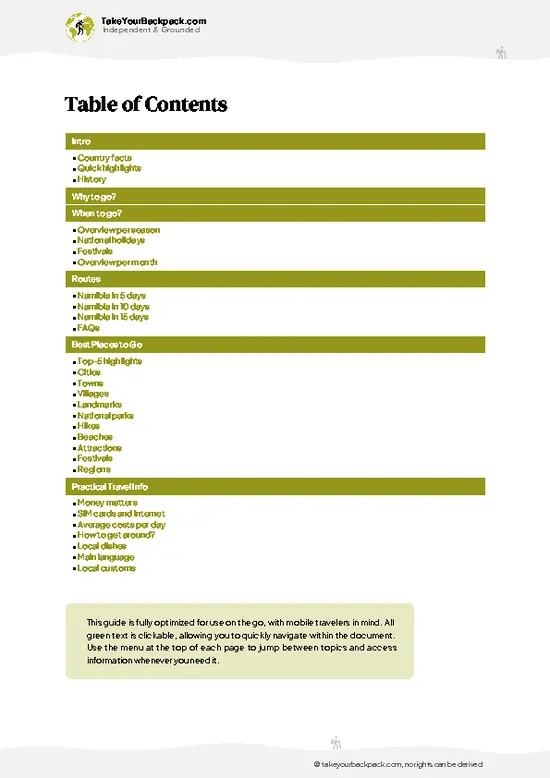
example page 0 from our offline Travel Guide for Namibia
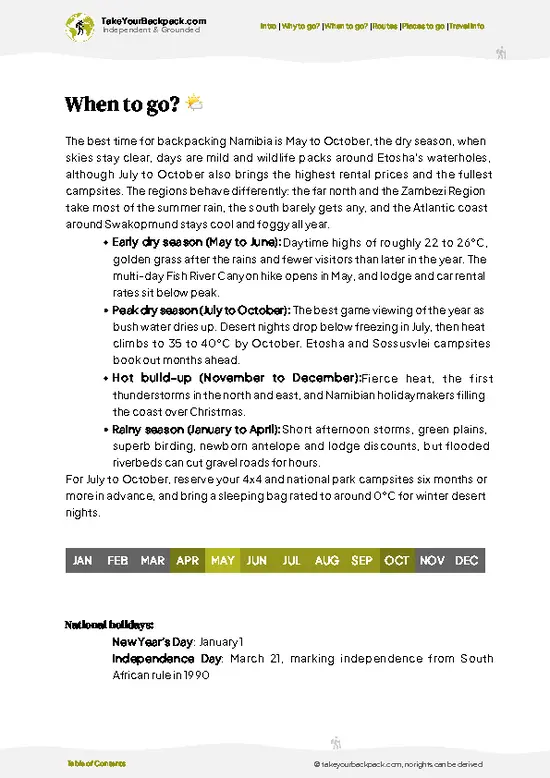
example page 1 from our offline Travel Guide for Namibia
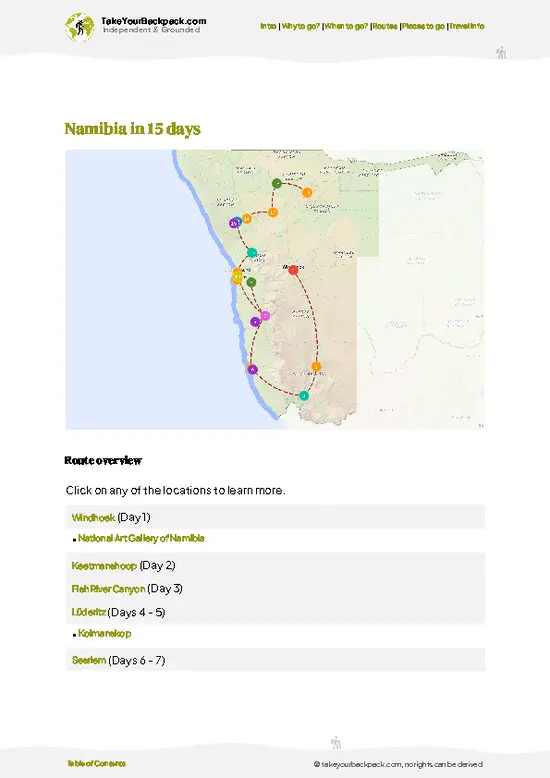
example page 2 from our offline Travel Guide for Namibia
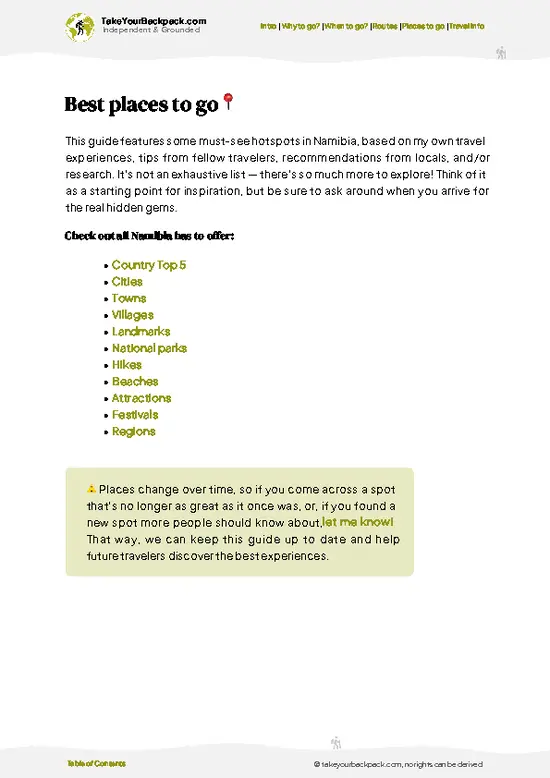
example page 3 from our offline Travel Guide for Namibia
example page 4 from our offline Travel Guide for Namibia
example page 5 from our offline Travel Guide for Namibia
example page 6 from our offline Travel Guide for Namibia
example page 7 from our offline Travel Guide for Namibia
Loading the map 🌍
CLICK TO FILTER
cities
towns
villages
landmarks
national parks
hikes
beaches
attractions
festivals
regions
SHOW COUNTRY’S BESTSHOW ALL

✨ Why go?
Ranked #2 town in Namibia
What makes this town worth visiting

Walvis Bay is the place to go when you want wildlife without a safari budget or a long drive. The lagoon, a protected wetland, draws greater and lesser flamingos in big numbers, and you can watch them from the Esplanade, a flat waterfront promenade, with a coffee in hand. Kayak and catamaran trips head out to Pelican Point, where a lighthouse and thousands of Cape fur seals share a sandy spit. Dolphins, and sometimes whales, tag along on the way. Then there are the salt pans and the dunes, which sit on the town's edge and make good half-day outings. Most backpackers stay one or two nights, usually as a base for these trips, then move on toward Sossusvlei or north up the coast. It suits solo travelers, birders, photographers and anyone who prefers a calm evening to a loud one. Expect small … read more 👉
Walvis Bay is the place to go when you want wildlife without a safari budget or a long drive. The lagoon, a protected wetland, draws greater and lesser flamingos in big numbers, and you can watch them from the Esplanade, a flat waterfront promenade, with a coffee in hand. Kayak and catamaran trips head out to Pelican Point, where a lighthouse and thousands of Cape fur seals share a sandy spit. Dolphins, and sometimes whales, tag along on the way. Then there are the salt pans and the dunes, which sit on the town's edge and make good half-day outings. Most backpackers stay one or two nights, usually as a base for these trips, then move on toward Sossusvlei or north up the coast. It suits solo travelers, birders, photographers and anyone who prefers a calm evening to a loud one. Expect small guesthouses, seafood suppers and early starts. If nightlife is your priority, stay in Swakopmund and come over for the day. If animals and wide, empty light are the draw, sleep here.

💡 HighlightsWhat this place is best known for

  1. Walvis Bay Lagoon and the Esplanade: The shallow Ramsar-listed lagoon holds flamingos, pelicans and many other waders. Walk or cycle the Esplanade for free, any time of day, though low tide at sunrise exposes more feeding birds. Allow 1 to 2 hours.
  2. Pelican Point and Seal Colony: A narrow sand spit with a lighthouse and one of the largest Cape fur seal colonies on the coast. Kayak or boat trips cost about US$55 to 90 and take 3 to 5 hours, with mornings calmest. Seals often come right up to the kayaks.
  3. Walvis Bay Salt Works: Rows of pink and green evaporation ponds stretch along the coast road, with salt piled in white heaps. Viewing from the road is free and takes 30 minutes. Late afternoon gives the best color for photos.
  4. Dune 7: A large dune northeast of town that you can climb along its steep
… read more 👉
  1. Walvis Bay Lagoon and the Esplanade: The shallow Ramsar-listed lagoon holds flamingos, pelicans and many other waders. Walk or cycle the Esplanade for free, any time of day, though low tide at sunrise exposes more feeding birds. Allow 1 to 2 hours.
  2. Pelican Point and Seal Colony: A narrow sand spit with a lighthouse and one of the largest Cape fur seal colonies on the coast. Kayak or boat trips cost about US$55 to 90 and take 3 to 5 hours, with mornings calmest. Seals often come right up to the kayaks.
  3. Walvis Bay Salt Works: Rows of pink and green evaporation ponds stretch along the coast road, with salt piled in white heaps. Viewing from the road is free and takes 30 minutes. Late afternoon gives the best color for photos.
  4. Dune 7: A large dune northeast of town that you can climb along its steep crest in 30 to 45 minutes. Entry is a small fee, around US$3 to 5, and the sand is coolest in the morning. Bring a windbreaker for the top.
  5. Walvis Bay Museum and Library Complex: A small civic museum with displays on the town's history, local nature and its port. Entry is low cost or free, and it takes about 45 minutes. It works well as a refuge on a windy, foggy afternoon.
For day trips, Walvis Bay puts you within reach of Sandwich Harbour's dunes meeting the sea, the Kuiseb Delta, Swakopmund's coastline and the moon landscape viewpoint inland.
For a first visit, the Pelican Point seal trip is the one to book.
Spotted a mistake or missing something? Contact us.

Things to do around Walvis Bay

Ratings based on Tripadvisor reviews. When you book through this link, you support our work at no extra cost to you.

🏘️ NeighborhoodsKey areas and districts to know

Walvis Bay is a flat, spread-out town where the Atlantic fog, the desert dunes and the lagoon each shape a different district, and three areas matter to a backpacker.
  • The Waterfront and Esplanade: This is where you should spend your first evening. The promenade runs along the lagoon, with flamingos and pelicans picking through the shallows, a cold salty breeze and the smell of kelp and grilled fish drifting from the restaurants. Oysters and seafood are the thing to eat here. It is quiet by 10 pm, and it is fully walkable.
  • Central Town (Sam Nujoma Avenue and Nangolo Mbumba Drive): The practical core, with supermarkets, ATMs, bakeries, tour offices and the old German-era buildings. It is functional rather than pretty, and midday traffic is dusty, but you will pass through to restock. A short wander
… read more 👉
Walvis Bay is a flat, spread-out town where the Atlantic fog, the desert dunes and the lagoon each shape a different district, and three areas matter to a backpacker.
  • The Waterfront and Esplanade: This is where you should spend your first evening. The promenade runs along the lagoon, with flamingos and pelicans picking through the shallows, a cold salty breeze and the smell of kelp and grilled fish drifting from the restaurants. Oysters and seafood are the thing to eat here. It is quiet by 10 pm, and it is fully walkable.
  • Central Town (Sam Nujoma Avenue and Nangolo Mbumba Drive): The practical core, with supermarkets, ATMs, bakeries, tour offices and the old German-era buildings. It is functional rather than pretty, and midday traffic is dusty, but you will pass through to restock. A short wander is enough, and you can cover it on foot in an hour.
  • Kuisebmond: The large township to the northeast. The best way in is with a local guide, who will take you to a shebeen for grilled meat and a cold beer, and to craft stalls. The streets are dusty and loud with music. Skip it on your own, since there is little to see unguided and no real walkable sights.
  • Dolphin Beach and Long Beach (the Dunes Road): Heading toward Swakopmund, wind-whipped sand meets cold surf, with sandboarding dunes and kite surfers. It is empty, bleak and bright. A beautiful stretch, but you need a vehicle, because it is too far and too exposed to walk.

⌛️ 1 daySeeing the highlights in 24 hours

7:30 AM, Pelican Point Kayak Launch: Start with the seal colony, since morning water is calmest and the fog often still hangs over the spit. Your guide drives you along the sand, then you paddle among curious seals for a few hours. Book this ahead, and bring a windproof layer.
11:30 AM, Esplanade Cafés: Back on shore, walk the waterfront promenade for brunch. Flamingos feed just beyond the rocks, and pelicans usually perch on the pier posts. Seafood is the safe order here.
1:30 PM, Walvis Bay Museum and Library Complex: A short walk or drive inland brings you to a quiet, shaded museum. It gives context for the harbor, and the cool rooms are a break from the wind and glare.
3:00 PM, Kuisebmond Township Visit: Off the usual tourist loop, this neighborhood is best seen with a local guide, who can … read more 👉
7:30 AM, Pelican Point Kayak Launch: Start with the seal colony, since morning water is calmest and the fog often still hangs over the spit. Your guide drives you along the sand, then you paddle among curious seals for a few hours. Book this ahead, and bring a windproof layer.
11:30 AM, Esplanade Cafés: Back on shore, walk the waterfront promenade for brunch. Flamingos feed just beyond the rocks, and pelicans usually perch on the pier posts. Seafood is the safe order here.
1:30 PM, Walvis Bay Museum and Library Complex: A short walk or drive inland brings you to a quiet, shaded museum. It gives context for the harbor, and the cool rooms are a break from the wind and glare.
3:00 PM, Kuisebmond Township Visit: Off the usual tourist loop, this neighborhood is best seen with a local guide, who can introduce craft workers, a shebeen and everyday life in the community. It is where much of the port town actually lives, and the visit gives a more complete picture of the place.
5:00 PM, Salt Works Road: Drive or cycle the coast road as the light softens. Pink ponds, white salt mounds and wading birds make the best photographs of the day.
7:00 PM, Waterfront Dinner: Finish with grilled fish or oysters, which are the local specialty, and head back to your guesthouse for an early night.

🌤️ When to go?Best time to visit Walvis Bay

  • Cool Dry Season (May to September): Days reach 19 to 23°C (66 to 73°F) and nights drop to 8 to 11°C (46 to 52°F). Mornings often start with fog. Whale and dolphin trips run well, and flamingo numbers on the lagoon are high.
  • Warm Season (December to March): Highs are 22 to 26°C (72 to 79°F), tempered by the cold Benguela current, so it never gets truly hot. Daylight stretches to about 13.5 hours, and this is the busiest period with Namibian and South African holidaymakers, especially around Christmas, when beds and tours cost more.
  • Shoulder Months (April, October, November): Mild weather, thin crowds and the best prices on tours and rooms. Fog is common near the coast, and a few days of wind can scour the beaches.
  • Rain: Annual rainfall is under 20 mm (0.8 in), so rain barely affects plans. Wind
… read more 👉
  • Cool Dry Season (May to September): Days reach 19 to 23°C (66 to 73°F) and nights drop to 8 to 11°C (46 to 52°F). Mornings often start with fog. Whale and dolphin trips run well, and flamingo numbers on the lagoon are high.
  • Warm Season (December to March): Highs are 22 to 26°C (72 to 79°F), tempered by the cold Benguela current, so it never gets truly hot. Daylight stretches to about 13.5 hours, and this is the busiest period with Namibian and South African holidaymakers, especially around Christmas, when beds and tours cost more.
  • Shoulder Months (April, October, November): Mild weather, thin crowds and the best prices on tours and rooms. Fog is common near the coast, and a few days of wind can scour the beaches.
  • Rain: Annual rainfall is under 20 mm (0.8 in), so rain barely affects plans. Wind and fog are the real variables.
Book sandboarding and kayak trips for the first sunny morning after fog clears, since they sometimes run late or cancel.


source: climatestotravel.comJANJanuary: fair for travelingFEBFebruary: fair for travelingMARMarch: good for travelingAPRApril: highly recommended for travelingMAYMay: excellent for travelingJUNJune: excellent for travelingJULJuly: excellent for travelingAUGAugust: excellent for travelingSEPSeptember: highly recommended for travelingOCTOctober: excellent for travelingNOVNovember: good for travelingDECDecember: fair for traveling
when-to-go

✈️ The backpacker research shortcutNamibia Travel Guide

An offline-friendly backpacking guide with optimized travel routes, ranked highlights, transport advice, and the best areas to stay.
example page 0 from our offline Travel Guide for Namibia
example page 1 from our offline Travel Guide for Namibia
example page 2 from our offline Travel Guide for Namibia
example page 3 from our offline Travel Guide for Namibia
example page 4 from our offline Travel Guide for Namibia
example page 5 from our offline Travel Guide for Namibia
example page 6 from our offline Travel Guide for Namibia
example page 7 from our offline Travel Guide for Namibia
The digital guide (294 pages) contains:
✅ 71 highlights, ranked by travel appeal
✅ Optimized 5, 10 & 15-day travel routes
✅ Cities, national parks, landmarks, beaches
✅ How to get around
✅ Offline-friendly for travel without Wi-Fi
👉 Click to see all 30+ guide features

📅 Plan smarter in minutes, not weeks
✅ Month by month travel advice
✅ Festivals & national holidays
✅ Budget expectations

🗺️ Go to the right places, skip the overrated ones
✅ Honest pros & cons of destinations
✅ Top hikes, parks & viewpoints
✅ Lesser-known places most travelers miss
✅ Clear “worth it vs skip it” guidance

🛏️ Travel smoothly without rookie mistakes
✅ Best areas to stay
✅ Transport systems explained simply
✅ Common scams & safety advice
✅ SIM cards, money & practical tips

🌍 Understand the country, not just visit it
✅ Culture & traditions
✅ 52 Essential phrases & customs
✅ Festivals worth planning around
✅ Traveler-friendly historical context
✅ Insights that make places more meaningful

📱 Built for real travel conditions
✅ Fully downloadable PDF
✅ Works completely offline
✅ Optimized for phone use
✅ Useful in remote areas & buses
✅ Everything in one place
Stop searching, start planning
Get instant access to your full guide. 30‑day money-back guarantee.
+ Add another guide for just

By proceeding you agree to our terms.
Sent to your inbox immediately after payment • 100% Secure Checkout
Best Backpacking Travel Advisor 2025 tourism awardBest Backpacking
Travel Advisor
2025
What others say about Take Your Backpack Guides:
⭐⭐⭐⭐⭐
Fantastic, amazing amount of information!
⭐⭐⭐⭐⭐
My goodness this is amazing, it's what I've been looking for hats off too you!
⭐⭐⭐⭐⭐
I think this is absolutely BRILLIANT
⭐⭐⭐⭐
Very complete and informative. It's still missing places, but I gotta to commend you
⭐⭐⭐⭐⭐
This is truly amazing, thank you, can't wait to explore it with my kids!
⭐⭐⭐⭐⭐
Awesome resource, thank you!
⭐⭐⭐⭐⭐
This is amazing! Can't wait to explore the ones I haven't seen
⭐⭐⭐⭐
I love this! Well done, great idea.
⭐⭐⭐⭐⭐
Thanks for taking the time to make this gem!
⭐⭐⭐⭐⭐
This might be the best website I've ever seen.
⭐⭐⭐⭐⭐
Congratulations, and thank you so much for your work; it's incredibly valuable.
⭐⭐⭐⭐
In all seriousness I think you did a great job pointing out the important spots
⭐⭐⭐⭐⭐
10/10 very good
⭐⭐⭐⭐⭐
As someone who's only just starting to visit regularly this is awesome, thank you.
⭐⭐⭐⭐
Thank you very much! I'm going to visit my dad, it's going to be very useful!
⭐⭐⭐⭐⭐
This is really cool! We'll be travelling for the first time and this definitely come in handy.
⭐⭐⭐⭐⭐
You are now our minister of culture, congratulations 👨‍💼
⭐⭐⭐⭐⭐
Just wanted to tell you that this is a pearl! Going to follow your recommendations.
⭐⭐⭐⭐⭐
This is so cool. I'll definitely be using the resource for my travels soon.
⭐⭐⭐⭐⭐
This is very impressive! Good work.
⭐⭐⭐⭐⭐
This is an amazing and informative site. Very well done!

🛏️ Where to stay?How to pick the right area

The most useful area for a budget stay is the central and waterfront zone around the Esplanade, where guesthouses, backpacker lodges and dorm beds are within walking distance of supermarkets, tour offices and restaurants. Streets are lit and calm in the evening, and noise is limited to the occasional bar and gulls at dawn. Taxis stop here easily, and shuttle pickups for Swakopmund and Windhoek are simple to arrange.
The second option is Swakopmund, about 35 minutes away by road. Its hostel scene is far bigger, with more dorm beds, a livelier social setting and the main adventure-activity operators, … read more 👉
The most useful area for a budget stay is the central and waterfront zone around the Esplanade, where guesthouses, backpacker lodges and dorm beds are within walking distance of supermarkets, tour offices and restaurants. Streets are lit and calm in the evening, and noise is limited to the occasional bar and gulls at dawn. Taxis stop here easily, and shuttle pickups for Swakopmund and Windhoek are simple to arrange.
The second option is Swakopmund, about 35 minutes away by road. Its hostel scene is far bigger, with more dorm beds, a livelier social setting and the main adventure-activity operators, so many backpackers sleep there and visit Walvis Bay for lagoon and Sandwich Harbour trips. Shuttles run frequently, and a taxi is roughly US$20 to 30. Pick it if you want other travelers to meet and a cheaper nightlife, but expect fog and a cold seaside chill.
Dorm beds in Walvis Bay itself are limited and fill in December and January, so book ahead in high season. Prices run about US$15 to 25 for a dorm bed, and US$40 to 70 for a private room. Staying in Kuisebmond is not recommended for visitors unless arranged through a local host.

🚌 Getting aroundHow to get around Walvis Bay

Walvis Bay is flat, and the Esplanade, waterfront and central blocks are easy to cover on foot, but walking stops making sense once you leave the center, because the lagoon, the salt works and the dunes lie 10 to 30 kilometers away along open, windy roads with almost no shade. Traffic is light and calm, and public transport is minimal, so most backpackers rely on taxis, tours or a rental car. Expect fog-cooled mornings and strong afternoon wind when you do walk.
  • Walking: Free, and pleasant along the lagoon promenade with the smell of salt and kelp. The center takes about 20 minutes end to end, and daylight walking is fine.
  • Local taxis: The standard way to get around town and to the lagoon-side lodges. Fares are US$2 to 5 for most trips within town and roughly US$20 to 30 to Swakopmund. Call
… read more 👉
Walvis Bay is flat, and the Esplanade, waterfront and central blocks are easy to cover on foot, but walking stops making sense once you leave the center, because the lagoon, the salt works and the dunes lie 10 to 30 kilometers away along open, windy roads with almost no shade. Traffic is light and calm, and public transport is minimal, so most backpackers rely on taxis, tours or a rental car. Expect fog-cooled mornings and strong afternoon wind when you do walk.
  • Walking: Free, and pleasant along the lagoon promenade with the smell of salt and kelp. The center takes about 20 minutes end to end, and daylight walking is fine.
  • Local taxis: The standard way to get around town and to the lagoon-side lodges. Fares are US$2 to 5 for most trips within town and roughly US$20 to 30 to Swakopmund. Call or ask your guesthouse, since few cruise the streets after dark. They run from early morning to late evening.
  • Shuttles and intercity buses: Shared shuttles and buses link Walvis Bay with Swakopmund (about 35 minutes) and Windhoek (4 to 5 hours). Expect US$8 to 15 to Swakopmund by shuttle and US$25 to 45 to Windhoek. Book a day ahead, since seats fill and departures cluster in the morning.
  • Rental car: The best option for Sandwich Harbour, Dolphin Beach and the Namib edge, at roughly US$35 to 60 a day for a small car with gravel permitted, plus fuel. Gravel and sand roads need caution, and driving on dunes is only for guided 4x4s. Split the cost with others to make it cheap.
  • Guided tours: Sandwich Harbour 4x4 trips cost US$100 to 150 and include pickup, which is the easiest option when you have no car.
My advice is to skip a car if you stay only in town and book tours instead. Hire one if you plan to see the coast, the salt pans and the dunes at your own pace.

👛 Costs (as of 22 October 2026)What things cost and how to budget

Walvis Bay costs about US$50 to 100 a day for a backpacker who takes the odd tour, with dorm beds and self-catering keeping the base low.
CategoryBudget RangeLocal Reality
Dorm accommodationUS$15 to 25 (high season), US$12 to 20 (low season)Dorm beds are limited in town, and December to January sells out early.
MealsUS$15 to 25Supermarket groceries and bakery items are cheap; a seafood dinner by the lagoon costs US$12 to 20.
Local transportUS$5 to 15Short taxi rides cost US$2 to 5; shuttle to Swakopmund US$8 to 15.
Basic activities/entry feesUS$10 to 25Lagoon walks, Dune 7 and beaches are free; a boat or kayak trip costs US$40 to 60 and a Sandwich Harbour tour US$100 to 150.
Miscellaneous expensesUS$5 to 10SIM card, water, sunscreen, laundry and tips.
Total Daily BudgetUS$50 to 100About US$75 per
… read more 👉
Walvis Bay costs about US$50 to 100 a day for a backpacker who takes the odd tour, with dorm beds and self-catering keeping the base low.
CategoryBudget RangeLocal Reality
Dorm accommodationUS$15 to 25 (high season), US$12 to 20 (low season)Dorm beds are limited in town, and December to January sells out early.
MealsUS$15 to 25Supermarket groceries and bakery items are cheap; a seafood dinner by the lagoon costs US$12 to 20.
Local transportUS$5 to 15Short taxi rides cost US$2 to 5; shuttle to Swakopmund US$8 to 15.
Basic activities/entry feesUS$10 to 25Lagoon walks, Dune 7 and beaches are free; a boat or kayak trip costs US$40 to 60 and a Sandwich Harbour tour US$100 to 150.
Miscellaneous expensesUS$5 to 10SIM card, water, sunscreen, laundry and tips.
Total Daily BudgetUS$50 to 100About US$75 per day on average.
Cook at the hostel with groceries from the central supermarkets, and split a rental car or tour with other travelers to cut the largest costs. Prices are paid in Namibian dollars, though South African rand is also accepted.
⚠️ Prices can change and everyone travels differently, so take this as a rough guide. Hope it helps you plan your adventure!

🚌 Day tripsExploring the surroundings

Walvis Bay works as a very easy base, because tour operators collect from town and the best sights sit within an hour of it, so you rarely need an overnight stay.
Sandwich Harbour:
Dunes plunge straight into the Atlantic here, with flamingos, pelicans and jackals on the tidal flats. A guided 4x4 trip takes 4 to 6 hours and costs US$100 to 150, which is the main splurge worth making. Go in the clear morning, and note that tide times shift the route. The common mistake is trying to self-drive without a permit and 4x4 experience.
👉 Explore Sandwich Harbour
Swakopmund:
About 35 minutes north by road, Swakopmund is the adventure hub for sandboarding, skydiving and quad biking. A shuttle costs US$8 to 15 each way. Plan a full day, from morning dunes to a seaside dinner, and book activities a day ahead … read more 👉
Walvis Bay works as a very easy base, because tour operators collect from town and the best sights sit within an hour of it, so you rarely need an overnight stay.
Sandwich Harbour:
Dunes plunge straight into the Atlantic here, with flamingos, pelicans and jackals on the tidal flats. A guided 4x4 trip takes 4 to 6 hours and costs US$100 to 150, which is the main splurge worth making. Go in the clear morning, and note that tide times shift the route. The common mistake is trying to self-drive without a permit and 4x4 experience.
👉 Explore Sandwich Harbour
Swakopmund:
About 35 minutes north by road, Swakopmund is the adventure hub for sandboarding, skydiving and quad biking. A shuttle costs US$8 to 15 each way. Plan a full day, from morning dunes to a seaside dinner, and book activities a day ahead since fog can delay them. Many first-timers underestimate the chill on the coast and arrive without a jacket.
👉 Explore Swakopmund
Kuiseb Delta and Dune 7:
Dune 7 lies about 15 minutes from town and is a free climb of roughly 20 to 30 minutes. The sand is ankle-deep, and the view at the top is of apricot ridges and the Kuiseb riverbed. Go early before the heat and wind pick up, and bring water and sun cover. The common mistake is wearing sandals, which fill with hot sand.

Moon Landscape and Welwitschia Drive:
About 45 minutes inland, this is a stark canyon landscape cut by the Swakop River, with ancient welwitschia plants beyond. A guided half-day tour costs US$60 to 90, and a permit is needed if you self-drive. The best time is the cooler months from May to September.

🛡️ SafetySafety Tips and Common Scams in Walvis Bay

Walvis Bay is a calm, relaxed town, and most visitors never have trouble. The main risk is opportunistic theft, so keep phones and cameras out of sight on the beach and Esplanade and never leave anything visible in a parked car, especially at lagoon viewpoints and trailheads. After dark, take a taxi instead of walking the quiet streets away from the center, and avoid the beaches and dunes at night, because poorly lit sand roads and cold wind make for a miserable and risky wait. Solo travelers, women included, generally find the center easy, with the usual caution about walking alone late. Kuisebmond is best visited with a local guide rather than alone. The scams are mild: occasional unofficial parking helpers who expect a small tip, and street sellers who press hard. A polite no works. The … read more 👉
Walvis Bay is a calm, relaxed town, and most visitors never have trouble. The main risk is opportunistic theft, so keep phones and cameras out of sight on the beach and Esplanade and never leave anything visible in a parked car, especially at lagoon viewpoints and trailheads. After dark, take a taxi instead of walking the quiet streets away from the center, and avoid the beaches and dunes at night, because poorly lit sand roads and cold wind make for a miserable and risky wait. Solo travelers, women included, generally find the center easy, with the usual caution about walking alone late. Kuisebmond is best visited with a local guide rather than alone. The scams are mild: occasional unofficial parking helpers who expect a small tip, and street sellers who press hard. A polite no works. The bigger hazards are natural. Driving on sand, strong sun despite cool fog, and rising tides at Sandwich Harbour all call for guided trips or experience.

FAQTraveler FAQ

Walvis Bay is worth a short visit rather than a long one. The lagoon with its flamingos, Sandwich Harbour dunes meeting the Atlantic and Dune 7 are the real draws, and many travelers pair them with nearby Swakopmund. A Sandwich Harbour tour costs about US$100 to 150.
Walvis Bay needs two days for most backpackers. Use one for a Sandwich Harbour trip and the other for the lagoon, Dune 7 and a boat trip, which costs US$40 to 60. Add one more day if you want to include the Moon Landscape or sandboarding in Swakopmund, 35 minutes away.
Walvis Bay works well as a day trip from Swakopmund, which is about 35 minutes by road, with shuttles at US$8 to 15 each way. A day lets you see Sandwich Harbour on a guided tour and the lagoon. From Windhoek it is a 4 to 5 hour drive each way, so a day trip from there is too tiring.
⚠️ Things can change over time, so always validate details locally before you go.

Other Namibian towns near Walvis Bay

Explore more nearby:

  • Swakopmund—Fog coast, jetty, adrenaline sports, German facades| 31 km away
  • Henties Bay—Surf angling, fog coast, river mouth| 96 km away
  • Usakos—Spitzkoppe turnoff, railway workshops, granite plains| 154 km away

💡 Not sure where to go next?
Create a personalized itinerary for Namibia including Walvis Bay and the places that fit your trip.

Generate my itinerary

👉 Discover all towns

Or checkout all Namibia has to offer (think cities, towns, villages, national parks, hikes, beaches, festivals)
Country photo of Namibia

We 💚 feedbackIs it worth it?

Walvis Bay is often treated as a quick lunch stop on the way to Swakopmund, and that is the mistake. Stay one night, book the Pelican Point trip for the morning, and let the lagoon fill your evening. I would bring a windbreaker even in summer, because the fog and cold Atlantic breeze surprise almost everyone.

✍️ Help improve this page!
The information on this page is based on in-depth research, insights shared by experienced travelers, and feedback from the local travel community in Namibia. While every effort is made to keep the information accurate and current, conditions can change — so if you spot anything incorrect or outdated, please get in touch.


🙋‍♂️ Give feedback

👋 Meet the founderWho’s Behind Take Your Backpack?

Johan, backpacker and founder of TakeYourBackpackHi, I’m Johan (Netherlands 🇳🇱), the creator of TakeYourBackpack. Over the past 3 decades, I’ve backpacked through 90+ countries across six continents, gaining extensive experience with independent travel, long-term trips, and overland routes.

This site is built on a combination of firsthand travel experience and carefully curated insights from other backpackers. Many guides are based on places I’ve personally visited, while others bring together tips, observations, and practical advice shared by trusted travelers I’ve met along the way.

The goal is to provide realistic, experience-driven guidance — not generic itineraries — so you can explore destinations with better context, clearer expectations, and more confidence.