×

Nepal🇳🇵 | landmarksBoudhanath Stupamassive mandala, Tibetan prayer wheels, rooftop viewpoints | things to do and best time to go

Explore BhairahawaExplore Gosaikunda

Backpacking in Boudhanath Stupa
🌟 Highlightunique site ranked #3
By Johan Kruseman 🇳🇱 | Updated June 8, 2026

Most people think Boudhanath Stupa is just a quick photo stop on a Kathmandu day tour. It isn’t. It’s a living Tibetan Buddhist powerhouse sitting in the northeastern part of Kathmandu, on the way toward the airport and the valley rim. As a backpacker, you’ll notice the first hit: yes, it’s commercial, ringed with cafés, guesthouses, and souvenir shops, and it can feel like a human roundabout at peak hours. But step onto the kora path, walk clockwise with the pilgrims, and the mood shifts hard—monks chanting from upper-floor gompas, butter-lamp smoke in your nose, prayer wheels clacking under your hand. The entry fee for foreigners is higher than you’d like, and sunset is crowded with selfie hunters, but the rooftop views are outrageous, the stupa’s scale is quietly jaw-dropping, and if you linger past dusk, the tour groups vanish and it becomes one of the most peaceful places in the valley.

Discover everything you want to know in the 📖 Nepal Travel Guide.


Get your Nepal guide
107 ranked highlights, routes & tips, works offline (402 pages)
Loading the map 🌍
CLICK TO FILTER
cities
towns
villages
landmarks
national parks
hikes
attractions
festivals
regions
SHOW COUNTRY’S BESTSHOW ALL

✨ Why go?
Ranked #3 unique site in Nepal
The unique appeal for travelers

Boudhanath Stupa is not just another tourist stop; it’s a living heartbeat of spirituality and culture in Nepal. Sure, you’ll encounter crowds, especially at sunrise and sunset, when the light hits just right. But don’t let that deter you. The energy here is palpable, with monks chanting and locals spinning prayer wheels.

The cost? Minimal. A few rupees to enter, and you can spend hours soaking in the atmosphere without breaking the bank. This isn’t just a photo op; it’s a place to reflect, to breathe, and to connect with something larger than yourself.

Boudhanath fits seamlessly into a broader route through Kathmandu. Pair it with a visit to nearby Pashupatinath Temple or a trek through the Thamel district for a full day of exploration. The stupa’s unique architecture—the massive mandala … read more 👉
Boudhanath Stupa is not just another tourist stop; it’s a living heartbeat of spirituality and culture in Nepal. Sure, you’ll encounter crowds, especially at sunrise and sunset, when the light hits just right. But don’t let that deter you. The energy here is palpable, with monks chanting and locals spinning prayer wheels.

The cost? Minimal. A few rupees to enter, and you can spend hours soaking in the atmosphere without breaking the bank. This isn’t just a photo op; it’s a place to reflect, to breathe, and to connect with something larger than yourself.

Boudhanath fits seamlessly into a broader route through Kathmandu. Pair it with a visit to nearby Pashupatinath Temple or a trek through the Thamel district for a full day of exploration. The stupa’s unique architecture—the massive mandala and the all-seeing eyes—draws you in, but it’s the stories and rituals that keep you there.

If you’re backpacking through Nepal, skipping Boudhanath would be like ignoring the heart of the city. It’s a must-see that’s worth every moment.
Want to include Boudhanath Stupa in your Nepal route?
Create a personalized Nepal itinerary that includes Boudhanath Stupa and the places that fit your trip — based on your travel style, budget, and available time. Get your route in seconds.

Generate my trip

💡 HighlightsEssential experiences to have while visiting Boudhanath Stupa

  • The Giant White Dome and All-Seeing Eyes — The stupa’s massive white mandala and the famous painted Buddha eyes (and third eye) are an instant symbol of Kathmandu; architecturally simple but hugely powerful visually and spiritually, you’ll feel the scale and intent the moment you step into the square.
  • Spin the Prayer Wheels (Kora) — Walking the clockwise path around the stupa and turning hundreds of prayer wheels is the day-to-day devotional heartbeat here. It’s meditative, tactile, and gives you a real sense of living religious practice rather than a museum piece. (Personal favorite — it’s quietly addictive.)
  • Monasteries and Monastic Life — The yellow-roofed gompas clustered around the stupa host monks, chanting sessions, and rituals you can often watch from a respectful distance. Seeing
read more 👉
  • The Giant White Dome and All-Seeing Eyes — The stupa’s massive white mandala and the famous painted Buddha eyes (and third eye) are an instant symbol of Kathmandu; architecturally simple but hugely powerful visually and spiritually, you’ll feel the scale and intent the moment you step into the square.
  • Spin the Prayer Wheels (Kora) — Walking the clockwise path around the stupa and turning hundreds of prayer wheels is the day-to-day devotional heartbeat here. It’s meditative, tactile, and gives you a real sense of living religious practice rather than a museum piece. (Personal favorite — it’s quietly addictive.)
  • Monasteries and Monastic Life — The yellow-roofed gompas clustered around the stupa host monks, chanting sessions, and rituals you can often watch from a respectful distance. Seeing novices study and monks in their daily routine brings context to what the stupa represents.
  • Rooftop Cafés and Sunset Views — Small cafés on the surrounding buildings give clean, sweeping views over the stupa at golden hour; the light on the dome, prayer flags fluttering, and a tea in hand make for a simple, unforgettable moment — great for photos or quiet reflection.
  • Butter Lamps and Night-time Rituals — In the evenings the stupa glows with butter lamps and devotional gatherings. The warm, flickering light changes the whole mood and gives a sense of continuity — people have been coming to do this for centuries.
  • Tibetan Culture and Handicrafts — Boudhanath is one of the best places in Kathmandu to browse authentic Tibetan-thangka paintings, prayer beads, amulets, and Tibetan restaurants; the shops and stalls are a living link to the Himalayan plateau and exile communities.
  • History and Symbolism (UNESCO Site) — Dating back to at least the 14th century and listed as a UNESCO World Heritage site, the stupa’s layered symbolism (the dome, the 13 steps to enlightenment, the eyes) makes it both a historical landmark and a dense spiritual map if you want to dig into meaning.
Spotted a mistake or missing something? Contact us.

Things to do around Boudhanath Stupa

Ratings based on Tripadvisor reviews. When you book through this link, you support our work at no extra cost to you.

🌤️ When to go?Weather, crowds, and seasonal trade-offs


  • Weather: The best window is late autumn (October to November) and early spring (March to April). These months dodge the monsoon’s relentless downpours and the biting chill of winter nights. Expect dry, clear skies perfect for wandering the stupa’s perimeter without getting drenched or frozen.

  • Temperature: Daytime temps hover around 15-20°C (59-68°F) in the ideal months, which is comfortable for hours of walking. Nights can dip to 5°C (41°F), so pack a warm layer. Avoid winter’s 0-10°C (32-50°F) cold snaps unless you’re a fan of shivering in the dark.

  • Daylight Hours: Around 10-12 hours of daylight in peak seasons means you can explore early morning rituals and evening ceremonies without rushing. Short winter days cut your window, making timing crucial if you want to catch the full spiritual
read more 👉

  • Weather: The best window is late autumn (October to November) and early spring (March to April). These months dodge the monsoon’s relentless downpours and the biting chill of winter nights. Expect dry, clear skies perfect for wandering the stupa’s perimeter without getting drenched or frozen.

  • Temperature: Daytime temps hover around 15-20°C (59-68°F) in the ideal months, which is comfortable for hours of walking. Nights can dip to 5°C (41°F), so pack a warm layer. Avoid winter’s 0-10°C (32-50°F) cold snaps unless you’re a fan of shivering in the dark.

  • Daylight Hours: Around 10-12 hours of daylight in peak seasons means you can explore early morning rituals and evening ceremonies without rushing. Short winter days cut your window, making timing crucial if you want to catch the full spiritual vibe.

  • Crowds: Peak tourist season floods Boudhanath with visitors, especially during major Buddhist festivals like Lhosar. The stupa can feel more like a crowded market than a sacred site. Off-peak months offer a quieter, more intimate experience, but some shops and eateries might close.

  • Seasonal Activities: Festivals bring vibrant ceremonies and local color but also crowds and inflated prices. If you want authentic rituals without the crush, aim for the shoulder seasons. You’ll catch monks spinning prayer wheels and locals circling the stupa in peaceful rhythm.

  • Price Fluctuations: Accommodation and flights spike during peak season (October-November). Booking off-season can save you 20-30%, but be ready for fewer amenities. Street food and local goods stay fairly consistent year-round, so budget wisely for the essentials.


Pro-tip: Visit just before or after the main tourist rush—early October or late November—to enjoy crisp weather, manageable crowds, and a genuine connection with the stupa’s spiritual pulse without the tourist circus.


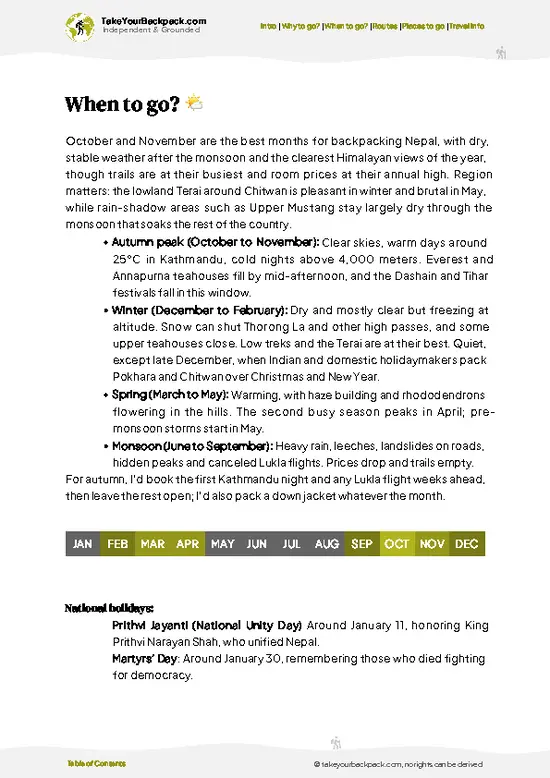
source: climatestotravel.comJANJanuary: fair for travelingFEBFebruary: good for travelingMARMarch: highly recommended for travelingAPRApril: highly recommended for travelingMAYMay: fair for travelingJUNJune: below average for travelingJULJuly: below average for travelingAUGAugust: below average for travelingSEPSeptember: fair for travelingOCTOctober: excellent for travelingNOVNovember: excellent for travelingDECDecember: fair for traveling
nepal-unique-site-boudhanath-stupa
© Google |

✈️ The backpacker research shortcutNepal Travel Guide

An offline-friendly backpacking guide with optimized travel routes, ranked highlights, transport advice, and the best areas to stay.
example page 0 from our offline Travel Guide for Nepal
example page 1 from our offline Travel Guide for Nepal
example page 2 from our offline Travel Guide for Nepal
example page 3 from our offline Travel Guide for Nepal
example page 4 from our offline Travel Guide for Nepal
example page 5 from our offline Travel Guide for Nepal
example page 6 from our offline Travel Guide for Nepal
example page 7 from our offline Travel Guide for Nepal
The digital guide (402 pages) contains:
107 highlights, ranked by travel appeal
Optimized 5, 10 & 15-day travel routes
Cities, national parks, landmarks, beaches
How to get around
Offline-friendly for travel without Wi-Fi
👉 Click to see all 30+ guide features

📅 Plan smarter in minutes, not weeks
Month by month travel advice
Festivals & national holidays
Budget expectations

🗺️ Go to the right places, skip the overrated ones
Honest pros & cons of destinations
Top hikes, parks & viewpoints
Lesser-known places most travelers miss
Clear “worth it vs skip it” guidance

🛏️ Travel smoothly without rookie mistakes
Best areas to stay
Transport systems explained simply
Common scams & safety advice
SIM cards, money & practical tips

🌍 Understand the country, not just visit it
Culture & traditions
52 Essential phrases & customs
Festivals worth planning around
Traveler-friendly historical context
Insights that make places more meaningful

📱 Built for real travel conditions
Fully downloadable PDF
Works completely offline
Optimized for phone use
Useful in remote areas & buses
Everything in one place
Save weeks of stressful planning
Get instant access to your full guide. 30‑day money-back guarantee.


By proceeding you agree to our terms.
Sent to your inbox immediately after payment • 100% Secure Checkout
Best Backpacking Travel Advisor 2025 tourism awardBest Backpacking
Travel Advisor
2025
What others say about Take Your Backpack Guides:
⭐⭐⭐⭐⭐
Fantastic, amazing amount of information!
⭐⭐⭐⭐⭐
My goodness this is amazing, it's what I've been looking for hats off too you!
⭐⭐⭐⭐⭐
I think this is absolutely BRILLIANT
⭐⭐⭐⭐
Very complete and informative. It's still missing places, but I gotta to commend you
⭐⭐⭐⭐⭐
This is truly amazing, thank you, can't wait to explore it with my kids!
⭐⭐⭐⭐⭐
Awesome resource, thank you!
⭐⭐⭐⭐⭐
This is amazing! Can't wait to explore the ones I haven't seen
⭐⭐⭐⭐
I love this! Well done, great idea.
⭐⭐⭐⭐⭐
Thanks for taking the time to make this gem!
⭐⭐⭐⭐⭐
This might be the best website I've ever seen.
⭐⭐⭐⭐⭐
Congratulations, and thank you so much for your work; it's incredibly valuable.
⭐⭐⭐⭐
In all seriousness I think you did a great job pointing out the important spots
⭐⭐⭐⭐⭐
10/10 very good
⭐⭐⭐⭐⭐
As someone who's only just starting to visit regularly this is awesome, thank you.
⭐⭐⭐⭐
Thank you very much! I'm going to visit my dad, it's going to be very useful!
⭐⭐⭐⭐⭐
This is really cool! We'll be travelling for the first time and this definitely come in handy.
⭐⭐⭐⭐⭐
You are now our minister of culture, congratulations 👨‍💼
⭐⭐⭐⭐⭐
Just wanted to tell you that this is a pearl! Going to follow your recommendations.
⭐⭐⭐⭐⭐
This is so cool. I'll definitely be using the resource for my travels soon.
⭐⭐⭐⭐⭐
This is very impressive! Good work.
⭐⭐⭐⭐⭐
This is an amazing and informative site. Very well done!

🛏️ Where to stay?Choosing the right base

Staying near Boudhanath Stupa is a game-changer for backpackers. This area is buzzing with energy, but let’s be real: it can get crowded. Tourists flock here, snapping selfies and soaking in the sights. But don’t let that deter you; there’s a vibrant community beneath the surface.

The streets around the stupa are lined with budget-friendly guesthouses and hostels. Look for spots that prioritize social interaction. You want a place where you can swap stories over a cup of chai or join a group for a sunset stroll around the stupa. The vibe here is welcoming, and you’ll find fellow travelers eager … read more 👉
Staying near Boudhanath Stupa is a game-changer for backpackers. This area is buzzing with energy, but let’s be real: it can get crowded. Tourists flock here, snapping selfies and soaking in the sights. But don’t let that deter you; there’s a vibrant community beneath the surface.

The streets around the stupa are lined with budget-friendly guesthouses and hostels. Look for spots that prioritize social interaction. You want a place where you can swap stories over a cup of chai or join a group for a sunset stroll around the stupa. The vibe here is welcoming, and you’ll find fellow travelers eager to connect.

Thamel is a popular choice, but it’s a bit of a tourist trap. Instead, consider staying in the quieter neighborhoods like Boudhanath itself or nearby Jhaukhel. These areas offer a more authentic experience, with local eateries serving up delicious momos and dal bhat.

Safety is generally good, but keep your wits about you, especially at night. The real magic lies in the small temples, local shops, and the chance to witness daily rituals. Immerse yourself in the culture, and you’ll find that the true essence of Boudhanath is far richer than any Instagram post can capture.

👛 Costs (as of 12 February 2026)Travel costs and budget guide for Boudhanath Stupa

Visiting Boudhanath Stupa is a blend of spiritual immersion and cultural exploration, but it comes with its own set of costs. Here’s the breakdown:
  • Entrance Fee: Expect to pay around $3 to $5 USD for entry. This fee helps maintain the site and supports local initiatives. It’s a small price for the chance to soak in the atmosphere of one of the largest stupas in the world.
  • Food & Drink: Meals in the area can range from $2 to $10 USD. Street food is a fantastic way to experience local flavors without breaking the bank. For a sit-down meal, budget around $5 to $10 USD at a decent restaurant. Don’t skip the local tea; it’s a must-try.
  • Transportation: If you’re coming from Thamel, a taxi might cost you about $5 to $10 USD. Alternatively, local buses are available for a fraction of that price, usually
read more 👉
Visiting Boudhanath Stupa is a blend of spiritual immersion and cultural exploration, but it comes with its own set of costs. Here’s the breakdown:
  • Entrance Fee: Expect to pay around $3 to $5 USD for entry. This fee helps maintain the site and supports local initiatives. It’s a small price for the chance to soak in the atmosphere of one of the largest stupas in the world.
  • Food & Drink: Meals in the area can range from $2 to $10 USD. Street food is a fantastic way to experience local flavors without breaking the bank. For a sit-down meal, budget around $5 to $10 USD at a decent restaurant. Don’t skip the local tea; it’s a must-try.
  • Transportation: If you’re coming from Thamel, a taxi might cost you about $5 to $10 USD. Alternatively, local buses are available for a fraction of that price, usually under $1 USD. Just be prepared for a crowded ride.
  • Souvenirs: Local shops offer everything from prayer flags to handcrafted jewelry. Prices vary widely, but you can find items starting at $1 USD. Bargaining is expected, so don’t hesitate to negotiate for a better deal.
  • Guided Tours: If you want a deeper understanding of the stupa’s significance, consider a guided tour. Prices typically range from $10 to $30 USD, depending on the length and depth of the tour. It’s worth it for the insights you’ll gain.

Boudhanath Stupa is more than just a pretty picture; it’s a living, breathing piece of culture. The costs are reasonable, especially considering the rich experiences waiting for you.


source: welcomenepal.com
⚠️ Prices can change and everyone travels differently, so take this as a rough guide. Hope it helps you plan your adventure!

Other Nepali landmarks near Boudhanath Stupa

Explore more nearby:


💡 Not sure where to go next?
Create a personalized itinerary for Nepal including Boudhanath Stupa and the places that fit your trip.

Generate my itinerary

👉 Discover all landmarks

Or checkout all Nepal has to offer (think cities, towns, villages, national parks, hikes, beaches, festivals)
Country photo of Nepal

We 💚 feedbackIs it worth it?

Boudhanath Stupa is a spiritual powerhouse. Watching the sun set behind its massive dome while monks chant is pure magic. But let’s be real: the crowds can be overwhelming, especially during festivals. You’ll be jostling for space with tourists and locals alike. Still, if you can find a quiet moment to soak it all in, you’ll understand why this place pulls people in. It’s a must-see, despite the hustle.

✈️ When did I visit Nepal?
Being a mountain lover, Nepal is one of my favorites. I visited it in November 2006, hiking the full Annapurna circuit as my highlight.

✍️ Help improve this page!
The information on this page is based on my own backpacking experience in Nepal, supplemented with up-to-date research and feedback from other travelers. Travel details can change, so if you notice anything outdated or incomplete, feel free to let me know.


🙋‍♂️ Give feedback

👋 Meet the founderWho’s Behind Take Your Backpack?

Johan, backpacker and founder of TakeYourBackpackHi, I’m Johan (Netherlands 🇳🇱), the creator of TakeYourBackpack. Over the past decade, I’ve backpacked through 80+ countries across six continents, gaining extensive experience with independent travel, long-term trips, and overland routes.

This site is built on a combination of firsthand travel experience and carefully curated insights from other backpackers. Many guides are based on places I’ve personally visited, while others bring together tips, observations, and practical advice shared by trusted travelers I’ve met along the way.

The goal is to provide realistic, experience-driven guidance — not generic itineraries — so you can explore destinations with better context, clearer expectations, and more confidence.

Get full Nepal guide •
Instant download • 107 highlights • Full Offline guide