×
Mount Everest

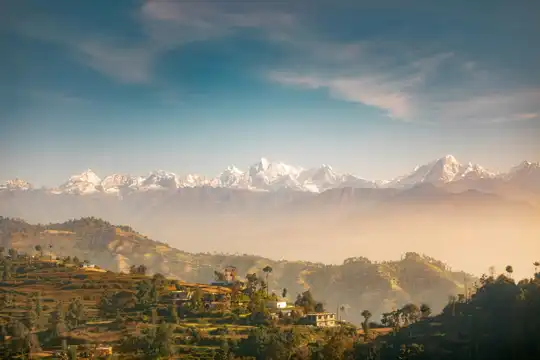
Nepal🇳🇵 | landmarksMount EverestSagarmatha summit, Khumbu glaciers, Sherpa villages | things to do and best time to go

Explore LumbiniExplore Nagarkot

Backpacking in Mount Everest
🏆 Top pickunique site ranked #1
By Johan Kruseman 🇳🇱 | Updated June 10, 2026

Most people don’t realize this: you can “go to Everest” without ever seeing the summit, and most trekkers on the Everest trail never get anywhere near Everest Base Camp, let alone climbing the mountain. Mount Everest sits in northeastern Nepal, in the Khumbu region of Sagarmatha National Park, up the valley from Lukla and Namche Bazaar.

As a backpacker destination, Everest is both magic and marketing. The wow-factor is real: huge walls of ice, prayer flags snapping in the wind, yaks hauling gas canisters while monks chant in smoky gompas. It’s also crowded, expensive by Nepal standards, and logistically annoying; flights cancel, lodges fill, and every extra thermos of hot water seems to have a price. But the culture in Sherpa villages, the history of the early expeditions, and the way the air thins and the world narrows to boots and breath? That’s the part no Instagram caption gets right.

Discover everything you want to know in the 📖 Nepal Travel Guide.


Get your Nepal guide
107 ranked highlights, routes & tips, works offline (402 pages)
Loading the map 🌍
CLICK TO FILTER
cities
towns
villages
landmarks
national parks
hikes
attractions
festivals
regions
SHOW COUNTRY’S BESTSHOW ALL

✨ Why go?
Ranked #1 unique site in Nepal
Why visitors keep coming back

Mount Everest isn’t just a photo op; it’s a journey that demands respect. Sure, the crowds can be overwhelming, especially at base camp, but that’s part of the experience. You’re not just ticking off a box; you’re standing at the foot of the world’s highest peak, feeling the weight of its presence.

The cost? It can be steep if you’re going for the summit, but trekking to base camp is surprisingly affordable. You can do it on a budget, with local teahouses offering meals and lodging that won’t break the bank. Plus, the accessibility is a game-changer. You can fly into Lukla and start your trek within a day, making it a natural fit in a broader route through the Khumbu region.

What makes Everest truly special is the culture you encounter along the way. The Sherpa communities, their hospitality, … read more 👉
Mount Everest isn’t just a photo op; it’s a journey that demands respect. Sure, the crowds can be overwhelming, especially at base camp, but that’s part of the experience. You’re not just ticking off a box; you’re standing at the foot of the world’s highest peak, feeling the weight of its presence.

The cost? It can be steep if you’re going for the summit, but trekking to base camp is surprisingly affordable. You can do it on a budget, with local teahouses offering meals and lodging that won’t break the bank. Plus, the accessibility is a game-changer. You can fly into Lukla and start your trek within a day, making it a natural fit in a broader route through the Khumbu region.

What makes Everest truly special is the culture you encounter along the way. The Sherpa communities, their hospitality, and the stunning landscapes are what you’ll remember long after the selfies fade. It’s not just about the peak; it’s about the stories you collect and the connections you make. That’s the real magic of Everest.
Want to include Mount Everest in your Nepal route?
Create a personalized Nepal itinerary that includes Mount Everest and the places that fit your trip — based on your travel style, budget, and available time. Get your route in seconds.

Generate my trip

💡 HighlightsWhat this place is best known for

  • Everest Base Camp trek — The classic way to get up-close to the mountain’s history and drama: you’ll walk through changing landscapes, pass memorials to climbers and stand near the Khumbu Icefall (view-only unless you’re on an expedition). It’s less about summiting and more about the atmosphere — climbers, Sherpas, prayer flags and that forever-near skyline. Permits required, and expect basic tea-house stays.
  • Kala Patthar sunrise viewpoint (personal favorite) — A short, steep climb that rewards you with probably the best unobstructed sunrise view of Everest and the surrounding giants. No technical gear needed, just early alarm, a jacket, and a camera. It’s dramatic, intimate and worth the sore legs.
  • Tengboche Monastery — A spiritual highlight framed by towering peaks. The monastery’s ancient
read more 👉
  • Everest Base Camp trek — The classic way to get up-close to the mountain’s history and drama: you’ll walk through changing landscapes, pass memorials to climbers and stand near the Khumbu Icefall (view-only unless you’re on an expedition). It’s less about summiting and more about the atmosphere — climbers, Sherpas, prayer flags and that forever-near skyline. Permits required, and expect basic tea-house stays.
  • Kala Patthar sunrise viewpoint (personal favorite) — A short, steep climb that rewards you with probably the best unobstructed sunrise view of Everest and the surrounding giants. No technical gear needed, just early alarm, a jacket, and a camera. It’s dramatic, intimate and worth the sore legs.
  • Tengboche Monastery — A spiritual highlight framed by towering peaks. The monastery’s ancient gompa life, morning chants and large prayer wheel feel timeless, and the mountain backdrop makes the place visually unforgettable. Great spot to breathe and watch Sherpa culture in action.
  • Lukla flight and airstrip experience — The tiny mountain airport is a rite of passage: the short, scenic flight into Lukla is equal parts stunning and adrenaline-inducing. It sets the tone for the trek and is a uniquely Nepalese travel memory (and yes, flights are often delayed — plan buffer days).
  • Sagarmatha National Park and Khumbu Glacier — A UNESCO-listed landscape of dramatic glaciers, rugged alpine terrain and surprising biodiversity (snow leopard habitat, high-altitude plants). The park protects both nature and Sherpa livelihoods, so every step feels part wilderness, part cultural landscape.
  • Namche Bazaar and Sherpa culture — The bustling acclimatization hub where you’ll find tea houses, gear shops, local markets and small museums. It’s the best place to soak up Sherpa hospitality, learn mountaineering history, and catch supplies or a hot shower after long days.
  • Khumjung village & Hillary’s legacy — Small village with the Hillary School and a strong link to the 1950s Everest expeditions. It’s low-key and human; you can see how climbing money and outside partnerships helped build local education and infrastructure.
Spotted a mistake or missing something? Contact us.

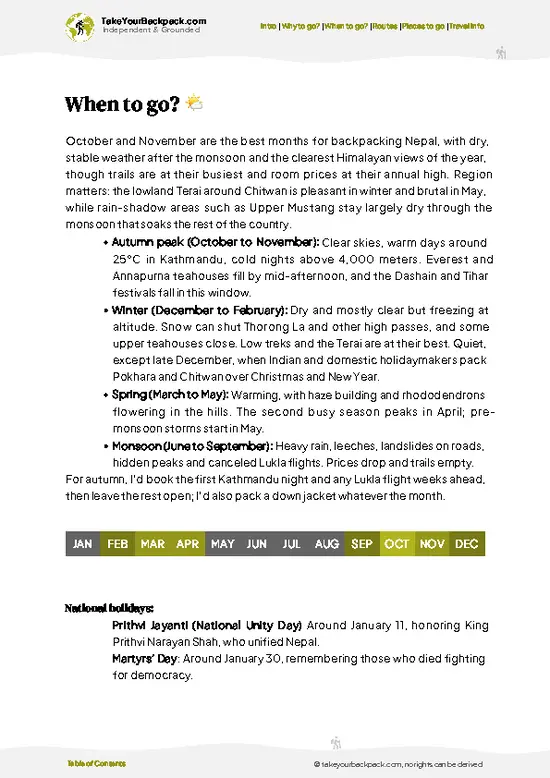
🌤️ When to go?When to go for the best experience


  • Weather: The best windows are spring (late March to May) and autumn (late September to November). These periods offer clear skies and stable weather, crucial for safe trekking and views. Winter is brutally cold, often below -20°C (-4°F) at higher altitudes, while monsoon season (June to August) brings relentless rain and landslides.

  • Temperature: Daytime temps in spring and autumn hover between 5°C to 15°C (41°F to 59°F) at base camp, but nights plunge below freezing. Summer is warmer but soggy, and winter nights can freeze your gear solid.

  • Daylight Hours: Spring and autumn provide roughly 10-12 hours of daylight, enough to cover long trekking days without rushing. Winter days shrink, making progress slower and riskier.

  • Crowds: Spring, especially April and May, is peak season with
read more 👉

  • Weather: The best windows are spring (late March to May) and autumn (late September to November). These periods offer clear skies and stable weather, crucial for safe trekking and views. Winter is brutally cold, often below -20°C (-4°F) at higher altitudes, while monsoon season (June to August) brings relentless rain and landslides.

  • Temperature: Daytime temps in spring and autumn hover between 5°C to 15°C (41°F to 59°F) at base camp, but nights plunge below freezing. Summer is warmer but soggy, and winter nights can freeze your gear solid.

  • Daylight Hours: Spring and autumn provide roughly 10-12 hours of daylight, enough to cover long trekking days without rushing. Winter days shrink, making progress slower and riskier.

  • Crowds: Spring, especially April and May, is peak season with packed trails and teahouses. Autumn is slightly less crowded but still busy. Winter and monsoon see far fewer trekkers, but conditions are harsh.

  • Seasonal Activities: Spring blooms rhododendrons and alpine flowers, adding color to the rugged landscape. Autumn offers crisp air and clear mountain views, perfect for photography and summit attempts.

  • Price Fluctuations: Peak seasons drive up costs for permits, accommodation, and guides. Off-season means cheaper rates but expect limited services and harsher conditions.


Pro-tip: If you want Everest’s magic without the crush, aim for late autumn—fewer crowds, solid weather, and a quieter trail that lets you soak in the raw power of the Himalayas.


source: climatestotravel.comJANJanuary: fair for travelingFEBFebruary: fair for travelingMARMarch: highly recommended for travelingAPRApril: excellent for travelingMAYMay: excellent for travelingJUNJune: below average for travelingJULJuly: below average for travelingAUGAugust: below average for travelingSEPSeptember: highly recommended for travelingOCTOctober: excellent for travelingNOVNovember: highly recommended for travelingDECDecember: fair for traveling
Nepal - the Mount Everest

✈️ The backpacker research shortcutNepal Travel Guide

An offline-friendly backpacking guide with optimized travel routes, ranked highlights, transport advice, and the best areas to stay.
example page 0 from our offline Travel Guide for Nepal
example page 1 from our offline Travel Guide for Nepal
example page 2 from our offline Travel Guide for Nepal
example page 3 from our offline Travel Guide for Nepal
example page 4 from our offline Travel Guide for Nepal
example page 5 from our offline Travel Guide for Nepal
example page 6 from our offline Travel Guide for Nepal
example page 7 from our offline Travel Guide for Nepal
The digital guide (402 pages) contains:
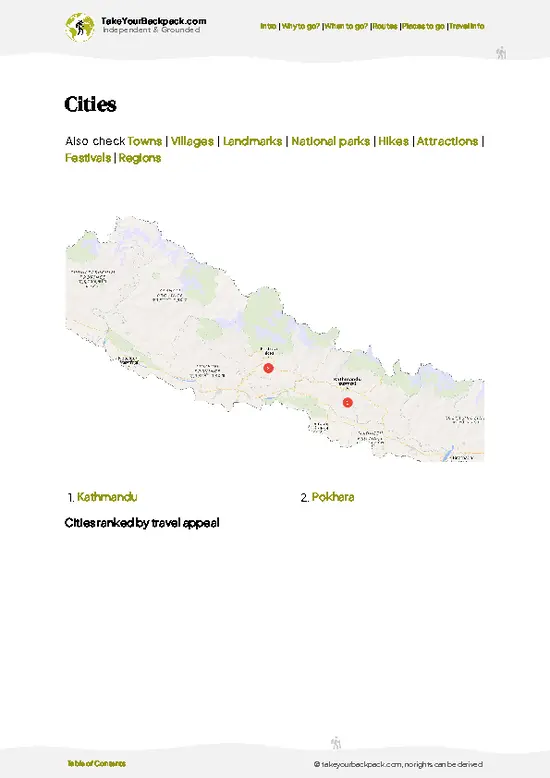
107 highlights, ranked by travel appeal
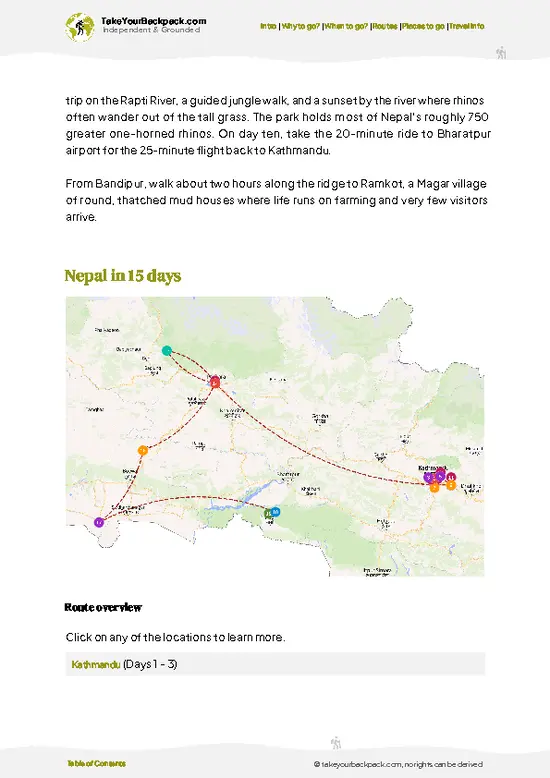
Optimized 5, 10 & 15-day travel routes
Cities, national parks, landmarks, beaches
How to get around
Offline-friendly for travel without Wi-Fi
👉 Click to see all 30+ guide features

📅 Plan smarter in minutes, not weeks
Month by month travel advice
Festivals & national holidays
Budget expectations

🗺️ Go to the right places, skip the overrated ones
Honest pros & cons of destinations
Top hikes, parks & viewpoints
Lesser-known places most travelers miss
Clear “worth it vs skip it” guidance

🛏️ Travel smoothly without rookie mistakes
Best areas to stay
Transport systems explained simply
Common scams & safety advice
SIM cards, money & practical tips

🌍 Understand the country, not just visit it
Culture & traditions
52 Essential phrases & customs
Festivals worth planning around
Traveler-friendly historical context
Insights that make places more meaningful

📱 Built for real travel conditions
Fully downloadable PDF
Works completely offline
Optimized for phone use
Useful in remote areas & buses
Everything in one place
Save weeks of stressful planning
Get instant access to your full guide. 30‑day money-back guarantee.


By proceeding you agree to our terms.
Sent to your inbox immediately after payment • 100% Secure Checkout
Best Backpacking Travel Advisor 2025 tourism awardBest Backpacking
Travel Advisor
2025
What others say about Take Your Backpack Guides:
⭐⭐⭐⭐⭐
Fantastic, amazing amount of information!
⭐⭐⭐⭐⭐
My goodness this is amazing, it's what I've been looking for hats off too you!
⭐⭐⭐⭐⭐
I think this is absolutely BRILLIANT
⭐⭐⭐⭐
Very complete and informative. It's still missing places, but I gotta to commend you
⭐⭐⭐⭐⭐
This is truly amazing, thank you, can't wait to explore it with my kids!
⭐⭐⭐⭐⭐
Awesome resource, thank you!
⭐⭐⭐⭐⭐
This is amazing! Can't wait to explore the ones I haven't seen
⭐⭐⭐⭐
I love this! Well done, great idea.
⭐⭐⭐⭐⭐
Thanks for taking the time to make this gem!
⭐⭐⭐⭐⭐
This might be the best website I've ever seen.
⭐⭐⭐⭐⭐
Congratulations, and thank you so much for your work; it's incredibly valuable.
⭐⭐⭐⭐
In all seriousness I think you did a great job pointing out the important spots
⭐⭐⭐⭐⭐
10/10 very good
⭐⭐⭐⭐⭐
As someone who's only just starting to visit regularly this is awesome, thank you.
⭐⭐⭐⭐
Thank you very much! I'm going to visit my dad, it's going to be very useful!
⭐⭐⭐⭐⭐
This is really cool! We'll be travelling for the first time and this definitely come in handy.
⭐⭐⭐⭐⭐
You are now our minister of culture, congratulations 👨‍💼
⭐⭐⭐⭐⭐
Just wanted to tell you that this is a pearl! Going to follow your recommendations.
⭐⭐⭐⭐⭐
This is so cool. I'll definitely be using the resource for my travels soon.
⭐⭐⭐⭐⭐
This is very impressive! Good work.
⭐⭐⭐⭐⭐
This is an amazing and informative site. Very well done!

🛏️ Where to stay?Best areas to stay in Nepal

When you’re eyeing Mount Everest, the hustle of the surrounding areas can be overwhelming. But let’s cut through the Instagram gloss. The most popular spots for backpackers are Namche Bazaar and Lukla.

Namche Bazaar is the heartbeat of the Khumbu region. It’s bustling with trekkers, guides, and locals. You’ll find a mix of budget lodges and teahouses that cater to every wallet. The vibe is social; you can swap stories over a cup of yak butter tea. Just be ready for the altitude—it’s a real thing.

Lukla, the gateway to Everest, is another hotspot. It’s small but packed with energy. The flights … read more 👉
When you’re eyeing Mount Everest, the hustle of the surrounding areas can be overwhelming. But let’s cut through the Instagram gloss. The most popular spots for backpackers are Namche Bazaar and Lukla.

Namche Bazaar is the heartbeat of the Khumbu region. It’s bustling with trekkers, guides, and locals. You’ll find a mix of budget lodges and teahouses that cater to every wallet. The vibe is social; you can swap stories over a cup of yak butter tea. Just be ready for the altitude—it’s a real thing.

Lukla, the gateway to Everest, is another hotspot. It’s small but packed with energy. The flights in can be chaotic, but once you land, you’re in the thick of it. The accommodations here are basic but safe, and you’ll meet fellow adventurers eager to share tips and experiences.

Both areas have their share of crowds, especially during peak trekking seasons. Expect to navigate through throngs of tourists. But don’t let that deter you. The real magic lies in the connections you make and the stories you gather.

So, pack your gear, embrace the chaos, and remember: it’s not just about the summit; it’s about the journey and the people you meet along the way.

👛 Costs (as of 15 February 2026)Money, prices, and spending tips

Visiting Mount Everest isn’t just a trek; it’s a financial commitment that requires serious planning. Here’s a breakdown of what you can expect to spend.
  • Permit Fees: To climb Everest, you’ll need a climbing permit, which costs around $11,000 USD. This is a non-negotiable expense and varies depending on the season. The fees are steep, but they help manage the number of climbers on the mountain.
  • Guides and Porters: Hiring a reputable guide is crucial for safety and navigation. Expect to pay between $3,000 to $8,000 USD for a guide, depending on their experience and the services included. Porters can cost an additional $500 to $1,000 USD, but they’re worth it for carrying your gear.
  • Equipment: Quality gear is essential. If you don’t already own it, budget around $1,500 to $3,000 USD for clothing,
read more 👉
Visiting Mount Everest isn’t just a trek; it’s a financial commitment that requires serious planning. Here’s a breakdown of what you can expect to spend.
  • Permit Fees: To climb Everest, you’ll need a climbing permit, which costs around $11,000 USD. This is a non-negotiable expense and varies depending on the season. The fees are steep, but they help manage the number of climbers on the mountain.
  • Guides and Porters: Hiring a reputable guide is crucial for safety and navigation. Expect to pay between $3,000 to $8,000 USD for a guide, depending on their experience and the services included. Porters can cost an additional $500 to $1,000 USD, but they’re worth it for carrying your gear.
  • Equipment: Quality gear is essential. If you don’t already own it, budget around $1,500 to $3,000 USD for clothing, climbing gear, and camping equipment. Renting is an option, but make sure it’s from a reliable source.
  • Travel and Accommodation: Getting to Nepal can range from $800 to $1,500 USD for round-trip flights, depending on your departure location. Once in Nepal, budget around $30 to $100 USD per night for accommodation in Kathmandu and slightly more in the Everest region.
  • Food and Miscellaneous: Daily food costs can vary widely. In Kathmandu, expect to spend about $10 to $30 USD per day. In the Everest region, prices can jump to $30 to $50 USD daily due to the remote location. Don’t forget to factor in additional costs for tips and unexpected expenses.

The total cost can easily exceed $30,000 USD for a full expedition, depending on your choices. It’s a hefty price tag, but the experience is transformative.


source: welcomenepal.com
⚠️ Prices can change and everyone travels differently, so take this as a rough guide. Hope it helps you plan your adventure!

Other Nepali landmarks near Mount Everest

Explore more nearby:

  • Nagarkot—hilltop ridge, panoramic sunrise, Himalayan views| 143 km away
  • Gosaikunda—alpine lakes, high-altitude trails, sacred pilgrimage site| 149 km away
  • Sundarijal—waterfalls, forest trails, Shivapuri foothills| 149 km away

💡 Not sure where to go next?
Create a personalized itinerary for Nepal including Mount Everest and the places that fit your trip.

Generate my itinerary

👉 Discover all landmarks

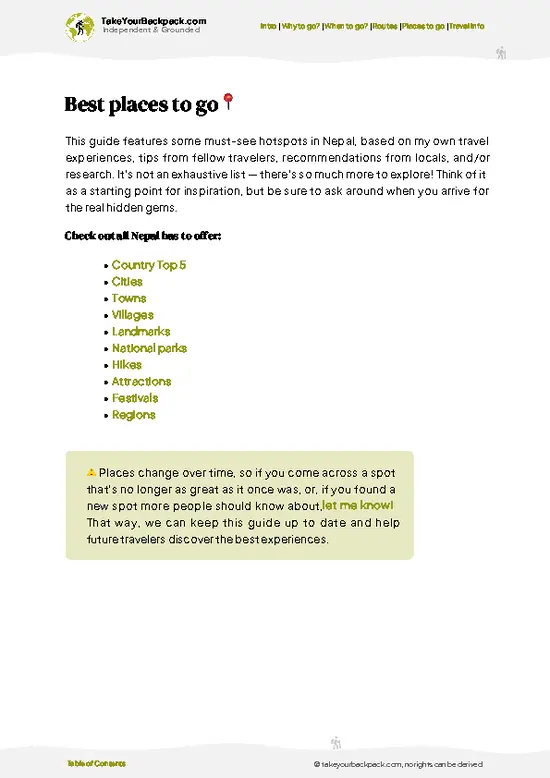
Or checkout all Nepal has to offer (think cities, towns, villages, national parks, hikes, beaches, festivals)
Country photo of Nepal

We 💚 feedbackSumming up the experience

Mount Everest is a pilgrimage for the soul. Standing at Base Camp, you feel the raw power of nature—it’s humbling and electrifying. But let’s be real: the crowds can be overwhelming, especially during peak season. You’ll share the trail with a parade of trekkers, and that can dilute the magic. Still, if you embrace the journey and the camaraderie, the experience is worth every step. Just know what you’re signing up for.

✈️ When did I visit Nepal?
Being a mountain lover, Nepal is one of my favorites. I visited it in November 2006, hiking the full Annapurna circuit as my highlight.

✍️ Help improve this page!
The information on this page is based on my own backpacking experience in Nepal, supplemented with up-to-date research and feedback from other travelers. Travel details can change, so if you notice anything outdated or incomplete, feel free to let me know.


🙋‍♂️ Give feedback

👋 Meet the founderWho’s Behind Take Your Backpack?

Johan, backpacker and founder of TakeYourBackpackHi, I’m Johan (Netherlands 🇳🇱), the creator of TakeYourBackpack. Over the past decade, I’ve backpacked through 80+ countries across six continents, gaining extensive experience with independent travel, long-term trips, and overland routes.

This site is built on a combination of firsthand travel experience and carefully curated insights from other backpackers. Many guides are based on places I’ve personally visited, while others bring together tips, observations, and practical advice shared by trusted travelers I’ve met along the way.

The goal is to provide realistic, experience-driven guidance — not generic itineraries — so you can explore destinations with better context, clearer expectations, and more confidence.

Get full Nepal guide •
Instant download • 107 highlights • Full Offline guide