×

The Netherlands🇳🇱 | regionsAmelandWhale-rib gates, Hollum lighthouse, seal trips, mudflat walks | things to do and best time to go

Explore Bargerveen Nature ReserveExplore Brabantse Kempen

Backpacking in Ameland
👌 Worth visitingregion ranked #3
By Johan Kruseman 🇳🇱 | Updated October 3, 2026

Look at the garden gates in Hollum and you will spot whale ribs, a leftover from the Greenland whaling era when island captains built Ameland’s wealth, and most visitors cycle straight past them. The island sits in the Wadden Sea off the Frisian coast, between Terschelling and Schiermonnikoog, reached by ferry from Holwerd in about 45 minutes. The pattern here is simple: four villages strung along 25 kilometers of flat land, with dunes and North Sea beach on one side and mudflats on the other. It is busier and more developed than Schiermonnikoog, yet calmer than Texel, and summer weekends fill up with Dutch families. One evening at Ballumerbocht, I still remember oystercatchers shrieking over the salt marsh, a piping that carried for a kilometer. Book ahead in July and August, expect island prices, and you get a place that works smoothly.

Discover everything you want to know in the 📖 The Netherlands Travel Guide.


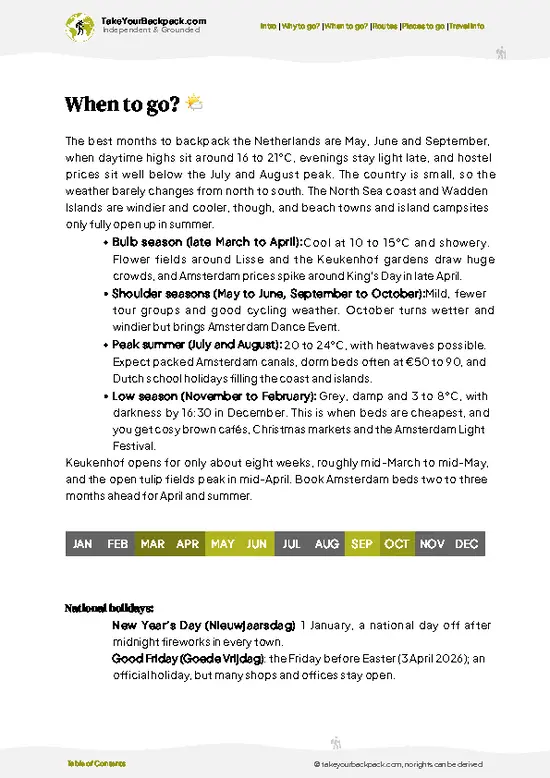
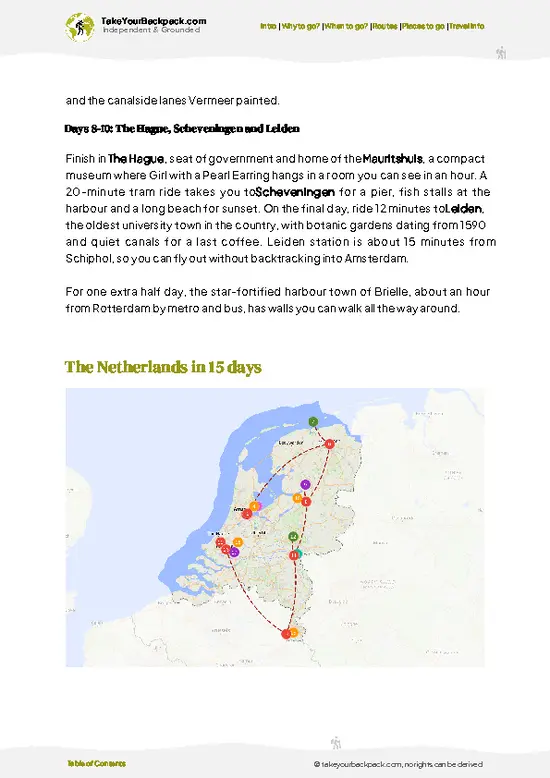
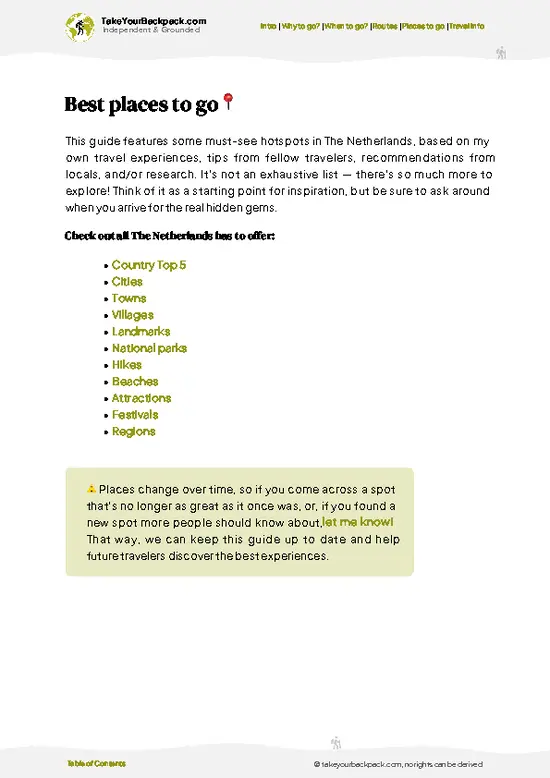
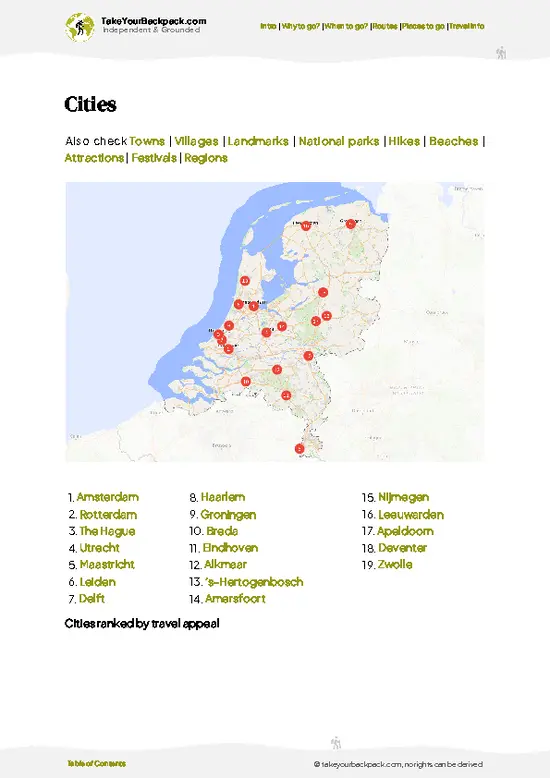
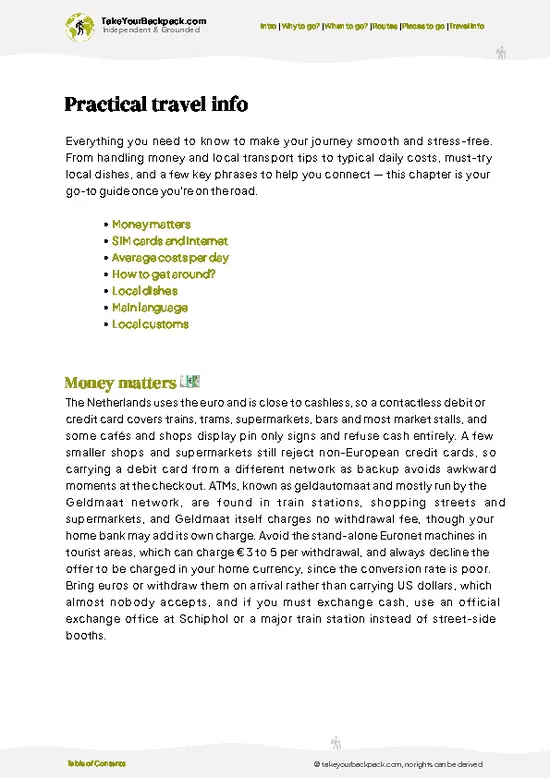
example page 0 from our offline Travel Guide for Netherlands
example page 1 from our offline Travel Guide for Netherlands
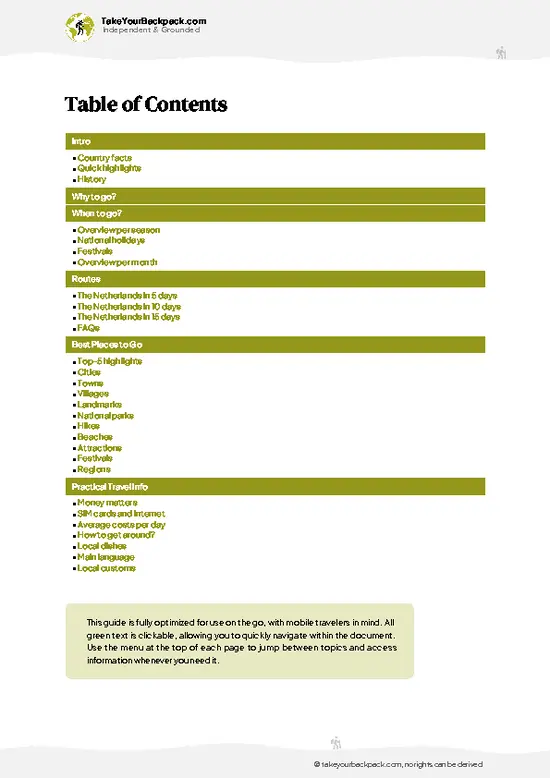
example page 2 from our offline Travel Guide for Netherlands
example page 3 from our offline Travel Guide for Netherlands
example page 4 from our offline Travel Guide for Netherlands
example page 5 from our offline Travel Guide for Netherlands
example page 6 from our offline Travel Guide for Netherlands
example page 7 from our offline Travel Guide for Netherlands
Loading the map 🌍
CLICK TO FILTER
cities
towns
villages
landmarks
national parks
hikes
beaches
attractions
festivals
regions
SHOW COUNTRY’S BESTSHOW ALL

✨ Why go?
Ranked #3 region in The Netherlands
Reasons people choose to visit here

Ameland rewards a stay of a few days because everything sits along one cycle route, so you never repack. From Nes you can reach the lighthouse at Hollum in roughly 35 minutes by bike and the eastern wilderness in about the same, which lets you mix culture and nature without any transfers. The villages keep the old captains’ houses and whaling stories, while the dunes and tidal flats take over a few pedal strokes later.

The tides also set the schedule. At low water, guides lead walkers across the seabed to the Engelsmanplaat sandbank, where seals haul out, and at high water the beach is the better bet. That rhythm forces a slow pace that suits backpackers on a flexible plan.

Getting there adds to the appeal. The bus to Holwerd and the 45-minute Wagenborg ferry mean you can arrive without … read more 👉
Ameland rewards a stay of a few days because everything sits along one cycle route, so you never repack. From Nes you can reach the lighthouse at Hollum in roughly 35 minutes by bike and the eastern wilderness in about the same, which lets you mix culture and nature without any transfers. The villages keep the old captains’ houses and whaling stories, while the dunes and tidal flats take over a few pedal strokes later.

The tides also set the schedule. At low water, guides lead walkers across the seabed to the Engelsmanplaat sandbank, where seals haul out, and at high water the beach is the better bet. That rhythm forces a slow pace that suits backpackers on a flexible plan.

Getting there adds to the appeal. The bus to Holwerd and the 45-minute Wagenborg ferry mean you can arrive without a car, and once on the island, rental bikes cost around €8 to 12 a day. The eastern Het Oerd reserve stays mostly quiet because it takes real pedaling to reach.

💡 HighlightsPlaces and moments you shouldn't skip

  1. Hollum Lighthouse: Standing 55 meters tall in the dunes at the island’s western end, it is the landmark you see from the ferry. The climb gives you the whole island laid out like a map, with the Wadden Sea on one side and the North Sea on the other.
  2. Reddingmuseum Abraham Fock, Hollum: This lifeboat museum explains the rescue tradition of the island, with the old rowing and sailing boats on display. It is a small place, but it shows how dangerous these waters were.
  3. Het Oerd: The eastern tip is a protected dune and beach area where walkers outnumber cyclists and the horizon feels wide. Birds and sand movement shape the landscape, and it gets quiet in the late afternoon.
  4. Ballumerbocht: This salt marsh on the Wadden side is one of the best places for birdwatching, with oystercatchers and spoonbills
… read more 👉
  1. Hollum Lighthouse: Standing 55 meters tall in the dunes at the island’s western end, it is the landmark you see from the ferry. The climb gives you the whole island laid out like a map, with the Wadden Sea on one side and the North Sea on the other.
  2. Reddingmuseum Abraham Fock, Hollum: This lifeboat museum explains the rescue tradition of the island, with the old rowing and sailing boats on display. It is a small place, but it shows how dangerous these waters were.
  3. Het Oerd: The eastern tip is a protected dune and beach area where walkers outnumber cyclists and the horizon feels wide. Birds and sand movement shape the landscape, and it gets quiet in the late afternoon.
  4. Ballumerbocht: This salt marsh on the Wadden side is one of the best places for birdwatching, with oystercatchers and spoonbills in season. Locals walk here at dusk, while most tourists never leave the beach.
  5. Nes village and Museum Swarte Haan: The main village has the island’s widest choice of cafés and shops. The museum sits in an old commander’s house and covers whaling, shipwrecks and beachcombing history.
  6. Natuurcentrum Ameland, Nes: The nature center explains the tides, dunes and Wadden wildlife, and works well on a rainy afternoon. It also helps you decide which part of the coast to cycle next.
  7. Seal trip to Engelsmanplaat: Boats leave from Nes and approach the sandbank where harbor and gray seals rest. Trips run on the tide, so check the timetable the day before.
  8. Mudflat walk with a guide: Walking on the seabed at low tide is the most Wadden thing you can do. Guides are required, and trips usually need booking in advance.
  9. Hollum’s whale-rib gates: A short walk through the village lets you find the old gateposts made from whale bones. They are easy to miss and tell the island’s history better than a sign could.
  10. Buren: This small village near the eastern end of the island is quiet, with a cluster of old houses and few visitors. It makes a good coffee stop on the way to Het Oerd.
Do the Hollum lighthouse first, because the view gives you the layout of the island before you start pedaling.
Spotted a mistake or missing something? Contact us.

Things to do near Ameland

Ratings based on Tripadvisor reviews. When you book through this link, you support our work at no extra cost to you.

⌛️ 5 days5-day itinerary for Ameland

Day 1: Nes: Arrive by the morning ferry from Holwerd, which takes about 45 minutes, and pick up a rental bike at the harbor or in the village. Nes is the island’s hub, and the bus and bike paths all radiate from here, so it makes the easiest base. Spend the afternoon at Museum Swarte Haan and the nature center to learn how the island works before you explore it.
Day 2: Nes (detour to the seals): Take the boat trip to Engelsmanplaat, which fits easily because the boats leave from Nes and you return in time for dinner. The trip depends on tide, so you may have to choose between morning and afternoon departures. It is the best detour on the island because it adds wildlife without a single transfer.
Day 3: Hollum: Cycle west for about 35 minutes along the quiet paths. Climb the lighthouse, visit … read more 👉
Day 1: Nes: Arrive by the morning ferry from Holwerd, which takes about 45 minutes, and pick up a rental bike at the harbor or in the village. Nes is the island’s hub, and the bus and bike paths all radiate from here, so it makes the easiest base. Spend the afternoon at Museum Swarte Haan and the nature center to learn how the island works before you explore it.
Day 2: Nes (detour to the seals): Take the boat trip to Engelsmanplaat, which fits easily because the boats leave from Nes and you return in time for dinner. The trip depends on tide, so you may have to choose between morning and afternoon departures. It is the best detour on the island because it adds wildlife without a single transfer.
Day 3: Hollum: Cycle west for about 35 minutes along the quiet paths. Climb the lighthouse, visit the lifeboat museum and look for the whale-rib gates, then take the beach back at low tide, when the sand is firm enough to ride.
Day 4: Ballum: Head to the Ballumerbocht salt marsh for a slow walk, then continue to the village itself. The pace here is set by the tide and the birds, not by the bus.
Day 5: Het Oerd: Leave early for the eastern tip, because the last ferry back is the day’s fixed point. Pedal through Buren, walk the dunes and beach, and catch the ferry to Holwerd. If one day justifies the whole trip, this is it, thanks to the open sand and silence.

🌤️ When to go?Weather, crowds, and seasonal trade-offs

The best window for Ameland is late May to mid-September, when daytime highs run 17 to 22°C (63 to 72°F) and beaches, ferries and walking tours all operate fully.
  • Summer (July to August): Warmest and busiest, with 16 to 17 hours of daylight in June and about 15 in July. Accommodation prices peak and the ferry fills on dry weekends.
  • Late Spring (May to June): Highs of 13 to 18°C (55 to 64°F), long evenings, blooming dunes and noticeably fewer people. Prices dip outside the Dutch holiday weekends.
  • Autumn (September to October): 11 to 17°C (52 to 63°F), migrating birds on the salt marshes and cheaper beds. Rain and wind increase.
  • Winter (November to March): 1 to 6°C (34 to 43°F), only 7.5 to 8 hours of daylight, and many beach pavilions and some restaurants shut. Storm walks on empty sand are the
… read more 👉
The best window for Ameland is late May to mid-September, when daytime highs run 17 to 22°C (63 to 72°F) and beaches, ferries and walking tours all operate fully.
  • Summer (July to August): Warmest and busiest, with 16 to 17 hours of daylight in June and about 15 in July. Accommodation prices peak and the ferry fills on dry weekends.
  • Late Spring (May to June): Highs of 13 to 18°C (55 to 64°F), long evenings, blooming dunes and noticeably fewer people. Prices dip outside the Dutch holiday weekends.
  • Autumn (September to October): 11 to 17°C (52 to 63°F), migrating birds on the salt marshes and cheaper beds. Rain and wind increase.
  • Winter (November to March): 1 to 6°C (34 to 43°F), only 7.5 to 8 hours of daylight, and many beach pavilions and some restaurants shut. Storm walks on empty sand are the draw.
Aim for the first half of June, since it has the longest days with summer prices not yet in force.


source: climatestotravel.comJANJanuary: fair for travelingFEBFebruary: fair for travelingMARMarch: good for travelingAPRApril: good for travelingMAYMay: excellent for travelingJUNJune: excellent for travelingJULJuly: good for travelingAUGAugust: good for travelingSEPSeptember: highly recommended for travelingOCTOctober: highly recommended for travelingNOVNovember: fair for travelingDECDecember: fair for traveling
netherlands-region-ameland
© Google | Christian Koepper

✈️ The backpacker research shortcutThe Netherlands Travel Guide

An offline-friendly backpacking guide with optimized travel routes, ranked highlights, transport advice, and the best areas to stay.
example page 0 from our offline Travel Guide for Netherlands
example page 1 from our offline Travel Guide for Netherlands
example page 2 from our offline Travel Guide for Netherlands
example page 3 from our offline Travel Guide for Netherlands
example page 4 from our offline Travel Guide for Netherlands
example page 5 from our offline Travel Guide for Netherlands
example page 6 from our offline Travel Guide for Netherlands
example page 7 from our offline Travel Guide for Netherlands
The digital guide (373 pages) contains:
✅ 127 highlights, ranked by travel appeal
✅ Optimized 5, 10 & 15-day travel routes
✅ Cities, national parks, landmarks, beaches
✅ How to get around
✅ Offline-friendly for travel without Wi-Fi
👉 Click to see all 30+ guide features

📅 Plan smarter in minutes, not weeks
✅ Month by month travel advice
✅ Festivals & national holidays
✅ Budget expectations

🗺️ Go to the right places, skip the overrated ones
✅ Honest pros & cons of destinations
✅ Top hikes, parks & viewpoints
✅ Lesser-known places most travelers miss
✅ Clear “worth it vs skip it” guidance

🛏️ Travel smoothly without rookie mistakes
✅ Best areas to stay
✅ Transport systems explained simply
✅ Common scams & safety advice
✅ SIM cards, money & practical tips

🌍 Understand the country, not just visit it
✅ Culture & traditions
✅ 52 Essential phrases & customs
✅ Festivals worth planning around
✅ Traveler-friendly historical context
✅ Insights that make places more meaningful

📱 Built for real travel conditions
✅ Fully downloadable PDF
✅ Works completely offline
✅ Optimized for phone use
✅ Useful in remote areas & buses
✅ Everything in one place
Stop searching, start planning
Get instant access to your full guide. 30‑day money-back guarantee.
+ Add another guide for just

By proceeding you agree to our terms.
Sent to your inbox immediately after payment • 100% Secure Checkout
Best Backpacking Travel Advisor 2025 tourism awardBest Backpacking
Travel Advisor
2025
What others say about Take Your Backpack Guides:
⭐⭐⭐⭐⭐
Fantastic, amazing amount of information!
⭐⭐⭐⭐⭐
My goodness this is amazing, it's what I've been looking for hats off too you!
⭐⭐⭐⭐⭐
I think this is absolutely BRILLIANT
⭐⭐⭐⭐
Very complete and informative. It's still missing places, but I gotta to commend you
⭐⭐⭐⭐⭐
This is truly amazing, thank you, can't wait to explore it with my kids!
⭐⭐⭐⭐⭐
Awesome resource, thank you!
⭐⭐⭐⭐⭐
This is amazing! Can't wait to explore the ones I haven't seen
⭐⭐⭐⭐
I love this! Well done, great idea.
⭐⭐⭐⭐⭐
Thanks for taking the time to make this gem!
⭐⭐⭐⭐⭐
This might be the best website I've ever seen.
⭐⭐⭐⭐⭐
Congratulations, and thank you so much for your work; it's incredibly valuable.
⭐⭐⭐⭐
In all seriousness I think you did a great job pointing out the important spots
⭐⭐⭐⭐⭐
10/10 very good
⭐⭐⭐⭐⭐
As someone who's only just starting to visit regularly this is awesome, thank you.
⭐⭐⭐⭐
Thank you very much! I'm going to visit my dad, it's going to be very useful!
⭐⭐⭐⭐⭐
This is really cool! We'll be travelling for the first time and this definitely come in handy.
⭐⭐⭐⭐⭐
You are now our minister of culture, congratulations 👨‍💼
⭐⭐⭐⭐⭐
Just wanted to tell you that this is a pearl! Going to follow your recommendations.
⭐⭐⭐⭐⭐
This is so cool. I'll definitely be using the resource for my travels soon.
⭐⭐⭐⭐⭐
This is very impressive! Good work.
⭐⭐⭐⭐⭐
This is an amazing and informative site. Very well done!

🛏️ Where to stay?Where staying makes the most sense

Nes is the best base for most backpackers, because it has the ferry terminal, the widest choice of places to eat and drink, a supermarket and the most travelers passing through in a day. It is also the easiest place to meet other people over a beer, and bike rental sits within a few minutes of the quay. Evenings are lively in summer, yet the streets stay safe and relaxed.

Hollum, at the western end, is the one to choose for quiet. It has the red-banded lighthouse, a tidy old center and a short ride to wide, empty beach. Solo travelers who prefer long walks and sunsets over nightlife tend to settle … read more 👉
Nes is the best base for most backpackers, because it has the ferry terminal, the widest choice of places to eat and drink, a supermarket and the most travelers passing through in a day. It is also the easiest place to meet other people over a beer, and bike rental sits within a few minutes of the quay. Evenings are lively in summer, yet the streets stay safe and relaxed.

Hollum, at the western end, is the one to choose for quiet. It has the red-banded lighthouse, a tidy old center and a short ride to wide, empty beach. Solo travelers who prefer long walks and sunsets over nightlife tend to settle in here, though you will need to cook or plan dinners ahead since choices are fewer.

Buren, in the east, is a small village close to the beach and the dunes, and it suits campers well. Campsites around the village are the cheapest way to sleep on the island and a good place to share a barbecue with strangers in July. Ballum, inland and the most peaceful, works best for travelers happy to cycle for supplies.

Book early for July and August and school holiday weekends, when the island fills. Outside peak season, rooms are easy to find, and you can pick a village on arrival.

🚌 Getting aroundGetting around like a local

The ferry from Holwerd lands at Nes, and from the terminal the village center is a flat walk of about 10 minutes, while island buses wait at the quay to meet each sailing. That small detail explains how everything works here: the ferry sets the rhythm, the bus is timed to it, and the bicycle fills every gap in between.

Ameland is roughly 25 km long and almost flat, with four villages strung along one axis. Distances are short, so the real constraint is wind and sailing times, not geography. Everything runs reliably, but on a schedule designed around the tide and the ferry.
  • Ferry from Holwerd: The crossing takes about 45 minutes, with roughly 6 to 10 sailings a day depending on season, and a foot passenger return costs about €12 to 18. It is the only practical link, and it costs little in time
… read more 👉
The ferry from Holwerd lands at Nes, and from the terminal the village center is a flat walk of about 10 minutes, while island buses wait at the quay to meet each sailing. That small detail explains how everything works here: the ferry sets the rhythm, the bus is timed to it, and the bicycle fills every gap in between.

Ameland is roughly 25 km long and almost flat, with four villages strung along one axis. Distances are short, so the real constraint is wind and sailing times, not geography. Everything runs reliably, but on a schedule designed around the tide and the ferry.
  • Ferry from Holwerd: The crossing takes about 45 minutes, with roughly 6 to 10 sailings a day depending on season, and a foot passenger return costs about €12 to 18. It is the only practical link, and it costs little in time or money, so it gives the best value by far. Buy a ticket at the terminal and avoid the last sailings, which sell out less often but leave no margin for delays. To reach Holwerd, take the bus from Leeuwarden (about 40 to 50 minutes, €4 to 6).
  • Rental bicycle: About €8 to 12 a day, with e-bikes at €20 to 30. It is the fastest door-to-door choice on the island, since paths cross dunes and forest away from traffic, and it gives you total freedom to chase the weather. Headwinds on the westward stretch are the main discomfort, so ride out against the wind and return with it behind you.
  • Island bus: A single ride costs about €2 to 4 and the bus links Nes, Buren, Hollum and Ballum roughly hourly in season. It is slower than cycling over short hops, but when rain sets in or you carry a full pack it is the most comfortable use of a few euros, and the schedule thins in winter.
  • Walking: Nes to Hollum is about 8 km along the dune path, so walking costs nothing but 2 hours of time. Villages are compact enough to cover on foot, and the beach walk at low tide is the most rewarding option for those with spare time.
Pick up your bicycle in Nes as soon as you arrive, then use the bus only as a rain backup, since that combination costs the least and keeps you flexible.

🍲 FoodLocal Cuisine & Drinks

Ameland tastes of salt marsh and sea. The signature is Amelander lamb, from sheep grazing the kwelder (salt marshes), which gives the meat a faintly herbal, mineral edge. You will also find Wadden mussels, North Sea shrimp and kibbeling, crisp fried cod chunks dipped in garlic sauce and eaten from a paper tray with salty wind in your face. Look for Amelander koek, a dense, spiced cake that travels well in a daypack, and the island’s small craft beers, plus the usual Dutch bitterballen with mustard.

For budget eating, the supermarket in Nes and fish stalls give you picnic fixings, while beach pavilions serve fries, soup and coffee with sand underfoot. Cozy brown cafés in the villages are the place for a late-afternoon borrel, with beer and snacks passed between friends.

Dutch dining runs early, … read more 👉
Ameland tastes of salt marsh and sea. The signature is Amelander lamb, from sheep grazing the kwelder (salt marshes), which gives the meat a faintly herbal, mineral edge. You will also find Wadden mussels, North Sea shrimp and kibbeling, crisp fried cod chunks dipped in garlic sauce and eaten from a paper tray with salty wind in your face. Look for Amelander koek, a dense, spiced cake that travels well in a daypack, and the island’s small craft beers, plus the usual Dutch bitterballen with mustard.

For budget eating, the supermarket in Nes and fish stalls give you picnic fixings, while beach pavilions serve fries, soup and coffee with sand underfoot. Cozy brown cafés in the villages are the place for a late-afternoon borrel, with beer and snacks passed between friends.

Dutch dining runs early, with kitchens often closing around 8:30 or 9 pm, and on summer weekends tables vanish, so reserve or eat before 7. Service is relaxed, you usually ask for the bill yourself, and rounding up by about 5 to 10 percent is the normal tip.

Tap water is safe and excellent, so refill your bottle.

FAQFrequently asked questions about Ameland

Three nights is enough to see Ameland’s main highlights, and four is better if you want to add a seal trip or mudflat walk. In that time you can cycle from Nes to Hollum lighthouse (about 35 minutes) and reach Het Oerd at the eastern end. A day trip from Holwerd is possible but leaves little time after the 45-minute ferry.
Rental bikes are the easiest way to get around, costing roughly €8 to 12 a day, and the flat paths link all four villages. The island bus runs between Nes, Hollum, Ballum and Buren, though it is less frequent in the off-season. To reach the island you take the bus from Leeuwarden to Holwerd (about 45 minutes) and then the Wagenborg ferry, which takes about 45 minutes.
Ameland is known for its wide North Sea beaches, dunes and Wadden Sea tidal flats, where guided mudflat walks and seal trips to Engelsmanplaat run at low tide. The Hollum lighthouse, 55 meters tall, is its best-known landmark, and the old whaling heritage shows in the captains’ houses and whale-rib gates. The eastern Het Oerd reserve is the quietest stretch, and summer is the busiest season.
⚠️ Things can change over time, so always validate details locally before you go.

Other Dutch regions near Ameland

Explore more nearby:

  • Wadden Islands—Five islands, ferry ports, dune reserves, island festival| 24 km away
  • Friesland—Harbor towns, lakes, ferry crossings, Elfstedentocht towns| 26 km away
  • Texel—Sheep polders, salt marsh, seal center, lighthouse tip| 75 km away

💡 Not sure where to go next?
Create a personalized itinerary for The Netherlands including Ameland and the places that fit your trip.

Generate my itinerary

👉 Discover all regions

Or checkout all The Netherlands has to offer (think cities, towns, villages, national parks, hikes, beaches, festivals)
Country photo of The Netherlands

We 💚 feedbackIs it worth it?

Three nights is the sweet spot. Two feels rushed once the tide table starts dictating your plans, and anything beyond four works only if you love long beach walks and don’t mind repeating the same bike paths. Come in June or September, book the ferry early, and treat Ameland as a slow reset rather than a party island.

✈️ When did I visit The Netherlands?
Netherlands is my home base, so whenever I don’t travel, you can find me in this tiny spot on the globe. When friends from abroad visit me, it’s the time to actually explore my own country as a traveler.

✍️ Help improve this page!
The information on this page is based on my own backpacking experience in The Netherlands, supplemented with up-to-date research and feedback from other travelers. Travel details can change, so if you notice anything outdated or incomplete, feel free to let me know.


🙋‍♂️ Give feedback

👋 Meet the founderWho’s Behind Take Your Backpack?

Johan, backpacker and founder of TakeYourBackpackHi, I’m Johan (Netherlands 🇳🇱), the creator of TakeYourBackpack. Over the past 3 decades, I’ve backpacked through 90+ countries across six continents, gaining extensive experience with independent travel, long-term trips, and overland routes.

This site is built on a combination of firsthand travel experience and carefully curated insights from other backpackers. Many guides are based on places I’ve personally visited, while others bring together tips, observations, and practical advice shared by trusted travelers I’ve met along the way.

The goal is to provide realistic, experience-driven guidance — not generic itineraries — so you can explore destinations with better context, clearer expectations, and more confidence.