×

Netherlands🇳🇱 | best regionsYour Guide to the 5 Best regions in The Netherlands

Regions in the Netherlands differ less in scenery than in density, price and rhythm. The Randstad (Amsterdam, Rotterdam, The Hague, Utrecht) packs most of the country's people, museums and nightlife into a small area, so beds cost the most and weekends sell out. The north, east and south are quieter, cheaper and calmer, but they need more planning around buses and bike routes. Because the country is small and rail covers nearly every corner, independent travel is easy everywhere. The real choice is between urban intensity and slow, rural or coastal pace, and that choice sets your daily budget and how many people you share a canal path with.

By Johan Kruseman 🇳🇱 | Updated October 18, 2026
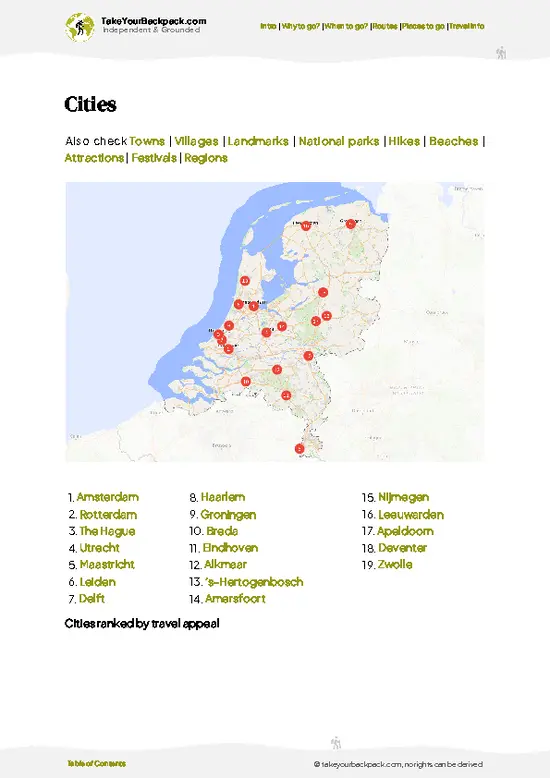
Explore the best cities in The Netherlands

Why go?Key Factors That Shape the Experience

The Netherlands suits regional travel because geography and infrastructure work together. The land is flat, much of it reclaimed from water, so cycling is a practical way to get around rather than a novelty. A dense rail network (NS) and a national public transport card system make crossing the country a matter of hours, not days. Centuries of water management and trade also left each area with its own dialect, architecture and food habits, even across short distances.

Before choosing the Netherlands, know that it is one of Europe's most expensive backpacking countries for accommodation, and cheap beds are scarce in peak months. Distances are short, but the country is crowded, so advance booking matters more than long transfers. Weather is maritime and changeable, with rain possible in any … read more 👉
The Netherlands suits regional travel because geography and infrastructure work together. The land is flat, much of it reclaimed from water, so cycling is a practical way to get around rather than a novelty. A dense rail network (NS) and a national public transport card system make crossing the country a matter of hours, not days. Centuries of water management and trade also left each area with its own dialect, architecture and food habits, even across short distances.

Before choosing the Netherlands, know that it is one of Europe's most expensive backpacking countries for accommodation, and cheap beds are scarce in peak months. Distances are short, but the country is crowded, so advance booking matters more than long transfers. Weather is maritime and changeable, with rain possible in any month, and wind is a constant factor for cyclists. Cards are accepted almost everywhere, and many places do not take cash, so a bank card that works abroad is essential. English is widely spoken, which lowers the barrier for first-time travelers. The same compactness means regions blur together if you rush, so fewer, longer stays give a clearer sense of difference.
Behind the Scenes of Selection
The list of best regions in The Netherlands is created based on landscapes, local culture, attractions, vibes, and overall appeal. If you feel a region is missing in this list, please let us know.

When to go?Timing Your Visit for the Best Experience

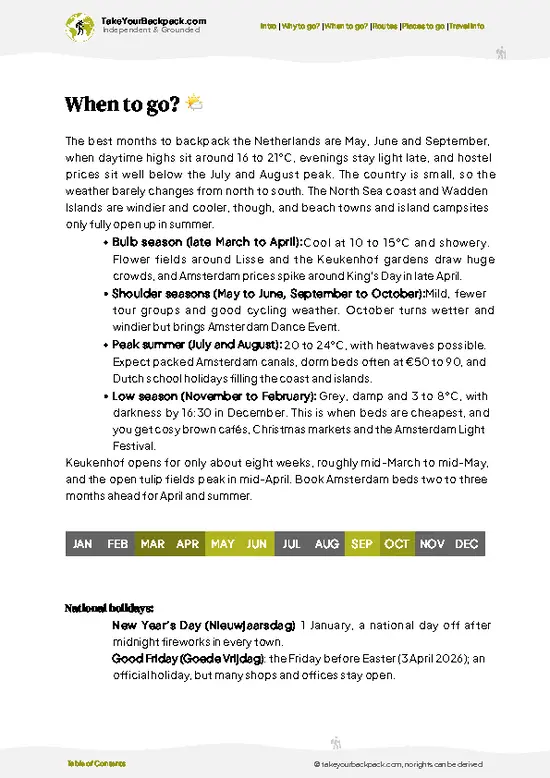
Best months and weather: The best months for exploring Dutch regions are late April to early June and September, when daytime temperatures sit around 12 to 20°C, daylight runs long, and crowds are lighter than in midsummer. Rain falls year-round, roughly 700 to 900 mm annually, spread fairly evenly, so a rain jacket matters in every season.
Peak and shoulder seasons: Tulip season, typically mid-April to early May, is the main spring peak, and it pushes up prices in the bulb-growing areas of the west and in Amsterdam. July and August bring warm days of 20 to 25°C and the highest prices, with dorm beds and hotels in the Randstad often 30 to 60 percent above shoulder levels. King's Day on April 27 fills Amsterdam and sends prices far higher for that weekend.
Winter and coast: From November to February, … read more 👉
Best months and weather: The best months for exploring Dutch regions are late April to early June and September, when daytime temperatures sit around 12 to 20°C, daylight runs long, and crowds are lighter than in midsummer. Rain falls year-round, roughly 700 to 900 mm annually, spread fairly evenly, so a rain jacket matters in every season.
Peak and shoulder seasons: Tulip season, typically mid-April to early May, is the main spring peak, and it pushes up prices in the bulb-growing areas of the west and in Amsterdam. July and August bring warm days of 20 to 25°C and the highest prices, with dorm beds and hotels in the Randstad often 30 to 60 percent above shoulder levels. King's Day on April 27 fills Amsterdam and sends prices far higher for that weekend.
Winter and coast: From November to February, temperatures hover between 0 and 6°C, days are short and some seasonal attractions close, but prices fall and museums are quiet. The Wadden coast and islands in the north have limited ferry schedules and many closed beach businesses outside April to September, so plan those for summer. Inland areas in the east and south are most comfortable for cycling and walking from May to September.

region hoppingHow to Combine regions Into One Trip

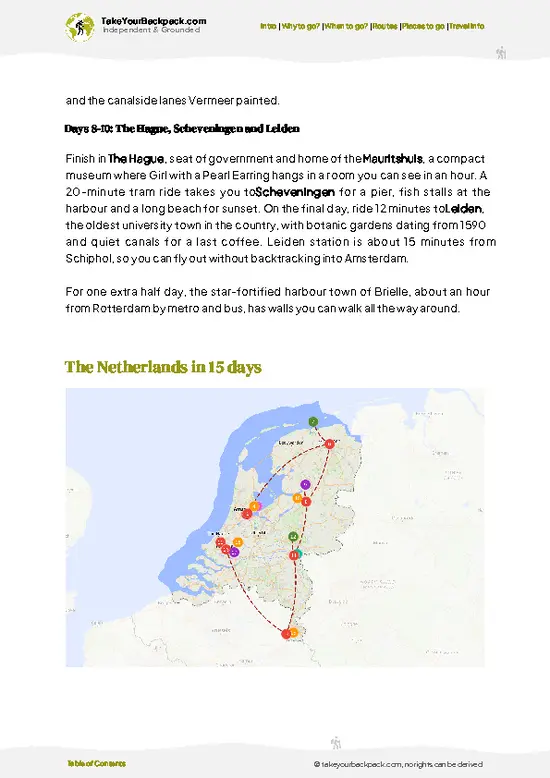
How many days to plan: A trip combining several Dutch regions needs 7 to 14 days, with 10 being comfortable for four or five stops. Because the country is small, rail hubs such as Amsterdam Centraal, Utrecht Centraal and Rotterdam Centraal connect almost everything, and typical transfers take 30 minutes to 2.5 hours.
Grouping and direction: Group by proximity: the western cities cluster within 30 to 60 minutes of each other by train, while the north and east need longer legs of 1.5 to 3 hours. A loop that starts in the Randstad, moves east or north, then returns south avoids doubling back. Arriving at Schiphol and finishing at a southern or eastern border city works well for onward travel to Belgium or Germany.
Time per stop: Allow 2 to 3 nights for the big urban areas and 1 to 2 nights for … read more 👉
How many days to plan: A trip combining several Dutch regions needs 7 to 14 days, with 10 being comfortable for four or five stops. Because the country is small, rail hubs such as Amsterdam Centraal, Utrecht Centraal and Rotterdam Centraal connect almost everything, and typical transfers take 30 minutes to 2.5 hours.
Grouping and direction: Group by proximity: the western cities cluster within 30 to 60 minutes of each other by train, while the north and east need longer legs of 1.5 to 3 hours. A loop that starts in the Randstad, moves east or north, then returns south avoids doubling back. Arriving at Schiphol and finishing at a southern or eastern border city works well for onward travel to Belgium or Germany.
Time per stop: Allow 2 to 3 nights for the big urban areas and 1 to 2 nights for smaller or rural ones. Cycling-focused areas deserve a full day on the bike.
Planning mistakes: The most common error is packing too many stops, which turns the trip into station platforms. Instead, choose a base and make day trips, as most places sit under 90 minutes apart. Another is booking late for weekends and summer, when beds in the west vanish. Travelers also forget that regional buses in rural areas run infrequently in the evenings and on Sundays, so check the 9292 journey planner before committing to a remote overnight.

The ListTop regions of The Netherlands

1 Wadden Islands

Five islands, ferry ports, dune reserves, island festival

Compare five inhabited islands by ferry, from Texel’s marsh and Terschelling’s Oerol stages to Vlieland’s sand flats and Schiermonnikoog’s national park.

netherlands-region-wadden-islands
© Google | Ron Bertelink

2 Texel

Sheep polders, salt marsh, seal center, lighthouse tip

Ride across polders dotted with tarred sheep shelters, then walk the Slufter marsh and visit the island’s seal and marine-life center.

netherlands-region-texel
© Google | Apm Steenbergen

3 Ameland

Whale-rib gates, Hollum lighthouse, seal trips, mudflat walks

Cycle between dune villages and a rescue museum, then join a guide across the tidal flats or a boat out to the seal banks.

netherlands-region-ameland
© Google | Christian Koepper

4 Friesland

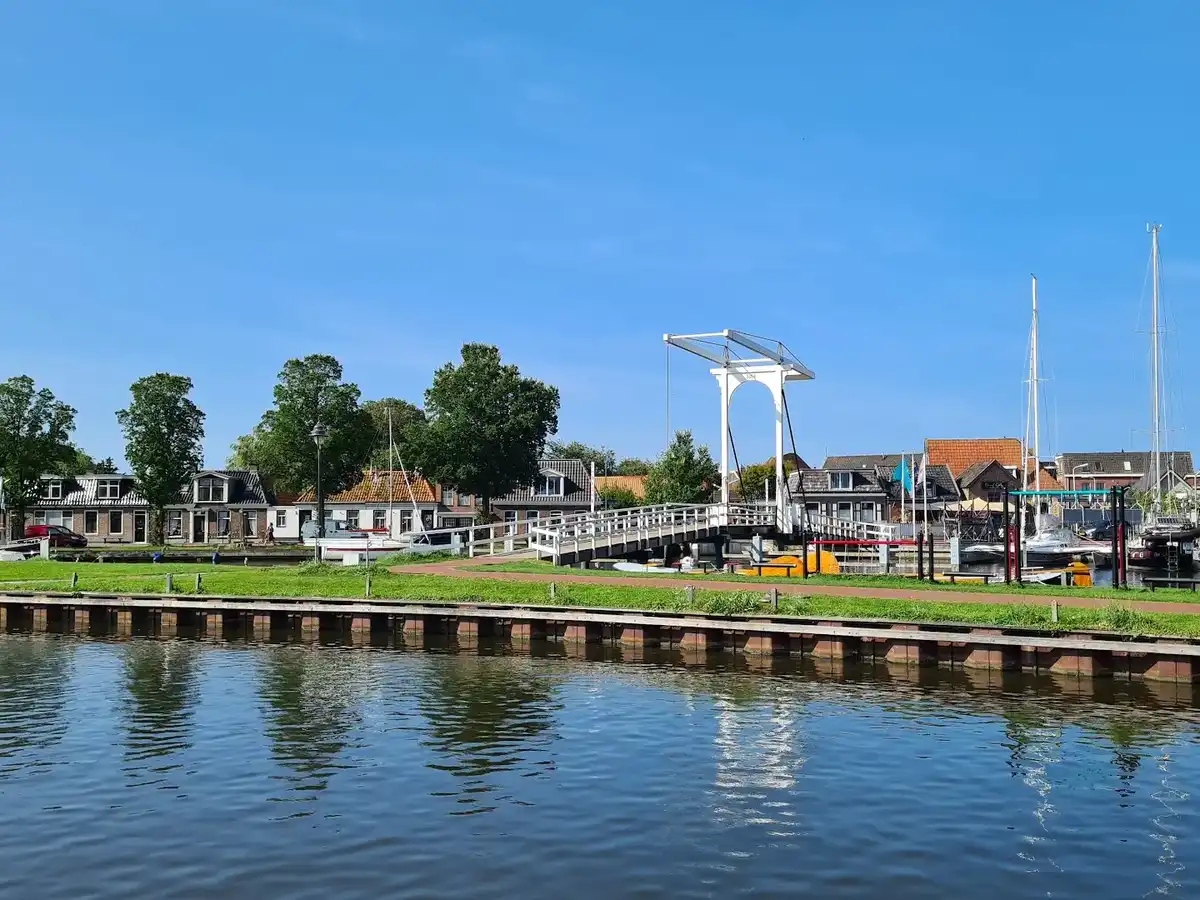
Harbor towns, lakes, ferry crossings, Elfstedentocht towns

Hop between Harlingen’s quay, Hindeloopen’s waterfront and the Fluessen lake shore, then catch a ferry out to Vlieland or Terschelling.

netherlands-region-friesland
© Google | Jan Willem Bouma

5 Brabantse Kempen

Heathland trails, Trappist abbey, Eindhoven design, cigar heritage

Pair long walks across open heath and border trails with a Trappist beer at the abbey and museum days in Eindhoven.

netherlands-region-brabantse-kempen
© Google | Ruud Castelijns
Loading the map 🌍

Expert viewInsights from Locals and Experts

How many regions to visit: I advise three to five regions on a trip of one to two weeks. The country is small and trains are fast, so the limit is not distance but attention. Each region has its own pace, and fewer, longer stays let you cycle, eat locally and see how the place works, rather than only photograph it.
Prioritizing by travel style: First-timers and museum lovers should give priority to the urban west, where culture, nightlife and transport are concentrated. Cyclists and hikers get more from the rural east and north, where national parks, heathland and quiet bike paths replace crowds. Beach and wildlife travelers should pick the coast and Wadden area in summer. Budget travelers do best mixing one expensive urban stop with cheaper rural or small-town stays, because accommodation … read more 👉
How many regions to visit: I advise three to five regions on a trip of one to two weeks. The country is small and trains are fast, so the limit is not distance but attention. Each region has its own pace, and fewer, longer stays let you cycle, eat locally and see how the place works, rather than only photograph it.
Prioritizing by travel style: First-timers and museum lovers should give priority to the urban west, where culture, nightlife and transport are concentrated. Cyclists and hikers get more from the rural east and north, where national parks, heathland and quiet bike paths replace crowds. Beach and wildlife travelers should pick the coast and Wadden area in summer. Budget travelers do best mixing one expensive urban stop with cheaper rural or small-town stays, because accommodation drops noticeably away from the Randstad.
What it costs: Expect roughly US$80 to 130 a day (about €75 to 120) if you use hostels, supermarket food and public transport. Dorm beds run €35 to 80 in Amsterdam in season and often €25 to 45 elsewhere. Meals out cost €12 to 20 for a casual main, while supermarkets such as Albert Heijn and Jumbo keep self-catering to €8 to 12 a day. Museum entries are mostly €15 to 25, and the Museumkaart (about €65 for adults) pays off after four or five visits. Train fares between regions are often €10 to 25 per leg, and off-peak discount cards only help on longer stays. Bike rental costs €10 to 15 a day, and a day pass for local transport costs about €10 to 20.
Safety and culture: The Netherlands is very safe, but bike theft and pickpocketing in tourist areas and stations are common. Use two locks on a rented bike and never leave belongings in a basket. Bike lanes are not pedestrian space: stepping into a red-surfaced path invites a collision, and cyclists will not slow for you, so look both ways even on one-way paths. Directness is normal in Dutch conversation and not rudeness. Cannabis is tolerated in licensed coffeeshops but not in public places in many city centers, and buying drugs on the street carries real risk. Always carry a card, since many shops, ticket machines and some train kiosks accept no cash. Weather can turn within an hour, so carry layers and a rain shell even on sunny mornings, and on the coast watch tide tables before any mudflat walk, which should only be done with a certified guide.

✈️ The backpacker research shortcutThe Netherlands Travel Guide

An offline-friendly backpacking guide with optimized travel routes, ranked highlights, transport advice, and the best areas to stay.
example page 0 from our offline Travel Guide for Netherlands
example page 1 from our offline Travel Guide for Netherlands
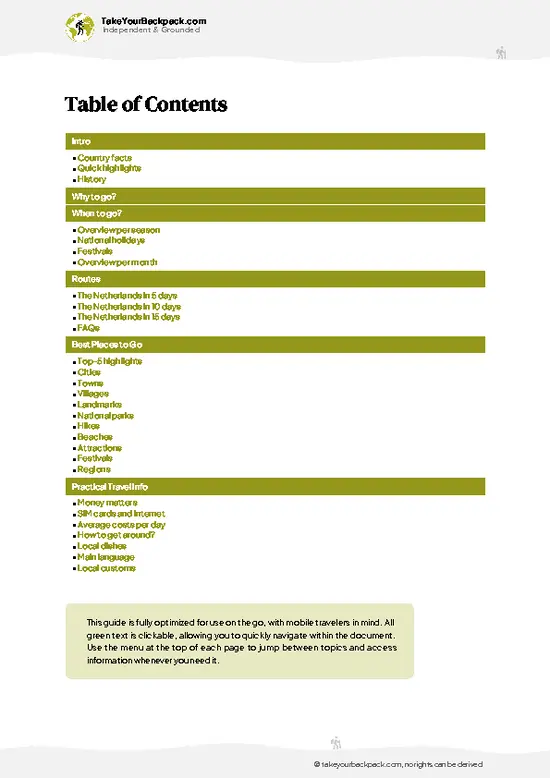
example page 2 from our offline Travel Guide for Netherlands
example page 3 from our offline Travel Guide for Netherlands
example page 4 from our offline Travel Guide for Netherlands
example page 5 from our offline Travel Guide for Netherlands
example page 6 from our offline Travel Guide for Netherlands
example page 7 from our offline Travel Guide for Netherlands
The digital guide (373 pages) contains:
✅ 127 highlights, ranked by travel appeal
✅ Optimized 5, 10 & 15-day travel routes
✅ Cities, national parks, landmarks, beaches
✅ How to get around
✅ Offline-friendly for travel without Wi-Fi
👉 Click to see all 30+ guide features

📅 Plan smarter in minutes, not weeks
✅ Month by month travel advice
✅ Festivals & national holidays
✅ Budget expectations

🗺️ Go to the right places, skip the overrated ones
✅ Honest pros & cons of destinations
✅ Top hikes, parks & viewpoints
✅ Lesser-known places most travelers miss
✅ Clear “worth it vs skip it” guidance

🛏️ Travel smoothly without rookie mistakes
✅ Best areas to stay
✅ Transport systems explained simply
✅ Common scams & safety advice
✅ SIM cards, money & practical tips

🌍 Understand the country, not just visit it
✅ Culture & traditions
✅ 52 Essential phrases & customs
✅ Festivals worth planning around
✅ Traveler-friendly historical context
✅ Insights that make places more meaningful

📱 Built for real travel conditions
✅ Fully downloadable PDF
✅ Works completely offline
✅ Optimized for phone use
✅ Useful in remote areas & buses
✅ Everything in one place
Stop searching, start planning
Get instant access to your full guide. 30‑day money-back guarantee.
+ Add another guide for just

By proceeding you agree to our terms.
Sent to your inbox immediately after payment • 100% Secure Checkout
Best Backpacking Travel Advisor 2025 tourism awardBest Backpacking
Travel Advisor
2025
What others say about Take Your Backpack Guides:
⭐⭐⭐⭐⭐
Fantastic, amazing amount of information!
⭐⭐⭐⭐⭐
My goodness this is amazing, it's what I've been looking for hats off too you!
⭐⭐⭐⭐⭐
I think this is absolutely BRILLIANT
⭐⭐⭐⭐
Very complete and informative. It's still missing places, but I gotta to commend you
⭐⭐⭐⭐⭐
This is truly amazing, thank you, can't wait to explore it with my kids!
⭐⭐⭐⭐⭐
Awesome resource, thank you!
⭐⭐⭐⭐⭐
This is amazing! Can't wait to explore the ones I haven't seen
⭐⭐⭐⭐
I love this! Well done, great idea.
⭐⭐⭐⭐⭐
Thanks for taking the time to make this gem!
⭐⭐⭐⭐⭐
This might be the best website I've ever seen.
⭐⭐⭐⭐⭐
Congratulations, and thank you so much for your work; it's incredibly valuable.
⭐⭐⭐⭐
In all seriousness I think you did a great job pointing out the important spots
⭐⭐⭐⭐⭐
10/10 very good
⭐⭐⭐⭐⭐
As someone who's only just starting to visit regularly this is awesome, thank you.
⭐⭐⭐⭐
Thank you very much! I'm going to visit my dad, it's going to be very useful!
⭐⭐⭐⭐⭐
This is really cool! We'll be travelling for the first time and this definitely come in handy.
⭐⭐⭐⭐⭐
You are now our minister of culture, congratulations 👨‍💼
⭐⭐⭐⭐⭐
Just wanted to tell you that this is a pearl! Going to follow your recommendations.
⭐⭐⭐⭐⭐
This is so cool. I'll definitely be using the resource for my travels soon.
⭐⭐⭐⭐⭐
This is very impressive! Good work.
⭐⭐⭐⭐⭐
This is an amazing and informative site. Very well done!

🛏️ Where to stay?Where to Base Yourself

Budget accommodation in the Netherlands is easy to find, with hostel dorms in Amsterdam typically running €30 to €70 a night in summer and noticeably less in Rotterdam, Utrecht and smaller cities like Haarlem. In Amsterdam, Centrum puts you within walking distance of the canal ring and the busiest nightlife but is loud, pricey and crowded around De Wallen, while De Pijp and Oud-West offer good bars, cafés and safe, livelier-but-local streets a 10 to 20 minute tram ride out, and Oost and Amsterdam-Noord are quieter and cheaper at the cost of a longer commute. Rotterdam’s Centrum and Witte de Withkwartier give you nightlife and architecture on foot at lower prices, and Utrecht’s compact Binnenstad … read more 👉
Budget accommodation in the Netherlands is easy to find, with hostel dorms in Amsterdam typically running €30 to €70 a night in summer and noticeably less in Rotterdam, Utrecht and smaller cities like Haarlem. In Amsterdam, Centrum puts you within walking distance of the canal ring and the busiest nightlife but is loud, pricey and crowded around De Wallen, while De Pijp and Oud-West offer good bars, cafés and safe, livelier-but-local streets a 10 to 20 minute tram ride out, and Oost and Amsterdam-Noord are quieter and cheaper at the cost of a longer commute. Rotterdam’s Centrum and Witte de Withkwartier give you nightlife and architecture on foot at lower prices, and Utrecht’s compact Binnenstad keeps everything walkable and calm, with Amsterdam about 30 minutes away by train.

If you enjoy meeting fellow travelers, consider choosing hostels with high ratings for atmosphere. On the other hand, if you prefer having your own space, a hotel might be a better option.

The NetherlandsExpand Your Journey

👋 Meet the founderWho’s Behind Take Your Backpack?

Johan, backpacker and founder of TakeYourBackpackHi, I’m Johan (Netherlands 🇳🇱), the creator of TakeYourBackpack. Over the past 3 decades, I’ve backpacked through 90+ countries across six continents, gaining extensive experience with independent travel, long-term trips, and overland routes.

This site is built on a combination of firsthand travel experience and carefully curated insights from other backpackers. Many guides are based on places I’ve personally visited, while others bring together tips, observations, and practical advice shared by trusted travelers I’ve met along the way.

The goal is to provide realistic, experience-driven guidance — not generic itineraries — so you can explore destinations with better context, clearer expectations, and more confidence.