
×
Fiordland National Park

New Zealand🇳🇿 | national parksFiordland National ParkDeep fiords, ancient rainforest, waterfalls, multi-day tracks | things to do and best time to go

Explore Aoraki Mount Cook National ParkExplore Mount Aspiring National Park

Backpacking in Fiordland
🏆 Top picknational park ranked #1
By Johan Kruseman 🇳🇱 | Updated September 4, 2026

Your boots hit the boardwalk and the sound just disappears into the moss. Sandflies whine at your ears, wet fern brushes your calves, and somewhere out in the grey you hear a waterfall before you ever see it. That’s Fiordland National Park, way down in the southwest corner of New Zealand’s South Island, where the road literally runs out at Milford and Te Anau is your last real town.

For backpackers, it’s both jackpot and test. The scenery is outrageous even by New Zealand standards, with multi-day hikes like the Kepler and Routeburn plus shorter day walks if you’re not up for hut life. Wildlife is mostly birds and sandflies, not big mammals, and the weather is moody, wet, and relentless. Access is easy by bus or car, but huts, campsites, and Milford cruises add up fast, and Great Walk bookings are competitive. Compared with Aoraki/Mount Cook or Mount Aspiring, Fiordland feels wilder, wetter, more committing—and less forgiving if you underestimate logistics or costs.

Discover everything you want to know in the 📖 New Zealand Travel Guide.
Loading the map 🌍
CLICK TO FILTER
cities
towns
villages
landmarks
national parks
hikes
beaches
attractions
festivals
regions
SHOW COUNTRY’S BESTSHOW ALL

✨ Why go?
Ranked #1 national park in New Zealand
Why Fiordland should be on your travel list

Fiordland National Park is a magnet for backpackers seeking independent exploration. The park’s vast landscapes offer a sense of freedom that’s hard to find elsewhere. You can wander through diverse trails ranging from easy walks to challenging hikes, catering to all skill levels. This variety means you can tailor your adventure to your energy and time constraints.

Budget-conscious travelers appreciate the camping and hostel options nearby. Affordable sites allow you to set up camp under the stars without breaking the bank. If you prefer a roof over your head, hostels in the area provide a cozy base for your explorations.

Self-guided travelers thrive here. The park is designed for those who want to forge their own path rather than rely on organized tours. With well-marked trails and plenty … read more 👉
Fiordland National Park is a magnet for backpackers seeking independent exploration. The park’s vast landscapes offer a sense of freedom that’s hard to find elsewhere. You can wander through diverse trails ranging from easy walks to challenging hikes, catering to all skill levels. This variety means you can tailor your adventure to your energy and time constraints.

Budget-conscious travelers appreciate the camping and hostel options nearby. Affordable sites allow you to set up camp under the stars without breaking the bank. If you prefer a roof over your head, hostels in the area provide a cozy base for your explorations.

Self-guided travelers thrive here. The park is designed for those who want to forge their own path rather than rely on organized tours. With well-marked trails and plenty of resources available, you can navigate the stunning scenery at your own pace.

However, be mindful of the weather; it can change rapidly, impacting your plans. Bring the right gear and be prepared for anything. This preparation will help you focus on the breathtaking views and unique experiences that make Fiordland a must-visit.
Want to include Fiordland National Park in your New Zealand route?
Create a personalized New Zealand itinerary that includes Fiordland National Park and the places that fit your trip — based on your travel style, budget, and available time. Get your route in seconds.

Generate my trip

💡 HighlightsWhat this place is best known for

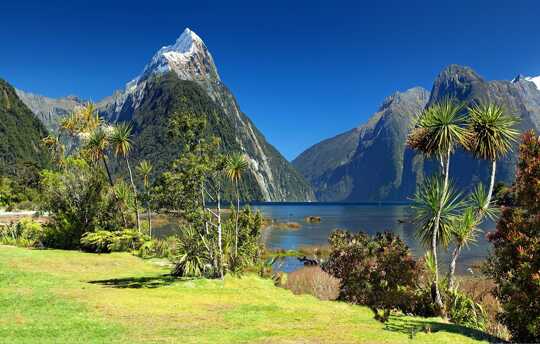
  • Milford Sound (Piopiotahi) — The postcard of Fiordland: sheer granite cliffs, thunderous waterfalls and the iconic Mitre Peak rising straight out of the water. Boat cruises or sea-kayaks give close-up views of bottlenose dolphins, fur seals and rainforest clinging to near-vertical rock.
  • Doubtful Sound — Wilder and far quieter than Milford, it feels like stepping into another world: deep, mirror-like water, steep rainforest walls and real solitude. Night cruises here can be magical — bioluminescence, quiet bays and a better chance to spot big pod dolphins and sea birds.
  • Milford Track — Called one of the world’s great walks for a reason: three days of waterfalls, sprawling beech forest, and alpine passes that open onto jaw-dropping fiord views. It’s a classic multi-day route — book huts
read more 👉
  • Milford Sound (Piopiotahi) — The postcard of Fiordland: sheer granite cliffs, thunderous waterfalls and the iconic Mitre Peak rising straight out of the water. Boat cruises or sea-kayaks give close-up views of bottlenose dolphins, fur seals and rainforest clinging to near-vertical rock.
  • Doubtful Sound — Wilder and far quieter than Milford, it feels like stepping into another world: deep, mirror-like water, steep rainforest walls and real solitude. Night cruises here can be magical — bioluminescence, quiet bays and a better chance to spot big pod dolphins and sea birds.
  • Milford Track — Called one of the world’s great walks for a reason: three days of waterfalls, sprawling beech forest, and alpine passes that open onto jaw-dropping fiord views. It’s a classic multi-day route — book huts early, but the scenery rewards every step.
  • Routeburn Track — A shorter Great Walk option with dramatic alpine ridgelines, mountain lakes and sweeping vistas where tussock meets glacier-carved valleys. Do Key Summit as a day trip if you want panoramic views without committing to the full multi-day trek.
  • Kepler Track — A well-graded loop that starts near Te Anau and mixes lakeshore, forest and a high ridgewalk with panoramic views across the park. It’s accessible and varied — good for hikers who want a solid multi-day walk without technical scrambling.
  • Lake Te Anau & Te Anau Glowworm Caves — Te Anau is the gateway town and the lake itself is huge and moody, framed by forested hills. The nearby glowworm caves are a short, tourist-friendly way to see native cave life and those tiny bioluminescent dots that look like a starlit ceiling.
  • Sutherland Falls — One of New Zealand’s tallest waterfalls, plunging in three dramatic tiers into a steep valley. Most visitors see it from the Milford Track or by helicopter — it’s especially spectacular after rain when the flow turns roaring.
Spotted a mistake or missing something? Contact us.

Things to do near Fiordland National Park

Ratings based on Tripadvisor reviews. When you book through this link, you support our work at no extra cost to you.

🌤️ When to go?When to go for the best experience


  • Weather: Fiordland’s weather is famously unpredictable. Summer (December to February) offers the most stable conditions but expect frequent rain year-round. Heavy rain can turn trails muddy and rivers swollen, so pack waterproof gear and plan for slower progress.

  • Temperature: Summer highs hover around 18-22°C (64-72°F), while winter drops to 5-10°C (41-50°F). Nights can be chilly even in summer, so layers are essential. Avoid winter if you’re not prepared for cold, wet conditions and possible snow on higher trails.

  • Daylight Hours: Long summer days stretch up to 15-16 hours, giving you more daylight for hiking. Winter days shrink to about 8-9 hours, limiting how far you can push on multi-day treks.

  • Crowds: Peak season in summer means busier huts and trails, especially on popular routes
read more 👉

  • Weather: Fiordland’s weather is famously unpredictable. Summer (December to February) offers the most stable conditions but expect frequent rain year-round. Heavy rain can turn trails muddy and rivers swollen, so pack waterproof gear and plan for slower progress.

  • Temperature: Summer highs hover around 18-22°C (64-72°F), while winter drops to 5-10°C (41-50°F). Nights can be chilly even in summer, so layers are essential. Avoid winter if you’re not prepared for cold, wet conditions and possible snow on higher trails.

  • Daylight Hours: Long summer days stretch up to 15-16 hours, giving you more daylight for hiking. Winter days shrink to about 8-9 hours, limiting how far you can push on multi-day treks.

  • Crowds: Peak season in summer means busier huts and trails, especially on popular routes like the Milford Track. Shoulder seasons (late spring and early autumn) offer quieter experiences but with more variable weather.

  • Seasonal Activities: Summer is prime for hiking and kayaking, while winter opens up opportunities for snowshoeing and spotting rare wildlife. Some tracks close in winter due to safety concerns, so check ahead.

  • Price Fluctuations: Accommodation and transport costs spike in summer. Booking early is crucial. Off-season rates can be significantly lower, but factor in the trade-off with weather and access.


Pro-tip: Aim for late spring or early autumn to dodge the crowds and enjoy manageable weather—just be ready for a few wet days and flexible plans.


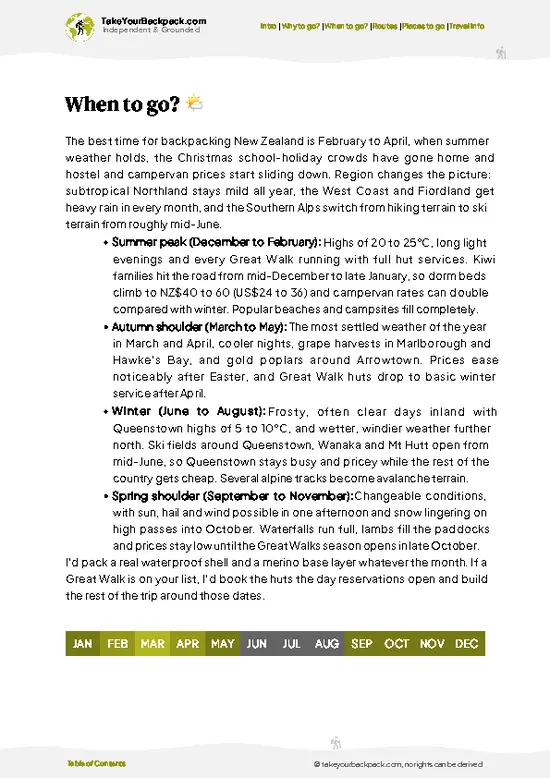
source: climatestotravel.comJANJanuary: excellent for travelingFEBFebruary: excellent for travelingMARMarch: highly recommended for travelingAPRApril: highly recommended for travelingMAYMay: good for travelingJUNJune: fair for travelingJULJuly: below average for travelingAUGAugust: below average for travelingSEPSeptember: good for travelingOCTOctober: highly recommended for travelingNOVNovember: highly recommended for travelingDECDecember: excellent for traveling
New Zealand - Fiordland National Park

✈️ The backpacker research shortcutNew Zealand Travel Guide

An offline-friendly backpacking guide with optimized travel routes, ranked highlights, transport advice, and the best areas to stay.
example page 0 from our offline Travel Guide for New Zealand
example page 1 from our offline Travel Guide for New Zealand
example page 2 from our offline Travel Guide for New Zealand
example page 3 from our offline Travel Guide for New Zealand
example page 4 from our offline Travel Guide for New Zealand
example page 5 from our offline Travel Guide for New Zealand
example page 6 from our offline Travel Guide for New Zealand
example page 7 from our offline Travel Guide for New Zealand
The digital guide (402 pages) contains:
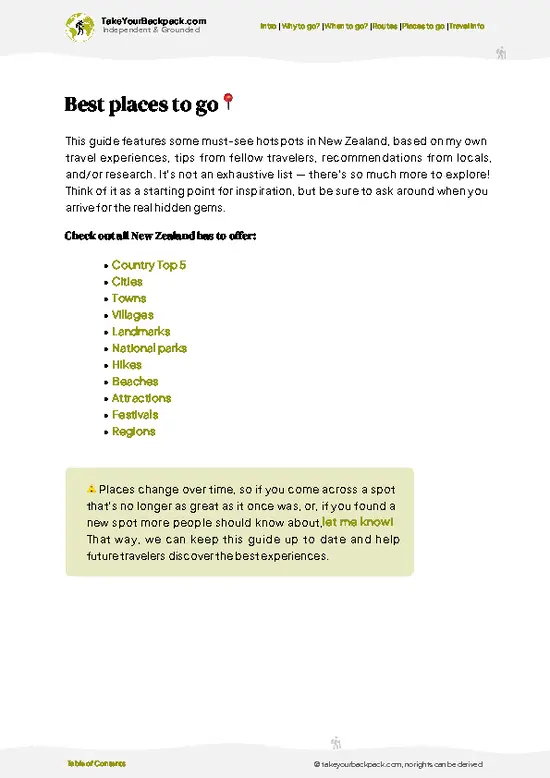
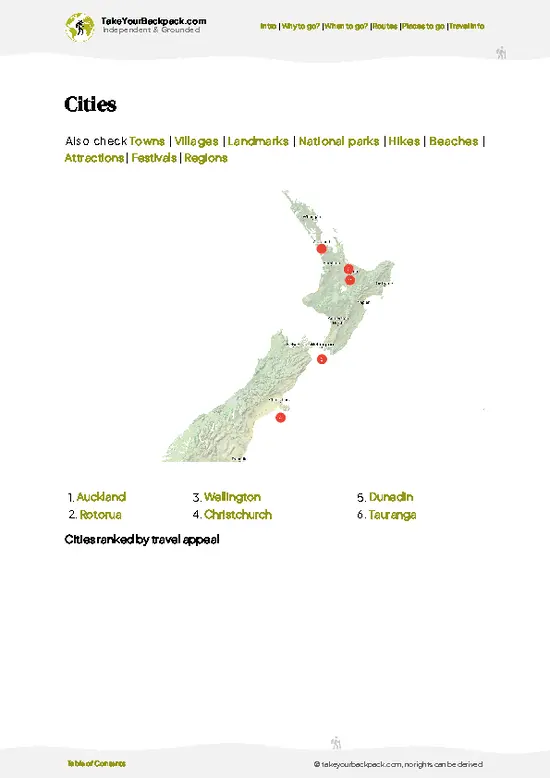
112 highlights, ranked by travel appeal
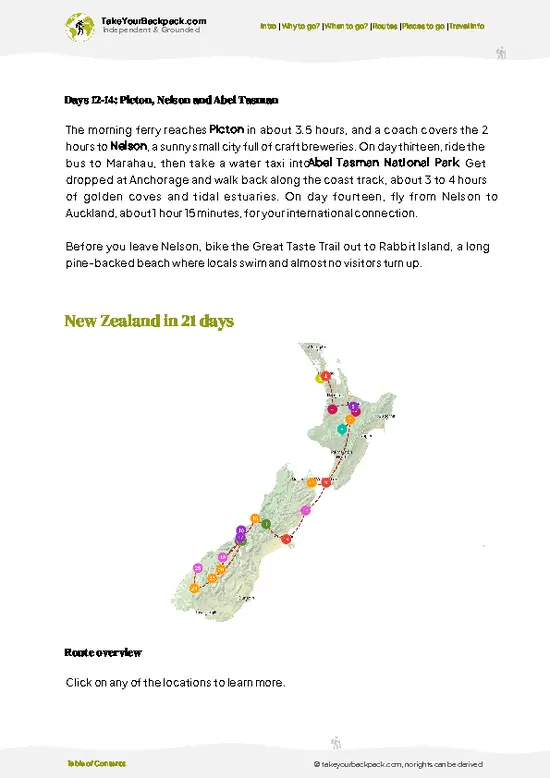
Optimized 7, 14 & 21-day travel routes
Cities, national parks, landmarks, beaches
How to get around
Offline-friendly for travel without Wi-Fi
👉 Click to see all 30+ guide features

📅 Plan smarter in minutes, not weeks
Month by month travel advice
Festivals & national holidays
Budget expectations

🗺️ Go to the right places, skip the overrated ones
Honest pros & cons of destinations
Top hikes, parks & viewpoints
Lesser-known places most travelers miss
Clear “worth it vs skip it” guidance

🛏️ Travel smoothly without rookie mistakes
Best areas to stay
Transport systems explained simply
Common scams & safety advice
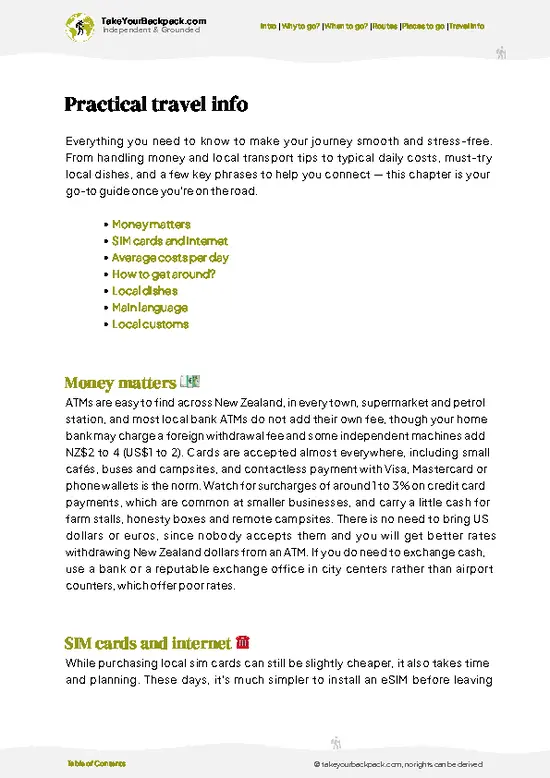
SIM cards, money & practical tips

🌍 Understand the country, not just visit it
Culture & traditions
Local customs
Festivals worth planning around
Traveler-friendly historical context
Insights that make places more meaningful

📱 Built for real travel conditions
Fully downloadable PDF
Works completely offline
Optimized for phone use
Useful in remote areas & buses
Everything in one place
Save weeks of stressful planning
Get instant access to your full guide. 30‑day money-back guarantee.
+ Add another guide for just CA$11.15

By proceeding you agree to our terms.
Sent to your inbox immediately after payment • 100% Secure Checkout
Best Backpacking Travel Advisor 2025 tourism awardBest Backpacking
Travel Advisor
2025
What others say about Take Your Backpack Guides:
⭐⭐⭐⭐⭐
Fantastic, amazing amount of information!
⭐⭐⭐⭐⭐
My goodness this is amazing, it's what I've been looking for hats off too you!
⭐⭐⭐⭐⭐
I think this is absolutely BRILLIANT
⭐⭐⭐⭐
Very complete and informative. It's still missing places, but I gotta to commend you
⭐⭐⭐⭐⭐
This is truly amazing, thank you, can't wait to explore it with my kids!
⭐⭐⭐⭐⭐
Awesome resource, thank you!
⭐⭐⭐⭐⭐
This is amazing! Can't wait to explore the ones I haven't seen
⭐⭐⭐⭐
I love this! Well done, great idea.
⭐⭐⭐⭐⭐
Thanks for taking the time to make this gem!
⭐⭐⭐⭐⭐
This might be the best website I've ever seen.
⭐⭐⭐⭐⭐
Congratulations, and thank you so much for your work; it's incredibly valuable.
⭐⭐⭐⭐
In all seriousness I think you did a great job pointing out the important spots
⭐⭐⭐⭐⭐
10/10 very good
⭐⭐⭐⭐⭐
As someone who's only just starting to visit regularly this is awesome, thank you.
⭐⭐⭐⭐
Thank you very much! I'm going to visit my dad, it's going to be very useful!
⭐⭐⭐⭐⭐
This is really cool! We'll be travelling for the first time and this definitely come in handy.
⭐⭐⭐⭐⭐
You are now our minister of culture, congratulations 👨‍💼
⭐⭐⭐⭐⭐
Just wanted to tell you that this is a pearl! Going to follow your recommendations.
⭐⭐⭐⭐⭐
This is so cool. I'll definitely be using the resource for my travels soon.
⭐⭐⭐⭐⭐
This is very impressive! Good work.
⭐⭐⭐⭐⭐
This is an amazing and informative site. Very well done!

🛏️ Where to stay?How to pick the right area

Fiordland National Park is a backpacker’s paradise, but choosing where to stay can make or break your experience. Inside the park, options are limited but rewarding. The Milford Sound Lodge offers a unique stay right at the sound, with shared facilities and a cozy atmosphere. It’s a bit pricier, but the proximity to the fjord is worth it for the early morning tranquility.

If you’re looking for something more budget-friendly, consider the DOC (Department of Conservation) huts scattered throughout the park. They provide basic shelter and a chance to connect with fellow hikers. Just remember to … read more 👉
Fiordland National Park is a backpacker’s paradise, but choosing where to stay can make or break your experience. Inside the park, options are limited but rewarding. The Milford Sound Lodge offers a unique stay right at the sound, with shared facilities and a cozy atmosphere. It’s a bit pricier, but the proximity to the fjord is worth it for the early morning tranquility.

If you’re looking for something more budget-friendly, consider the DOC (Department of Conservation) huts scattered throughout the park. They provide basic shelter and a chance to connect with fellow hikers. Just remember to book in advance, especially during peak season, as they fill up quickly.

For a more vibrant scene, Te Anau is your best bet. This town serves as the gateway to the park and has a range of accommodations, from hostels to motels. The Te Anau Lakeview Kiwi Holiday Park is a solid choice for backpackers, offering kitchen facilities and a communal vibe.

Avoid the tourist traps in Milford Sound; they can drain your wallet without delivering true value. Instead, focus on experiences like kayaking or hiking the Routeburn Track, which are where your energy and budget will pay off.

👛 Costs (as of 4 September 2026)How expensive it really is

Visiting Fiordland National Park in New Zealand can be a breathtaking experience, but it’s essential to be aware of the costs involved to avoid surprises.

Entry to the park itself is free. However, if you plan to use the Milford Road, expect a toll of around $10 USD per vehicle. This road is the main access point to the park and is worth the fee for the stunning views.

Accommodation options vary widely. Camping in designated areas costs about $15 to $20 USD per night. If you prefer a more comfortable stay, lodges and hotels in Te Anau range from $100 to $300 USD per night, depending on the season and amenities.

Guided tours can add to your experience but come with a price. Day trips to Milford Sound typically cost between $70 and $150 USD per person. If you’re considering a cruise, prices … read more 👉
Visiting Fiordland National Park in New Zealand can be a breathtaking experience, but it’s essential to be aware of the costs involved to avoid surprises.

Entry to the park itself is free. However, if you plan to use the Milford Road, expect a toll of around $10 USD per vehicle. This road is the main access point to the park and is worth the fee for the stunning views.

Accommodation options vary widely. Camping in designated areas costs about $15 to $20 USD per night. If you prefer a more comfortable stay, lodges and hotels in Te Anau range from $100 to $300 USD per night, depending on the season and amenities.

Guided tours can add to your experience but come with a price. Day trips to Milford Sound typically cost between $70 and $150 USD per person. If you’re considering a cruise, prices can range from $50 to $100 USD, depending on the length and inclusions.

Food costs can also add up. Expect to pay around $15 to $25 USD for a meal at a casual restaurant. If you’re cooking for yourself, groceries in Te Anau are reasonably priced, but plan for about $50 USD for a week’s worth of supplies.

Lastly, if you’re renting gear for hiking or camping, budget around $20 to $50 USD per day, depending on what you need.

Being aware of these costs will help you allocate your budget wisely, ensuring you have the energy and funds for the experiences that truly matter in this stunning landscape.


source: doc.govt.nz
⚠️ Prices can change and everyone travels differently, so take this as a rough guide. Hope it helps you plan your adventure!

🥾 TrailsHiking Fiordland national park: highlights and difficulty

Fiordland National Park is a hiker’s dream, packed with jaw-dropping scenery, from towering peaks to serene fjords. The terrain can be rugged, with steep climbs and sometimes muddy paths, but the views are so stunning they’ll make you forget about any sore muscles. Wildlife is abundant, too; keep an eye out for the cheeky kea parrots and maybe even a rare takahe if you’re lucky.

One of the standout trails is the Milford Track. Here are the details:
  • Length: 53.5 km
  • Estimated Duration: 4 days
  • Difficulty Level: Moderate to Challenging
  • Key Features: Spectacular waterfalls, lush rainforests, and stunning
read more 👉
Fiordland National Park is a hiker’s dream, packed with jaw-dropping scenery, from towering peaks to serene fjords. The terrain can be rugged, with steep climbs and sometimes muddy paths, but the views are so stunning they’ll make you forget about any sore muscles. Wildlife is abundant, too; keep an eye out for the cheeky kea parrots and maybe even a rare takahe if you’re lucky.

One of the standout trails is the Milford Track. Here are the details:
  • Length: 53.5 km
  • Estimated Duration: 4 days
  • Difficulty Level: Moderate to Challenging
  • Key Features: Spectacular waterfalls, lush rainforests, and stunning mountain vistas
  • Terrain: Varied, including boardwalks, steep sections, and river crossings

Another great option is the Routeburn Track:
  • Length: 32 km
  • Estimated Duration: 2-4 days
  • Difficulty Level: Moderate
  • Key Features: Alpine lakes, wildflower meadows, and panoramic views
  • Terrain: Mix of well-formed tracks and some rocky sections

Getting to Fiordland isn’t too tricky; you can catch a bus from Queenstown or Te Anau. Just be aware that during peak season, the trails can get pretty crowded, especially the Milford Track. As for entrance fees, there’s no charge for entering the park itself, but if you’re planning to stay in the huts along the tracks, you’ll need to book and pay for those in advance. Happy hiking!
⚠️ Hiking info can sometimes be outdated or inaccurate. Before you hit the trail, check the latest conditions with locals. If you do spot anything that's off, I'd love to hear from you, so I can update it for fellow travelers.

🛡️ SafetyScams, Hazards, and Annoyances

Fiordland National Park is a hiker’s paradise, but it comes with its quirks. Weather can shift rapidly; a sunny morning can morph into rain or snow by afternoon. Layer your clothing and pack a reliable rain jacket.

The terrain varies from well-maintained paths to steep, rocky sections. Pay attention to your footing, especially on descents. Navigation is generally straightforward, but always carry a map and compass. Some trails may involve river crossings, which can be tricky after heavy rain. Timing your hike to avoid peak water levels is smart.

Wildlife encounters are part of the experience. Keep your distance from animals like kea, the cheeky mountain parrots. They’re curious but can be destructive.

First-timers often underestimate the physical demands. Pace yourself and take breaks … read more 👉
Fiordland National Park is a hiker’s paradise, but it comes with its quirks. Weather can shift rapidly; a sunny morning can morph into rain or snow by afternoon. Layer your clothing and pack a reliable rain jacket.

The terrain varies from well-maintained paths to steep, rocky sections. Pay attention to your footing, especially on descents. Navigation is generally straightforward, but always carry a map and compass. Some trails may involve river crossings, which can be tricky after heavy rain. Timing your hike to avoid peak water levels is smart.

Wildlife encounters are part of the experience. Keep your distance from animals like kea, the cheeky mountain parrots. They’re curious but can be destructive.

First-timers often underestimate the physical demands. Pace yourself and take breaks to enjoy the views. With the right preparation, you’ll conserve energy for the moments that truly matter. Embrace the wild, but respect its rules.

FAQFrequently asked questions about Fiordland

3 to 5 days is ideal to explore Fiordland National Park thoroughly, allowing time for key hikes like the Milford Track or Kepler Track and some time for boat tours in Milford or Doubtful Sound.
Yes, you can visit Fiordland National Park without a car by using shuttle services, guided tours, or public transport options from nearby towns like Te Anau or Queenstown, though having a car offers more flexibility.
No entrance fee or general permit is required to enter Fiordland National Park, but some specific tracks like the Milford Track require a booking and fee during the peak season from October to April.
⚠️ Things can change over time, so always validate details locally before you go.

Other New Zealander national parks near Fiordland

Explore more nearby:


💡 Not sure where to go next?
Create a personalized itinerary for New Zealand including Fiordland and the places that fit your trip.

Generate my itinerary

👉 Discover all national parks

Or checkout all New Zealand has to offer (think cities, towns, villages, national parks, hikes, beaches, festivals)
Country photo of New Zealand

We 💚 feedbackKey takeaways before you go

Fiordland National Park is a breathtaking testament to nature’s raw power, with its towering cliffs and deep fjords. The scenery is worth every ounce of effort. But here’s the catch: the weather can be unpredictable. Rain can turn a sunny hike into a soggy slog, so pack accordingly. Embrace the elements, and you’ll find that the park’s wild beauty shines brightest when you’re prepared. It’s all about balancing adventure with a dose of realism.

✈️ When did I visit New Zealand?
All the way back in high school I have been visiting the Northern Island of New Zealand (1993).

✍️ Help improve this page!
The information on this page is based on my own backpacking experience in New Zealand, supplemented with up-to-date research and feedback from other travelers. Travel details can change, so if you notice anything outdated or incomplete, feel free to let me know.


🙋‍♂️ Give feedback

👋 Meet the founderWho’s Behind Take Your Backpack?

Johan, backpacker and founder of TakeYourBackpackHi, I’m Johan (Netherlands 🇳🇱), the creator of TakeYourBackpack. Over the past decade, I’ve backpacked through 80+ countries across six continents, gaining extensive experience with independent travel, long-term trips, and overland routes.

This site is built on a combination of firsthand travel experience and carefully curated insights from other backpackers. Many guides are based on places I’ve personally visited, while others bring together tips, observations, and practical advice shared by trusted travelers I’ve met along the way.

The goal is to provide realistic, experience-driven guidance — not generic itineraries — so you can explore destinations with better context, clearer expectations, and more confidence.

Get full country guide •
Instant download • 112 highlights • Full Offline guide