
×

New Zealand🇳🇿 | national parksMount Aspiring National ParkAspiring pyramid, Rob Roy Glacier, river fords, Routeburn tops | things to do and best time to go

Explore Fiordland National ParkExplore Rakiura National Park

Backpacking in Mount Aspiring
🌟 Highlightnational park ranked #5
By Johan Kruseman 🇳🇱 | Updated October 15, 2026

The decision most visitors face is whether to commit to a multi-day hut or tent trek or settle for day walks from the road, and the answer hinges on weather and booking windows. Mount Aspiring National Park sits in the Southern Alps of New Zealand, northwest of Queenstown and Wanaka, and its rain-fed valleys mean rivers can block trails after heavy downpours. That is why flexible plans pay off. The tradeoff is real: road-end trailheads are gravel and fords are unbridged, but you get glacier-fed turquoise flats and few crowds beyond Routeburn. At a Raspberry Creek car park a local ranger told me, “Read the river, not the clock,” and I waited an hour before crossing. On the far side, a pair of rock wrens flicked along the moraine below Rob Roy Glacier’s hanging ice.

Discover everything you want to know in the 📖 New Zealand Travel Guide.


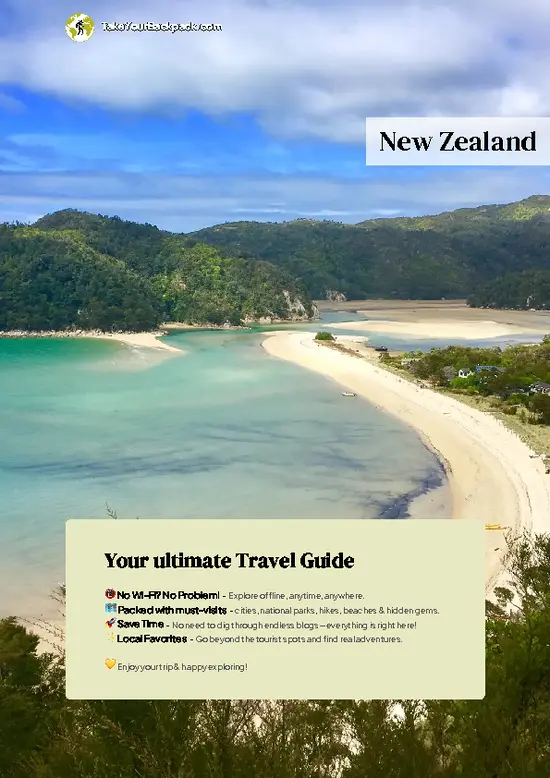
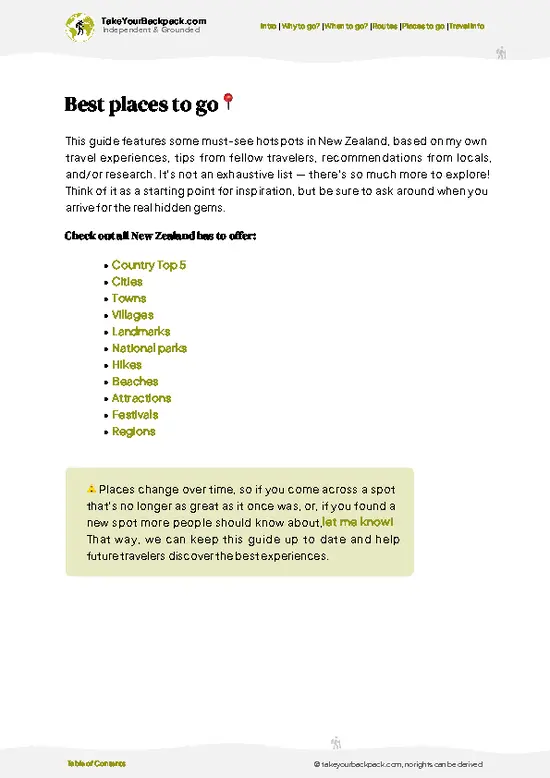
example page 0 from our offline Travel Guide for New Zealand
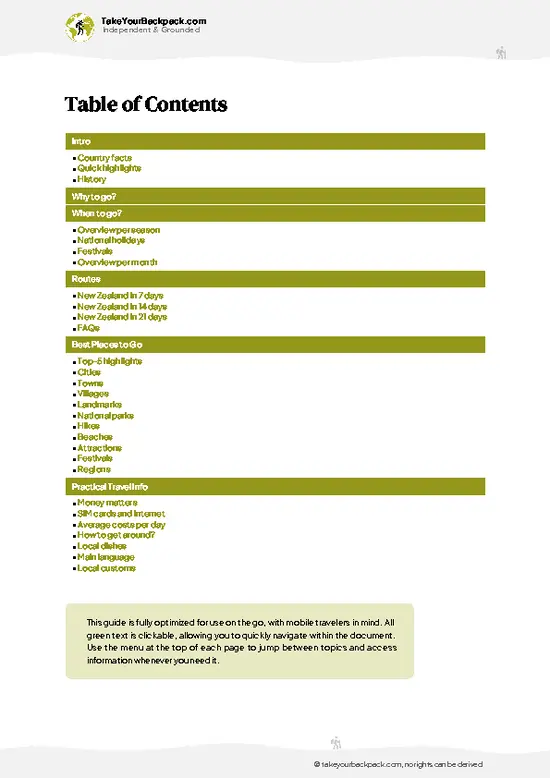
example page 1 from our offline Travel Guide for New Zealand
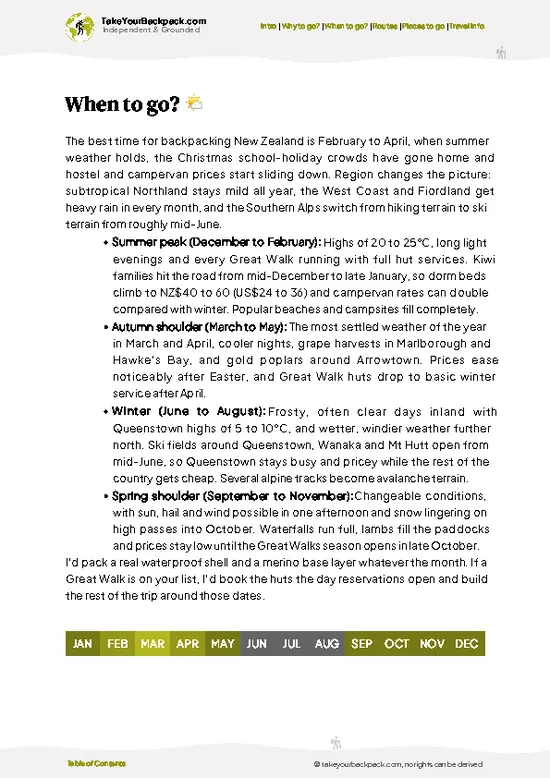
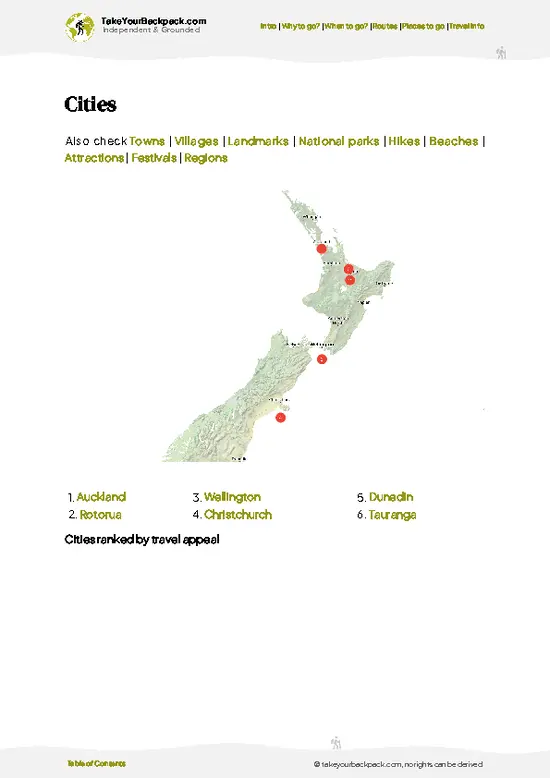
example page 2 from our offline Travel Guide for New Zealand
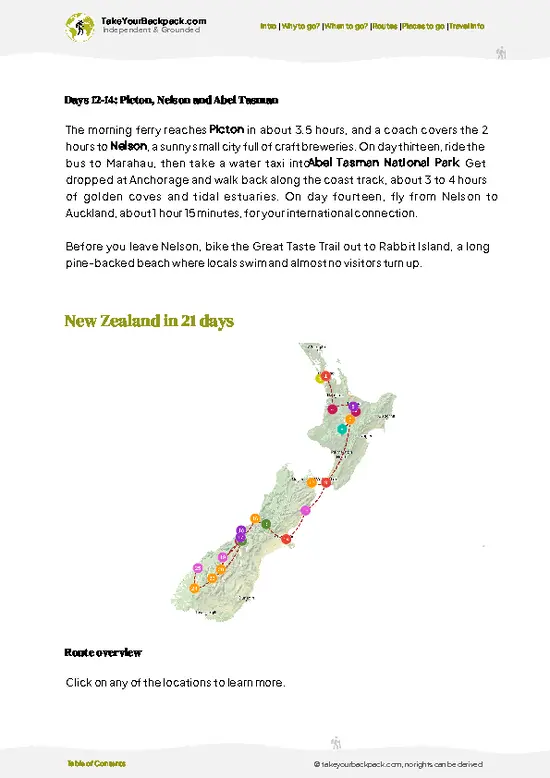
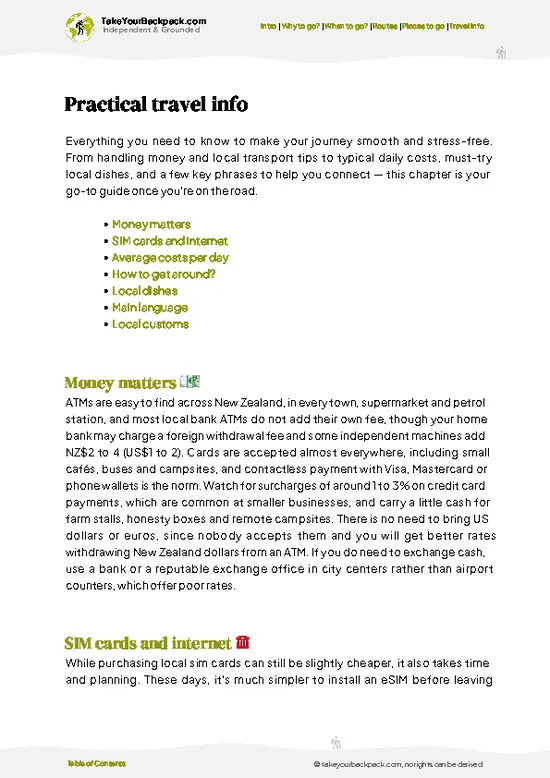
example page 3 from our offline Travel Guide for New Zealand
example page 4 from our offline Travel Guide for New Zealand
example page 5 from our offline Travel Guide for New Zealand
example page 6 from our offline Travel Guide for New Zealand
example page 7 from our offline Travel Guide for New Zealand
Loading the map 🌍
CLICK TO FILTER
cities
towns
villages
landmarks
national parks
hikes
beaches
attractions
festivals
regions
SHOW COUNTRY’S BESTSHOW ALL

✨ Why go?
Ranked #5 national park in New Zealand
The unique appeal for travelers

Backpackers choose this park for independence. Most of the terrain suits self-guided travel, with marked tracks, basic huts and open camping that let you build your own itinerary rather than buy a package. The Cascade Saddle route is a good example: a steep climb above the bushline that opens onto views of Dart Glacier and the Matukituki valley, with no guide required if the forecast is clear and your navigation is sound.

Trail variety is the second draw. You can do a 3-hour return to Rob Roy Glacier in the morning, then plan a multi-day push up the Matukituki valley toward French Ridge Hut. Both start from roads that run through sheep farms and beech forest, so a rental car or shuttle gets you onto the trail the same day. Crowds thin quickly once you leave the car parks, and the valleys feel remote in a way the Great Walks do not.

💡 HighlightsEssential experiences to have while exploring Mount Aspiring

  1. Mount Aspiring/Tititea: The pyramid-shaped peak, 3,033 meters, is the park’s namesake and the sight most visitors search for. Climbers go for the summit; walkers see it from the West Matukituki valley and the upper tracks.
  2. Rob Roy Glacier Track: A day walk through beech forest to a viewpoint facing a hanging glacier, with waterfalls streaming off the cliffs below the ice.
  3. Routeburn Track (Mount Aspiring section): One of the Great Walks, crossing alpine tops and the Harris Saddle, with long views over the Hollyford and Routeburn valleys.
  4. Cascade Saddle: A demanding alpine route with steep tussock slopes and glimpses of Dart Glacier, best for experienced hikers in settled weather.
  5. Matukituki Valley: Flat river terraces, braided channels and grazing farmland beneath rock walls, reached by a gravel
… read more 👉
  1. Mount Aspiring/Tititea: The pyramid-shaped peak, 3,033 meters, is the park’s namesake and the sight most visitors search for. Climbers go for the summit; walkers see it from the West Matukituki valley and the upper tracks.
  2. Rob Roy Glacier Track: A day walk through beech forest to a viewpoint facing a hanging glacier, with waterfalls streaming off the cliffs below the ice.
  3. Routeburn Track (Mount Aspiring section): One of the Great Walks, crossing alpine tops and the Harris Saddle, with long views over the Hollyford and Routeburn valleys.
  4. Cascade Saddle: A demanding alpine route with steep tussock slopes and glimpses of Dart Glacier, best for experienced hikers in settled weather.
  5. Matukituki Valley: Flat river terraces, braided channels and grazing farmland beneath rock walls, reached by a gravel road with several fords.
  6. Blue Pools: A short walk from Haast Pass Highway to a swing bridge above clear, deep pools in the Makarora River. Brown trout are visible from above.
  7. Lake Wanaka headwaters at Makarora: The remote northern entrance to the park, with river flats, beech forest and the start of the Siberia Valley flight-in routes.
Most visitors miss the Siberia Valley, where scenic flights drop trampers onto open tussock flats beneath snow peaks.
Spotted a mistake or missing something? Contact us.

Things to do around Mount Aspiring National Park

Ratings based on Tripadvisor reviews. When you book through this link, you support our work at no extra cost to you.

🌤️ When to go?Choosing the right time of year

December to March is the most reliable window for Mount Aspiring National Park, with long days and the huts at their busiest.
  • Summer (Dec to Feb): Valley highs run 18 to 24°C (64 to 75°F), nights 5 to 10°C (41 to 50°F). Daylight lasts until about 9:30 pm. Great Walks-style hut bookings for the Routeburn Track fill months ahead, and Wanaka accommodation costs peak.
  • Autumn (Mar to May): Days of 12 to 19°C (54 to 66°F), steadier weather in March and April, thinner crowds, and larch and poplar color around Glendhu Bay and Matukituki. Daylight shrinks from roughly 8 pm to 6 pm.
  • Winter (Jun to Aug): Highs of 4 to 9°C (39 to 48°F), frost in the valleys, short days ending near 5 pm, and avalanche terrain on high routes. Only experienced alpine parties go high; lower valley walks stay quiet and prices
… read more 👉
December to March is the most reliable window for Mount Aspiring National Park, with long days and the huts at their busiest.
  • Summer (Dec to Feb): Valley highs run 18 to 24°C (64 to 75°F), nights 5 to 10°C (41 to 50°F). Daylight lasts until about 9:30 pm. Great Walks-style hut bookings for the Routeburn Track fill months ahead, and Wanaka accommodation costs peak.
  • Autumn (Mar to May): Days of 12 to 19°C (54 to 66°F), steadier weather in March and April, thinner crowds, and larch and poplar color around Glendhu Bay and Matukituki. Daylight shrinks from roughly 8 pm to 6 pm.
  • Winter (Jun to Aug): Highs of 4 to 9°C (39 to 48°F), frost in the valleys, short days ending near 5 pm, and avalanche terrain on high routes. Only experienced alpine parties go high; lower valley walks stay quiet and prices drop.
  • Spring (Sep to Nov): 8 to 16°C (46 to 61°F), snowmelt-swollen rivers, and unsettled weather. Waterfalls are at their best, huts are empty, and rates are low.
Book Routeburn huts the moment the booking window opens, or pick a weekday in March.


source: climatestotravel.comJANJanuary: excellent for travelingFEBFebruary: excellent for travelingMARMarch: highly recommended for travelingAPRApril: good for travelingMAYMay: fair for travelingJUNJune: below average for travelingJULJuly: below average for travelingAUGAugust: below average for travelingSEPSeptember: fair for travelingOCTOctober: good for travelingNOVNovember: highly recommended for travelingDECDecember: excellent for traveling
new-zealand-national-park-mount-aspiring-national-park
© Google | 李李志郁

✈️ The backpacker research shortcutNew Zealand Travel Guide

An offline-friendly backpacking guide with optimized travel routes, ranked highlights, transport advice, and the best areas to stay.
example page 0 from our offline Travel Guide for New Zealand
example page 1 from our offline Travel Guide for New Zealand
example page 2 from our offline Travel Guide for New Zealand
example page 3 from our offline Travel Guide for New Zealand
example page 4 from our offline Travel Guide for New Zealand
example page 5 from our offline Travel Guide for New Zealand
example page 6 from our offline Travel Guide for New Zealand
example page 7 from our offline Travel Guide for New Zealand
The digital guide (327 pages) contains:
✅ 110 highlights, ranked by travel appeal
✅ Optimized 7, 14 & 21-day travel routes
✅ Cities, national parks, landmarks, beaches
✅ How to get around
✅ Offline-friendly for travel without Wi-Fi
👉 Click to see all 30+ guide features

📅 Plan smarter in minutes, not weeks
✅ Month by month travel advice
✅ Festivals & national holidays
✅ Budget expectations

🗺️ Go to the right places, skip the overrated ones
✅ Honest pros & cons of destinations
✅ Top hikes, parks & viewpoints
✅ Lesser-known places most travelers miss
✅ Clear “worth it vs skip it” guidance

🛏️ Travel smoothly without rookie mistakes
✅ Best areas to stay
✅ Transport systems explained simply
✅ Common scams & safety advice
✅ SIM cards, money & practical tips

🌍 Understand the country, not just visit it
✅ Culture & traditions
✅ Local customs
✅ Festivals worth planning around
✅ Traveler-friendly historical context
✅ Insights that make places more meaningful

📱 Built for real travel conditions
✅ Fully downloadable PDF
✅ Works completely offline
✅ Optimized for phone use
✅ Useful in remote areas & buses
✅ Everything in one place
Stop searching, start planning
Get instant access to your full guide. 30‑day money-back guarantee.
+ Add another guide for just

By proceeding you agree to our terms.
Sent to your inbox immediately after payment • 100% Secure Checkout
Best Backpacking Travel Advisor 2025 tourism awardBest Backpacking
Travel Advisor
2025
What others say about Take Your Backpack Guides:
⭐⭐⭐⭐⭐
Fantastic, amazing amount of information!
⭐⭐⭐⭐⭐
My goodness this is amazing, it's what I've been looking for hats off too you!
⭐⭐⭐⭐⭐
I think this is absolutely BRILLIANT
⭐⭐⭐⭐
Very complete and informative. It's still missing places, but I gotta to commend you
⭐⭐⭐⭐⭐
This is truly amazing, thank you, can't wait to explore it with my kids!
⭐⭐⭐⭐⭐
Awesome resource, thank you!
⭐⭐⭐⭐⭐
This is amazing! Can't wait to explore the ones I haven't seen
⭐⭐⭐⭐
I love this! Well done, great idea.
⭐⭐⭐⭐⭐
Thanks for taking the time to make this gem!
⭐⭐⭐⭐⭐
This might be the best website I've ever seen.
⭐⭐⭐⭐⭐
Congratulations, and thank you so much for your work; it's incredibly valuable.
⭐⭐⭐⭐
In all seriousness I think you did a great job pointing out the important spots
⭐⭐⭐⭐⭐
10/10 very good
⭐⭐⭐⭐⭐
As someone who's only just starting to visit regularly this is awesome, thank you.
⭐⭐⭐⭐
Thank you very much! I'm going to visit my dad, it's going to be very useful!
⭐⭐⭐⭐⭐
This is really cool! We'll be travelling for the first time and this definitely come in handy.
⭐⭐⭐⭐⭐
You are now our minister of culture, congratulations 👨‍💼
⭐⭐⭐⭐⭐
Just wanted to tell you that this is a pearl! Going to follow your recommendations.
⭐⭐⭐⭐⭐
This is so cool. I'll definitely be using the resource for my travels soon.
⭐⭐⭐⭐⭐
This is very impressive! Good work.
⭐⭐⭐⭐⭐
This is an amazing and informative site. Very well done!

🛏️ Where to stay?How to pick the right area

Wanaka is the best base for Mount Aspiring National Park, about 1 hour from the Matukituki Valley trailhead by road. Inside the park there are no hotels, only Department of Conservation (DOC) huts and campsites. Matukituki valley huts run about NZ$15 to 40 per night, and Aspiring Hut must be booked through DOC. Routeburn Track huts are Great Walk huts, costing around NZ$80 to 140, and need advance booking.
In Wanaka, hostels have dorm beds for NZ$35 to 55, and lakefront holiday parks have tent sites for NZ$20 to 35 per person. Glendhu Bay holiday park sits on the lake, close to the road toward … read more 👉
Wanaka is the best base for Mount Aspiring National Park, about 1 hour from the Matukituki Valley trailhead by road. Inside the park there are no hotels, only Department of Conservation (DOC) huts and campsites. Matukituki valley huts run about NZ$15 to 40 per night, and Aspiring Hut must be booked through DOC. Routeburn Track huts are Great Walk huts, costing around NZ$80 to 140, and need advance booking.
In Wanaka, hostels have dorm beds for NZ$35 to 55, and lakefront holiday parks have tent sites for NZ$20 to 35 per person. Glendhu Bay holiday park sits on the lake, close to the road toward the Matukituki.
On the southern side, Glenorchy is the gateway to the Routeburn and Dart tracks. It is small, with a backpacker lodge, a holiday park and a few cafes, and dorms cost NZ$40 to 60. Queenstown, 45 minutes from Glenorchy, has the widest choice of hostels and shuttle connections. Haast, on the west side, has basic motels and campsites near the Haast Pass.

👛 Costs (as of 15 October 2026)Money, prices, and spending tips

A realistic daily budget for Mount Aspiring National Park is about US$85 per person in high season, assuming you camp, cook your own food and hitchhike or share a ride from Wanaka.
CategoryBudget RangeLocal Reality
Park entranceUS$0No entry fee for the park or its road-end trailheads.
Hut or campsiteUS$0 to 15Department of Conservation (DOC) basic campsites in the Matukituki Valley are free or very cheap. Serviced huts such as Aspiring Hut cost about US$20 to 30 per night, and backcountry hut tickets or a pass cover the rest.
Accommodation (high season)US$25 to 40A dorm bed in Wanaka runs roughly US$25 to 40 in summer. Winter rates drop to about US$20 to 30.
Local transportUS$10 to 35Shuttles from Wanaka to Raspberry Creek car park cost around US$30 to 40 return when shared. Driving yourself is
… read more 👉
A realistic daily budget for Mount Aspiring National Park is about US$85 per person in high season, assuming you camp, cook your own food and hitchhike or share a ride from Wanaka.
CategoryBudget RangeLocal Reality
Park entranceUS$0No entry fee for the park or its road-end trailheads.
Hut or campsiteUS$0 to 15Department of Conservation (DOC) basic campsites in the Matukituki Valley are free or very cheap. Serviced huts such as Aspiring Hut cost about US$20 to 30 per night, and backcountry hut tickets or a pass cover the rest.
Accommodation (high season)US$25 to 40A dorm bed in Wanaka runs roughly US$25 to 40 in summer. Winter rates drop to about US$20 to 30.
Local transportUS$10 to 35Shuttles from Wanaka to Raspberry Creek car park cost around US$30 to 40 return when shared. Driving yourself is free but the last stretch is gravel with fords.
Food and suppliesUS$18 to 28Stock up at the Wanaka supermarkets, which are cheaper than anything near the trailheads. Dehydrated meals cost US$8 to 12 each.
Gear and extrasUS$0 to 20Rental of a tent or pack in Wanaka costs about US$10 to 20 per day. A personal locator beacon rental is about US$8 to 10 per trip.
Total Daily BudgetUS$85Per person, per day, in high season.


source: doc.govt.nz
⚠️ Prices can change and everyone travels differently, so take this as a rough guide. Hope it helps you plan your adventure!

🥾 TrailsHiking Mount Aspiring national park: highlights and difficulty

Trails here range from short valley strolls to demanding alpine routes, and rivers shape every plan.

  • Rob Roy Glacier Track: About 10 km return, 3 to 4 hours, easy to moderate. It crosses a swing bridge and climbs through beech forest to a glacier view.
  • Routeburn Track: About 32 km one way, 2 to 3 days, moderate. Alpine tops, huts and waterfalls; booking is needed in season.
  • Cascade Saddle Route: A long and exposed alpine route, 2 to 3 days from Raspberry Creek, hard. Steep tussock and rock, with weather-dependent navigation.
  • French Ridge Track: About 4 to 5 hours one way, hard. A steep climb to
… read more 👉
Trails here range from short valley strolls to demanding alpine routes, and rivers shape every plan.

  • Rob Roy Glacier Track: About 10 km return, 3 to 4 hours, easy to moderate. It crosses a swing bridge and climbs through beech forest to a glacier view.
  • Routeburn Track: About 32 km one way, 2 to 3 days, moderate. Alpine tops, huts and waterfalls; booking is needed in season.
  • Cascade Saddle Route: A long and exposed alpine route, 2 to 3 days from Raspberry Creek, hard. Steep tussock and rock, with weather-dependent navigation.
  • French Ridge Track: About 4 to 5 hours one way, hard. A steep climb to a hut with glacier views beneath Mount Aspiring.
  • Blue Pools Track: About 3 km return, 30 to 45 minutes, easy. Forest path to a swing bridge over a clear river.

Wildlife includes kea, rock wren, falcon and whio (blue duck) on fast rivers. Sandflies are fierce near water.

Public transport is limited. Shuttles run from Wanaka to the Matukituki road end, and Routeburn has transfers from Queenstown. Gravel roads and fords limit rental car use after rain. The park is free to enter, though huts and Great Walk bookings carry fees. Popular tracks are busy in summer, but the alpine routes stay quiet.
⚠️ Hiking info can sometimes be outdated or inaccurate. Before you hit the trail, check the latest conditions with locals. If you do spot anything that's off, I'd love to hear from you, so I can update it for fellow travelers.

🛡️ SafetyStaying Safe: What Travelers Should Know

Mount Aspiring National Park is well managed, but the weather turns fast and rivers are the main hazard. Rain in the mountains can lift a creek from ankle-deep to impassable within hours, so check the DOC hut warnings and the MetService mountain forecast before leaving. Many valley tracks cross unbridged streams. Cross early in the day, unclip your hip belt, and wait if the water is rising.
Tracks beyond Rob Roy and the Routeburn are rougher, with route markers rather than formed paths and steep, slippery rock. Carry a topographic map and a personal locator beacon (rentable in Wanaka) and tell someone your plans through the Adventure Smart site. Alpine routes in winter and spring need avalanche training and an ice axe.
Sandflies are relentless near water, so pack repellent. Keas, the cheeky … read more 👉
Mount Aspiring National Park is well managed, but the weather turns fast and rivers are the main hazard. Rain in the mountains can lift a creek from ankle-deep to impassable within hours, so check the DOC hut warnings and the MetService mountain forecast before leaving. Many valley tracks cross unbridged streams. Cross early in the day, unclip your hip belt, and wait if the water is rising.
Tracks beyond Rob Roy and the Routeburn are rougher, with route markers rather than formed paths and steep, slippery rock. Carry a topographic map and a personal locator beacon (rentable in Wanaka) and tell someone your plans through the Adventure Smart site. Alpine routes in winter and spring need avalanche training and an ice axe.
Sandflies are relentless near water, so pack repellent. Keas, the cheeky alpine parrots, will shred boot straps and packs left outside, so keep gear zipped inside. Cold hits even in summer, so carry a warm layer and a waterproof jacket.

FAQCommon questions from travelers

Plan on 3 to 5 days for the main highlights. One day covers the Rob Roy Glacier track (about 3 to 4 hours return) from Raspberry Flat, and a second can handle the Matukituki Valley. The Routeburn Track takes 2 to 4 days, and the Cascade Saddle route needs at least 3 to 4 days.
Yes, but only with shuttles, since there is no public bus into the park. Wanaka and Queenstown operators run trailhead transfers to Raspberry Flat, the Routeburn and Glenorchy for about NZ$40 to 100 return. Hitchhiking is possible from Wanaka, but the final 30 km of the Matukituki road is gravel with little traffic.
There is no entrance fee for the park, and most day walks need no permit. Overnight stays do carry costs. DOC huts cost NZ$15 to 25 per night for backcountry sites, and Great Walk huts (such as on the Routeburn) cost about NZ$80 to 140 and must be booked ahead. Campsites on the Routeburn cost NZ$28 to 42.
⚠️ Things can change over time, so always validate details locally before you go.

Other New Zealander national parks near Mount Aspiring

Explore more nearby:


💡 Not sure where to go next?
Create a personalized itinerary for New Zealand including Mount Aspiring and the places that fit your trip.

Generate my itinerary

👉 Discover all national parks

Or checkout all New Zealand has to offer (think cities, towns, villages, national parks, hikes, beaches, festivals)
Country photo of New Zealand

We 💚 feedbackParting advice and final tips

This place suits self-reliant hikers who read forecasts and enjoy rivers, ridges and quiet huts. If you want easy walks with big payoffs, Rob Roy is enough. If you crave a serious alpine objective, Cascade Saddle is the one. I would carry a spare day of food and let the weather make the call.

✈️ When did I visit New Zealand?
All the way back in high school I have been visiting the North Island of New Zealand (1993).

✍️ Help improve this page!
The information on this page is based on my own backpacking experience in New Zealand, supplemented with up-to-date research and feedback from other travelers. Travel details can change, so if you notice anything outdated or incomplete, feel free to let me know.


🙋‍♂️ Give feedback

👋 Meet the founderWho’s Behind Take Your Backpack?

Johan, backpacker and founder of TakeYourBackpackHi, I’m Johan (Netherlands 🇳🇱), the creator of TakeYourBackpack. Over the past 3 decades, I’ve backpacked through 90+ countries across six continents, gaining extensive experience with independent travel, long-term trips, and overland routes.

This site is built on a combination of firsthand travel experience and carefully curated insights from other backpackers. Many guides are based on places I’ve personally visited, while others bring together tips, observations, and practical advice shared by trusted travelers I’ve met along the way.

The goal is to provide realistic, experience-driven guidance — not generic itineraries — so you can explore destinations with better context, clearer expectations, and more confidence.