×

New Zealand🇳🇿 | citiesTaurangaMauao summit, surf beach, geothermal pools, kiwifruit port | things to do and best time to go

Explore DunedinExplore Auckland Lantern Festival

Backpacking in Tauranga
👀 For curious travelerscity ranked #6
By Johan Kruseman 🇳🇱 | Updated October 16, 2026

The gulls go quiet at dawn on The Strand, and what you hear instead is the clank of halyards and the low rumble of log trucks heading to the port. I still connect that sound with Tauranga. The city sits on the Bay of Plenty, in the north of New Zealand’s North Island, and it runs on sea, kiwifruit and cruise ships. It suits beach lovers, surfers and people who want a relaxed base. Nightlife is modest and the center is small, so party seekers should look elsewhere. The smarter move is to skip the car-free fantasy: buses are infrequent, so experienced travelers cluster stays near the waterfront and rent bikes. Mount Maunganui sits across the harbor, where the surf shops stay open late.

Discover everything you want to know in the 📖 New Zealand Travel Guide.


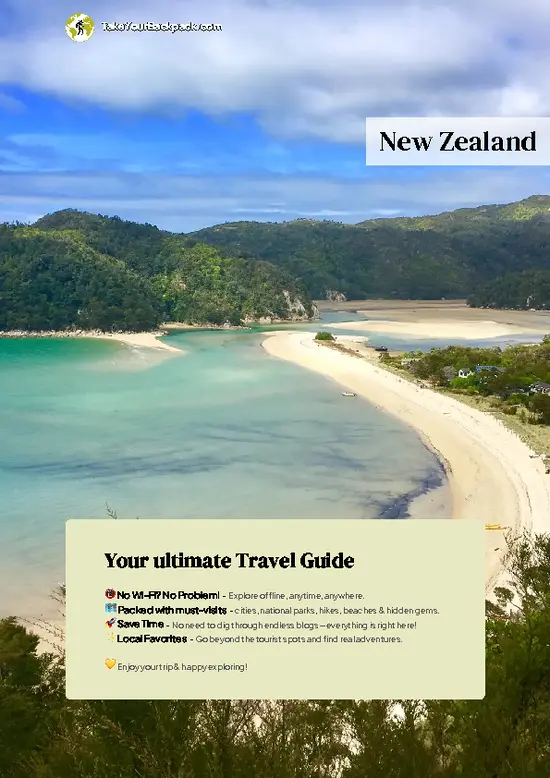
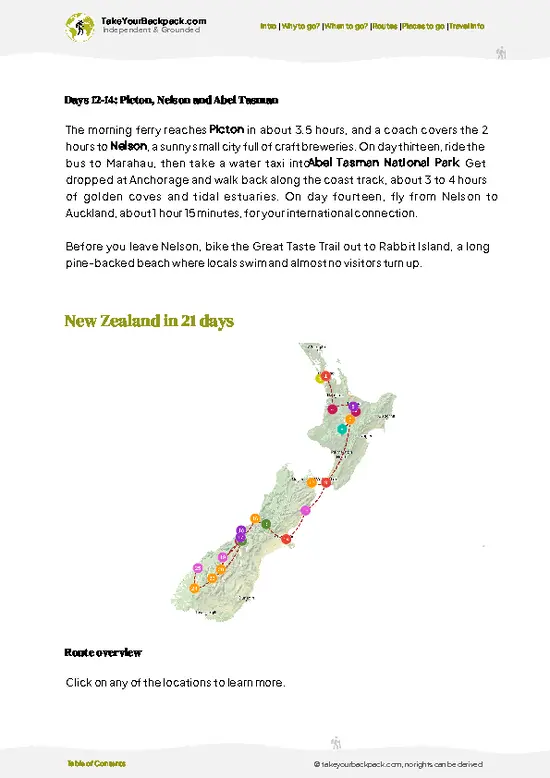
example page 0 from our offline Travel Guide for New Zealand
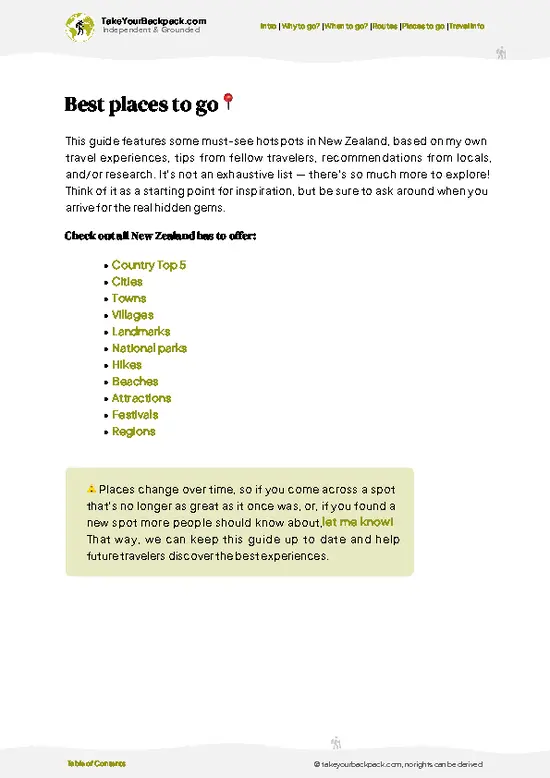
example page 1 from our offline Travel Guide for New Zealand
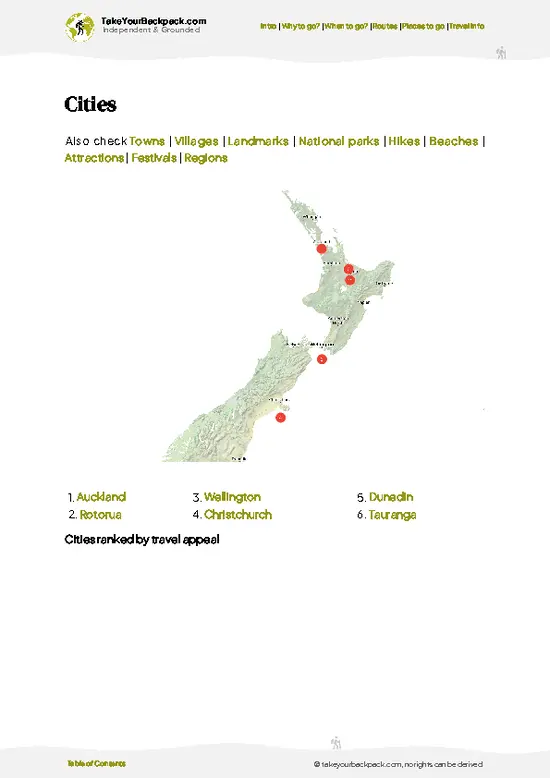
example page 2 from our offline Travel Guide for New Zealand
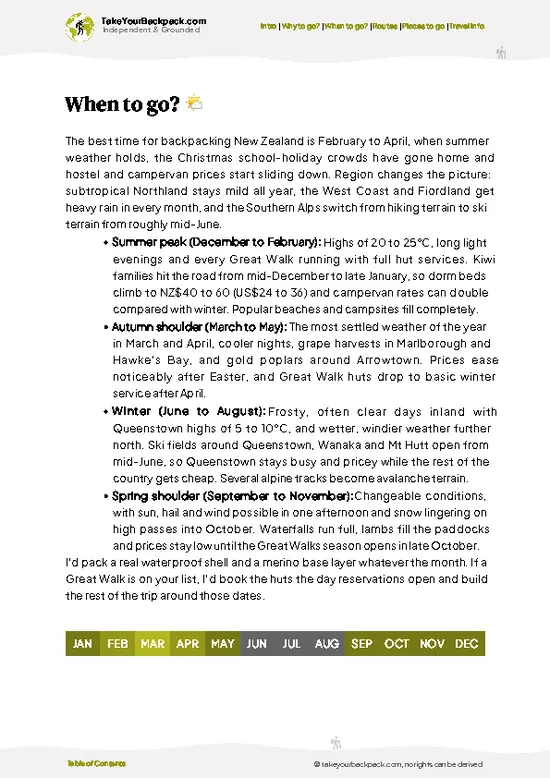
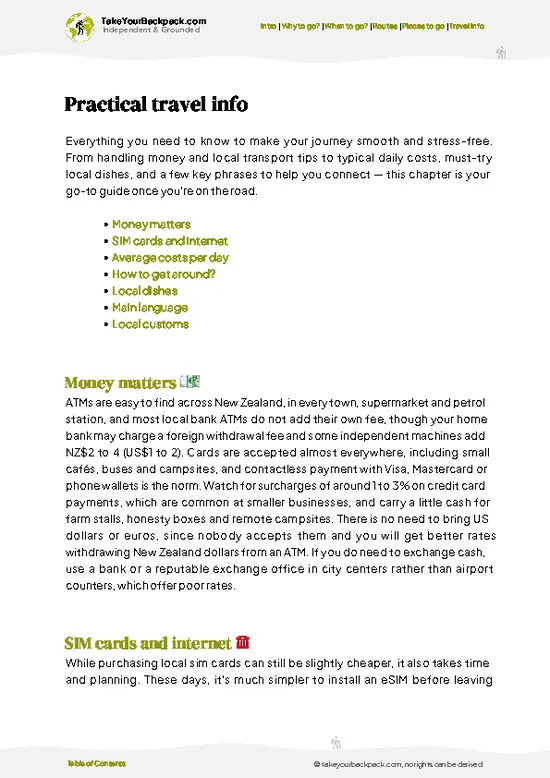
example page 3 from our offline Travel Guide for New Zealand
example page 4 from our offline Travel Guide for New Zealand
example page 5 from our offline Travel Guide for New Zealand
example page 6 from our offline Travel Guide for New Zealand
example page 7 from our offline Travel Guide for New Zealand
Loading the map 🌍
CLICK TO FILTER
cities
towns
villages
landmarks
national parks
hikes
beaches
attractions
festivals
regions
SHOW COUNTRY’S BESTSHOW ALL

✨ Why go?
Ranked #6 city in New Zealand
Why Tauranga should be on your travel list

Backpackers come to Tauranga because it gives you a proper coastal breather between the busier stops of the North Island. The big draw is the pairing of Mauao (Mount Maunganui) and the long ocean beach beneath it, which means you can surf, swim and hike in one afternoon without planning anything. It also works well as a practical stop. Rotorua and its geothermal pools lie inland, the Coromandel is up the coast, and the Kiwi Experience and InterCity long-distance coaches from Auckland and Rotorua reach it. Hostels are fewer than in Queenstown, so book ahead in summer, when the city fills with holidaying Kiwis. Food leans on fresh seafood and good coffee rather than anything fancy. Nights are quiet by backpacker standards. If you want a beach day or two, a swim with dolphins and a calm reset, … read more 👉
Backpackers come to Tauranga because it gives you a proper coastal breather between the busier stops of the North Island. The big draw is the pairing of Mauao (Mount Maunganui) and the long ocean beach beneath it, which means you can surf, swim and hike in one afternoon without planning anything. It also works well as a practical stop. Rotorua and its geothermal pools lie inland, the Coromandel is up the coast, and the Kiwi Experience and InterCity long-distance coaches from Auckland and Rotorua reach it. Hostels are fewer than in Queenstown, so book ahead in summer, when the city fills with holidaying Kiwis. Food leans on fresh seafood and good coffee rather than anything fancy. Nights are quiet by backpacker standards. If you want a beach day or two, a swim with dolphins and a calm reset, this city fits well. If you crave a nonstop party scene, treat it as a short stop.

💡 HighlightsKey sights and experiences for travelers

  1. Mauao (Mount Maunganui) summit walk: The extinct volcanic cone is the city’s signature. The summit track takes 40 to 60 minutes up, and the views over the bay and Pilot Bay are best at sunrise or late afternoon. Free. The base track circuit takes about an hour.
  2. Mount Maunganui Main Beach: Long surf beach with consistent waves and lifeguards in summer. Best in the morning before the wind rises. Free, plan 2 to 3 hours. Surfboard rental runs roughly NZ$30 to 50 a day.
  3. Hot Salt Water Pools: Natural geothermal water at the foot of Mauao, heated to about 33 to 39°C. Evening is the best time. Entry around NZ$15 to 20, plan 1 to 2 hours.
  4. The Strand waterfront: A strip of cafes, bars and harbor views, with a lively evening feel on warm nights. Free to stroll, an hour or two.
  5. The Elms (Te Papa Tauranga):
… read more 👉
  1. Mauao (Mount Maunganui) summit walk: The extinct volcanic cone is the city’s signature. The summit track takes 40 to 60 minutes up, and the views over the bay and Pilot Bay are best at sunrise or late afternoon. Free. The base track circuit takes about an hour.
  2. Mount Maunganui Main Beach: Long surf beach with consistent waves and lifeguards in summer. Best in the morning before the wind rises. Free, plan 2 to 3 hours. Surfboard rental runs roughly NZ$30 to 50 a day.
  3. Hot Salt Water Pools: Natural geothermal water at the foot of Mauao, heated to about 33 to 39°C. Evening is the best time. Entry around NZ$15 to 20, plan 1 to 2 hours.
  4. The Strand waterfront: A strip of cafes, bars and harbor views, with a lively evening feel on warm nights. Free to stroll, an hour or two.
  5. The Elms (Te Papa Tauranga): A restored 1830s mission house with gardens and a quiet historical record of early missionary life. Guided visits are inexpensive, about 1 hour. Check opening days before going.
  6. Mauao Base Track: A flat circuit around the mountain with coastal views and pohutukawa trees. Free, about 45 to 60 minutes, lovely at golden hour.
  7. Tauranga Farmers Market: Saturday morning market with local produce and coffee, a good breakfast stop for self-caterers. Free entry, 1 hour.
  8. Pilot Bay: Calm, sheltered water on the harbor side of Mauao. Good for swimming and paddleboarding with kids. Free, 1 to 2 hours.
If time is short, skip The Elms and spend the hours on the summit walk instead. Nearby day trips include Papamoa beach, Kaiate Falls, Rotorua’s geothermal parks and the volcanic White Island area viewed from the sea.
Spotted a mistake or missing something? Contact us.

Things to do in Tauranga

Ratings based on Tripadvisor reviews. When you book through this link, you support our work at no extra cost to you.

🏘️ NeighborhoodsUnderstanding the local layout

Tauranga is a spread-out harbor city, so the areas feel separate and each suits a different kind of day. Distances between them are the reason a single base plus a bike or bus pass works better than trying to walk everything.
  • The CBD and Waterfront: Compact and flat, with cafés, bars and the Strand’s harborside restaurants. It is the only part that is properly walkable, and evenings here are lively on weekends but quiet midweek. Walk it in an hour, then move on.
  • Mount Maunganui: A separate town on a peninsula, ten to fifteen minutes by road from the center. Its draw is the surf beach, the walk up or around Mauao (232 m) and the Main Beach strip of bars and fish and chip shops. It is busy in summer, so go for sunrise and the base track when crowds are thin.
  • Papamoa: A long suburban beach strip
… read more 👉
Tauranga is a spread-out harbor city, so the areas feel separate and each suits a different kind of day. Distances between them are the reason a single base plus a bike or bus pass works better than trying to walk everything.
  • The CBD and Waterfront: Compact and flat, with cafés, bars and the Strand’s harborside restaurants. It is the only part that is properly walkable, and evenings here are lively on weekends but quiet midweek. Walk it in an hour, then move on.
  • Mount Maunganui: A separate town on a peninsula, ten to fifteen minutes by road from the center. Its draw is the surf beach, the walk up or around Mauao (232 m) and the Main Beach strip of bars and fish and chip shops. It is busy in summer, so go for sunrise and the base track when crowds are thin.
  • Papamoa: A long suburban beach strip to the southeast. It is calmer and cheaper for food, but spread out, so you need the bus or a ride.
  • Bethlehem and Greerton: Residential and shopping areas inland. Greerton has supermarkets, handy for stocking up cheaply rather than paying beachfront prices.
  • Welcome Bay and Te Puna: Orchards, kiwifruit and wineries. Visit by car or tour, since public transport is sparse.

⌛️ 1 daySeeing the highlights in 24 hours

6:30 AM, Mauao summit: Start with the climb, because the light is soft and the track is quiet. It takes about an hour up, and the view over the harbor entrance and offshore islands explains the whole geography of the city. Come down via the base track.
9:00 AM, Mount Maunganui cafes: Walk to the main street for flat whites and a hearty breakfast. Locals gather here after surf sessions.
10:30 AM, Main Beach: Swim, surf or just walk the sand. Hire a board if the swell is up.
1:00 PM, Pilot Bay and lunch: Cross to the calm side for fish and chips on the grass, then cool off in the shallows.
3:00 PM, Hot Salt Water Pools: Soak tired legs in geothermal water. It is a good way to ease the morning’s climb.
5:00 PM, The Elms: Take a bus or ride across the bridge to this quiet, rarely visited mission house. … read more 👉
6:30 AM, Mauao summit: Start with the climb, because the light is soft and the track is quiet. It takes about an hour up, and the view over the harbor entrance and offshore islands explains the whole geography of the city. Come down via the base track.
9:00 AM, Mount Maunganui cafes: Walk to the main street for flat whites and a hearty breakfast. Locals gather here after surf sessions.
10:30 AM, Main Beach: Swim, surf or just walk the sand. Hire a board if the swell is up.
1:00 PM, Pilot Bay and lunch: Cross to the calm side for fish and chips on the grass, then cool off in the shallows.
3:00 PM, Hot Salt Water Pools: Soak tired legs in geothermal water. It is a good way to ease the morning’s climb.
5:00 PM, The Elms: Take a bus or ride across the bridge to this quiet, rarely visited mission house. The gardens are peaceful and give a different view of local history from the beach crowd.
6:30 PM, The Strand: Finish with dinner at the waterfront, then watch the harbor lights come on.

🌤️ When to go?Weather, crowds, and seasonal trade-offs

Tauranga is at its best from December to March, when days reach 22 to 26°C (72 to 79°F) and the sea is swimmable.
  • Summer (Dec to Feb): Sunny, with up to 15 hours of daylight. Beaches and the Mauao tracks are crowded, and hostel beds and campervans cost the most, especially around New Year.
  • Autumn (Mar to May): Highs of 17 to 22°C (63 to 72°F), settled weather, warm water into March and easier bookings.
  • Winter (Jun to Aug): Mild at 11 to 15°C (52 to 59°F), with nights near 5°C (41°F), around 9.5 hours of light and occasional heavy rain. Prices drop and the walking tracks are empty.
  • Spring (Sep to Nov): Changeable, 15 to 20°C (59 to 68°F), with windy days but fresh blossom and falling prices.
Book summer beds a month ahead, or arrive in March for the same weather with far less pressure.

source: climatestotravel.comJANJanuary: highly recommended for travelingFEBFebruary: highly recommended for travelingMARMarch: excellent for travelingAPRApril: excellent for travelingMAYMay: highly recommended for travelingJUNJune: good for travelingJULJuly: good for travelingAUGAugust: good for travelingSEPSeptember: highly recommended for travelingOCTOctober: excellent for travelingNOVNovember: excellent for travelingDECDecember: highly recommended for traveling
when-to-go

✈️ The backpacker research shortcutNew Zealand Travel Guide

An offline-friendly backpacking guide with optimized travel routes, ranked highlights, transport advice, and the best areas to stay.
example page 0 from our offline Travel Guide for New Zealand
example page 1 from our offline Travel Guide for New Zealand
example page 2 from our offline Travel Guide for New Zealand
example page 3 from our offline Travel Guide for New Zealand
example page 4 from our offline Travel Guide for New Zealand
example page 5 from our offline Travel Guide for New Zealand
example page 6 from our offline Travel Guide for New Zealand
example page 7 from our offline Travel Guide for New Zealand
The digital guide (327 pages) contains:
✅ 110 highlights, ranked by travel appeal
✅ Optimized 7, 14 & 21-day travel routes
✅ Cities, national parks, landmarks, beaches
✅ How to get around
✅ Offline-friendly for travel without Wi-Fi
👉 Click to see all 30+ guide features

📅 Plan smarter in minutes, not weeks
✅ Month by month travel advice
✅ Festivals & national holidays
✅ Budget expectations

🗺️ Go to the right places, skip the overrated ones
✅ Honest pros & cons of destinations
✅ Top hikes, parks & viewpoints
✅ Lesser-known places most travelers miss
✅ Clear “worth it vs skip it” guidance

🛏️ Travel smoothly without rookie mistakes
✅ Best areas to stay
✅ Transport systems explained simply
✅ Common scams & safety advice
✅ SIM cards, money & practical tips

🌍 Understand the country, not just visit it
✅ Culture & traditions
✅ Local customs
✅ Festivals worth planning around
✅ Traveler-friendly historical context
✅ Insights that make places more meaningful

📱 Built for real travel conditions
✅ Fully downloadable PDF
✅ Works completely offline
✅ Optimized for phone use
✅ Useful in remote areas & buses
✅ Everything in one place
Stop searching, start planning
Get instant access to your full guide. 30‑day money-back guarantee.
+ Add another guide for just

By proceeding you agree to our terms.
Sent to your inbox immediately after payment • 100% Secure Checkout
Best Backpacking Travel Advisor 2025 tourism awardBest Backpacking
Travel Advisor
2025
What others say about Take Your Backpack Guides:
⭐⭐⭐⭐⭐
Fantastic, amazing amount of information!
⭐⭐⭐⭐⭐
My goodness this is amazing, it's what I've been looking for hats off too you!
⭐⭐⭐⭐⭐
I think this is absolutely BRILLIANT
⭐⭐⭐⭐
Very complete and informative. It's still missing places, but I gotta to commend you
⭐⭐⭐⭐⭐
This is truly amazing, thank you, can't wait to explore it with my kids!
⭐⭐⭐⭐⭐
Awesome resource, thank you!
⭐⭐⭐⭐⭐
This is amazing! Can't wait to explore the ones I haven't seen
⭐⭐⭐⭐
I love this! Well done, great idea.
⭐⭐⭐⭐⭐
Thanks for taking the time to make this gem!
⭐⭐⭐⭐⭐
This might be the best website I've ever seen.
⭐⭐⭐⭐⭐
Congratulations, and thank you so much for your work; it's incredibly valuable.
⭐⭐⭐⭐
In all seriousness I think you did a great job pointing out the important spots
⭐⭐⭐⭐⭐
10/10 very good
⭐⭐⭐⭐⭐
As someone who's only just starting to visit regularly this is awesome, thank you.
⭐⭐⭐⭐
Thank you very much! I'm going to visit my dad, it's going to be very useful!
⭐⭐⭐⭐⭐
This is really cool! We'll be travelling for the first time and this definitely come in handy.
⭐⭐⭐⭐⭐
You are now our minister of culture, congratulations 👨‍💼
⭐⭐⭐⭐⭐
Just wanted to tell you that this is a pearl! Going to follow your recommendations.
⭐⭐⭐⭐⭐
This is so cool. I'll definitely be using the resource for my travels soon.
⭐⭐⭐⭐⭐
This is very impressive! Good work.
⭐⭐⭐⭐⭐
This is an amazing and informative site. Very well done!

🛏️ Where to stay?How to pick the right area

The CBD and Mount Maunganui are the two best budget bases, and which one suits depends on your plans. The center has the more practical mix of hostels and budget motels, with dorms generally easiest to find here. It is flat, quiet by about 10 pm and well connected, since most Bayhopper routes start at the downtown bus interchange. Walking back at night is straightforward on the main streets, and supermarkets and the bus station to Rotorua and Auckland are close.

Mount Maunganui suits beach-focused travelers who want to surf, swim and walk Mauao each morning. Beds are fewer and cost noticeably … read more 👉
The CBD and Mount Maunganui are the two best budget bases, and which one suits depends on your plans. The center has the more practical mix of hostels and budget motels, with dorms generally easiest to find here. It is flat, quiet by about 10 pm and well connected, since most Bayhopper routes start at the downtown bus interchange. Walking back at night is straightforward on the main streets, and supermarkets and the bus station to Rotorua and Auckland are close.

Mount Maunganui suits beach-focused travelers who want to surf, swim and walk Mauao each morning. Beds are fewer and cost noticeably more in summer, and holiday periods fill quickly, so book early. Noise from bars along the main strip can carry on summer weekends, so ask for a room away from the street. Buses connect to the city center every 15 to 30 minutes in the day, but fall away late in the evening. Holiday parks with camping and cabins around the Mount are a cheaper alternative when dorms are full.

🚌 Getting aroundHow to get from A to B

Visitors lose the most time and money by assuming Tauranga’s buses run like a big-city network, then paying for repeated rideshares between the center and Mount Maunganui. Services exist, but they are infrequent in the evenings and thin on Sundays, because the city grew as spread-out suburbs rather than around a rail or tram core. Plan around that and the place becomes easy.
  • Walking: Free and enough for the CBD, the Strand and the base of Mauao. Beyond these, distances are too long, so use walking for exploring, not commuting.
  • Bayhopper buses: Run by Bay of Plenty Regional Council, with routes linking the CBD, Mount Maunganui, Papamoa and Greerton. Pay with a Bee Card, which gives a lower fare of about NZ$1.50 to 2.50 (US$0.90 to 1.50) per trip against cash fares near NZ$4 to 5. Most routes
… read more 👉
Visitors lose the most time and money by assuming Tauranga’s buses run like a big-city network, then paying for repeated rideshares between the center and Mount Maunganui. Services exist, but they are infrequent in the evenings and thin on Sundays, because the city grew as spread-out suburbs rather than around a rail or tram core. Plan around that and the place becomes easy.
  • Walking: Free and enough for the CBD, the Strand and the base of Mauao. Beyond these, distances are too long, so use walking for exploring, not commuting.
  • Bayhopper buses: Run by Bay of Plenty Regional Council, with routes linking the CBD, Mount Maunganui, Papamoa and Greerton. Pay with a Bee Card, which gives a lower fare of about NZ$1.50 to 2.50 (US$0.90 to 1.50) per trip against cash fares near NZ$4 to 5. Most routes run roughly 6 am to 9 pm, with the best frequency on weekdays.
  • Bike and e-scooter: Shared e-scooters operate around the center and the Mount, usually costing a NZ$1 unlock plus about NZ$0.50 per minute. Cycling is pleasant on the flat harbor paths, though bridges and main roads are less comfortable.
  • Rideshare and taxi: Uber and local taxis cost roughly NZ$20 to 35 (US$12 to 21) between the CBD and the Mount. Share with others after buses stop, since late nights are where this pays off.
  • Rental car: Worth it for Rotorua, Te Puke or the Coromandel, from about NZ$40 to 80 (US$24 to 48) per day. Parking at the Mount is tight in summer, so arrive before 9 am or park in the CBD and take the bus.

👛 Costs (as of 16 October 2026)How expensive it really is

Backpacking in Tauranga costs about US$100 to 125 a day, with a dorm bed in high season making up the biggest share. Prices are in New Zealand dollars at the till, shown here in US dollars.
CategoryBudget RangeLocal Reality
Dorm bed (high season, Dec to Feb)US$27 to 38Beds fill fast around the Mount Maunganui beachfront in January, so book ahead.
Dorm bed (off-season)US$20 to 30Winter rates drop and walk-in beds are easy to find.
MealsUS$25 to 40Supermarket cooking is cheapest. A bakery pie runs US$3 to 5 and a cafe breakfast US$10 to 15.
Local transportUS$3 to 8Bayhopper buses cover the city and the Mount with cheap short fares when you pay by card.
City transport passUS$4 to 6Capped daily fares on the Bee Card keep bus costs low if you ride a lot.
Basic activities and entry feesUS$0 to 25The Mount
… read more 👉
Backpacking in Tauranga costs about US$100 to 125 a day, with a dorm bed in high season making up the biggest share. Prices are in New Zealand dollars at the till, shown here in US dollars.
CategoryBudget RangeLocal Reality
Dorm bed (high season, Dec to Feb)US$27 to 38Beds fill fast around the Mount Maunganui beachfront in January, so book ahead.
Dorm bed (off-season)US$20 to 30Winter rates drop and walk-in beds are easy to find.
MealsUS$25 to 40Supermarket cooking is cheapest. A bakery pie runs US$3 to 5 and a cafe breakfast US$10 to 15.
Local transportUS$3 to 8Bayhopper buses cover the city and the Mount with cheap short fares when you pay by card.
City transport passUS$4 to 6Capped daily fares on the Bee Card keep bus costs low if you ride a lot.
Basic activities and entry feesUS$0 to 25The Mount Maunganui summit walk and the beaches are free. The Elms mission house and a hot pools soak cost extra.
MiscellaneousUS$8 to 15Sunscreen, laundry and a drink or two at a local bar.
Total Daily BudgetUS$100 to 125Based on a high-season dorm bed, with the other rows at their midpoints to upper ends.
Cook most dinners in the hostel kitchen and buy fruit and vegetables at the Saturday morning Tauranga Farmers Market, where produce is usually cheaper than at the supermarkets.
⚠️ Prices can change and everyone travels differently, so take this as a rough guide. Hope it helps you plan your adventure!

🚌 Day tripsShort trips worth adding

Tauranga works well as a base for day trips because Rotorua, Waihi and the Bay’s volcanic island all sit within a few hours.
Rotorua:
Geothermal steam, mud pools and Māori cultural experiences make this the classic outing. Intercity buses take about 1 hour 15 minutes each way, with returns from about NZ$20 to 40 (US$12 to 24). Free parks like Kuirau give a taste of the geothermal activity without paying for the big attractions. First-timers often try to fit in Redwoods, a geyser park and a hangi in one day, so pick two.
👉 Explore Rotorua
Waihi Beach:
This surf beach is about 50 minutes west by car, and is quieter than Mount Maunganui. The Karangahake Gorge walks nearby pass old gold mining tunnels and a waterfall, and cost nothing. You need your own transport, so budget NZ$30 to 50 for fuel if … read more 👉
Tauranga works well as a base for day trips because Rotorua, Waihi and the Bay’s volcanic island all sit within a few hours.
Rotorua:
Geothermal steam, mud pools and Māori cultural experiences make this the classic outing. Intercity buses take about 1 hour 15 minutes each way, with returns from about NZ$20 to 40 (US$12 to 24). Free parks like Kuirau give a taste of the geothermal activity without paying for the big attractions. First-timers often try to fit in Redwoods, a geyser park and a hangi in one day, so pick two.
👉 Explore Rotorua
Waihi Beach:
This surf beach is about 50 minutes west by car, and is quieter than Mount Maunganui. The Karangahake Gorge walks nearby pass old gold mining tunnels and a waterfall, and cost nothing. You need your own transport, so budget NZ$30 to 50 for fuel if sharing. Go from November to April.

Whakaari / White Island Views and Whakatāne:
Whakatāne, about 1 hour 15 minutes east by car, has dolphin and coastal walks plus the Ōhope Beach drive. Landings on Whakaari have been closed since the 2019 eruption, so do not plan on that. Hit the Kohi Point walk on a clear morning.
👉 Explore Whakatāne
Te Puke and Maketu:
Kiwifruit country lies 30 minutes south, with the Maketu coastline nearby. Expect NZ$0 to 30 for activities. Orchard visits are best in autumn, when harvest runs.

🍲 FoodLocal Cuisine & Drinks

Tauranga’s local flavor comes from the sea and the orchards. The Bay of Plenty produces most of New Zealand’s kiwifruit, so look for kiwifruit in juices, ice cream, wine and sorbets, along with avocados and citrus from roadside stalls. The harbor brings in snapper, scallops, green-lipped mussels and crayfish, best eaten as fresh fish and chips on the grass beside the Strand or at the Mount, where a battered fillet and chips usually costs NZ$10 to 16 (US$6 to 10).

For budget grazing, the Tauranga Farmers Market on Saturday mornings is where growers sell fruit, honey, bread and hot breakfast, and it costs much less than café brunches. Cafés in the CBD and Mount Maunganui take coffee seriously, with flat whites around NZ$5 to 6. Craft beer is strong here, with taprooms around the center and … read more 👉
Tauranga’s local flavor comes from the sea and the orchards. The Bay of Plenty produces most of New Zealand’s kiwifruit, so look for kiwifruit in juices, ice cream, wine and sorbets, along with avocados and citrus from roadside stalls. The harbor brings in snapper, scallops, green-lipped mussels and crayfish, best eaten as fresh fish and chips on the grass beside the Strand or at the Mount, where a battered fillet and chips usually costs NZ$10 to 16 (US$6 to 10).

For budget grazing, the Tauranga Farmers Market on Saturday mornings is where growers sell fruit, honey, bread and hot breakfast, and it costs much less than café brunches. Cafés in the CBD and Mount Maunganui take coffee seriously, with flat whites around NZ$5 to 6. Craft beer is strong here, with taprooms around the center and at the Mount, and pints at about NZ$9 to 12. Local wineries around Te Puna pour Chardonnay and Pinot Gris at tastings.

🛡️ SafetySafety Tips and Common Scams in Tauranga

Tauranga is a calm, safe city for solo travelers, and the problems you are likely to meet are petty. Theft from parked cars is the real issue, particularly at trailheads and beach car parks around Mauao and Papamoa, so take your valuables with you and leave nothing visible. Hostel dorms are generally fine with a padlock on your locker. Central streets are fine at night, though the CBD can have rowdy drinkers late on Friday and Saturday, so walk on lit streets and use a rideshare if the buses have stopped. Rips at Mount Maunganui Main Beach are the bigger hazard, so swim between the flags when patrolled. Weather and sun matter too, as UV is strong, so cover up from 10 am to 4 pm. Scams are rare.

FAQCommon questions from travelers

Two to three days covers Tauranga well. One day takes in the CBD and a morning on Mauao at Mount Maunganui (the base track takes about 45 minutes, the summit about 1 hour), and an extra day or two lets you add Rotorua, 1 hour 15 minutes away by bus, or the Karangahake Gorge.
Yes, Tauranga is very safe for solo backpackers, with crime mostly limited to opportunistic car break-ins at beach and trailhead car parks. Central streets are fine after dark, though weekend nights can get rowdy, and Bayhopper buses finish around 9 pm, so a rideshare of NZ$20 to 35 to the Mount is useful. The main physical risk is ocean rips at Main Beach, so swim between the flags.
Tauranga is known for Mount Maunganui, its surf beach and the 232 m Mauao walk, plus New Zealand’s busiest export port. The Bay of Plenty is also the country’s kiwifruit capital, with orchards around Te Puke. Sunny weather, with about 2,200 sunshine hours a year, makes it a popular summer holiday spot.
⚠️ Things can change over time, so always validate details locally before you go.

Other New Zealander cities near Tauranga

Explore more nearby:

  • Rotorua—Pōhutu Geyser, steam parks, hāngī evenings, crater lakes| 51 km away
  • Auckland—Sky Tower views, volcanic cones, two harbors, ferry hops| 155 km away
  • Wellington—Te Papa, cable car, Cuba Street, windy waterfront| 418 km away

💡 Not sure where to go next?
Create a personalized itinerary for New Zealand including Tauranga and the places that fit your trip.

Generate my itinerary

👉 Discover all cities

Or checkout all New Zealand has to offer (think cities, towns, villages, national parks, hikes, beaches, festivals)
Country photo of New Zealand

We 💚 feedbackKey takeaways before you go

Tauranga works best paired with Rotorua’s geothermal sights inland and the Coromandel’s beaches up the coast, so treat it as the relaxed middle link. I’d give it two nights, bring reef-safe sunscreen, and save the summit for sunrise.

✈️ When did I visit New Zealand?
All the way back in high school I have been visiting the North Island of New Zealand (1993).

✍️ Help improve this page!
The information on this page is based on my own backpacking experience in New Zealand, supplemented with up-to-date research and feedback from other travelers. Travel details can change, so if you notice anything outdated or incomplete, feel free to let me know.


🙋‍♂️ Give feedback

👋 Meet the founderWho’s Behind Take Your Backpack?

Johan, backpacker and founder of TakeYourBackpackHi, I’m Johan (Netherlands 🇳🇱), the creator of TakeYourBackpack. Over the past 3 decades, I’ve backpacked through 90+ countries across six continents, gaining extensive experience with independent travel, long-term trips, and overland routes.

This site is built on a combination of firsthand travel experience and carefully curated insights from other backpackers. Many guides are based on places I’ve personally visited, while others bring together tips, observations, and practical advice shared by trusted travelers I’ve met along the way.

The goal is to provide realistic, experience-driven guidance — not generic itineraries — so you can explore destinations with better context, clearer expectations, and more confidence.