×

Nicaragua🇳🇮 | citiesManaguaurban sprawl, lakeshore, local markets, political murals | things to do and best time to go

Explore DiriambaExplore Carnival

Backpacking in Managua
🌟 Highlightcity ranked #3
By Johan Kruseman 🇳🇱 | Updated September 4, 2026

A bus door slams shut behind you and the air hits with a cocktail of exhaust, fried plantains, and the sharp tang of sunbaked concrete. Horns blare, street vendors shout, and you’re instantly in the pulse of Managua—Nicaragua’s capital, sprawled along the southern shore of Lake Xolotlán, right in the country’s heart.

Managua is not the city that seduces at first glance. It’s chaotic, a little rough around the edges, and famously decentralized—don’t expect a classic colonial core. But if you’re the kind of traveler who likes to see how a country really ticks, Managua rewards curiosity. The Plaza de la Revolución, with its bullet-scarred cathedral and revolutionary murals, is a living history lesson. The National Palace of Culture and the Rubén Darío Theater are worth a peek if you’re into art or politics. Nightlife is lively but local; you’ll find more backpackers in León or Granada, but Managua’s prices are lower and the food scene is surprisingly inventive. Safety is a mixed bag—keep your wits about you, especially after dark. It’s not the easiest city, but it’s real, and sometimes that’s the best value of all.

Discover everything you want to know in the 📖 Nicaragua Travel Guide.
Loading the map 🌍
CLICK TO FILTER
cities
towns
landmarks
national parks
hikes
beaches
attractions
festivals
regions
SHOW COUNTRY’S BESTSHOW ALL

✨ Why go?
Ranked #3 city in Nicaragua
Reasons people choose to visit here

Managua often gets a bad rap, but savvy backpackers know it’s a strategic hub, not a destination to linger on without purpose. The city’s real value lies in its role as a basecamp. It’s where you find the best balance between time and money—affordable hostels and a decent range of food options keep your budget intact while you recharge. Managua’s walkability is limited compared to smaller towns, but it’s manageable enough to explore key spots without burning time on transport. The nightlife here isn’t flashy, but it’s a reliable way to unwind after a day of planning or travel. What really tips the scales is Managua’s connectivity. It’s the gateway for smooth onward travel, whether you’re heading to volcanic landscapes, colonial towns, or coastal escapes. If you’re the type who values comfortread more 👉
Managua often gets a bad rap, but savvy backpackers know it’s a strategic hub, not a destination to linger on without purpose. The city’s real value lies in its role as a basecamp. It’s where you find the best balance between time and money—affordable hostels and a decent range of food options keep your budget intact while you recharge. Managua’s walkability is limited compared to smaller towns, but it’s manageable enough to explore key spots without burning time on transport. The nightlife here isn’t flashy, but it’s a reliable way to unwind after a day of planning or travel. What really tips the scales is Managua’s connectivity. It’s the gateway for smooth onward travel, whether you’re heading to volcanic landscapes, colonial towns, or coastal escapes. If you’re the type who values comfort in logistics—easy bus terminals, taxis, and even flights—Managua delivers. But if your style is all about immersive, slow-paced exploration, this city is best treated as a practical stopover rather than a highlight. In short, Managua is the chessboard’s center square: not the flashiest piece, but essential for setting up your next winning move.
Want to include Managua in your Nicaragua route?
Create a personalized Nicaragua itinerary that includes Managua and the places that fit your trip — based on your travel style, budget, and available time. Get your route in seconds.

Generate my trip

💡 HighlightsPlaces and moments you shouldn't skip

Plaza de la Revolución
This is the beating heart of Managua’s modern history. You’re standing where revolutions were declared, presidents have spoken, and the city’s story is still being written. The plaza itself is flanked by the shell of the old Catedral de Santiago (damaged in the 1972 earthquake and left as a haunting monument), the National Palace of Culture, and the tomb of revolutionary leader Carlos Fonseca. Go in the late afternoon when the heat eases and locals gather. Entry is free, but if you want to tour the National Palace’s museum, expect to pay a small fee (under $5). Give yourself 1-2 hours to soak in the atmosphere and people-watch.

Huellas de Acahualinca
If you want to feel the weight of time, this is it: 6,000-year-old human footprints, fossilized in volcanic mud, preserved … read more 👉
Plaza de la Revolución
This is the beating heart of Managua’s modern history. You’re standing where revolutions were declared, presidents have spoken, and the city’s story is still being written. The plaza itself is flanked by the shell of the old Catedral de Santiago (damaged in the 1972 earthquake and left as a haunting monument), the National Palace of Culture, and the tomb of revolutionary leader Carlos Fonseca. Go in the late afternoon when the heat eases and locals gather. Entry is free, but if you want to tour the National Palace’s museum, expect to pay a small fee (under $5). Give yourself 1-2 hours to soak in the atmosphere and people-watch.

Huellas de Acahualinca
If you want to feel the weight of time, this is it: 6,000-year-old human footprints, fossilized in volcanic mud, preserved right where they were found. It’s a compact but powerful site—one of the oldest human traces in the Americas. The museum is basic but authentic, and the staff are genuinely proud to share their heritage. Go in the morning to avoid school groups. Entry is about $2-$3, and you’ll need 30-45 minutes.

Loma de Tiscapa
This volcanic hill offers the best panoramic view of Managua, with Lake Xolotlán on one side and the city’s sprawl on the other. At the top, you’ll find the iconic silhouette of Augusto Sandino, Nicaragua’s national hero, and the ruins of Somoza’s bunker. The park is open all day, but sunset is the jackpot—golden light, cool breeze, and a cityscape that finally makes sense. Entry is free, but a taxi up the hill is worth the $3-$5 if you’re not up for a steep walk. Plan for 45-60 minutes.

Puerto Salvador Allende
This lakeside promenade is Managua’s social living room. It’s a patchwork of open-air restaurants, colorful playgrounds, and Nicaraguan kitsch, all facing the water. Locals come here to stroll, snack, and watch the city’s neon “arboles de la vida” light up after dark. It’s safe, lively, and a great place to try street food (grilled corn, vigorón, or a cold Toña beer). Go at sunset or after dark for the full effect. Entry is free, but food and drinks run $2-$10. Give yourself 1-2 hours.

Galería Códice
This is Managua’s creative pulse—a contemporary art gallery showcasing Nicaraguan artists who rarely get international attention. The space is intimate, the curation sharp, and the staff are happy to talk about the art scene. If you want to understand the city’s soul beyond politics and history, this is your stop. Open during business hours; entry is free. 30-45 minutes is plenty unless you get pulled into a conversation.

Mercado Roberto Huembes
This sprawling market is the city’s sensory overload: fruit vendors, flower stalls, and rows of crafts from every corner of Nicaragua. It’s chaotic, but if you want to see real Managua in motion, this is it. Go in the morning for the freshest produce and safest experience. Entry is free, but bring small bills for bargaining. Allow 1-1.5 hours, and keep your valuables close.

If you’re itching to break out of the city, Masaya Volcano (lava views at night), the artisan town of Masaya, and the crater lake of Laguna de Apoyo are all easy day trips—Masaya Volcano is my personal favorite for sheer geological drama.
Spotted a mistake or missing something? Contact us.

Things to do in Managua

Ratings based on Tripadvisor reviews. When you book through this link, you support our work at no extra cost to you.

🏘️ NeighborhoodsWhere things are and how it's laid out

Managua’s layout is a puzzle of contrasts—each neighborhood offers a distinct trade-off between convenience, cost, and comfort. Knowing where to base yourself can turn a chaotic city into a strategic advantage.

Centro Histórico
This is the heart of old Managua, where you get a raw, gritty city experience. It’s cheap and packed with local markets and street food, but expect noise and a lack of polished infrastructure. Walkability is decent if you’re street-smart, but nightlife is more about local dives than tourist bars. Best for short stays if you want to dive into authentic city life without fuss.

Zona Rosa
If you want nightlife and a more polished vibe, Zona Rosa is your go-to. It’s pricier but offers safer streets, trendy cafes, and clubs. Walkability is good within the zone, but … read more 👉
Managua’s layout is a puzzle of contrasts—each neighborhood offers a distinct trade-off between convenience, cost, and comfort. Knowing where to base yourself can turn a chaotic city into a strategic advantage.

Centro Histórico
This is the heart of old Managua, where you get a raw, gritty city experience. It’s cheap and packed with local markets and street food, but expect noise and a lack of polished infrastructure. Walkability is decent if you’re street-smart, but nightlife is more about local dives than tourist bars. Best for short stays if you want to dive into authentic city life without fuss.

Zona Rosa
If you want nightlife and a more polished vibe, Zona Rosa is your go-to. It’s pricier but offers safer streets, trendy cafes, and clubs. Walkability is good within the zone, but public transport can be spotty, so factor in taxis. This area suits those who want comfort and social scenes, ideal for medium-length stays where you want to balance energy and ease.

San Juan del Sur
Though technically outside Managua, it’s worth mentioning for backpackers who want a beach town vibe after the city. It’s more expensive and less walkable, but the laid-back atmosphere and surf culture are a strong draw. Best for longer stays if you’re mixing city hustle with coastal chill.

Carretera Masaya
This stretch is a practical choice for budget travelers who want access to buses and local eateries without the chaos of downtown. It’s less touristy, quieter, and more residential, making it a good spot for longer stays if you’re okay with relying on taxis or buses for nightlife and city center trips.

Understanding these trade-offs lets you pick your base like a pro—whether you want to save money, soak up local life, or enjoy some creature comforts while exploring Managua.

⌛️ 1 dayA smart one-day plan

Managua often gets a bad rap as a chaotic, sprawling capital, but it’s a city with layers worth peeling back if you’re willing to play the logistics game smartly. It’s not about cramming every sight into a frantic race; it’s about choosing a slice of the city and savoring its pulse. Start your day in the historic heart, the Centro Histórico, where the ruins of the old cathedral stand as a quiet reminder of Managua’s resilience after the 1972 earthquake. The morning light here is soft, perfect for a slow walk around Plaza de la Revolución, soaking in the mix of Soviet-era architecture and local life waking up. Grab a coffee at a nearby café—nothing fancy, but strong enough to fuel your next move.

By midday, shift gears to the neighborhood of El Carmen, just a short taxi ride away. This area … read more 👉
Managua often gets a bad rap as a chaotic, sprawling capital, but it’s a city with layers worth peeling back if you’re willing to play the logistics game smartly. It’s not about cramming every sight into a frantic race; it’s about choosing a slice of the city and savoring its pulse. Start your day in the historic heart, the Centro Histórico, where the ruins of the old cathedral stand as a quiet reminder of Managua’s resilience after the 1972 earthquake. The morning light here is soft, perfect for a slow walk around Plaza de la Revolución, soaking in the mix of Soviet-era architecture and local life waking up. Grab a coffee at a nearby café—nothing fancy, but strong enough to fuel your next move.

By midday, shift gears to the neighborhood of El Carmen, just a short taxi ride away. This area is a bit off the standard tourist radar but offers a genuine slice of Managua’s creative spirit. Here, street art colors the walls and small galleries showcase local artists who don’t get much attention outside Nicaragua. It’s a refreshing break from the usual sights and a chance to connect with the city’s evolving identity. Lunch at a modest fonda will introduce you to Nicaraguan staples like vigorón or nacatamales without the tourist markup.

As afternoon fades, head to the lakeside district of Puerto Salvador Allende. This is where Managua shows off its more polished side—restaurants and bars line the waterfront, and the views of Lake Xolotlán are surprisingly calming. It’s a perfect spot to unwind, watch the sunset, and reflect on the day’s discoveries. If you’re up for it, a casual boat ride here offers a different vantage point of the city’s skyline and the distant volcanoes. Managua isn’t about ticking boxes; it’s about piecing together moments that reveal its character, if you’re willing to look beyond the obvious.
Turn your Managua visit into an Nicaragua adventure
Build a complete Nicaragua route with Managua, hidden gems, must-see destinations, and realistic travel times included.

Generate my trip

🌤️ When to go?Choosing the right time of year


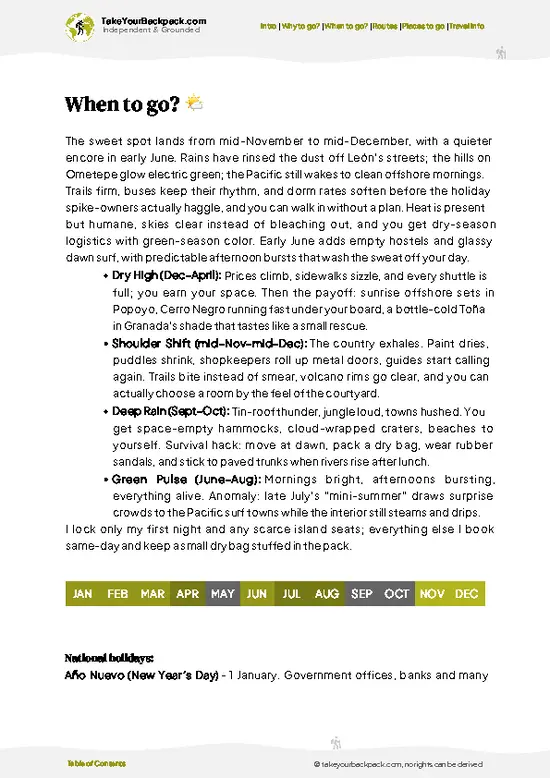
  • Topic: Weather – Managua’s dry season runs from November through April, offering clear skies and minimal rain. The wet season, May to October, brings heavy afternoon showers and high humidity, which can slow down your pace and soak your gear.

  • Topic: Temperature – Expect daytime highs around 30-35°C (86-95°F) year-round, with nights cooling to 20-24°C (68-75°F). The dry season feels more comfortable due to lower humidity, while the wet season’s heat can feel oppressive.

  • Topic: Daylight Hours – Managua sits near the equator, so daylight is steady year-round, roughly 11.5 to 12.5 hours daily. Sunrise hovers around 5:30-6:00 AM, sunset near 5:30-6:00 PM, giving you consistent windows for exploration.

  • Topic: Crowds – Peak tourist flow aligns with the dry season, especially December through
read more 👉

  • Topic: Weather – Managua’s dry season runs from November through April, offering clear skies and minimal rain. The wet season, May to October, brings heavy afternoon showers and high humidity, which can slow down your pace and soak your gear.

  • Topic: Temperature – Expect daytime highs around 30-35°C (86-95°F) year-round, with nights cooling to 20-24°C (68-75°F). The dry season feels more comfortable due to lower humidity, while the wet season’s heat can feel oppressive.

  • Topic: Daylight Hours – Managua sits near the equator, so daylight is steady year-round, roughly 11.5 to 12.5 hours daily. Sunrise hovers around 5:30-6:00 AM, sunset near 5:30-6:00 PM, giving you consistent windows for exploration.

  • Topic: Crowds – Peak tourist flow aligns with the dry season, especially December through February, when locals and visitors alike escape colder climates. This means busier hostels and higher prices but also more social energy.

  • Topic: Seasonal Activities – Dry months host festivals like the Santo Domingo celebrations in August and the International Poetry Festival in February. The wet season limits outdoor events but offers lush landscapes for nature lovers willing to brave the rain.

  • Topic: Price Fluctuations – Accommodation and flights spike during the dry season, particularly December and January. Traveling in shoulder months like November or April can save money while still avoiding heavy rains.


Pro-tip: Aim for late November or early April to balance dry weather, manageable crowds, and better prices—this sweet spot lets you hack Managua’s rhythm without paying the premium or getting drenched.


source: climatestotravel.comJANJanuary: highly recommended for travelingFEBFebruary: highly recommended for travelingMARMarch: excellent for travelingAPRApril: highly recommended for travelingMAYMay: fair for travelingJUNJune: fair for travelingJULJuly: fair for travelingAUGAugust: good for travelingSEPSeptember: fair for travelingOCTOctober: fair for travelingNOVNovember: highly recommended for travelingDECDecember: highly recommended for traveling
when-to-go

✈️ The backpacker research shortcutNicaragua Travel Guide

An offline-friendly backpacking guide with optimized travel routes, ranked highlights, transport advice, and the best areas to stay.
example page 0 from our offline Travel Guide for Nicaragua
example page 1 from our offline Travel Guide for Nicaragua
example page 2 from our offline Travel Guide for Nicaragua
example page 3 from our offline Travel Guide for Nicaragua
example page 4 from our offline Travel Guide for Nicaragua
example page 5 from our offline Travel Guide for Nicaragua
example page 6 from our offline Travel Guide for Nicaragua
example page 7 from our offline Travel Guide for Nicaragua
The digital guide (339 pages) contains:
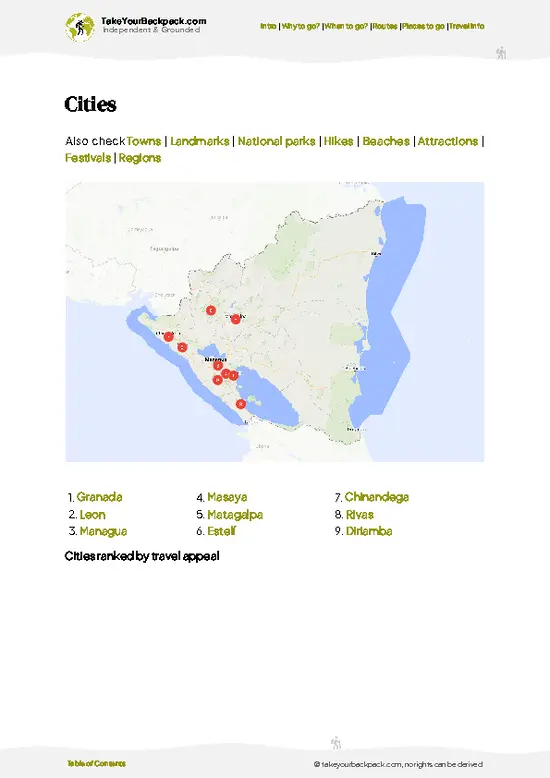
86 highlights, ranked by travel appeal
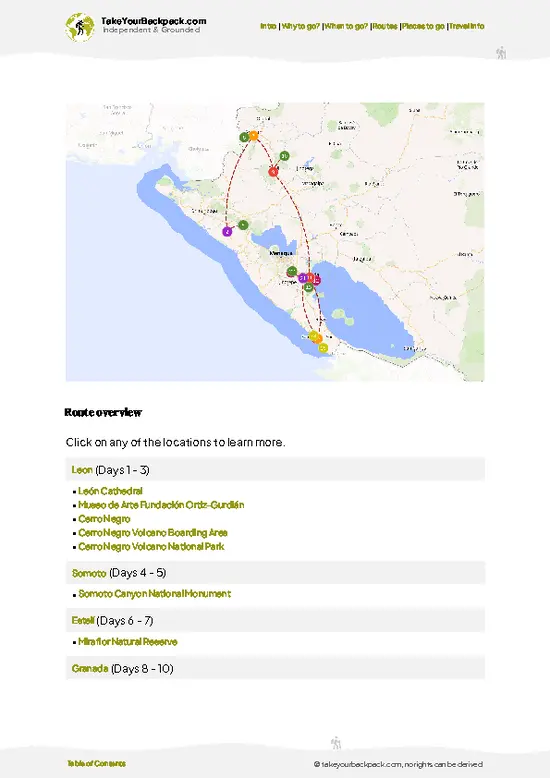
Optimized 5, 10 & 15-day travel routes
Cities, national parks, landmarks, beaches
How to get around
Offline-friendly for travel without Wi-Fi
👉 Click to see all 30+ guide features

📅 Plan smarter in minutes, not weeks
Month by month travel advice
Festivals & national holidays
Budget expectations

🗺️ Go to the right places, skip the overrated ones
Honest pros & cons of destinations
Top hikes, parks & viewpoints
Lesser-known places most travelers miss
Clear “worth it vs skip it” guidance

🛏️ Travel smoothly without rookie mistakes
Best areas to stay
Transport systems explained simply
Common scams & safety advice
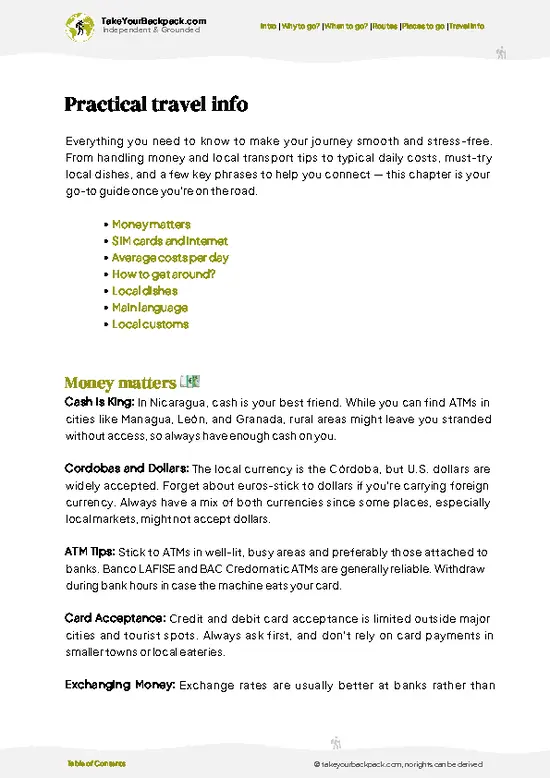
SIM cards, money & practical tips

🌍 Understand the country, not just visit it
Culture & traditions
52 Essential phrases & customs
Festivals worth planning around
Traveler-friendly historical context
Insights that make places more meaningful

📱 Built for real travel conditions
Fully downloadable PDF
Works completely offline
Optimized for phone use
Useful in remote areas & buses
Everything in one place
Save weeks of stressful planning
Get instant access to your full guide. 30‑day money-back guarantee.
+ Add another guide for just US$7.80

By proceeding you agree to our terms.
Sent to your inbox immediately after payment • 100% Secure Checkout
Best Backpacking Travel Advisor 2025 tourism awardBest Backpacking
Travel Advisor
2025
What others say about Take Your Backpack Guides:
⭐⭐⭐⭐⭐
Fantastic, amazing amount of information!
⭐⭐⭐⭐⭐
My goodness this is amazing, it's what I've been looking for hats off too you!
⭐⭐⭐⭐⭐
I think this is absolutely BRILLIANT
⭐⭐⭐⭐
Very complete and informative. It's still missing places, but I gotta to commend you
⭐⭐⭐⭐⭐
This is truly amazing, thank you, can't wait to explore it with my kids!
⭐⭐⭐⭐⭐
Awesome resource, thank you!
⭐⭐⭐⭐⭐
This is amazing! Can't wait to explore the ones I haven't seen
⭐⭐⭐⭐
I love this! Well done, great idea.
⭐⭐⭐⭐⭐
Thanks for taking the time to make this gem!
⭐⭐⭐⭐⭐
This might be the best website I've ever seen.
⭐⭐⭐⭐⭐
Congratulations, and thank you so much for your work; it's incredibly valuable.
⭐⭐⭐⭐
In all seriousness I think you did a great job pointing out the important spots
⭐⭐⭐⭐⭐
10/10 very good
⭐⭐⭐⭐⭐
As someone who's only just starting to visit regularly this is awesome, thank you.
⭐⭐⭐⭐
Thank you very much! I'm going to visit my dad, it's going to be very useful!
⭐⭐⭐⭐⭐
This is really cool! We'll be travelling for the first time and this definitely come in handy.
⭐⭐⭐⭐⭐
You are now our minister of culture, congratulations 👨‍💼
⭐⭐⭐⭐⭐
Just wanted to tell you that this is a pearl! Going to follow your recommendations.
⭐⭐⭐⭐⭐
This is so cool. I'll definitely be using the resource for my travels soon.
⭐⭐⭐⭐⭐
This is very impressive! Good work.
⭐⭐⭐⭐⭐
This is an amazing and informative site. Very well done!

🛏️ Where to stay?Best areas to stay in Nicaragua

In Managua, the backpacker sweet spot is the area around the historic center and the nearby neighborhoods of El Centro and Santo Domingo. These zones strike a rare balance between safety, social buzz, and budget-friendly options. Unlike the sprawling, chaotic outskirts, here you’ll find streets that feel alive but not threatening—where you can walk without constantly scanning your back.

El Centro is the logical hub for solo travelers who want to plug into the city’s pulse. It’s where you’ll find the most hostels, small cafes, and local eateries that cater to shoestring budgets. The vibe is straightforward: … read more 👉
In Managua, the backpacker sweet spot is the area around the historic center and the nearby neighborhoods of El Centro and Santo Domingo. These zones strike a rare balance between safety, social buzz, and budget-friendly options. Unlike the sprawling, chaotic outskirts, here you’ll find streets that feel alive but not threatening—where you can walk without constantly scanning your back.

El Centro is the logical hub for solo travelers who want to plug into the city’s pulse. It’s where you’ll find the most hostels, small cafes, and local eateries that cater to shoestring budgets. The vibe is straightforward: practical, no-frills, but with enough character to keep you curious. It’s also a place where you can easily meet other backpackers, making it a social launchpad without the noise of tourist traps.

Santo Domingo, just a short walk away, offers a quieter, more residential feel with pockets of nightlife and street food that won’t break the bank. It’s a subtle trade-off: a bit more calm and comfort for a slight step away from the busiest spots. Both areas benefit from better policing and a more established backpacker infrastructure compared to neighborhoods like Ciudad Jardin or the upscale but isolated zones, which can feel disconnected and less welcoming for budget travelers.

In Managua, choosing where to stay is about balancing your need for safety and social connection against the city’s uneven urban fabric. El Centro and Santo Domingo give you the best shot at a genuine, hassle-free experience without sacrificing your wallet or your peace of mind.

🚌 Getting aroundHow to get around Managua

Managua moves like a city that’s learned to dance between order and chaos. It’s not about rigid timetables or spotless punctuality; instead, it’s a pulse you feel in the streets—a blend of informal rhythms and spontaneous flow. The city’s transit system mirrors this vibe perfectly: you won’t find neat schedules posted everywhere, but you will find options that reward patience and a bit of street savvy. Understanding Managua’s transit is about reading the cues, knowing when to wait and when to jump in, and recognizing that comfort often comes at a price. For the budget traveler, this means balancing time, money, and comfort with a clear-eyed view of what you’re willing to trade off.


  • Walking: Managua’s central areas are surprisingly walkable if you’re up for some heat and street noise. It’s
read more 👉
Managua moves like a city that’s learned to dance between order and chaos. It’s not about rigid timetables or spotless punctuality; instead, it’s a pulse you feel in the streets—a blend of informal rhythms and spontaneous flow. The city’s transit system mirrors this vibe perfectly: you won’t find neat schedules posted everywhere, but you will find options that reward patience and a bit of street savvy. Understanding Managua’s transit is about reading the cues, knowing when to wait and when to jump in, and recognizing that comfort often comes at a price. For the budget traveler, this means balancing time, money, and comfort with a clear-eyed view of what you’re willing to trade off.


  • Walking: Managua’s central areas are surprisingly walkable if you’re up for some heat and street noise. It’s free, obviously, and gives you the best feel for the city’s pulse, but distances can be long and sidewalks uneven. Use walking to save money and soak in local life, but don’t expect it to be a fast or comfortable option for longer trips.


  • Urban Buses (Rutas): These are the backbone of Managua’s budget transit. They run roughly from 5:00 AM to 9:00 PM, cost around 5 to 10 córdobas (about $0.15 to $0.30), and cover most routes. They’re slow, often packed, and comfort is minimal—think hard plastic seats and open windows—but they’re unbeatable for price and local immersion. Expect unpredictable stops and a bit of a jostle during rush hours.


  • Shared Taxis (Taxi Colectivos): These operate on fixed routes but without strict schedules. They leave when full, so timing is flexible but uncertain. Prices hover around 20 to 40 córdobas ($0.60 to $1.20). They’re faster than buses and more direct but less comfortable than private taxis. Ideal if you want a balance between speed and cost without the hassle of haggling.


  • Private Taxis: Available 24/7, private taxis offer door-to-door service and comfort but at a premium—expect to pay 150 to 300 córdobas ($4.50 to $9) for typical city rides. They save time and hassle, especially late at night or with luggage, but they’re the least budget-friendly. Use them strategically when time or comfort is your priority.


  • Mototaxis: These three-wheeled motorbikes are a quick way to navigate short distances in congested areas. They’re cheap (around 10 to 30 córdobas, $0.30 to $0.90) and fast but offer zero protection from weather or traffic dust. Comfort is minimal, and safety standards vary, so use them for short hops when you’re feeling adventurous and time-pressed.

👛 Costs (as of 4 September 2026)Typical daily expenses

Backpacking in Managua, Nicaragua, offers a budget-friendly experience with a variety of affordable options.
  • Dorm accommodation: In high season, expect to pay around USD8 to 12 per night, while off-season prices can drop to USD6 to 10.
  • Meals: Local street food and casual eateries typically cost between USD3 to 7 per meal, making it easy to eat well on a budget.
  • Local transport: Bus rides and shared taxis usually cost about USD0.25 to 0.50 per trip within the city.
  • City transport pass: Managua does not have a formal city transport pass, so budgeting around USD1 to 2 daily for multiple rides is reasonable.
  • Basic activities/entry fees: Entrance to museums or local attractions generally ranges from USD2 to 5.
  • Miscellaneous expenses: Budget around USD2 to 5 for small extras like bottled water, snacks,
read more 👉
Backpacking in Managua, Nicaragua, offers a budget-friendly experience with a variety of affordable options.
  • Dorm accommodation: In high season, expect to pay around USD8 to 12 per night, while off-season prices can drop to USD6 to 10.
  • Meals: Local street food and casual eateries typically cost between USD3 to 7 per meal, making it easy to eat well on a budget.
  • Local transport: Bus rides and shared taxis usually cost about USD0.25 to 0.50 per trip within the city.
  • City transport pass: Managua does not have a formal city transport pass, so budgeting around USD1 to 2 daily for multiple rides is reasonable.
  • Basic activities/entry fees: Entrance to museums or local attractions generally ranges from USD2 to 5.
  • Miscellaneous expenses: Budget around USD2 to 5 for small extras like bottled water, snacks, or occasional tips.

Total daily costs for an independent backpacker in Managua typically range from USD20 to 40. This budget allows for comfortable dorm stays, local meals, transport, and some activities without stretching your wallet.


source: numbeo.com
⚠️ Prices can change and everyone travels differently, so take this as a rough guide. Hope it helps you plan your adventure!

🚌 Day tripsWhere to go beyond the main area

Managua is a strategic hub for backpackers who want to explore Nicaragua without the hassle of constant packing and moving. It’s a city that might not steal your heart outright, but it’s a practical launchpad for some genuinely rewarding day trips that balance time, cost, and comfort.

Masaya Volcano National Park
Just a 30-minute ride from Managua, Masaya Volcano offers a rare chance to peer into an active crater without breaking the bank or spending hours on the road. The park entrance fee is modest, and local buses or shared shuttles keep transport costs low—expect to spend under $10 round trip. The best time to visit is late afternoon when the glowing lava is visible against the darkening sky, turning the experience from a simple hike into a dramatic spectacle. First-timers often underestimate … read more 👉
Managua is a strategic hub for backpackers who want to explore Nicaragua without the hassle of constant packing and moving. It’s a city that might not steal your heart outright, but it’s a practical launchpad for some genuinely rewarding day trips that balance time, cost, and comfort.

Masaya Volcano National Park
Just a 30-minute ride from Managua, Masaya Volcano offers a rare chance to peer into an active crater without breaking the bank or spending hours on the road. The park entrance fee is modest, and local buses or shared shuttles keep transport costs low—expect to spend under $10 round trip. The best time to visit is late afternoon when the glowing lava is visible against the darkening sky, turning the experience from a simple hike into a dramatic spectacle. First-timers often underestimate the volcanic fumes; bring a bandana or mask if you’re sensitive. This trip is a perfect blend of comfort and spectacle without the need for overnight gear.


Granada and Lake Nicaragua
Granada is a colorful colonial town about 45 minutes from Managua by bus, making it an easy day trip. The town itself is a feast for the senses—bright facades, lively markets, and street food that won’t drain your wallet. From there, you can hop on a cheap boat tour of Lake Nicaragua’s islets, a serene contrast to the city’s buzz. Budget travelers can expect to spend around $15-$20 for transport and a basic boat ride. The dry season, November to April, is ideal to avoid muddy roads and rain interruptions. Avoid the temptation to cram too many activities; Granada’s charm is best savored slowly.
👉 Explore Granada

Apoyo Lagoon
About an hour from Managua, Apoyo Lagoon is a volcanic crater filled with clear, warm water—perfect for a refreshing swim or kayak session. It’s a low-cost escape, with entry fees under $5 and affordable local transport options. Weekdays are quieter, so plan accordingly if you want to dodge the weekend crowds. The lagoon’s calm waters and scenic cliffs offer a peaceful contrast to Managua’s urban sprawl, making it a comfort-focused day trip that doesn’t demand much time or money but delivers a solid recharge.


Leon City and Cerro Negro Volcano
Leon is a bit further—roughly two hours by bus—but still doable as a long day trip if you start early. The city itself is a cultural hotspot with street art and colonial architecture, but the real draw is Cerro Negro, an active volcano where you can try volcano boarding. The cost for transport and a guided volcano boarding tour can run around $25-$30, which is a splurge compared to other trips but worth it for the adrenaline rush. The dry season is essential here; wet slopes make boarding impossible and dangerous. Many first-timers underestimate the physical effort required, so be ready for a decent hike before the thrill.


Each of these trips from Managua offers a clear trade-off between time invested, money spent, and comfort level. You can pick your poison: quick and cheap, a bit more adventurous, or a splash of adrenaline—all without losing your base camp advantage.
Want to know what more Nicaragua offers?
The Nicaragua Travel Guide describes 86 highlights, from cities to national parks, from beaches to hikes

Get the Travel Guide -

🍲 FoodEating & Drinking in Managua

Managua’s food scene is a playground for your taste buds if you know where to look. The city’s signature dish, gallo pinto, is more than just rice and beans—it’s the heartbeat of Nicaraguan breakfasts, often paired with fried eggs, cheese, and a side of plantains. Don’t miss nacatamales, the local take on tamales, wrapped in banana leaves and bursting with pork, corn, and spices. These are the kind of dishes that stick with you, not just because of flavor but because of the slow-cooked care behind them.

Backpackers will find their culinary sweet spot in the markets and street stalls, where the air is thick with the scent of grilled meats and fresh tortillas. These spots are social hubs, where locals and travelers rub elbows over cheap, hearty meals. Casual eateries nearby offer a break from … read more 👉
Managua’s food scene is a playground for your taste buds if you know where to look. The city’s signature dish, gallo pinto, is more than just rice and beans—it’s the heartbeat of Nicaraguan breakfasts, often paired with fried eggs, cheese, and a side of plantains. Don’t miss nacatamales, the local take on tamales, wrapped in banana leaves and bursting with pork, corn, and spices. These are the kind of dishes that stick with you, not just because of flavor but because of the slow-cooked care behind them.

Backpackers will find their culinary sweet spot in the markets and street stalls, where the air is thick with the scent of grilled meats and fresh tortillas. These spots are social hubs, where locals and travelers rub elbows over cheap, hearty meals. Casual eateries nearby offer a break from the hustle, serving up fresh ceviche and fried cheese balls that pair perfectly with a cold Flor de Caña rum or a local beer. Nighttime brings out the bars where the drinking culture is relaxed but lively—expect to sip on guaro, a potent sugarcane spirit, often mixed with fruit juices to soften the edge.

Eating here isn’t rushed. Meals are moments to savor, often shared. It’s common to see families and friends lingering over plates, so don’t expect fast service or solo dining vibes. The rhythm is slow, the flavors bold, and the experience deeply local.

🛡️ SafetyStaying Safe: What Travelers Should Know

Managua doesn’t have a reputation for violent crime against tourists, but it’s not a place to wander blindly, especially after dark. Stick to well-lit, busier streets if you’re solo or out late—areas like the historic center can feel deserted and a bit sketchy once the sun sets. Petty theft, like pickpocketing or bag snatching, is the real headache here, often happening on crowded buses or markets where your attention is split. Keep your valuables close and avoid flashy displays of cash or gadgets.

Scams aren’t elaborate but watch for overcharging in taxis or street vendors pushing overpriced souvenirs. A firm, polite “no” and knowing the usual prices will save you from most hassles. If you carry yourself confidently and stay aware of your surroundings, Managua’s everyday annoyances stay … read more 👉
Managua doesn’t have a reputation for violent crime against tourists, but it’s not a place to wander blindly, especially after dark. Stick to well-lit, busier streets if you’re solo or out late—areas like the historic center can feel deserted and a bit sketchy once the sun sets. Petty theft, like pickpocketing or bag snatching, is the real headache here, often happening on crowded buses or markets where your attention is split. Keep your valuables close and avoid flashy displays of cash or gadgets.

Scams aren’t elaborate but watch for overcharging in taxis or street vendors pushing overpriced souvenirs. A firm, polite “no” and knowing the usual prices will save you from most hassles. If you carry yourself confidently and stay aware of your surroundings, Managua’s everyday annoyances stay just that—annoyances, not threats. The city’s rhythm rewards travelers who move with purpose and respect local cues, turning what could be friction into smooth, manageable moments.

FAQTraveler FAQ

2 to 3 days are sufficient to explore Managua. Key sites include the historic center, the Old Cathedral, and the Tiscapa Lagoon Natural Reserve. This timeframe allows for a relaxed pace and some local dining experiences.
No, Managua is not considered very safe for solo backpackers, especially at night. Petty crime and occasional violent incidents occur, so staying in well-known areas and using reliable transport is crucial. Solo travelers should remain vigilant and avoid isolated places after dark.
Managua is known for its mix of modern and colonial architecture, including the Old Cathedral and the National Palace of Culture. It is also recognized for its vibrant street markets and proximity to natural attractions like Lake Managua and volcanic landscapes.
⚠️ Things can change over time, so always validate details locally before you go.

Other Nicaraguan cities near Managua

Explore more nearby:

  • Masaya—artisan markets, volcano views, folkloric traditions| 23 km away
  • Diriamba—traditional dances, central plaza, cool highlands| 29 km away
  • Granada—colonial facades, lakeshore, horse-drawn carriages| 36 km away

💡 Not sure where to go next?
Create a personalized itinerary for Nicaragua including Managua and the places that fit your trip.

Generate my itinerary

👉 Discover all cities

Or checkout all Nicaragua has to offer (think cities, towns, villages, national parks, hikes, beaches, festivals)
Country photo of Nicaragua

We 💚 feedbackIs it worth it?

Managua grabs you with its raw, unpolished energy—a city where history and chaos collide in a way that feels alive, not staged. If you’re after polished tourist comforts, this isn’t your spot; the infrastructure can be rough, and the vibe is gritty. But if you want to see Nicaragua’s pulse beyond postcards, navigating Managua’s imperfect streets is a small price for a genuine, unfiltered experience few travelers get to claim.

✈️ When did I visit Nicaragua?
Nicaragua I visited during my half year trip through South and Central America back in 2003

✍️ Help improve this page!
The information on this page is based on my own backpacking experience in Nicaragua, supplemented with up-to-date research and feedback from other travelers. Travel details can change, so if you notice anything outdated or incomplete, feel free to let me know.


🙋‍♂️ Give feedback

👋 Meet the founderWho’s Behind Take Your Backpack?

Johan, backpacker and founder of TakeYourBackpackHi, I’m Johan (Netherlands 🇳🇱), the creator of TakeYourBackpack. Over the past decade, I’ve backpacked through 80+ countries across six continents, gaining extensive experience with independent travel, long-term trips, and overland routes.

This site is built on a combination of firsthand travel experience and carefully curated insights from other backpackers. Many guides are based on places I’ve personally visited, while others bring together tips, observations, and practical advice shared by trusted travelers I’ve met along the way.

The goal is to provide realistic, experience-driven guidance — not generic itineraries — so you can explore destinations with better context, clearer expectations, and more confidence.

Get full Nicaragua guide •
Instant download • 86 highlights • Full Offline guide