
×

Nigeria🇳🇬 | citiesAkureforest reserves, cocoa farms, palace grounds | things to do and best time to go

Explore UyoExplore Minna

Backpacking in Akure
👍 Recommendedcity ranked #19
By Johan Kruseman 🇳🇱 | Updated June 11, 2026

You land in Akure and face your first real fork: do you splurge on a private car to Oke Idanre’s ancient hills, or brave the crowded, unpredictable minibuses for a fraction of the price? That’s the Akure equation—every move is a trade between time, comfort, and cash. Akure sits in southwestern Nigeria, a university city with a pulse but not a party. You’ll find colonial relics, a lively market, and the Deji’s Palace, but nightlife is modest and backpacker camaraderie is rare. It’s safer and less chaotic than Lagos, cheaper than Abuja, but you’ll work for your discoveries—Akure rewards patience, not instant thrills.

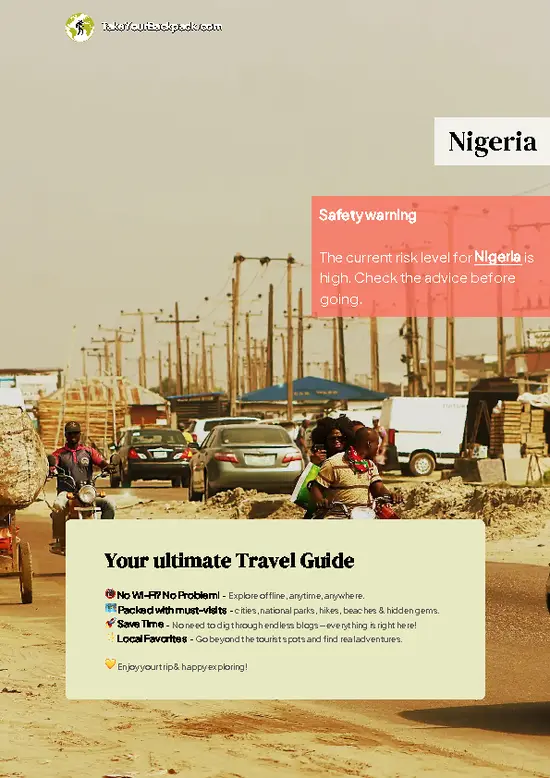
Discover everything you want to know in the 📖 Nigeria Travel Guide.
Safety warning

The current risk level for Nigeria is high. Check the advice before going.


Get your Nigeria guide
89 ranked highlights, routes & tips, works offline (332 pages)
Loading the map 🌍
CLICK TO FILTER
cities
towns
landmarks
national parks
hikes
beaches
attractions
festivals
regions
SHOW COUNTRY’S BESTSHOW ALL

✨ Why go?
Ranked #19 city in Nigeria
The unique appeal for travelers

Akure, Nigeria, is a strategic stop for backpackers weaving through the region. It offers a basecamp value that’s hard to beat, making it easy to launch into day trips without the hassle of constant packing. The hostels here are budget-friendly and often buzzing with fellow travelers, creating a sense of community that’s perfect for sharing tips and stories.

You’ll find affordable local food that packs a punch, fueling your adventures without draining your wallet. The city is walkable, allowing you to soak in the local vibe while navigating easily between highlights. When the sun sets, the nightlife offers a mix of chill spots and lively hangouts, perfect for unwinding after a day of exploration.

If you’re looking for a place that balances comfort and value, Akure fits the bill, whether … read more 👉
Akure, Nigeria, is a strategic stop for backpackers weaving through the region. It offers a basecamp value that’s hard to beat, making it easy to launch into day trips without the hassle of constant packing. The hostels here are budget-friendly and often buzzing with fellow travelers, creating a sense of community that’s perfect for sharing tips and stories.

You’ll find affordable local food that packs a punch, fueling your adventures without draining your wallet. The city is walkable, allowing you to soak in the local vibe while navigating easily between highlights. When the sun sets, the nightlife offers a mix of chill spots and lively hangouts, perfect for unwinding after a day of exploration.

If you’re looking for a place that balances comfort and value, Akure fits the bill, whether you’re staying for a while or just passing through.
Want to include Akure in your Nigeria route?
Create a personalized Nigeria itinerary that includes Akure and the places that fit your trip — based on your travel style, budget, and available time. Get your route in seconds.

Generate my trip

💡 HighlightsTop highlights of Akure

  • Deji of Akure’s Palace — The royal seat of the Deji is the cultural heart of the city: traditional architecture, palace courtyards, and the chance to catch ceremonies or talk to local historians about Akure’s kings and customs.
  • Oja Oba (King’s Market) — A bustling, colorful market next to the palace where you’ll find local food, textiles, traditional beads and a real slice of everyday life — great for people-watching and bargaining practice.
  • Federal University of Technology, Akure (FUTA) campus — Big, leafy campus with interesting modern architecture, student life to observe, and small green pockets and trails that make for relaxed walks away from the city noise.
  • FUTA Botanical Garden / Campus Gardens — Low-key but pleasant: good for a short nature break, birdwatching, and seeing local
read more 👉
  • Deji of Akure’s Palace — The royal seat of the Deji is the cultural heart of the city: traditional architecture, palace courtyards, and the chance to catch ceremonies or talk to local historians about Akure’s kings and customs.
  • Oja Oba (King’s Market) — A bustling, colorful market next to the palace where you’ll find local food, textiles, traditional beads and a real slice of everyday life — great for people-watching and bargaining practice.
  • Federal University of Technology, Akure (FUTA) campus — Big, leafy campus with interesting modern architecture, student life to observe, and small green pockets and trails that make for relaxed walks away from the city noise.
  • FUTA Botanical Garden / Campus Gardens — Low-key but pleasant: good for a short nature break, birdwatching, and seeing local plant species without leaving the city proper.
  • Akure Township Stadium — Catch a local football match (Sunshine Stars games are the highlight) to feel the city’s energy; loud, affordable, and a real way to meet locals.
  • Ondo State Museum (Akure branch) — Small regional museum with displays of Yoruba artifacts, traditional tools and local history — useful background if you want to understand the material culture behind what you see in town.
  • Akure Central Mosque — A prominent place of worship and community life; visiting outside prayer times lets you appreciate the architecture and observe local religious practices respectfully.
  • St. David’s (Anglican) / Prominent Cathedrals — Historic church buildings in the city center are worth a look for their colonial-era architecture and the role they play in Akure’s social life (Sunday services are lively if you want to experience local worship).
  • Oja Oba Street Food Strip — Not a single landmark but a must-do: a string of open-air stalls and small eateries near the market serving local favorites — suya, akara, fresh palm-wine vendors and other affordable bites.
  • City Civic Areas & Markets around Oke-Onigbin — Walkable neighborhoods with handicraft sellers, tailors, and traditional barbers; great for low-cost souvenirs and honest conversation with vendors who’ll tell you about daily life in Akure.
A few excellent day trips outside Akure: Idanre Hills (spectacular climbing, ancient sites), the historic town of Owo (palaces and Owo Museum), and Ikogosi Warm Springs — all doable from Akure in a day.
Spotted a mistake or missing something? Contact us.

🏘️ NeighborhoodsKey areas and districts to know

Akure, Nigeria, offers a blend of vibrant culture and practical logistics for backpackers. Here’s how its neighborhoods stack up:

Oda Road: This area buzzes with local markets and street food stalls. It’s affordable and walkable, perfect for those who want to immerse themselves in daily life. Nightlife is low-key, making it suitable for short stays where you can soak in the local vibe without the chaos.

Alagbaka: A bit more upscale, Alagbaka features hotels and restaurants catering to a range of budgets. It’s well-connected by public transport, making it easy to explore the city. The atmosphere is quieter, ideal for longer stays where comfort is a priority.

Oba Adesida Road: Known for its lively energy, this area is packed with shops and eateries. It’s a great spot for nightlife, with … read more 👉
Akure, Nigeria, offers a blend of vibrant culture and practical logistics for backpackers. Here’s how its neighborhoods stack up:

Oda Road: This area buzzes with local markets and street food stalls. It’s affordable and walkable, perfect for those who want to immerse themselves in daily life. Nightlife is low-key, making it suitable for short stays where you can soak in the local vibe without the chaos.

Alagbaka: A bit more upscale, Alagbaka features hotels and restaurants catering to a range of budgets. It’s well-connected by public transport, making it easy to explore the city. The atmosphere is quieter, ideal for longer stays where comfort is a priority.

Oba Adesida Road: Known for its lively energy, this area is packed with shops and eateries. It’s a great spot for nightlife, with bars and music venues that keep the vibe alive. While it can be a bit pricier, the walkability and access to transport make it a solid choice for both short and extended visits.

Isikan: This neighborhood is more residential, offering a glimpse into everyday life. It’s less touristy and more affordable, making it suitable for longer stays. The pace is slower, perfect for those seeking a quieter experience.

⌛️ 1 day1-day itinerary for Akure

’Akure, Nigeria, is a city rich in culture and history, often overlooked by travelers. It’s a place where you can feel the pulse of everyday life, from bustling markets to serene parks. Start your day in the heart of the city at the popular Oja Oba Market. The vibrant atmosphere is electric, with vendors selling everything from fresh produce to handmade crafts. Grab a local breakfast of akara (bean cakes) and pap (fermented corn pudding) from a street vendor. It’s a delicious way to fuel up for the day.

In the afternoon, head to the serene Idanre Hills, just a short drive away. This UNESCO World Heritage site offers breathtaking views and a chance to explore ancient settlements. The climb is invigorating, and the fresh air is a welcome change from the city’s hustle. Spend a few hours wandering … read more 👉
’Akure, Nigeria, is a city rich in culture and history, often overlooked by travelers. It’s a place where you can feel the pulse of everyday life, from bustling markets to serene parks. Start your day in the heart of the city at the popular Oja Oba Market. The vibrant atmosphere is electric, with vendors selling everything from fresh produce to handmade crafts. Grab a local breakfast of akara (bean cakes) and pap (fermented corn pudding) from a street vendor. It’s a delicious way to fuel up for the day.

In the afternoon, head to the serene Idanre Hills, just a short drive away. This UNESCO World Heritage site offers breathtaking views and a chance to explore ancient settlements. The climb is invigorating, and the fresh air is a welcome change from the city’s hustle. Spend a few hours wandering the trails and soaking in the history.

As evening approaches, return to ’Akure and visit the Cultural Centre. Here, you can catch a local performance or art exhibition that showcases the region’s talent. For dinner, stop by a local eatery in the Alagbaka neighborhood, where you can savor jollof rice and grilled chicken, a staple that never disappoints.

This itinerary balances time, comfort, and cost, allowing you to experience the essence of ’Akure without feeling rushed. Embrace the local vibe, and you’ll leave with stories worth sharing.
Turn your Akure visit into an Nigeria adventure
Build a complete Nigeria route with Akure, hidden gems, must-see destinations, and realistic travel times included.

Generate my trip

🌤️ When to go?Weather, crowds, and seasonal trade-offs


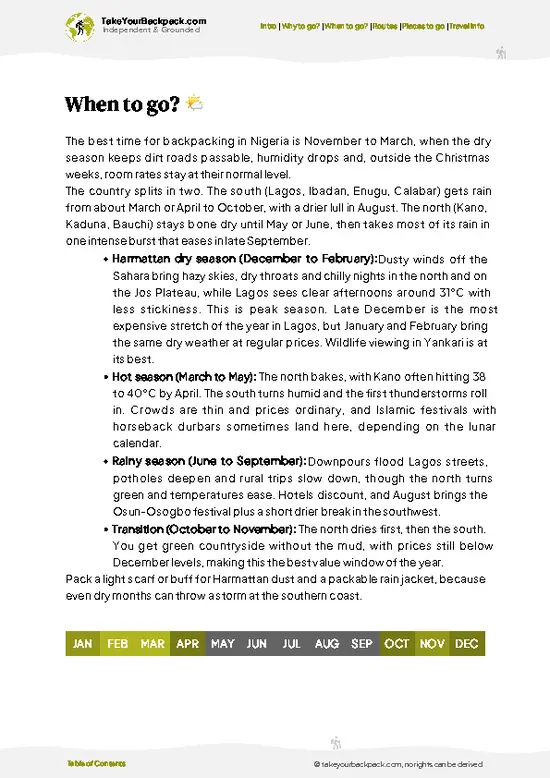
  • Weather: Akure’s tropical climate means heavy rains from April to October, making trails muddy and travel slower. Dry season from November to March offers clearer skies and easier hiking conditions.

  • Temperature: Expect highs around 28-32°C (82-90°F) year-round, but humidity spikes during the rainy season, making it feel hotter and stickier.

  • Daylight Hours: Fairly consistent, about 12 hours daily, so no drastic shifts in your daily schedule.

  • Crowds: Tourist presence is low year-round, but dry season sees a slight uptick as locals and visitors take advantage of better weather.

  • Seasonal Activities: Dry months are prime for exploring local festivals and outdoor markets, while rainy months focus more on indoor cultural experiences.

  • Price Fluctuations: Accommodation and transport costs
read more 👉

  • Weather: Akure’s tropical climate means heavy rains from April to October, making trails muddy and travel slower. Dry season from November to March offers clearer skies and easier hiking conditions.

  • Temperature: Expect highs around 28-32°C (82-90°F) year-round, but humidity spikes during the rainy season, making it feel hotter and stickier.

  • Daylight Hours: Fairly consistent, about 12 hours daily, so no drastic shifts in your daily schedule.

  • Crowds: Tourist presence is low year-round, but dry season sees a slight uptick as locals and visitors take advantage of better weather.

  • Seasonal Activities: Dry months are prime for exploring local festivals and outdoor markets, while rainy months focus more on indoor cultural experiences.

  • Price Fluctuations: Accommodation and transport costs dip during the rainy season due to lower demand, but some services may be less reliable.


Pro-tip: Aim for late dry season (February-March) to balance comfortable weather, fewer crowds, and vibrant local life without paying a premium.


source: climatestotravel.comJANJanuary: highly recommended for travelingFEBFebruary: excellent for travelingMARMarch: excellent for travelingAPRApril: good for travelingMAYMay: fair for travelingJUNJune: fair for travelingJULJuly: fair for travelingAUGAugust: fair for travelingSEPSeptember: fair for travelingOCTOctober: good for travelingNOVNovember: highly recommended for travelingDECDecember: highly recommended for traveling
when-to-go

✈️ The backpacker research shortcutNigeria Travel Guide

An offline-friendly backpacking guide with optimized travel routes, ranked highlights, transport advice, and the best areas to stay.
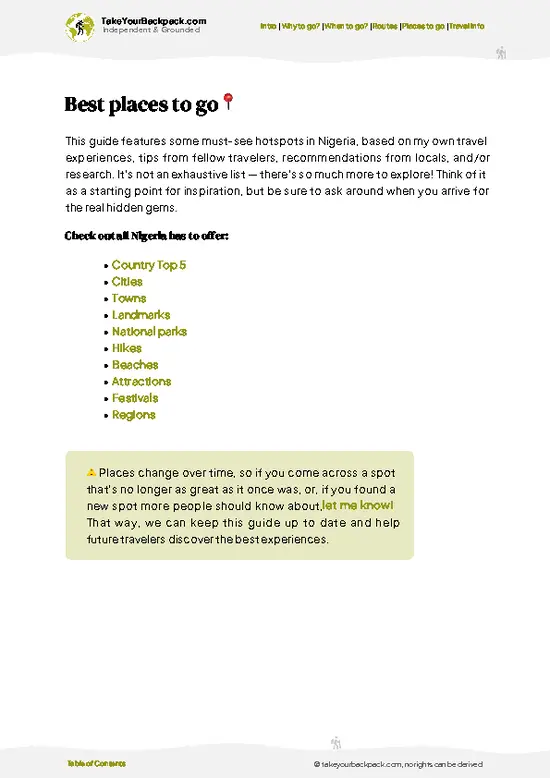
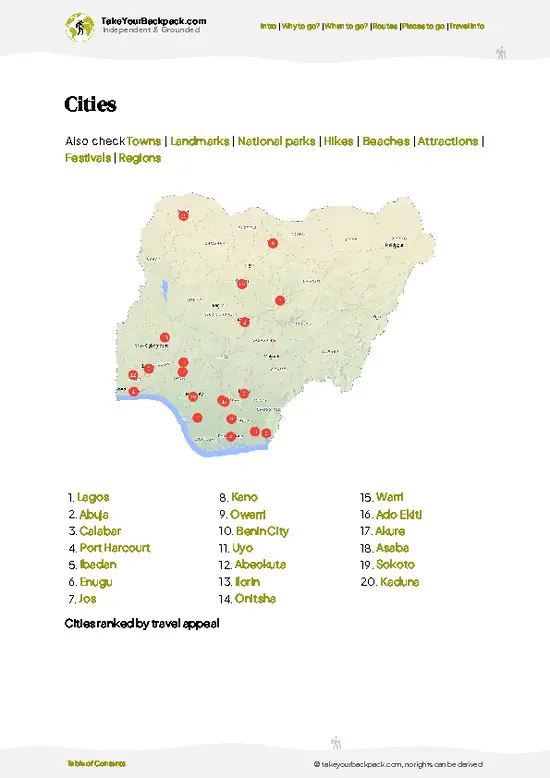
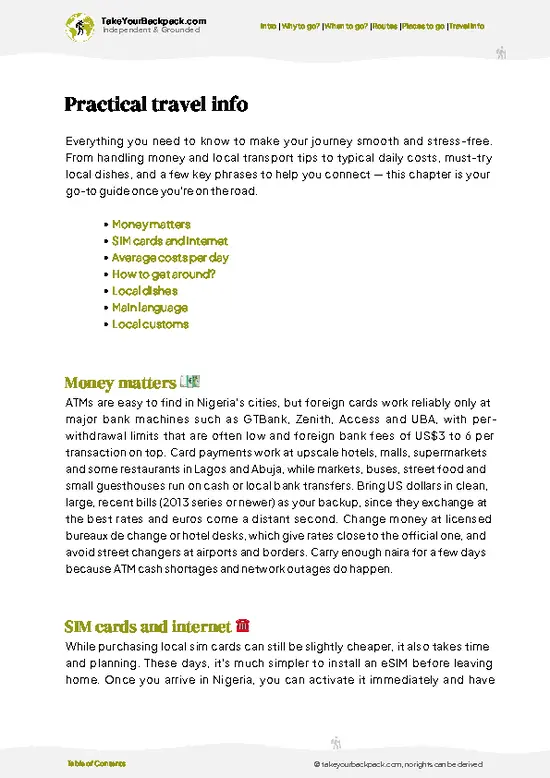
example page 0 from our offline Travel Guide for Nigeria
example page 1 from our offline Travel Guide for Nigeria
example page 2 from our offline Travel Guide for Nigeria
example page 3 from our offline Travel Guide for Nigeria
example page 4 from our offline Travel Guide for Nigeria
example page 5 from our offline Travel Guide for Nigeria
example page 6 from our offline Travel Guide for Nigeria
example page 7 from our offline Travel Guide for Nigeria
The digital guide (332 pages) contains:
89 highlights, ranked by travel appeal
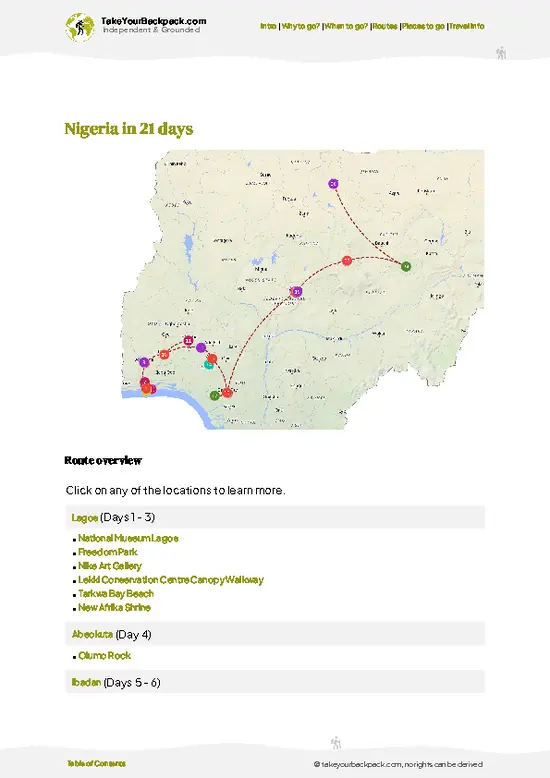
Optimized 7, 14 & 21-day travel routes
Cities, national parks, landmarks, beaches
How to get around
Offline-friendly for travel without Wi-Fi
👉 Click to see all 30+ guide features

📅 Plan smarter in minutes, not weeks
Month by month travel advice
Festivals & national holidays
Budget expectations

🗺️ Go to the right places, skip the overrated ones
Honest pros & cons of destinations
Top hikes, parks & viewpoints
Lesser-known places most travelers miss
Clear “worth it vs skip it” guidance

🛏️ Travel smoothly without rookie mistakes
Best areas to stay
Transport systems explained simply
Common scams & safety advice
SIM cards, money & practical tips

🌍 Understand the country, not just visit it
Culture & traditions
52 Essential phrases & customs
Festivals worth planning around
Traveler-friendly historical context
Insights that make places more meaningful

📱 Built for real travel conditions
Fully downloadable PDF
Works completely offline
Optimized for phone use
Useful in remote areas & buses
Everything in one place
Save weeks of stressful planning
Get instant access to your full guide. 30‑day money-back guarantee.


By proceeding you agree to our terms.
Sent to your inbox immediately after payment • 100% Secure Checkout
Best Backpacking Travel Advisor 2025 tourism awardBest Backpacking
Travel Advisor
2025
What others say about Take Your Backpack Guides:
⭐⭐⭐⭐⭐
Fantastic, amazing amount of information!
⭐⭐⭐⭐⭐
My goodness this is amazing, it's what I've been looking for hats off too you!
⭐⭐⭐⭐⭐
I think this is absolutely BRILLIANT
⭐⭐⭐⭐
Very complete and informative. It's still missing places, but I gotta to commend you
⭐⭐⭐⭐⭐
This is truly amazing, thank you, can't wait to explore it with my kids!
⭐⭐⭐⭐⭐
Awesome resource, thank you!
⭐⭐⭐⭐⭐
This is amazing! Can't wait to explore the ones I haven't seen
⭐⭐⭐⭐
I love this! Well done, great idea.
⭐⭐⭐⭐⭐
Thanks for taking the time to make this gem!
⭐⭐⭐⭐⭐
This might be the best website I've ever seen.
⭐⭐⭐⭐⭐
Congratulations, and thank you so much for your work; it's incredibly valuable.
⭐⭐⭐⭐
In all seriousness I think you did a great job pointing out the important spots
⭐⭐⭐⭐⭐
10/10 very good
⭐⭐⭐⭐⭐
As someone who's only just starting to visit regularly this is awesome, thank you.
⭐⭐⭐⭐
Thank you very much! I'm going to visit my dad, it's going to be very useful!
⭐⭐⭐⭐⭐
This is really cool! We'll be travelling for the first time and this definitely come in handy.
⭐⭐⭐⭐⭐
You are now our minister of culture, congratulations 👨‍💼
⭐⭐⭐⭐⭐
Just wanted to tell you that this is a pearl! Going to follow your recommendations.
⭐⭐⭐⭐⭐
This is so cool. I'll definitely be using the resource for my travels soon.
⭐⭐⭐⭐⭐
This is very impressive! Good work.
⭐⭐⭐⭐⭐
This is an amazing and informative site. Very well done!

🛏️ Where to stay?Choosing the right base

In Akure, the sweet spot for backpackers is the city center around Oja Oba Market and the nearby Oba Adesida Road area. This zone balances safety and social buzz without the inflated prices of more upscale districts. It’s where you’ll find a handful of budget guesthouses and informal hostels—nothing flashy, but clean and functional, perfect for solo travelers who want to plug into local life. The vibe here is lively during the day, with street vendors and markets offering an authentic slice of daily Nigerian hustle. Compared to quieter, more residential neighborhoods, this area keeps you close … read more 👉
In Akure, the sweet spot for backpackers is the city center around Oja Oba Market and the nearby Oba Adesida Road area. This zone balances safety and social buzz without the inflated prices of more upscale districts. It’s where you’ll find a handful of budget guesthouses and informal hostels—nothing flashy, but clean and functional, perfect for solo travelers who want to plug into local life. The vibe here is lively during the day, with street vendors and markets offering an authentic slice of daily Nigerian hustle. Compared to quieter, more residential neighborhoods, this area keeps you close to transport links and eateries, making it easier to stretch your time and money while staying comfortable enough to recharge.

🚌 Getting aroundHow to get around Akure

Akure moves at a pace that’s more about rhythm than rigid timetables. It’s a city where the clock matters, but the human element—drivers, vendors, and fellow travelers—shapes your experience. Expect a blend of informal hustle and pockets of order. You’ll find that timing here is a flexible concept, especially on the roads. Understanding this flow lets you play the system smartly, choosing when to save time, when to save money, and when to prioritize comfort.


  • Walking: The ultimate budget option. Akure’s central areas are compact enough to explore on foot, giving you full control over your pace and stops. Zero cost, zero schedule, but prepare for tropical heat and uneven sidewalks.

  • Danfo Buses: These minibuses are the backbone of local transit. They run from early morning until late evening,
read more 👉
Akure moves at a pace that’s more about rhythm than rigid timetables. It’s a city where the clock matters, but the human element—drivers, vendors, and fellow travelers—shapes your experience. Expect a blend of informal hustle and pockets of order. You’ll find that timing here is a flexible concept, especially on the roads. Understanding this flow lets you play the system smartly, choosing when to save time, when to save money, and when to prioritize comfort.


  • Walking: The ultimate budget option. Akure’s central areas are compact enough to explore on foot, giving you full control over your pace and stops. Zero cost, zero schedule, but prepare for tropical heat and uneven sidewalks.

  • Danfo Buses: These minibuses are the backbone of local transit. They run from early morning until late evening, costing just a few naira per trip. They’re slow and crowded but unbeatable for budget travelers who want to blend in and cover longer distances.

  • Motorcycle Taxis (Okada): Fast and flexible, these weave through traffic like a video game. Prices vary but remain affordable. They’re less comfortable and riskier, so reserve them for short hops when time is tight and you’re feeling adventurous.

  • Shared Taxis: Sitting between danfos and private taxis, these offer a bit more comfort and speed for a slightly higher price. They run on popular routes and leave when full, so timing is unpredictable but often quicker than buses.

  • Private Taxis: The most comfortable and fastest option, but also the priciest. Ideal if you’re traveling with a group or have a tight schedule. Negotiate fares upfront to avoid surprises.

👛 Costs (as of 1 March 2026)Typical daily expenses

Backpacking in Akure, Nigeria, offers a clear trade-off between cost and comfort, with prices that reflect the city’s developing infrastructure and local economy. Here’s how your daily expenses typically break down:
  • Dorm Accommodation (High Season): Expect to pay around $10 to $15 per night. High season sees a slight bump due to demand, but options remain basic, often with shared facilities and modest amenities.
  • Dorm Accommodation (Off-Season): Prices drop to about $7 to $12 per night. Fewer travelers mean better bargaining power, but quality and availability can vary significantly.
  • Meals: Local street food and small eateries dominate the scene, costing roughly $3 to $7 per day if you stick to traditional Nigerian dishes. Western-style meals or dining in more tourist-oriented spots can
read more 👉
Backpacking in Akure, Nigeria, offers a clear trade-off between cost and comfort, with prices that reflect the city’s developing infrastructure and local economy. Here’s how your daily expenses typically break down:
  • Dorm Accommodation (High Season): Expect to pay around $10 to $15 per night. High season sees a slight bump due to demand, but options remain basic, often with shared facilities and modest amenities.
  • Dorm Accommodation (Off-Season): Prices drop to about $7 to $12 per night. Fewer travelers mean better bargaining power, but quality and availability can vary significantly.
  • Meals: Local street food and small eateries dominate the scene, costing roughly $3 to $7 per day if you stick to traditional Nigerian dishes. Western-style meals or dining in more tourist-oriented spots can push this higher.
  • Local Transport: Short rides on motorcycle taxis (okadas) or shared minibuses typically cost between $0.30 and $1 per trip. Frequent use adds up but remains affordable.
  • City Transport Pass: Akure doesn’t have a formal city transport pass system. Budgeting around $2 to $3 daily for multiple local rides is realistic for planning purposes.
  • Basic Activities/Entry Fees: Cultural sites and small museums charge minimal fees, usually under $2. Organized tours or special events can cost more but are less common.
  • Miscellaneous Expenses: Include essentials like bottled water, snacks, phone credit, and occasional tips, which can add $2 to $5 daily depending on your habits.

In total, a backpacker in Akure can expect to spend roughly $15 to $30 per day. This range balances the bare essentials with a bit of comfort and flexibility, letting you decide how much you want to invest in convenience versus stretching your budget. Understanding these trade-offs lets you play the system smartly, maximizing your experience without surprises.
⚠️ Prices can change and everyone travels differently, so take this as a rough guide. Hope it helps you plan your adventure!

🚌 Day tripsShort trips worth adding

Using Akure as your base opens up a treasure trove of day trips that are both enriching and accessible. Here’s how to maximize your time, money, and comfort while diving into the heart of Nigeria.

Idanre Hills
Just a short 30-minute drive from Akure, Idanre Hills is a must-see. The ancient hills are not just a visual feast; they’re steeped in history and culture. You’ll hike up to the summit, where you can explore the old settlements and take in panoramic views that make the effort worthwhile. Expect to spend around ₦1,500 on transport and entrance fees. The best time to visit is during the dry season, from November to March. A common mistake? Underestimating the hike—bring water and wear sturdy shoes.
👉 Explore Idanre Hills

Owo Museum
About 45 minutes from Akure, the Owo Museum offers … read more 👉
Using Akure as your base opens up a treasure trove of day trips that are both enriching and accessible. Here’s how to maximize your time, money, and comfort while diving into the heart of Nigeria.

Idanre Hills
Just a short 30-minute drive from Akure, Idanre Hills is a must-see. The ancient hills are not just a visual feast; they’re steeped in history and culture. You’ll hike up to the summit, where you can explore the old settlements and take in panoramic views that make the effort worthwhile. Expect to spend around ₦1,500 on transport and entrance fees. The best time to visit is during the dry season, from November to March. A common mistake? Underestimating the hike—bring water and wear sturdy shoes.
👉 Explore Idanre Hills

Owo Museum
About 45 minutes from Akure, the Owo Museum offers a deep dive into the region’s rich heritage. The museum houses artifacts from the ancient Owo Kingdom, including intricate bronze sculptures. Entry is typically around ₦500, making it a budget-friendly stop. Visit in the morning to avoid the heat and crowds. Many first-timers overlook the guided tours, which provide invaluable context to the exhibits.


Erin Ijesha Waterfalls
A bit further afield, about an hour and a half from Akure, Erin Ijesha Waterfalls is worth every minute of travel. The cascading waters create a stunning backdrop for a refreshing swim or a picnic. Expect to spend around ₦2,000 for transport and entrance fees. The rainy season (June to September) enhances the waterfalls, but be cautious of slippery paths. Many backpackers miss the upper levels—don’t skip the climb!


Ado Awaye Suspended Lake
Roughly two hours from Akure, this unique lake sits high on a hill, offering a surreal experience. The hike to the lake is moderate, and the views are spectacular. Budget around ₦2,500 for transport and entry. The dry season is ideal for clear skies. A common oversight is not bringing snacks; the hike can be longer than expected.
Want to know what more Nigeria offers?
The Nigeria Travel Guide describes 89 highlights, from cities to national parks, from beaches to hikes

Get the Travel Guide -

🍲 FoodLocal Flavors for Backpackers

In Akure, food is a vibrant tapestry of flavors that tells the story of its people. Dive into pounded yam served with egusi soup, a rich blend of ground melon seeds, spices, and leafy greens. The texture is a delight, and the taste? Pure comfort. Don’t miss bitter leaf soup for a unique twist; its slightly bitter notes balance beautifully with the savory elements.

Street food is where the magic happens. Vendors line the bustling markets, offering suya, spicy skewers of grilled meat that sizzle with flavor. Pair it with a cold zobo, a refreshing hibiscus drink that’s both tart and sweet.

Eating here is a communal affair. You’ll often see locals sharing dishes, so don’t hesitate to join in. Just remember, it’s customary to eat with your right hand, a nod to local etiquette. Embrace the lively … read more 👉
In Akure, food is a vibrant tapestry of flavors that tells the story of its people. Dive into pounded yam served with egusi soup, a rich blend of ground melon seeds, spices, and leafy greens. The texture is a delight, and the taste? Pure comfort. Don’t miss bitter leaf soup for a unique twist; its slightly bitter notes balance beautifully with the savory elements.

Street food is where the magic happens. Vendors line the bustling markets, offering suya, spicy skewers of grilled meat that sizzle with flavor. Pair it with a cold zobo, a refreshing hibiscus drink that’s both tart and sweet.

Eating here is a communal affair. You’ll often see locals sharing dishes, so don’t hesitate to join in. Just remember, it’s customary to eat with your right hand, a nod to local etiquette. Embrace the lively atmosphere; every bite is a connection to Akure’s heart and soul.

🛡️ SafetyTraveler Safety Guide

In ’Akure, Nigeria, the atmosphere is generally safe, but awareness is key. Stick to well-lit areas at night, especially if you’re solo. The city has a friendly vibe, but some neighborhoods can feel a bit off after dark.

Common scams are rare, but be cautious with street vendors who might inflate prices for tourists. Always negotiate before buying. Keep your belongings close; petty theft can happen in crowded markets.

When interacting with locals, a smile goes a long way. They appreciate genuine interest. If someone offers unsolicited help, be polite but firm; it’s often a prelude to a request for money. Stay alert, trust your instincts, and you’ll navigate ’Akure with ease.

Other Nigerian cities near Akure

Explore more nearby:

  • Ado Ekiti—rolling hills, university campus, local festivals| 40 km away
  • Ilesa—gold mining, cocoa farms, Ijesha festivals| 67 km away
  • Ife—ancient sculptures, university campus, spiritual shrines| 77 km away

💡 Not sure where to go next?
Create a personalized itinerary for Nigeria including Akure and the places that fit your trip.

Generate my itinerary

👉 Discover all cities

Or checkout all Nigeria has to offer (think cities, towns, villages, national parks, hikes, beaches, festivals)
Country photo of Nigeria

We 💚 feedbackParting advice and final tips

Akure has a pulse that’s both vibrant and laid-back. You’ll find locals eager to share stories over spicy suya. The best surprise? The lush scenery around the city—perfect for a quick escape. Just a heads-up: traffic can be a beast, so plan your outings wisely. Embrace the chaos; it’s part of the charm. You’ll leave with a piece of its heart.

✍️ Help improve this page!
The information on this page is based on in-depth research, insights shared by experienced travelers, and feedback from the local travel community in Nigeria. While every effort is made to keep the information accurate and current, conditions can change — so if you spot anything incorrect or outdated, please get in touch.


🙋‍♂️ Give feedback

👋 Meet the founderWho’s Behind Take Your Backpack?

Johan, backpacker and founder of TakeYourBackpackHi, I’m Johan (Netherlands 🇳🇱), the creator of TakeYourBackpack. Over the past decade, I’ve backpacked through 80+ countries across six continents, gaining extensive experience with independent travel, long-term trips, and overland routes.

This site is built on a combination of firsthand travel experience and carefully curated insights from other backpackers. Many guides are based on places I’ve personally visited, while others bring together tips, observations, and practical advice shared by trusted travelers I’ve met along the way.

The goal is to provide realistic, experience-driven guidance — not generic itineraries — so you can explore destinations with better context, clearer expectations, and more confidence.

Get full Nigeria guide •
Instant download • 89 highlights • Full Offline guide