×

North Korea🇰🇵 | citiesKaesongConfucian sites, border proximity, ginseng trade | things to do and best time to go

Explore HaejuExplore Kumya

Backpacking in Kaesong
🏆 Top pickcity ranked #2
By Johan Kruseman 🇳🇱 | Updated June 13, 2026

Steam from your metal lunch tray fogs the window while a guide explains, in rehearsed English, how this exact alley once linked merchants from China to the Korean peninsula. Outside, bicycle bells, the clack of wooden carts, faint propaganda music drifting from a tinny loudspeaker. Kimchi funk, coal smoke, cold air on your cheeks. Kaesong sits just north of the DMZ, in the south of North Korea, and it feels closer to another century than to Seoul, an hour away across a border you can’t cross.

For backpackers, Kaesong is controlled-access travel, not free roaming. You’re on a tour, full stop. The payoff is walking old streets, seeing traditional courtyard houses, and visiting the Koryo Museum and hilltop monuments with almost no other foreigners around. It’s relatively safe but emotionally intense, socially constrained, and more expensive than it looks, especially compared with Pyongyang, which has more spectacle and slightly looser evenings. Kaesong’s vibe is quieter, older, more watchful.

Discover everything you want to know in the 📖 North Korea Travel Guide.
Safety warning

The current risk level for North Korea is high. Check the advice before going.


Get your North Korea guide
74 ranked highlights, routes & tips, works offline (296 pages)
Loading the map 🌍
CLICK TO FILTER
cities
towns
landmarks
national parks
hikes
beaches
attractions
festivals
regions
SHOW COUNTRY’S BESTSHOW ALL

✨ Why go?
Ranked #2 city in North Korea
Why Kaesong should be on your travel list

Kaesong is a unique stop for backpackers navigating North Korea, offering a blend of highlights and activities that make it worth your time. The city serves as a solid basecamp for day trips, allowing you to explore the surrounding areas without the hassle of constant packing and unpacking. With a few hostels that cater to budget travelers, you can find a place to rest your head without breaking the bank.

Food options are limited but interesting, giving you a taste of local cuisine that’s both affordable and filling. The city’s walkability makes it easy to explore on foot, allowing you to soak in the atmosphere without the stress of navigating public transport. While nightlife isn’t exactly bustling, there are a few spots where you can unwind and share stories with fellow travelers.

As … read more 👉
Kaesong is a unique stop for backpackers navigating North Korea, offering a blend of highlights and activities that make it worth your time. The city serves as a solid basecamp for day trips, allowing you to explore the surrounding areas without the hassle of constant packing and unpacking. With a few hostels that cater to budget travelers, you can find a place to rest your head without breaking the bank.

Food options are limited but interesting, giving you a taste of local cuisine that’s both affordable and filling. The city’s walkability makes it easy to explore on foot, allowing you to soak in the atmosphere without the stress of navigating public transport. While nightlife isn’t exactly bustling, there are a few spots where you can unwind and share stories with fellow travelers.

As for onward travel, Kaesong is conveniently located near the DMZ, making it a strategic point for those heading deeper into North Korea or back to South Korea. If you’re looking for a unique experience that fits into a broader backpacking route, Kaesong offers just enough to make it a worthwhile stop.
Want to include Kaesong in your North Korea route?
Create a personalized North Korea itinerary that includes Kaesong and the places that fit your trip — based on your travel style, budget, and available time. Get your route in seconds.

Generate my trip

💡 HighlightsDon't-miss highlights and experiences

  1. Manwoldae Palace Site — The ruined royal palace of the Goryeo dynasty; you can walk among exposed foundations and see ongoing excavations and info panels that really help you picture the old capital’s layout.
  2. Koryo Museum (Kaesong) — Small but focused: artifacts, pottery and finds from the Manwoldae digs, so it’s the best place to tie the palace ruins to real objects and daily life in Goryeo.
  3. Koryo Songgyungwan (Confucian Academy) — A restored education complex where Korea’s elite studied Confucian texts; the courtyards and lecture halls give a clear sense of scholarly life in the old capital.
  4. Royal Tombs of the Koryo Dynasty — A cluster of well-preserved burial mounds, stone statues and ritual features (including the tomb of King Gongmin); atmospheric, photogenic and steeped in history.
read more 👉
  1. Manwoldae Palace Site — The ruined royal palace of the Goryeo dynasty; you can walk among exposed foundations and see ongoing excavations and info panels that really help you picture the old capital’s layout.
  2. Koryo Museum (Kaesong) — Small but focused: artifacts, pottery and finds from the Manwoldae digs, so it’s the best place to tie the palace ruins to real objects and daily life in Goryeo.
  3. Koryo Songgyungwan (Confucian Academy) — A restored education complex where Korea’s elite studied Confucian texts; the courtyards and lecture halls give a clear sense of scholarly life in the old capital.
  4. Royal Tombs of the Koryo Dynasty — A cluster of well-preserved burial mounds, stone statues and ritual features (including the tomb of King Gongmin); atmospheric, photogenic and steeped in history.
  5. Sonjuk Bridge — A modest stone bridge with a huge story: the assassination of the scholar Jeong Mong-ju took place here. It’s compact, easy to visit, and resonates with late-Goryeo politics.
  6. Kaesong Namdaemun (South Gate) — One of the city’s historic gates; it’s a tangible remnant of Kaesong’s defensive past and a great spot for photos and watching daily life roll by.
  7. Kaesong Hyanggyo (Local Confucian Shrine) — A quieter counterpart to Songgyungwan: a neighborhood shrine and school with ritual architecture and simple, calming courtyards.
  8. Kaesong Traditional Market & Ginseng Street — Lively market where you’ll see ginseng trade, local snacks (try the famous Kaesong bread if offered), and everyday commerce—better than a museum for getting a feel of the city.
  9. Traditional craft workshops — Small artisan spots scattered through town (textiles, paper, lacquer, embroidery) where you can watch techniques passed down generations and pick up a locally made souvenir.
  10. Sections of the Kaesong city walls and fortifications — Walkable stretches of old walls that frame the historic core; they connect many of the sites above and give a good sense of the city’s scale and defenses.
A few real, visitable highlights just outside Kaesong worth day-tripping to are Panmunjom/Joint Security Area (the DMZ), some of the surrounding royal-tomb countryside, and the former Kaesong Industrial Complex (when it’s open); my personal favorite for atmosphere and intensity is Panmunjom.
Spotted a mistake or missing something? Contact us.

🏘️ NeighborhoodsWhere things are and how it's laid out

Kaesong offers a unique blend of history and culture, making it an intriguing stop for backpackers. Here’s how the neighborhoods stack up:

Historic Center: This area is the heart of Kaesong, where you’ll find the iconic Koryo Museum and ancient architecture. The vibe is steeped in history, perfect for those who want to soak up the past. Walkability is excellent; everything is within a short stroll. Costs here are moderate, with a few budget-friendly guesthouses. Ideal for short stays, but longer visits can feel repetitive.

Songak Mountain Area: If you’re craving nature, this is your spot. The trails offer stunning views and a chance to escape the city buzz. It’s quieter, making it suitable for reflection or a peaceful retreat. Transport access is limited, so plan ahead. Costs can vary; some … read more 👉
Kaesong offers a unique blend of history and culture, making it an intriguing stop for backpackers. Here’s how the neighborhoods stack up:

Historic Center: This area is the heart of Kaesong, where you’ll find the iconic Koryo Museum and ancient architecture. The vibe is steeped in history, perfect for those who want to soak up the past. Walkability is excellent; everything is within a short stroll. Costs here are moderate, with a few budget-friendly guesthouses. Ideal for short stays, but longer visits can feel repetitive.

Songak Mountain Area: If you’re craving nature, this is your spot. The trails offer stunning views and a chance to escape the city buzz. It’s quieter, making it suitable for reflection or a peaceful retreat. Transport access is limited, so plan ahead. Costs can vary; some lodges are pricier due to the location. Best for longer stays if you enjoy hiking and solitude.

Kaesong Industrial Complex: This area is more modern and less touristy, showcasing the working side of the city. The vibe is utilitarian, with fewer attractions but a unique perspective on North Korean life. Costs are lower here, but amenities are basic. Walkability is decent, but you’ll need to rely on local transport for sightseeing. Suitable for those looking to dive deeper into local culture, making it better for longer stays.

East Kaesong: A quieter residential area, East Kaesong offers a glimpse into daily life. It’s less touristy, which means lower costs and a more authentic experience. Walkability is fair, but you might need to navigate some less maintained paths. Nightlife is minimal, making it perfect for those seeking peace. Great for longer stays if you want to immerse yourself in local life.

⌛️ 1 daySeeing the highlights in 24 hours

Kaesong, North Korea, is a city steeped in history, known for its rich cultural heritage and proximity to the DMZ. It’s a place where ancient traditions meet the echoes of a divided past. Spending a day here is like stepping into a living museum, where every corner tells a story.

Start your morning at the Koryo Museum, housed in a former Confucian academy. The museum showcases artifacts from the Koryo Dynasty, including ceramics and ancient texts. Take your time wandering through the exhibits; the quiet atmosphere allows for reflection. Just a short walk away is the historic Songgyungwan, a Confucian school that dates back to the 14th century. The architecture is striking, and it’s a perfect spot for some early-morning photos.

After soaking in the history, head to the bustling Kaesong city … read more 👉
Kaesong, North Korea, is a city steeped in history, known for its rich cultural heritage and proximity to the DMZ. It’s a place where ancient traditions meet the echoes of a divided past. Spending a day here is like stepping into a living museum, where every corner tells a story.

Start your morning at the Koryo Museum, housed in a former Confucian academy. The museum showcases artifacts from the Koryo Dynasty, including ceramics and ancient texts. Take your time wandering through the exhibits; the quiet atmosphere allows for reflection. Just a short walk away is the historic Songgyungwan, a Confucian school that dates back to the 14th century. The architecture is striking, and it’s a perfect spot for some early-morning photos.

After soaking in the history, head to the bustling Kaesong city center for lunch. Try a local restaurant serving Koryo-style cold noodles, a dish that’s both refreshing and filling. The flavors are unique, and you’ll appreciate the local twist on a classic.

In the afternoon, make your way to the Tomb of King Wanggon, the founder of the Koryo Dynasty. It’s a bit off the standard tourist path, but the serene setting and intricate stone carvings are worth the detour. The peacefulness of the site allows for a moment of introspection, a chance to ponder the weight of history.

As the sun begins to set, stroll through the quaint streets of the Hanok Village. The traditional Korean houses here are charming, and the atmosphere is relaxed. Grab a cup of local tea from a small vendor and enjoy the fading light.

End your day at the Kaesong Korean War Museum. It’s a poignant reminder of the city’s complex history, and the exhibits provide a deeper understanding of the region. Reflect on your day as you walk back, knowing you’ve experienced a slice of North Korean life that few get to see.
Turn your Kaesong visit into an North Korea adventure
Build a complete North Korea route with Kaesong, hidden gems, must-see destinations, and realistic travel times included.

Generate my trip

🌤️ When to go?Weather, crowds, and seasonal trade-offs


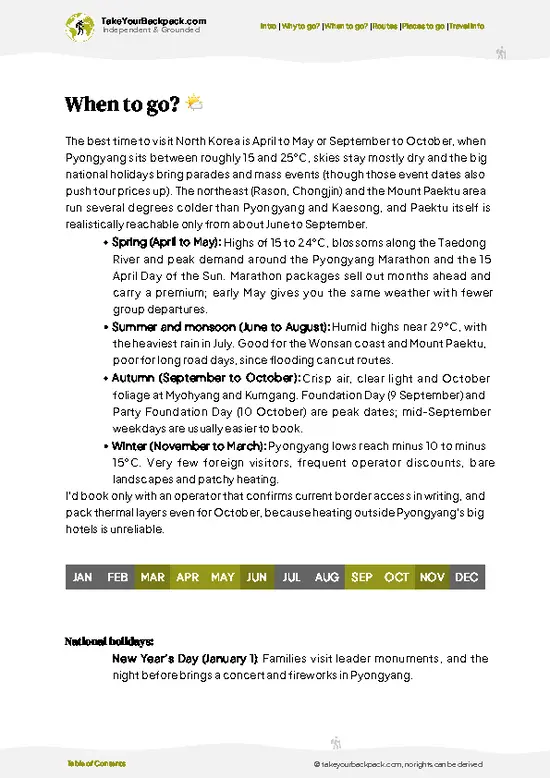
  • Topic: Weather and Temperature — Spring (April to June) and autumn (September to October) offer the most comfortable weather for backpacking Kaesong. Temperatures hover between 10°C to 25°C (50°F to 77°F), avoiding the bitter cold of winter and the stifling heat of summer.

  • Topic: Daylight Hours — In spring and autumn, daylight stretches roughly 12 to 14 hours, giving you ample time to explore without rushing. Winter days shrink to about 9 hours, limiting sightseeing opportunities.

  • Topic: Crowds — Tourist numbers peak during summer and major North Korean holidays, making spring and autumn quieter. This means less waiting, more authentic interactions, and a smoother experience navigating restricted areas.

  • Topic: Seasonal Activities — Autumn brings vibrant foliage around Kaesong’s historic
read more 👉

  • Topic: Weather and Temperature — Spring (April to June) and autumn (September to October) offer the most comfortable weather for backpacking Kaesong. Temperatures hover between 10°C to 25°C (50°F to 77°F), avoiding the bitter cold of winter and the stifling heat of summer.

  • Topic: Daylight Hours — In spring and autumn, daylight stretches roughly 12 to 14 hours, giving you ample time to explore without rushing. Winter days shrink to about 9 hours, limiting sightseeing opportunities.

  • Topic: Crowds — Tourist numbers peak during summer and major North Korean holidays, making spring and autumn quieter. This means less waiting, more authentic interactions, and a smoother experience navigating restricted areas.

  • Topic: Seasonal Activities — Autumn brings vibrant foliage around Kaesong’s historic sites, enhancing the visual experience. Spring showcases blooming flowers, but summer’s heat can dampen outdoor enthusiasm.

  • Topic: Price Fluctuations — Prices for guided tours and accommodations tend to rise in summer and during national holidays. Traveling in shoulder seasons like spring and autumn often secures better rates and availability.


Pro-tip: Aim for early October when the weather is crisp, crowds thin, and the landscape turns fiery red—perfect for turning logistics into a winning strategy.


source: climatestotravel.comJANJanuary: below average for travelingFEBFebruary: below average for travelingMARMarch: good for travelingAPRApril: excellent for travelingMAYMay: excellent for travelingJUNJune: highly recommended for travelingJULJuly: fair for travelingAUGAugust: fair for travelingSEPSeptember: excellent for travelingOCTOctober: excellent for travelingNOVNovember: good for travelingDECDecember: below average for traveling
when-to-go

✈️ The backpacker research shortcutNorth Korea Travel Guide

An offline-friendly backpacking guide with optimized travel routes, ranked highlights, transport advice, and the best areas to stay.
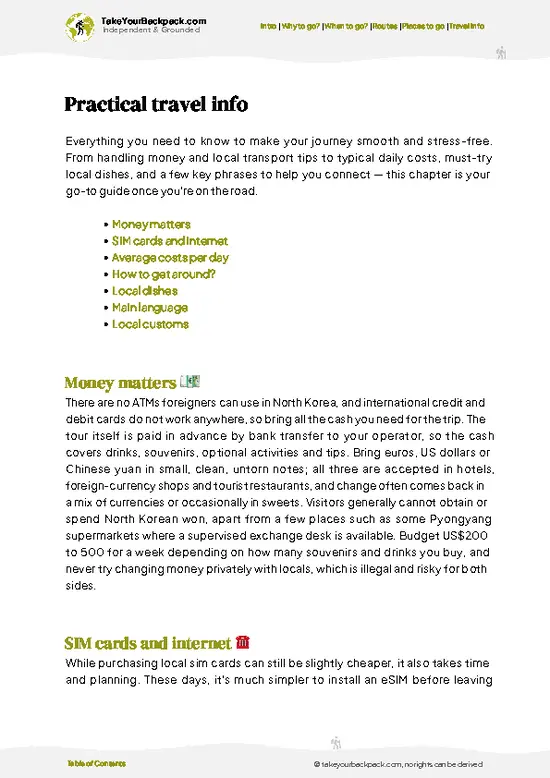
example page 0 from our offline Travel Guide for North Korea
example page 1 from our offline Travel Guide for North Korea
example page 2 from our offline Travel Guide for North Korea
example page 3 from our offline Travel Guide for North Korea
example page 4 from our offline Travel Guide for North Korea
example page 5 from our offline Travel Guide for North Korea
example page 6 from our offline Travel Guide for North Korea
example page 7 from our offline Travel Guide for North Korea
The digital guide (296 pages) contains:
74 highlights, ranked by travel appeal
Optimized 5, 10 & 15-day travel routes
Cities, national parks, landmarks, beaches
How to get around
Offline-friendly for travel without Wi-Fi
👉 Click to see all 30+ guide features

📅 Plan smarter in minutes, not weeks
Month by month travel advice
Festivals & national holidays
Budget expectations

🗺️ Go to the right places, skip the overrated ones
Honest pros & cons of destinations
Top hikes, parks & viewpoints
Lesser-known places most travelers miss
Clear “worth it vs skip it” guidance

🛏️ Travel smoothly without rookie mistakes
Best areas to stay
Transport systems explained simply
Common scams & safety advice
SIM cards, money & practical tips

🌍 Understand the country, not just visit it
Culture & traditions
52 Essential phrases & customs
Festivals worth planning around
Traveler-friendly historical context
Insights that make places more meaningful

📱 Built for real travel conditions
Fully downloadable PDF
Works completely offline
Optimized for phone use
Useful in remote areas & buses
Everything in one place
Save weeks of stressful planning
Get instant access to your full guide. 30‑day money-back guarantee.


By proceeding you agree to our terms.
Sent to your inbox immediately after payment • 100% Secure Checkout
Best Backpacking Travel Advisor 2025 tourism awardBest Backpacking
Travel Advisor
2025
What others say about Take Your Backpack Guides:
⭐⭐⭐⭐⭐
Fantastic, amazing amount of information!
⭐⭐⭐⭐⭐
My goodness this is amazing, it's what I've been looking for hats off too you!
⭐⭐⭐⭐⭐
I think this is absolutely BRILLIANT
⭐⭐⭐⭐
Very complete and informative. It's still missing places, but I gotta to commend you
⭐⭐⭐⭐⭐
This is truly amazing, thank you, can't wait to explore it with my kids!
⭐⭐⭐⭐⭐
Awesome resource, thank you!
⭐⭐⭐⭐⭐
This is amazing! Can't wait to explore the ones I haven't seen
⭐⭐⭐⭐
I love this! Well done, great idea.
⭐⭐⭐⭐⭐
Thanks for taking the time to make this gem!
⭐⭐⭐⭐⭐
This might be the best website I've ever seen.
⭐⭐⭐⭐⭐
Congratulations, and thank you so much for your work; it's incredibly valuable.
⭐⭐⭐⭐
In all seriousness I think you did a great job pointing out the important spots
⭐⭐⭐⭐⭐
10/10 very good
⭐⭐⭐⭐⭐
As someone who's only just starting to visit regularly this is awesome, thank you.
⭐⭐⭐⭐
Thank you very much! I'm going to visit my dad, it's going to be very useful!
⭐⭐⭐⭐⭐
This is really cool! We'll be travelling for the first time and this definitely come in handy.
⭐⭐⭐⭐⭐
You are now our minister of culture, congratulations 👨‍💼
⭐⭐⭐⭐⭐
Just wanted to tell you that this is a pearl! Going to follow your recommendations.
⭐⭐⭐⭐⭐
This is so cool. I'll definitely be using the resource for my travels soon.
⭐⭐⭐⭐⭐
This is very impressive! Good work.
⭐⭐⭐⭐⭐
This is an amazing and informative site. Very well done!

🛏️ Where to stay?How to pick the right area

Kaesong’s layout is unlike the sprawling urban jungles you might expect. It’s compact, almost village-like, which means your choice of neighborhood isn’t about dodging traffic or hunting for nightlife—it’s about proximity to the city’s core and the rhythm of daily life. For backpackers, the sweet spot is the area around the city center, near the historic sites and main streets. This zone offers the best balance of safety, social opportunities, and budget-friendly lodging options.

Unlike more commercialized cities, Kaesong doesn’t have a backpacker district buzzing with hostels and bars. Instead, … read more 👉
Kaesong’s layout is unlike the sprawling urban jungles you might expect. It’s compact, almost village-like, which means your choice of neighborhood isn’t about dodging traffic or hunting for nightlife—it’s about proximity to the city’s core and the rhythm of daily life. For backpackers, the sweet spot is the area around the city center, near the historic sites and main streets. This zone offers the best balance of safety, social opportunities, and budget-friendly lodging options.

Unlike more commercialized cities, Kaesong doesn’t have a backpacker district buzzing with hostels and bars. Instead, the city center’s modest guesthouses and hostels cater to international visitors, providing a quiet but welcoming atmosphere. Staying here means you’re within walking distance of key landmarks, local markets, and eateries where you can engage with locals or fellow travelers. The vibe is low-key but genuine—no tourist traps, just authentic encounters.

Venture too far out, and you’ll find fewer accommodation options and less social interaction. The outskirts are quieter, more residential, and less geared toward visitors, which can feel isolating. So, if you want to maximize your time, budget, and comfort, the city center is your strategic base. It’s where you get the most bang for your buck without sacrificing safety or the chance to connect.

🚌 Getting aroundHow to get around Kaesong

Kaesong moves at a pace that feels like a dance between old-world rhythm and modern necessity. It’s not a city of strict timetables or gleaming efficiency. Instead, it’s a place where intuition and patience shape your journey. The flow here is less about catching the next bus on the dot and more about reading the subtle cues of the street—when a shared taxi fills up, when a vendor packs up, when the light shifts just right. You’re not just moving through Kaesong; you’re syncing with its pulse, and that’s where the real trade-offs begin.


  • Walking: The most straightforward and cost-free way to navigate Kaesong’s compact center. Expect to cover most key sites within 20-40 minutes on foot. It’s slow but immersive, letting you catch the city’s textures and sounds without missing a beat. Comfort
read more 👉
Kaesong moves at a pace that feels like a dance between old-world rhythm and modern necessity. It’s not a city of strict timetables or gleaming efficiency. Instead, it’s a place where intuition and patience shape your journey. The flow here is less about catching the next bus on the dot and more about reading the subtle cues of the street—when a shared taxi fills up, when a vendor packs up, when the light shifts just right. You’re not just moving through Kaesong; you’re syncing with its pulse, and that’s where the real trade-offs begin.


  • Walking: The most straightforward and cost-free way to navigate Kaesong’s compact center. Expect to cover most key sites within 20-40 minutes on foot. It’s slow but immersive, letting you catch the city’s textures and sounds without missing a beat. Comfort is high, but time is the currency you spend here.


  • Shared Taxis (Jipsa): These operate on a semi-flexible schedule, filling up before departure rather than leaving at fixed times. Prices hover around 1,000-1,500 KRW per ride, making them a budget-friendly option. They’re faster than walking but less predictable—comfort varies with passenger load, and you might wait a bit for the car to fill.


  • Local Buses: Limited routes and infrequent service define Kaesong’s bus system. First buses start around 6:00 AM, with the last around 7:00 PM. Tickets cost roughly 1,200 KRW. Buses are slow and can be crowded, but they cover longer distances than walking or taxis, offering a middle ground between cost and speed.


  • Bicycle Rentals: Available near major tourist spots, these cost about 3,000-5,000 KRW per hour. They offer a sweet spot between speed and comfort, letting you cover more ground than walking without the unpredictability of shared taxis. However, road conditions and traffic require some caution.


Understanding Kaesong’s transit is about balancing your priorities. If you’re chasing comfort and control, walking or renting a bike gives you that freedom, but it demands more time and energy. Shared taxis shave minutes off your travel but ask for patience and flexibility. Buses, while cheap, are the slowest option and best for those who want to stretch their budget without rushing. Every choice here is a trade-off—your job is to pick the one that fits your rhythm, turning the city’s flow into your advantage.

👛 Costs (as of 10 April 2026)Money, prices, and spending tips

Backpacking in Kaesong, North Korea, is a unique challenge where costs are tightly controlled and options limited, but understanding the trade-offs between time, money, and comfort here is crucial for making smart choices.
  • Dorm Accommodation (High Season and Off-Season): Dorm-style lodging in Kaesong is rare and usually tied to organized tours rather than independent stays. When available, expect to pay around $20-30 USD per night in high season, dropping slightly to $15-25 USD off-season. These are basic, government-run guesthouses with minimal amenities, so comfort is modest.
  • Meals: Food costs are surprisingly low but limited in variety. A simple meal at a local eatery runs about $3-5 USD. Western-style or hotel meals can push $10-15 USD. Budget around $10-20 USD daily if you mix local
read more 👉
Backpacking in Kaesong, North Korea, is a unique challenge where costs are tightly controlled and options limited, but understanding the trade-offs between time, money, and comfort here is crucial for making smart choices.
  • Dorm Accommodation (High Season and Off-Season): Dorm-style lodging in Kaesong is rare and usually tied to organized tours rather than independent stays. When available, expect to pay around $20-30 USD per night in high season, dropping slightly to $15-25 USD off-season. These are basic, government-run guesthouses with minimal amenities, so comfort is modest.
  • Meals: Food costs are surprisingly low but limited in variety. A simple meal at a local eatery runs about $3-5 USD. Western-style or hotel meals can push $10-15 USD. Budget around $10-20 USD daily if you mix local spots with occasional splurges on more comfortable dining.
  • Local Transport: Public transport options are minimal and mostly consist of shared taxis or government buses. A single ride typically costs under $1 USD, but routes and schedules are irregular. Budget $2-4 USD daily if you plan to move around within the city.
  • City Transport Pass: There is no formal city transport pass system in Kaesong. Travel is mostly pay-per-ride or arranged through tour operators, so factor in individual fares rather than a pass.
  • Basic Activities/Entry Fees: Entry to historical sites like the Kaesong Koryo Museum or royal tombs usually costs between $5-10 USD. Guided tours, which are often mandatory, can add $20-40 USD per day, bundled with transport and meals. Independent exploration is limited, so these fees are part of the package.
  • Miscellaneous Expenses: Souvenirs and small purchases are limited and generally inexpensive, around $1-5 USD for typical items. Internet access is nearly non-existent for independent travelers, so no extra costs there. Budget a small buffer of $3-5 USD for unexpected expenses.

Total daily costs for backpacking in Kaesong hover between $40 and $70 USD, depending on season and how much you lean into guided services versus self-managed logistics. The key trade-off here is comfort and independence versus cost and control—Kaesong’s tightly regulated environment means you pay a premium for the rare chance to explore, but the experience is unlike anywhere else.


source: korea-dpr.com
⚠️ Prices can change and everyone travels differently, so take this as a rough guide. Hope it helps you plan your adventure!

🚌 Day tripsWhere to go beyond the main area

Kaesong, North Korea, is a unique base for day trips that blend history, culture, and stunning landscapes. With a bit of planning, you can dive deep into the heart of this fascinating region without breaking the bank.

**DMZ Tour**
The Demilitarized Zone (DMZ) is a must-see. Just a short drive from Kaesong, this heavily fortified border offers a glimpse into the tense history between North and South Korea. Expect to spend around two hours exploring the area, including the iconic Joint Security Area (JSA). Costs hover around $50, which includes a guide and transportation. The best time to visit is spring or autumn when the weather is mild. A common mistake? Not bringing your passport; you’ll need it for entry.


**Koryo Museum**
Dive into the rich history of the Koryo Dynasty at the Koryo … read more 👉
Kaesong, North Korea, is a unique base for day trips that blend history, culture, and stunning landscapes. With a bit of planning, you can dive deep into the heart of this fascinating region without breaking the bank.

**DMZ Tour**
The Demilitarized Zone (DMZ) is a must-see. Just a short drive from Kaesong, this heavily fortified border offers a glimpse into the tense history between North and South Korea. Expect to spend around two hours exploring the area, including the iconic Joint Security Area (JSA). Costs hover around $50, which includes a guide and transportation. The best time to visit is spring or autumn when the weather is mild. A common mistake? Not bringing your passport; you’ll need it for entry.


**Koryo Museum**
Dive into the rich history of the Koryo Dynasty at the Koryo Museum, located right in Kaesong. This museum houses ancient artifacts, including ceramics and manuscripts, that tell the story of Korea’s past. You can easily spend a couple of hours here, and the entrance fee is a mere $2. It’s best to visit in the morning to avoid crowds. Many first-timers overlook this gem, thinking it’s just another museum, but it’s a treasure trove of cultural insights.


**Mount Kumgang**
For those craving nature, Mount Kumgang is a breathtaking option. About a two-hour drive from Kaesong, this mountain range offers stunning views and hiking trails that cater to various skill levels. Expect to pay around $30 for transportation and entrance fees. Spring and autumn are ideal for hiking, as the weather is pleasant and the scenery is vibrant. A common pitfall is underestimating the hike’s difficulty; make sure to wear proper footwear.
👉 Explore Mount Kumgang

**Kaesong’s Historic Streets**
Stroll through the historic streets of Kaesong itself. The city is filled with traditional Korean architecture and charming alleyways that tell stories of the past. You can easily spend a few hours wandering, and it’s completely free. The best time to explore is early morning or late afternoon to avoid the heat. Many backpackers rush through, but taking your time here reveals the city’s character and warmth.


**Tomb of King Wanggon**
This royal tomb is a short trip from Kaesong and offers a serene escape into history. The site is well-preserved, showcasing the burial practices of the Koryo Dynasty. Plan for about an hour to explore, with a minimal entrance fee of $1. Spring is particularly lovely, with blooming flowers surrounding the tomb. First-timers often miss this site, thinking it’s just another grave; however, it’s a peaceful spot that reflects the region’s heritage.
Want to know what more North Korea offers?
The North Korea Travel Guide describes 74 highlights, from cities to national parks, from beaches to hikes

Get the Travel Guide -

🍲 FoodEating & Drinking in Kaesong

In Kaesong, the **local cuisine** is a delightful mix of tradition and simplicity. You can’t miss trying **Pyongyang cold noodles** (naengmyeon), served in a chilled broth with slices of beef and a hint of vinegar. The texture is chewy, and the flavors are refreshingly subtle. Pair it with **Kimchi**, which here has a unique, slightly sweeter profile that complements the noodles perfectly.

Street food stalls are where the action is. You’ll find vendors selling **rice cakes** and **grilled fish**, filling the air with enticing aromas. The casual atmosphere invites you to mingle with locals, who are often eager to share a laugh or a story. Markets buzz with life, and you can grab a quick bite while soaking in the vibrant energy around you.

When it comes to **drinking**, don’t overlook the … read more 👉
In Kaesong, the **local cuisine** is a delightful mix of tradition and simplicity. You can’t miss trying **Pyongyang cold noodles** (naengmyeon), served in a chilled broth with slices of beef and a hint of vinegar. The texture is chewy, and the flavors are refreshingly subtle. Pair it with **Kimchi**, which here has a unique, slightly sweeter profile that complements the noodles perfectly.

Street food stalls are where the action is. You’ll find vendors selling **rice cakes** and **grilled fish**, filling the air with enticing aromas. The casual atmosphere invites you to mingle with locals, who are often eager to share a laugh or a story. Markets buzz with life, and you can grab a quick bite while soaking in the vibrant energy around you.

When it comes to **drinking**, don’t overlook the local **soju**. This potent rice liquor is often enjoyed during meals and is a staple at social gatherings. It’s customary to pour for others, so keep an eye on your glass and be ready to reciprocate.

Eating in Kaesong is about connection—between flavors, people, and culture. Embrace the quirks, like sharing dishes and toasting with a hearty “ganbei!” It’s all part of the experience.

🛡️ SafetySafety Tips and Common Scams in Kaesong

Kaesong is generally safe for travelers, but a few nuances can enhance your experience. Always stay aware of your surroundings, especially in crowded areas like the Koryo Museum or near the DMZ. While solo travel is possible, it’s wise to stick to guided tours, as independent exploration is limited.

Nighttime can feel quiet, but avoid wandering alone after dark. The streets may not be well-lit, and you might miss out on the local vibe.

Scams are rare, but be cautious of overly friendly locals who might want to engage you in conversation. They may ask for money or try to sell you something. If someone approaches you, keep your responses polite but brief.

Everyday annoyances can include language barriers; not everyone speaks English. Carry a translation app or a phrasebook to ease communication. … read more 👉
Kaesong is generally safe for travelers, but a few nuances can enhance your experience. Always stay aware of your surroundings, especially in crowded areas like the Koryo Museum or near the DMZ. While solo travel is possible, it’s wise to stick to guided tours, as independent exploration is limited.

Nighttime can feel quiet, but avoid wandering alone after dark. The streets may not be well-lit, and you might miss out on the local vibe.

Scams are rare, but be cautious of overly friendly locals who might want to engage you in conversation. They may ask for money or try to sell you something. If someone approaches you, keep your responses polite but brief.

Everyday annoyances can include language barriers; not everyone speaks English. Carry a translation app or a phrasebook to ease communication. Overall, approach Kaesong with curiosity and respect, and you’ll navigate it just fine.

Other North Korean cities near Kaesong

Explore more nearby:

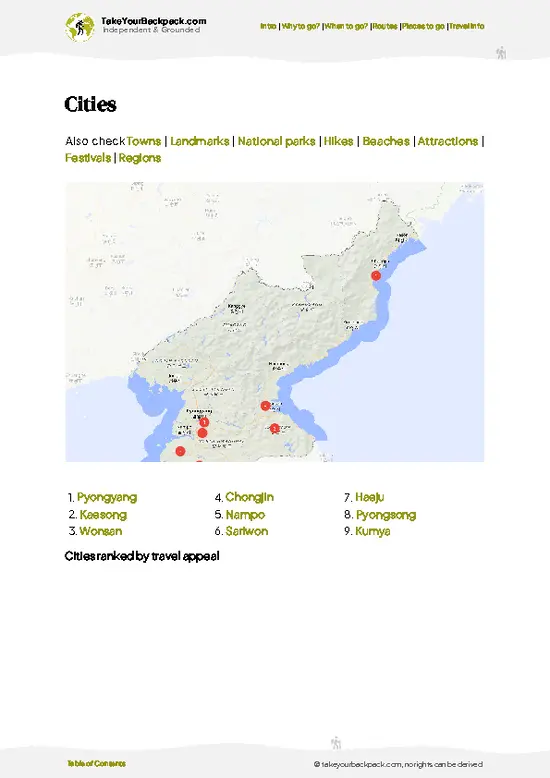
  • Haeju—coastal hills, regional markets, art museum| 78 km away
  • Sariwon—folk customs street, grape farms, provincial capital| 101 km away
  • Nampo—West Sea Barrage, shipping docks, salt flats| 147 km away

💡 Not sure where to go next?
Create a personalized itinerary for North Korea including Kaesong and the places that fit your trip.

Generate my itinerary

👉 Discover all cities

Or checkout all North Korea has to offer (think cities, towns, villages, national parks, hikes, beaches, festivals)
Country photo of North Korea

We 💚 feedbackSumming up the experience

Kaesong is a fascinating window into North Korea’s history, with its ancient architecture and the palpable sense of a bygone era. Walking through the streets feels like stepping into a different world. But here’s the catch: the strict regulations can be stifling. You’ll have limited freedom to explore on your own, which can feel frustrating. Weigh that against the unique experience, and you’ll see why it’s worth the effort.

✈️ When did I visit North Korea?
As part of my 1.5 year travel around the world trip, I visited North Korea in August 2015. I had never expected I was able to get in.

✍️ Help improve this page!
The information on this page is based on my own backpacking experience in North Korea, supplemented with up-to-date research and feedback from other travelers. Travel details can change, so if you notice anything outdated or incomplete, feel free to let me know.


🙋‍♂️ Give feedback

👋 Meet the founderWho’s Behind Take Your Backpack?

Johan, backpacker and founder of TakeYourBackpackHi, I’m Johan (Netherlands 🇳🇱), the creator of TakeYourBackpack. Over the past decade, I’ve backpacked through 80+ countries across six continents, gaining extensive experience with independent travel, long-term trips, and overland routes.

This site is built on a combination of firsthand travel experience and carefully curated insights from other backpackers. Many guides are based on places I’ve personally visited, while others bring together tips, observations, and practical advice shared by trusted travelers I’ve met along the way.

The goal is to provide realistic, experience-driven guidance — not generic itineraries — so you can explore destinations with better context, clearer expectations, and more confidence.

Get full country guide •
Instant download • 74 highlights • Full Offline guide