×

North Korea🇰🇵 | citiesKumyacoastal wetlands, fishing villages, tidal flats | things to do and best time to go

Explore KaesongExplore Nampo

Backpacking in Kumya
👌 Worth visitingcity ranked #10
By Johan Kruseman 🇳🇱 | Updated June 13, 2026

Most write‑ups skip Kumya entirely, but here’s the twist: for a tightly controlled country, this little town can feel oddly open, with long, empty riverside paths where you’ll sometimes walk for half an hour without seeing another foreigner or a single souvenir stall. Kumya sits on the east coast of North Korea in South Hamgyong Province, between Wonsan and Hamhung, and works less as a “must‑see” and more as a quiet pause on an overland-style route. It’s a practical overnight for nature access rather than a destination town: low‑rise streets, a few markets, sea air that smells faintly of salt and coal smoke, and a grey beach that’s more for walks than swims. You move everywhere with your guide, usually by van, so logistics are easy but not free; there’s no hostel scene, no bar crawl, just slow evenings, state hotels, and the occasional chance to watch locals fish at dusk. Compared with Wonsan’s more polished, showcase vibe, Kumya feels workaday and subdued, cheaper in feel than in actual cost, and worth including only if you care more about quiet coastal atmosphere and road‑trip continuity than ticking off headline sights.

Discover everything you want to know in the 📖 North Korea Travel Guide.
Safety warning

The current risk level for North Korea is high. Check the advice before going.


Get your North Korea guide
74 ranked highlights, routes & tips, works offline (296 pages)
Loading the map 🌍
CLICK TO FILTER
cities
towns
landmarks
national parks
hikes
beaches
attractions
festivals
regions
SHOW COUNTRY’S BESTSHOW ALL

✨ Why go?
Ranked #10 city in North Korea
Why Kumya should be on your travel list

Kumya is a strategic stop for backpackers navigating North Korea, especially those drawn to the nearby hikes and beaches. The town serves as a gateway to the stunning Kumya Mountain, where trails wind through dense forests, offering both challenge and breathtaking views. After a day of hiking, you can unwind at local guesthouses that provide a cozy atmosphere and a chance to connect with fellow travelers. The walkable streets are lined with small eateries where you can savor authentic Korean dishes—think spicy kimchi and fresh seafood, all while soaking in the local vibe.

Most travelers tend to stay for a few days, allowing time to explore the surrounding nature and engage with the community. It’s a friendly place, perfect for solo travelers or small groups looking for a more intimate experience. … read more 👉
Kumya is a strategic stop for backpackers navigating North Korea, especially those drawn to the nearby hikes and beaches. The town serves as a gateway to the stunning Kumya Mountain, where trails wind through dense forests, offering both challenge and breathtaking views. After a day of hiking, you can unwind at local guesthouses that provide a cozy atmosphere and a chance to connect with fellow travelers. The walkable streets are lined with small eateries where you can savor authentic Korean dishes—think spicy kimchi and fresh seafood, all while soaking in the local vibe.

Most travelers tend to stay for a few days, allowing time to explore the surrounding nature and engage with the community. It’s a friendly place, perfect for solo travelers or small groups looking for a more intimate experience. The social atmosphere is relaxed, making it easy to strike up conversations with locals or fellow backpackers. If you’re seeking a blend of adventure and cultural immersion, Kumya is more than just a pit stop; it’s a chance to embrace the essence of North Korea.
Want to include Kumya in your North Korea route?
Create a personalized North Korea itinerary that includes Kumya and the places that fit your trip — based on your travel style, budget, and available time. Get your route in seconds.

Generate my trip

💡 HighlightsWhat this place is best known for

  1. Kumya Railway Station — The town’s main rail hub on the east-coast line, where you can watch local and freight trains, see typical DPRK station architecture, and get a feel for everyday travel logistics when moving between Hamhung, Wonsan and other coastal towns.
  2. Kumya Port — A working fishing harbor on the East Sea with boats, processing sheds and early-morning activity; it’s the best place in town to see local fisheries, watch unloading and sorting, and sample very fresh seafood from simple stalls.
  3. Kumya Market (town market) — The central outdoor market where locals buy and sell produce, dried seafood and household goods; visiting gives a clear, unvarnished window into daily life, seasonal foodstuffs and street-level commerce in the town.
  4. Kumya Revolutionary Site — A local commemorative
read more 👉
  1. Kumya Railway Station — The town’s main rail hub on the east-coast line, where you can watch local and freight trains, see typical DPRK station architecture, and get a feel for everyday travel logistics when moving between Hamhung, Wonsan and other coastal towns.
  2. Kumya Port — A working fishing harbor on the East Sea with boats, processing sheds and early-morning activity; it’s the best place in town to see local fisheries, watch unloading and sorting, and sample very fresh seafood from simple stalls.
  3. Kumya Market (town market) — The central outdoor market where locals buy and sell produce, dried seafood and household goods; visiting gives a clear, unvarnished window into daily life, seasonal foodstuffs and street-level commerce in the town.
  4. Kumya Revolutionary Site — A local commemorative site with exhibits and memorial plaques that mark a historic visit tied to the revolutionary narrative; it’s worth visiting to understand how national history and memory are presented in smaller towns.
Nearby day trips worth doing include nearby Hamhung, the industrial and cultural regional center (personal favorite), the coastal fishing towns and ports down the East Sea, and the Tanchon area.
Spotted a mistake or missing something? Contact us.

🏘️ NeighborhoodsHow different areas shape the experience

Kumya is a unique blend of history and culture, offering backpackers a chance to experience North Korea beyond the usual tourist routes. Here’s how to navigate its neighborhoods for the best experience.

Central Kumya: This area buzzes with local life. You’ll find markets filled with the scent of fresh produce and street food. It’s walkable, making it easy to explore on foot. Prices here are reasonable, and you can enjoy a mix of quiet cafes and lively eateries. Perfect for short stays, as you can soak in the atmosphere without feeling rushed.

Seaside District: If you crave a view, head to the Seaside District. The salty air and sound of waves create a serene vibe. It’s less crowded, ideal for those seeking tranquility. Accommodations can be pricier here, but the sunsets are worth it. This … read more 👉
Kumya is a unique blend of history and culture, offering backpackers a chance to experience North Korea beyond the usual tourist routes. Here’s how to navigate its neighborhoods for the best experience.

Central Kumya: This area buzzes with local life. You’ll find markets filled with the scent of fresh produce and street food. It’s walkable, making it easy to explore on foot. Prices here are reasonable, and you can enjoy a mix of quiet cafes and lively eateries. Perfect for short stays, as you can soak in the atmosphere without feeling rushed.

Seaside District: If you crave a view, head to the Seaside District. The salty air and sound of waves create a serene vibe. It’s less crowded, ideal for those seeking tranquility. Accommodations can be pricier here, but the sunsets are worth it. This area suits longer stays, allowing you to unwind and explore the coast at your own pace.

Historical Quarter: Rich in stories, this neighborhood is a must for history buffs. The architecture tells tales of the past, and you can almost hear the whispers of history. It’s a bit more touristy, but the insights gained are invaluable. Walkability is decent, and it’s a great spot for evening strolls. Perfect for both short and longer visits, as you can dive deep into the local culture.

Transport Hub: This area is your gateway to the rest of Kumya. Buses and taxis are readily available, making it easy to get around. The vibe is bustling, with a mix of locals and travelers. While not the most picturesque, it’s practical for those on a tight schedule. Best for short stays, as you can quickly access other neighborhoods.

⌛️ 1 dayA smart one-day plan

Kumya, North Korea, is a town that feels like a time capsule, where the air carries the scent of pine and the whispers of history. Nestled along the coast, it offers a unique blend of natural beauty and cultural depth, making it a fascinating stop for the adventurous traveler.

Start your day early with a stroll along the waterfront. The soft light of dawn dances on the waves, and the salty breeze invigorates your senses. Grab a simple breakfast at a local eatery—perhaps some rice porridge and kimchi. The warmth of the food and the genuine smiles of the locals set a welcoming tone for the day.

After breakfast, head to the Kumya Revolutionary Museum. This spot often flies under the radar for tourists, but it’s a treasure trove of local history. The exhibits are straightforward, yet they offer … read more 👉
Kumya, North Korea, is a town that feels like a time capsule, where the air carries the scent of pine and the whispers of history. Nestled along the coast, it offers a unique blend of natural beauty and cultural depth, making it a fascinating stop for the adventurous traveler.

Start your day early with a stroll along the waterfront. The soft light of dawn dances on the waves, and the salty breeze invigorates your senses. Grab a simple breakfast at a local eatery—perhaps some rice porridge and kimchi. The warmth of the food and the genuine smiles of the locals set a welcoming tone for the day.

After breakfast, head to the Kumya Revolutionary Museum. This spot often flies under the radar for tourists, but it’s a treasure trove of local history. The exhibits are straightforward, yet they offer a glimpse into the town’s past and its role in the broader narrative of North Korea. The museum’s quiet atmosphere allows for reflection, making it a perfect prelude to your next adventure.

In the afternoon, wander through the nearby neighborhoods. The streets are lined with modest homes, and the occasional burst of laughter from children playing adds life to the scene. Make your way to the Kumya Beach, where the golden sand invites you to relax. Dip your toes in the water and take a moment to soak in the surroundings. This is where the hard work of travel pays off—finding a slice of tranquility in a place often overlooked.

As evening approaches, seek out a local restaurant for dinner. Try the grilled fish, fresh from the sea, paired with a local brew. The flavors are simple yet satisfying, and the ambiance is filled with the chatter of families enjoying their meals.

End your day with a leisurely walk back along the waterfront, the sunset painting the sky in hues of orange and pink. Reflect on the day’s experiences—the sights, the flavors, the connections made. In Kumya, every moment feels earned, and every corner holds a story waiting to be discovered.
Turn your Kumya visit into an North Korea adventure
Build a complete North Korea route with Kumya, hidden gems, must-see destinations, and realistic travel times included.

Generate my trip

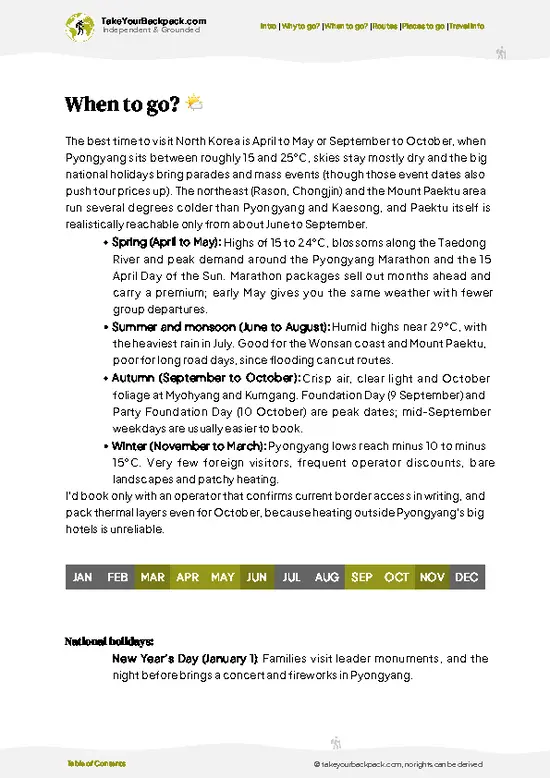
🌤️ When to go?When to go for the best experience


  • Weather: Kumya experiences cold winters, often dipping below -5°C (23°F), making outdoor exploration tough. Summers hover around 22-27°C (72-81°F), offering a comfortable climate for walking and sightseeing without the oppressive heat.

  • Temperature: Spring and autumn bring mild days around 15-20°C (59-68°F), perfect for layering and avoiding sweat or chills. Avoid the bitter cold of winter and the muggy summer highs that can sap your energy.

  • Daylight Hours: Late spring to early autumn provides longer daylight, roughly 12-14 hours, giving you more time to explore before dusk settles in. Winter days shrink to about 9 hours, limiting your window for outdoor activities.

  • Crowds: Tourist numbers peak during national holidays and summer months, which can mean busier sites and higher prices.
read more 👉

  • Weather: Kumya experiences cold winters, often dipping below -5°C (23°F), making outdoor exploration tough. Summers hover around 22-27°C (72-81°F), offering a comfortable climate for walking and sightseeing without the oppressive heat.

  • Temperature: Spring and autumn bring mild days around 15-20°C (59-68°F), perfect for layering and avoiding sweat or chills. Avoid the bitter cold of winter and the muggy summer highs that can sap your energy.

  • Daylight Hours: Late spring to early autumn provides longer daylight, roughly 12-14 hours, giving you more time to explore before dusk settles in. Winter days shrink to about 9 hours, limiting your window for outdoor activities.

  • Crowds: Tourist numbers peak during national holidays and summer months, which can mean busier sites and higher prices. Visiting in shoulder seasons like April or October offers a quieter, more intimate experience.

  • Seasonal Activities: Autumn brings vibrant foliage and harvest festivals, adding cultural depth to your visit. Spring’s blooming landscapes offer fresh air and a sense of renewal, but winter’s starkness reveals a different, quieter beauty if you’re prepared.

  • Price Fluctuations: Peak season in summer and around holidays sees accommodation and tour prices rise. Shoulder seasons often provide better deals without sacrificing the quality of experience.


Pro-tip: Aim for late spring or early autumn to catch crisp air, manageable crowds, and the richest cultural moments—this timing turns the logistical challenges into part of the story you’ll tell.


source: climatestotravel.comJANJanuary: below average for travelingFEBFebruary: below average for travelingMARMarch: good for travelingAPRApril: highly recommended for travelingMAYMay: excellent for travelingJUNJune: highly recommended for travelingJULJuly: good for travelingAUGAugust: fair for travelingSEPSeptember: highly recommended for travelingOCTOctober: excellent for travelingNOVNovember: good for travelingDECDecember: fair for traveling
when-to-go

✈️ The backpacker research shortcutNorth Korea Travel Guide

An offline-friendly backpacking guide with optimized travel routes, ranked highlights, transport advice, and the best areas to stay.
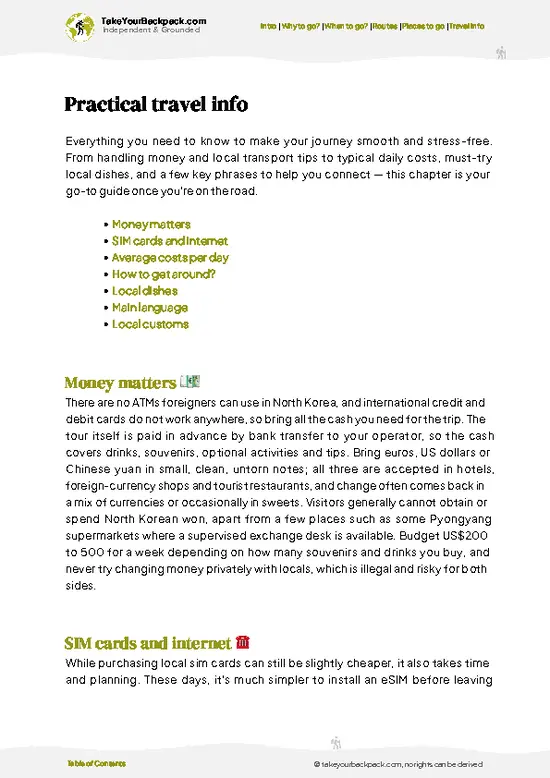
example page 0 from our offline Travel Guide for North Korea
example page 1 from our offline Travel Guide for North Korea
example page 2 from our offline Travel Guide for North Korea
example page 3 from our offline Travel Guide for North Korea
example page 4 from our offline Travel Guide for North Korea
example page 5 from our offline Travel Guide for North Korea
example page 6 from our offline Travel Guide for North Korea
example page 7 from our offline Travel Guide for North Korea
The digital guide (296 pages) contains:
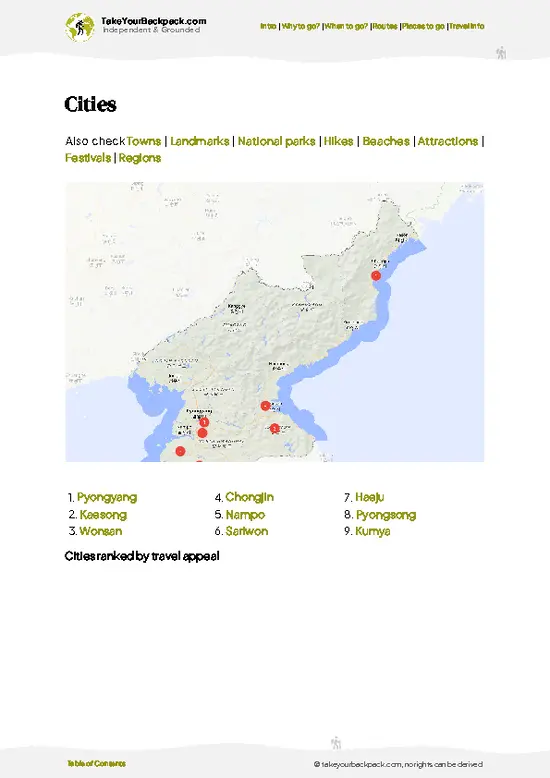
74 highlights, ranked by travel appeal
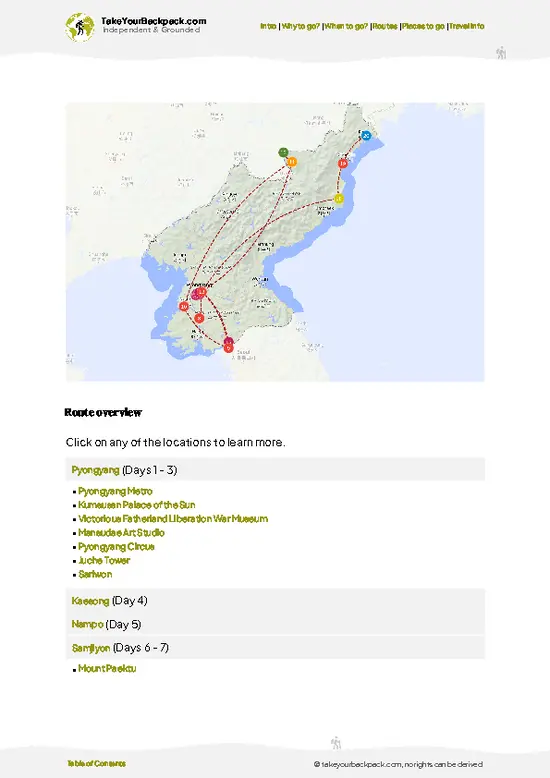
Optimized 5, 10 & 15-day travel routes
Cities, national parks, landmarks, beaches
How to get around
Offline-friendly for travel without Wi-Fi
👉 Click to see all 30+ guide features

📅 Plan smarter in minutes, not weeks
Month by month travel advice
Festivals & national holidays
Budget expectations

🗺️ Go to the right places, skip the overrated ones
Honest pros & cons of destinations
Top hikes, parks & viewpoints
Lesser-known places most travelers miss
Clear “worth it vs skip it” guidance

🛏️ Travel smoothly without rookie mistakes
Best areas to stay
Transport systems explained simply
Common scams & safety advice
SIM cards, money & practical tips

🌍 Understand the country, not just visit it
Culture & traditions
52 Essential phrases & customs
Festivals worth planning around
Traveler-friendly historical context
Insights that make places more meaningful

📱 Built for real travel conditions
Fully downloadable PDF
Works completely offline
Optimized for phone use
Useful in remote areas & buses
Everything in one place
Save weeks of stressful planning
Get instant access to your full guide. 30‑day money-back guarantee.


By proceeding you agree to our terms.
Sent to your inbox immediately after payment • 100% Secure Checkout
Best Backpacking Travel Advisor 2025 tourism awardBest Backpacking
Travel Advisor
2025
What others say about Take Your Backpack Guides:
⭐⭐⭐⭐⭐
Fantastic, amazing amount of information!
⭐⭐⭐⭐⭐
My goodness this is amazing, it's what I've been looking for hats off too you!
⭐⭐⭐⭐⭐
I think this is absolutely BRILLIANT
⭐⭐⭐⭐
Very complete and informative. It's still missing places, but I gotta to commend you
⭐⭐⭐⭐⭐
This is truly amazing, thank you, can't wait to explore it with my kids!
⭐⭐⭐⭐⭐
Awesome resource, thank you!
⭐⭐⭐⭐⭐
This is amazing! Can't wait to explore the ones I haven't seen
⭐⭐⭐⭐
I love this! Well done, great idea.
⭐⭐⭐⭐⭐
Thanks for taking the time to make this gem!
⭐⭐⭐⭐⭐
This might be the best website I've ever seen.
⭐⭐⭐⭐⭐
Congratulations, and thank you so much for your work; it's incredibly valuable.
⭐⭐⭐⭐
In all seriousness I think you did a great job pointing out the important spots
⭐⭐⭐⭐⭐
10/10 very good
⭐⭐⭐⭐⭐
As someone who's only just starting to visit regularly this is awesome, thank you.
⭐⭐⭐⭐
Thank you very much! I'm going to visit my dad, it's going to be very useful!
⭐⭐⭐⭐⭐
This is really cool! We'll be travelling for the first time and this definitely come in handy.
⭐⭐⭐⭐⭐
You are now our minister of culture, congratulations 👨‍💼
⭐⭐⭐⭐⭐
Just wanted to tell you that this is a pearl! Going to follow your recommendations.
⭐⭐⭐⭐⭐
This is so cool. I'll definitely be using the resource for my travels soon.
⭐⭐⭐⭐⭐
This is very impressive! Good work.
⭐⭐⭐⭐⭐
This is an amazing and informative site. Very well done!

🛏️ Where to stay?Best areas and accommodation options

Kumya’s best spot for backpackers is the area around the city center, where the pulse of daily life hums steadily. This neighborhood is compact, making it easy to navigate on foot, which is crucial since transport options are limited and often unpredictable. The streets here carry the scent of fresh bread from local bakeries and the faint, earthy aroma of nearby markets—small sensory details that make wandering feel immersive rather than aimless.

Safety is a given in Kumya, but the city center edges ahead because it’s where you’ll find the few guesthouses and hostels that cater to budget travelers … read more 👉
Kumya’s best spot for backpackers is the area around the city center, where the pulse of daily life hums steadily. This neighborhood is compact, making it easy to navigate on foot, which is crucial since transport options are limited and often unpredictable. The streets here carry the scent of fresh bread from local bakeries and the faint, earthy aroma of nearby markets—small sensory details that make wandering feel immersive rather than aimless.

Safety is a given in Kumya, but the city center edges ahead because it’s where you’ll find the few guesthouses and hostels that cater to budget travelers and solo adventurers. These places aren’t flashy; they’re simple, clean, and offer a chance to meet other travelers or local guides over shared meals or morning tea.

Compared to the quieter residential districts or the industrial outskirts, the city center has a social vibe without the noise or chaos of a big city. Staying here means you’re plugged into the rhythm of Kumya, with easy access to cultural sites and a genuine feel for everyday life—no tourist bubble, just the real deal.

🚌 Getting aroundMoving around without the hassle

Kumya moves at a pace that feels like a slow breath in a bustling world. The town’s rhythm isn’t dictated by strict timetables but by the ebb and flow of daily life—vendors setting up stalls as the sun softens the morning light, locals weaving through narrow streets with a practiced ease, and the occasional honk of a shared taxi breaking the calm. It’s a place where intuition guides your steps more than schedules, and understanding this flow is your ticket to moving like a local rather than a lost tourist.


  • Walking: The heart of Kumya is compact enough to explore on foot, and this is your best bet for soaking in the scents of street food and the texture of weathered walls. Walking costs nothing and lets you pause whenever a corner or conversation catches your eye. Expect uneven sidewalks
read more 👉
Kumya moves at a pace that feels like a slow breath in a bustling world. The town’s rhythm isn’t dictated by strict timetables but by the ebb and flow of daily life—vendors setting up stalls as the sun softens the morning light, locals weaving through narrow streets with a practiced ease, and the occasional honk of a shared taxi breaking the calm. It’s a place where intuition guides your steps more than schedules, and understanding this flow is your ticket to moving like a local rather than a lost tourist.


  • Walking: The heart of Kumya is compact enough to explore on foot, and this is your best bet for soaking in the scents of street food and the texture of weathered walls. Walking costs nothing and lets you pause whenever a corner or conversation catches your eye. Expect uneven sidewalks and occasional crowds near markets, so sturdy shoes and patience pay off.


  • Shared Taxis (Jitneys): These are the lifeblood of Kumya’s transit, darting through streets with a mix of urgency and local know-how. They run from dawn until about 9 p.m., costing just a fraction of a private taxi. The ride can be cramped and noisy, but it’s fast and drops you right where you need to be. Flag one down anywhere along main roads—no fixed stops, just a wave and a squeeze in.


  • Local Buses: If you’re venturing beyond the town center, local buses offer a cheap and reliable option. They start around 6 a.m. and wind down by 7 p.m., with fares so low they barely register. The buses are basic—think hard seats and open windows—but they move steadily and give you a real sense of daily life as locals chat and bargain over goods.


  • Bicycle Rentals: For a bit more speed and freedom, renting a bike is a smart move. Rentals are affordable and available near the main square. The terrain is mostly flat, making it easy to cover more ground without sweating it out. Just watch for traffic during peak hours and keep your eyes peeled for potholes hidden by dust.

👛 Costs (as of 12 April 2026)How expensive it really is

Backpacking in Kumya, North Korea, is a unique challenge where costs reflect the controlled, limited access to independent travelers. Here’s what you can expect to spend daily, broken down by category:
  • Dorm Accommodation: Options are extremely limited and usually tied to government-run guesthouses or arranged through official tours. Prices hover around $30-$50 USD per night, often including basic amenities but little flexibility. Expect Spartan rooms with minimal comforts, but clean and functional.
  • Meals: Food choices are basic and typically local fare served in state-run restaurants or guesthouses. A meal will cost about $5-$10 USD, with simple dishes like rice, kimchi, and stewed vegetables dominating. Western-style options are rare and pricier if available.
  • Local Transport: Public transport
read more 👉
Backpacking in Kumya, North Korea, is a unique challenge where costs reflect the controlled, limited access to independent travelers. Here’s what you can expect to spend daily, broken down by category:
  • Dorm Accommodation: Options are extremely limited and usually tied to government-run guesthouses or arranged through official tours. Prices hover around $30-$50 USD per night, often including basic amenities but little flexibility. Expect Spartan rooms with minimal comforts, but clean and functional.
  • Meals: Food choices are basic and typically local fare served in state-run restaurants or guesthouses. A meal will cost about $5-$10 USD, with simple dishes like rice, kimchi, and stewed vegetables dominating. Western-style options are rare and pricier if available.
  • Local Transport: Public transport is scarce for foreigners; most travel happens via arranged buses or taxis through official channels. Daily transport costs can range from $10-$20 USD, depending on distance and negotiation. Walking is often the best way to soak in the atmosphere and save money.
  • Basic Activities/Entry Fees: Independent sightseeing is heavily restricted. Entry fees to any permitted sites or museums are minimal, around $2-$5 USD, but access is usually bundled into guided tours. The real cost here is the mandatory guide fees rather than the ticket prices themselves.
  • Miscellaneous Expenses: This includes bottled water, snacks, and small souvenirs. Prices are inflated due to scarcity, so budget $5-$10 USD daily. Internet access is nearly nonexistent for travelers, so no extra costs there, but plan for limited connectivity.

All told, you’re looking at a daily budget roughly between $50 and $95 USD. The price tags reflect the controlled environment and limited options rather than typical backpacker freedom. The payoff is in the rare glimpse behind one of the world’s most closed doors, but smooth travel here means embracing the constraints and planning carefully.


source: korea-dpr.com
⚠️ Prices can change and everyone travels differently, so take this as a rough guide. Hope it helps you plan your adventure!

🚌 Day tripsShort trips worth adding

Kumya, North Korea, is a unique base for day trips that blend adventure with cultural immersion. The town itself is a quiet spot, but the surrounding landscapes and historical sites offer a rich tapestry of experiences. Here are some worthwhile day trips that will elevate your journey.

Mount Kumgang
This majestic mountain range is a must-see, with its jagged peaks and lush valleys. The hike to the summit is challenging but rewarding, offering breathtaking views that make every step worthwhile. Expect to spend about 2-3 hours getting there by bus, and plan for a full day of exploration. The entrance fee is around $10, which is a steal for the scenery you’ll encounter. Spring and autumn are ideal, as the weather is mild and the foliage is vibrant. A common mistake is underestimating the hike’s … read more 👉
Kumya, North Korea, is a unique base for day trips that blend adventure with cultural immersion. The town itself is a quiet spot, but the surrounding landscapes and historical sites offer a rich tapestry of experiences. Here are some worthwhile day trips that will elevate your journey.

Mount Kumgang
This majestic mountain range is a must-see, with its jagged peaks and lush valleys. The hike to the summit is challenging but rewarding, offering breathtaking views that make every step worthwhile. Expect to spend about 2-3 hours getting there by bus, and plan for a full day of exploration. The entrance fee is around $10, which is a steal for the scenery you’ll encounter. Spring and autumn are ideal, as the weather is mild and the foliage is vibrant. A common mistake is underestimating the hike’s difficulty; wear sturdy shoes and bring plenty of water.
👉 Explore Mount Kumgang

Kaesong
Just a couple of hours from Kumya, Kaesong is steeped in history. The city was once the capital of the Koryo Dynasty, and you can explore the ancient Koryo Museum and the UNESCO-listed Tomb of King Wanggon. The bus ride is about 1.5 hours, and you’ll spend around $15 for the round trip. Visit in the fall for cooler temperatures and fewer tourists. Many first-timers overlook the local cuisine; don’t miss trying the famous Kaesong ginseng chicken soup.
👉 Explore Kaesong

Panmunjom
The Demilitarized Zone (DMZ) is a powerful experience, offering a glimpse into the tense history between North and South Korea. The trip takes about 2 hours by bus, and the cost is roughly $20. Guided tours are mandatory, so budget for that. Spring is particularly poignant, with the landscape blooming against a backdrop of historical significance. A common mistake is not preparing for the strict regulations; dress conservatively and follow your guide’s instructions closely.


Wonsan
This coastal city is perfect for a day of relaxation and exploration. The beach is a great spot to unwind, and the seafood here is fresh and delicious. It takes about 2.5 hours to reach Wonsan by bus, with costs around $15. Summer is the best time to visit, when the beach is lively and the weather is warm. Many backpackers miss out on the local markets; take time to wander and sample street food.
👉 Explore Wonsan

Each of these trips from Kumya offers a unique lens into North Korean culture and history, making your backpacking adventure not just a journey, but a profound experience.
Want to know what more North Korea offers?
The North Korea Travel Guide describes 74 highlights, from cities to national parks, from beaches to hikes

Get the Travel Guide -

🍲 FoodWhat to Eat & Drink

In Kumya, the food scene is a quiet revelation for backpackers willing to lean into local rhythms. The city’s signature dishes often revolve around simple, hearty flavors—think bowls of steaming cold noodles, subtly spiced kimchi, and rice cakes that balance chewiness with a faint sweetness. These aren’t just meals; they’re a window into everyday life here.

Backpackers won’t find bustling street food stalls like in other Asian cities, but the markets and casual eateries offer a low-key charm. Vendors serve up freshly made dumplings and grilled fish, often enjoyed standing or on simple benches. The air carries the faint scent of fermented vegetables and toasted sesame, grounding you in the moment.

Drinking culture is understated but meaningful. Sharing a bottle of soju or local rice wineread more 👉
In Kumya, the food scene is a quiet revelation for backpackers willing to lean into local rhythms. The city’s signature dishes often revolve around simple, hearty flavors—think bowls of steaming cold noodles, subtly spiced kimchi, and rice cakes that balance chewiness with a faint sweetness. These aren’t just meals; they’re a window into everyday life here.

Backpackers won’t find bustling street food stalls like in other Asian cities, but the markets and casual eateries offer a low-key charm. Vendors serve up freshly made dumplings and grilled fish, often enjoyed standing or on simple benches. The air carries the faint scent of fermented vegetables and toasted sesame, grounding you in the moment.

Drinking culture is understated but meaningful. Sharing a bottle of soju or local rice wine is less about getting buzzed and more about connection. Expect to pour for others and receive the same in return—a quiet ritual of respect. Here, eating and drinking is less about speed and more about savoring the shared experience, a subtle dance of patience and presence.

🛡️ SafetyStaying Safe: What Travelers Should Know

Kumya is generally safe for backpackers, but a few practical tips can enhance your experience. The streets are quiet, and the atmosphere is calm, but stay alert in crowded areas, especially near markets. Here, you might encounter locals eager to engage, but be cautious of overly friendly faces; some may want to sell you something or lead you into a shop with inflated prices.

Traveling solo? Stick to well-lit areas at night. The town is small, but wandering off the beaten path can lead to unexpected encounters. Always maintain a confident posture; looking lost can attract unwanted attention.

While scams are rare, be mindful of currency exchanges. Use official exchange points to avoid unfavorable rates. Annoyances like language barriers can arise, so a translation app or a phrasebook can be … read more 👉
Kumya is generally safe for backpackers, but a few practical tips can enhance your experience. The streets are quiet, and the atmosphere is calm, but stay alert in crowded areas, especially near markets. Here, you might encounter locals eager to engage, but be cautious of overly friendly faces; some may want to sell you something or lead you into a shop with inflated prices.

Traveling solo? Stick to well-lit areas at night. The town is small, but wandering off the beaten path can lead to unexpected encounters. Always maintain a confident posture; looking lost can attract unwanted attention.

While scams are rare, be mindful of currency exchanges. Use official exchange points to avoid unfavorable rates. Annoyances like language barriers can arise, so a translation app or a phrasebook can be invaluable. Embrace the quirks of Kumya; they often lead to the most memorable interactions.

Other North Korean cities near Kumya

Explore more nearby:

  • Wonsan—beachfront promenade, seafood markets, ferry terminal| 47 km away
  • Hamhung—chemical plants, broad avenues, theater| 58 km away
  • Tokchon—agricultural plains, collective farms, local markets| 85 km away

💡 Not sure where to go next?
Create a personalized itinerary for North Korea including Kumya and the places that fit your trip.

Generate my itinerary

👉 Discover all cities

Or checkout all North Korea has to offer (think cities, towns, villages, national parks, hikes, beaches, festivals)
Country photo of North Korea

We 💚 feedbackKey takeaways before you go

Kumya offers a rare glimpse into North Korean life, where the air is thick with the scent of pine and the sounds of laughter from local children fill the streets. It’s a place where history and daily life intertwine, making every moment feel significant. But be prepared: the rigid regulations can feel stifling. Freedom of movement is limited, so embrace the structure as part of the experience. It’s a trade-off for authenticity.

✈️ When did I visit North Korea?
As part of my 1.5 year travel around the world trip, I visited North Korea in August 2015. I had never expected I was able to get in.

✍️ Help improve this page!
The information on this page is based on my own backpacking experience in North Korea, supplemented with up-to-date research and feedback from other travelers. Travel details can change, so if you notice anything outdated or incomplete, feel free to let me know.


🙋‍♂️ Give feedback

👋 Meet the founderWho’s Behind Take Your Backpack?

Johan, backpacker and founder of TakeYourBackpackHi, I’m Johan (Netherlands 🇳🇱), the creator of TakeYourBackpack. Over the past decade, I’ve backpacked through 80+ countries across six continents, gaining extensive experience with independent travel, long-term trips, and overland routes.

This site is built on a combination of firsthand travel experience and carefully curated insights from other backpackers. Many guides are based on places I’ve personally visited, while others bring together tips, observations, and practical advice shared by trusted travelers I’ve met along the way.

The goal is to provide realistic, experience-driven guidance — not generic itineraries — so you can explore destinations with better context, clearer expectations, and more confidence.

Get full country guide •
Instant download • 74 highlights • Full Offline guide