×

North Korea🇰🇵 | citiesPyongyangmonumental architecture, central squares, state museums | things to do and best time to go

Explore PyongsongExplore Sariwon

Backpacking in Pyongyang
🏆 Top pickcity ranked #1
By Johan Kruseman 🇳🇱 | Updated June 11, 2026

Pyongyang is not for anyone who needs spontaneity, nightlife freedom, or political comfort. You’re watched, scheduled, and filtered. But that’s exactly why a certain kind of backpacker still benefits: you see how a closed system works from the inside, and that perspective is rare. Pyongyang sits in the southwest of North Korea, on the Taedong River, the controlled heart of the country. As a destination, it’s weirdly polished: giant boulevards, Kim Il Sung Square, the Mansudae Grand Monument, spotless metro stations with Soviet-style murals, and museums that are as much propaganda as history. Travel is logistically easy because your tour company handles everything, but zero independent wandering and almost no casual contact with locals. Costs are high for what you get, and meeting other travelers depends entirely on who’s in your small group. It feels safer than most cities, yet more constrained than anywhere else in East Asia, including other North Korean cities like Kaesong or Wonsan, which at least hint at normal life beyond the showcase capital.

Discover everything you want to know in the 📖 North Korea Travel Guide.
Safety warning

The current risk level for North Korea is high. Check the advice before going.


Get your North Korea guide
74 ranked highlights, routes & tips, works offline (296 pages)
Loading the map 🌍
CLICK TO FILTER
cities
towns
landmarks
national parks
hikes
beaches
attractions
festivals
regions
SHOW COUNTRY’S BESTSHOW ALL

✨ Why go?
Ranked #1 city in North Korea
Why visitors keep coming back

Backpackers find their way to Pyongyang for a mix of curiosity and cultural immersion. This city is a unique stop on the backpacking circuit, offering a rare glimpse into a world few experience. The highlights here are compelling, but it’s the basecamp value that really shines. You can easily launch day trips to surrounding areas, making it a strategic hub for exploration.

Accommodations are straightforward, with hostels that cater to budget travelers, providing a sense of community. The food scene is an adventure in itself, with local dishes that challenge your palate and expand your culinary horizons. Plus, the city is walkable, allowing you to soak in the atmosphere without the hassle of public transport.

While nightlife isn’t booming, there are pockets of activity that offer a taste … read more 👉
Backpackers find their way to Pyongyang for a mix of curiosity and cultural immersion. This city is a unique stop on the backpacking circuit, offering a rare glimpse into a world few experience. The highlights here are compelling, but it’s the basecamp value that really shines. You can easily launch day trips to surrounding areas, making it a strategic hub for exploration.

Accommodations are straightforward, with hostels that cater to budget travelers, providing a sense of community. The food scene is an adventure in itself, with local dishes that challenge your palate and expand your culinary horizons. Plus, the city is walkable, allowing you to soak in the atmosphere without the hassle of public transport.

While nightlife isn’t booming, there are pockets of activity that offer a taste of local life. If you’re looking to move on, easy onward travel options connect you to other parts of Asia. Pyongyang may not be a long-term stay, but it’s a high-value stop that enriches your journey, making it a worthy addition to your backpacking route.
Want to include Pyongyang in your North Korea route?
Create a personalized North Korea itinerary that includes Pyongyang and the places that fit your trip — based on your travel style, budget, and available time. Get your route in seconds.

Generate my trip

💡 HighlightsEssential experiences to have while visiting Pyongyang

  1. Mansudae Grand Monument — The giant bronze statues of Kim Il-sung and Kim Jong-il are the image most people have of Pyongyang. It’s a choreographed, almost theatrical place: laying flowers and the formal bows are part of the visit, and the scale and detail of the sculptures say a lot about how the city presents itself.
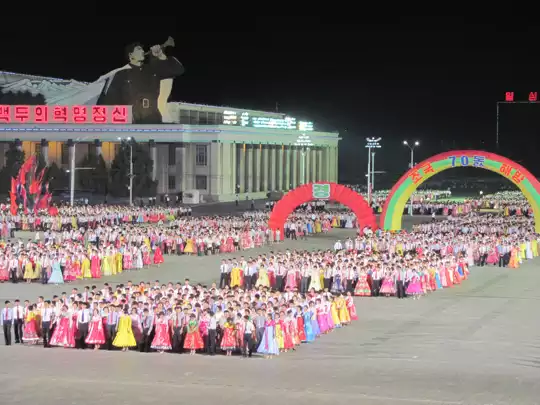
  2. Kim Il-sung Square — The riverside parade ground where you’ll see massed formations, civic events, and a very deliberate, ceremonial side of North Korea. Even when quiet it gives a clear feel for public life and the city’s central axis along the Taedong River.
  3. Juche Tower (Tower of the Juche Idea) — Climb (there’s a small fee) to the observation deck for one of the best panoramic views of Pyongyang. The base museum and the symbolic torch are useful for understanding the
read more 👉
  1. Mansudae Grand Monument — The giant bronze statues of Kim Il-sung and Kim Jong-il are the image most people have of Pyongyang. It’s a choreographed, almost theatrical place: laying flowers and the formal bows are part of the visit, and the scale and detail of the sculptures say a lot about how the city presents itself.
  2. Kim Il-sung Square — The riverside parade ground where you’ll see massed formations, civic events, and a very deliberate, ceremonial side of North Korea. Even when quiet it gives a clear feel for public life and the city’s central axis along the Taedong River.
  3. Juche Tower (Tower of the Juche Idea) — Climb (there’s a small fee) to the observation deck for one of the best panoramic views of Pyongyang. The base museum and the symbolic torch are useful for understanding the ideology that’s woven into the city’s layout.
  4. Arch of Triumph — Bigger than the one in Paris and built to celebrate Kim Il-sung’s role in early resistance. You can walk up the ramp and get good views of the wide boulevards; it’s also a neat urban photo stop for studying post-war monumentality.
  5. Pyongyang Metro — One of the world’s deepest metro systems and a surprisingly decorative one: chandeliers, mosaics, socialist realist art. Tours include at least a couple of stations and a short ride — an everyday system that doubles as a subterranean gallery.
  6. Victorious Fatherland Liberation War Museum (and the USS Pueblo) — The Korean War museum is the DPRK’s version of history-telling: tanks, aircraft, dioramas and the captured US intelligence ship USS Pueblo on display. Expect a narrative you won’t get elsewhere, but it’s essential to seeing how the state frames past conflicts.
  7. Mansudae Art Studio — A sprawling art production centre where state artists paint murals, portraits and official prints. You can watch craftsmen at work and buy prints; it’s one of the clearest windows into how official imagery is produced and distributed.
  8. Mangyongdae Native House — The preserved village house and compound said to be the birthplace of Kim Il-sung. The site mixes domestic vernacular architecture with political meaning; besides the official story, the surrounding area gives a quieter, almost local feel away from the big plazas.
  9. Grand People’s Study House — The national library and cultural hub facing Kim Il-sung Square. It’s a striking building and, if your guide arranges it, you can see reading rooms and displays that show how education and culture are organized in the capital.
  10. Pyongyang Department Store No. 1 (Kwangbok Street shopping) — Not a tourist mall — a working state department store where locals shop. It’s a short, revealing stop to see everyday products, pricing and a different slice of urban life than the monuments provide.
A few good day-trips from Pyongyang: the West Sea (Taedong) Barrage in Nampo, the mountain and temple scenery around Mount Myohyang (plus the International Friendship Exhibition), and the historic sites of Kaesong/near the DMZ — my personal favourite is Mount Myohyang for the mix of scenery, temples and that bizarre museum of gifts.
Spotted a mistake or missing something? Contact us.

🏘️ NeighborhoodsNeighborhood guide to Pyongyang

In Pyongyang, navigating the city is a unique experience, shaped by its distinct neighborhoods. Each area offers different vibes and opportunities, so understanding them helps you maximize your time and money.

**Kim Il-sung Square**: This is the heart of Pyongyang. It’s a must-see for its monumental architecture and historical significance. The square is walkable, but be mindful of the strict rules. It’s busy during the day, but quiet at night. Ideal for short stays, as you can soak in the atmosphere quickly.

**Changgwang Street**: Known for its hotels and restaurants, this area is more tourist-friendly. Prices here can be higher, but the convenience is worth it. It’s walkable and offers decent nightlife options, making it suitable for those wanting to mingle with fellow travelers. Longer … read more 👉
In Pyongyang, navigating the city is a unique experience, shaped by its distinct neighborhoods. Each area offers different vibes and opportunities, so understanding them helps you maximize your time and money.

**Kim Il-sung Square**: This is the heart of Pyongyang. It’s a must-see for its monumental architecture and historical significance. The square is walkable, but be mindful of the strict rules. It’s busy during the day, but quiet at night. Ideal for short stays, as you can soak in the atmosphere quickly.

**Changgwang Street**: Known for its hotels and restaurants, this area is more tourist-friendly. Prices here can be higher, but the convenience is worth it. It’s walkable and offers decent nightlife options, making it suitable for those wanting to mingle with fellow travelers. Longer stays are manageable due to the amenities.

**Mangyongdae District**: This residential area offers a glimpse into everyday life in Pyongyang. It’s quieter, with fewer tourists, which can be refreshing. Costs are lower here, but the walkability is limited. It’s best for longer stays if you want to immerse yourself in local culture.

**Pyongyang Metro**: While not a neighborhood, the metro is a vital transport option. It’s affordable and connects key areas, but the experience is more about the journey than the destination. Use it to explore the city efficiently, especially if you’re short on time.

Understanding these areas helps you choose wisely, balancing comfort, cost, and the authentic experience you seek.

⌛️ 1 dayA smart one-day plan

Pyongyang is a city that operates on its own unique rhythm, a blend of history and ideology that feels like stepping into a living museum. The grand monuments and wide boulevards are striking, but there’s a pulse beneath the surface that’s worth exploring. Spending a day here can be a fascinating journey, especially if you know where to look.

Start your morning at Kim Il-sung Square. The sheer scale of the square is impressive, flanked by the towering Kim Il-sung Monument. Take a moment to soak in the atmosphere; locals often gather here for morning exercises. From there, stroll to the nearby Mansudae Grand Monument. Standing before the colossal statues of the leaders, you’ll feel the weight of history. It’s a must-see, but don’t rush; take your time to observe the rituals of respect shown … read more 👉
Pyongyang is a city that operates on its own unique rhythm, a blend of history and ideology that feels like stepping into a living museum. The grand monuments and wide boulevards are striking, but there’s a pulse beneath the surface that’s worth exploring. Spending a day here can be a fascinating journey, especially if you know where to look.

Start your morning at Kim Il-sung Square. The sheer scale of the square is impressive, flanked by the towering Kim Il-sung Monument. Take a moment to soak in the atmosphere; locals often gather here for morning exercises. From there, stroll to the nearby Mansudae Grand Monument. Standing before the colossal statues of the leaders, you’ll feel the weight of history. It’s a must-see, but don’t rush; take your time to observe the rituals of respect shown by locals.

For lunch, head to the nearby Koryo Hotel. The revolving restaurant offers a panoramic view of the city, and while it’s a bit pricier, the experience is worth it. You’ll find a mix of traditional Korean dishes and international fare. The view alone is a high-value experience.

In the afternoon, venture to the Pyongyang Metro. It’s not just a means of transport; it’s an art gallery underground. The stations are adorned with murals and mosaics that tell stories of the nation. Ride to the end of the line and explore the less-visited stations, like the Puhung Station, where you can see the local life unfold.

As evening approaches, make your way to the Taedong River. A walk along the riverbank is a refreshing way to wind down. If you’re feeling adventurous, seek out a local eatery in the Changgwang Street area. It’s not on the typical tourist path, but the authentic atmosphere and local dishes will give you a taste of daily life.

Wrap up your day with a visit to the Arch of Triumph. It’s a stunning sight at night, illuminated against the dark sky. Reflect on your day as you take in the grandeur of the city, realizing that Pyongyang is more than just its monuments; it’s a place where history and daily life intertwine in unexpected ways.
Turn your Pyongyang visit into an North Korea adventure
Build a complete North Korea route with Pyongyang, hidden gems, must-see destinations, and realistic travel times included.

Generate my trip

🌤️ When to go?Seasonal considerations and timing


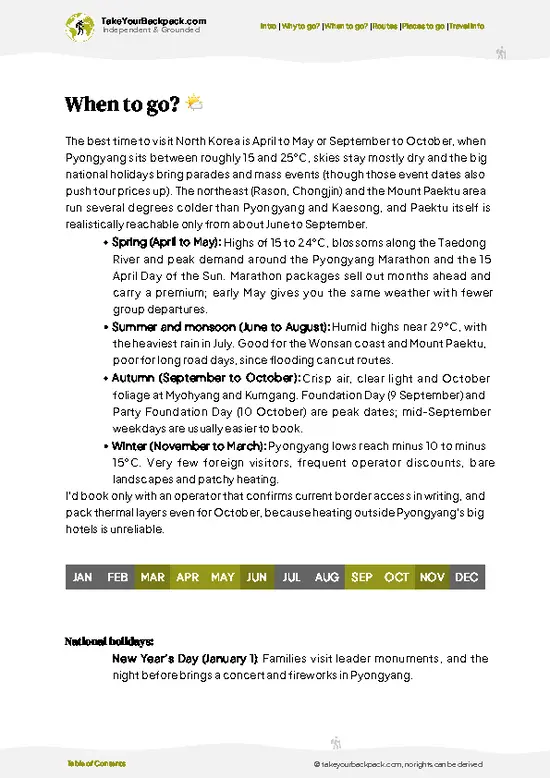
  • Topic: Weather – Pyongyang experiences a continental climate with cold winters and hot summers. Spring (April to June) and autumn (September to October) offer mild, pleasant weather, avoiding the harsh chill of winter (down to -10°C/14°F) and the stifling heat of summer (up to 30°C/86°F).

  • Topic: Temperature – Spring temperatures range from 10°C to 20°C (50°F to 68°F), perfect for walking tours without overheating or freezing. Autumn cools down similarly, providing comfortable days and crisp evenings.

  • Topic: Daylight Hours – Around spring and autumn equinoxes, daylight lasts about 12 hours, giving you ample time to explore without rushing or relying on artificial light.

  • Topic: Crowds – Tourist numbers peak during national holidays and summer months. Visiting in shoulder seasons means
read more 👉

  • Topic: Weather – Pyongyang experiences a continental climate with cold winters and hot summers. Spring (April to June) and autumn (September to October) offer mild, pleasant weather, avoiding the harsh chill of winter (down to -10°C/14°F) and the stifling heat of summer (up to 30°C/86°F).

  • Topic: Temperature – Spring temperatures range from 10°C to 20°C (50°F to 68°F), perfect for walking tours without overheating or freezing. Autumn cools down similarly, providing comfortable days and crisp evenings.

  • Topic: Daylight Hours – Around spring and autumn equinoxes, daylight lasts about 12 hours, giving you ample time to explore without rushing or relying on artificial light.

  • Topic: Crowds – Tourist numbers peak during national holidays and summer months. Visiting in shoulder seasons means fewer crowds, making it easier to navigate the city and engage with local guides.

  • Topic: Seasonal Activities – Spring brings blooming flowers and outdoor events, while autumn showcases vibrant foliage and harvest festivals. Both seasons offer cultural experiences that winter and summer lack.

  • Topic: Price Fluctuations – Peak summer and major holidays drive up tour costs and accommodation prices. Shoulder seasons often come with better deals, maximizing value without sacrificing experience quality.


Pro-tip: Aim for late April or early October—this sweet spot balances weather, daylight, and crowd size, turning your Pyongyang trip into a smooth, high-value win.


source: climatestotravel.comJANJanuary: below average for travelingFEBFebruary: below average for travelingMARMarch: good for travelingAPRApril: excellent for travelingMAYMay: highly recommended for travelingJUNJune: highly recommended for travelingJULJuly: fair for travelingAUGAugust: fair for travelingSEPSeptember: highly recommended for travelingOCTOctober: excellent for travelingNOVNovember: good for travelingDECDecember: below average for traveling
when-to-go

✈️ The backpacker research shortcutNorth Korea Travel Guide

An offline-friendly backpacking guide with optimized travel routes, ranked highlights, transport advice, and the best areas to stay.
example page 0 from our offline Travel Guide for North Korea
example page 1 from our offline Travel Guide for North Korea
example page 2 from our offline Travel Guide for North Korea
example page 3 from our offline Travel Guide for North Korea
example page 4 from our offline Travel Guide for North Korea
example page 5 from our offline Travel Guide for North Korea
example page 6 from our offline Travel Guide for North Korea
example page 7 from our offline Travel Guide for North Korea
The digital guide (296 pages) contains:
74 highlights, ranked by travel appeal
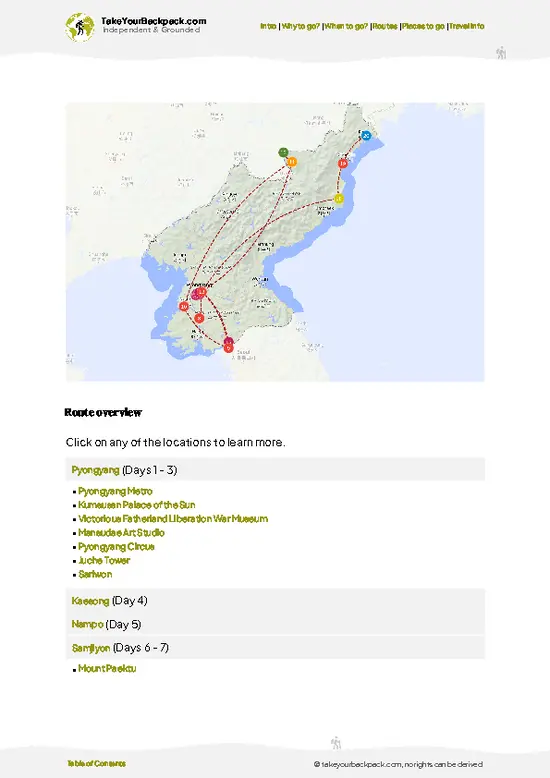
Optimized 5, 10 & 15-day travel routes
Cities, national parks, landmarks, beaches
How to get around
Offline-friendly for travel without Wi-Fi
👉 Click to see all 30+ guide features

📅 Plan smarter in minutes, not weeks
Month by month travel advice
Festivals & national holidays
Budget expectations

🗺️ Go to the right places, skip the overrated ones
Honest pros & cons of destinations
Top hikes, parks & viewpoints
Lesser-known places most travelers miss
Clear “worth it vs skip it” guidance

🛏️ Travel smoothly without rookie mistakes
Best areas to stay
Transport systems explained simply
Common scams & safety advice
SIM cards, money & practical tips

🌍 Understand the country, not just visit it
Culture & traditions
52 Essential phrases & customs
Festivals worth planning around
Traveler-friendly historical context
Insights that make places more meaningful

📱 Built for real travel conditions
Fully downloadable PDF
Works completely offline
Optimized for phone use
Useful in remote areas & buses
Everything in one place
Save weeks of stressful planning
Get instant access to your full guide. 30‑day money-back guarantee.


By proceeding you agree to our terms.
Sent to your inbox immediately after payment • 100% Secure Checkout
Best Backpacking Travel Advisor 2025 tourism awardBest Backpacking
Travel Advisor
2025
What others say about Take Your Backpack Guides:
⭐⭐⭐⭐⭐
Fantastic, amazing amount of information!
⭐⭐⭐⭐⭐
My goodness this is amazing, it's what I've been looking for hats off too you!
⭐⭐⭐⭐⭐
I think this is absolutely BRILLIANT
⭐⭐⭐⭐
Very complete and informative. It's still missing places, but I gotta to commend you
⭐⭐⭐⭐⭐
This is truly amazing, thank you, can't wait to explore it with my kids!
⭐⭐⭐⭐⭐
Awesome resource, thank you!
⭐⭐⭐⭐⭐
This is amazing! Can't wait to explore the ones I haven't seen
⭐⭐⭐⭐
I love this! Well done, great idea.
⭐⭐⭐⭐⭐
Thanks for taking the time to make this gem!
⭐⭐⭐⭐⭐
This might be the best website I've ever seen.
⭐⭐⭐⭐⭐
Congratulations, and thank you so much for your work; it's incredibly valuable.
⭐⭐⭐⭐
In all seriousness I think you did a great job pointing out the important spots
⭐⭐⭐⭐⭐
10/10 very good
⭐⭐⭐⭐⭐
As someone who's only just starting to visit regularly this is awesome, thank you.
⭐⭐⭐⭐
Thank you very much! I'm going to visit my dad, it's going to be very useful!
⭐⭐⭐⭐⭐
This is really cool! We'll be travelling for the first time and this definitely come in handy.
⭐⭐⭐⭐⭐
You are now our minister of culture, congratulations 👨‍💼
⭐⭐⭐⭐⭐
Just wanted to tell you that this is a pearl! Going to follow your recommendations.
⭐⭐⭐⭐⭐
This is so cool. I'll definitely be using the resource for my travels soon.
⭐⭐⭐⭐⭐
This is very impressive! Good work.
⭐⭐⭐⭐⭐
This is an amazing and informative site. Very well done!

🛏️ Where to stay?Where staying makes the most sense

Pyongyang isn’t your typical backpacker city with sprawling neighborhoods of hostels and budget guesthouses. The city’s layout and strict control over tourism funnel visitors into a very narrow set of options, which means your choice of “area” is less about picking a vibrant district and more about understanding where you can safely and comfortably plug into the city’s unique rhythm.

The heart of Pyongyang for foreign visitors is the central district around Kim Il-sung Square and the nearby Mansudae area. This zone is where most official guesthouses and government-approved accommodations cluster. … read more 👉
Pyongyang isn’t your typical backpacker city with sprawling neighborhoods of hostels and budget guesthouses. The city’s layout and strict control over tourism funnel visitors into a very narrow set of options, which means your choice of “area” is less about picking a vibrant district and more about understanding where you can safely and comfortably plug into the city’s unique rhythm.

The heart of Pyongyang for foreign visitors is the central district around Kim Il-sung Square and the nearby Mansudae area. This zone is where most official guesthouses and government-approved accommodations cluster. It’s the safest bet for solo travelers because it’s heavily monitored, ensuring a secure environment. Socially, it’s limited but stable—expect interactions mostly with guides and other tourists rather than a backpacker community. Hostels as you know them don’t exist here; instead, you’ll find state-run guesthouses that offer basic comfort without the usual backpacker buzz.

Compared to the outskirts or residential neighborhoods, which are off-limits to tourists, staying central means sacrificing the gritty, spontaneous social scenes you might find elsewhere in Asia. But you gain a front-row seat to Pyongyang’s carefully curated public spaces and monuments, which is the real draw here. The trade-off is clear: you trade the typical backpacker freedom and social chaos for a controlled, safe, and uniquely immersive experience that’s hard to replicate anywhere else.

🚌 Getting aroundGetting around like a local

Pyongyang moves to a rhythm that’s part clockwork, part mystery. It’s a city where the state’s precision meets the quiet pulse of everyday life, but don’t expect the frantic hustle of a global megacity. Schedules exist, but they’re more like guidelines than ironclad rules. You’ll find a system that’s surprisingly orderly on the surface, yet beneath it, there’s a layer of controlled spontaneity. For a budget traveler, mastering Pyongyang’s transit is about reading between the lines—knowing when to lean into the comfort of routine and when to embrace the slower, less predictable flow.


  • Metro: The Pyongyang Metro is a marvel of efficiency and spectacle, running roughly from 6:00 AM to 10:30 PM. Tickets cost a fraction of a dollar, making it the cheapest way to cover long distances underground.
read more 👉
Pyongyang moves to a rhythm that’s part clockwork, part mystery. It’s a city where the state’s precision meets the quiet pulse of everyday life, but don’t expect the frantic hustle of a global megacity. Schedules exist, but they’re more like guidelines than ironclad rules. You’ll find a system that’s surprisingly orderly on the surface, yet beneath it, there’s a layer of controlled spontaneity. For a budget traveler, mastering Pyongyang’s transit is about reading between the lines—knowing when to lean into the comfort of routine and when to embrace the slower, less predictable flow.


  • Metro: The Pyongyang Metro is a marvel of efficiency and spectacle, running roughly from 6:00 AM to 10:30 PM. Tickets cost a fraction of a dollar, making it the cheapest way to cover long distances underground. Trains arrive every 5 to 10 minutes during peak hours, offering a fast, reliable, and surprisingly comfortable ride. The stations themselves are a cultural experience—ornate, cavernous, and eerily quiet. The trade-off? Limited English signage and a strict photography ban keep you on your toes.


  • Trams: Trams crisscross the city at a snail’s pace, but they’re dirt cheap and a window into local life. They start running around 6:00 AM and wrap up by 8:00 PM. Expect a slow crawl with frequent stops, so this is a choice for those who want to soak up the city’s rhythm rather than rush through it. Comfort is basic—wooden seats, no air conditioning—but the low cost and steady schedule make trams a solid budget option.


  • Buses: Buses fill in the gaps where the metro and trams don’t reach, operating from about 6:00 AM to 8:00 PM. They’re affordable, though slightly less punctual, and can get crowded during peak times. The ride is bumpier and less predictable, but buses offer a broader reach across Pyongyang’s sprawling neighborhoods. If you’re willing to sacrifice a bit of comfort and timing, buses are your flexible workhorse.


  • Walking: Pyongyang’s wide boulevards and monumental architecture make walking a surprisingly viable option, especially in the central districts. It’s free, obviously, and lets you control your pace and stops. The trade-off is time—distances can be long, and the city’s scale is designed for vehicles. Still, walking offers an unmatched chance to absorb the atmosphere, catch street-level details, and avoid the constraints of schedules altogether.

👛 Costs (as of 8 April 2026)Travel costs and budget guide for Pyongyang

Backpacking in Pyongyang is a unique challenge where costs are tightly controlled and options are limited, but understanding the trade-offs between time, money, and comfort here is key to navigating your budget smartly.
  • Dorm Accommodation (High Season): Expect to pay around $50 to $70 per night. High season, usually tied to national holidays or special events, sees prices rise due to limited availability and mandatory guided stays.
  • Dorm Accommodation (Off-Season): Prices drop slightly to about $40 to $55 per night. Even off-season, accommodation is basic and often bundled with tours, so flexibility is limited.
  • Meals: Meals are generally included in tour packages, but if you’re paying independently, budget about $10 to $15 per day for simple, local fare. Options outside official venues are scarce
read more 👉
Backpacking in Pyongyang is a unique challenge where costs are tightly controlled and options are limited, but understanding the trade-offs between time, money, and comfort here is key to navigating your budget smartly.
  • Dorm Accommodation (High Season): Expect to pay around $50 to $70 per night. High season, usually tied to national holidays or special events, sees prices rise due to limited availability and mandatory guided stays.
  • Dorm Accommodation (Off-Season): Prices drop slightly to about $40 to $55 per night. Even off-season, accommodation is basic and often bundled with tours, so flexibility is limited.
  • Meals: Meals are generally included in tour packages, but if you’re paying independently, budget about $10 to $15 per day for simple, local fare. Options outside official venues are scarce and tightly regulated.
  • Local Transport: Public transport is minimal for tourists, with taxis being the main option. Taxi rides typically cost $5 to $10 for short trips, but you’ll often need to negotiate through your guide.
  • City Transport Pass: There is no standard city transport pass available for independent travelers. Movement is mostly arranged through official tours or guides, which adds to overall costs.
  • Basic Activities/Entry Fees: Entry fees to museums and monuments are usually included in tour packages. Independent fees, if applicable, range from $3 to $7 per site, but access is tightly controlled.
  • Miscellaneous Expenses: Souvenirs, bottled water, and tips can add $5 to $10 daily. Internet access is extremely limited and expensive, so plan accordingly.

Daily costs in Pyongyang skew higher than typical backpacker destinations due to the controlled environment and mandatory guided experiences. A realistic daily budget ranges from $65 to $90, depending on season and how much you rely on official tours versus independent spending. The trade-off here is clear: you pay a premium for the rare chance to experience a city few outsiders see, but you sacrifice flexibility and the usual backpacker comforts.


source: korea-dpr.com
⚠️ Prices can change and everyone travels differently, so take this as a rough guide. Hope it helps you plan your adventure!

🚌 Day tripsWhere to go beyond the main area

Using Pyongyang as a base for day trips opens up a unique window into North Korea’s culture and history. Each excursion offers a blend of insight and adventure, making the effort worthwhile.

**Kumgangsan Mountains**
Just a few hours from Pyongyang, the Kumgangsan Mountains are a breathtaking escape into nature. The rugged peaks and serene lakes provide a stark contrast to the urban landscape. Expect to pay around $30 for transportation and entrance fees. The best time to visit is during spring or fall when the foliage is vibrant. A common mistake is underestimating the weather; pack layers, as temperatures can shift dramatically.


**Kaesong**
A trip to Kaesong, about two hours away, immerses you in the historical heart of Korea. This city, once the capital of the Goryeo Dynasty, is … read more 👉
Using Pyongyang as a base for day trips opens up a unique window into North Korea’s culture and history. Each excursion offers a blend of insight and adventure, making the effort worthwhile.

**Kumgangsan Mountains**
Just a few hours from Pyongyang, the Kumgangsan Mountains are a breathtaking escape into nature. The rugged peaks and serene lakes provide a stark contrast to the urban landscape. Expect to pay around $30 for transportation and entrance fees. The best time to visit is during spring or fall when the foliage is vibrant. A common mistake is underestimating the weather; pack layers, as temperatures can shift dramatically.


**Kaesong**
A trip to Kaesong, about two hours away, immerses you in the historical heart of Korea. This city, once the capital of the Goryeo Dynasty, is home to the UNESCO-listed Koryo Museum and the impressive Tomb of King Wang Geon. Budget around $40 for transport and entry fees. Spring is ideal for exploring, as the cherry blossoms bloom. First-timers often overlook the importance of local guides; they can enrich your experience with context and stories.
👉 Explore Kaesong

**DMZ Tour**
The Demilitarized Zone (DMZ) is a must-see for anyone curious about the Korean Peninsula’s division. This half-day trip takes about an hour from Pyongyang. Expect to spend around $50 for the tour, which includes a guide and transportation. The best time to visit is during the summer months when the area is more accessible. A common pitfall is not preparing for the strict regulations; dress conservatively and follow your guide’s instructions closely.


**Nampo**
Nampo, located about an hour from Pyongyang, offers a glimpse into North Korea’s coastal life. The city features the impressive Nampo Dam and the scenic West Sea Barrage. Total costs hover around $25 for transport and entry. Late spring or early summer is perfect for enjoying the coastal breeze. Many travelers miss out on the local seafood; don’t skip the chance to try fresh catches at a local eatery.
👉 Explore Nampo

**Sariwon**
Just an hour away, Sariwon is known for its rich agricultural landscape and the historic Sariwon Folk Village. The trip costs about $30, including transport and entry. Visit in the fall to see the harvest in action. First-timers often rush through; take your time to engage with locals and soak in the rural charm.
👉 Explore Sariwon
Want to know what more North Korea offers?
The North Korea Travel Guide describes 74 highlights, from cities to national parks, from beaches to hikes

Get the Travel Guide -

🍲 FoodLocal Flavors for Backpackers

In Pyongyang, **food** is a window into the culture, and you’ll want to dive right in. Start with **naengmyeon**, cold buckwheat noodles served with a tangy broth, often garnished with slices of beef and a hard-boiled egg. The texture is refreshing, especially during the summer months. Another must-try is **kimchi**, which comes in various forms, each with its own kick. The locals take pride in their fermented vegetables, and you’ll find it accompanying almost every meal.

For a taste of the local drinking culture, seek out **soju**, a potent rice liquor that pairs well with meals. It’s common to see groups sharing a bottle, pouring for one another as a sign of respect. Don’t miss the chance to sip on **maekju**, the local beer, which is surprisingly crisp and light.

Backpackers often find … read more 👉
In Pyongyang, **food** is a window into the culture, and you’ll want to dive right in. Start with **naengmyeon**, cold buckwheat noodles served with a tangy broth, often garnished with slices of beef and a hard-boiled egg. The texture is refreshing, especially during the summer months. Another must-try is **kimchi**, which comes in various forms, each with its own kick. The locals take pride in their fermented vegetables, and you’ll find it accompanying almost every meal.

For a taste of the local drinking culture, seek out **soju**, a potent rice liquor that pairs well with meals. It’s common to see groups sharing a bottle, pouring for one another as a sign of respect. Don’t miss the chance to sip on **maekju**, the local beer, which is surprisingly crisp and light.

Backpackers often find themselves in **markets** or casual eateries, where the atmosphere buzzes with chatter and the aroma of grilled meats fills the air. Street vendors offer quick bites, like **tteokbokki** (spicy rice cakes) that are perfect for a snack on the go.

Etiquette is key here; always accept food or drink with both hands, and don’t stick your chopsticks upright in your rice—it’s a no-go. Embrace the communal spirit, and you’ll savor not just the flavors but the connections that make your experience rich.

🛡️ SafetyTraveler Safety Guide

Traveling in Pyongyang is generally safe, but awareness is key. The city is tightly controlled, so sticking to designated areas is crucial. Wandering off the beaten path can lead to unwanted attention. Always keep your guide informed about your plans; they’re your lifeline.

Solo travel isn’t common here, and nighttime outings are limited. If you’re out after dark, stay with your group and follow your guide’s lead. The streets can feel eerily quiet, and it’s easy to lose your bearings.

Scams are rare, but be cautious of overly friendly locals who might want to engage in conversation. They could be looking for a way to draw you into a situation that feels uncomfortable. Everyday annoyances include strict rules about photography—ask before snapping pictures, especially of government buildings … read more 👉
Traveling in Pyongyang is generally safe, but awareness is key. The city is tightly controlled, so sticking to designated areas is crucial. Wandering off the beaten path can lead to unwanted attention. Always keep your guide informed about your plans; they’re your lifeline.

Solo travel isn’t common here, and nighttime outings are limited. If you’re out after dark, stay with your group and follow your guide’s lead. The streets can feel eerily quiet, and it’s easy to lose your bearings.

Scams are rare, but be cautious of overly friendly locals who might want to engage in conversation. They could be looking for a way to draw you into a situation that feels uncomfortable. Everyday annoyances include strict rules about photography—ask before snapping pictures, especially of government buildings or military sites.

Carry yourself with confidence and respect local customs. This isn’t just about safety; it’s about making the most of your experience in a unique environment.

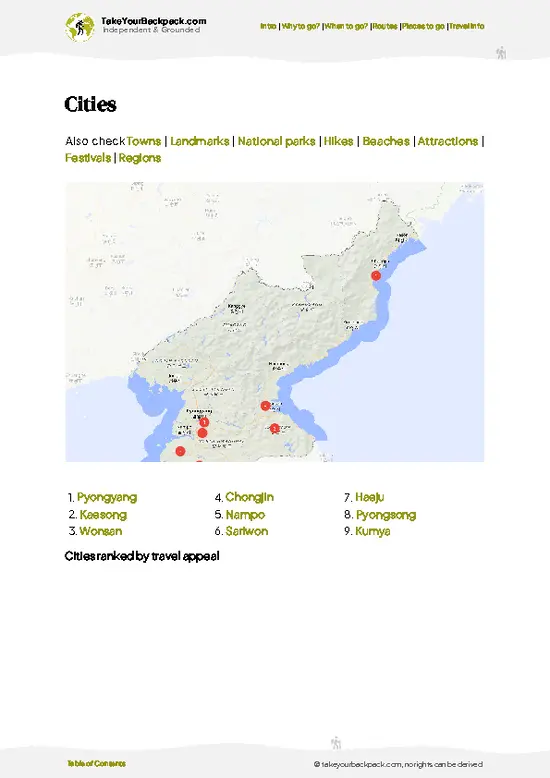
Other North Korean cities near Pyongyang

Explore more nearby:

  • Pyongsong—industrial zones, academic institutes, transport hub| 21 km away
  • Nampo—West Sea Barrage, shipping docks, salt flats| 56 km away
  • Anju—coal mining, riverside industry, worker districts| 62 km away

💡 Not sure where to go next?
Create a personalized itinerary for North Korea including Pyongyang and the places that fit your trip.

Generate my itinerary

👉 Discover all cities

Or checkout all North Korea has to offer (think cities, towns, villages, national parks, hikes, beaches, festivals)
Country photo of North Korea

We 💚 feedbackSumming up the experience

Visiting Pyongyang is like stepping into a living history book. The grand monuments and the palpable sense of a different world are captivating. But let’s be real: the restrictions can feel stifling. You’re on a tight leash, and spontaneity is out the window. If you’re okay with that trade-off, the experience can be eye-opening. Just know that this isn’t your typical backpacking adventure; it’s a carefully curated journey.

✈️ When did I visit North Korea?
As part of my 1.5 year travel around the world trip, I visited North Korea in August 2015. I had never expected I was able to get in.

✍️ Help improve this page!
The information on this page is based on my own backpacking experience in North Korea, supplemented with up-to-date research and feedback from other travelers. Travel details can change, so if you notice anything outdated or incomplete, feel free to let me know.


🙋‍♂️ Give feedback

👋 Meet the founderWho’s Behind Take Your Backpack?

Johan, backpacker and founder of TakeYourBackpackHi, I’m Johan (Netherlands 🇳🇱), the creator of TakeYourBackpack. Over the past decade, I’ve backpacked through 80+ countries across six continents, gaining extensive experience with independent travel, long-term trips, and overland routes.

This site is built on a combination of firsthand travel experience and carefully curated insights from other backpackers. Many guides are based on places I’ve personally visited, while others bring together tips, observations, and practical advice shared by trusted travelers I’ve met along the way.

The goal is to provide realistic, experience-driven guidance — not generic itineraries — so you can explore destinations with better context, clearer expectations, and more confidence.

Get full country guide •
Instant download • 74 highlights • Full Offline guide