×

Norway🇳🇴 | attractionsKon-Tiki Museumbalsa raft, ocean crossing, Thor Heyerdahl | things to do and best time to go

Explore PolariaExplore Bergenhus Fortress

Backpacking in Kon-Tiki Museum
🌟 Highlightattraction ranked #6
By Johan Kruseman 🇳🇱 | Updated September 4, 2026

Let’s get real: most people hit the Kon-Tiki Museum in Oslo because they’ve seen that iconic photo—Thor Heyerdahl, sunburned and grinning, drifting across the Pacific on a balsa raft. But if you’re just here for a selfie with the raft, you’re missing the actual magic. The Kon-Tiki isn’t about a single wild voyage; it’s about the audacity to question what’s possible, and the stubborn, slightly reckless curiosity that drives real adventure. Yes, it’s in Oslo, right on the Bygdøy peninsula, surrounded by Norway’s heavyweight museums. As a backpacker, you’ll notice the entry fee stings a bit, and the crowds can feel like a school field trip exploded—especially in summer. But there’s a pulse here: the museum’s artifacts and grainy expedition footage hit harder than any TikTok highlight reel. It’s not adrenaline in the classic sense, but it’s a jolt of inspiration. Compared to Norway’s fjords or arctic wilds, Kon-Tiki is compact, cerebral, and—if you let it—quietly electrifying.

Discover everything you want to know in the 📖 Norway Travel Guide.


Get your Norway guide
101 ranked highlights, routes & tips, works offline (380 pages)
Loading the map 🌍
CLICK TO FILTER
cities
towns
villages
landmarks
national parks
hikes
beaches
attractions
festivals
regions
SHOW COUNTRY’S BESTSHOW ALL

✨ Why go?
Ranked #6 attraction in Norway
Reasons people choose to visit here

The Kon-Tiki Museum in Norway isn’t just another stop on the tourist checklist—it’s a raw, unvarnished dive into human daring and curiosity. Forget the polished Instagram shots; this place gets real about the grit behind Thor Heyerdahl’s 1947 expedition. Yes, it’s crowded during peak season, and the entry fee isn’t pocket change, but that’s because you’re stepping into a living story of adventure that’s as much about guts as it is about history. The museum houses the original Kon-Tiki raft, a fragile, hand-built vessel that crossed the Pacific on a wild hunch to prove a theory about ancient migration. That’s not just a display; it’s a milestone in cultural exploration and scientific challenge.

Backpackers make time here because it’s a checkpoint on Norway’s route that connects you to a bigger … read more 👉
The Kon-Tiki Museum in Norway isn’t just another stop on the tourist checklist—it’s a raw, unvarnished dive into human daring and curiosity. Forget the polished Instagram shots; this place gets real about the grit behind Thor Heyerdahl’s 1947 expedition. Yes, it’s crowded during peak season, and the entry fee isn’t pocket change, but that’s because you’re stepping into a living story of adventure that’s as much about guts as it is about history. The museum houses the original Kon-Tiki raft, a fragile, hand-built vessel that crossed the Pacific on a wild hunch to prove a theory about ancient migration. That’s not just a display; it’s a milestone in cultural exploration and scientific challenge.

Backpackers make time here because it’s a checkpoint on Norway’s route that connects you to a bigger narrative—one that transcends borders and time. The adrenaline isn’t from a rollercoaster but from standing face-to-face with a symbol of human tenacity and imagination. It’s a reminder that some journeys aren’t about the destination but the audacity to set sail against all odds. If you want a dose of inspiration that’s grounded in reality, this museum delivers.
Want to include Kon-Tiki Museum in your Norway route?
Create a personalized Norway itinerary that includes Kon-Tiki Museum and the places that fit your trip — based on your travel style, budget, and available time. Get your route in seconds.

Generate my trip

💡 HighlightsWhat this place is best known for

The Original Kon-Tiki Raft
Let’s cut through the Instagram fog: the actual Kon-Tiki raft is here, and it’s not some polished movie prop. This is the battered, sun-bleached balsa wood craft that Thor Heyerdahl and his crew sailed 8,000 kilometers across the Pacific in 1947. You can walk right up to it—see the patched sails, the rough lashings, the absurdly basic hut. It’s a monument to stubbornness and wild ideas, not luxury. If you want to feel the pulse of real adventure, stand next to this thing and imagine betting your life on a pile of sticks and a theory.

The Ra II
Heyerdahl didn’t stop with the Pacific. He built the Ra II, a reed boat, and sailed from Morocco to Barbados to prove ancient Egyptians could have crossed the Atlantic. The Ra II sits here, looking like something out of a fever … read more 👉
The Original Kon-Tiki Raft
Let’s cut through the Instagram fog: the actual Kon-Tiki raft is here, and it’s not some polished movie prop. This is the battered, sun-bleached balsa wood craft that Thor Heyerdahl and his crew sailed 8,000 kilometers across the Pacific in 1947. You can walk right up to it—see the patched sails, the rough lashings, the absurdly basic hut. It’s a monument to stubbornness and wild ideas, not luxury. If you want to feel the pulse of real adventure, stand next to this thing and imagine betting your life on a pile of sticks and a theory.

The Ra II
Heyerdahl didn’t stop with the Pacific. He built the Ra II, a reed boat, and sailed from Morocco to Barbados to prove ancient Egyptians could have crossed the Atlantic. The Ra II sits here, looking like something out of a fever dream—bulbous, golden, and unmistakably handmade. It’s a reminder that history’s boundaries are often set by the limits of our imagination, not our technology.

Kon-Tiki Documentary Screening Room
Forget TikTok edits—this is the real deal. The museum screens Heyerdahl’s original Oscar-winning documentary, shot during the 1947 expedition. The footage is grainy, the narration is old-school, but the tension is real. You see the crew battling storms, sharks, and their own doubts. It’s a time capsule of human grit, and it’s far more gripping than any influencer’s highlight reel.

Artifacts from the Expedition
This isn’t just about boats. The museum is packed with objects that survived the journey: navigation tools, journals, even the crew’s makeshift fishing gear. These aren’t staged for effect—they’re worn, practical, and sometimes a little desperate. You get a sense of the daily grind, the improvisation, and the sheer resourcefulness it took to survive months at sea.

Polynesian and South American Cultural Exhibits
Here’s where the museum quietly outclasses the selfie crowd. Heyerdahl’s theories about ancient contact between cultures are controversial, but the museum treats the people of Polynesia and South America with respect. You’ll find artifacts, models, and stories that go beyond the “white explorer” narrative. It’s a rare chance to see the Pacific’s history through more than one lens.

Personal Favorite: The Original Kon-Tiki Raft
Standing beside the Kon-Tiki itself is a gut-check. It’s not glamorous. It’s not comfortable. It’s the physical embodiment of risk, curiosity, and the willingness to look foolish in pursuit of something bigger. If you want to understand what separates a real adventure from a staged photo op, this is it.
Spotted a mistake or missing something? Contact us.

Things to do around Kon-Tiki Museum

Ratings based on Tripadvisor reviews. When you book through this link, you support our work at no extra cost to you.

🌤️ When to go?Seasonal considerations and timing


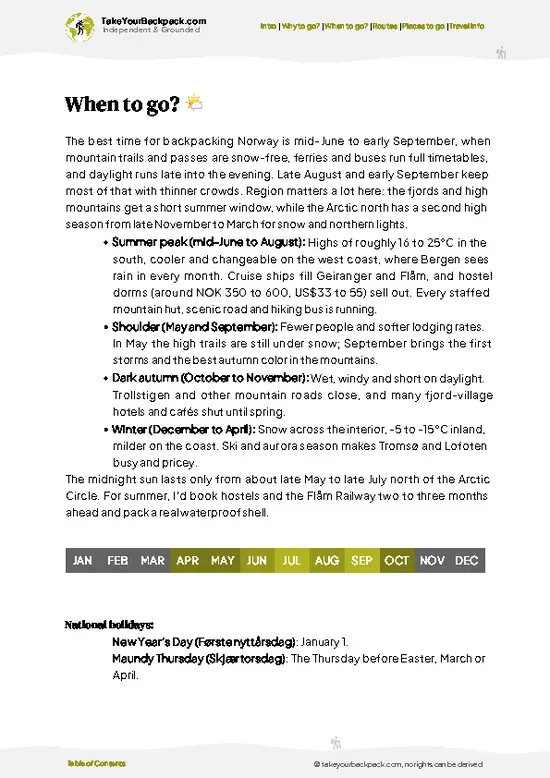
  • Weather: Norway’s coastal climate means the Kon-Tiki Museum faces chilly, damp conditions most of the year. From November through March, expect cold, often wet weather with temperatures hovering around 0°C to 5°C (32°F to 41°F). April to September offers milder, more comfortable weather, with highs between 12°C and 20°C (54°F to 68°F), making it easier to enjoy the outdoor exhibits and nearby waterfront.

  • Daylight Hours: The museum’s location means brutal darkness in winter—December and January barely see daylight, which can kill any sightseeing vibe. From May to July, you get the midnight sun effect, with nearly 24 hours of light, perfect for stretching your visit and soaking in the maritime atmosphere.

  • Crowds: Peak tourist season hits in July and August, when the museum is busiest.
read more 👉

  • Weather: Norway’s coastal climate means the Kon-Tiki Museum faces chilly, damp conditions most of the year. From November through March, expect cold, often wet weather with temperatures hovering around 0°C to 5°C (32°F to 41°F). April to September offers milder, more comfortable weather, with highs between 12°C and 20°C (54°F to 68°F), making it easier to enjoy the outdoor exhibits and nearby waterfront.

  • Daylight Hours: The museum’s location means brutal darkness in winter—December and January barely see daylight, which can kill any sightseeing vibe. From May to July, you get the midnight sun effect, with nearly 24 hours of light, perfect for stretching your visit and soaking in the maritime atmosphere.

  • Crowds: Peak tourist season hits in July and August, when the museum is busiest. If you want to dodge the selfie sticks and school groups, aim for late May or early September. You’ll still get decent weather but with fewer people elbowing their way to the Kon-Tiki raft.

  • Seasonal Activities: Summer months bring outdoor events and boat tours linked to Thor Heyerdahl’s expeditions, adding layers to the experience. Winter is quiet, with fewer extras but a chance to see the museum’s indoor exhibits without distraction.

  • Price Fluctuations: Entry fees and local accommodation prices spike in July and August. Visiting in shoulder months like May or September can save you a decent chunk of cash without sacrificing much in terms of experience.


Pro-tip: Hit the Kon-Tiki Museum in late spring or early fall—weather’s decent, crowds are manageable, and you’ll get a more genuine feel for Heyerdahl’s legacy without the tourist circus.


source: climatestotravel.comJANJanuary: below average for travelingFEBFebruary: fair for travelingMARMarch: fair for travelingAPRApril: good for travelingMAYMay: excellent for travelingJUNJune: highly recommended for travelingJULJuly: good for travelingAUGAugust: good for travelingSEPSeptember: excellent for travelingOCTOctober: good for travelingNOVNovember: fair for travelingDECDecember: below average for traveling
when-to-go

✈️ The backpacker research shortcutNorway Travel Guide

An offline-friendly backpacking guide with optimized travel routes, ranked highlights, transport advice, and the best areas to stay.
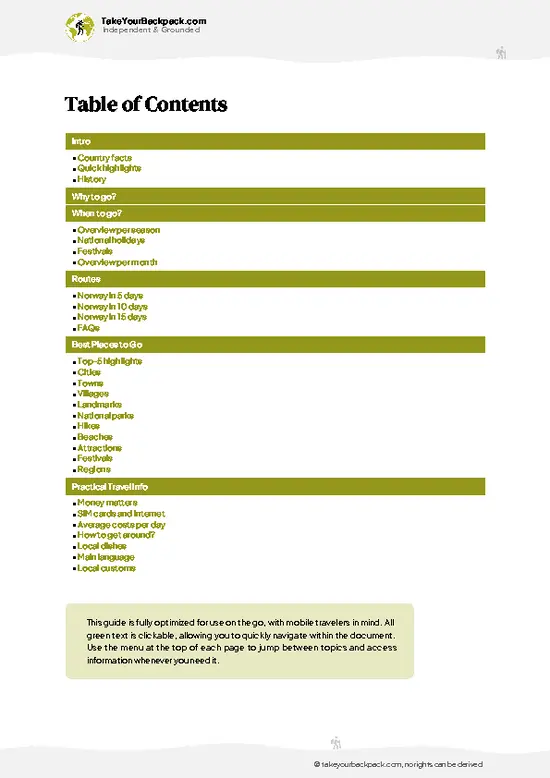
example page 0 from our offline Travel Guide for Norway
example page 1 from our offline Travel Guide for Norway
example page 2 from our offline Travel Guide for Norway
example page 3 from our offline Travel Guide for Norway
example page 4 from our offline Travel Guide for Norway
example page 5 from our offline Travel Guide for Norway
example page 6 from our offline Travel Guide for Norway
example page 7 from our offline Travel Guide for Norway
The digital guide (380 pages) contains:
101 highlights, ranked by travel appeal
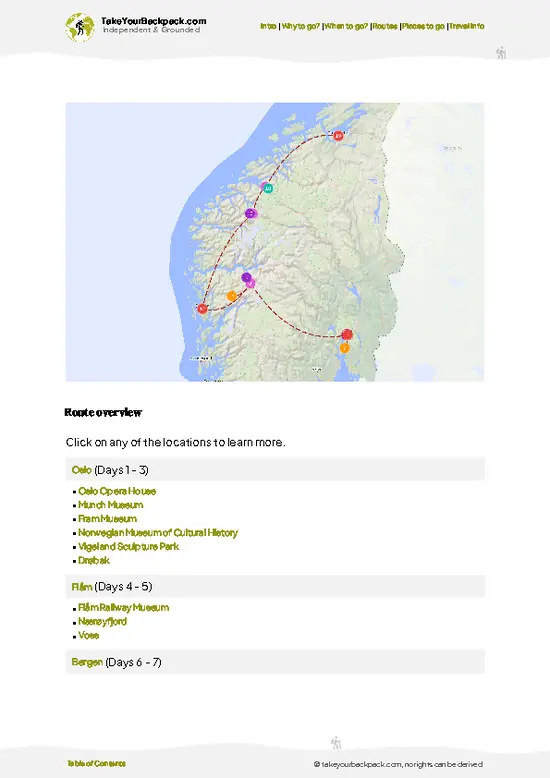
Optimized 5, 10 & 15-day travel routes
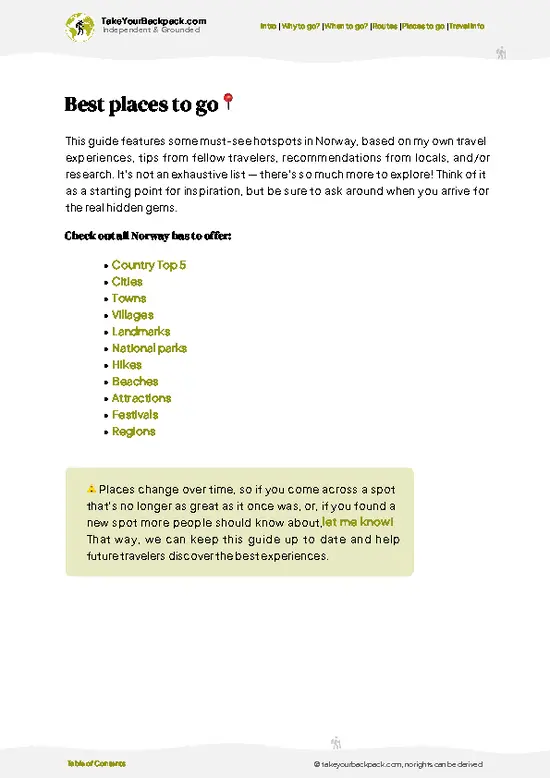
Cities, national parks, landmarks, beaches
How to get around
Offline-friendly for travel without Wi-Fi
👉 Click to see all 30+ guide features

📅 Plan smarter in minutes, not weeks
Month by month travel advice
Festivals & national holidays
Budget expectations

🗺️ Go to the right places, skip the overrated ones
Honest pros & cons of destinations
Top hikes, parks & viewpoints
Lesser-known places most travelers miss
Clear “worth it vs skip it” guidance

🛏️ Travel smoothly without rookie mistakes
Best areas to stay
Transport systems explained simply
Common scams & safety advice
SIM cards, money & practical tips

🌍 Understand the country, not just visit it
Culture & traditions
52 Essential phrases & customs
Festivals worth planning around
Traveler-friendly historical context
Insights that make places more meaningful

📱 Built for real travel conditions
Fully downloadable PDF
Works completely offline
Optimized for phone use
Useful in remote areas & buses
Everything in one place
Save weeks of stressful planning
Get instant access to your full guide. 30‑day money-back guarantee.
+ Add another guide for just US$7.80

By proceeding you agree to our terms.
Sent to your inbox immediately after payment • 100% Secure Checkout
Best Backpacking Travel Advisor 2025 tourism awardBest Backpacking
Travel Advisor
2025
What others say about Take Your Backpack Guides:
⭐⭐⭐⭐⭐
Fantastic, amazing amount of information!
⭐⭐⭐⭐⭐
My goodness this is amazing, it's what I've been looking for hats off too you!
⭐⭐⭐⭐⭐
I think this is absolutely BRILLIANT
⭐⭐⭐⭐
Very complete and informative. It's still missing places, but I gotta to commend you
⭐⭐⭐⭐⭐
This is truly amazing, thank you, can't wait to explore it with my kids!
⭐⭐⭐⭐⭐
Awesome resource, thank you!
⭐⭐⭐⭐⭐
This is amazing! Can't wait to explore the ones I haven't seen
⭐⭐⭐⭐
I love this! Well done, great idea.
⭐⭐⭐⭐⭐
Thanks for taking the time to make this gem!
⭐⭐⭐⭐⭐
This might be the best website I've ever seen.
⭐⭐⭐⭐⭐
Congratulations, and thank you so much for your work; it's incredibly valuable.
⭐⭐⭐⭐
In all seriousness I think you did a great job pointing out the important spots
⭐⭐⭐⭐⭐
10/10 very good
⭐⭐⭐⭐⭐
As someone who's only just starting to visit regularly this is awesome, thank you.
⭐⭐⭐⭐
Thank you very much! I'm going to visit my dad, it's going to be very useful!
⭐⭐⭐⭐⭐
This is really cool! We'll be travelling for the first time and this definitely come in handy.
⭐⭐⭐⭐⭐
You are now our minister of culture, congratulations 👨‍💼
⭐⭐⭐⭐⭐
Just wanted to tell you that this is a pearl! Going to follow your recommendations.
⭐⭐⭐⭐⭐
This is so cool. I'll definitely be using the resource for my travels soon.
⭐⭐⭐⭐⭐
This is very impressive! Good work.
⭐⭐⭐⭐⭐
This is an amazing and informative site. Very well done!

🛏️ Where to stay?Best areas to stay in Norway

The Kon-Tiki Museum sits in Oslo’s Bygdøy peninsula, a spot that’s less about nightlife and more about daylight adventures. If you’re chasing the authentic backpacker vibe near the museum, your best bet is to base yourself in central Oslo, not Bygdøy itself. Why? Because Bygdøy is quiet, mostly residential, and while it’s safe, it lacks the social buzz and budget-friendly spots backpackers crave.

Head to neighborhoods like Grünerløkka or the area around Jernbanetorget. Grünerløkka is where you’ll find a mix of affordable hostels, lively cafés, and a crowd that’s young and curious—perfect for … read more 👉
The Kon-Tiki Museum sits in Oslo’s Bygdøy peninsula, a spot that’s less about nightlife and more about daylight adventures. If you’re chasing the authentic backpacker vibe near the museum, your best bet is to base yourself in central Oslo, not Bygdøy itself. Why? Because Bygdøy is quiet, mostly residential, and while it’s safe, it lacks the social buzz and budget-friendly spots backpackers crave.

Head to neighborhoods like Grünerløkka or the area around Jernbanetorget. Grünerløkka is where you’ll find a mix of affordable hostels, lively cafés, and a crowd that’s young and curious—perfect for solo travelers looking to swap stories over a cheap beer. It’s also well-connected by tram to Bygdøy, so you can hit the museum during the day without sacrificing your social life.

Jernbanetorget, Oslo’s central hub, is another solid choice. It’s a transit goldmine with easy access to Bygdøy’s ferry and bus routes. Plus, it’s packed with budget eateries and backpacker-friendly spots. Staying here means you’re never far from the pulse of the city, even if the museum itself is a short escape from the urban grind.

👛 Costs (as of 4 September 2026)How expensive it really is

As of the latest available information, the Kon-Tiki Museum in Oslo offers the following ticket prices: Adults: NOK 180 (€16), Children (6-17 years): NOK 70 (€6), Seniors (over 67): NOK 140 (€13), Students: NOK 70 (€6), Family (2 adults + 5 children): NOK 400 (€37), Group price for 10 or more: NOK 130 per person (€12). Additional costs may include guided tours, which are available upon request. Please note that prices are subject to change, and it's advisable to check the official website for the most current information.

source: kon-tiki.no
⚠️ Prices can change and everyone travels differently, so take this as a rough guide. Hope it helps you plan your adventure!

FAQTraveler FAQ

Plan for about 1.5 to 2 hours to visit the Kon-Tiki Museum to fully explore the exhibits and watch the documentary films. This allows enough time to see the original Kon-Tiki raft and other Thor Heyerdahl expeditions. Longer visits may be needed if you are particularly interested in maritime history.
Yes, the Kon-Tiki Museum is worth the entrance fee, which is around 140 NOK for adults. The museum offers unique insights into Thor Heyerdahl's famous expeditions and features original artifacts, making it a valuable experience for history and adventure enthusiasts.
The Kon-Tiki Museum is located on the Bygdøy Peninsula in Oslo. You can get there by taking bus number 30 from the city center, which takes about 15 minutes, or by ferry from the Oslo harbor during the summer months.
⚠️ Things can change over time, so always validate details locally before you go.

Other Norwegian attractions near Kon-Tiki Museum

Explore more nearby:


💡 Not sure where to go next?
Create a personalized itinerary for Norway including Kon-Tiki Museum and the places that fit your trip.

Generate my itinerary

👉 Discover all attractions

Or checkout all Norway has to offer (think cities, towns, villages, national parks, hikes, beaches, festivals)
Country photo of Norway

We 💚 feedbackIs it worth it?

The Kon-Tiki Museum isn’t just another dusty maritime exhibit—it’s a raw, tangible slice of human daring. Seeing Thor Heyerdahl’s actual raft up close hits different; it’s proof that wild ideas can rewrite history. But heads up: it’s a niche spot, so if you’re expecting crowds or flashy displays, you’ll be disappointed. This place rewards curiosity and patience, not Instagram moments. If you dig stories that challenge the impossible, it’s worth every minute.

✈️ When did I visit Norway?
Having played floorball, a sport large in the nordic countries, I have visited Norway as well a couple of times from 1999 to 2008.

✍️ Help improve this page!
The information on this page is based on my own backpacking experience in Norway, supplemented with up-to-date research and feedback from other travelers. Travel details can change, so if you notice anything outdated or incomplete, feel free to let me know.


🙋‍♂️ Give feedback

👋 Meet the founderWho’s Behind Take Your Backpack?

Johan, backpacker and founder of TakeYourBackpackHi, I’m Johan (Netherlands 🇳🇱), the creator of TakeYourBackpack. Over the past decade, I’ve backpacked through 80+ countries across six continents, gaining extensive experience with independent travel, long-term trips, and overland routes.

This site is built on a combination of firsthand travel experience and carefully curated insights from other backpackers. Many guides are based on places I’ve personally visited, while others bring together tips, observations, and practical advice shared by trusted travelers I’ve met along the way.

The goal is to provide realistic, experience-driven guidance — not generic itineraries — so you can explore destinations with better context, clearer expectations, and more confidence.

Get full Norway guide •
Instant download • 101 highlights • Full Offline guide