×

Panama🇵🇦 | regionsChiriquí HighlandsVolcán Barú, coffee farms, quetzal trails, hot springs | things to do and best time to go

Explore Taboga IslandExplore Cerro Azul

Backpacking in Chiriquí Highlands
🏆 Top pickregion ranked #1
By Johan Kruseman 🇳🇱 | Updated October 22, 2026

The pickup truck bounced up the gravel past Boquete, and the driver stopped without warning so a farmer could hand me a paper bag of warm bread, no money asked, because the bakery cousin down the road had baked too much. I had expected a polished coffee-tourist strip. Chiriquí Highlands sits in the west of Panama, near the Costa Rican border, around the slopes of Volcán Barú. What I found was working farmland with a gringo layer on top. The upsides are cool-climate hiking, waterfalls, coffee farms and the cloud forest around Boquete and Cerro Punta, plus a real village feel once you leave the main street. The downsides are expat prices in Boquete and tours that cost real money. Colectivos cost little but eat time, while guided trips save hours and drain the wallet, so for a backpacker the best mix is public vans for transfers and a guide only for the Barú summit. Bring a rain jacket, because afternoon mist arrives fast.

Discover everything you want to know in the 📖 Panama Travel Guide.


example page 0 from our offline Travel Guide for Panama
example page 1 from our offline Travel Guide for Panama
example page 2 from our offline Travel Guide for Panama
example page 3 from our offline Travel Guide for Panama
example page 4 from our offline Travel Guide for Panama
example page 5 from our offline Travel Guide for Panama
example page 6 from our offline Travel Guide for Panama
example page 7 from our offline Travel Guide for Panama
Loading the map 🌍
CLICK TO FILTER
cities
towns
villages
landmarks
national parks
hikes
beaches
attractions
festivals
regions
SHOW COUNTRY’S BESTSHOW ALL

✨ Why go?
Ranked #1 region in Panama
The unique appeal for travelers

Chiriquí Highlands lets you swap landscapes without ever repacking your bag for long. In a single week you can walk the Sendero Los Quetzales through cloud forest, soak in the volcanic hot springs near Caldera, and taste coffee at working fincas around Boquete. Then you can climb Volcán Barú at 3,474 meters, the highest point in Panama, where on a clear dawn you can see both the Pacific and the Caribbean. That variety matters because the region is compact. Local vans link Boquete, David, Volcán and Cerro Punta, so you can run slow loops, sleeping in one valley and day-tripping through the next. The pace suits long stays. Highland towns like Cerro Punta feel agricultural rather than touristy, with vegetable terraces climbing the hillsides and Ngäbe workers harvesting in bright dresses. Add … read more 👉
Chiriquí Highlands lets you swap landscapes without ever repacking your bag for long. In a single week you can walk the Sendero Los Quetzales through cloud forest, soak in the volcanic hot springs near Caldera, and taste coffee at working fincas around Boquete. Then you can climb Volcán Barú at 3,474 meters, the highest point in Panama, where on a clear dawn you can see both the Pacific and the Caribbean. That variety matters because the region is compact. Local vans link Boquete, David, Volcán and Cerro Punta, so you can run slow loops, sleeping in one valley and day-tripping through the next. The pace suits long stays. Highland towns like Cerro Punta feel agricultural rather than touristy, with vegetable terraces climbing the hillsides and Ngäbe workers harvesting in bright dresses. Add Panama’s Pacific coast an easy descent away and you can balance cool mornings with beach afternoons. If you want mountain culture and serious hiking without Andean altitude logistics, this is the easiest place in Central America to do it, and the Boquete coffee estates give you a rainy-day plan.

💡 HighlightsDon't-miss highlights and experiences

  1. Volcán Barú Summit: Panama’s highest peak is a long night climb or a rough 4x4 ride to the top. Clear mornings reveal two oceans, and the park charges a small entry fee.
  2. Sendero Los Quetzales: This forest trail links Cerro Punta and Boquete through mossy trees, with resplendent quetzals possible between roughly March and June.
  3. Boquete Coffee Farms: Finca tours show picking, drying and roasting, and Geisha lots here are among the world’s most prized. Pick a small estate over the large tour operators.
  4. Caldera Hot Springs: Rustic pools beside a river, reached by a rough road from Boquete. Locals come for the free-flowing mineral water and quiet.
  5. Lost Waterfalls Trail: A short forested loop near Boquete passing three cascades, with the largest dropping into a cool swimming pool.
  6. Mirador Los Quetzales
… read more 👉
  1. Volcán Barú Summit: Panama’s highest peak is a long night climb or a rough 4x4 ride to the top. Clear mornings reveal two oceans, and the park charges a small entry fee.
  2. Sendero Los Quetzales: This forest trail links Cerro Punta and Boquete through mossy trees, with resplendent quetzals possible between roughly March and June.
  3. Boquete Coffee Farms: Finca tours show picking, drying and roasting, and Geisha lots here are among the world’s most prized. Pick a small estate over the large tour operators.
  4. Caldera Hot Springs: Rustic pools beside a river, reached by a rough road from Boquete. Locals come for the free-flowing mineral water and quiet.
  5. Lost Waterfalls Trail: A short forested loop near Boquete passing three cascades, with the largest dropping into a cool swimming pool.
  6. Mirador Los Quetzales Lodge Area: Gorgeous ridge views over Volcán Barú’s flanks, ideal for slow birdwatching mornings.
  7. Cerro Punta Farm Terraces: Little-visited, steep vegetable fields and strawberry stands. Locals sell produce right beside the road.
  8. Volcán Lakes (Lagunas de Volcán): Quiet highland lakes outside Volcán town, favored by local families for picnics and bird sightings.
  9. Boquete Central Park and Weekend Market: Fresh bread, tamales and fruit from farmers in town. Locals meet here for breakfast.
Chiriquí Highlands is easiest on the wallet at Boquete Central Park, where wandering and watching cost nothing.
Spotted a mistake or missing something? Contact us.

Things to do around Chiriquí Highlands

Ratings based on Tripadvisor reviews. When you book through this link, you support our work at no extra cost to you.

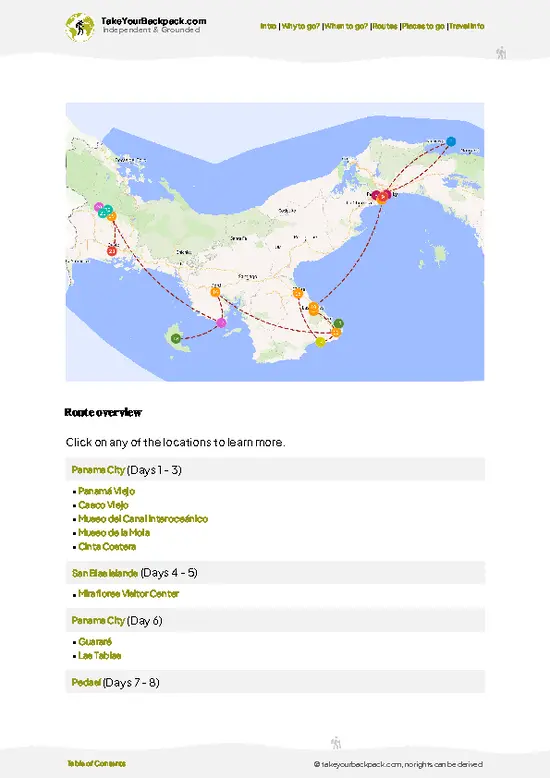
⌛️ 5 daysWhat you can realistically do in a week

Day 1: Boquete: Start with the Sendero Los Quetzales trail, the one stop not to skip, hiking from the Cerro Punta end downhill so the day ends in your base town. Colectivos run on fixed schedules and fill up fast, so the early start fits transport as much as the forest. Spend the evening in Boquete, where cheap bakeries and warm cafés make recovery easy.
Day 2: Boquete: Visit a small coffee finca in the morning, when the pickers are active, then walk the Lost Waterfalls loop after lunch. Vans return to town regularly, so staying put keeps the logistics simple. That also leaves you rested for Barú, which does not forgive tired legs.
Day 3: Volcán Barú: Leave in the dark for the summit, either on foot or by hired 4x4. Only a handful of drivers work the road, so arrange it a day ahead. Trucks return … read more 👉
Day 1: Boquete: Start with the Sendero Los Quetzales trail, the one stop not to skip, hiking from the Cerro Punta end downhill so the day ends in your base town. Colectivos run on fixed schedules and fill up fast, so the early start fits transport as much as the forest. Spend the evening in Boquete, where cheap bakeries and warm cafés make recovery easy.
Day 2: Boquete: Visit a small coffee finca in the morning, when the pickers are active, then walk the Lost Waterfalls loop after lunch. Vans return to town regularly, so staying put keeps the logistics simple. That also leaves you rested for Barú, which does not forgive tired legs.
Day 3: Volcán Barú: Leave in the dark for the summit, either on foot or by hired 4x4. Only a handful of drivers work the road, so arrange it a day ahead. Trucks return by midday, leaving time to rest.
Day 4: Caldera: This is the detour. Hot springs near Caldera require a rough road, so go with a driver or shared ride, and soak in the late afternoon. It adds a slow local day without changing your onward plan.
Day 5: Cerro Punta: Take colectivos via David to the cooler farm country, then walk the terraces. Cerro Punta is the day that justifies the trip. Standing among the vegetable fields under cloud, with almost no other visitors, I would choose it over any Boquete tour.

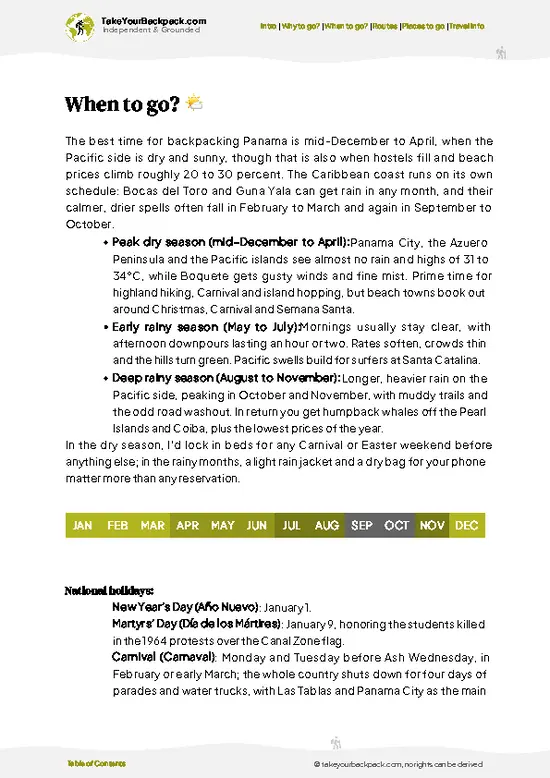
🌤️ When to go?Weather, crowds, and seasonal trade-offs

  • Dry Season (mid-December to April): Boquete and Volcán see mornings of 12 to 16°C (54 to 61°F) and afternoons of 22 to 27°C (72 to 81°F), with little rain and wind gusts known locally as bajareque. This is the window for the Barú Volcano sunrise hike and the Quetzals Trail, and the cleanest views from the trailheads. Rooms cost the most, and Christmas to Easter is the busiest stretch.
  • Green Season (May to November): Rain arrives most afternoons and gets heaviest in September and October, when trails turn to mud and landslides can close some roads. Temperatures stay similar, but mornings are often dry and bright. Hostels drop prices or throw in discounts, and the hills turn deep green.
  • Flower and Coffee Events: The Boquete flower and coffee fair runs in January, drawing crowds and filling beds.
… read more 👉
  • Dry Season (mid-December to April): Boquete and Volcán see mornings of 12 to 16°C (54 to 61°F) and afternoons of 22 to 27°C (72 to 81°F), with little rain and wind gusts known locally as bajareque. This is the window for the Barú Volcano sunrise hike and the Quetzals Trail, and the cleanest views from the trailheads. Rooms cost the most, and Christmas to Easter is the busiest stretch.
  • Green Season (May to November): Rain arrives most afternoons and gets heaviest in September and October, when trails turn to mud and landslides can close some roads. Temperatures stay similar, but mornings are often dry and bright. Hostels drop prices or throw in discounts, and the hills turn deep green.
  • Flower and Coffee Events: The Boquete flower and coffee fair runs in January, drawing crowds and filling beds. The coffee harvest runs roughly November to February, so farm tours show picking in action.
  • Daylight: Days stay close to 12 hours all year, so start hikes early.
Book Barú summit nights and January fair weekends a few weeks ahead, or go in late April when rain is still light.


source: climatestotravel.comJANJanuary: excellent for travelingFEBFebruary: excellent for travelingMARMarch: excellent for travelingAPRApril: excellent for travelingMAYMay: highly recommended for travelingJUNJune: good for travelingJULJuly: good for travelingAUGAugust: good for travelingSEPSeptember: fair for travelingOCTOctober: fair for travelingNOVNovember: highly recommended for travelingDECDecember: excellent for traveling
when-to-go

✈️ The backpacker research shortcutPanama Travel Guide

An offline-friendly backpacking guide with optimized travel routes, ranked highlights, transport advice, and the best areas to stay.
example page 0 from our offline Travel Guide for Panama
example page 1 from our offline Travel Guide for Panama
example page 2 from our offline Travel Guide for Panama
example page 3 from our offline Travel Guide for Panama
example page 4 from our offline Travel Guide for Panama
example page 5 from our offline Travel Guide for Panama
example page 6 from our offline Travel Guide for Panama
example page 7 from our offline Travel Guide for Panama
The digital guide (272 pages) contains:
✅ 89 highlights, ranked by travel appeal
✅ Optimized 5, 10 & 15-day travel routes
✅ Cities, national parks, landmarks, beaches
✅ How to get around
✅ Offline-friendly for travel without Wi-Fi
👉 Click to see all 30+ guide features

📅 Plan smarter in minutes, not weeks
✅ Month by month travel advice
✅ Festivals & national holidays
✅ Budget expectations

🗺️ Go to the right places, skip the overrated ones
✅ Honest pros & cons of destinations
✅ Top hikes, parks & viewpoints
✅ Lesser-known places most travelers miss
✅ Clear “worth it vs skip it” guidance

🛏️ Travel smoothly without rookie mistakes
✅ Best areas to stay
✅ Transport systems explained simply
✅ Common scams & safety advice
✅ SIM cards, money & practical tips

🌍 Understand the country, not just visit it
✅ Culture & traditions
✅ 52 Essential phrases & customs
✅ Festivals worth planning around
✅ Traveler-friendly historical context
✅ Insights that make places more meaningful

📱 Built for real travel conditions
✅ Fully downloadable PDF
✅ Works completely offline
✅ Optimized for phone use
✅ Useful in remote areas & buses
✅ Everything in one place
Stop searching, start planning
Get instant access to your full guide. 30‑day money-back guarantee.
+ Add another guide for just

By proceeding you agree to our terms.
Sent to your inbox immediately after payment • 100% Secure Checkout
Best Backpacking Travel Advisor 2025 tourism awardBest Backpacking
Travel Advisor
2025
What others say about Take Your Backpack Guides:
⭐⭐⭐⭐⭐
Fantastic, amazing amount of information!
⭐⭐⭐⭐⭐
My goodness this is amazing, it's what I've been looking for hats off too you!
⭐⭐⭐⭐⭐
I think this is absolutely BRILLIANT
⭐⭐⭐⭐
Very complete and informative. It's still missing places, but I gotta to commend you
⭐⭐⭐⭐⭐
This is truly amazing, thank you, can't wait to explore it with my kids!
⭐⭐⭐⭐⭐
Awesome resource, thank you!
⭐⭐⭐⭐⭐
This is amazing! Can't wait to explore the ones I haven't seen
⭐⭐⭐⭐
I love this! Well done, great idea.
⭐⭐⭐⭐⭐
Thanks for taking the time to make this gem!
⭐⭐⭐⭐⭐
This might be the best website I've ever seen.
⭐⭐⭐⭐⭐
Congratulations, and thank you so much for your work; it's incredibly valuable.
⭐⭐⭐⭐
In all seriousness I think you did a great job pointing out the important spots
⭐⭐⭐⭐⭐
10/10 very good
⭐⭐⭐⭐⭐
As someone who's only just starting to visit regularly this is awesome, thank you.
⭐⭐⭐⭐
Thank you very much! I'm going to visit my dad, it's going to be very useful!
⭐⭐⭐⭐⭐
This is really cool! We'll be travelling for the first time and this definitely come in handy.
⭐⭐⭐⭐⭐
You are now our minister of culture, congratulations 👨‍💼
⭐⭐⭐⭐⭐
Just wanted to tell you that this is a pearl! Going to follow your recommendations.
⭐⭐⭐⭐⭐
This is so cool. I'll definitely be using the resource for my travels soon.
⭐⭐⭐⭐⭐
This is very impressive! Good work.
⭐⭐⭐⭐⭐
This is an amazing and informative site. Very well done!

🛏️ Where to stay?Best areas to stay in Panama

Boquete is where most backpackers should sleep, and it is the one town in the Chiriquí Highlands with a real traveler scene. Its hostels and guesthouses sit within a short walk of the main plaza, restaurants and tour agencies, and dorm beds usually run US$12 to 20 a night. The social side is easy here: group hikes, coffee farm visits and evening chats on terraces mean solo travelers rarely stay solo for long. The town feels safe, with a mix of retirees, expats and travelers, and a cool climate that makes sleeping easy.

Volcán, on the western side of Barú Volcano, suits hikers and birders who … read more 👉
Boquete is where most backpackers should sleep, and it is the one town in the Chiriquí Highlands with a real traveler scene. Its hostels and guesthouses sit within a short walk of the main plaza, restaurants and tour agencies, and dorm beds usually run US$12 to 20 a night. The social side is easy here: group hikes, coffee farm visits and evening chats on terraces mean solo travelers rarely stay solo for long. The town feels safe, with a mix of retirees, expats and travelers, and a cool climate that makes sleeping easy.

Volcán, on the western side of Barú Volcano, suits hikers and birders who want quieter evenings. Beds are US$15 to 30, and the scene is smaller, with fewer hostels and a more local, farming-town feel. It works well for Sendero Los Quetzales access from the Cerro Punta side and for the Lagunas de Volcán.

Cerro Punta and Guadalupe, higher up, have a few farm stays and lodges, with a cold, misty feel and strawberry and vegetable fields at the door. They are peaceful but have little nightlife.

David, the lowland city, is hot and busy. It makes sense only for a night before an early bus or when connecting onward, with dorms around US$12 to 18.

🚌 Getting aroundHow to get around Chiriquí Highlands

Chiriquí Highlands is not a place to cover on foot, apart from the compact center of Boquete, where a stroll takes in the main plaza, cafés and tour offices in 15 minutes. Past that, farms, trailheads and waterfalls sit several kilometers apart along steep roads. Most backpackers combine local buses, shared taxis and the occasional guided transfer, and the system is reliable because these routes serve commuters and coffee workers every day.
  • Local buses and minibuses: Boquete connects to David by frequent minibuses for about US$2 to 2.50, taking 50 minutes to an hour, with departures roughly every 15 to 30 minutes in daylight. Volcán and Cerro Punta run on a similar pattern from David, for about US$2.50 to 4 over 1.5 to 2 hours. They are crowded at commuter hours and have no luggage space, but
… read more 👉
Chiriquí Highlands is not a place to cover on foot, apart from the compact center of Boquete, where a stroll takes in the main plaza, cafés and tour offices in 15 minutes. Past that, farms, trailheads and waterfalls sit several kilometers apart along steep roads. Most backpackers combine local buses, shared taxis and the occasional guided transfer, and the system is reliable because these routes serve commuters and coffee workers every day.
  • Local buses and minibuses: Boquete connects to David by frequent minibuses for about US$2 to 2.50, taking 50 minutes to an hour, with departures roughly every 15 to 30 minutes in daylight. Volcán and Cerro Punta run on a similar pattern from David, for about US$2.50 to 4 over 1.5 to 2 hours. They are crowded at commuter hours and have no luggage space, but they give the most for the least money, so use them for every long leg.
  • Shared and private taxis: Short hops within Boquete cost US$2 to 5, and rides to trailheads like Quetzals Trail or the Pipeline Trail run US$10 to 25. Taxis save hours on routes with no bus, and splitting a fare among three or four people makes the cost close to a bus ticket for something far more comfortable.
  • Hitchhiking and rural pickups: On roads to farms and the Barú trailhead, pickup trucks carry passengers for a few dollars. Offering a small payment is customary. It is slow and unpredictable, so it only suits flexible days.
  • Guided transfers and tours: Shuttles to the Barú summit or the hot springs cost US$25 to 60 per person. The price is high, but they solve the hardest logistics, like pre-dawn starts with no public transport.
  • Rental scooters and ATVs: In Boquete, scooters rent for about US$25 to 40 a day. They offer freedom, but the wet, winding roads make them risky for beginners.
Base yourself in one town for several nights and use daily buses plus a split taxi for outliers, rather than shifting bags every day, because the mountain roads make every transfer slower than the map suggests.

🍲 FoodLocal Cuisine & Drinks

Highland cooking in Chiriquí leans on cool-climate produce, so expect strawberries from Cerro Punta, carrots, potatoes and onions from Volcán, and some of Panama’s best coffee, including the pricey Geisha, grown on the slopes near Boquete. A cup at a farm tasting, about US$5 to 15, is bright, floral and nothing like the usual brew. Warm up with sancocho served with rice and a splash of ají chombo, or hojaldras and carimañolas at breakfast, crisp and oily from the fryer.

For cheap meals, look for fondas and small family kitchens serving a plate of rice, beans, stewed chicken or pork and fried plantain for about US$4 to 7. Bakeries sell empanadas and warm bread in the early morning, and Boquete’s cafés fill with travelers sharing pastries and brunch plates for US$6 to 10. In Volcán and Cerro … read more 👉
Highland cooking in Chiriquí leans on cool-climate produce, so expect strawberries from Cerro Punta, carrots, potatoes and onions from Volcán, and some of Panama’s best coffee, including the pricey Geisha, grown on the slopes near Boquete. A cup at a farm tasting, about US$5 to 15, is bright, floral and nothing like the usual brew. Warm up with sancocho served with rice and a splash of ají chombo, or hojaldras and carimañolas at breakfast, crisp and oily from the fryer.

For cheap meals, look for fondas and small family kitchens serving a plate of rice, beans, stewed chicken or pork and fried plantain for about US$4 to 7. Bakeries sell empanadas and warm bread in the early morning, and Boquete’s cafés fill with travelers sharing pastries and brunch plates for US$6 to 10. In Volcán and Cerro Punta, roadside stands sell fresh strawberries with cream, milkshakes and local cheese, and a bag costs a couple of dollars. Pair evenings with a cold Balboa or Atlas beer, or try a craft pour in Boquete’s small breweries.

Meals are unhurried, and the bill often arrives only when you ask for it. Tipping is modest, around 10 percent at sit-down places, and street vendors expect none. Lunch is the main meal, so almuerzo ejecutivo specials are the best-value hour of the day, and many small kitchens close by early evening.

FAQTraveler FAQ

Three to four days covers Boquete well, and five to six lets you add Volcán and Cerro Punta. A day goes to the Quetzals Trail (about 4 hours one way, roughly 9 km), another to a coffee farm tour or hot springs, and the Barú Volcano summit takes a full night and morning, often starting around midnight. Chiriquí Highlands is easy to stretch to a week if you like hiking.
In Chiriquí Highlands, local minibuses and shared taxis cover nearly everything without a car. Buses from David reach Boquete in about an hour for roughly US$2 to 2.50 and Volcán in 1.5 to 2 hours for US$2.50 to 4, while trailheads usually need a taxi at US$10 to 25. Boquete center is walkable, and tours cost US$25 to 60 where there is no bus.
Chiriquí Highlands is known for its coffee, especially the Geisha grown near Boquete, and for cool mountain air in a country that is mostly hot. Barú Volcano, at 3,474 m the highest point in Panama, offers a summit view of both the Pacific and the Caribbean on clear mornings. The area also draws birders for the resplendent quetzal, and visitors come for hiking, hot springs and strawberry and flower farms.
⚠️ Things can change over time, so always validate details locally before you go.

Other Panamanian regions near Chiriquí Highlands

Explore more nearby:

  • Taboga Island—Car-free village, ferry pier, pelican colony, hillside lookouts| 323 km away
  • Cerro Azul—Cloud forest, Cerro Jefe trails, birding roads, Lake Alajuela| 343 km away
  • Isla Contadora—Golf carts, small beaches, snorkeling, whale season| 381 km away

💡 Not sure where to go next?
Create a personalized itinerary for Panama including Chiriquí Highlands and the places that fit your trip.

Generate my itinerary

👉 Discover all regions

Or checkout all Panama has to offer (think cities, towns, villages, national parks, hikes, beaches, festivals)
Country photo of Panama

We 💚 feedbackIs it worth it?

Chiriquí Highlands trips go wrong when travelers book the Barú summit for their first morning and then find clouds covering everything. Give yourself a buffer of two or three days and ask your hostel about current visibility. I would also carry cash, because small village shops and many vans do not take cards.

✈️ When did I visit Panama?
Panama I visited during my half year trip through South and Central America back in 2003

✍️ Help improve this page!
The information on this page is based on my own backpacking experience in Panama, supplemented with up-to-date research and feedback from other travelers. Travel details can change, so if you notice anything outdated or incomplete, feel free to let me know.


🙋‍♂️ Give feedback

👋 Meet the founderWho’s Behind Take Your Backpack?

Johan, backpacker and founder of TakeYourBackpackHi, I’m Johan (Netherlands 🇳🇱), the creator of TakeYourBackpack. Over the past 3 decades, I’ve backpacked through 90+ countries across six continents, gaining extensive experience with independent travel, long-term trips, and overland routes.

This site is built on a combination of firsthand travel experience and carefully curated insights from other backpackers. Many guides are based on places I’ve personally visited, while others bring together tips, observations, and practical advice shared by trusted travelers I’ve met along the way.

The goal is to provide realistic, experience-driven guidance — not generic itineraries — so you can explore destinations with better context, clearer expectations, and more confidence.