×

Panama🇵🇦 | best regionsDiscover the 2 Best regions Across Panama

In Panama, the choice of region profoundly shapes your backpacking experience. Each area boasts distinct climates, landscapes, and cultural characters that cater to different travel styles and budgets. The Pacific coast offers vibrant beach towns, while the Caribbean side presents lush rainforests and Afro-Caribbean culture.

Understanding seasonal nuances is crucial; for instance, the dry season (December to April) enhances accessibility and safety, making it ideal for independent travel. Conversely, the rainy season can reveal a quieter, more authentic side of local life. Choosing the right region not only impacts your vibe and ease of travel but also enriches your cultural immersion, ensuring a more rewarding journey through this diverse country.

By Johan Kruseman 🇳🇱 | Updated June 11, 2026
Explore the best cities in Panama

Why go?What Makes Them Special

In Panama, the climatic diversity is a game changer. From the humid Caribbean coast to the cooler highlands, each region offers distinct weather patterns that influence activities and experiences. This variety allows travelers to engage with multiple ecosystems in a single trip, but it also means planning around seasonal weather. For instance, the dry season from December to April is ideal for exploring the Pacific side, while the Caribbean can be wetter during this time.

Culturally, Panama is a melting pot. The blend of Indigenous, Afro-Caribbean, and Spanish influences creates a rich tapestry of traditions, music, and cuisine. This cultural character is not uniform; it varies significantly across regions. Understanding these differences can enhance interactions and deepen experiences, but … read more 👉
In Panama, the climatic diversity is a game changer. From the humid Caribbean coast to the cooler highlands, each region offers distinct weather patterns that influence activities and experiences. This variety allows travelers to engage with multiple ecosystems in a single trip, but it also means planning around seasonal weather. For instance, the dry season from December to April is ideal for exploring the Pacific side, while the Caribbean can be wetter during this time.

Culturally, Panama is a melting pot. The blend of Indigenous, Afro-Caribbean, and Spanish influences creates a rich tapestry of traditions, music, and cuisine. This cultural character is not uniform; it varies significantly across regions. Understanding these differences can enhance interactions and deepen experiences, but it requires some research and flexibility in itinerary planning.

Geographically, Panama’s landscapes range from lush rainforests to mountainous terrains, each presenting unique opportunities for exploration. However, this diversity comes with trade-offs in accessibility. Some areas may require longer travel times, which can limit the number of experiences you can pack into a trip.

Infrastructurally, Panama is relatively well-connected, but not all regions are equally accessible. While major highways facilitate travel between urban centers, remote areas may demand more time and effort to reach. This means that while you can cover a lot of ground, the depth of exploration in less accessible regions may be compromised. Understanding these dynamics empowers travelers to make informed choices, balancing breadth with depth for a more rewarding experience.
How the List Was Created
The list of best regions in Panama is created based on landscapes, local culture, attractions, vibes, and overall appeal. If you feel a region is missing in this list, please let us know.

When to go?Best Time to Visit Panama for regions

Seasonality and Regional Patterns


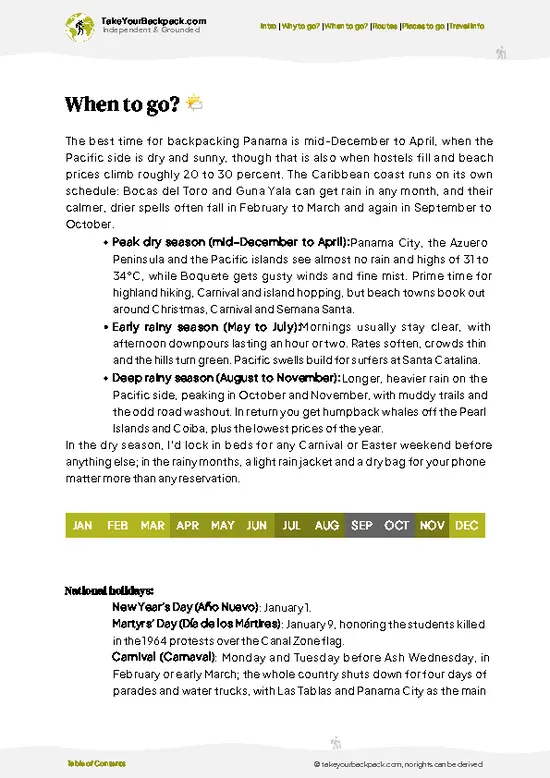
Panama’s climate is primarily tropical, with a distinct wet and dry season that influences travel experiences across the country. The dry season, typically from December to April, offers the most comfortable weather, making it ideal for outdoor activities. However, this period also attracts larger crowds and higher prices, particularly in popular areas.

The wet season, from May to November, presents a different scenario. While rain is frequent, it often falls in short bursts, allowing for exploration during breaks. This season is less crowded, and costs tend to drop, offering a more intimate experience with the landscape. Travelers should be aware that some regions may become less accessible due to heavy rainfall, impacting logistics and timing.

Shoulder … read more 👉

Seasonality and Regional Patterns


Panama’s climate is primarily tropical, with a distinct wet and dry season that influences travel experiences across the country. The dry season, typically from December to April, offers the most comfortable weather, making it ideal for outdoor activities. However, this period also attracts larger crowds and higher prices, particularly in popular areas.

The wet season, from May to November, presents a different scenario. While rain is frequent, it often falls in short bursts, allowing for exploration during breaks. This season is less crowded, and costs tend to drop, offering a more intimate experience with the landscape. Travelers should be aware that some regions may become less accessible due to heavy rainfall, impacting logistics and timing.

Shoulder seasons, particularly late April and early November, can be advantageous. These months often balance decent weather with fewer tourists and lower prices. However, travelers should prepare for unpredictable weather patterns, which can vary significantly by region.

Regional festivals can also influence timing. Events often coincide with peak tourist seasons, providing unique cultural experiences but also increasing accommodation demand. Understanding these dynamics allows for strategic planning, ensuring a smoother journey through Panama’s diverse regions.

region hoppingTips for Visiting Multiple Destinations

General Routing Logic
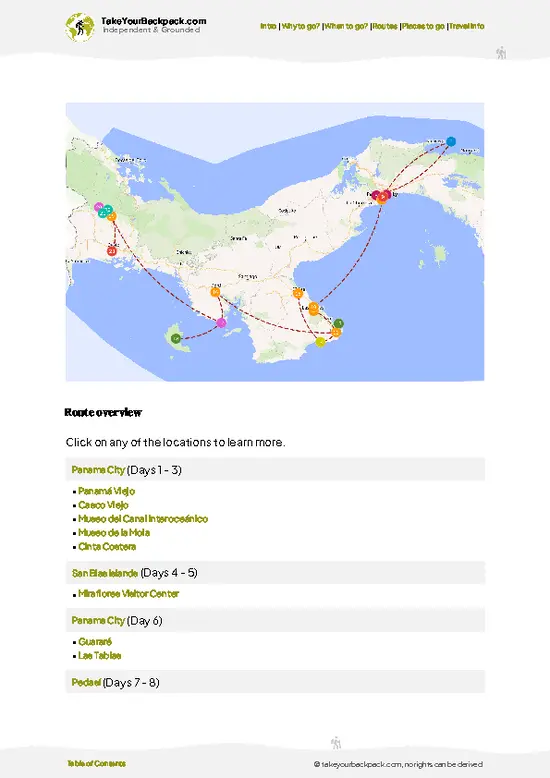
Start in Panama City, the gateway to the country. From there, head west to the Azuero Peninsula, then north to Boquete, and finally east to Bocas del Toro. This route creates a natural flow, allowing for a mix of urban, cultural, and natural experiences.

Typical Time Needed
Allocate at least two days in Panama City for museums and the canal. Spend three days in Azuero for local festivals and beaches. Boquete deserves four days for hiking and coffee tours, while Bocas del Toro can be enjoyed in three days for its vibrant nightlife and water activities. This pacing allows for immersion without feeling rushed.

Common Planning Mistakes
Travelers often underestimate travel times between regions. Roads can be winding, and public transport may not be as frequent as expected. … read more 👉
General Routing Logic
Start in Panama City, the gateway to the country. From there, head west to the Azuero Peninsula, then north to Boquete, and finally east to Bocas del Toro. This route creates a natural flow, allowing for a mix of urban, cultural, and natural experiences.

Typical Time Needed
Allocate at least two days in Panama City for museums and the canal. Spend three days in Azuero for local festivals and beaches. Boquete deserves four days for hiking and coffee tours, while Bocas del Toro can be enjoyed in three days for its vibrant nightlife and water activities. This pacing allows for immersion without feeling rushed.

Common Planning Mistakes
Travelers often underestimate travel times between regions. Roads can be winding, and public transport may not be as frequent as expected. Avoid cramming too many stops into a short timeframe; it dilutes the experience.

Trade-offs and Constraints
Consider the balance between speed and depth. Quick stops may save time but miss the essence of each region. Budget constraints can also affect comfort; opting for local accommodations can enhance the experience without breaking the bank. Flexibility is key; allow for spontaneous detours that may lead to unexpected rewards.

The ListThe Best regions of Panama

1 Chiriquí Highlands

cloud forests, coffee fincas, volcanic slopes, cool climate

Hike through misty trails, visit working coffee farms, and experience the region’s unique mix of mountain weather and agricultural life.

2 Cerro Azul

pine groves, mountain cabins, birdwatching, city escape

Relax in forested hills dotted with cabins, watch for rare birds, and enjoy a cooler retreat just outside Panama City’s urban sprawl.

panama-region-cerro-azul v1
© Google |
Loading the map 🌍

Expert viewExpert Commentary on regions

Geographic Diversity
Panama is a patchwork of ecosystems and cultures, each region offering a unique flavor. The country can be broadly divided into four main areas: the Pacific Coast, the Caribbean Coast, the Central Highlands, and the Canal Zone. Each region has its own character, shaped by geography and history. The Pacific Coast is known for its beaches and bustling urban centers, while the Caribbean Coast boasts a laid-back vibe with Afro-Caribbean influences. The Central Highlands provide a cooler climate and lush landscapes, perfect for hiking and coffee tours. The Canal Zone, a historical marvel, is a blend of engineering and nature.

When planning your trip, aim to explore at least three of these regions. This allows you to experience the contrasts in culture and environment without … read more 👉
Geographic Diversity
Panama is a patchwork of ecosystems and cultures, each region offering a unique flavor. The country can be broadly divided into four main areas: the Pacific Coast, the Caribbean Coast, the Central Highlands, and the Canal Zone. Each region has its own character, shaped by geography and history. The Pacific Coast is known for its beaches and bustling urban centers, while the Caribbean Coast boasts a laid-back vibe with Afro-Caribbean influences. The Central Highlands provide a cooler climate and lush landscapes, perfect for hiking and coffee tours. The Canal Zone, a historical marvel, is a blend of engineering and nature.

When planning your trip, aim to explore at least three of these regions. This allows you to experience the contrasts in culture and environment without feeling rushed. However, be mindful of travel time; moving between regions can take longer than expected due to road conditions and limited transport options. Prioritize your interests—if you’re drawn to beaches, focus on the Pacific and Caribbean. If you’re a nature lover, the Highlands should be on your list.

Transport Between Regions
Getting around Panama requires some strategic thinking. While the country is relatively small, the infrastructure can be a mixed bag. Buses are the most common form of transport, offering an affordable way to traverse the country. However, they can be slow and crowded. Domestic flights are available but can be pricier. If you’re short on time, flying might be worth the splurge, especially for longer distances.

Consider the trade-off between cost and convenience. If you opt for buses, be prepared for a slower pace and plan for potential delays. This can be a great opportunity to engage with locals, but it may not suit everyone’s travel style. If you choose to fly, factor in the additional budget and the need for advance booking, especially during peak seasons.

Cultural Variation
Cultural experiences vary dramatically across regions. The Pacific Coast is heavily influenced by Spanish colonial history, while the Caribbean Coast reflects a rich tapestry of Afro-Caribbean traditions. The Central Highlands, home to indigenous communities, offer a glimpse into traditional lifestyles and crafts. Each region has its own festivals, foods, and customs, making it essential to immerse yourself in local culture.

When planning, think about what cultural experiences resonate with you. If you’re interested in indigenous cultures, the Highlands are a must. However, be aware that some areas may have limited English speakers, so learning a few basic Spanish phrases can enhance your experience and show respect for local customs.

Pacing Trade-offs
Pacing is crucial in Panama. The allure of multiple regions can lead to the temptation to cram too much into your itinerary. However, this can backfire, leaving you exhausted and missing the essence of each place. A more effective approach is to spend at least two to three days in each region. This allows you to soak in the local atmosphere, try regional dishes, and participate in activities without feeling rushed.

Be realistic about your energy levels and travel style. If you prefer a more relaxed pace, consider focusing on fewer regions and diving deeper into each one. This not only enhances your experience but also reduces the stress of constant travel logistics.

Safety & Cultural Considerations
Safety is generally good in Panama, but like anywhere, it’s wise to stay alert, especially in urban areas. Be cautious with your belongings and avoid displaying valuables. Cultural sensitivity is key; dress modestly in rural areas and respect local customs. Engaging with locals can enrich your experience, but always approach interactions with an open mind and a willingness to learn.

In summary, Panama’s regions offer a rich tapestry of experiences, but understanding the logistics and cultural nuances will empower you to navigate your journey like a pro. Prioritize your interests, plan your transport wisely, and embrace the local culture to unlock the full potential of your adventure.

✈️ The backpacker research shortcutPanama Travel Guide

An offline-friendly backpacking guide with optimized travel routes, ranked highlights, transport advice, and the best areas to stay.
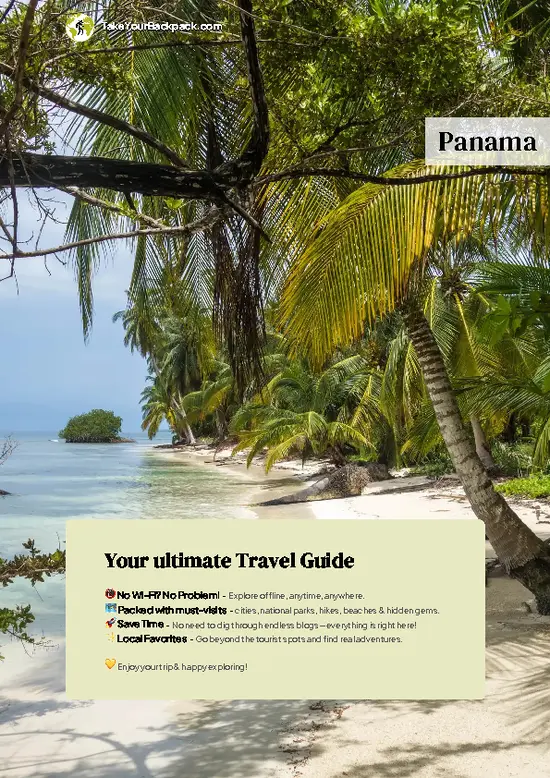
example page 0 from our offline Travel Guide for Panama
example page 1 from our offline Travel Guide for Panama
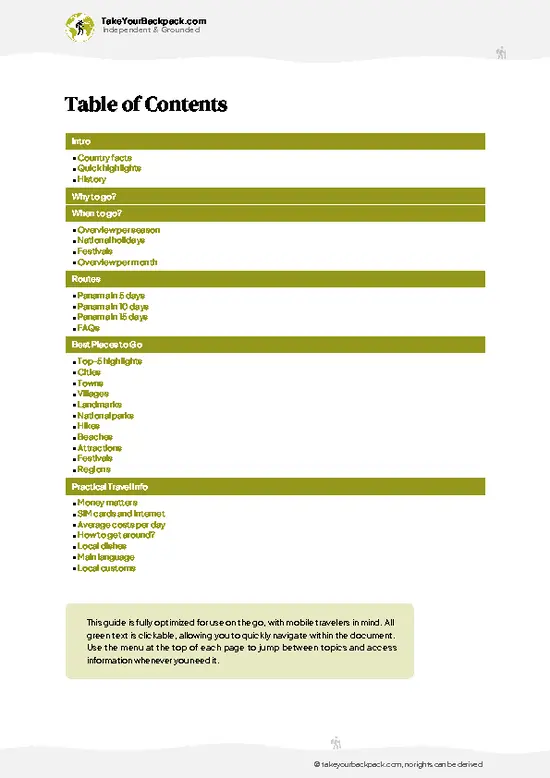
example page 2 from our offline Travel Guide for Panama
example page 3 from our offline Travel Guide for Panama
example page 4 from our offline Travel Guide for Panama
example page 5 from our offline Travel Guide for Panama
example page 6 from our offline Travel Guide for Panama
example page 7 from our offline Travel Guide for Panama
The digital guide (363 pages) contains:
96 highlights, ranked by travel appeal
Optimized 5, 10 & 15-day travel routes
Cities, national parks, landmarks, beaches
How to get around
Offline-friendly for travel without Wi-Fi
👉 Click to see all 30+ guide features

📅 Plan smarter in minutes, not weeks
Month by month travel advice
Festivals & national holidays
Budget expectations

🗺️ Go to the right places, skip the overrated ones
Honest pros & cons of destinations
Top hikes, parks & viewpoints
Lesser-known places most travelers miss
Clear “worth it vs skip it” guidance

🛏️ Travel smoothly without rookie mistakes
Best areas to stay
Transport systems explained simply
Common scams & safety advice
SIM cards, money & practical tips

🌍 Understand the country, not just visit it
Culture & traditions
52 Essential phrases & customs
Festivals worth planning around
Traveler-friendly historical context
Insights that make places more meaningful

📱 Built for real travel conditions
Fully downloadable PDF
Works completely offline
Optimized for phone use
Useful in remote areas & buses
Everything in one place
Save weeks of stressful planning
Get instant access to your full guide. 30‑day money-back guarantee.


By proceeding you agree to our terms.
Sent to your inbox immediately after payment • 100% Secure Checkout
Best Backpacking Travel Advisor 2025 tourism awardBest Backpacking
Travel Advisor
2025
What others say about Take Your Backpack Guides:
⭐⭐⭐⭐⭐
Fantastic, amazing amount of information!
⭐⭐⭐⭐⭐
My goodness this is amazing, it's what I've been looking for hats off too you!
⭐⭐⭐⭐⭐
I think this is absolutely BRILLIANT
⭐⭐⭐⭐
Very complete and informative. It's still missing places, but I gotta to commend you
⭐⭐⭐⭐⭐
This is truly amazing, thank you, can't wait to explore it with my kids!
⭐⭐⭐⭐⭐
Awesome resource, thank you!
⭐⭐⭐⭐⭐
This is amazing! Can't wait to explore the ones I haven't seen
⭐⭐⭐⭐
I love this! Well done, great idea.
⭐⭐⭐⭐⭐
Thanks for taking the time to make this gem!
⭐⭐⭐⭐⭐
This might be the best website I've ever seen.
⭐⭐⭐⭐⭐
Congratulations, and thank you so much for your work; it's incredibly valuable.
⭐⭐⭐⭐
In all seriousness I think you did a great job pointing out the important spots
⭐⭐⭐⭐⭐
10/10 very good
⭐⭐⭐⭐⭐
As someone who's only just starting to visit regularly this is awesome, thank you.
⭐⭐⭐⭐
Thank you very much! I'm going to visit my dad, it's going to be very useful!
⭐⭐⭐⭐⭐
This is really cool! We'll be travelling for the first time and this definitely come in handy.
⭐⭐⭐⭐⭐
You are now our minister of culture, congratulations 👨‍💼
⭐⭐⭐⭐⭐
Just wanted to tell you that this is a pearl! Going to follow your recommendations.
⭐⭐⭐⭐⭐
This is so cool. I'll definitely be using the resource for my travels soon.
⭐⭐⭐⭐⭐
This is very impressive! Good work.
⭐⭐⭐⭐⭐
This is an amazing and informative site. Very well done!

🛏️ Where to stay?Where to Stay in Panama

Yes — there are many hostels and budget accommodations across Panama, concentrated in Panama City and tourist towns; typical dorm beds run about $8–20 USD and private budget rooms commonly $20–50 USD, so expect lower costs outside the main city center.
In Panama City, the best neighborhoods for budget stays are Casco Viejo (most hostels, historic sights and nightlife but busier and higher petty‑theft risk at night), El Cangrejo (central, good local food, calmer evenings and solid public transport), and Obarrio/Marbella (safer business district with more budget hotels, quieter nights and farther from the old town).
Outside the capital, Bocas Town (Bocas del Toro) has many backpacker hostels, … read more 👉
Yes — there are many hostels and budget accommodations across Panama, concentrated in Panama City and tourist towns; typical dorm beds run about $8–20 USD and private budget rooms commonly $20–50 USD, so expect lower costs outside the main city center.
In Panama City, the best neighborhoods for budget stays are Casco Viejo (most hostels, historic sights and nightlife but busier and higher petty‑theft risk at night), El Cangrejo (central, good local food, calmer evenings and solid public transport), and Obarrio/Marbella (safer business district with more budget hotels, quieter nights and farther from the old town).
Outside the capital, Bocas Town (Bocas del Toro) has many backpacker hostels, bars and island access but is crowded and humid, while Boquete offers quieter, cooler stays ideal for hiking and long stays with limited nightlife; the Amador Causeway is scenic and peaceful with fewer hostel options and is convenient for short stays near museums and airport transfers.

If you enjoy meeting fellow travelers, consider choosing hostels with high ratings for atmosphere. On the other hand, if you prefer having your own space, a hotel might be a better option.

PanamaMore of Panama

👋 Meet the founderWho’s Behind Take Your Backpack?

Johan, backpacker and founder of TakeYourBackpackHi, I’m Johan (Netherlands 🇳🇱), the creator of TakeYourBackpack. Over the past decade, I’ve backpacked through 80+ countries across six continents, gaining extensive experience with independent travel, long-term trips, and overland routes.

This site is built on a combination of firsthand travel experience and carefully curated insights from other backpackers. Many guides are based on places I’ve personally visited, while others bring together tips, observations, and practical advice shared by trusted travelers I’ve met along the way.

The goal is to provide realistic, experience-driven guidance — not generic itineraries — so you can explore destinations with better context, clearer expectations, and more confidence.

Get full Panama guide •
Instant download • 96 highlights • Full Offline guide