
×

Panama🇵🇦 | regionsTaboga IslandCar-free village, ferry pier, pelican colony, hillside lookouts | things to do and best time to go

Explore San Blas IslandsExplore Chiriquí Highlands

Backpacking in Taboga Island
👀 For curious travelersregion ranked #6
By Johan Kruseman 🇳🇱 | Updated October 22, 2026

The decision most travelers face on Taboga Island is whether to come for a single day or sleep over, and the last ferry back is what tips it. Day-trippers rush the beach and miss the quiet that returns once the boats leave. Taboga Island sits in the Gulf of Panama, in Panama’s capital region, a short ferry ride from the city’s Amador causeway. The island is small and car-free, so a bag on foot is plenty. Book weekend beds ahead, since the handful of guesthouses fill first. What I still connect with it is the clatter of pelican wings and the smell of frying fish drifting off the pier at dusk. Unlike Contadora in the Pearl Islands, it is cheap, close and lived-in rather than resort-polished.

Discover everything you want to know in the 📖 Panama Travel Guide.


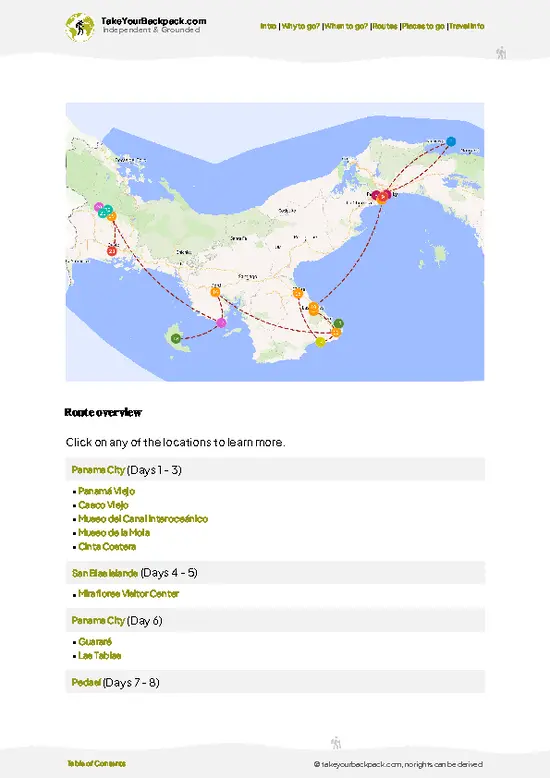
example page 0 from our offline Travel Guide for Panama
example page 1 from our offline Travel Guide for Panama
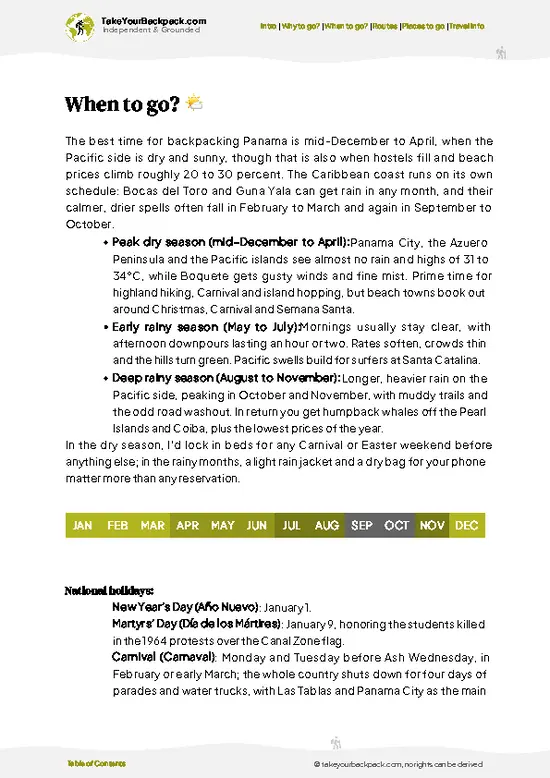
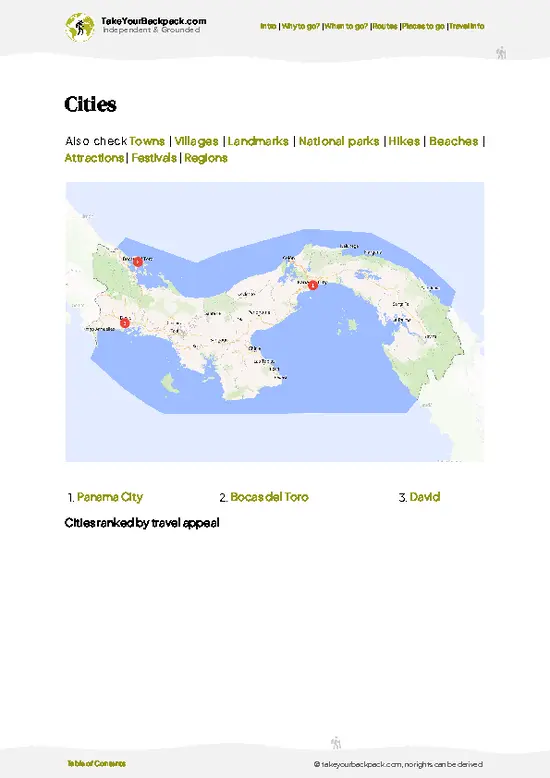
example page 2 from our offline Travel Guide for Panama
example page 3 from our offline Travel Guide for Panama
example page 4 from our offline Travel Guide for Panama
example page 5 from our offline Travel Guide for Panama
example page 6 from our offline Travel Guide for Panama
example page 7 from our offline Travel Guide for Panama
Loading the map 🌍
CLICK TO FILTER
cities
towns
villages
landmarks
national parks
hikes
beaches
attractions
festivals
regions
SHOW COUNTRY’S BESTSHOW ALL

✨ Why go?
Ranked #6 region in Panama
Reasons people choose to visit here

Taboga Island works because it gives you a full island break without the logistics of the Pearl Islands. The ferry runs from the Amador causeway, so you can leave your city hostel bag behind and still be swimming by late morning. Within walking distance you get the pastel village, the colonial church of San Pedro, which is among the oldest in the Americas still standing, and the hill trail to the Cerro de la Cruz lookout. That combination of history, a beach and a hike on one small island means no onward transport at all. It also suits slow travel: the pace is set by the ferry timetable, and sleeping over gives you the evening and early morning, when pelicans work the bay and the village belongs to residents. Fruit sellers and small fondas keep everything within a few minutes’ walk, so San … read more 👉
Taboga Island works because it gives you a full island break without the logistics of the Pearl Islands. The ferry runs from the Amador causeway, so you can leave your city hostel bag behind and still be swimming by late morning. Within walking distance you get the pastel village, the colonial church of San Pedro, which is among the oldest in the Americas still standing, and the hill trail to the Cerro de la Cruz lookout. That combination of history, a beach and a hike on one small island means no onward transport at all. It also suits slow travel: the pace is set by the ferry timetable, and sleeping over gives you the evening and early morning, when pelicans work the bay and the village belongs to residents. Fruit sellers and small fondas keep everything within a few minutes’ walk, so San Pedro church, Cerro de la Cruz and the Taboga and Urabá wildlife refuge can all fit into one unhurried stay.

💡 HighlightsThe experiences that define the visit

  1. Iglesia San Pedro: The second-oldest church in the Americas still standing, with a whitewashed facade and a quiet plaza out front. It sits a few steps from the ferry pier and is free to enter.
  2. Playa Honda: The main swimming beach in town, with calm, warm water and a short walk from the pier. Pelicans dive here at high tide, and the sand turns to rocky flats when the tide goes out.
  3. Cerro de la Cruz: A steep hillside trail up to a cross, with views over red-roofed houses, the bay and the Panama City skyline on clear days. Start early and carry water, since there is little shade.
  4. Isla Morro: A tiny rock linked to the main island by a sandbar at low tide. Walk across, watch the tide tables, and do not linger once the water starts to creep back.
  5. Gauguin plaque: An engraved plate on the main beach recalling
… read more 👉
  1. Iglesia San Pedro: The second-oldest church in the Americas still standing, with a whitewashed facade and a quiet plaza out front. It sits a few steps from the ferry pier and is free to enter.
  2. Playa Honda: The main swimming beach in town, with calm, warm water and a short walk from the pier. Pelicans dive here at high tide, and the sand turns to rocky flats when the tide goes out.
  3. Cerro de la Cruz: A steep hillside trail up to a cross, with views over red-roofed houses, the bay and the Panama City skyline on clear days. Start early and carry water, since there is little shade.
  4. Isla Morro: A tiny rock linked to the main island by a sandbar at low tide. Walk across, watch the tide tables, and do not linger once the water starts to creep back.
  5. Gauguin plaque: An engraved plate on the main beach recalling the painter’s brief stay on the island in 1887, before he went on to Martinique. It is small, but it gives the lanes of the village some history.
  6. Pelican Colony at Isla Urabá: Taboga’s offshore bird sanctuary hosts one of the largest brown pelican nesting sites on the Pacific coast. Admire it from a boat.
  7. Playa La Restinga: The beach whose sandbar leads to Isla Morro at low tide, a good spot to read under a palm.
  8. Mirador del Cerro Vigía: A lesser-used lookout reached on a side track near the old cemetery, giving a different angle over the bay, where ships queue for the Canal. Locals come up for the evening breeze.
  9. Taboga’s back lanes and village murals: Wander the narrow streets behind the church, where bougainvillea spills over low walls, fishermen mend nets and hand-painted signs mark tiny family-run shops. Locals love it for the unhurried pace.
Taboga Island is best started with the climb up Cerro de la Cruz, because the morning light is soft and the trail is cooler before the sun gets high.
Spotted a mistake or missing something? Contact us.

Things to do near Taboga Island

Ratings based on Tripadvisor reviews. When you book through this link, you support our work at no extra cost to you.

⌛️ 5 daysSeeing the highlights in 5 days

Day 1: Taboga Village
Take an early ferry so you reach the island before day-trippers, drop your bag at a guesthouse and walk straight up to Cerro de la Cruz while the air is cool. The ferry schedule dictates everything here, so arriving early gives you the whole day. Come down through the lanes to San Pedro church, then eat at a plaza fonda.
Day 2: Playa Restinga:
Spend the morning on Playa Restinga before the crowds, then walk on to Playa Honda for snorkeling. The village is so compact that you never need transport, and slowing down is the point. Return for sunset at the pier, when fishers land their catch.
Day 3: Isla Morro:
Check the tide and cross the sandbar to El Morro for its pelicans and frigatebirds, best at low water and early light. As a detour, hike the upper forest track in the … read more 👉
Day 1: Taboga Village
Take an early ferry so you reach the island before day-trippers, drop your bag at a guesthouse and walk straight up to Cerro de la Cruz while the air is cool. The ferry schedule dictates everything here, so arriving early gives you the whole day. Come down through the lanes to San Pedro church, then eat at a plaza fonda.
Day 2: Playa Restinga:
Spend the morning on Playa Restinga before the crowds, then walk on to Playa Honda for snorkeling. The village is so compact that you never need transport, and slowing down is the point. Return for sunset at the pier, when fishers land their catch.
Day 3: Isla Morro:
Check the tide and cross the sandbar to El Morro for its pelicans and frigatebirds, best at low water and early light. As a detour, hike the upper forest track in the afternoon for shade and birdsong, since it adds a quiet half day without any extra logistics.
Day 4: Back to the City:
Take a morning ferry back and use the afternoon for Amador, where you board onward buses.
If one day justifies the trip, I would choose Day 3 for the pelicans.

🌤️ When to go?When to go for the best experience

  • Dry Season (mid-December to April): Rain is rare, days run 30 to 33°C (86 to 91°F) and the sea is calm, so ferries are smooth and beaches are at their best. Weekends and Carnival (February or March) fill the island with Panama City day-trippers, and rooms cost more, roughly US$50 to 90 for a basic double.
  • Green Season (May to November): Afternoon downpours are common, and October and November are the wettest. Highs stay near 29 to 31°C (84 to 88°F), the hills turn deep green, and rooms drop to about US$30 to 55. Mornings are usually clear enough for hiking.
  • Humpback Whale Season (July to September): Whales pass through nearby Pacific waters, and boat trips toward the Perlas side run then.
  • Daylight: Days stay close to 12 hours all year, so plan hikes for the morning.
Book a Tuesday to Thursday … read more 👉
  • Dry Season (mid-December to April): Rain is rare, days run 30 to 33°C (86 to 91°F) and the sea is calm, so ferries are smooth and beaches are at their best. Weekends and Carnival (February or March) fill the island with Panama City day-trippers, and rooms cost more, roughly US$50 to 90 for a basic double.
  • Green Season (May to November): Afternoon downpours are common, and October and November are the wettest. Highs stay near 29 to 31°C (84 to 88°F), the hills turn deep green, and rooms drop to about US$30 to 55. Mornings are usually clear enough for hiking.
  • Humpback Whale Season (July to September): Whales pass through nearby Pacific waters, and boat trips toward the Perlas side run then.
  • Daylight: Days stay close to 12 hours all year, so plan hikes for the morning.
Book a Tuesday to Thursday stay in any season for emptier sand and lower rates.


source: climatestotravel.comJANJanuary: excellent for travelingFEBFebruary: excellent for travelingMARMarch: excellent for travelingAPRApril: excellent for travelingMAYMay: fair for travelingJUNJune: fair for travelingJULJuly: fair for travelingAUGAugust: fair for travelingSEPSeptember: fair for travelingOCTOctober: fair for travelingNOVNovember: good for travelingDECDecember: highly recommended for traveling
panama-region-taboga-island
© Google |

✈️ The backpacker research shortcutPanama Travel Guide

An offline-friendly backpacking guide with optimized travel routes, ranked highlights, transport advice, and the best areas to stay.
example page 0 from our offline Travel Guide for Panama
example page 1 from our offline Travel Guide for Panama
example page 2 from our offline Travel Guide for Panama
example page 3 from our offline Travel Guide for Panama
example page 4 from our offline Travel Guide for Panama
example page 5 from our offline Travel Guide for Panama
example page 6 from our offline Travel Guide for Panama
example page 7 from our offline Travel Guide for Panama
The digital guide (272 pages) contains:
✅ 89 highlights, ranked by travel appeal
✅ Optimized 5, 10 & 15-day travel routes
✅ Cities, national parks, landmarks, beaches
✅ How to get around
✅ Offline-friendly for travel without Wi-Fi
👉 Click to see all 30+ guide features

📅 Plan smarter in minutes, not weeks
✅ Month by month travel advice
✅ Festivals & national holidays
✅ Budget expectations

🗺️ Go to the right places, skip the overrated ones
✅ Honest pros & cons of destinations
✅ Top hikes, parks & viewpoints
✅ Lesser-known places most travelers miss
✅ Clear “worth it vs skip it” guidance

🛏️ Travel smoothly without rookie mistakes
✅ Best areas to stay
✅ Transport systems explained simply
✅ Common scams & safety advice
✅ SIM cards, money & practical tips

🌍 Understand the country, not just visit it
✅ Culture & traditions
✅ 52 Essential phrases & customs
✅ Festivals worth planning around
✅ Traveler-friendly historical context
✅ Insights that make places more meaningful

📱 Built for real travel conditions
✅ Fully downloadable PDF
✅ Works completely offline
✅ Optimized for phone use
✅ Useful in remote areas & buses
✅ Everything in one place
Stop searching, start planning
Get instant access to your full guide. 30‑day money-back guarantee.
+ Add another guide for just

By proceeding you agree to our terms.
Sent to your inbox immediately after payment • 100% Secure Checkout
Best Backpacking Travel Advisor 2025 tourism awardBest Backpacking
Travel Advisor
2025
What others say about Take Your Backpack Guides:
⭐⭐⭐⭐⭐
Fantastic, amazing amount of information!
⭐⭐⭐⭐⭐
My goodness this is amazing, it's what I've been looking for hats off too you!
⭐⭐⭐⭐⭐
I think this is absolutely BRILLIANT
⭐⭐⭐⭐
Very complete and informative. It's still missing places, but I gotta to commend you
⭐⭐⭐⭐⭐
This is truly amazing, thank you, can't wait to explore it with my kids!
⭐⭐⭐⭐⭐
Awesome resource, thank you!
⭐⭐⭐⭐⭐
This is amazing! Can't wait to explore the ones I haven't seen
⭐⭐⭐⭐
I love this! Well done, great idea.
⭐⭐⭐⭐⭐
Thanks for taking the time to make this gem!
⭐⭐⭐⭐⭐
This might be the best website I've ever seen.
⭐⭐⭐⭐⭐
Congratulations, and thank you so much for your work; it's incredibly valuable.
⭐⭐⭐⭐
In all seriousness I think you did a great job pointing out the important spots
⭐⭐⭐⭐⭐
10/10 very good
⭐⭐⭐⭐⭐
As someone who's only just starting to visit regularly this is awesome, thank you.
⭐⭐⭐⭐
Thank you very much! I'm going to visit my dad, it's going to be very useful!
⭐⭐⭐⭐⭐
This is really cool! We'll be travelling for the first time and this definitely come in handy.
⭐⭐⭐⭐⭐
You are now our minister of culture, congratulations 👨‍💼
⭐⭐⭐⭐⭐
Just wanted to tell you that this is a pearl! Going to follow your recommendations.
⭐⭐⭐⭐⭐
This is so cool. I'll definitely be using the resource for my travels soon.
⭐⭐⭐⭐⭐
This is very impressive! Good work.
⭐⭐⭐⭐⭐
This is an amazing and informative site. Very well done!

🛏️ Where to stay?Choosing the right base

Taboga village is the only sensible base, and it is a good one: the whole island has a single main settlement, so you sleep within a few minutes of the pier, the beach, the cafés and the trailheads. Rooms in the village run roughly US$30 to 90 a night depending on the season, with simple guesthouses, small inns and a few places with dorm-style options.
The area along the main beach and the streets behind it is the most social, with cafés, small bars and beach chairs where solo travelers end up chatting with other guests and locals. It is also the safest stretch because it is lit, busy and close … read more 👉
Taboga village is the only sensible base, and it is a good one: the whole island has a single main settlement, so you sleep within a few minutes of the pier, the beach, the cafés and the trailheads. Rooms in the village run roughly US$30 to 90 a night depending on the season, with simple guesthouses, small inns and a few places with dorm-style options.
The area along the main beach and the streets behind it is the most social, with cafés, small bars and beach chairs where solo travelers end up chatting with other guests and locals. It is also the safest stretch because it is lit, busy and close to everything. Streets higher up the hill are quieter, have sea views and need a short climb with luggage, so they suit people who want sleep over nightlife.
The village is calm after dark, with no club scene, so expect low-key evenings of drinks and card games. Most backpackers come for a night or two, and staying overnight lets you enjoy the island after the day boats have left. Book ahead for weekends and holidays.

🚌 Getting aroundMoving around without the hassle

Taboga Island is small enough that the village center, the church, the pier and the main beach all sit within a ten-minute walk of each other, and walking stops making sense only when you head for the hilltop cross, a steep and sun-exposed hike. The island has almost no cars because the lanes are narrow and the population is only about 1,600, so everything you need is on foot or by sea. Getting here is the real logistics puzzle, and it is reliable once you know the system.
  • Ferry from Panama City: Boats leave from the Amador Causeway (Marina Isla Flamenco) and take about 30 to 45 minutes. A round trip costs roughly US$20 to 30. There are only a few sailings a day, because the route is run by a small operator and demand is tied to tides and weekends, so reserve ahead on Saturdays and holidays
… read more 👉
Taboga Island is small enough that the village center, the church, the pier and the main beach all sit within a ten-minute walk of each other, and walking stops making sense only when you head for the hilltop cross, a steep and sun-exposed hike. The island has almost no cars because the lanes are narrow and the population is only about 1,600, so everything you need is on foot or by sea. Getting here is the real logistics puzzle, and it is reliable once you know the system.
  • Ferry from Panama City: Boats leave from the Amador Causeway (Marina Isla Flamenco) and take about 30 to 45 minutes. A round trip costs roughly US$20 to 30. There are only a few sailings a day, because the route is run by a small operator and demand is tied to tides and weekends, so reserve ahead on Saturdays and holidays and take the morning boat to get a full day. Sit on the shaded side on the way back.
  • Walking: Free, and it works for the village and nearby beaches. The trail to the lookout and Cerro de la Cruz takes 30 to 45 minutes uphill. Go early, since the shade is thin and the heat builds fast.
  • Golf carts and small taxis: A handful are available for about US$5 to 10 per ride. They exist because of the steep lanes and luggage, so use them only for heavy bags or the hill.
  • Private boats: Local captains run trips to Isla Urabá bird sanctuary and quiet coves for roughly US$10 to 30 per person in a group. Prices are set per boat, so a group of four splits the cost, which is the smarter way to book.
Taxi to the Amador Causeway from central Panama City costs about US$8 to 15 by ride-hailing app, and it is cheaper than the tourist cars waiting at hotels, so call one yourself.

🍲 FoodEating & Drinking in Taboga Island

Fish is the island’s identity, and you taste it in fried whole red snapper with crisp patacones (twice-fried plantain discs) and a squeeze of lime. Ceviche here is bright and sharp, usually made with corvina and a lot of onion and cilantro. Arroz con mariscos arrives in a heap of rice with shrimp, squid and mussels, and the smoky sancocho broth is worth ordering on a rainy day. Most meals cost about US$6 to 15.
For drinks, local Balboa and Atlas beer come ice cold, chicha and fresh juices such as tamarind or passion fruit cut the heat, and seco con leche is the local cane spirit mixed with milk.
Eating is casual. Small beachfront restaurants near the pier serve lunch with a view of the water, fondas in the village do plate lunches of rice, beans and fried fish for less, and little bakeries sell … read more 👉
Fish is the island’s identity, and you taste it in fried whole red snapper with crisp patacones (twice-fried plantain discs) and a squeeze of lime. Ceviche here is bright and sharp, usually made with corvina and a lot of onion and cilantro. Arroz con mariscos arrives in a heap of rice with shrimp, squid and mussels, and the smoky sancocho broth is worth ordering on a rainy day. Most meals cost about US$6 to 15.
For drinks, local Balboa and Atlas beer come ice cold, chicha and fresh juices such as tamarind or passion fruit cut the heat, and seco con leche is the local cane spirit mixed with milk.
Eating is casual. Small beachfront restaurants near the pier serve lunch with a view of the water, fondas in the village do plate lunches of rice, beans and fried fish for less, and little bakeries sell fresh bread and empanadas for breakfast. Service is relaxed, so expect a wait and do not rush it. Tipping around 10 percent is appreciated when no service is added, and paying in cash is easiest. Buy snacks and water before long hikes, since there are no shops on the trails.

🛡️ SafetySafety Tips and Common Scams in Taboga Island

Taboga Island beach is generally a chill spot for swimming and soaking up the sun. The waters are usually calm, but keep an eye out for the occasional current. Locals know where to swim, so follow their lead. If you see flags, follow them.

As for marine life, jellyfish can pop up, but they’re not a constant threat. Sharks? Rarely a concern here. Just be mindful of the rocky areas when wading in.

Weather can shift, so slather on sunscreen early and often. Mornings are quieter, but by afternoon, the beach fills up. Theft isn’t rampant, but don’t leave your valuables unattended.

FAQTraveler FAQ

One night is the ideal stay on Taboga Island, though a full day trip works if you take an early ferry. The boat from the Amador Causeway takes about 30 to 45 minutes and a round trip costs roughly US$20 to 30. That leaves time for the beach, the hike to Cerro de la Cruz and lunch in the village. A second day only makes sense for boat trips to Isla Urabá.
Taboga Island has almost no cars, so you get around on foot, and the village, pier and main beach are within a ten-minute walk. For the steeper lanes or heavy bags, small golf carts or taxis cost about US$5 to 10. Boat captains run trips to nearby islets and coves for roughly US$10 to 30 per person. To reach the island, take the ferry from Amador Causeway, a 30 to 45 minute crossing.
Taboga Island is known as the Island of Flowers, a small Pacific retreat about 20 kilometers (12 miles) off Panama City. It has calm beaches, a colonial-era church among the oldest in the Americas, and the story of Paul Gauguin staying briefly nearby during the Panama Canal construction era. Hikers climb Cerro de la Cruz in 30 to 45 minutes for views over the bay, and the nearby bird sanctuary on Isla Urabá draws pelicans and frigatebirds.
⚠️ Things can change over time, so always validate details locally before you go.

Other Panamanian regions near Taboga Island

Explore more nearby:

  • Cerro Azul—Cloud forest, Cerro Jefe trails, birding roads, Lake Alajuela| 47 km away
  • Isla Contadora—Golf carts, small beaches, snorkeling, whale season| 60 km away
  • Las Perlas Archipelago—Pearl Islands, boat-hopping, empty beaches, fishing villages| 77 km away

💡 Not sure where to go next?
Create a personalized itinerary for Panama including Taboga Island and the places that fit your trip.

Generate my itinerary

👉 Discover all regions

Or checkout all Panama has to offer (think cities, towns, villages, national parks, hikes, beaches, festivals)
Country photo of Panama

We 💚 feedbackParting advice and final tips

Taboga Island is best on a weekday morning, ideally in the drier months, when the beach is nearly empty and the pelicans are working the bay. I would sleep over rather than rush back, and bring cash, since the village has few places to pay by card.

✈️ When did I visit Panama?
Panama I visited during my half year trip through South and Central America back in 2003

✍️ Help improve this page!
The information on this page is based on my own backpacking experience in Panama, supplemented with up-to-date research and feedback from other travelers. Travel details can change, so if you notice anything outdated or incomplete, feel free to let me know.


🙋‍♂️ Give feedback

👋 Meet the founderWho’s Behind Take Your Backpack?

Johan, backpacker and founder of TakeYourBackpackHi, I’m Johan (Netherlands 🇳🇱), the creator of TakeYourBackpack. Over the past 3 decades, I’ve backpacked through 90+ countries across six continents, gaining extensive experience with independent travel, long-term trips, and overland routes.

This site is built on a combination of firsthand travel experience and carefully curated insights from other backpackers. Many guides are based on places I’ve personally visited, while others bring together tips, observations, and practical advice shared by trusted travelers I’ve met along the way.

The goal is to provide realistic, experience-driven guidance — not generic itineraries — so you can explore destinations with better context, clearer expectations, and more confidence.