×

Panama🇵🇦 | citiesPanama CityCasco Viejo, canal locks, skyline promenade, rainforest park | things to do and best time to go

Explore Bocas del ToroExplore David

Backpacking in Panama City
UNESCO World Heritage site
🏆 Top pickcity ranked #1
By Johan Kruseman 🇳🇱 | Updated October 22, 2026

Most people come to Panama City for the Canal, and the ships at Miraflores Locks are worth the trip. What matters just as much is that this is Central America’s easiest hub: you can fly, bus or sail onward from here, and the old quarter, skyline and rainforest sit within one city. It is the capital of Panama, on the Pacific mouth of the Canal. I stepped out of the Albrook terminal and watched a diablo rojo bus, painted like a carnival float, roar past a glass tower; that clash told me everything. Spend your time in Casco Viejo, the Canal and Metropolitano Park. Skip the mall-heavy Cinta Costera strip and most of the skyline district, which feel like Miami with fewer reasons to linger. Unlike San José in Costa Rica, which is mostly a transit stop, Panama City gives you real sights worth planning days around.

Discover everything you want to know in the 📖 Panama Travel Guide.


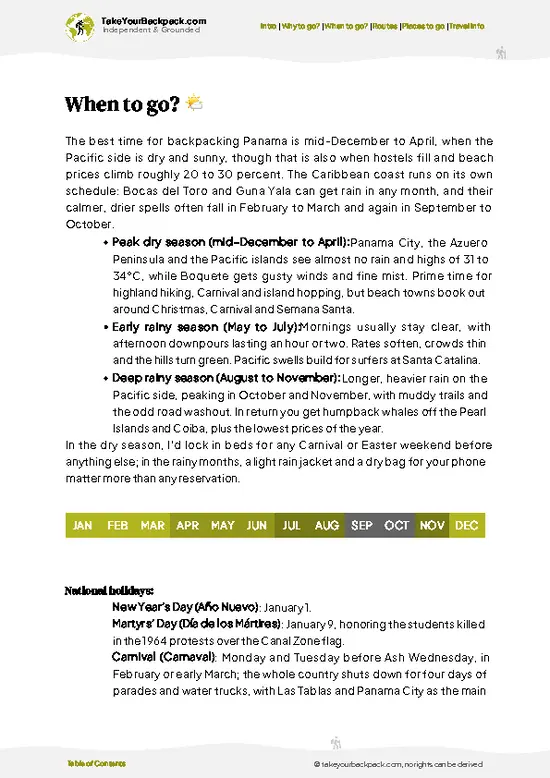
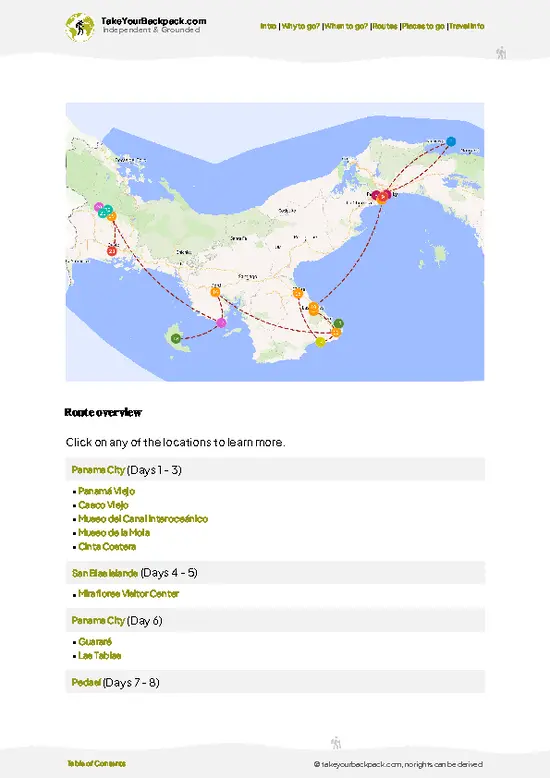
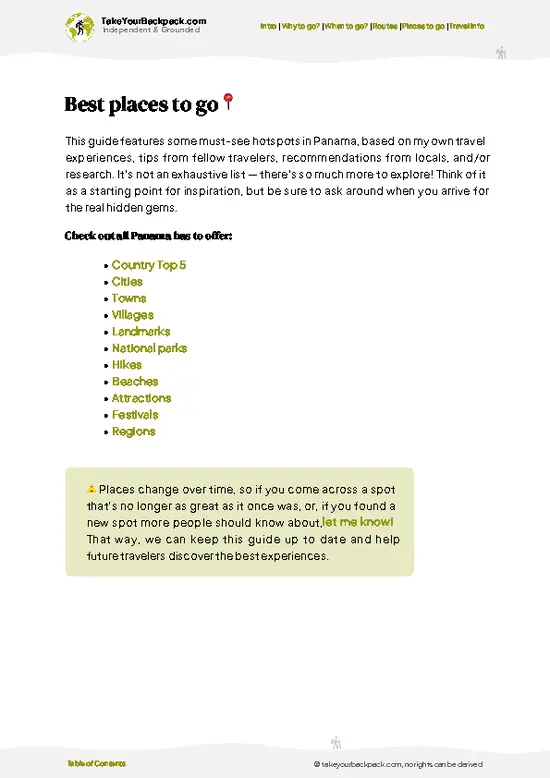
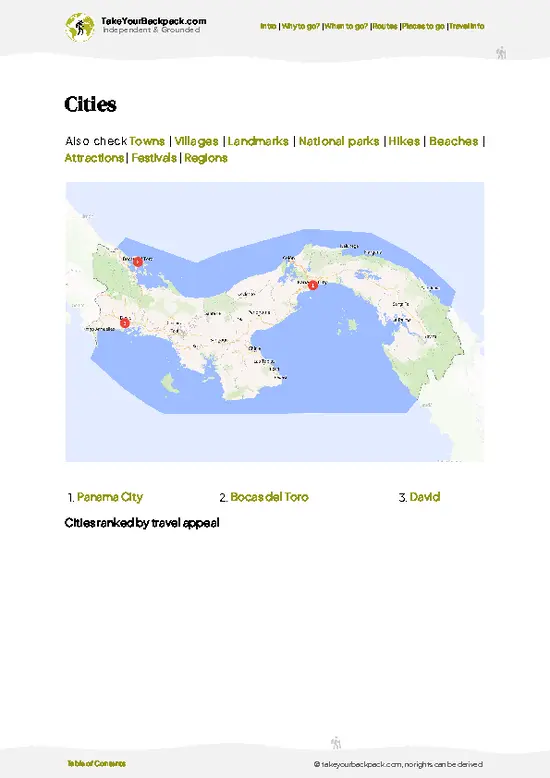
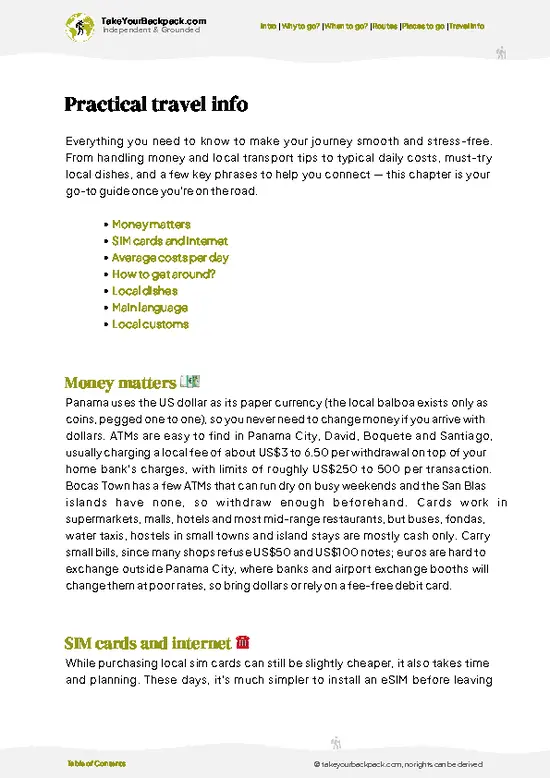
example page 0 from our offline Travel Guide for Panama
example page 1 from our offline Travel Guide for Panama
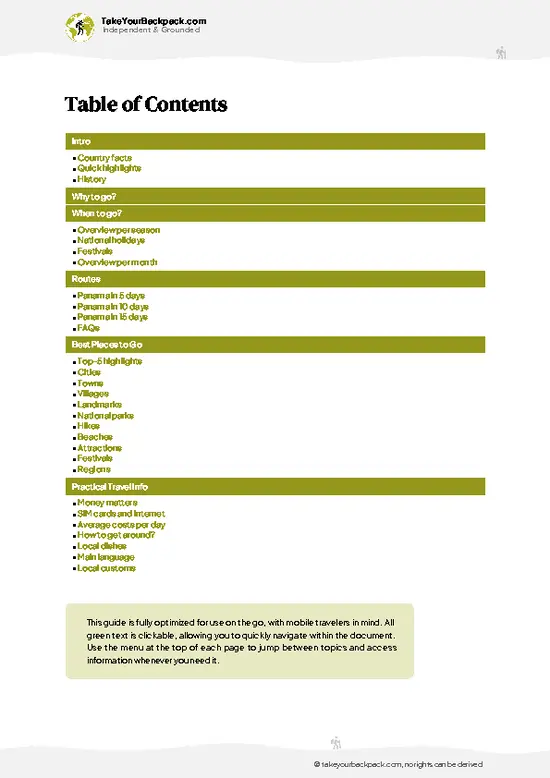
example page 2 from our offline Travel Guide for Panama
example page 3 from our offline Travel Guide for Panama
example page 4 from our offline Travel Guide for Panama
example page 5 from our offline Travel Guide for Panama
example page 6 from our offline Travel Guide for Panama
example page 7 from our offline Travel Guide for Panama
Loading the map 🌍
CLICK TO FILTER
cities
towns
villages
landmarks
national parks
hikes
beaches
attractions
festivals
regions
SHOW COUNTRY’S BESTSHOW ALL

✨ Why go?
Ranked #1 city in Panama
The unique appeal for travelers

Panama City works for backpackers because it packs a working Canal, a restored colonial quarter and a rainforest park into one metro area, so a few days here cover more ground than almost any other Central American capital. It also acts as a flexible base. Casco Viejo has the densest cluster of hostels, rooftop bars and cheap cafes, and the old streets are easy to cover on foot, while the new city needs the metro or a short ride. Onward travel is the other big reason. Tocumen International Airport links to much of the Americas, and the Albrook terminal sends buses to the interior, the Caribbean side and the Costa Rican border. That makes the city a logical start or finish for an overland loop. Nightlife is good and varied, from salsa bars to craft beer, though it runs later and pricier than … read more 👉
Panama City works for backpackers because it packs a working Canal, a restored colonial quarter and a rainforest park into one metro area, so a few days here cover more ground than almost any other Central American capital. It also acts as a flexible base. Casco Viejo has the densest cluster of hostels, rooftop bars and cheap cafes, and the old streets are easy to cover on foot, while the new city needs the metro or a short ride. Onward travel is the other big reason. Tocumen International Airport links to much of the Americas, and the Albrook terminal sends buses to the interior, the Caribbean side and the Costa Rican border. That makes the city a logical start or finish for an overland loop. Nightlife is good and varied, from salsa bars to craft beer, though it runs later and pricier than the rest of the country. It is a smart stop of three to four days. Beyond that, the beaches and mountains call.

💡 HighlightsTop highlights of Panama City

  1. Miraflores Locks: The Canal’s best-known viewpoint, where ships rise and drop in the chambers. Go in the morning, when most big vessels transit. Entry is about US$20 to 25, and 2 to 3 hours covers the museum and viewing decks.
  2. Casco Viejo: The restored colonial quarter, with plazas, balconies and churches such as the Cathedral. Walk it in the late afternoon, when it cools and the stone turns gold. Free to wander; allow 3 to 4 hours.
  3. Panama Canal Museum: Set in a Plaza de la Independencia building, it traces the French and American construction eras. Quiet in the morning. Entry is around US$5 to 10, and 1 hour is enough.
  4. Metropolitano Natural Park: Rainforest inside the city, with trails to a lookout over the skyline and the Pacific. Sloths and monkeys are common. Go early. Entry is about US$5
… read more 👉
  1. Miraflores Locks: The Canal’s best-known viewpoint, where ships rise and drop in the chambers. Go in the morning, when most big vessels transit. Entry is about US$20 to 25, and 2 to 3 hours covers the museum and viewing decks.
  2. Casco Viejo: The restored colonial quarter, with plazas, balconies and churches such as the Cathedral. Walk it in the late afternoon, when it cools and the stone turns gold. Free to wander; allow 3 to 4 hours.
  3. Panama Canal Museum: Set in a Plaza de la Independencia building, it traces the French and American construction eras. Quiet in the morning. Entry is around US$5 to 10, and 1 hour is enough.
  4. Metropolitano Natural Park: Rainforest inside the city, with trails to a lookout over the skyline and the Pacific. Sloths and monkeys are common. Go early. Entry is about US$5 to 10, and 2 hours works.
  5. Biomuseo: Frank Gehry’s colorful building tells how the isthmus rose and joined two continents. Visit on a rainy afternoon. Tickets cost about US$20 for foreign adults, and 2 hours is plenty.
  6. Panamá Viejo: The ruins of the original city, sacked by pirate Henry Morgan in 1671. Climb the cathedral tower for views over the modern skyline. Go in the early morning. Entry for the site is about US$10 to 15, and 2 hours suffices.
  7. Mercado de Mariscos: The fish market, where ceviche is served in plastic cups at counters. Best at lunch. Cups cost about US$3 to 6, and an hour is plenty.
  8. Amador Causeway: A causeway built from Canal excavation rock, with a bike path and views of ships queuing for the Canal. Come at dusk. Walking is free, bike rental is roughly US$5 to 10, and allow 2 hours.
From Panama City, easy day trips include Gamboa and the Soberanía rainforest, Portobelo’s old forts, and the Embera communities on the Chagres River.
Miraflores Locks and the Biomuseo sell tickets online, which is worth doing in busy periods.
Spotted a mistake or missing something? Contact us.

Things to do in Panama City

Ratings based on Tripadvisor reviews. When you book through this link, you support our work at no extra cost to you.

🏘️ NeighborhoodsUnderstanding the local layout

Panama City sprawls along the Pacific, and three areas hold nearly everything a backpacker needs. Their layout explains the logistics: the old town sits on a peninsula at the southwest end, while the business districts stretch east along the bay.
  • Casco Viejo: The colonial quarter is the one area you should not skip. Plazas, restored balconied buildings, rooftop bars and street vendors selling fried corn fritters sit within a few compact blocks, and you can cover it on foot in half a day. It is the best place for nightlife, but the northern fringe is rougher, so keep to the lit core after dark.
  • Calidonia and Bella Vista: This is the working-class center, with cheap fondas (lunch counters) serving rice, beans and stewed meat for a fraction of tourist prices. Bella Vista is greener and calmer,
… read more 👉
Panama City sprawls along the Pacific, and three areas hold nearly everything a backpacker needs. Their layout explains the logistics: the old town sits on a peninsula at the southwest end, while the business districts stretch east along the bay.
  • Casco Viejo: The colonial quarter is the one area you should not skip. Plazas, restored balconied buildings, rooftop bars and street vendors selling fried corn fritters sit within a few compact blocks, and you can cover it on foot in half a day. It is the best place for nightlife, but the northern fringe is rougher, so keep to the lit core after dark.
  • Calidonia and Bella Vista: This is the working-class center, with cheap fondas (lunch counters) serving rice, beans and stewed meat for a fraction of tourist prices. Bella Vista is greener and calmer, with a good restaurant strip along Via Argentina. Neither has sights, so treat them as places to eat and pass through. They are walkable by day, but the traffic is loud.
  • Avenida Balboa and the Cinta Costera: A waterfront path and skyline of glass towers. Worth an hour for a walk or bike ride at golden hour, but the surrounding area is business-focused and quiet at night.
  • Amador Causeway: A flat strip built from canal excavation spoil, with views of the skyline and the bridge. Rent a bike for the afternoon. It is too far to walk from town, and little else is there.
  • El Cangrejo: Cafés, bars and international restaurants, with a university crowd. Pleasant for an evening meal, though lacking character compared with Casco Viejo.

⌛️ 1 daySeeing the highlights in 24 hours

7:30 AM: Metropolitano Natural Park Start early on the forest trail to the lookout, when sloths and birds are active and the air is cool. Take a taxi or ride-hailing car from your hostel, then walk the loop in about 2 hours.
10:30 AM: Miraflores Locks A short ride brings you to the Canal. Catch a transit from the viewing deck, then see the museum to understand the engineering. Spending 2 hours here is right.
1:00 PM: Mercado de Mariscos Head back toward the city for ceviche at the fish market. Eat at the counters upstairs or outside, where locals queue. It is plain, noisy and the freshest lunch in town.
2:30 PM: Casco Viejo Walk the old quarter through Plaza de la Independencia, the Cathedral and the seawall promenade. Stop for coffee in a shaded courtyard and pause to see the balconies.
4:30 … read more 👉
7:30 AM: Metropolitano Natural Park Start early on the forest trail to the lookout, when sloths and birds are active and the air is cool. Take a taxi or ride-hailing car from your hostel, then walk the loop in about 2 hours.
10:30 AM: Miraflores Locks A short ride brings you to the Canal. Catch a transit from the viewing deck, then see the museum to understand the engineering. Spending 2 hours here is right.
1:00 PM: Mercado de Mariscos Head back toward the city for ceviche at the fish market. Eat at the counters upstairs or outside, where locals queue. It is plain, noisy and the freshest lunch in town.
2:30 PM: Casco Viejo Walk the old quarter through Plaza de la Independencia, the Cathedral and the seawall promenade. Stop for coffee in a shaded courtyard and pause to see the balconies.
4:30 PM: Calidonia and the Museo de Arte Contemporáneo area Skip the usual loop and ride the metro or a short taxi to quieter neighborhoods, where local life goes on without tourists. Browse the stalls and have a cold drink where office workers gather.
6:30 PM: Amador Causeway Finish with a walk or bike along the causeway. Ships wait at anchor and the skyline lights up behind you. Share a taxi back to the old quarter for dinner.

🌤️ When to go?Choosing the right time of year

December to April is the easiest window for sightseeing, with almost no rain and sea breezes that take the edge off the heat.
  • Dry Season (December to April): Daytime temperatures reach 31 to 34°C (88 to 93°F), nights stay near 24°C (75°F), and rain is rare. Casco Viejo terraces fill, and hostel beds and island tours cost more, especially around Carnival in February or March.
  • Green Season (May to November): Expect 28 to 31°C (82 to 88°F), humidity that makes clothes cling, and downpours that usually hit in the afternoon. Mornings are often clear, so schedule sightseeing early. Crowds thin and room rates soften.
  • Canal Watching: Ships transit year-round, but the dry months give better visibility at the locks.
  • Daylight: Days stay close to 11 to 12 hours all year, so the season barely changes your
… read more 👉
December to April is the easiest window for sightseeing, with almost no rain and sea breezes that take the edge off the heat.
  • Dry Season (December to April): Daytime temperatures reach 31 to 34°C (88 to 93°F), nights stay near 24°C (75°F), and rain is rare. Casco Viejo terraces fill, and hostel beds and island tours cost more, especially around Carnival in February or March.
  • Green Season (May to November): Expect 28 to 31°C (82 to 88°F), humidity that makes clothes cling, and downpours that usually hit in the afternoon. Mornings are often clear, so schedule sightseeing early. Crowds thin and room rates soften.
  • Canal Watching: Ships transit year-round, but the dry months give better visibility at the locks.
  • Daylight: Days stay close to 11 to 12 hours all year, so the season barely changes your schedule.
Book Carnival weekends well ahead, or plan to be elsewhere that week.


source: climatestotravel.comJANJanuary: excellent for travelingFEBFebruary: highly recommended for travelingMARMarch: highly recommended for travelingAPRApril: highly recommended for travelingMAYMay: good for travelingJUNJune: fair for travelingJULJuly: fair for travelingAUGAugust: fair for travelingSEPSeptember: fair for travelingOCTOctober: fair for travelingNOVNovember: good for travelingDECDecember: highly recommended for traveling

✈️ The backpacker research shortcutPanama Travel Guide

An offline-friendly backpacking guide with optimized travel routes, ranked highlights, transport advice, and the best areas to stay.
example page 0 from our offline Travel Guide for Panama
example page 1 from our offline Travel Guide for Panama
example page 2 from our offline Travel Guide for Panama
example page 3 from our offline Travel Guide for Panama
example page 4 from our offline Travel Guide for Panama
example page 5 from our offline Travel Guide for Panama
example page 6 from our offline Travel Guide for Panama
example page 7 from our offline Travel Guide for Panama
The digital guide (272 pages) contains:
✅ 89 highlights, ranked by travel appeal
✅ Optimized 5, 10 & 15-day travel routes
✅ Cities, national parks, landmarks, beaches
✅ How to get around
✅ Offline-friendly for travel without Wi-Fi
👉 Click to see all 30+ guide features

📅 Plan smarter in minutes, not weeks
✅ Month by month travel advice
✅ Festivals & national holidays
✅ Budget expectations

🗺️ Go to the right places, skip the overrated ones
✅ Honest pros & cons of destinations
✅ Top hikes, parks & viewpoints
✅ Lesser-known places most travelers miss
✅ Clear “worth it vs skip it” guidance

🛏️ Travel smoothly without rookie mistakes
✅ Best areas to stay
✅ Transport systems explained simply
✅ Common scams & safety advice
✅ SIM cards, money & practical tips

🌍 Understand the country, not just visit it
✅ Culture & traditions
✅ 52 Essential phrases & customs
✅ Festivals worth planning around
✅ Traveler-friendly historical context
✅ Insights that make places more meaningful

📱 Built for real travel conditions
✅ Fully downloadable PDF
✅ Works completely offline
✅ Optimized for phone use
✅ Useful in remote areas & buses
✅ Everything in one place
Stop searching, start planning
Get instant access to your full guide. 30‑day money-back guarantee.
+ Add another guide for just

By proceeding you agree to our terms.
Sent to your inbox immediately after payment • 100% Secure Checkout
Best Backpacking Travel Advisor 2025 tourism awardBest Backpacking
Travel Advisor
2025
What others say about Take Your Backpack Guides:
⭐⭐⭐⭐⭐
Fantastic, amazing amount of information!
⭐⭐⭐⭐⭐
My goodness this is amazing, it's what I've been looking for hats off too you!
⭐⭐⭐⭐⭐
I think this is absolutely BRILLIANT
⭐⭐⭐⭐
Very complete and informative. It's still missing places, but I gotta to commend you
⭐⭐⭐⭐⭐
This is truly amazing, thank you, can't wait to explore it with my kids!
⭐⭐⭐⭐⭐
Awesome resource, thank you!
⭐⭐⭐⭐⭐
This is amazing! Can't wait to explore the ones I haven't seen
⭐⭐⭐⭐
I love this! Well done, great idea.
⭐⭐⭐⭐⭐
Thanks for taking the time to make this gem!
⭐⭐⭐⭐⭐
This might be the best website I've ever seen.
⭐⭐⭐⭐⭐
Congratulations, and thank you so much for your work; it's incredibly valuable.
⭐⭐⭐⭐
In all seriousness I think you did a great job pointing out the important spots
⭐⭐⭐⭐⭐
10/10 very good
⭐⭐⭐⭐⭐
As someone who's only just starting to visit regularly this is awesome, thank you.
⭐⭐⭐⭐
Thank you very much! I'm going to visit my dad, it's going to be very useful!
⭐⭐⭐⭐⭐
This is really cool! We'll be travelling for the first time and this definitely come in handy.
⭐⭐⭐⭐⭐
You are now our minister of culture, congratulations 👨‍💼
⭐⭐⭐⭐⭐
Just wanted to tell you that this is a pearl! Going to follow your recommendations.
⭐⭐⭐⭐⭐
This is so cool. I'll definitely be using the resource for my travels soon.
⭐⭐⭐⭐⭐
This is very impressive! Good work.
⭐⭐⭐⭐⭐
This is an amazing and informative site. Very well done!

🛏️ Where to stay?Best areas and accommodation options

Casco Viejo is the best base for most backpackers, with Bella Vista a cheaper and quieter second choice. Dorm beds in the old town typically run US$12 to 25 a night, and the area holds the city’s densest cluster of hostels, so it is easy to compare options and book late. You can walk to cafés, plazas and bars, which saves transport money, and you meet other travelers without trying. The trade-off is noise: weekend rooftop parties run late, so request a room away from the street or bring earplugs. Late at night, stay on the main lit streets and take a ride-hailing car to the edge of the neighborhood … read more 👉
Casco Viejo is the best base for most backpackers, with Bella Vista a cheaper and quieter second choice. Dorm beds in the old town typically run US$12 to 25 a night, and the area holds the city’s densest cluster of hostels, so it is easy to compare options and book late. You can walk to cafés, plazas and bars, which saves transport money, and you meet other travelers without trying. The trade-off is noise: weekend rooftop parties run late, so request a room away from the street or bring earplugs. Late at night, stay on the main lit streets and take a ride-hailing car to the edge of the neighborhood instead of wandering the fringe.
Bella Vista and nearby El Cangrejo offer fewer hostels and more small guesthouses and budget hotels, with private rooms from about US$30 to 45. They are calmer, close to good local restaurants, and well placed for the Metro, with stations a short walk away, so reaching the old town or the bus terminal takes 15 to 25 minutes. Nights are quiet, though you will be on your own for a social scene.
Book ahead from December to April and around Carnival. In the green season you can usually find a bed the same day.

🚌 Getting aroundMoving around without the hassle

Panama City is easiest to handle with the Metro for long hops and your own feet for the old town, because the Metro is cheap, air-conditioned and avoids the heavy traffic that clogs the main avenues. Casco Viejo is walkable, while the sprawl between districts is not, and rush hours stretch the same ride to double its normal time. Ride-hailing fills the gaps.
  • Metro: Two lines run through the city. A ride costs about US$0.35 to 0.50 using a rechargeable card (the card itself costs around US$2). Trains run roughly 5 a.m. to 11 p.m. on weekdays, and it is the fastest option across town. Line 1 runs north to south past Albrook bus terminal.
  • Metrobus: The red buses run on the same card at around US$0.25 to 0.35 per ride. They cover districts the Metro misses, but routes are confusing for newcomers.
… read more 👉
Panama City is easiest to handle with the Metro for long hops and your own feet for the old town, because the Metro is cheap, air-conditioned and avoids the heavy traffic that clogs the main avenues. Casco Viejo is walkable, while the sprawl between districts is not, and rush hours stretch the same ride to double its normal time. Ride-hailing fills the gaps.
  • Metro: Two lines run through the city. A ride costs about US$0.35 to 0.50 using a rechargeable card (the card itself costs around US$2). Trains run roughly 5 a.m. to 11 p.m. on weekdays, and it is the fastest option across town. Line 1 runs north to south past Albrook bus terminal.
  • Metrobus: The red buses run on the same card at around US$0.25 to 0.35 per ride. They cover districts the Metro misses, but routes are confusing for newcomers. Use them only if you have a map app, and skip them at rush hour.
  • Taxis and ride-hailing: Taxis have no meters and set zone-based fares, so agree the price first. Short trips cost US$3 to 6, and the airport runs about US$30 to 35. Apps like Uber and inDrive are often cheaper and avoid haggling, which makes them my pick after dark.
  • Walking: Best in Casco Viejo and along the Cinta Costera. Elsewhere, pavements are broken and crossings are hostile, so do not plan to walk between districts.
  • Bike rental: Available on the Amador Causeway for about US$5 to 10 for a few hours. It is flat and traffic-free, and worth doing once.
For trips beyond the city, Albrook terminal has intercity buses, and the airport lies 30 to 45 minutes from the center depending on traffic.

👛 Costs (as of 22 October 2026)Typical daily expenses

Panama City costs about US$61 a day for a backpacker who uses dorms, local food and the Metro. The figures below reflect typical recent prices, though high season runs higher.
CategoryBudget RangeLocal Reality
Dorm (high season)US$15 to 25Casco Viejo hostels are priciest and fill up from December to April.
Dorm (off-season)US$10 to 18May to November brings discounts and easy same-day booking.
MealsUS$10 to 18Fondas serve lunch plates for US$3 to 5, while tourist cafes charge double.
Local transportUS$2 to 6Metro rides cost about US$0.35 to 0.50, and short ride-hailing trips run US$3 to 6.
City transport passUS$2 card, then pay per rideA rechargeable card works on the Metro and Metrobus. There is no unlimited pass.
Activities and entry feesUS$5 to 25Miraflores Locks cost about US$20 to 25, while many
… read more 👉
Panama City costs about US$61 a day for a backpacker who uses dorms, local food and the Metro. The figures below reflect typical recent prices, though high season runs higher.
CategoryBudget RangeLocal Reality
Dorm (high season)US$15 to 25Casco Viejo hostels are priciest and fill up from December to April.
Dorm (off-season)US$10 to 18May to November brings discounts and easy same-day booking.
MealsUS$10 to 18Fondas serve lunch plates for US$3 to 5, while tourist cafes charge double.
Local transportUS$2 to 6Metro rides cost about US$0.35 to 0.50, and short ride-hailing trips run US$3 to 6.
City transport passUS$2 card, then pay per rideA rechargeable card works on the Metro and Metrobus. There is no unlimited pass.
Activities and entry feesUS$5 to 25Miraflores Locks cost about US$20 to 25, while many plazas and walks are free.
MiscellaneousUS$5 to 10Covers water, SIM data, laundry and the occasional beer.
Total Daily BudgetUS$61Based on the high-season dorm at US$25 plus mid-range figures elsewhere.
Eat your main meal at lunch, when fondas offer set plates, and keep dinner light to save around US$5 a day.
⚠️ Prices can change and everyone travels differently, so take this as a rough guide. Hope it helps you plan your adventure!

🚌 Day tripsWhere to go beyond the main area

Panama City works well as a base for day trips, because the canal, rainforest and islands all sit within two hours, and public transport reaches most of them. Leave early, since afternoon rain builds quickly.Miraflores Locks and Panama Canal: The Miraflores Locks are 20 to 30 minutes by ride-hailing car, or a short taxi from the Albrook area. Entry is about US$20 to 25 for foreigners and includes a museum and viewing decks. Ships pass most reliably in the morning, so arrive before 10 a.m. Many first-timers show up in the afternoon and watch an empty chamber. Budget US$30 to 45 total.
Gamboa and Soberania National Park: Rainforest trails and some of Central America’s best birding sit about 40 minutes from the city. Take a bus from Albrook to Gamboa for about US$1 to 2, then walk or hire a guide. … read more 👉
Panama City works well as a base for day trips, because the canal, rainforest and islands all sit within two hours, and public transport reaches most of them. Leave early, since afternoon rain builds quickly.Miraflores Locks and Panama Canal: The Miraflores Locks are 20 to 30 minutes by ride-hailing car, or a short taxi from the Albrook area. Entry is about US$20 to 25 for foreigners and includes a museum and viewing decks. Ships pass most reliably in the morning, so arrive before 10 a.m. Many first-timers show up in the afternoon and watch an empty chamber. Budget US$30 to 45 total.
Gamboa and Soberania National Park: Rainforest trails and some of Central America’s best birding sit about 40 minutes from the city. Take a bus from Albrook to Gamboa for about US$1 to 2, then walk or hire a guide. Pipeline Road is famous with birders, and early morning gives the best wildlife sightings. Go in the dry season for easier trails. Total cost is about US$10 to 40.
Taboga Island: A ferry leaves from the Amador Causeway and takes about 30 to 60 minutes. Round-trip fares run roughly US$20 to 30, so book morning departures. The island has quiet beaches, a small hilltop viewpoint and sleepy streets. Weekends fill up, so go midweek. Bring cash for food, and plan on US$40 to 60 in all.
👉 Explore Taboga IslandPortobelo and Colon Coast: The old Spanish forts on the Caribbean side are about two hours from Albrook by bus, costing about US$4 to 8 each way. You will need to change in Colon, which is rough around the station, so move on promptly to the Portobelo bus. Aim for a Tuesday to Friday departure and leave by 3 p.m. to get back before dark. Total cost runs US$20 to 35.
👉 Explore Portobelo

🍲 FoodEating & Drinking in Panama City

Panama City mixes Pacific seafood with Afro-Caribbean and Chinese-Panamanian influences, and it is cheapest at the local counters. Start with ceviche, served in paper cups at the Mercado de Mariscos by the fish market, where corvina is cut with lime, onion and hot pepper for about US$3 to 6. It is the freshest in the country, and the market is best at lunchtime. Order patacones (twice-fried plantain) or hojaldras (fried dough) at street stalls for a few dollars. Look for fondas in Calidonia, which serve a plate of rice, beans and stewed meat for about US$3 to 5. For drinks, try chicha, a fruit juice, or a cold Balboa or Atlas beer. Another local pick is seco, a sugar cane spirit, mixed with milk or soda. Casco Viejo has cafes with Panamanian coffee, and Geisha beans from Boquete are the splurge … read more 👉
Panama City mixes Pacific seafood with Afro-Caribbean and Chinese-Panamanian influences, and it is cheapest at the local counters. Start with ceviche, served in paper cups at the Mercado de Mariscos by the fish market, where corvina is cut with lime, onion and hot pepper for about US$3 to 6. It is the freshest in the country, and the market is best at lunchtime. Order patacones (twice-fried plantain) or hojaldras (fried dough) at street stalls for a few dollars. Look for fondas in Calidonia, which serve a plate of rice, beans and stewed meat for about US$3 to 5. For drinks, try chicha, a fruit juice, or a cold Balboa or Atlas beer. Another local pick is seco, a sugar cane spirit, mixed with milk or soda. Casco Viejo has cafes with Panamanian coffee, and Geisha beans from Boquete are the splurge there. Chinese-Panamanian restaurants on Via Argentina and in Barrio Chino offer fried rice and dim sum at fair prices. Eating is casual, and lunch is the main meal, so many fondas close by mid-afternoon.

🛡️ SafetyScams, Hazards, and Annoyances

Panama City is broadly safe for backpackers who use ordinary urban sense, and most problems are petty theft rather than violence. Casco Viejo is well patrolled in its tourist core, but the edges, plus neighborhoods like El Chorrillo and Curundu, are best avoided; if you are unsure, check the map before walking. Phone snatching happens on crowded buses and in markets, so keep your phone in a front pocket and out of sight near doors. At night, take ride-hailing cars rather than walking more than a few blocks, and do not carry large amounts of cash. Solo travelers, including women, do fine here, though catcalling is common and best ignored. Taxi drivers may quote inflated fares to visitors, so agree a price first or use an app. ATMs inside malls or banks are safer than street machines. Carry a copy of your passport instead of the original.

FAQTraveler FAQ

Three days is enough for Panama City if you want Casco Viejo, the Miraflores Locks and a half day on the Amador Causeway. Add a fourth day for Taboga Island by ferry (about 30 to 60 minutes) or Soberania National Park, 40 minutes away. Backpackers using the city as a gateway to Bocas del Toro or San Blas often stay only two nights.
Yes, Panama City is generally safe for solo backpackers, including women, if you stick to the tourist areas like Casco Viejo, Bella Vista and the Cinta Costera. Use ride-hailing apps after dark instead of walking, which costs about US$3 to 6 for short rides. Avoid El Chorrillo and the fringe of Casco Viejo at night, and keep your phone hidden on buses.
Panama City is known for the Panama Canal, whose Miraflores Locks cost about US$20 to 25 to visit. It is also famous for Casco Viejo, the UNESCO-listed colonial quarter with rooftop bars, and for a glass skyline along the Pacific. The city also has the Mercado de Mariscos, where ceviche costs about US$3 to 6.
⚠️ Things can change over time, so always validate details locally before you go.

Other Panamanian cities near Panama City

Explore more nearby:

  • Bocas del Toro—Stilt houses, water taxis, island hopping, reggae bars| 301 km away
  • David—Bus connections, Parque Cervantes, farmers’ market, Ngäbe-Buglé crafts| 325 km away

💡 Not sure where to go next?
Create a personalized itinerary for Panama including Panama City and the places that fit your trip.

Generate my itinerary

👉 Discover all cities

Or checkout all Panama has to offer (think cities, towns, villages, national parks, hikes, beaches, festivals)
Country photo of Panama

We 💚 feedbackParting advice and final tips

Panama City’s best secret is how quickly it ends. Ten minutes by taxi from the skyline you can be in rainforest or on a ship’s deck. I would stay in Casco Viejo, but sleep a night near Albrook if you have an early bus. Skip the malls, and keep your afternoons free for rain.

✈️ When did I visit Panama?
Panama I visited during my half year trip through South and Central America back in 2003

✍️ Help improve this page!
The information on this page is based on my own backpacking experience in Panama, supplemented with up-to-date research and feedback from other travelers. Travel details can change, so if you notice anything outdated or incomplete, feel free to let me know.


🙋‍♂️ Give feedback

👋 Meet the founderWho’s Behind Take Your Backpack?

Johan, backpacker and founder of TakeYourBackpackHi, I’m Johan (Netherlands 🇳🇱), the creator of TakeYourBackpack. Over the past 3 decades, I’ve backpacked through 90+ countries across six continents, gaining extensive experience with independent travel, long-term trips, and overland routes.

This site is built on a combination of firsthand travel experience and carefully curated insights from other backpackers. Many guides are based on places I’ve personally visited, while others bring together tips, observations, and practical advice shared by trusted travelers I’ve met along the way.

The goal is to provide realistic, experience-driven guidance — not generic itineraries — so you can explore destinations with better context, clearer expectations, and more confidence.