×

Panama🇵🇦 | regionsSan Blas IslandsGuna Yala, sandbar cabins, wreck snorkeling, mola villages | things to do and best time to go

Explore Las Perlas ArchipelagoExplore Taboga Island

Backpacking in San Blas Islands
🏆 Top pickregion ranked #1
By Johan Kruseman 🇳🇱 | Updated October 22, 2026

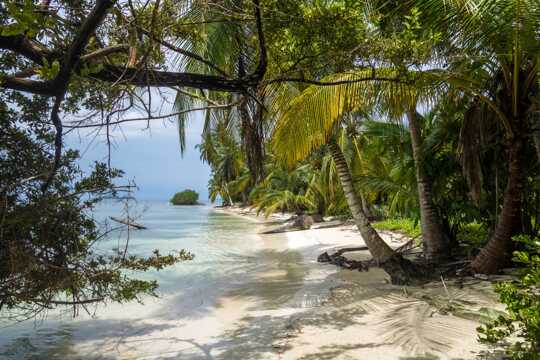
Twenty years ago San Blas meant a trading sloop, a hammock and a Guna family who tolerated you. Today it means a 4x4 shuttle, a speedboat and a booking made in advance. The archipelago of Guna Yala sits in the north of Panama, on the Caribbean coast, and the Guna run it themselves, which is why you pay entry fees to them and why there are no resorts. That also explains the basics: islands have little electricity, no hot showers and cash-only pricing, so an experienced traveler books a multi-night stay with meals included and carries small bills. I left Panama City before dawn, and our shuttle stopped at a roadside checkpoint where a Guna official collected the entry fee and wrote our names in a notebook. Everyone cheered when the first palm-fringed island appeared from the dock. A first day usually means a boat ride, a swim off a sandbar, grilled fish and a hammock before dark.

Discover everything you want to know in the 📖 Panama Travel Guide.


example page 0 from our offline Travel Guide for Panama
example page 1 from our offline Travel Guide for Panama
example page 2 from our offline Travel Guide for Panama
example page 3 from our offline Travel Guide for Panama
example page 4 from our offline Travel Guide for Panama
example page 5 from our offline Travel Guide for Panama
example page 6 from our offline Travel Guide for Panama
example page 7 from our offline Travel Guide for Panama
Loading the map 🌍
CLICK TO FILTER
cities
towns
villages
landmarks
national parks
hikes
beaches
attractions
festivals
regions
SHOW COUNTRY’S BESTSHOW ALL

✨ Why go?
Ranked #1 region in Panama
Why visitors keep coming back

San Blas Islands rewards backpackers who want a place to stop moving. The archipelago has roughly 365 islands by local count, and the Guna Yala territory is self-governed, so you sleep in thatched cabins or hammocks on islands owned by Guna families and eat what they catch. That is the draw: culture and sea in the same place, without a tour bus in sight. Moving between islands is simple, because most stays include day hopping by small boat to sandbars like Isla Perro Chico for snorkeling around a wreck. If you are crossing between Panama and Colombia, the sailing trips from here are the other major reason to come, since several boats run the open-water leg with a few days of island stops. Expect basic comfort, saltwater showers and early nights. In return you get water in several shades of … read more 👉
San Blas Islands rewards backpackers who want a place to stop moving. The archipelago has roughly 365 islands by local count, and the Guna Yala territory is self-governed, so you sleep in thatched cabins or hammocks on islands owned by Guna families and eat what they catch. That is the draw: culture and sea in the same place, without a tour bus in sight. Moving between islands is simple, because most stays include day hopping by small boat to sandbars like Isla Perro Chico for snorkeling around a wreck. If you are crossing between Panama and Colombia, the sailing trips from here are the other major reason to come, since several boats run the open-water leg with a few days of island stops. Expect basic comfort, saltwater showers and early nights. In return you get water in several shades of blue, women in hand-stitched mola blouses selling their work directly, and a rhythm set by tides rather than timetables.

💡 HighlightsMust-see experiences and standout moments

  1. Isla Diablo: a small, popular island with simple cabins, a volleyball net and a short swim to the neighboring sandbars.
  2. Cayos Holandeses (Hollandes Cays): a cluster of uninhabited palm islets with clear water for snorkeling, usually reached on longer boat trips or sailing routes.
  3. Isla Perro Chico: sheltered water and a shipwreck close enough to snorkel from the surface.
  4. Isla Perro Grande: a quiet islet beside a wreck known for sea life, good for a calm swim.
  5. Cayos Limones: a laid-back group of small islands where Guna families host visitors in cabins on the sand.
  6. Isla Aguja: a small island with a few rooms and starfish in the shallows, often skipped by day-trippers.
  7. Isla Chichime: a tiny island with beach cabins and long stretches of white sand, good for those who want quiet.
  8. El Porvenir: the administrative
… read more 👉
  1. Isla Diablo: a small, popular island with simple cabins, a volleyball net and a short swim to the neighboring sandbars.
  2. Cayos Holandeses (Hollandes Cays): a cluster of uninhabited palm islets with clear water for snorkeling, usually reached on longer boat trips or sailing routes.
  3. Isla Perro Chico: sheltered water and a shipwreck close enough to snorkel from the surface.
  4. Isla Perro Grande: a quiet islet beside a wreck known for sea life, good for a calm swim.
  5. Cayos Limones: a laid-back group of small islands where Guna families host visitors in cabins on the sand.
  6. Isla Aguja: a small island with a few rooms and starfish in the shallows, often skipped by day-trippers.
  7. Isla Chichime: a tiny island with beach cabins and long stretches of white sand, good for those who want quiet.
  8. El Porvenir: the administrative island with a small museum on Guna culture and the airstrip used by flights from Panama City.
  9. Carti Sugdub: a stilted village island whose people mostly moved to the new mainland village of Isber Yala in 2024 because of rising seas.
  10. Mamitupu and the mainland rivers: a lesser-known communal village visit that includes jungle river access and a view of the rainforest behind the coast.
Isla Perro Chico and Isla Diablo combine easily in one day, since a short boat ride links the snorkeling and the sand.
Spotted a mistake or missing something? Contact us.

Things to do around San Blas Islands

Ratings based on Tripadvisor reviews. When you book through this link, you support our work at no extra cost to you.

⌛️ 5 days5-day itinerary for San Blas Islands

Day 1: Isla Perro (Diadupu): Start in the Hole in the Wall anchorage around Isla Perro, because the shipwreck there sits in water so clear that you can snorkel over the rusted hull of the Dutch freighter within minutes of arriving. Nobody sails through here on a fixed schedule. Transfers run from the mainland by 4x4 and then by lancha (a motorboat of the Guna), so the day starts when the road to the port opens, not when you wake up. Get on the water early and let the boat captain set the afternoon.
Day 2: Chichime Cays: Boats hop between these palm-topped sandbars in under an hour, which is why you can sleep in a Guna-run cabin on Day 1 and wake somewhere new on Day 2 without any planning. Pay your hosts in cash, as there is no ATM on the islands. Chichime has a reef edge close enough to wade … read more 👉
Day 1: Isla Perro (Diadupu): Start in the Hole in the Wall anchorage around Isla Perro, because the shipwreck there sits in water so clear that you can snorkel over the rusted hull of the Dutch freighter within minutes of arriving. Nobody sails through here on a fixed schedule. Transfers run from the mainland by 4x4 and then by lancha (a motorboat of the Guna), so the day starts when the road to the port opens, not when you wake up. Get on the water early and let the boat captain set the afternoon.
Day 2: Chichime Cays: Boats hop between these palm-topped sandbars in under an hour, which is why you can sleep in a Guna-run cabin on Day 1 and wake somewhere new on Day 2 without any planning. Pay your hosts in cash, as there is no ATM on the islands. Chichime has a reef edge close enough to wade out to, and the evenings are quiet, with only the sound of lapping water and a generator that shuts off early.
Day 3: Rio Sidra and Achutupu: Move east in the morning, since the islands are strung along the coast and the boats only run efficiently in one direction at a time. Rio Sidra is a tiny community where you can sit with a family and watch molas (the layered, hand-stitched textile panels Guna women sew) take shape. Spend the night there rather than rushing on.
Day 4: Detour to Mamitupu Mainland River: Ask your captain for a short side trip up a river on the mainland coast. Dugout canoes slip under jungle canopy, and you can swim in fresh water after days of salt. It adds a different ecosystem without lengthening the route, since the boat returns to the same island by dusk.
Day 5: Back toward the Mainland: Leave early, since the boats and the road back both depend on morning conditions, and the swell picks up later in the day. Allow slack time for your onward connection.

If I had to keep one day, I would keep Day 2. Waking on a sandbar you can walk around in five minutes, with nothing built on it but a few thatched huts, is the whole trip in one morning.

🌤️ When to go?Seasonal considerations and timing

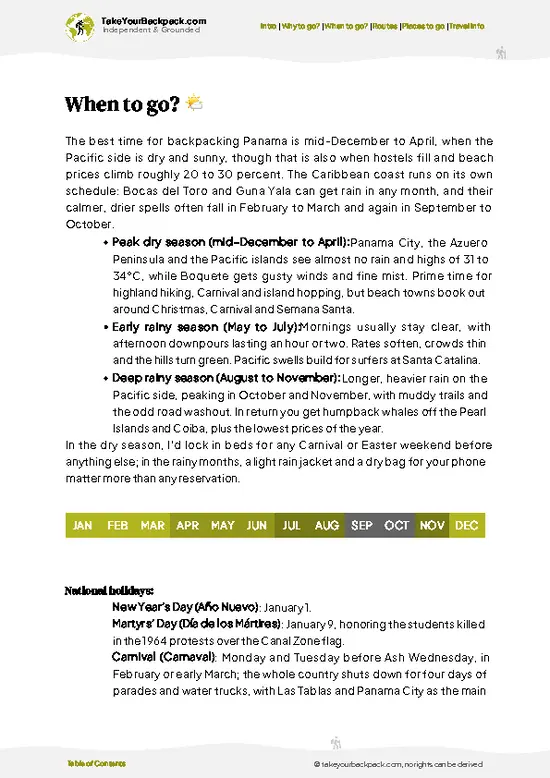
  • Dry Season (mid-December to April): Trade winds keep the air breezy, seas calmer on most days and sunshine reliable. Daytime highs run 29 to 32°C (84 to 90°F), nights 24 to 26°C (75 to 79°F). Sailing trips to Colombia and island tours fill early and prices peak.
  • Early Wet Season (May to July): Short, heavy downpours roll in, often in the afternoon, with warm water and fewer boats on the anchorages. Expect 28 to 31°C (82 to 88°F). Tour operators discount rooms and cabins.
  • Late Wet Season (August to November): Humidity is highest, storms last longer, and some crossings get rough. October and November are the rainiest. Temperatures sit at 27 to 31°C (81 to 88°F), and you will often have a whole island to yourself.
  • Daylight: Close to the equator, days run about 11 to 12.5 hours year-round, so plan
… read more 👉
  • Dry Season (mid-December to April): Trade winds keep the air breezy, seas calmer on most days and sunshine reliable. Daytime highs run 29 to 32°C (84 to 90°F), nights 24 to 26°C (75 to 79°F). Sailing trips to Colombia and island tours fill early and prices peak.
  • Early Wet Season (May to July): Short, heavy downpours roll in, often in the afternoon, with warm water and fewer boats on the anchorages. Expect 28 to 31°C (82 to 88°F). Tour operators discount rooms and cabins.
  • Late Wet Season (August to November): Humidity is highest, storms last longer, and some crossings get rough. October and November are the rainiest. Temperatures sit at 27 to 31°C (81 to 88°F), and you will often have a whole island to yourself.
  • Daylight: Close to the equator, days run about 11 to 12.5 hours year-round, so plan boat transfers for the morning, when seas are calmest.
Book a late-January to March trip at least a few weeks ahead, or go in early December, before holiday demand pushes prices up.


source: climatestotravel.comJANJanuary: excellent for travelingFEBFebruary: excellent for travelingMARMarch: excellent for travelingAPRApril: highly recommended for travelingMAYMay: good for travelingJUNJune: fair for travelingJULJuly: fair for travelingAUGAugust: fair for travelingSEPSeptember: fair for travelingOCTOctober: fair for travelingNOVNovember: good for travelingDECDecember: highly recommended for traveling

✈️ The backpacker research shortcutPanama Travel Guide

An offline-friendly backpacking guide with optimized travel routes, ranked highlights, transport advice, and the best areas to stay.
example page 0 from our offline Travel Guide for Panama
example page 1 from our offline Travel Guide for Panama
example page 2 from our offline Travel Guide for Panama
example page 3 from our offline Travel Guide for Panama
example page 4 from our offline Travel Guide for Panama
example page 5 from our offline Travel Guide for Panama
example page 6 from our offline Travel Guide for Panama
example page 7 from our offline Travel Guide for Panama
The digital guide (272 pages) contains:
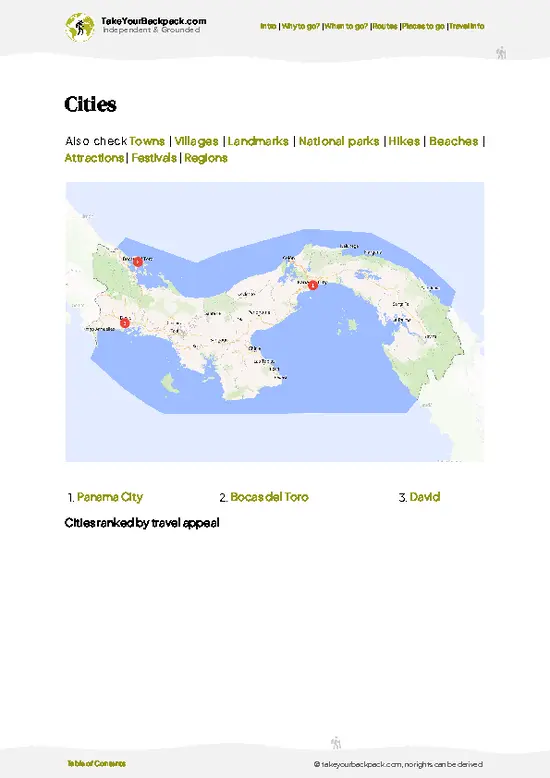
✅ 89 highlights, ranked by travel appeal
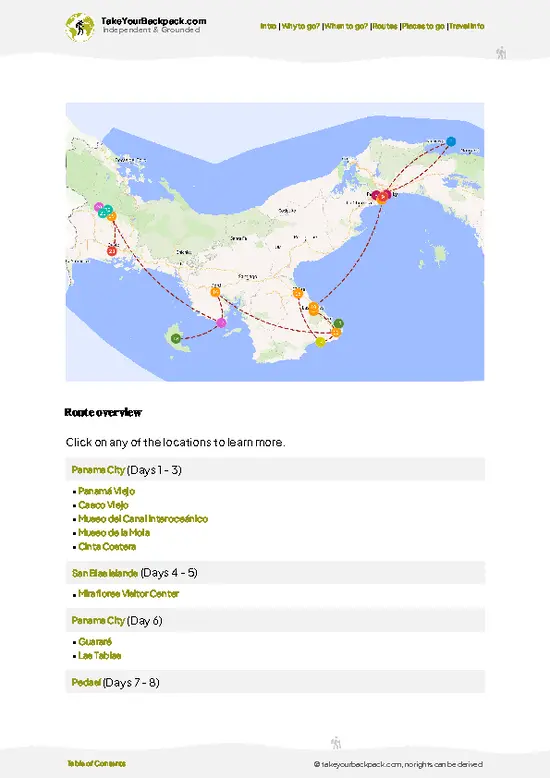
✅ Optimized 5, 10 & 15-day travel routes
✅ Cities, national parks, landmarks, beaches
✅ How to get around
✅ Offline-friendly for travel without Wi-Fi
👉 Click to see all 30+ guide features

📅 Plan smarter in minutes, not weeks
✅ Month by month travel advice
✅ Festivals & national holidays
✅ Budget expectations

🗺️ Go to the right places, skip the overrated ones
✅ Honest pros & cons of destinations
✅ Top hikes, parks & viewpoints
✅ Lesser-known places most travelers miss
✅ Clear “worth it vs skip it” guidance

🛏️ Travel smoothly without rookie mistakes
✅ Best areas to stay
✅ Transport systems explained simply
✅ Common scams & safety advice
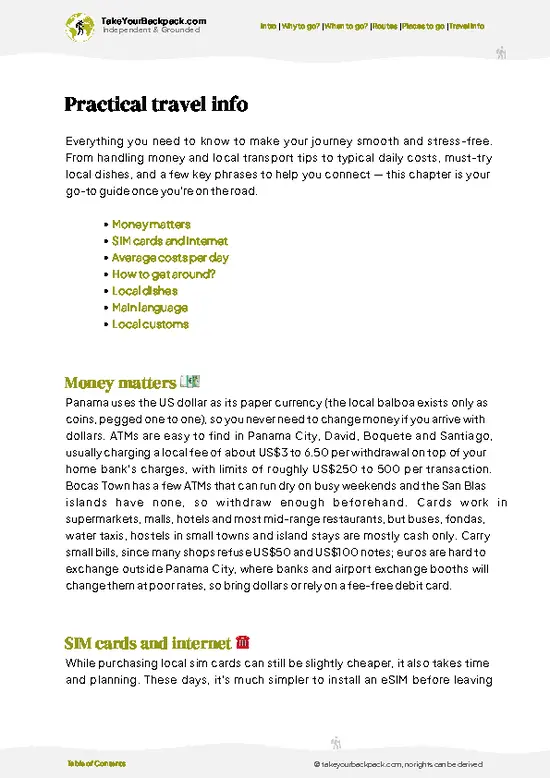
✅ SIM cards, money & practical tips

🌍 Understand the country, not just visit it
✅ Culture & traditions
✅ 52 Essential phrases & customs
✅ Festivals worth planning around
✅ Traveler-friendly historical context
✅ Insights that make places more meaningful

📱 Built for real travel conditions
✅ Fully downloadable PDF
✅ Works completely offline
✅ Optimized for phone use
✅ Useful in remote areas & buses
✅ Everything in one place
Stop searching, start planning
Get instant access to your full guide. 30‑day money-back guarantee.
+ Add another guide for just

By proceeding you agree to our terms.
Sent to your inbox immediately after payment • 100% Secure Checkout
Best Backpacking Travel Advisor 2025 tourism awardBest Backpacking
Travel Advisor
2025
What others say about Take Your Backpack Guides:
⭐⭐⭐⭐⭐
Fantastic, amazing amount of information!
⭐⭐⭐⭐⭐
My goodness this is amazing, it's what I've been looking for hats off too you!
⭐⭐⭐⭐⭐
I think this is absolutely BRILLIANT
⭐⭐⭐⭐
Very complete and informative. It's still missing places, but I gotta to commend you
⭐⭐⭐⭐⭐
This is truly amazing, thank you, can't wait to explore it with my kids!
⭐⭐⭐⭐⭐
Awesome resource, thank you!
⭐⭐⭐⭐⭐
This is amazing! Can't wait to explore the ones I haven't seen
⭐⭐⭐⭐
I love this! Well done, great idea.
⭐⭐⭐⭐⭐
Thanks for taking the time to make this gem!
⭐⭐⭐⭐⭐
This might be the best website I've ever seen.
⭐⭐⭐⭐⭐
Congratulations, and thank you so much for your work; it's incredibly valuable.
⭐⭐⭐⭐
In all seriousness I think you did a great job pointing out the important spots
⭐⭐⭐⭐⭐
10/10 very good
⭐⭐⭐⭐⭐
As someone who's only just starting to visit regularly this is awesome, thank you.
⭐⭐⭐⭐
Thank you very much! I'm going to visit my dad, it's going to be very useful!
⭐⭐⭐⭐⭐
This is really cool! We'll be travelling for the first time and this definitely come in handy.
⭐⭐⭐⭐⭐
You are now our minister of culture, congratulations 👨‍💼
⭐⭐⭐⭐⭐
Just wanted to tell you that this is a pearl! Going to follow your recommendations.
⭐⭐⭐⭐⭐
This is so cool. I'll definitely be using the resource for my travels soon.
⭐⭐⭐⭐⭐
This is very impressive! Good work.
⭐⭐⭐⭐⭐
This is an amazing and informative site. Very well done!

🛏️ Where to stay?Where staying makes the most sense

Most backpackers sleep on the small, Guna-owned islands rather than on the mainland, because that is where the beds are. Each island holds a handful of basic cabins and dorm-style huts, run by Guna families, with sand floors, shared bucket showers and no hot water. The social side comes from the shared meals and the long evenings, as there is little else to do after dark.
Isla Perro Chico and Isla Diablo sit close to snorkeling reefs and a wreck, and they draw plenty of young travelers. Cayos Limones and Chichime, nearer the entry road, are the easiest picks for a short stay of one or two nights. … read more 👉
Most backpackers sleep on the small, Guna-owned islands rather than on the mainland, because that is where the beds are. Each island holds a handful of basic cabins and dorm-style huts, run by Guna families, with sand floors, shared bucket showers and no hot water. The social side comes from the shared meals and the long evenings, as there is little else to do after dark.
Isla Perro Chico and Isla Diablo sit close to snorkeling reefs and a wreck, and they draw plenty of young travelers. Cayos Limones and Chichime, nearer the entry road, are the easiest picks for a short stay of one or two nights. They suit first-timers who want quiet beaches, calm water and simple logistics.
Isla Aguja and the Coco Bandero area have a similar feel, with clear water, sandbars and small clusters of huts. Islands farther east, like Playon Chico, offer more cultural contact, as the Guna community there lives on the island itself.
If you want a party, look at the sailboats instead, where groups of travelers share cabins for several days. Safety on the islands is relaxed, and theft is rare, but keep valuables in a dry bag. Expect to pay about US$30 to 60 per person per night, usually with meals included.

🚌 Getting aroundTransportation options and practical tips

San Blas Islands has no public transport at sea, so a shared boat ride between islands costs roughly US$5 to 20 per person, paid in cash US dollars directly to your boatman or tour host, since there are no card machines or ATMs on the islands. Cash is the rule because the Guna Yala territory is autonomous, run by Guna communities, and the islands have almost no banking infrastructure. Bring small bills and enough for the whole trip, plus the entry fee, currently around US$20 per person, collected at the checkpoint.
  • Shared 4x4 from Panama City: Roads in Guna Yala are rough, and the entry road is steep and potholed, so tour operators use sturdy 4x4 vans. Expect US$100 to 140 round trip with boat transfer and an overnight stay. The pickup leaves around 5 a.m. to reach the port in 2.5 to 3 hours.
… read more 👉
San Blas Islands has no public transport at sea, so a shared boat ride between islands costs roughly US$5 to 20 per person, paid in cash US dollars directly to your boatman or tour host, since there are no card machines or ATMs on the islands. Cash is the rule because the Guna Yala territory is autonomous, run by Guna communities, and the islands have almost no banking infrastructure. Bring small bills and enough for the whole trip, plus the entry fee, currently around US$20 per person, collected at the checkpoint.
  • Shared 4x4 from Panama City: Roads in Guna Yala are rough, and the entry road is steep and potholed, so tour operators use sturdy 4x4 vans. Expect US$100 to 140 round trip with boat transfer and an overnight stay. The pickup leaves around 5 a.m. to reach the port in 2.5 to 3 hours. Book through an agency, because arranging it yourself costs about the same and adds uncertainty.
  • Island-hopping lancha: These small open boats, called lanchas, are the only way between islands, usually 15 to 45 minutes. Because the Guna own the waters, only licensed Guna boatmen operate them. Agree the price per person before boarding, and bring a dry bag, because spray soaks everything.
  • Sailing to Colombia: Sailboats run between Panama and Cartagena in about 4 to 5 days, at US$550 to 650 per person including meals. There is no road across the Darién Gap, so this is the practical overland alternative to a flight. Book a boat with a licensed captain who handles the immigration stamps.
  • Charter flights: Air Panama flies small planes from Panama City’s Albrook airport to Guna Yala as charters only, in about 30 to 40 minutes. They suit short schedules, but baggage limits are strict, usually around 10 kg (22 lb), and weather can delay flights.
Pack a single soft bag, since the boats are small and wet, and leave bulky luggage in Panama City before heading out.

🍲 FoodLocal Flavors for Backpackers

Eating in San Blas Islands means fresh seafood, cooked simply over wood or gas. Grilled fish or lobster (in season, roughly July to February) arrive with coconut rice and fried patacones, crisp green plantain discs that taste of salt and oil. Guna families also make tulemasi, a fish and coconut soup that is gently sweet and peppery, and sahpa, a plantain porridge. For a drink, try fresh coconut water cut from the palm in front of you, or a cold local Balboa beer, if the island sells it.
Most meals come as part of a package, served at a family table under a thatch roof, where the smell of frying fish drifts across the sand. On the mainland side, roadside stalls sell empanadas and hojaldras, fried dough that is good with coffee on the early drive. Bring snacks and water, because shops on the … read more 👉
Eating in San Blas Islands means fresh seafood, cooked simply over wood or gas. Grilled fish or lobster (in season, roughly July to February) arrive with coconut rice and fried patacones, crisp green plantain discs that taste of salt and oil. Guna families also make tulemasi, a fish and coconut soup that is gently sweet and peppery, and sahpa, a plantain porridge. For a drink, try fresh coconut water cut from the palm in front of you, or a cold local Balboa beer, if the island sells it.
Most meals come as part of a package, served at a family table under a thatch roof, where the smell of frying fish drifts across the sand. On the mainland side, roadside stalls sell empanadas and hojaldras, fried dough that is good with coffee on the early drive. Bring snacks and water, because shops on the islands are small and sell little beyond soda and crackers.
Guna customs matter here. Alcohol is not available on some islands, so ask first, and always ask before photographing people or their food. Meals come at set times, usually early. Vegetarians should say so when booking, since fish is the default. Pay cash, and tip the cook if you can.

🛡️ SafetyTraveler Safety Guide

The San Blas Islands are a slice of paradise, but like any beach, they come with their quirks. Swimming here is generally safe, but keep an eye on the currents. Some areas can have sneaky riptides, especially during high tide. Locals know where to swim, so follow their lead.

As for marine life, you might spot rays gliding gracefully beneath the surface. Sharks? Rarely a concern, but it’s always wise to be aware of your surroundings. Jellyfish can pop up, so check the water before diving in.

Weather-wise, the sun can be relentless. Bring sunscreen and reapply often, especially during midday when it’s at its peak. The winds can shift, too, so don’t be surprised if the calm morning turns into a breezy afternoon.

Keep your belongings close; theft isn’t rampant, but it’s smart to stay vigilant. … read more 👉
The San Blas Islands are a slice of paradise, but like any beach, they come with their quirks. Swimming here is generally safe, but keep an eye on the currents. Some areas can have sneaky riptides, especially during high tide. Locals know where to swim, so follow their lead.

As for marine life, you might spot rays gliding gracefully beneath the surface. Sharks? Rarely a concern, but it’s always wise to be aware of your surroundings. Jellyfish can pop up, so check the water before diving in.

Weather-wise, the sun can be relentless. Bring sunscreen and reapply often, especially during midday when it’s at its peak. The winds can shift, too, so don’t be surprised if the calm morning turns into a breezy afternoon.

Keep your belongings close; theft isn’t rampant, but it’s smart to stay vigilant. Enjoy the beauty, but remember: a little situational awareness goes a long way in making your beach day a breeze.

FAQCommon questions from travelers

Three to four days is the practical minimum. A two-night stay covers the nearest cays, such as Chichime and Cayos Limones, while four days lets you reach the Holandes Cays and the snorkeling sites. Add five more days if you sail on to Cartagena, Colombia, which takes 4 to 5 days.
Boats and 4x4 vans are the only options. From Panama City, a shared 4x4 takes about 2.5 to 3 hours to the port, at roughly US$100 to 140 round trip with tours, and small lanchas then connect the islands in 15 to 45 minutes. Charter flights from Albrook airport take 30 to 40 minutes.
San Blas Islands is known for its white-sand cays, clear turquoise water and the Guna people, who run the territory themselves. There are about 365 islands, though only some are inhabited, and you can snorkel reefs and shipwrecks around the Holandes Cays. Travelers also come for the sailing route to Colombia, which takes 4 to 5 days.
⚠️ Things can change over time, so always validate details locally before you go.

Other Panamanian regions near San Blas Islands

Explore more nearby:

  • Cerro Azul—Cloud forest, Cerro Jefe trails, birding roads, Lake Alajuela| 81 km away
  • Isla Contadora—Golf carts, small beaches, snorkeling, whale season| 108 km away
  • Taboga Island—Car-free village, ferry pier, pelican colony, hillside lookouts| 121 km away

💡 Not sure where to go next?
Create a personalized itinerary for Panama including San Blas Islands and the places that fit your trip.

Generate my itinerary

👉 Discover all regions

Or checkout all Panama has to offer (think cities, towns, villages, national parks, hikes, beaches, festivals)
Country photo of Panama

We 💚 feedbackKey takeaways before you go

San Blas Islands works best over three nights, which gives you one day to arrive, one to snorkel and one to simply lie in a hammock. Two nights feels rushed once the road is counted, and five needs a book and patience. I would bring plenty of small bills, a dry bag and reef-safe sunscreen.

✈️ When did I visit Panama?
Panama I visited during my half year trip through South and Central America back in 2003

✍️ Help improve this page!
The information on this page is based on my own backpacking experience in Panama, supplemented with up-to-date research and feedback from other travelers. Travel details can change, so if you notice anything outdated or incomplete, feel free to let me know.


🙋‍♂️ Give feedback

👋 Meet the founderWho’s Behind Take Your Backpack?

Johan, backpacker and founder of TakeYourBackpackHi, I’m Johan (Netherlands 🇳🇱), the creator of TakeYourBackpack. Over the past 3 decades, I’ve backpacked through 90+ countries across six continents, gaining extensive experience with independent travel, long-term trips, and overland routes.

This site is built on a combination of firsthand travel experience and carefully curated insights from other backpackers. Many guides are based on places I’ve personally visited, while others bring together tips, observations, and practical advice shared by trusted travelers I’ve met along the way.

The goal is to provide realistic, experience-driven guidance — not generic itineraries — so you can explore destinations with better context, clearer expectations, and more confidence.