×

Papua New Guinea🇵🇬 | hikesSepik River Trekriverine trails, stilt villages, carved spirit houses | things to do and best time to go

Explore Sarawaget Range TrekExplore Crater Mountain Trek

Backpacking in Sepik River Trek
👀 For curious travelershike ranked #7
By Johan Kruseman 🇳🇱 | Updated July 30, 2026

You have to choose early: do you commit days to a raw, river‑driven expedition on the Sepik, or play it safe with easier, shorter PNG hikes like around Kokoda or Mt Wilhelm? That choice matters, because the Sepik River Trek is less a “trail” and more a moving corridor of mud banks, dugout canoes, and stilt villages in Papua New Guinea’s north, running inland from the coast near Wewak. It’s long, hot, and logistically messy, with humidity that slams you and sections that are more slog than stroll, and public transport to the jumping-off villages is sporadic and cramped. But the payoff is huge: wide brown water under burning sunsets, spirit-house carvings, crocodile-men scarification ceremonies, and a sense of immersion that makes more polished PNG treks feel tame and almost civilized by comparison.

Discover everything you want to know in the 📖 Papua New Guinea Travel Guide.
Best time to go: May - October
Duration: 10 days
Distance: 120 kilometers
Total ascent: 2,500 meters
Loading the map 🌍
CLICK TO FILTER
cities
towns
national parks
hikes
beaches
attractions
festivals
regions
SHOW COUNTRY’S BESTSHOW ALL

✨ Why go?
Ranked #7 hike in Papua New Guinea
What makes it a must-see hike

The Sepik River Trek in Papua New Guinea is a magnet for backpackers craving authentic adventure. The scenery-to-effort ratio is off the charts. You’ll traverse lush rainforests, cross rickety bridges, and encounter vibrant villages where life pulses with tradition. Each step is a workout, but the payoff? Breathtaking views of the river snaking through the landscape, a reward that makes every bead of sweat worth it.

Getting there is a breeze. Public transport access is straightforward, with local buses whisking you to the trailhead without breaking the bank. Speaking of costs, this trek is a low-cost option that doesn’t skimp on experience. You can tailor your journey, choosing flexible distances that fit your pace.

Plus, it seamlessly integrates into a longer backpacking route through … read more 👉
The Sepik River Trek in Papua New Guinea is a magnet for backpackers craving authentic adventure. The scenery-to-effort ratio is off the charts. You’ll traverse lush rainforests, cross rickety bridges, and encounter vibrant villages where life pulses with tradition. Each step is a workout, but the payoff? Breathtaking views of the river snaking through the landscape, a reward that makes every bead of sweat worth it.

Getting there is a breeze. Public transport access is straightforward, with local buses whisking you to the trailhead without breaking the bank. Speaking of costs, this trek is a low-cost option that doesn’t skimp on experience. You can tailor your journey, choosing flexible distances that fit your pace.

Plus, it seamlessly integrates into a longer backpacking route through PNG. Whether you’re heading to the highlands or the coast, the Sepik is a perfect stop. It’s not just a hike; it’s a deep dive into a world that feels untouched.
Want to include Sepik River Trek in your Papua New Guinea route?
Create a personalized Papua New Guinea itinerary that includes Sepik River Trek and the places that fit your trip — based on your travel style, budget, and available time. Get your route in seconds.

Generate my trip

💡 HighlightsWhat this place is best known for

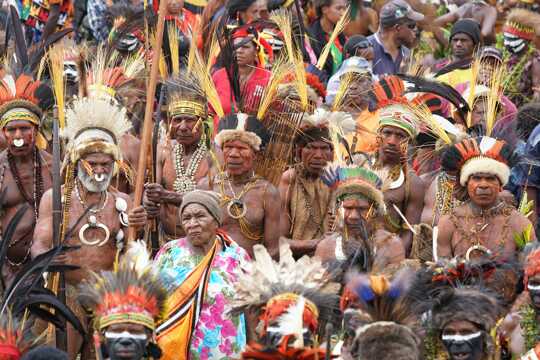
  1. Haus Tambaran and Sepik Carvings — The open-air spirit houses and massive carved figures outside villages are unlike anything on alpine trails: raw, living woodcarving traditions that tell clan stories. You’ll pass walls of masks and totems—perfect for slow-looking and asking questions to local carvers.
  2. Braided River Channels & Floodplain Scenery — The landscape constantly rearranges itself: sandbanks one day, muddy channels the next. Sunrises and sunsets on the flat floodplain give huge mirror reflections and a feeling of walking through a moving painting rather than a fixed trail.
  3. Canoe Portages & Village Crossings — This trek isn’t just footpaths—expect dugout canoes, poling across side channels and short portages between water and land. Those transitions are where you meet people,
read more 👉
  1. Haus Tambaran and Sepik Carvings — The open-air spirit houses and massive carved figures outside villages are unlike anything on alpine trails: raw, living woodcarving traditions that tell clan stories. You’ll pass walls of masks and totems—perfect for slow-looking and asking questions to local carvers.
  2. Braided River Channels & Floodplain Scenery — The landscape constantly rearranges itself: sandbanks one day, muddy channels the next. Sunrises and sunsets on the flat floodplain give huge mirror reflections and a feeling of walking through a moving painting rather than a fixed trail.
  3. Canoe Portages & Village Crossings — This trek isn’t just footpaths—expect dugout canoes, poling across side channels and short portages between water and land. Those transitions are where you meet people, swap stories, and get the real Sepik travel rhythm.
  4. Wildlife Encounters — Crocodiles and Birds — Sepik’s riverbanks are prime crocodile-watching spots (from a respectful distance), and the lowland birdlife—kingfishers, herons, parrots and other tropical species—fills the mornings. It’s river-wildlife, not alpine marmots.
  5. Oxbow Lakes, Mangroves & Night River Ambience — Hidden side-lakes and mangrove fringes feel secret and still, with water lilies, fireflies and a soundtrack of frogs and insects at night. The quiet, starlit river stretches are a rare kind of solitude you won’t find on crowded trails.
Spotted a mistake or missing something? Contact us.
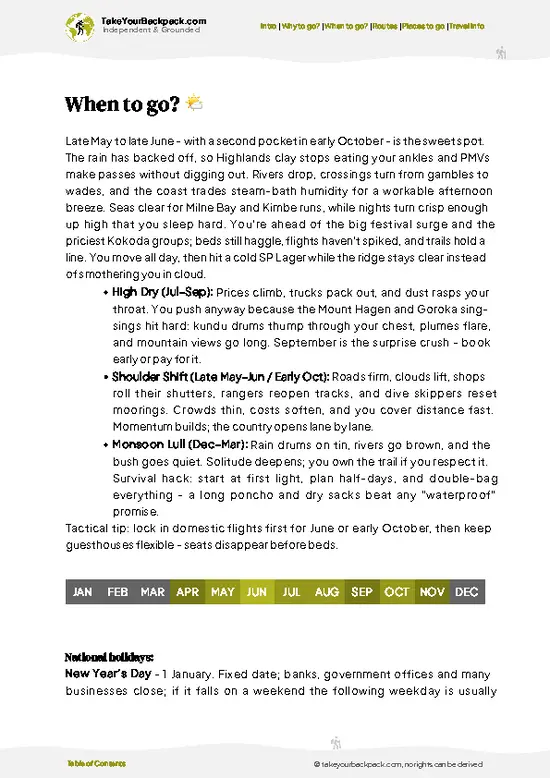
🌤️ When to go?Choosing the right time of year


  • Weather: The dry season from May to October is your best bet. Trails firm up, rivers calm, and the relentless humidity eases. Avoid the wet season—November through April—when downpours turn paths into mudslides and rivers into roaring beasts.

  • Temperature: Expect daytime highs around 28-32°C (82-90°F) during the dry months, with nights cooling to 20-24°C (68-75°F). The wet season feels hotter and stickier, sapping your energy fast.

  • Daylight Hours: Papua New Guinea sits near the equator, so daylight stays steady—roughly 12 hours year-round. That means early starts and late finishes are always doable, no matter when you go.

  • Crowds: The Sepik River Trek is off the beaten path, so crowds are rare anytime. Still, the dry season draws a few more adventurous souls, giving you a better chance
read more 👉

  • Weather: The dry season from May to October is your best bet. Trails firm up, rivers calm, and the relentless humidity eases. Avoid the wet season—November through April—when downpours turn paths into mudslides and rivers into roaring beasts.

  • Temperature: Expect daytime highs around 28-32°C (82-90°F) during the dry months, with nights cooling to 20-24°C (68-75°F). The wet season feels hotter and stickier, sapping your energy fast.

  • Daylight Hours: Papua New Guinea sits near the equator, so daylight stays steady—roughly 12 hours year-round. That means early starts and late finishes are always doable, no matter when you go.

  • Crowds: The Sepik River Trek is off the beaten path, so crowds are rare anytime. Still, the dry season draws a few more adventurous souls, giving you a better chance to swap stories without feeling alone.

  • Seasonal Activities: Dry season aligns with local festivals and tribal ceremonies, adding cultural fire to your trek. Timing your hike here means catching vibrant rituals that vanish in the wet months.

  • Price Fluctuations: Expect higher costs during the dry season when guides and lodges fill up. The wet season offers bargains but at the expense of comfort and safety on the trail.


Pro-tip: Plan for the dry season to balance trail conditions, cultural experiences, and manageable crowds—your legs and camera will thank you.


source: climatestotravel.comJANJanuary: below average for travelingFEBFebruary: below average for travelingMARMarch: below average for travelingAPRApril: fair for travelingMAYMay: excellent for travelingJUNJune: excellent for travelingJULJuly: excellent for travelingAUGAugust: excellent for travelingSEPSeptember: excellent for travelingOCTOctober: highly recommended for travelingNOVNovember: fair for travelingDECDecember: below average for traveling
when-to-go

✈️ The backpacker research shortcutPapua New Guinea Travel Guide

An offline-friendly backpacking guide with optimized travel routes, ranked highlights, transport advice, and the best areas to stay.
example page 0 from our offline Travel Guide for Papua New Guinea
example page 1 from our offline Travel Guide for Papua New Guinea
example page 2 from our offline Travel Guide for Papua New Guinea
example page 3 from our offline Travel Guide for Papua New Guinea
example page 4 from our offline Travel Guide for Papua New Guinea
example page 5 from our offline Travel Guide for Papua New Guinea
example page 6 from our offline Travel Guide for Papua New Guinea
example page 7 from our offline Travel Guide for Papua New Guinea
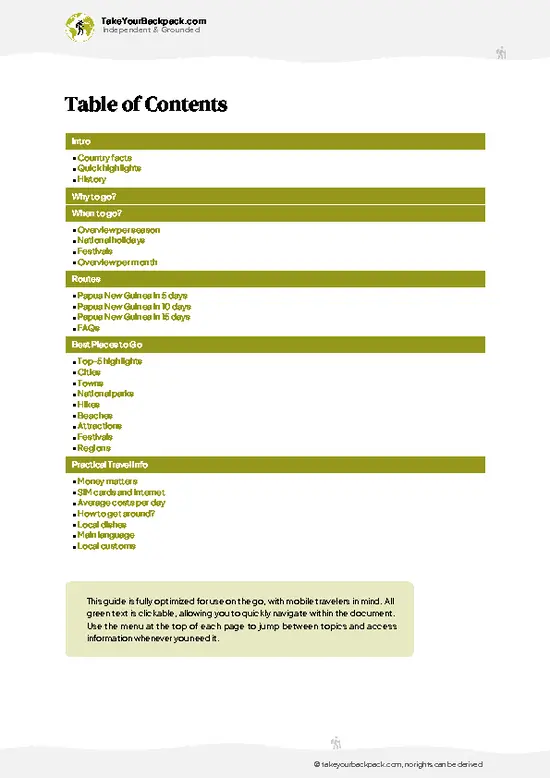
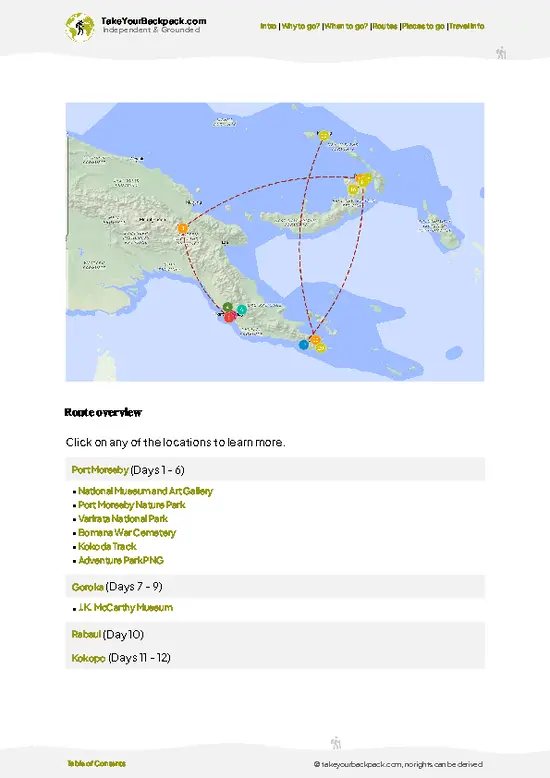
The digital guide (319 pages) contains:
86 highlights, ranked by travel appeal
Optimized 5, 10 & 15-day travel routes
Cities, national parks, landmarks, beaches
How to get around
Offline-friendly for travel without Wi-Fi
👉 Click to see all 30+ guide features

📅 Plan smarter in minutes, not weeks
Month by month travel advice
Festivals & national holidays
Budget expectations

🗺️ Go to the right places, skip the overrated ones
Honest pros & cons of destinations
Top hikes, parks & viewpoints
Lesser-known places most travelers miss
Clear “worth it vs skip it” guidance

🛏️ Travel smoothly without rookie mistakes
Best areas to stay
Transport systems explained simply
Common scams & safety advice
SIM cards, money & practical tips

🌍 Understand the country, not just visit it
Culture & traditions
52 Essential phrases & customs
Festivals worth planning around
Traveler-friendly historical context
Insights that make places more meaningful

📱 Built for real travel conditions
Fully downloadable PDF
Works completely offline
Optimized for phone use
Useful in remote areas & buses
Everything in one place
Save weeks of stressful planning
Get instant access to your full guide. 30‑day money-back guarantee.


By proceeding you agree to our terms.
Sent to your inbox immediately after payment • 100% Secure Checkout
Best Backpacking Travel Advisor 2025 tourism awardBest Backpacking
Travel Advisor
2025
What others say about Take Your Backpack Guides:
⭐⭐⭐⭐⭐
Fantastic, amazing amount of information!
⭐⭐⭐⭐⭐
My goodness this is amazing, it's what I've been looking for hats off too you!
⭐⭐⭐⭐⭐
I think this is absolutely BRILLIANT
⭐⭐⭐⭐
Very complete and informative. It's still missing places, but I gotta to commend you
⭐⭐⭐⭐⭐
This is truly amazing, thank you, can't wait to explore it with my kids!
⭐⭐⭐⭐⭐
Awesome resource, thank you!
⭐⭐⭐⭐⭐
This is amazing! Can't wait to explore the ones I haven't seen
⭐⭐⭐⭐
I love this! Well done, great idea.
⭐⭐⭐⭐⭐
Thanks for taking the time to make this gem!
⭐⭐⭐⭐⭐
This might be the best website I've ever seen.
⭐⭐⭐⭐⭐
Congratulations, and thank you so much for your work; it's incredibly valuable.
⭐⭐⭐⭐
In all seriousness I think you did a great job pointing out the important spots
⭐⭐⭐⭐⭐
10/10 very good
⭐⭐⭐⭐⭐
As someone who's only just starting to visit regularly this is awesome, thank you.
⭐⭐⭐⭐
Thank you very much! I'm going to visit my dad, it's going to be very useful!
⭐⭐⭐⭐⭐
This is really cool! We'll be travelling for the first time and this definitely come in handy.
⭐⭐⭐⭐⭐
You are now our minister of culture, congratulations 👨‍💼
⭐⭐⭐⭐⭐
Just wanted to tell you that this is a pearl! Going to follow your recommendations.
⭐⭐⭐⭐⭐
This is so cool. I'll definitely be using the resource for my travels soon.
⭐⭐⭐⭐⭐
This is very impressive! Good work.
⭐⭐⭐⭐⭐
This is an amazing and informative site. Very well done!

🛏️ Where to stay?Where staying makes the most sense

If you enjoy meeting fellow travelers, consider choosing hostels with high ratings for atmosphere. On the other hand, if you prefer having your own space, a hotel might be a better option.

🥾 Hike detailsA practical overview of the hike

Total Distance: Approximately 100 kilometers (about 62 miles) over several days, depending on the specific route you choose and how many detours you take to explore.

Estimated Duration: Typically takes around 5 to 7 days to complete, depending on your pace and how long you want to spend soaking in the scenery or chatting with locals along the way.

Difficulty Level: Moderate to challenging. There are some steep sections, muddy paths, and river crossings that can be tricky, especially after rain. Good fitness and some hiking experience are recommended.

Starting Point: The trek usually starts … read more 👉
Total Distance: Approximately 100 kilometers (about 62 miles) over several days, depending on the specific route you choose and how many detours you take to explore.

Estimated Duration: Typically takes around 5 to 7 days to complete, depending on your pace and how long you want to spend soaking in the scenery or chatting with locals along the way.

Difficulty Level: Moderate to challenging. There are some steep sections, muddy paths, and river crossings that can be tricky, especially after rain. Good fitness and some hiking experience are recommended.

Starting Point: The trek usually starts in a village called Kanganaman. To get there, take a bus from Wewak to the town of Maprik. From Maprik, you can catch a local transport (like a PMV - public motor vehicle) to Kanganaman. It’s a bit of an adventure in itself, so be ready for a bumpy ride!

Major Landmarks Along the Route:
  • Sepik River: The winding river itself is a highlight, offering stunning views and a chance to see traditional villages along its banks.
  • Traditional Villages: You’ll pass through several small villages where you can experience local culture and maybe even join a sing-sing.
  • Mount Nimbia: A great spot for panoramic views of the surrounding landscape, if you’re up for a slight detour.

Type of Terrain and Scenery: Expect a mix of muddy trails, riverbanks, and hilly areas. The scenery varies from lush jungle to open grasslands, with plenty of opportunities to see the Sepik River weaving through the landscape.

Typical Vegetation and Wildlife:
  • Vegetation: Dense tropical rainforest, with towering trees, ferns, and vibrant orchids. You might even spot some wild banana and coconut palms.
  • Wildlife: Keep an eye out for colorful birds like cassowaries and various parrots. You might also encounter wallabies and a range of insects, so don’t forget your bug spray!

This trek is a true off-the-beaten-path experience. Make sure to pack enough food, a good water filter, and a sense of adventure. Enjoy the journey!
⚠️ Hiking info can sometimes be outdated or inaccurate. Before you hit the trail, check the latest conditions with locals. If you do spot anything that's off, I'd love to hear from you, so I can update it for fellow travelers.

🛡️ SafetyScams, Hazards, and Annoyances

The Sepik River Trek is a raw, immersive experience, but it demands respect for its realities. Weather can shift quickly; rain can turn trails into slippery mudslides. Dress in layers and pack a reliable rain jacket. The terrain varies from flat paths to steep, root-laden climbs. Navigation can be tricky, so a good map and compass are essential.

River crossings are part of the adventure; be prepared to wade through water that can be knee-deep. Keep an eye out for wildlife, like snakes or boars. Stay calm and give them space.

First-timers often underestimate the humidity and the toll it takes on energy levels. Pace yourself, hydrate often, and don’t rush. The reward? A breathtaking view of the river winding through lush jungle, and the satisfaction of knowing you’ve truly earned it.

Other Papua New Guinean hikes near Sepik River Trek

Explore more nearby:


💡 Not sure where to go next?
Create a personalized itinerary for Papua New Guinea including Sepik River Trek and the places that fit your trip.

Generate my itinerary

👉 Discover all hikes

Or checkout all Papua New Guinea has to offer (think cities, towns, villages, national parks, hikes, beaches, festivals)
Country photo of Papua New Guinea

We 💚 feedbackWhat to keep in mind

The Sepik River Trek is raw and real. You’ll sweat, stumble, and maybe curse a little, but that first glimpse of the river at dawn? Worth every drop. The locals are genuine, sharing stories that stick with you long after you leave. Just be ready for the humidity—it’s relentless. Pack light, stay curious, and embrace the unexpected. You’ll find beauty in the grit, and the connections you make will linger long after the trek is over.

✍️ Help improve this page!
The information on this page is based on in-depth research, insights shared by experienced travelers, and feedback from the local travel community in Papua New Guinea. While every effort is made to keep the information accurate and current, conditions can change — so if you spot anything incorrect or outdated, please get in touch.


🙋‍♂️ Give feedback

👋 Meet the founderWho’s Behind Take Your Backpack?

Johan, backpacker and founder of TakeYourBackpackHi, I’m Johan (Netherlands 🇳🇱), the creator of TakeYourBackpack. Over the past decade, I’ve backpacked through 80+ countries across six continents, gaining extensive experience with independent travel, long-term trips, and overland routes.

This site is built on a combination of firsthand travel experience and carefully curated insights from other backpackers. Many guides are based on places I’ve personally visited, while others bring together tips, observations, and practical advice shared by trusted travelers I’ve met along the way.

The goal is to provide realistic, experience-driven guidance — not generic itineraries — so you can explore destinations with better context, clearer expectations, and more confidence.

Get full country guide •
Instant download • 86 highlights • Full Offline guide